




























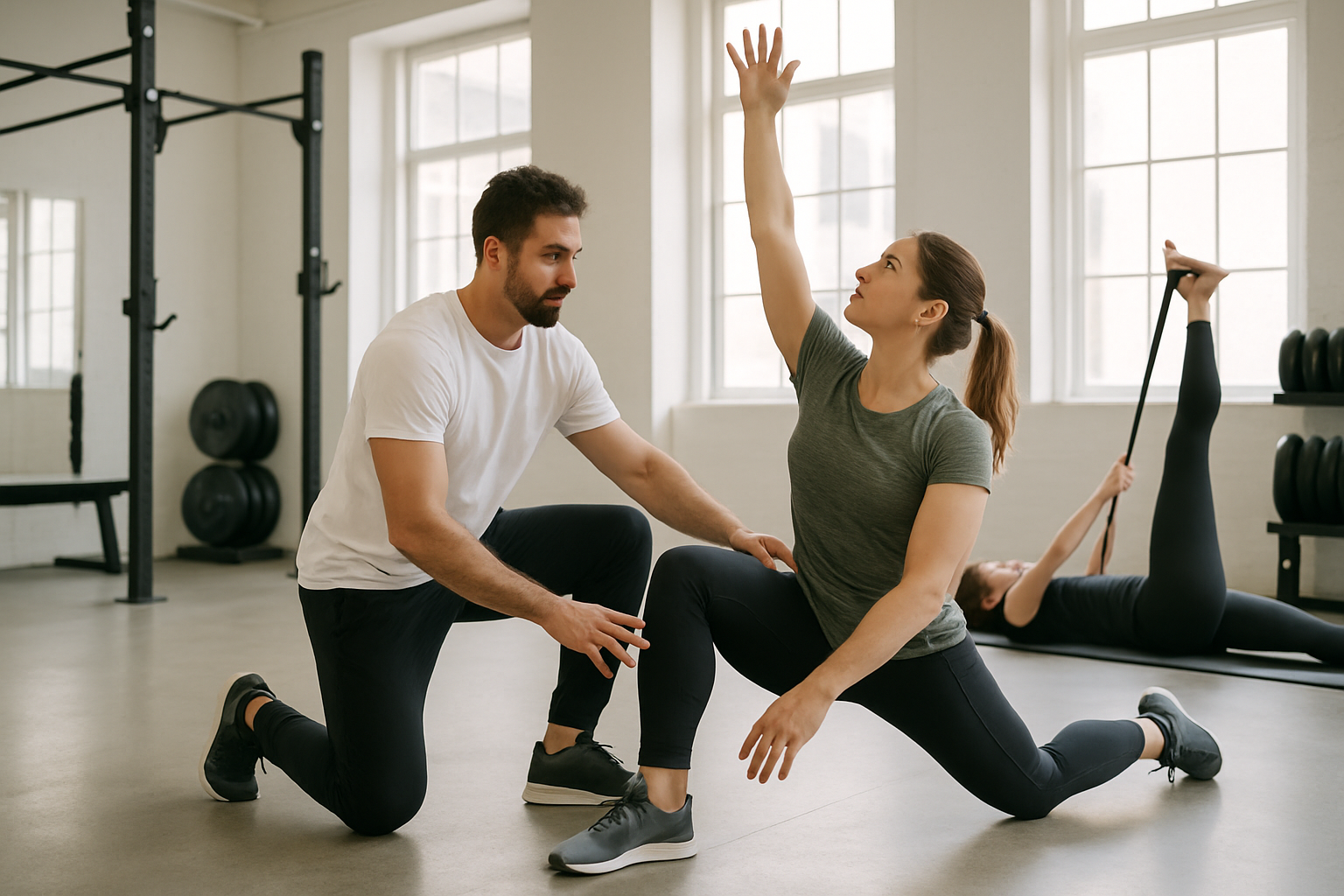
If you’ve ever wondered whether tight hamstrings mean you need more “stretching” or more “mobility work,” you’re in the right place. This guide breaks down the practical difference between mobility and flexibility, how each affects performance and comfort, and exactly how to train both without wasting time. It’s written for active people, lifters, runners, yogis, and anyone who just wants to move better with fewer aches. Quick answer: Flexibility is your passive range of motion (how far a joint can move when relaxed), while mobility is your active range of motion (how far you can control that motion under your own power). Both matter, but they’re trained differently and used for different goals. This guide is educational only and not a substitute for personal medical advice.
1. The Core Definition: Passive Length vs Active Control
Mobility and flexibility aren’t interchangeable: flexibility is the capacity of muscles and connective tissues to lengthen so a joint can move through range when you’re relaxed, while mobility is your ability to actively control and use that range. Most daily tasks and sports rely on mobility because you need strength and coordination at specific joint angles, not just slack in tissues. That’s why you can “touch your toes” after a long static stretch yet still feel stiff during a deep squat—passive length didn’t automatically become active control. The practical takeaway is that you build flexibility with methods that increase tissue tolerance to stretch, and you build mobility with methods that improve strength, motor control, and joint-specific movement quality. You’ll often train both, but your emphasis depends on the bottleneck: tissue extensibility or usable control.
1.1 Why it matters
- Mobility is what shows up in sport and daily life: climbing stairs, squatting, getting up from the floor.
- Flexibility lays the groundwork for mobility when tissues are the limiting factor.
- Chasing flexibility alone can leave you with range you can’t stabilize; chasing mobility alone can be slow if tissues won’t yield.
1.2 Quick self-checks
- Toe touch vs deep squat: If you can touch toes but can’t reach depth in a squat, you likely lack mobility (control/strength) more than flexibility.
- Passive vs active lift: Lift your straight leg lying down (active). Then have a partner raise it higher (passive). The gap = mobility gap.
Synthesis: Start by naming the problem: if you can be put into the position but can’t get there yourself, mobility is the limiter; if neither active nor passive range is available, address flexibility first.
2. Active vs Passive Range: How They’re Measured and Felt
The cleanest distinction is active versus passive range of motion. Active ROM is what you can reach using your muscles alone—think raising your arm overhead without arching your back. Passive ROM is what you can reach when an external force helps—gravity, a strap, a therapist, or a training partner. The nervous system sets “guardrails” on both, but passive ROM usually exceeds active ROM because relaxed tissues and external assistance reduce protective tension. In practice, athletes and desk workers alike benefit most from closing the active–passive gap: the smaller the gap, the more you can use the range you have without compensations.
2.1 Numbers & guardrails (practical, not diagnostic)
- Expect passive > active ROM in most joints; large gaps hint at control deficits.
- Track with simple tools: a wall, a dowel, a strap, or phone video.
- Re-test every 2–4 weeks after consistent practice to confirm progress.
2.2 How to assess at home
- Shoulder flexion: Lie on your back, ribs down. Raise arms overhead. If thumbs can’t reach the floor without rib flare, mobility is limited. Check passive with a dowel assist.
- Straight-leg raise: Active lift vs strap-assisted. The difference shows whether flexibility or control limits you.
- Ankle dorsiflexion (knee-to-wall): Lunge toward a wall; move foot back until your knee just touches without the heel lifting. Mark distance; compare sides.
Synthesis: Use simple A/B checks (active vs passive). Program more control work if active trails far behind; program more tissue-length work if both are limited.
3. What Limits Each: Tissue, Joint, and Nervous System Factors
When flexibility is limited, the usual culprits are muscle–tendon stiffness and the nervous system’s tolerance to stretch. With mobility, common limits are motor control, strength at end range, and sometimes joint mechanics (e.g., capsular tightness or bony shape). Pain or fear can also restrict either, as the nervous system “brakes” motion to protect you. Understanding the limiter helps you choose the correct tool: long-hold stretching for tissue extensibility; end-range isometrics and controlled reps for mobility; technique changes when joint angles are the issue.
3.1 Mechanisms (plain language)
- Flexibility: Repeated stretching improves tolerance to length and may reduce stiffness over time.
- Mobility: You earn control with load, time under tension, and coordination at the angles you care about.
- Joint structure: Some hips naturally antevert or retrovert; some people will squat deeper with a wider stance. That’s anatomy, not a “mobility flaw.”
3.2 Common mistakes
- Forcing end-range with aggressive stretches when the limiter is coordination or strength.
- Only doing band distractions or foam rolling without following up with active work.
- Ignoring technique: stance width, foot angle, and bracing often fix “mobility issues.”
Synthesis: Match tool to limiter: tissue-focused methods for flexibility limits; strength/control drills for mobility limits; technique for anatomical fit.
4. How to Assess: Screens and Simple Tests You Can Trust
Good assessment is repeatable, safe, and specific. You don’t need lab gear to get signal. The goal is to pick one measure per joint you care about, test under the same setup each time, and track trends over weeks. Pair a mobility screen with a flexibility check so you can see whether the active–passive gap is closing.
4.1 Practical screens (mobility emphasis)
- Deep bodyweight squat (heels down, arms forward): Note depth, torso angle, and heel lift.
- Half-kneeling ankle rock: Watch for heel lift or collapsing arch.
- Wall slide (ribs down): Slide arms up the wall; note rib flare or lumbar extension.
4.2 Practical flexibility checks
- 90/90 hip rotation: Sit with both knees bent at 90°. Rotate shins side to side. Note asymmetry or pinch.
- Hamstring strap stretch: Straight-leg hip flexion lying supine; note angle at end-range without pelvis lifting.
- Lat stretch on bench: Elbows on bench, hands together; sink chest. Note shoulder/lats/upper back tension.
4.3 Mini-checklist for reliable testing
- Same warm-up each test day (or test cold each time).
- Record short phone video from the side.
- Log 1–2 notes: depth, discomfort (0–10), and any compensations.
Synthesis: Choose a small test battery, film it, and re-test on a schedule (every 2–4 weeks). If your numbers move and your movement looks cleaner, your plan is working.
5. Training Flexibility: Methods, Durations, and Progressions
To build flexibility, emphasize methods that increase tissue tolerance to stretch: static stretching (holding positions), PNF (contract–relax), and context-specific eccentric lengthening. Most people do well with modest holds repeated consistently rather than occasional marathon sessions. Stretch what’s truly limited and relevant to your goals, not everything you can find on a poster.
5.1 How to do it (evidence-aligned guardrails)
- Static holds: 20–60 seconds per rep; 2–4 reps per muscle; 3–5 days/week.
- PNF (contract–relax): 5–10s gentle contraction at end-range, relax, then sink slightly deeper for 20–30s; 2–3 cycles.
- Eccentric emphasis: Slow lowering into range (e.g., Nordic hamstring lowers, Jefferson curls within comfort) to build length tolerance and strength.
5.2 Mini routine (10–15 minutes)
- Hip flexors (half-kneeling lunge): 2–3×30–45s/side.
- Hamstrings (strap): 2–3×30–45s/side.
- Lats/pecs (doorway or bench): 2–3×30–45s/side or position.
- Thoracic extension (bench prayer stretch): 2–3×30s.
Synthesis: Progress gradually—slight discomfort (2–3/10) is okay; sharp pain is not. Consistency matters more than intensity for long-term changes.
6. Training Mobility: Control, End-Range Strength, and Coordination
To build mobility, train your ability to actively reach and control range under load. Think controlled articular rotations (CARs), end-range isometrics, and pattern-specific strength (e.g., goblet squats for hips/ankles, overhead carries for shoulders). Pair drills with positions you want to own—deep squat, lunge, overhead reach—so gains transfer immediately to your sport or life.
6.1 How to do it (principles that work)
- Slow reps at the edge: 3–6 second tempos into/out of end-range.
- Isometric holds: 10–20s contractions at end-range; 3–5 sets.
- Link to patterns: Follow a mobility drill with the related strength move (e.g., ankle rocks → squats).
6.2 Sample session (12–18 minutes)
- Ankles: Half-kneeling ankle rocks 2×8/side → Bodyweight squats 2×8.
- Hips: 90/90 transitions 2×6/side → Split squats 2×8/side.
- Shoulders/T-spine: Prone swimmers or wall slides 2×6 → Overhead carries 2×20–30 m.
Synthesis: Train mobility like strength: quality contractions, progressive challenge, and deliberate practice near the ranges you actually need.
7. Performance, Warm-Ups, and Injury Risk: What the Evidence Suggests
In the short term, long static stretches before explosive efforts can temporarily reduce maximal strength and power, especially when holds exceed about a minute per muscle. Conversely, dynamic warm-ups and mobility-focused activation tend to improve readiness, coordination, and joint positions for lifting, sprinting, or change of direction. For injury risk, the picture is nuanced: stretching alone is not a magic shield, but adequate range plus strength and control seems to support healthier mechanics. Most sport-prep routines now use a “dynamic first, static later” flow: mobilize and activate before training; save longer static holds for cooldowns or separate sessions.
7.1 Warm-up structure that works
- Raise body temperature (2–5 minutes easy cardio).
- Mobilize key joints dynamically (e.g., leg swings, ankle rocks, T-spine rotations).
- Activate pattern muscles (e.g., glute bridges, band pull-aparts).
- Rehearse with scaled sets of your main movement.
7.2 Smart risk management
- Address obvious asymmetries and painful restrictions with targeted work.
- Replace “stretch everything” with “mobilize what limits today’s pattern.”
- Keep power moves after dynamic prep; park longer statics for after.
Synthesis: Use dynamic mobility to prepare the nervous system and positions for performance; treat longer static stretching as a separate flexibility dose.
8. Programming & Sequencing: How to Fit Both Into Real Life
You don’t need hours. Most people can maintain and improve with 10–20 minutes, 3–5 days/week, split across warm-ups, short evening routines, or micro-sessions. Align your work with your training cycle and job demands: heavy lower-body day? Emphasize ankles/hips; desk-heavy week? Add thoracic and hip-flexor blocks. The key is specificity and repeatability—small, regular inputs beat occasional heroic sessions.
8.1 Weekly template (example)
- Mon (lower): Dynamic ankle/hip mobility pre-lifts (10–12 min); short hamstring and calf static holds post.
- Wed (upper): T-spine/shoulder mobility pre; pec/lat static holds post.
- Fri (mixed): Light full-body mobility circuit; pick 2 flexibility holds that felt tight this week.
- Sat/Sun: Optional 15-min flexibility focus or easy yoga flow.
8.2 Progress check cadence
- Re-test every 2–4 weeks (same time, similar warm-up).
- Expect faster changes in mobility (neuromuscular) within weeks; flexibility (tissue) often needs consistent months.
- If tests don’t budge, change the stimulus: longer holds, different drills, or load the end-range.
Synthesis: Put both mobility and flexibility on a schedule tied to your training patterns; verify progress with routine re-tests and adjust inputs like you would a lifting program.
9. When to Prioritize Which: Scenarios, Joints, and Examples
Not every body or sport needs the same ranges. A powerlifter needs hip and ankle mobility for depth and bar path, while a swimmer needs shoulder mobility with lat/pec flexibility for a long, strong catch. Desk workers often need thoracic extension mobility and hip-flexor flexibility to counter sitting. Prioritize the quality most related to your positions and forces—and remember that end-range control is the “converter” that makes passive length useful.
9.1 Common profiles
- Runner with stiff calves: Prioritize ankle mobility (rocks, isometrics) and calf flexibility post-run.
- Desk worker with shoulder pinch: T-spine mobility (extensions/rotations) and pec/lat flexibility holds.
- Yogi with deep passive range but shaky strength: End-range isometrics in hips/shoulders; lighter static holds.
- Lifter missing squat depth: Ankle/hip mobility paired with goblet squats; targeted hamstring/adductor flexibility if both ranges are limited.
9.2 Eight-week mini plan (example)
- Weeks 1–2: Daily 10–12 min mobility circuit + 2 flexibility holds.
- Weeks 3–4: Add end-range isometrics (10–15s) to the two tightest joints.
- Weeks 5–6: Increase static holds to 45–60s post-training.
- Weeks 7–8: Add light loaded patterns at new ranges (e.g., heels-elevated squats, overhead carries).
Synthesis: Let your sport and day-to-day positions set priorities; pair flexibility with mobility so new range becomes strong, coordinated range you can trust.
FAQs
1) Which should I train first: mobility or flexibility?
Start with the limiter. If you can be placed into a position passively but can’t get there yourself, train mobility first (end-range strength, control). If you can’t reach the position even passively, spend time on flexibility first to create usable range, then “lock it in” with mobility work.
2) Can static stretching make me weaker?
Long static holds immediately before explosive lifting or sprinting can temporarily reduce peak force or power. Keep longer holds for after training or separate sessions. Use dynamic mobility and pattern rehearsal in your warm-up to feel springy and prepared.
3) How long until I notice results?
Mobility changes can appear in weeks because you’re improving coordination and strength. Flexibility changes usually need consistent practice over months. Re-test every 2–4 weeks; if numbers stall, adjust hold times, add end-range isometrics, or change drills.
4) Do I need foam rolling for mobility?
Foam rolling can reduce short-term tone and make movement feel easier, but it’s not mandatory. If you roll, follow it with mobility drills and pattern practice; otherwise the short-lived window won’t convert into lasting control.
5) What if stretching feels painful or pinchy?
Sharp or joint-line pain is a stop signal. Modify the angle, reduce range, or switch drills. Persistent pain, numbness, or night pain warrants evaluation from a qualified clinician before continuing mobility or flexibility work.
6) Is yoga enough for mobility?
Yoga can build flexibility and some mobility, especially in slower styles with isometric holds. For sport transfer, add pattern-specific strength (e.g., squats, pulls, carries) and end-range isometrics so your new range supports loads and speed.
7) How many days per week should I train this?
Most people do well with 3–5 days/week, 10–20 minutes per session. Tie drills to your main training days so they become part of your routine and not an extra chore.
8) Can I improve mobility without stretching at all?
Yes—mobility emphasizes active control. End-range isometrics, slow eccentrics, and pattern practice can improve mobility without long static stretches. That said, if tissues are truly short or restricted, flexibility work helps create space for control.
9) What’s the difference between mobility drills and dynamic stretching?
Dynamic stretching uses movement to reach greater ranges repeatedly, often as part of a warm-up. Mobility drills emphasize control and strength at the edges of range (tempo reps, isometrics). They can overlap, but mobility drills usually feel more like strength training.
10) Are there “normal” numbers for joint range?
There are clinical reference ranges, but individual anatomy and sport demands vary widely. Track your own baselines and focus on what positions your activities require. Meeting your sport’s positions safely matters more than chasing textbook angles.
11) Should older adults train mobility or flexibility differently?
Older adults benefit from both, with conservative progressions. Slightly longer static holds (e.g., toward 30–60s) and regular mobility practice can help offset age-related stiffness. Prioritize safety, balance, and comfort; use supports and stable surfaces.
12) What tools do I need to start?
Minimal gear: a wall, a yoga strap or towel, a light kettlebell or dumbbell, and space to move. Consistency beats equipment. If you have bands, sliders, or blocks, they can make positions easier to access and load.
Conclusion
The fastest way to move and feel better is to stop treating mobility and flexibility as the same thing. Flexibility creates potential range by improving tissue tolerance; mobility turns that potential into usable movement through strength and control. Start by identifying your limiter with simple active–passive checks, then choose methods that match: static and PNF holds for flexibility; end-range isometrics, slow tempo reps, and pattern-linked drills for mobility. Fit both into your week in 10–20 minute blocks, re-test every few weeks, and expect mobility changes sooner and flexibility changes with patient consistency. If something hurts sharply or doesn’t change after a month of smart work, adjust the plan or get a qualified assessment. Move with purpose, measure your progress, and make new range strong.
CTA: Start today—pick one joint that limits a key movement, test it, train it, and re-test in two weeks.
References
- Stretching: Focus on flexibility. Harvard Health Publishing. November 2019. https://www.health.harvard.edu/staying-healthy/stretching-focus-on-flexibility
- Dynamic vs. Static Stretching: What’s the Difference? Cleveland Clinic. 2024. https://health.clevelandclinic.org/dynamic-vs-static-stretching
- Acute effects of muscle stretching on physical performance, range of motion, and injury incidence in healthy active individuals: An umbrella review. Behm DG, et al. Journal of Applied Physiology. 2016. https://journals.physiology.org/doi/full/10.1152/japplphysiol.00165.2015
- The acute effects of static stretching on strength and power performance. Kay AD, Blazevich AJ. Scandinavian Journal of Medicine & Science in Sports. 2012. https://onlinelibrary.wiley.com/doi/10.1111/j.1600-0838.2012.01462.x
- Proprioceptive neuromuscular facilitation stretching: Mechanisms and clinical implications. Sharman MJ, Cresswell AG, Riek S. British Journal of Sports Medicine. 2006. https://bjsm.bmj.com/content/40/2/87
- Physical Activity Guidelines for Americans, 2nd edition (mobility and flexibility context). U.S. Department of Health and Human Services. 2018. https://health.gov/sites/default/files/2019-09/Physical_Activity_Guidelines_2nd_edition.pdf
- The relationship between stretching before exercise and risk of injury: A systematic review of the literature. Small K, McNaughton L, Matthews M. Sports Medicine. 2008. https://link.springer.com/article/10.2165/00007256-200838060-00003
- Weight-bearing lunge test for ankle dorsiflexion: Reliability and validity review. Konor MM, et al. Journal of Athletic Training. 2012. https://www.ncbi.nlm.nih.gov/pmc/articles/PMC3418131/
- ACSM’s Guidelines for Exercise Testing and Prescription (Flexibility recommendations overview). American College of Sports Medicine. 11th ed., 2021. https://www.acsm.org/education-resources/books/exercise-testing-and-prescription
- The role of thoracic spine mobility in shoulder function: A clinical perspective. Kibler WB, McMullen J. International Journal of Sports Physical Therapy. 2012. https://www.ncbi.nlm.nih.gov/pmc/articles/PMC3445063/