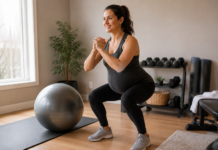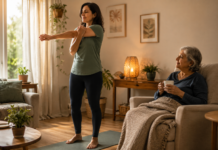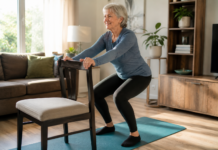

























A well-planned full-body stretching routine is the simplest way to feel looser, move better, and recover faster. This guide gives you 12 precise moves that flow head-to-toe, with timing, regressions, and form cues you can trust. It’s built for everyday people—beginners, weekend warriors, and anyone stiff from work or workouts—who want practical steps rather than generic lists. A full-body stretching routine for flexibility is a sequence of dynamic and static stretches that targets major joints and muscle groups, typically 10–20 minutes total, performed most days of the week. Use dynamic motions at the start to warm tissues, then longer, slower holds to expand range of motion safely. This is educational, not medical advice; if stretches cause sharp pain, stop and speak with a health professional.
At a glance (quick plan):
- Warm up for 2 minutes (gentle marching, arm circles).
- Perform each stretch for 20–30 seconds per side or 5–8 slow breaths; repeat 2–3 rounds for tighter areas.
- Move head-to-toe: neck → upper back → chest/shoulders → lats → wrists → hips → hamstrings → glutes → adductors → calves → ankles/feet.
- Breathe through your nose, exhale slowly; never force a joint past a mild 6–7/10 stretch sensation.
- Total time: 12–20 minutes. Do it 4–7 days/week.
1. Two-Minute Dynamic Warm-Up (March, Arm Circles, Leg Swings)
A smart warm-up raises tissue temperature, lubricates joints, and primes your nervous system so the later static holds feel easier and safer. Begin by marching in place and gently swinging your arms to stimulate circulation without fatigue. Add arm circles to wake up the shoulder girdle and leg swings to mobilize hips without yanking on tight tissues. The goal is not to stretch to end-range yet, but to create smooth, comfortable motion that tells your body, “We’re about to move more.” Keep breathing through your nose and relax your jaw and shoulders. If you sit a lot, think of this as clearing out stiffness from the day before you aim for deeper range.
1.1 How to do it
- 0:00–0:40: March in place, light knee lift, elbows swinging naturally.
- 0:40–1:20: Arm circles: 10 small + 10 large each way.
- 1:20–2:00: Front-to-back leg swings: 10–15 per leg, light tap on support.
1.2 Numbers & guardrails
- Intensity: Easy, 3–4/10 effort.
- Range: Stay within pain-free motion; no ballistic jerks.
- Progression: Add side-to-side leg swings or 5 bodyweight squats.
Finish knowing you’re warmer—not winded—and ready to stretch.
2. Neck & Upper-Back Reset (Chin Tuck + Upper Trap/Levator Scap Combo)
This sequence counters screen-time posture by re-centering the head and easing tension along the tops of your shoulders. Start with a chin tuck to activate deep neck flexors and elongate the back of your neck; then layer gentle upper trapezius and levator scapulae stretches. These are small, precise moves: the aim is subtle decompression, not cranking your head around. By restoring neutral alignment first, your later shoulder and thoracic stretches “stick” better. Expect a sensation of length and space rather than a sharp pull. Keep your ribcage quiet and shoulders down.
2.1 How to do it
- Chin tuck: Stand tall. Glide the chin straight back (like making a “double chin”) for 3–5 seconds; release. Do 6–8 reps.
- Upper trap: Tilt right ear toward right shoulder; gently add right hand over left temple to guide a mild stretch (20–30 sec). Switch sides.
- Levator scap: From ear-to-shoulder position, rotate nose toward armpit; hold 20–30 sec. Switch.
2.2 Common mistakes
- Cranking with the hand; this should be a guide, not a lever.
- Shrugging the stretching-side shoulder.
- Arching the low back or jutting ribs.
End feeling taller through the back of your neck and lighter across the shoulders.
3. Thoracic Spine Opener (Quadruped Thread-the-Needle)
If your mid-back is stiff, shoulder and neck tissues overwork. Thread-the-Needle rotates the thoracic spine while keeping the low back quiet, opening the area most people truly need. The setup on hands and knees keeps the movement controlled and shoulder-friendly. Aim for a slow spiral: reach, breathe, and let the ribs soften. Expect a gentle stretch between shoulder blades and along the back of the rotating shoulder. Improved thoracic mobility also helps overhead positions, rowing, and everyday reaching.
3.1 How to do it
- Start on all fours, wrists under shoulders, knees under hips.
- Slide the right arm palm-up under the torso, reaching across; lower the right shoulder and temple to the floor.
- Keep hips stacked over knees; breathe 5–8 slow breaths.
- Option: Press the left hand into the floor to add a tiny counter-rotation.
- Switch sides.
3.2 Numbers & guardrails
- Holds: 20–40 seconds per side or 5–8 breaths; 1–2 rounds.
- Keep weight mostly through knees/shins; avoid collapsing into the neck.
- Progression: Extend the top arm overhead or anchor it on the low back.
Close by sitting back into Child’s Pose for 20 seconds to let the spine settle.
4. Chest & Front-Shoulder Opener (Doorway Pec Stretch, 90/90)
Rounded shoulders can limit shoulder flexion and create the feeling of a “short” chest. The doorway pec stretch targets pectoralis major/minor and the anterior shoulder capsule to balance all the pulling and pushing of daily life. It’s especially useful if you bench press, cycle, or sit with shoulders forward. Positioning matters: elbows at roughly 90° with forearms on the doorframe places the stretch where most people need it, without torquing the neck. Expect a diffuse stretch across the chest and front-shoulder, not numbness or pins-and-needles.
4.1 How to do it
- Stand in a doorway, forearms vertical on the frame at shoulder height.
- Step one foot forward; gently lean your torso through until you feel a mild stretch.
- Keep ribs down, chin tucked, shoulders away from ears; breathe 5–8 slow breaths.
- Option: Do one side at a time by placing a single forearm on the frame.
4.2 Numbers & common mistakes
- Hold 20–30 seconds; 2–3 rounds.
- Avoid flaring the ribs or collapsing the low back.
- If you feel tingling in the hands/fingers, reduce depth or lower the elbow angle.
You should come out standing taller, with your shoulders set naturally—not yanked back.
5. Lats & Side Body (Overhead Side Bend with Wall Support)
Tight latissimus dorsi and obliques can limit overhead reaching and make your low back compensate. This overhead side-bend uses a wall for balance so you can breathe into the ribs and truly lengthen the side body. It’s a great bridge between thoracic work and shoulder mobility, especially before overhead lifting or swimming. Focus on a long line from wrist to hip, and think “reach and breathe” rather than “crunch and crank.” The sensation should be broad along the side, not sharp in the low back.
5.1 How to do it
- Stand side-on to a wall, inside foot about 30–45 cm (12–18 in) from the wall.
- Place the inside hand on the wall for light balance. Reach the outside arm overhead and side-bend toward the wall.
- Keep hips stacked, ribs knitted; breathe into the outside ribs for 5–8 breaths.
- Switch sides.
5.2 Numbers & guardrails
- Hold 20–40 seconds; 1–2 rounds per side.
- If you feel low-back compression, ease off and engage your glutes lightly.
- Progression: Cross the outside foot behind the inside foot to increase the line of stretch.
Finish feeling more space overhead and less tug on the low back when you reach.
6. Wrists & Forearms (Flexor/Extensor Stretch, Desk-Safe)
Your wrists pay the price for keyboards, phones, and push-ups. Balancing flexor and extensor tissues restores comfortable extension for planks and better grip for pulling. The key is gentle, patient holds—these small structures respond to low-intensity, longer-breathing stretches. You should feel a smooth pull in the forearm, never joint pain in the wrist. Keep shoulders relaxed, and imagine lengthening from elbow to fingertips. This is one move where “less is more” truly applies.
6.1 How to do it
- Flexor stretch: Extend one arm palm-up, elbow straight; with the other hand gently pull the fingers back toward you. Hold 20–30 sec.
- Extensor stretch: Extend arm palm-down; gently flex the wrist by pulling knuckles toward you. Hold 20–30 sec.
- Switch arms.
6.2 Mini-checklist
- Elbow stays straight to bias the forearm muscles.
- Shoulders down; no shrugging.
- Sensation in muscle belly, not in the joint.
End with a few wrist circles to reintroduce comfortable motion.
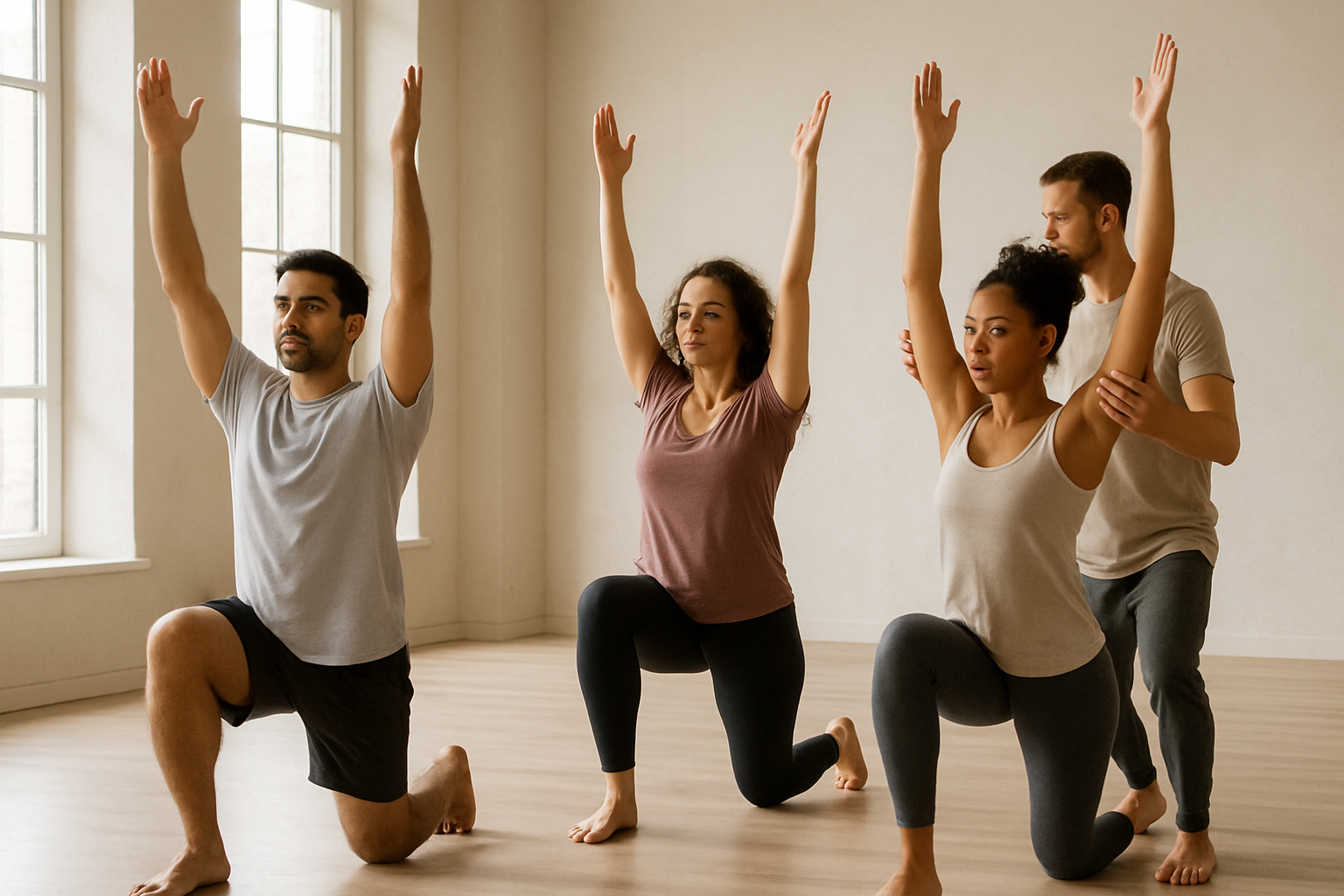
7. Hip Flexor Reset (Half-Kneeling Lunge with Posterior Pelvic Tilt & Reach)
If you sit a lot, your hip flexors often feel short, tugging the pelvis into anterior tilt and stressing the low back. The half-kneeling hip flexor stretch corrects this by using a posterior pelvic tilt (PPT)—think “tuck your tail”—to bias the front of the hip rather than the low back. Add a same-side arm reach to involve the psoas and rectus femoris lines. Expect a front-of-hip stretch on the kneeling side; if you feel it in your back, reset your tuck. Keep the ribs quiet and glute of the kneeling leg lightly engaged.
7.1 How to do it
- Kneel on a pad with the right knee down, left foot forward.
- Tuck your tail (PPT) and squeeze the right glute lightly.
- Shift hips just a few centimeters forward while maintaining the tuck.
- Reach the right arm up and slightly across; breathe 5–8 slow breaths.
- Switch sides.
7.2 Numbers & guardrails
- Hold 20–40 seconds per side; 2 rounds.
- Intensity: 6–7/10 stretch sensation; no pinching.
- Progression: Elevate the rear foot on a low step or add a gentle side-bend away from the kneeling side.
You’ll finish standing taller with less hip-front tension and a quieter low back.
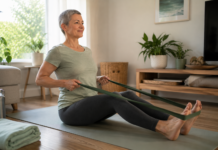
8. Hamstring Length (Supine Strap Stretch with Optional PNF)
Hamstrings often feel “tight” from prolonged sitting or from protective guarding rather than true shortness. The supine strap stretch unloads the spine and isolates the hamstrings safely. Using a strap (or towel) around the mid-foot prevents toe gripping and helps keep the knee straight. Adding an optional PNF contract-relax (light hamstring contraction against the strap) can create a noticeable short-term increase in range. Expect a line of stretch along the back of the thigh—not behind the knee.
8.1 How to do it
- Lie on your back; loop a strap around the middle of the right foot.
- Keep the left leg long on the floor. Straighten the right knee and lift the leg until you feel a mild stretch.
- Breathe 5–8 slow breaths, gently drawing the leg closer as the tissue relaxes.
- Optional PNF: Press the heel lightly into the strap for 5 seconds (about 30–40% effort), then relax and take up slack.
8.2 Numbers & guardrails
- Hold 20–30 seconds; 2–3 rounds per side.
- Avoid locking or hyperextending the knee.
- Progression: Place the down leg on a small cushion to control pelvic tilt or add a slight ankle dorsiflexion to bias the posterior chain.
You should stand up feeling longer through the back of the thigh without tugging your low back.
9. Glute & Piriformis Ease (Supine Figure-4 or Chair Version)
Deep gluteal tissues, including the piriformis, can feel guarded after long sitting or heavy lifting. The figure-4 externally rotates the hip to open the back of the pelvis. Lying supine supports the spine; a chair version works well if getting to the floor is difficult. The right sensation is a deep, broad stretch in the buttock of the crossed-leg side, not a pinch in the groin. Slow breathing helps the hip capsule relax and accept the new position.
9.1 How to do it
- Floor: Lie on your back; cross the right ankle over the left knee (figure-4). Thread your hands behind the left thigh; draw the legs toward you.
- Chair: Sit tall; place right ankle over left knee; hinge forward from the hips while keeping a long spine.
- Hold 20–40 seconds; switch sides.
9.2 Common mistakes & fixes
- Mistake: Rounding the low back. Fix: Keep a slight arch and hinge at the hips.
- Mistake: Pulling only with arms. Fix: Think “knee moves away from chest” to externally rotate the hip.
- Mistake: Numbness/tingling. Fix: Reduce depth; choose chair version.
Expect a satisfying release deep in the hip and easier step-ups or squats afterward.
10. Adductors/Groin (Cossack Lunge Stretch—Dynamic to Static)
Inner-thigh adductors are crucial stabilizers yet often neglected. The Cossack blends dynamic movement with end-range holds, building usable mobility for lateral steps, skating motions, and change-of-direction sports. Start shallow and smooth; your goal is to feel length along the straight leg’s inner thigh while maintaining a tall chest. This move teaches your hips to load laterally (sideways) with control, which carries over to everything from trail walking to tennis.
10.1 How to do it
- Stand with feet wider than shoulders, toes turned out slightly.
- Shift your weight to the right, bending the right knee and keeping the left leg straight; sit back into the right hip.
- Keep the chest lifted and both heels heavy; reach arms forward for balance.
- Pulse gently 6–8 times, then hold the bottom for 15–20 seconds.
- Switch sides.
10.2 Numbers & guardrails
- Depth is limited by heel contact and spine neutrality.
- 1–2 rounds per side; intensity 6–7/10 stretch sensation.
- Progression: Elevate the heel of the bending leg or hold a light counterweight (e.g., small dumbbell) to help you sit back.
You’ll finish with stronger side-to-side control and a clear stretch across the inner thigh.
11. Calf Complex (Wall Calf Stretch—Gastrocnemius & Soleus)
Your calves cross the ankle and, for the gastrocnemius, the knee—so different knee angles bias different tissues. Tight calves can limit a deep squat and strain the plantar fascia. The wall calf stretch lets you bias gastrocnemius with a straight knee and soleus with a bent knee, covering both. Keep the heel glued down and aim for a smooth pull in the belly of the calf; avoid any pinching at the front of the ankle. Controlling the arch of your foot (no collapsing) gives even better results.
11.1 How to do it
- Face a wall; place right toes on the wall or a wedge, heel on the floor.
- Gastrocnemius: Keep the right knee straight; lean toward the wall. Hold 20–30 sec.
- Soleus: Bend the right knee and lean in again, keeping the heel down. Hold 20–30 sec.
- Switch legs.
11.2 Mini-checklist
- Hips square, heel heavy, toes relaxed.
- Don’t let the arch collapse; think “tripod foot.”
- Progression: Add a gentle dorsiflexion pulse (micro bend/straighten) at end-range.
Expect smoother ankle motion and less heel-cord tug when you walk or squat.
12. Ankles & Feet (Knee-to-Wall Ankle Mobilization + Plantar Fascia)
Strong, mobile ankles keep force traveling smoothly from the ground up. Knee-to-wall mobilization builds dorsiflexion (knee tracking over toes) while anchoring the heel, and a short plantar fascia release rounds out the routine for feet that spend long hours in shoes. Move slowly and use the wall as a reference for measurable progress—mark the distance from big toe to wall that you can touch without the heel lifting. This combines well with calf work and pays off in running, squatting, and balance tasks.
12.1 How to do it
- Knee-to-wall: Stand facing a wall with the right big toe 5–10 cm (2–4 in) away. Drive the right knee toward the wall without lifting the heel. If it touches easily, slide the foot back 1–2 cm and repeat. Do 8–12 smooth reps; switch sides.
- Plantar fascia: Sit and cross the right ankle over the left knee; gently extend the toes back and massage the arch with your thumb for 30–45 seconds; switch sides.
12.2 Numbers & guardrails
- Aim for knee-to-wall distance symmetry side-to-side within ~1–2 cm.
- No front-of-ankle pinching; back off if present.
- Progression: Add a 10–15 second isometric calf press into a strap at end-range.
End feeling grounded through your feet and free through your ankles.
FAQs
1) How long should a full-body stretching routine take?
For most people, 12–20 minutes covers all major areas. Spend 20–30 seconds per stretch or 5–8 calm breaths; add a second or third round only for persistently tight regions. If time-crunched, pick 6–8 moves that target your personal bottlenecks (e.g., hip flexors, hamstrings, calves) and rotate others across the week.
2) What’s the best time of day to stretch?
Any time you’ll actually do it. Many feel looser later in the day after moving around, which makes static holds more comfortable. In the morning, emphasize gentle dynamic motions first, then shorter holds. Before sports, focus mostly on dynamic mobility; after workouts or on rest days, use longer static holds.
3) Dynamic vs static stretching—when should I use each?
Dynamic stretching warms tissues and rehearses movement patterns—best before activity. Static holds are better after activity or as a stand-alone session to expand range. If you must static-stretch before performance, keep holds short (≈20–30 seconds) and follow with a few activation drills to restore snap.
4) Should stretching hurt?
No. You’re aiming for a mild-to-moderate stretch sensation (around 6–7/10), never sharp pain, numbness, or tingling. Pain often triggers guarding, which fights range gains. Ease into the stretch, breathe, and let the tissue “melt.” If symptoms persist, stop and consult a clinician.
5) How often should I do this routine?
Most people benefit from 4–7 days per week. Consistency matters more than marathon sessions. Small daily doses (10–15 minutes) accumulate and stick better than once-a-week 45-minute efforts. Track what feels better—sleep, squats, desk comfort—and adjust dosage.
6) Can older adults follow these moves safely?
Yes, with conservative ranges and support (chair, wall, cushions). Older adults may benefit from slightly longer holds (30–60 seconds) and slower transitions. The key is comfort and balance: prioritize safety, use supports, and avoid positions that strain the neck or low back.
7) Is PNF stretching safe to do alone?
A gentle contract-relax (30–40% effort for ~5 seconds followed by a deeper exhale) is safe for most healthy adults when performed without straining or breath-holding. Avoid maximal pushes, and skip PNF around recent surgeries, acute strains, or joint instability unless cleared by a professional.
8) Does stretching prevent injuries?
Stretching improves flexibility and movement options; whether it prevents all injuries is context-dependent. As part of a broader plan (sleep, load management, technique, strength), it can reduce certain stiffness-related issues. Warm-ups that include dynamic motions and sport-specific drills have the strongest preventive effect.
9) How do I know I’m making progress?
Use simple checkpoints: knee-to-wall ankle distance, ability to reach overhead without rib flare, or hamstring strap angle measured against a doorframe. Note daily comfort—getting in/out of a car, squatting to pick something up, or walking briskly without tugging calves.
10) What equipment do I need?
A doorframe, wall, a towel or strap, and a pad for your knee are enough. Yoga blocks or a small wedge can make positions more comfortable. Shoes off is ideal for foot and ankle work, but wear sneakers if a bare floor is slippery or cold.
11) Can I replace this with yoga?
Yoga can absolutely build flexibility and control. This routine simply organizes mobility work into a short, repeatable sequence you can plug in daily. If you already practice yoga, consider using these moves as a warm-up or to target areas your practice doesn’t currently address.
12) What if I feel pinching instead of stretch?
Pinching (especially at the front of the hip or ankle) suggests joint compression or poor alignment. Back out, adjust angles (e.g., add a posterior pelvic tilt for hip flexor work), or choose a regression (chair figure-4, shallower Cossack). Stretches should feel spacious, not jammed.
Conclusion
Flexibility isn’t about forcing the deepest position—it’s about teaching your body to trust new ranges with calm breathing, smart alignment, and repeatable practice. This 12-move sequence flows from dynamic warm-up to precise static holds so your joints feel prepared, not pried open. You learned how to set angles that bias the right tissues (like PPT for hip flexors), pair breath with gradual depth, and use progressions that make sense for real life (kneeling pads, wall support, short PNF). Done 4–7 days per week, it’s long enough to matter yet short enough to stick. Start with the areas that most limit your day, add a round where you need more change, and track easy markers like ankle-to-wall distance or an overhead reach that no longer tugs. Consistency builds capacity. Roll out a mat tonight, pick your start time for tomorrow, and let your body discover how good smooth motion can feel—begin your 12-move routine today.
References
- Guidelines on Physical Activity and Sedentary Behaviour — World Health Organization (2020). https://www.who.int/publications/i/item/9789240015128
- Physical Activity Guidelines for Americans, 2nd ed. — U.S. Department of Health & Human Services (2018). https://health.gov/sites/default/files/2019-09/Physical_Activity_Guidelines_2nd_edition.pdf
- ACSM’s Guidelines for Exercise Testing and Prescription, 11th ed. — American College of Sports Medicine (2021). https://global.oup.com/academic/product/acsms-guidelines-for-exercise-testing-and-prescription-9781975150181
- Behm, D.G., et al. Acute effects of muscle stretching on physical performance, range of motion, and injury incidence in healthy active individuals: a systematic review. Applied Physiology, Nutrition, and Metabolism (2016). https://cdnsciencepub.com/doi/10.1139/apnm-2015-0235
- Kay, A.D., & Blazevich, A.J. Effect of acute static stretch on maximal muscle performance: a systematic review. Scandinavian Journal of Medicine & Science in Sports (2012). https://onlinelibrary.wiley.com/doi/10.1111/j.1600-0838.2012.01444.x
- How to stretch after exercise — National Health Service, UK (page reviewed 2023). https://www.nhs.uk/live-well/exercise/how-to-stretch-after-exercise/
- Stretching to prevent or reduce muscle soreness after exercise (Review) — Cochrane (Herbert et al., 2011). https://www.cochranelibrary.com/cdsr/doi/10.1002/14651858.CD004577.pub3/full
- The importance of stretching — Harvard Health Publishing (updated 2022). https://www.health.harvard.edu/staying-healthy/the-importance-of-stretching
- Flexibility: Benefits, stretching types, and how to stretch — Mayo Clinic (updated 2024). https://www.mayoclinic.org/healthy-lifestyle/fitness/in-depth/stretching/art-20047931
- Exercise for healthy aging: flexibility training — American Council on Exercise (n.d.). https://www.acefitness.org/resources/everyone/blog/7634/flexibility-exercise-for-healthy-aging/