

























Cooking releases real pollutants indoors, but which ventilation habit you use matters more than most people realize: a properly used range hood over a back burner captures about 80% of emissions, while the same hood over a front burner captures roughly half. Research estimates 22 million Americans breathe unsafe nitrogen dioxide levels from gas stove cooking alone.
By Rowan P. Briarwick
Who This Matters Most For
This is for anyone who cooks regularly at home and has a gas or propane stove, and especially for households with children, anyone with asthma or another respiratory condition, and anyone living in a smaller home where cooking pollutants have less room to dilute. It’s also relevant if you cook on electric or induction, since particulate matter from frying, searing, and high-heat cooking isn’t a gas-only problem.
If you already run a properly vented range hood every time you cook and use your back burners when possible, most of what follows will confirm good habits. This is written for the much larger group whose hood, if they have one, mostly stays off.
It’s also relevant if you’ve recently moved into a home with different kitchen equipment than what you’re used to, since a lot of ventilation habits are built around whatever setup someone grew up with or had in a previous home. A hood that vents outdoors behaves very differently from one that simply recirculates air, and it’s easy to carry old habits into a kitchen where they don’t work the same way.
A note on scope: This is educational information about general household air quality, not personalized medical advice. If you or someone in your household has asthma, COPD, or another chronic respiratory condition, ask a clinician what precautions apply specifically to you.
What’s Actually in Cooking Emissions
Gas and propane stoves burn fuel indoors, and combustion produces nitrogen dioxide (NO2) as a direct byproduct, even when a flame is burning cleanly and correctly. A 2025 Stanford-led study found that gas and propane stove use pushes roughly 22 million Americans past long-term NO2 safety thresholds, concentrated in smaller homes and rural areas where pollutants have less space to dilute. The same research found that for many households, indoor NO2 exposure from stove cooking rivals or exceeds their total outdoor exposure from every source combined.
Cooking method matters too, independent of fuel type. Frying, searing, and other high-heat techniques release fine and ultrafine particulate matter regardless of whether the heat source is gas, electric coil, or induction. That’s why ventilation habits matter for every kitchen, even one that’s already switched away from gas. A household that swapped its gas range for an induction cooktop but never developed a ventilation habit still faces meaningful particulate exposure from regular high-heat cooking, just without the added NO2 component.
Americans over safe NO2 thresholds from gas stoves
Of US childhood asthma linked to gas stove use
Capture efficiency, good hood + back burner
Capture efficiency, same hood + front burner
Sources: Stanford-led study, 2025; population attributable fraction study, 2023; Lawrence Berkeley National Laboratory hood testing.
How Much Does Range Hood Design Actually Matter?
A lot, and more than most people expect. Researchers at Lawrence Berkeley National Laboratory tested seven range hood models under real cooking conditions and found capture efficiency ranging from under 15% to over 98%, depending on hood design, fan speed, and which burner was in use.
| Condition | Typical Capture Efficiency |
|---|---|
| Code-compliant hood, back burner | About 80% or greater |
| Code-compliant hood, front burner | About 50% or greater |
| Code-compliant hood, oven use | About 60% or greater |
| ENERGY STAR-rated hood, front/oven burners | Often under 30% |
That last line is worth sitting with: an efficiency rating designed around energy use doesn’t guarantee strong pollutant capture, and the two goals can pull in different directions. The practical lesson isn’t “buy the most expensive hood,” it’s that burner choice and consistent use matter as much as, or more than, the hood model itself.
The Health Research, in More Detail
A 2023 population attributable fraction study estimated that 12.7% of current childhood asthma cases in the United States, with a 95% confidence interval of 6.3% to 19.3%, are attributable to gas stove use. The estimate was built from a meta-analysis odds ratio of 1.34 for gas cooking and childhood asthma, combined with national housing survey data on how many children live in homes with gas stoves.
A separate 2024 study published in Science Advances, co-authored by Harvard T.H. Chan School of Public Health researcher Kari Nadeau, linked gas stove NO2 exposure to roughly 50,000 current childhood asthma cases nationally, with the researchers noting the total could reach 200,000 cases when accounting for other pollutants gas stoves emit. Nadeau’s team concluded there’s “no safe amount of exposure” to these combustion byproducts. The same research found exposure isn’t distributed evenly: households in homes under 800 square feet face roughly four times the long-term NO2 exposure of households in homes over 3,000 square feet, and American Indian and Alaska Native households face 60% higher exposure than the national average.
A Ventilation Hierarchy: What Actually Works Best
A recirculating hood, common in apartments and older homes, filters air and sends it back into the kitchen rather than venting it outside. It’s better than nothing for grease and odor, but it doesn’t remove NO2 or fine particulate matter the way an outdoor-vented hood does, since it never actually expels the polluted air from the home.
How Cooking Compares to Other Indoor Air Sources
Cooking isn’t the only source of indoor air pollution, but it’s one of the most frequent and controllable ones, since it happens daily and responds directly to habits rather than requiring a renovation.
| Indoor Source | Typical Frequency | How Controllable |
|---|---|---|
| Gas or propane stove cooking | Daily, often multiple times | High, through ventilation habits and burner choice |
| Candles and incense | Occasional | High, by reducing frequency or switching products |
| Wood-burning fireplace | Seasonal | Moderate, depends on ventilation and how often it’s used |
| Household cleaning products | Weekly | High, through product choice and ventilation during use |
The daily frequency of cooking is exactly why small ventilation habits compound. A change that shaves even a modest amount of exposure off one cooking session adds up meaningfully across hundreds of sessions a year.
Mini-Glossary
NO2 (nitrogen dioxide): A gas produced by combustion, including gas and propane stove burners, linked to respiratory irritation and worsened asthma.
PM2.5: Fine particulate matter small enough to reach deep into the lungs, produced by frying, searing, and other high-heat cooking regardless of fuel type.
Capture efficiency: The percentage of cooking pollutants a range hood actually removes from the kitchen, as opposed to what escapes into the rest of the home.
Recirculating hood: A hood that filters air and returns it to the kitchen rather than venting it outdoors; useful for grease and odor but doesn’t remove NO2.
The Household Cooking-Ventilation Protocol, Step by Step
- Turn the hood on before you start cooking, not partway through. Pollutant levels rise fastest in the first few minutes over high heat.
- Use back burners whenever the recipe allows it. The capture-efficiency gap between back and front burners is large enough to matter on its own.
- Leave the hood running for 10 to 20 minutes after you finish cooking. Pollutant levels don’t drop to baseline the moment the burner turns off.
- Open a window when weather and safety allow it, even alongside a running hood, since cross-ventilation helps clear whatever the hood misses.
- Keep the grease filter clean. A clogged filter measurably reduces airflow and capture efficiency, even on a well-designed hood.
Building the Habit: A Two-Week Starter Plan
| Week | Focus |
|---|---|
| Week 1 | Turn the hood on before cooking every time, and leave it running until 10 to 20 minutes after you finish. This is the single highest-impact habit to lock in first. |
| Week 2 | Add back-burner use whenever a recipe allows it, and open a window during cooking when weather permits. By the end of week two, both habits should feel automatic rather than effortful. |
Sequencing it this way, rather than trying to change everything at once, tends to make the habits stick. The hood-timing habit alone captures a meaningful share of the available benefit, which makes it a reasonable place to start even for a household not ready to change every cooking routine at once.
Adapting the Plan for Common Constraints
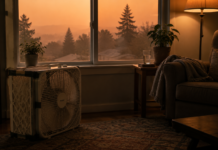
No outdoor-vented hood available. A window fan or portable exhaust fan positioned to pull air out of the kitchen, combined with an open window on the opposite side of the room for cross-ventilation, is a meaningful substitute. It won’t match a good range hood, but it’s far better than a closed, unventilated kitchen.
Renters with a recirculating-only hood. Running it anyway still helps with grease and odor, and pairing it with an open window during and after cooking captures more of the actual pollutant load than the hood alone.
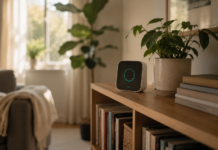
Apartments without operable windows in the kitchen. A portable air cleaner that doesn’t generate ozone, run during and after cooking, and the highest-rated MERV filter your HVAC system can accommodate, both help reduce what lingers in the air afterward.
Tight budgets. The single most effective free change is simply using back burners and running whatever ventilation you already have consistently, since the biggest capture-efficiency gains in the research came from usage habits, not equipment upgrades.
What About Air Fryers and Other Countertop Appliances?
Countertop appliances like air fryers, toaster ovens, and electric griddles avoid the NO2 emissions specific to gas combustion, and research comparing cooking methods has found air frying tends to produce less particulate matter than pan-frying or deep-frying on a stovetop. That makes them a reasonable lower-emission option for some meals, though they’re not a full substitute for ventilation habits.
Countertop appliances are typically used away from the range hood’s coverage area, so any particulate matter they do generate has less chance of being captured at all. If you use one regularly, running a kitchen exhaust fan or opening a nearby window during use extends at least some ventilation benefit to that part of the kitchen.
Evidence Strength, Claim by Claim
Strong: gas and propane stoves emit NO2 during combustion; range hood capture efficiency varies substantially by burner position and hood design.
Moderate: the specific 12.7% childhood asthma attributable fraction, since it’s a modeled estimate with a wide confidence interval (6.3% to 19.3%), not a direct measurement.
Developing: exact long-term health outcomes from moderate, well-ventilated gas stove use, since most of the strongest evidence concerns heavier, poorly ventilated exposure.
Who Is Most at Risk?
| Group | Why the Risk Is Higher |
|---|---|
| Children | Developing lungs; higher relative exposure per pound of body weight in a given kitchen |
| People with asthma or COPD | NO2 and particulate matter are documented triggers for worsened respiratory symptoms |
| Residents of homes under 800 sq ft | Roughly 4x the long-term NO2 exposure of residents in homes over 3,000 sq ft, per Harvard-affiliated research |
| Anyone who cooks frequently at high heat | Frying and searing generate more particulate matter regardless of fuel type |
| Pregnant people | NO2 exposure has been linked to preterm birth risk in the research reviewed above |
Worked Example: A Family in a Small Apartment
Consider a family of four in a 700-square-foot apartment with a gas stove and a recirculating-only hood. Their plan: cook on back burners whenever possible, run the hood every time regardless of its limited filtering, crack the kitchen window during and for 15 minutes after cooking, and run a small ozone-free air purifier on the counter during dinner prep.
Total added cost: the air purifier runs $60 to $100 as a one-time purchase. Total added routine: opening one window and pressing one button before starting to cook. None of it requires replacing the stove or the hood, and it directly targets the two factors, burner position and post-cooking ventilation time, that the research shows matter most.
Mistakes That Undermine an Otherwise Good Plan
| Mistake | Why It Backfires |
|---|---|
| Turning the hood off the moment the burner goes off | Pollutant levels stay elevated for 10 to 20 minutes after cooking ends |
| Defaulting to front burners out of habit | Cuts capture efficiency roughly in half compared to back-burner cooking under the same hood |
| Never cleaning the grease filter | Reduced airflow measurably lowers capture efficiency, even on a well-rated hood |
| Assuming a recirculating hood works the same as an outdoor-vented one | It filters some particles and odor but never actually removes NO2 from the home |
What Building Scientists Do Differently
Researchers who study indoor air quality professionally treat cooking ventilation as a usage problem as much as an equipment problem. A high-end hood run at low speed over a front burner can underperform a modest hood run at full speed over a back burner, so they focus recommendations on habits: burner choice, fan speed, and duration, rather than assuming a hardware upgrade alone solves the issue.
They also account for how unevenly this risk falls. Because smaller homes concentrate pollutants faster and lower-income households are statistically more likely to live in smaller units with older, less effective ventilation equipment, the same cooking session can represent meaningfully different exposure depending on where it happens. That’s part of why the recommended fixes emphasize free or low-cost habit changes, like burner position and post-cooking run time, that any household can use regardless of what equipment they have.
This is also why public health messaging on cooking ventilation has shifted in recent years toward habit-focused advice rather than equipment-focused advice alone. Telling every household to install a new outdoor-vented hood ignores that renters, apartment dwellers, and budget-constrained households often can’t make that change, while burner position and hood run time are available to nearly everyone regardless of what kitchen they’re working with.
Copy-Ready Cooking Ventilation Checklist
- ☐ Turn on the range hood before you start cooking, not after
- ☐ Use back burners whenever the recipe allows it
- ☐ Leave the hood running 10 to 20 minutes after cooking finishes
- ☐ Open a window during and after cooking when weather permits
- ☐ Clean the grease filter regularly to maintain airflow
- ☐ If your hood only recirculates, pair it with a window or portable exhaust fan
- ☐ Consider an ozone-free portable air cleaner in kitchens without outdoor venting
Safety Limits and When to Seek Help
Persistent headaches, unexplained fatigue, or a chronic cough that improves when you’re away from home can be signs of ongoing NO2 or particulate exposure worth discussing with a clinician, especially in a household that cooks frequently with limited ventilation. These are general warning signs, not a diagnosis.
If you or a household member has asthma or COPD and notices symptoms worsening around cooking times specifically, mention this pattern to your provider. It’s a useful clue even though only a clinician can determine the cause.
Key Takeaways
- Roughly 22 million Americans breathe unsafe NO2 levels from gas stove cooking alone.
- A good hood over a back burner captures about 80% of emissions; the same hood over a front burner captures about half.
- An estimated 12.7% of current US childhood asthma is attributable to gas stove use.
- Smaller homes concentrate cooking pollutants faster, with up to 4x the long-term exposure of larger homes.
- Recirculating hoods reduce grease and odor but don’t remove NO2 from the home.
- Running the hood 10 to 20 minutes after cooking matters as much as running it during cooking.
- Usage habits, burner choice and run time, often matter more than which hood you own.
Frequently Asked Questions
Is cooking on a gas stove actually dangerous?
Gas stoves release nitrogen dioxide and other combustion byproducts even when working correctly, and research links this exposure to childhood asthma, COPD, and other respiratory effects. The risk is meaningfully reduced, though not eliminated, by consistent, effective ventilation.
Does an electric or induction stove eliminate cooking-related air pollution?
It eliminates the combustion byproducts specific to gas and propane, like NO2, but frying, searing, and other high-heat cooking still release particulate matter regardless of fuel type. Ventilation habits remain useful even after switching to electric or induction.
Does it really matter which burner I cook on?
Yes, significantly. Lawrence Berkeley National Laboratory testing found code-compliant hoods capture roughly 80% of emissions from back burners but only about 50% from front burners, since front burners sit further from the hood’s intake.
Is a recirculating range hood worth using if it doesn’t vent outside?
It’s worth running for grease and odor control, but it doesn’t remove nitrogen dioxide from the home since the filtered air stays indoors. Pairing it with an open window or portable exhaust fan meaningfully improves on a recirculating hood alone.
How long should I run the range hood after I finish cooking?
The EPA recommends leaving the hood on for 10 to 20 minutes after cooking ends, since pollutant levels don’t return to baseline the moment the burner is turned off.
Are children more affected by cooking emissions than adults?
Yes. Children have developing lungs and higher relative exposure per pound of body weight in the same kitchen air, which is part of why childhood asthma has been a specific focus of gas stove emissions research.
What can I do if I rent and can’t install a better range hood?
Use back burners, run whatever hood or fan you have consistently, open a window during and after cooking when possible, and consider a portable, ozone-free air cleaner. These habit-based changes capture much of the available benefit without any permanent modification.
References
- Stanford-led study on gas and propane stove nitrogen dioxide exposure, 2025.
- Science Advances, Harvard T.H. Chan School of Public Health-affiliated research on gas stove NO2 and childhood asthma, 2024.
- “Population Attributable Fraction of Gas Stoves and Childhood Asthma in the United States,” International Journal of Environmental Research and Public Health, 2023.
- Lawrence Berkeley National Laboratory, residential cooking exhaust hood capture efficiency testing.
- U.S. Environmental Protection Agency, “Strategies for Improving Indoor Air Quality While Cooking.”