


























Reducing dust and allergen load at home means combining four proven levers: keeping relative humidity in the 30-50% range, encasing mattresses and pillows, vacuuming weekly with a sealed HEPA system, and washing bedding in water at least 130°F. No single step fixes everything, but the four together reliably lower exposure.
By Emily Harrison
Who This Is For
This guide is for anyone who wakes up congested, notices a sneezing fit within minutes of sitting on the couch, or has a household member with diagnosed dust mite, pet dander, or pollen sensitivity and wants a practical plan for the home itself, not just symptom management. It’s written for renters and homeowners alike, since almost everything here works without renovation: a hygrometer, mattress and pillow encasements, a vacuum, laundry habits, and a cleaning schedule. It’s also useful for people without a formal allergy diagnosis who simply want to cut down on household dust for comfort. It is not written for people managing an active mold infestation, a pest infestation, or a home with structural moisture damage, all of which need remediation beyond routine cleaning, and it is not a substitute for a clinical allergy diagnosis.
A note on scope: This article covers home-based strategies for reducing dust mite, pet dander, and pollen exposure indoors, drawing on guidance from the EPA, CDC/ATSDR, and peer-reviewed allergy research. It does not cover diagnosing an allergy, prescribing medication or immunotherapy, or remediating mold, pest, or structural moisture problems, which require a clinician or licensed contractor. Nothing here should be treated as a substitute for advice from a physician or board-certified allergist, particularly for anyone managing asthma alongside allergy symptoms.
Understanding What’s Actually in Your Household Dust
“Dust” is a catch-all term for a mixture that includes shed human and pet skin cells, textile fibers, soil particles, pollen grains, insect fragments, and the microscopic mites that feed on all of it. According to StatPearls, a peer-reviewed clinical reference maintained through the National Library of Medicine and revised in August 2023, house dust mites are present in roughly 84% of U.S. households, and dust mite allergy affects an estimated 20 million people in the United States, per the Asthma and Allergy Foundation of America’s (AAFA) Allergy Facts and Figures report, updated April 2026. The mites themselves, mainly Dermatophagoides pteronyssinus and Dermatophagoides farinae, measure about 0.4 millimeters and are invisible without magnification. They don’t bite or sting; the allergic reaction comes from proteins in their fecal pellets and body fragments, chiefly an enzyme called Der p 1 (from D. pteronyssinus) or Der f 1 (from D. farinae). StatPearls notes that 97% of people with a dust mite allergy are sensitized specifically to Der p 1.
Pet dander works differently. It isn’t hair itself but flecks of skin, along with proteins from saliva and urine that dry and become airborne, chiefly Fel d 1 from cats and Can f 1 from dogs. The American College of Allergy, Asthma and Immunology (ACAAI) notes that cat dander is unusually small and light, which means it “remains airborne for at least 30 minutes after you disturb it in the room,” longer than most other household particles. That size also explains a counterintuitive finding cited in the Institute of Medicine’s Clearing the Air report: a Baltimore-area study detected settled cat allergen in dust samples from 38 of 40 homes that had never had a cat, likely carried in on clothing from other cat-owning environments. The same report found dog allergen in more than half of a separate set of homes surveyed.
Pollen enters through a third route. A June 2023 review in Allergo Journal International on indoor allergenic pollen found that grains mostly enter through open windows and doors or get carried in on clothing and shoes, and that because pollen grains are relatively large, they “rapidly settle on indoor surfaces” rather than staying airborne, though some grass and birch pollen can fragment into smaller particles that linger longer. The same review notes that people spend an estimated 80-90% of their time indoors, which means even pollen that settles quickly still accounts for meaningful exposure once it’s tracked in repeatedly across a pollen season.
| Allergen Source | Where It Concentrates | Behavior | Primary Reduction Lever |
|---|---|---|---|
| Dust mites (Der p 1 / Der f 1) | Mattresses, pillows, carpets, upholstered furniture | Heavier particles that settle quickly; require disturbance (sitting, vacuuming) to become airborne | Humidity control below 50%, encasements, hot-water washing |
| Cat dander (Fel d 1) | Airborne broadly, plus soft furnishings, clothing, carpet | Very small, light particles; stays airborne 30+ minutes after disturbance | HEPA air filtration, bedroom exclusion, frequent vacuuming |
| Dog dander (Can f 1) | Similar to cat dander, plus saliva on furniture and toys | Moderately airborne; persists in dust and fabric for weeks after exposure | Regular bathing, HEPA vacuuming, washing pet bedding weekly |
| Pollen | Entryways, floors near doors, window sills | Large grains that settle fast; some fragments (grass, birch) stay airborne longer | Shoes-off policy, door mats, closed windows during peak season |
| General household dust | Everywhere; heaviest on horizontal surfaces and in HVAC ducts | Mixed particle sizes; resettles after cleaning if not captured, not just moved | Damp-dusting, HEPA vacuuming, HVAC filter maintenance |
The Humidity Lever: Why It Matters More Than Most People Realize
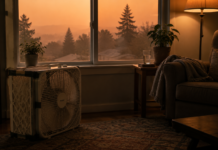
Of every variable covered in this guide, relative humidity is the one with the clearest research backing, largely because dust mites can’t drink water the way most insects do. They absorb moisture directly from the surrounding air through specialized glands, which means their survival depends almost entirely on ambient humidity rather than food or temperature alone. Research summarized by Lawrence Berkeley National Laboratory’s Indoor Air Quality Scientific Findings Resource Bank, citing entomologist Larry Arlian’s water-balance research from 1992 and follow-up studies through 2001, found that when relative humidity is maintained below the 40% to 50% range for a prolonged period, dust mites die off. ACAAI’s dust allergy page, reviewed in February 2018, is more specific still: mites thrive at temperatures around 70°F with humidity between 75% and 80%, and populations decline once humidity drops below 50%.
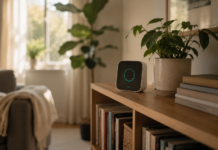
This is why a $15-20 digital hygrometer is arguably the single most useful purchase in this entire process, more useful than most air purifiers. Guessing at humidity is unreliable; a room can feel comfortable at 60% relative humidity, well within the range where mites reproduce. The EPA’s own Care for Your Air guide, updated September 2025, recommends keeping indoor humidity “between 30 and 50 percent” as a general target that also helps prevent mold growth. A 1995 study by Cabrera and colleagues, cited in the same LBL research summary, found that dehumidifier use measurably reduced house dust mite allergen levels in homes, reinforcing that this isn’t a theoretical relationship but one that shows up in actual allergen sampling.
Two mistakes show up repeatedly in this range. The first is running a humidifier through the winter without checking a hygrometer, which in already-humid climates can push a bedroom past 50% and directly favor mite reproduction. The second is over-correcting with a dehumidifier to the point of dropping below 30%, which the EPA guidance and general indoor air quality practice both associate with dry, irritated airways and static-related discomfort, not just mite control. The target band is a range, not a single number to chase downward indefinitely.
A 7-Step Plan to Reduce Dust and Allergen Load at Home
The steps below are ordered deliberately. Earlier steps address the biggest, cheapest wins and set up the conditions that make later steps more effective; skipping ahead to buy an air purifier before fixing humidity, for instance, means paying to filter a problem that a $20 hygrometer and a dehumidifier could have prevented in the first place.
Step 1: Identify Your Actual Allergen Sources
Before buying anything, spend a week noting when symptoms flare: right after waking (points toward bedding and mattress), after vacuuming or dusting (points toward general dust and possibly a leaky vacuum), near a pet or on soft furniture (points toward dander), or worse with windows open during a specific season (points toward pollen). If symptoms are significant or unclear, a board-certified allergist can run a skin-prick or specific IgE blood test to confirm exactly which allergens you’re reacting to, which prevents spending money on interventions aimed at the wrong source.
Step 2: Set Up a Hygrometer and Target 30-50% Humidity
Place a basic digital hygrometer in the bedroom, since that’s typically the highest-exposure room. If readings run above 50%, run a dehumidifier or air conditioner with the humidity function engaged; if a dry climate or heating season pushes readings below 30%, a humidifier can help, but recheck frequently so it doesn’t overshoot back into mite-friendly territory. This single step, done consistently, addresses the root cause of dust mite reproduction rather than just cleaning up after it.
Step 3: Encase Your Mattress, Box Spring, and Pillows
A mattress accumulates dust mite allergen faster than almost any other surface in the home because it combines warmth, moisture from sweat, and a steady food supply of shed skin. Zippered, allergen-resistant encasements for the mattress, box spring, and pillows create a physical barrier the mites and their allergen can’t cross. CDC/ATSDR guidance and AAFA both recommend this step specifically, and research on bedding-encasement materials has found that pore size matters: covers built for allergen control are engineered to block particles far smaller than the weave of ordinary fabric, which is why a regular fitted sheet doesn’t substitute for a real encasement.
Step 4: Wash Bedding Weekly in Hot Water
CDC/ATSDR guidance recommends washing sheets, pillowcases, and blankets weekly in water at least 130°F, hot enough to kill dust mites outright rather than just rinsing surface debris. AAFA’s guidance matches this and adds a hot dryer cycle as backup for items that can’t be washed that hot, since heat alone (not just water) is what denatures the allergen and kills the mites. Stuffed animals and other washable soft items in a child’s bed benefit from the same routine, or can be frozen overnight periodically as a supplemental step for items too delicate for hot water.
Step 5: Vacuum With a Sealed HEPA System, 1-2 Times a Week
AAFA recommends vacuuming one to two times weekly using a vacuum certified under a recognized asthma- and allergy-friendly program, noting that such filters can capture close to 98% of allergen particles when the whole machine, not just the filter cartridge, is properly sealed. The distinction matters: a standard vacuum with a HEPA filter bolted onto an otherwise leaky housing can blow fine particles back into the room around the filter rather than through it. Look for language like “sealed system” or “true HEPA,” not just the word HEPA printed somewhere on the box.
Step 6: Add Whole-Room or Whole-Home Air Filtration
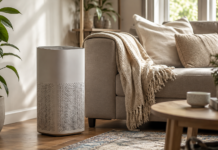
The EPA defines a true HEPA filter as one that removes “at least 99.97% of dust, pollen, mold, bacteria, and other airborne particles with a size of 0.3 microns,” described as the most penetrating particle size because particles both larger and smaller are trapped even more efficiently. For central HVAC systems, ACAAI’s dust allergy guidance points toward filters in the MERV 11-13 range as a reasonable middle ground for allergen capture, provided the system is rated to handle the added airflow resistance; jumping straight to the highest-rated filter without checking the manufacturer’s specs can strain a blower motor not designed for it.
Step 7: Build a Shoes-Off, Pet-Smart Maintenance Routine
Since pollen mostly enters on clothing, shoes, and pets rather than drifting in on its own, a shoes-off policy at the front door paired with a washable entry mat cuts down on what gets tracked and later re-suspended by foot traffic. For households keeping a pet despite an allergy, ACAAI recommends keeping the pet out of the allergic person’s bedroom, bathing the pet weekly, and running HEPA air cleaners continuously in the most-used rooms, while acknowledging that allergen levels typically decline slowly, over a period of weeks, even after these changes take hold.
HEPA Vacuums and Air Filtration: What the Evidence Actually Supports
It’s worth being honest about what the research does and doesn’t show, because filtration marketing tends to overstate the case. A February 2018 systematic review by the Agency for Healthcare Research and Quality (AHRQ), which analyzed 72 studies (60 randomized controlled trials and 8 non-randomized studies) on indoor allergen reduction for asthma management, found that mattress covers used alone showed no measurable effect on asthma control or exacerbations, despite successfully reducing measured allergen levels. That’s a meaningful distinction: allergen counts went down, but clinical symptoms didn’t reliably improve when a mattress cover was the only change made.
What did show benefit, according to the same review, were multicomponent interventions that combined several measures at once. HEPA vacuums used as part of a bundled approach showed a moderate strength of evidence for reducing asthma exacerbations and improving quality of life, and mattress covers included within a multicomponent bundle were associated with a high strength of evidence for improved asthma symptoms, in contrast to their weak showing alone. Air filtration on its own, examined across 9 randomized trials, produced inconclusive results for asthma control specifically, though the Allergo Journal International review from June 2023 separately found that HEPA filtration reduces airborne particulate matter by roughly 50-70%, depending on particle size, which is a real physical effect even where clinical symptom data is mixed.
| Tool | What It Does | Evidence-Backed Role |
|---|---|---|
| Sealed HEPA vacuum | Removes settled allergen from carpet, upholstery, mattress surfaces | Moderate-strength evidence for reduced exacerbations when combined with other measures (AHRQ, 2018) |
| Mattress/pillow encasement | Physically blocks allergen transfer from mattress interior to sleeping surface | Weak alone; high-strength evidence for symptom improvement as part of a bundle (AHRQ, 2018) |
| Portable HEPA air cleaner | Filters airborne particles already suspended in room air | Reduces measured particulate matter 50-70%; asthma-outcome evidence alone is inconclusive (AHRQ, 2018; Allergo Journal Int’l, 2023) |
| MERV 11-13 HVAC filter | Filters whole-home circulated air passing through the furnace or AC system | Recommended by ACAAI as a practical middle ground; check system compatibility first |
| Dehumidifier | Lowers relative humidity below the 50% threshold mites need to reproduce | Documented allergen reduction in home sampling (Cabrera et al., 1995, cited by LBL) |
A Practical Cleaning Cadence
Consistency matters more than intensity here. A single aggressive deep clean followed by months of neglect performs worse than a modest routine kept up every week, because allergen reservoirs in carpet, upholstery, and bedding rebuild within days once cleaning stops. ACAAI’s guidance also flags a real short-term tradeoff worth knowing about: disturbance from vacuuming or dusting temporarily stirs particles into the air, which is why a sealed HEPA system and damp-dusting (rather than a dry cloth that just redistributes dust) matter as much as frequency.
- ☐ Wash sheets and pillowcases weekly in water 130°F or hotter
- ☐ Vacuum carpets, rugs, and upholstery 1-2 times weekly with a sealed HEPA vacuum
- ☐ Damp-dust hard surfaces weekly instead of dry-dusting
- ☐ Check the hygrometer weekly; adjust humidifier/dehumidifier as needed to stay in the 30-50% band
- ☐ Wipe down entryway mats and shoe-storage areas weekly
- ☐ Wash pet bedding weekly if a pet sleeps on furniture or in the bedroom
- ☐ Replace or clean HVAC/furnace filters on the manufacturer’s schedule, typically every 1-3 months
- ☐ Launder or freeze washable soft toys and throw pillows every 1-2 weeks
- ☐ Deep-clean curtains, blinds, and upholstery monthly
- ☐ Check mattress and pillow encasements for tears or worn zippers monthly
Common Mistakes That Undermine the Effort
| Mistake | Why It Backfires | Better Approach |
|---|---|---|
| Vacuuming with a non-sealed or bagless unit lacking true HEPA | Fine particles can leak around the filter and re-enter the room instead of being captured | Choose a machine labeled “sealed system” or “true HEPA,” not just one with a HEPA filter somewhere inside |
| Buying an air purifier before addressing humidity or encasements | Filtration can’t outpace allergen sources being actively regenerated in bedding and carpet | Fix humidity and encasements first; add filtration as a supplement, not the first move |
| Running a humidifier through allergy season without checking a hygrometer | Can push relative humidity past 50%, directly favoring dust mite reproduction | Check readings regularly and only humidify if levels are genuinely below 30% |
| Washing bedding in cold or warm water | Doesn’t reliably kill mites or fully denature allergen proteins | Wash at 130°F or hotter, or finish with a hot dryer cycle for items that can’t be washed that hot |
| Treating a deep clean as a once-a-season event | Allergen reservoirs in carpet and upholstery rebuild within days to weeks | Follow a weekly bedroom routine and a monthly whole-home routine, not an occasional overhaul |
| Removing shoes at the door but skipping the mat and pet wipe-down | Pollen still transfers indoors on socks, clothing hems, and pet paws | Pair a shoes-off policy with a washable entry mat and a quick pet-paw wipe after walks |
What Allergists and IAQ Professionals Do Differently
Allergists and indoor air quality professionals tend to work in a different order than most households do on their own. First, they confirm the actual sensitization pattern with a skin-prick or specific IgE test before recommending changes, rather than guessing which allergen is responsible based on symptoms alone; someone convinced they’re reacting to pet dander may actually be reacting to dust mites in the same room, and the fix for each looks different. Second, they prioritize the bedroom over the rest of the house, since most people spend six to nine hours a night there, in direct contact with bedding, making it the single highest-exposure room in most homes.
Third, they lean on measurement rather than assumption: a hygrometer instead of guessing at humidity, and in persistent or unclear cases, dust sampling with an allergen-specific test to check whether interventions are actually lowering levels rather than just feeling like progress. Fourth, professionals treat this as a combined-intervention problem rather than a single-fix problem, consistent with the AHRQ’s 2018 finding that multicomponent approaches outperform any single measure on its own. Finally, when avoidance measures plateau and symptoms persist, allergists commonly discuss allergen immunotherapy, delivered as regular injections or under-the-tongue tablets, as a longer-term option that reduces sensitivity over time rather than only managing exposure.
Worked example: a household’s staged approach
Consider a two-adult household with one member who wakes up congested most mornings and has a mild reaction near the family cat. Rather than buying every product on a checklist at once, they work through the steps in order over about a month.
Week 1: They place a hygrometer in the bedroom and discover it’s running around 58% overnight, well above the EPA’s recommended 30-50% band. They set the bedroom air conditioner’s humidity function to hold the room closer to 45%.
Week 2: They add zippered mattress and pillow encasements and switch to washing bedding weekly at 130°F, replacing an old habit of washing on a cold, energy-saving cycle.
Week 3: They confirm their vacuum is a sealed HEPA model (it wasn’t; the old one had a HEPA filter but a leaky housing) and start vacuuming the bedroom twice weekly, along with the cat’s favorite couch spot.
By week 4, the cat stays out of the bedroom entirely and a portable HEPA air cleaner runs continuously in the living room. None of this happened as a single purchase or a single weekend project, which reflects how the underlying research treats it: as a set of habits maintained together, not a one-time fix.
Safety Limits and When to See an Allergist
Home measures are supportive, not curative, and they have real limits worth naming plainly. If someone in the household has wheezing, audible whistling with breathing, chest tightness, shortness of breath, or nighttime awakenings caused by breathing difficulty, that’s a signal to seek medical evaluation rather than waiting to see if a cleaning routine helps; those symptoms can indicate asthma that needs its own management plan alongside any home changes. If congestion, sneezing, or itchy eyes persist largely unchanged after four to six weeks of consistently following the steps in this guide, an allergist visit for skin or blood testing is a reasonable next step, both to confirm the actual trigger and to discuss options like immunotherapy that go beyond avoidance.
A few practical cautions apply to the cleaning side of this as well. Avoid mixing bleach-based cleaners with other household chemicals, and ventilate any room where you’re using them, since fumes can irritate airways independent of any allergen exposure. Strongly fragranced cleaning products and air fresheners can also trigger respiratory symptoms in sensitive individuals that mimic or worsen allergy symptoms, so unscented products are generally the safer default in an allergy-focused cleaning routine. Running a dehumidifier to extremes, chasing humidity well below 30% to “be safe,” can dry out and irritate airways and skin, which works against the goal rather than helping it; the target is a band, not a race to the lowest possible number. Children with asthma, older adults, and anyone immunocompromised should have material changes like introducing a new pet, starting a renovation, or beginning long-term dehumidifier use discussed with their physician first.
This article is written for general educational purposes and reflects publicly available guidance from agencies including the EPA, CDC/ATSDR, and peer-reviewed allergy research current as of 2026. It is not medical advice, and it doesn’t replace an in-person evaluation. If you suspect asthma, a severe allergy, or a reaction that includes swelling, difficulty breathing, or symptoms of anaphylaxis, seek emergency care immediately rather than treating it as a home dust problem.
Key Takeaways
- Dust mites die off when relative humidity is held below the 40-50% range for a sustained period; a $15-20 hygrometer is the cheapest and most useful tool in this entire process.
- The EPA recommends keeping indoor humidity between 30% and 50%, a band that also helps prevent mold growth.
- Mattress covers alone don’t reliably improve asthma symptoms, per a 2018 AHRQ review of 72 studies, but they do when combined with HEPA vacuuming, hot-water washing, and humidity control.
- True HEPA filters capture at least 99.97% of particles at 0.3 microns, the hardest particle size to trap, according to the EPA.
- Cat and dog allergen persists in homes and clothing even without a pet present; a Baltimore-area study found detectable cat allergen in dust from 38 of 40 pet-free homes.
- Pollen mostly settles quickly rather than staying airborne, so a shoes-off policy and entry mats reduce a meaningful share of what gets tracked in and later re-suspended.
- Weekly hot-water bedding washes (130°F+) and 1-2 times weekly sealed-HEPA vacuuming form the practical backbone of an ongoing routine.
- Persistent symptoms after 4-6 weeks of consistent home measures are a reasonable trigger to see a board-certified allergist rather than buying more equipment.
Frequently Asked Questions
How long does it take to notice a difference after starting a dust and allergen reduction routine?
Many people notice modestly fewer morning symptoms within 2 to 4 weeks of consistent HEPA vacuuming, weekly hot-water bedding washes, and humidity control. Full effects on allergen levels in carpet and upholstery can take longer, since these materials act as reservoirs that release allergen gradually even after the source is addressed.
Can I get rid of dust mites completely?
No. Dust mites are present in an estimated 84% of U.S. households, and complete elimination isn’t a realistic goal. The practical aim is reducing allergen load below the level that triggers symptoms, using humidity control, encasements, and regular cleaning, rather than pursuing a mite-free home.
Do air purifiers replace the need for vacuuming and encasements?
No. Air purifiers only capture particles already suspended in the air. Dust mite allergen concentrates in mattresses, carpet, and upholstery and needs to be physically removed through vacuuming or blocked with encasements; filtration is a useful addition, not a substitute for addressing those reservoirs directly.
Is a humidifier ever helpful if I have dust mite allergies?
Generally not in already-humid climates, since dust mites reproduce once relative humidity climbs above 50%. A humidifier may make sense in genuinely dry conditions, but it should be paired with a hygrometer so the room doesn’t overshoot back into the range mites favor.
What’s the difference between a HEPA vacuum and a vacuum with a HEPA filter?
A vacuum only performs like a true HEPA vacuum if the entire airflow path is sealed; otherwise air can leak around the filter and re-release fine particles into the room. Look for labeling like “sealed system” or “true HEPA,” not just a HEPA filter listed among the parts.
Should I remove my pet if someone in the house is allergic?
Removing the pet is the most effective single step, but it isn’t the only option. If rehoming isn’t possible, keeping pets out of bedrooms, running HEPA air cleaners continuously, bathing pets weekly, and vacuuming frequently can meaningfully lower exposure, though allergen levels typically decline slowly, over weeks, even after a pet leaves the home.
How often should I replace my HVAC filter for allergen control?
Follow the manufacturer’s schedule, typically every 1 to 3 months, and check sooner during high pollen seasons or in a pet-heavy household. A mid-range filter around MERV 11-13 captures more allergen-sized particles than a basic filter, provided the system is rated to handle the added airflow resistance.
References
U.S. Environmental Protection Agency, “Care for Your Air: A Guide to Indoor Air Quality,” epa.gov/indoor-air-quality-iaq/care-your-air-guide-indoor-air-quality, updated September 8, 2025.
U.S. Environmental Protection Agency, “What is a HEPA filter?,” epa.gov/indoor-air-quality-iaq/what-hepa-filter.
Centers for Disease Control and Prevention / Agency for Toxic Substances and Disease Registry, “Environmental Triggers of Asthma: Treatment, Management, and Prevention,” archive.cdc.gov, reviewed December 29, 2014.
Agency for Healthcare Research and Quality, “Effectiveness of Indoor Allergen Reduction in Management of Asthma,” Comparative Effectiveness Review, ncbi.nlm.nih.gov/books/NBK493783, February 2018.
StatPearls (NCBI Bookshelf), “Dust Mite Allergy,” ncbi.nlm.nih.gov/sites/books/NBK560718, updated August 8, 2023.
Lawrence Berkeley National Laboratory, Indoor Air Quality Scientific Findings Resource Bank, “Humidity and Dust Mite Allergies,” iaqscience.lbl.gov/humidity-and-dust-mite-allergies.
Lawrence Berkeley National Laboratory, Indoor Air Quality Scientific Findings Resource Bank, “Pollen Allergens,” iaqscience.lbl.gov/pollen-allergens.
“Assessing the relevance of allergenic pollen in indoor environments,” Allergo Journal International, June 13, 2023.
American College of Allergy, Asthma and Immunology, “Dust Allergy,” acaai.org/allergies/allergic-conditions/dust-allergies, reviewed February 2, 2018.
American College of Allergy, Asthma and Immunology, “Pets, Dog and Cat Allergies,” acaai.org/allergies/allergic-conditions/pet-allergies.
Asthma and Allergy Foundation of America, “Control Indoor Allergens to Improve Indoor Air Quality,” aafa.org/allergies/prevent-allergies/control-indoor-allergens, reviewed September 2015.
Asthma and Allergy Foundation of America, “Allergy Facts and Figures,” aafa.org, April 2026.
Institute of Medicine (US) Committee on the Assessment of Asthma and Indoor Air, “Clearing the Air: Asthma and Indoor Air Exposures,” National Academies Press, ncbi.nlm.nih.gov/books/NBK224482.