




























Most people notice noise only when it becomes unbearable: a leaf blower at 7 a.m., a neighbor’s bass through a shared wall, trucks idling below an apartment window. But the noise that does the most damage to health is usually the kind that never gets loud enough to complain about. It just never stops.
Chronic exposure to environmental noise, even at levels well below what feels painful, is linked to higher cardiovascular risk, disrupted sleep, slower cognitive development in children, and permanent hearing changes. The World Health Organization sets specific decibel thresholds for this reason, and home-level fixes like sealing gaps, upgrading windows, and using sound masking can meaningfully reduce exposure.
By Sophie Taylor
Who This Is For
This guide is for people who live near a road, rail line, flight path, or noisy neighbor and want to understand what the exposure is actually doing to their body, not just how annoying it feels. It’s for parents wondering whether a noisy apartment or school zone could affect a child’s concentration or reading. It’s for anyone who has started noticing ringing in their ears after concerts, headphone use, or a loud workplace, and wants to know when that’s worth taking seriously. And it’s for renters and homeowners who want a realistic, budget-aware plan for reducing indoor noise rather than a vague suggestion to “just get earplugs.”
What Counts as Noise Pollution
“Noise pollution” refers to unwanted or harmful environmental sound, most often from road traffic, rail, aircraft, industrial equipment, or dense housing. Researchers typically measure it in two ways: peak loudness, in decibels (dB), and cumulative exposure over a day or a year, expressed as Lden (day-evening-night average, with penalties added for evening and nighttime noise because those hours are more disruptive) and Lnight (average nighttime noise level alone). A single loud event, like a passing motorcycle, is not the main concern in the research reviewed here. The health effects described below are associated with sustained average exposure, day after day and year after year.
The decibel scale is logarithmic, so small-looking number differences represent large changes in sound energy: a 10 dB increase corresponds to roughly a doubling of perceived loudness. That matters for mitigation planning, because a window upgrade that only shaves off 3-4 dB can still feel meaningfully quieter, while getting from “quiet” to “silent” often requires a much larger, more expensive intervention.
Reference ranges compiled from NYC Department of Environmental Protection sound level education materials and NIOSH occupational exposure guidance.
How Chronic Noise Affects the Body
The body treats sustained unwanted sound as a low-grade stressor, even during sleep, even when a person reports no longer “noticing” it. That stress response is measurable, and it is the mechanism behind most of the health associations described in this section.
Cardiovascular Risk
The strongest and most consistent evidence connects chronic transportation noise to cardiovascular disease. A 2024 review by Münzel and colleagues, published in the Journal of Exposure Science & Environmental Epidemiology, pooled results from multiple cohort studies and meta-analyses of road traffic noise. Per 10 dB increase in average daily noise exposure (Lden), the review reported a relative risk of about 1.05 for cardiovascular mortality, 1.05 for ischemic heart disease mortality, 1.04 for ischemic heart disease incidence, and 1.05 for stroke incidence, with a combined cardiovascular risk increase of roughly 3.2% across conditions in an umbrella review of the evidence base. Some of the cohort data cited in that review suggest measurable effects on cardiovascular diagnoses beginning around 45 dB Lden, well below levels most people would describe as loud.
The proposed mechanism is not simple annoyance. Nighttime traffic noise around 47 dB(A) sustained over a single night has been shown to raise oxidative stress markers such as 3-nitrotyrosine and 8-isoprostane. Chronic exposure is associated with activation of the hypothalamic-pituitary-adrenal axis, elevated cortisol and catecholamines, and increases in angiotensin II and endothelin-1, hormones involved in blood vessel constriction. Researchers have also documented reduced flow-mediated dilation (a marker of endothelial function) and downregulation of FOXO3, a gene tied to circadian regulation and vascular protection, in people with high nighttime noise exposure. In plain terms: noise the body registers as a threat, even subconsciously during sleep, triggers the same stress-hormone and blood-vessel pathways implicated in hypertension and heart disease.
Sources: Münzel et al., Journal of Exposure Science & Environmental Epidemiology (2024); European Environment Agency, “Health risks caused by environmental noise in Europe” (2020); CDC/NIOSH, “About Occupational Hearing Loss.”
Sleep Disruption
Noise doesn’t need to wake a person up to fragment sleep. Even brief noise events that don’t reach full conscious awakening can trigger micro-arousals, shifts toward lighter sleep stages, and increased heart rate, all of which reduce the restorative value of a night’s sleep. This is part of why WHO’s nighttime guideline values (Lnight) are set lower than the average 24-hour values: the same noise level is more disruptive between roughly 11 p.m. and 7 a.m. than during the day. The European Environment Agency estimated in its 2020 assessment, using 2017 data, that around 6.5 million people across Europe experience chronic severe sleep disturbance attributable to environmental noise, separate from the 22 million reporting high daytime annoyance.
Aircraft noise has been studied particularly closely for this reason, since flight paths often concentrate nighttime exposure over specific neighborhoods regardless of a resident’s daytime activity. This is one reason WHO’s nighttime aircraft noise guideline, at 40 dB Lnight, is the strictest of the four transportation categories it addresses.
Cognitive Effects in Children
Children’s cognitive development, particularly reading comprehension, has one of the clearer noise-exposure research trails. The RANCH study (Road traffic and Aircraft Noise exposure and children’s Cognition and Health), published in 2005 and analyzed further through the mid-2000s, followed 2,010 children aged 9-10 across 89 schools near three major airports: Amsterdam Schiphol, Madrid Barajas, and London Heathrow. Aircraft noise exposure at school was linearly associated with impaired reading comprehension, an association that held after adjusting for socioeconomic status, noise annoyance, and other cognitive measures like memory and attention, and that replicated consistently across all three countries. Interestingly, road traffic noise exposure at school did not show the same association with reading comprehension in that study, which researchers have suggested may relate to differences in noise pattern (the intermittent, high-peak nature of aircraft events versus the more continuous hum of road traffic) rather than total sound energy.
The likely mechanism is that intermittent, high-amplitude noise interrupts working memory and sustained attention during tasks that require holding information in mind, such as reading a paragraph and connecting it to the one before it. The European Environment Agency’s 2020 review estimated more than 12,000 schoolchildren across Europe show reading comprehension impairment linked specifically to aircraft noise exposure at school.
Tinnitus and Hearing Effects
Unlike cardiovascular and cognitive effects, which are driven mostly by chronic low-to-moderate noise, hearing damage is primarily a function of intensity and duration together. According to the CDC’s National Institute for Occupational Safety and Health, noise becomes hazardous at 85 dBA or higher, which is the basis for NIOSH’s Recommended Exposure Limit of 85 dBA averaged over an eight-hour period. NIOSH also notes that hearing loss is the third most prevalent chronic physical condition among American adults, and that roughly 1 in 9 workers report hearing difficulty, with about 1 in 13 reporting tinnitus and 1 in 25 reporting both. Occupational hearing loss is described by NIOSH as permanent but preventable, since, unlike many other chronic conditions, it has an identifiable and controllable cause.
Tinnitus (persistent ringing, buzzing, or hissing not caused by an external sound) tends to follow a distinct demographic pattern. Data compiled by the National Institute on Deafness and Other Communication Disorders (NIDCD), drawn from the National Health Interview Survey Disability Supplement, show chronic tinnitus rates rising markedly starting around age 40, peaking between ages 65 and 79, then declining somewhat after 80. Men show significantly higher rates than women at every adult age band, with the largest gap between ages 50 and 69, a pattern NIDCD attributes partly to greater average lifetime exposure to loud environmental and occupational noise among men.
WHO Environmental Noise Guidelines
In 2018, the World Health Organization published its Environmental Noise Guidelines for the European Region, the first update in over a decade and the most widely cited reference point for “how much noise is too much” in residential settings. The guidelines set strong recommendations for road, rail, and aircraft noise, and a conditional recommendation (meaning the evidence base was judged less certain, though the direction of harm was still clear) for wind turbine noise.
| Noise Source | Average Exposure (Lden) | Nighttime Exposure (Lnight) | Recommendation Strength |
|---|---|---|---|
| Road traffic | Below 53 dB | Below 45 dB | Strong |
| Railway | Below 54 dB | Below 44 dB | Strong |
| Aircraft | Below 45 dB | Below 40 dB | Strong |
| Wind turbines | Below 45 dB | Insufficient evidence for a value | Conditional |
Source: WHO Environmental Noise Guidelines for the European Region (2018); WHO Housing and Health Guidelines summary table (NCBI Bookshelf).
These thresholds were set specifically to minimize the cardiovascular, sleep, and cognitive effects covered above, not just to reduce annoyance. Aircraft noise gets the strictest values in part because of its documented nighttime and children’s-cognition effects, even though it is often not the loudest source people encounter day to day. The European Environment Agency’s 2017-data assessment found more than 100 million people across Europe were exposed to noise levels above these guideline values, contributing to an estimated 1 million healthy life years lost annually, roughly 12,000 premature deaths linked to long-term traffic noise exposure, and about 48,000 new cases of ischemic heart disease each year.
Decibel Levels, Common Sources, and Health Effects
Putting occupational exposure limits next to everyday sound sources makes the numbers easier to use in practice. NIOSH’s Recommended Exposure Limit uses a 3 dB exchange rate, meaning allowable exposure time is cut in half for every 3 dB increase, a more conservative standard than OSHA’s legal 5 dB exchange rate.
| Decibel Level | Everyday Example | OSHA Permitted Time (8-hr TWA, 5 dB exchange) | Health Relevance |
|---|---|---|---|
| 30-50 dB | Whisper, quiet library | No limit | Below all WHO thresholds |
| 50-65 dB | Normal conversation, quiet office | No limit | Near WHO road/rail Lden ceiling |
| 70-85 dB | City traffic, dishwasher, lawnmower | 8 hours at 85-90 dB | Cardiovascular risk zone begins; hearing-safe threshold approaches |
| 90 dB | Heavy truck traffic, power tools | 8 hours | OSHA action level for hearing conservation |
| 100 dB | Train passing, motorcycle at close range | 2 hours (OSHA) / under 15 minutes (NIOSH) | Hearing damage risk rises sharply with duration |
| 110-120 dB | Concert speakers, thunderclap | 30 minutes or less | Short exposures can cause permanent damage |
| 130+ dB | Jet takeoff at close range | Avoid entirely without hearing protection | Pain threshold; immediate injury risk |
Sources: OSHA, “Occupational Noise Exposure”; CDC/NIOSH, “Understand Noise Exposure”; NYC Department of Environmental Protection sound level chart.
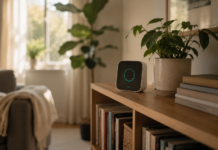
Consider a bedroom facing a moderately trafficked urban street, where a phone-based sound meter app reads an average of roughly 62 dB during the day and 54 dB overnight with windows closed, driven mostly by passing cars and the occasional bus. That nighttime figure already sits about 9 dB above WHO’s 45 dB Lnight guideline for road traffic, and around 14 dB above what the most conservative cardiovascular cohort data flagged as a possible effect threshold near 45 dB Lden.
A single-pane or aging dual-pane window in that room is likely rated around STC 26-32, meaning it is only modestly better than no window treatment at all in terms of perceived noise reduction. Upgrading to a laminated-glass or secondary-glazing window rated STC 40-48 would not eliminate the noise, but industry acoustic testing suggests moving from the high-20s to the low-40s in STC rating can reduce perceived loudness by somewhere in the range of 90%, which in this case could plausibly bring the room’s effective nighttime exposure close to or under the WHO guideline value, especially combined with door-seal gaskets and a white noise machine set to mask the remaining low-frequency rumble.
The point of this example isn’t a guaranteed number. It’s the method: measure first, compare against a real guideline value, then size the intervention to the actual gap rather than guessing.
Practical Home Mitigation
Most home noise problems are solvable in layers rather than with one purchase. The order below roughly follows cost-effectiveness: cheap and fast interventions first, structural ones last.
Sealing and Soundproofing Basics
Sound leaks through gaps the same way air does. Door sweeps, weatherstripping around window frames, and acoustic caulk around baseboards and outlet boxes address flanking noise, sound that sneaks around a barrier rather than through it, and they are typically the cheapest fixes available. Dense materials placed to add mass, such as heavy curtains, upholstered furniture, bookshelves against a shared wall, or mass-loaded vinyl behind drywall, reduce mid- and high-frequency noise more effectively than low-frequency rumble from trucks or trains, which tends to travel through a building’s structure rather than the air.
White Noise and Sound Masking
White noise machines, fans, and some HVAC systems don’t block noise, they mask it, by adding a steady, predictable sound that raises the threshold at which an intermittent noise (a passing car, a door closing down the hall) registers as a disruption. This is a reasonable, low-cost first step for sleep specifically, since the RANCH-study evidence on cognitive effects and the cardiovascular evidence on nighttime exposure both point to intermittent, unpredictable noise events as more disruptive than a constant background level. Masking is not a substitute for reducing total sound energy in a room, but for many people it closes the gap between “technically still noisy” and “sleeps through it.”
Window Upgrades
Windows are usually the weakest point in a home’s sound barrier, often rated far below the surrounding wall. Industry Sound Transmission Class (STC) figures put typical single-pane windows around STC 26-28, and standard dual-pane replacement windows only modestly higher, around STC 26-32, which explains why simply “getting new windows” from a general contractor sometimes disappoints people expecting a dramatic change. Purpose-built acoustic windows, using laminated glass and wider air gaps, run roughly STC 40-54, closer to or above a typical wall’s STC 43-48. Because the scale is logarithmic, industry acoustic data suggests the jump from the high-20s to the high-30s can cut perceived loudness by around 90%, and reaching the low-40s and above can push that closer to 95%, though real-world results depend heavily on installation quality and remaining gaps elsewhere in the room.
Decibel Thresholds Worth Acting On
Not every noise complaint needs a renovation. A reasonable, evidence-informed way to prioritize: if a bedroom’s nighttime average is above 45 dB (WHO’s aircraft Lnight guideline, and a conservative benchmark for any source), sleep-focused mitigation, masking, sealing, curtains, is worth doing regardless of source. If a home’s daytime average sits above roughly 53-55 dB from road or rail noise, WHO’s Lden guideline range, structural steps like window upgrades become more clearly justified. And if any regularly encountered noise, at home, at work, or during hobbies, reaches 85 dBA or higher for extended periods, that crosses NIOSH’s hearing-hazard threshold and calls for hearing protection or exposure-time limits, not just comfort measures.
A Simple Mitigation Workflow
Acousticians and noise consultants tend to follow a version of this sequence rather than buying products first and measuring later.
Common Mistakes
| Mistake | Why It Falls Short | Better Approach |
|---|---|---|
| Buying foam acoustic panels expecting outside noise reduction | Foam panels absorb echo inside a room; they do very little to block sound coming from outside | Add mass and seal gaps (curtains, door sweeps, mass-loaded vinyl) instead |
| Replacing windows without sealing the frame | A high-STC window with an unsealed frame leaks sound around the edges, undercutting the rating | Pair any window upgrade with proper acoustic caulking at the frame |
| Relying only on subjective “does it feel quieter” | Habituation makes chronic noise feel normal even when it’s still crossing health-relevant thresholds | Use a calibrated sound meter app and compare to WHO/NIOSH values, not just perception |
| Treating white noise as a total fix for a loud room | Masking raises the threshold for noticing disruption; it doesn’t reduce the underlying sound energy or its physiological effects | Use masking alongside sealing and mass, not as a replacement for it |
| Ignoring low-frequency structure-borne noise | Truck and train rumble travels through a building’s frame; window fixes alone won’t touch it | Address flooring, wall mass, and furniture placement against shared structural walls |
What Acousticians and Audiologists Do Differently
Professionals working on noise problems tend to separate two questions that homeowners often merge: “how do I make this feel quieter” and “how do I actually reduce the exposure that affects health.” A consulting acoustician will typically start with an actual measurement, often over 24-48 hours to capture both daytime and nighttime averages, rather than a single spot check, because a room can sound tolerable during a five-minute test and still average above WHO’s nighttime guideline once traffic patterns are captured over a full night. They also test one intervention path at a time (windows, then doors, then floor) so the source of any remaining noise stays identifiable, instead of doing everything at once and being unable to tell what worked.
Audiologists take a parallel approach to hearing risk: rather than relying on how loud something “feels,” they use dosimetry, cumulative exposure measured against a time-weighted average like OSHA’s 90 dBA over eight hours or NIOSH’s stricter 85 dBA limit, because subjective loudness tolerance rises with repeated exposure even as the ear’s actual risk does not decrease. A useful home version of this same discipline is worth adopting: measure before deciding what to fix, and measure again after, rather than assuming a purchase worked because the room feels different.
Copy-Ready Home Noise Checklist
- ☐ Measure daytime and nighttime average dB levels in the room with a calibrated sound meter app, over at least one full 24-hour cycle
- ☐ Compare your readings against WHO guideline values (53 dB Lden / 45 dB Lnight for road; 45 dB Lden / 40 dB Lnight for aircraft)
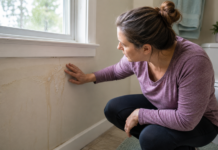
- ☐ Walk the room’s perimeter to feel for air leaks around windows, doors, and outlet boxes
- ☐ Install door sweeps and weatherstripping on doors leading to noisy hallways or the outside
- ☐ Add acoustic caulk around window frames, baseboards, and electrical boxes on exterior or shared walls
- ☐ Add mass near the noisiest wall: heavy curtains, a bookshelf, or upholstered furniture
- ☐ If windows are original single-pane or older dual-pane, get a quote for laminated-glass or secondary-glazing options rated STC 40+
- ☐ Add a white noise machine or fan for sleep, set low enough to mask intermittent sound without adding its own disruption
- ☐ Re-measure after each change to confirm actual dB reduction, not just perceived difference
- ☐ If any regular exposure (work, hobbies, home equipment) reaches 85 dBA or higher, add hearing protection rather than relying on mitigation alone
Safety Limits and When to Take Action
Home mitigation is appropriate for chronic, moderate noise exposure. Some situations call for medical evaluation instead of, or alongside, an acoustic fix. Consider contacting a physician or audiologist if you notice any of the following:
Persistent ringing, buzzing, or hissing (tinnitus) that lasts more than a few days after a loud event, or that appears with no clear trigger at all. NIDCD data show tinnitus prevalence rises sharply from around age 40 onward, and CDC/NIOSH figures put occupational tinnitus at roughly 1 in 13 U.S. workers, so it is common, but it is also the kind of symptom that benefits from an audiologist’s baseline hearing test rather than being assumed to be harmless.
Difficulty understanding speech, especially in noisy settings, or consistently needing the TV or phone volume higher than others around you find comfortable. This is one of the earliest, most under-reported signs of hearing loss, and NIOSH notes it is permanent but preventable if caught and addressed early.
Regular exposure to sound at or above 85 dBA for extended periods, whether from a workplace, power tools, motorcycles, concerts, or headphones at high volume, meets or exceeds NIOSH’s Recommended Exposure Limit. If avoiding the source isn’t realistic, hearing protection (earplugs or earmuffs) is the appropriate response, not an optional extra.
New or worsening sleep problems alongside a known noisy environment, particularly if paired with elevated blood pressure readings, unusual fatigue, or a known cardiovascular risk profile, is worth raising with a physician. Given the cardiovascular associations described earlier in this article, sleep disruption from chronic noise is not purely a comfort issue for people who already have elevated cardiovascular risk.
None of the mitigation steps in this article are a substitute for these evaluations. Sealing a window will not diagnose tinnitus, and a white noise machine will not lower blood pressure that is already elevated. Use the checklist above for exposure reduction, and use a healthcare provider for symptoms.
Key Takeaways
- Chronic noise exposure, not just loud single events, drives most of the documented health effects, including cardiovascular risk, sleep fragmentation, and slower reading development in children.
- WHO’s 2018 guidelines set specific thresholds: road traffic below 53 dB Lden / 45 dB Lnight, rail below 54/44 dB, and aircraft below 45/40 dB, with aircraft noise held to the strictest standard.
- A 2024 review found roughly 5% higher cardiovascular mortality risk per 10 dB increase in road traffic noise, with effects on some outcomes appearing to begin near 45 dB Lden.
- The RANCH study linked aircraft noise at school to measurably worse reading comprehension in children across three countries, independent of socioeconomic status.
- Hearing damage follows a different rule than cardiovascular or sleep effects: it depends on intensity and duration together, with 85 dBA as NIOSH’s key hazard threshold.
- Foam panels reduce room echo, not outside noise; sealing gaps and adding mass at windows, doors, and shared walls does far more for actual exposure reduction.
- Window upgrades matter more than most people expect: moving from a roughly STC 27 single-pane window to an STC 40+ acoustic window can cut perceived loudness by a large margin, though sealing the frame matters as much as the glass itself.
- Persistent tinnitus, new difficulty understanding speech, or sleep disruption paired with cardiovascular risk factors are reasons to see a professional, not just adjust curtains.
Frequently Asked Questions
What decibel level is considered harmful for daily living?
For hearing safety specifically, NIOSH sets 85 dBA as the threshold where extended exposure becomes hazardous. For broader health effects like cardiovascular risk and sleep disruption, WHO’s guideline values are lower: below 53 dB Lden and 45 dB Lnight for road traffic, and below 45/40 dB for aircraft noise.
Can quiet-seeming background noise still be bad for my health?
Yes. Research reviewed by Münzel and colleagues in 2024 found cardiovascular risk associations beginning around 45 dB Lden in some cohort studies, a level many people would describe as barely noticeable. The effect appears to depend on chronic, cumulative exposure rather than perceived loudness alone.
Do acoustic foam panels reduce traffic or neighbor noise?
Not much. Foam panels absorb sound reflecting inside a room, reducing echo, but they have little mass and don’t meaningfully block sound entering from outside. Reducing outside noise requires adding mass and sealing air gaps at windows, doors, and walls instead.
How much noise reduction can I expect from new windows?
It depends heavily on the rating. Standard dual-pane replacement windows (roughly STC 26-32) often disappoint people expecting a dramatic change. Purpose-built acoustic windows rated STC 40 or higher, properly sealed at the frame, can cut perceived loudness by a substantial margin, based on industry acoustic testing data.
Is white noise actually effective, or is it just a placebo?
White noise works by masking intermittent noise events rather than eliminating sound energy in a room. Since intermittent, unpredictable noise appears more disruptive to sleep and cognition than steady background sound, masking can meaningfully improve sleep continuity, though it should be paired with sealing and mass reduction for full exposure control.
When should I see a doctor about noise-related symptoms?
See a physician or audiologist for persistent tinnitus lasting more than a few days, new difficulty understanding speech or following conversations in noisy rooms, or sleep problems that coincide with known cardiovascular risk factors. These are evaluation-worthy symptoms, not situations to address with curtains or a white noise machine alone.
Does noise pollution affect children differently than adults?
The RANCH study found aircraft noise exposure at school linearly associated with impaired reading comprehension in children aged 9-10, an effect that held across three countries independent of socioeconomic status. Children’s developing attention and memory systems appear particularly sensitive to intermittent, high-peak noise during learning tasks.
References
World Health Organization. “New WHO noise guidelines for Europe released.” WHO Regional Office for Europe, October 10, 2018.
World Health Organization. “Environmental Noise Guidelines for the European Region,” summarized in WHO Housing and Health Guidelines, Table 8.11, National Center for Biotechnology Information Bookshelf.
Centers for Disease Control and Prevention, National Institute for Occupational Safety and Health. “About Occupational Hearing Loss.” CDC/NIOSH.
Centers for Disease Control and Prevention, National Institute for Occupational Safety and Health. “Understand Noise Exposure.” CDC/NIOSH.
Occupational Safety and Health Administration. “Occupational Noise Exposure – Overview.” OSHA.gov.
National Institute on Deafness and Other Communication Disorders. “Prevalence of Chronic Tinnitus” chart, NIDCD/NIH, based on National Health Interview Survey Disability Supplement data.
Clark, C., Martin, R., van Kempen, E., et al. “Exposure-effect relations between aircraft and road traffic noise exposure at school and reading comprehension: the RANCH project.” Published 2005 (PubMed ID 16306314).
Münzel, T., et al. “Noise causes cardiovascular disease: it’s time to act.” Journal of Exposure Science & Environmental Epidemiology, December 10, 2024.
European Environment Agency. “Health risks caused by environmental noise in Europe.” Published December 14, 2020, based on 2017 data.
New York City Department of Environmental Protection. “Sound/Noise Loudness Chart,” environmental education materials.
Soundproof Windows, Inc. “STC Ratings,” industry acoustic testing reference for window sound transmission class.