




























Quick answer: That “tight” feeling in the front of your hips is often not a shortened muscle at all. Research on stretching and flexibility shows the relief you feel after a stretch mostly comes from your nervous system tolerating more tension, not from the muscle actually getting longer. In many cases, the sensation is driven by weak, overworked hip flexors or protective muscle tone rather than true structural shortness, which is exactly why stretching alone tends to wear off within hours. A combined approach of targeted strengthening plus brief, purposeful mobility work addresses the underlying cause instead of just the symptom.
By Ellie Brooks
Who This Matters Most For
This article is written for people who feel a persistent pulling, pinching, or tension sensation at the front of the hip, especially after sitting for long stretches, running, cycling, or lifting, and who have already tried stretching without lasting improvement. It is especially relevant for desk workers, runners, cyclists, and anyone who has stretched their hip flexors daily for weeks and still feels tight the next morning. It is not intended for anyone with a sudden, sharp hip flexor tear, a recent fall, or hip pain accompanied by fever, numbness, or inability to bear weight, all of which need direct medical evaluation rather than a home routine.
What the Hip Flexors Actually Are
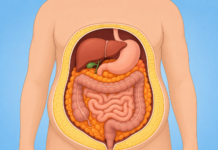
The phrase “hip flexors” refers to a small group of muscles that cross the front of the hip joint and lift the thigh toward the torso, or the torso toward the thigh when the leg is fixed. The main players are the iliopsoas group (psoas major and iliacus, which merge into a shared tendon), the rectus femoris (part of the quadriceps, which also crosses the knee), and smaller contributors like the sartorius and tensor fasciae latae. According to the anatomy reference StatPearls, the iliopsoas is described as the primary flexor of the thigh, and the psoas major also plays a role in stabilizing the lumbar spine during sitting, while the iliacus is supplied by the femoral nerve and the psoas by branches of the lumbar plexus.
This anatomy matters because the psoas is not just a hip mover. It is also a postural and stabilizing muscle that stays active during sitting, standing, and walking. A muscle that is constantly working to stabilize the spine and pelvis can feel dense, tense, or “tight” simply because it is under continuous low-level contraction, not because its fibers have physically shortened. That distinction, between a muscle that feels tense because it is working and a muscle that is genuinely shorter than normal, sits at the center of why so many people stretch their hip flexors for months without lasting change.
The rectus femoris adds another layer of complexity because it crosses two joints, the hip and the knee. That means its resting tension is influenced by both hip and knee position, and by how much time is spent with the knee bent (as in sitting or cycling). Understanding that the “hip flexors” are really several muscles with different jobs, different nerve supplies, and different sensitivities to posture helps explain why a single generic stretch rarely resolves the sensation for everyone.
Why That “Tight” Feeling Often Isn’t True Shortness
When most people say a muscle is “tight,” they mean it feels stiff, restricted, or resistant to stretch. Clinically, that sensation can come from at least three different sources: an actual reduction in the muscle’s resting length, elevated resting muscle tone driven by the nervous system, or fatigue and weakness that make the muscle recruit protectively. Only the first of these is true shortening, and physical therapists who write about this distinction consistently point out that the other two are far more common in otherwise healthy, active people.
Neural tone and protective guarding
Muscle tone is set by the nervous system, not just by tissue length. A muscle that the brain perceives as needing to stabilize a joint, because the surrounding muscles are weak or the joint feels unstable, can hold a higher baseline level of contraction even at rest. That elevated tone reads to the person as tightness, because the muscle genuinely resists being lengthened more than a fully relaxed muscle would. The clinical group Barbell Physio describes this directly, noting that tension in the front of the hip is often present “when the hip flexors are weak and getting overworked,” and that palpating a tense muscle without testing its actual length (for example with a Thomas test) can lead to a mistaken diagnosis of shortness when the real issue is tone.
This is not unique to the hip. Muscles throughout the body can hold protective tone around a joint that feels unstable, painful, or poorly controlled. The practical implication is that stretching a muscle that is tight because of neural guarding does not remove the reason the nervous system is guarding it, so the tension predictably returns once the stretch ends and daily movement resumes.
Weakness that masquerades as tightness
A related and frequently overlooked driver is outright weakness. Physical therapist Andrew Millett, writing for Move Strong Physical Therapy, explains that a muscle can feel tight simply because it is “working very hard to maintain strength or stabilize something,” particularly when the iliacus and psoas are underconditioned relative to the demands placed on them. In that scenario, the hip flexors are being asked to do more stabilizing work than they are prepared for, whether that is holding the pelvis level during single-leg stance while walking, controlling the lowering phase of a leg raise, or simply keeping the trunk upright through hours of sitting with poor postural support from the deep core and glutes. The muscle compensates by staying tense, and tense reads as tight.
There is also a well-known idea in rehabilitation circles that prolonged sitting simply shortens the hip flexors through the hours spent in a flexed position. It is intuitive, but the evidence for it is thinner than most people assume. Movement researcher Todd Hargrove, writing on the Better Movement blog, reviewed the available literature and found no studies demonstrating a clear relationship between hours spent sitting and measurable hip flexor shortening. He points out that humans and animals routinely hold hip-flexed positions for hours, such as side-lying sleep, without developing structural shortness, and that the muscle tissue changes associated with true immobilization can be prevented by even brief periods of daily movement. That does not mean sitting has no effect on how the hips feel. It means the mechanism is more likely reduced tolerance, altered tone, and general deconditioning of the muscles that support the hip, rather than the hip flexor tissue itself getting physically shorter.
Why Stretching Alone Usually Gives Only Temporary Relief
One of the most cited pieces of research on this topic is a 2010 systematic review published in the journal Physical Therapy by Chris Weppler and Peter Magnusson, titled “Increasing Muscle Extensibility: A Matter of Increasing Length or Modifying Sensation?” The review examined what actually changes when a muscle becomes more flexible after stretching, whether it is a structural increase in muscle length or a change in how much tension a person is willing to tolerate before it feels uncomfortable. Their conclusion was direct: increases in muscle extensibility seen immediately after stretching, and after short-term stretching programs lasting three to eight weeks, were attributable to an alteration of sensation, meaning increased stretch tolerance, rather than to an actual increase in muscle length. In plain terms, stretching mostly trains a person to tolerate more tension before it feels tight, not to physically lengthen the tissue.
That finding explains a pattern almost anyone who has tried a daily hip flexor stretching routine will recognize: the stretch feels great in the moment, range of motion looks and feels better for a while, and then the tight sensation creeps back within hours or by the next day. If the underlying driver is neural tone or compensatory weakness, a stretch calms the nervous system’s guarding response temporarily and increases tolerance briefly, but it does nothing to reduce the demand being placed on an underprepared muscle. Once the person stands up, sits back down at a desk, or goes for a run, the same postural and load demands reappear, the same protective tone returns, and the same “tight” sensation follows.
This is also consistent with clinical experience described by The Barbell Physio, which frames stretching as addressing the symptom rather than the cause when the actual problem is weakness-driven tone, and recommends that stretching be paired with, or in some cases replaced by, a strengthening approach aimed at the muscles that are being overworked. None of this means stretching is useless. Gentle mobility work has a place, particularly for genuinely restricted tissue after injury or prolonged immobilization, and for general comfort. The issue is treating stretching as a complete solution when the sensation is coming from tone or weakness rather than true shortness.
Stretching-Only vs. Combined Approach: What the Outcomes Tend to Look Like
This table reflects general patterns described in physical therapy literature and clinical writing on hip flexor tightness, not a controlled head-to-head trial specific to hip flexors.
The Evidence-Based Combined Approach: Strengthening Plus Targeted Mobility
If tightness sensation is frequently a byproduct of tone and weakness rather than true shortness, the logical shift is to spend less energy chasing a longer stretch hold and more energy building the hip flexors’ capacity to do their job without needing to guard. This does not mean abandoning mobility work. It means sequencing it correctly and giving strengthening the leading role rather than treating it as an afterthought.
A combined approach typically includes three components. First, controlled strengthening of the hip flexors themselves, such as slow, resisted hip flexion movements that build the muscle’s ability to work through its full range without excessive protective tension. Second, strengthening of the muscles that normally share the stabilizing load with the hip flexors, particularly the glutes and deep core, so the hip flexors are not compensating for weak neighbors. Third, brief targeted mobility work, not to force a longer stretch, but to maintain comfortable range of motion and reduce the guarding response, especially after long periods in one position. Physical therapist Kimberly Baptiste-Mbadiwe of Hospital for Special Surgery reflects this layered approach in her clinical guidance, recommending stretching be paired with strengthening exercises for supporting muscle groups and with regular position changes throughout the day, rather than relying on stretching in isolation.
The order matters for a practical reason. Stretching a muscle that is tight because it is weak and overworked can occasionally increase the sense of instability, since the person is asking an underprepared muscle to lengthen further without giving it more capacity to control that range. Building strength first, then layering in mobility, tends to produce more durable improvement because the nervous system has less reason to keep the muscle guarded once the surrounding structures can share the load.
Sample Combined Strengthening and Mobility Routine
Perform strengthening exercises 3 to 4 times per week, and treat the mobility and positional-change items as daily habits. Progress load and range gradually and stop any exercise that causes sharp or worsening pain.
Checklist: Addressing Hip Flexor Tightness Properly
- Rule out red-flag symptoms (sharp pain, swelling, groin pain, or reduced range of motion) before starting a home routine
- Stop assuming every tight feeling means a short muscle, and consider tone or weakness as likely causes
- Add 2 to 3 hip flexor and glute strengthening sessions per week rather than relying on stretching alone
- Include core stabilization work so the hip flexors are not compensating for a weak trunk
- Keep mobility work brief and purposeful, not a prolonged daily hold expected to fix everything
- Change position every 30 to 45 minutes during long periods of sitting
- Track symptoms over 4 to 6 weeks rather than judging a routine after a single session
- Progress resistance and range gradually, and back off if soreness lingers beyond normal muscle fatigue
- Seek a physical therapy evaluation if tightness persists beyond several weeks of consistent effort
A Worked Example: The Desk Worker Who Stretched for a Year
Consider a composite, realistic example based on a common pattern seen in outpatient physical therapy settings. A 34-year-old marketing manager sits at a desk roughly nine hours a day, with a short walk at lunch and an occasional evening run. For over a year, this person has done a daily half-kneeling hip flexor stretch, sometimes twice a day, after reading that tight hip flexors cause low back pain. The stretch feels good in the moment. By the next morning, the same pulling sensation at the front of the hip is back, and it is often worse after a longer run.
A physical therapy assessment in a case like this typically starts with a Thomas test to check actual hip flexor length, alongside a look at glute and core strength and how the pelvis moves during a single-leg stance. It is common to find that hip flexor length is essentially normal, while glute strength is noticeably reduced on the same side as the tightness, and the pelvis drops or rotates during single-leg loading, a sign the deep stabilizers are not doing their share of the work. The hip flexors, in other words, are compensating for a stability gap elsewhere, which keeps them in a state of elevated tone that a stretch can only interrupt temporarily.
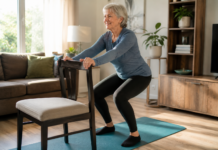
In this scenario, a shift toward glute bridges, banded lateral steps, dead bugs, and resisted hip flexion, done three times a week, alongside brief daily mobility and a habit of standing up every 40 minutes, tends to produce a different trajectory than stretching alone did. Instead of daily, short-lived relief, the person typically notices the baseline tightness sensation gradually decreasing over several weeks as the surrounding muscles take on more of the stabilizing load. The stretch is still there in the routine, but it is no longer being asked to do a job it was never suited for.
Common Mistakes When Addressing Hip Flexor Tightness
What Physical Therapists Say
Clinicians who write publicly about this topic tend to converge on the same core message: test before you assume, and treat the cause rather than only the sensation. Andrew Millett, PT, of Move Strong Physical Therapy, frames tightness as frequently reflecting a muscle “working very hard to maintain strength or stabilize something,” and recommends progressive strengthening exercises for the iliacus and psoas rather than defaulting to stretching. The Barbell Physio similarly argues that many people who believe they have tight hip flexors actually have weak hip flexors presenting as increased tone, and that a proper flexibility assessment, not just a subjective feeling of tightness, should guide treatment. Kimberly Baptiste-Mbadiwe, PT, DPT, OCS, SFMA, at Hospital for Special Surgery, takes a layered view, recommending stretching be combined with strengthening for the core, glutes, and surrounding hip muscles, plus regular position changes for anyone who sits for long periods.
None of these clinicians dismiss stretching outright. The consistent theme is sequencing and proportion: mobility work has a supporting role, while strengthening and load management do the heavier lifting when the driver is tone or weakness rather than genuine shortness.
Safety and Scope
This article provides general educational information and is not medical advice, and it is not a substitute for individualized care from a qualified professional. Persistent or worsening hip pain, groin pain, sharp or catching sensations, swelling, or a noticeable reduction in range of motion warrants evaluation by a physical therapist or physician before continuing any exercise routine. Stop any exercise that causes sharp pain and seek prompt medical attention for sudden severe pain, inability to bear weight, or signs of a significant muscle tear.
Key Takeaways
- The sensation of tight hip flexors is often driven by elevated muscle tone or weakness, not true shortening of the muscle
- A 2010 systematic review in Physical Therapy found that flexibility gains from stretching largely reflect increased stretch tolerance, not increased muscle length
- Stretching-only relief tends to fade within hours because it does not change the underlying tone or weakness driving the sensation
- Strengthening the hip flexors, glutes, and core addresses the demand that keeps the muscles guarded
- A combined routine of strengthening, brief targeted mobility, and regular position changes tends to produce more durable results than stretching alone
- Persistent or worsening hip or groin pain should be evaluated by a physical therapist or physician rather than managed with a generic stretching routine
Frequently Asked Questions
If stretching feels good, why isn’t it fixing the tightness?
Stretching activates a genuine relaxation response and increases how much tension you can tolerate before it feels tight, which is why it feels good in the moment. But research indicates that effect is mostly sensory rather than a lasting structural change in the muscle, so once the underlying tone or weakness reasserts itself, the sensation returns.
Does sitting all day actually shorten my hip flexors?
The evidence for sitting causing true structural shortening is weaker than commonly assumed. Reviews of the available research have not found clear proof that hours spent sitting produce measurable hip flexor shortening in otherwise healthy people. Sitting more likely contributes to the tight sensation through reduced movement variety, deconditioning of supporting muscles, and altered tone rather than the tissue itself getting physically shorter.
How do I know if my hip flexors are actually short versus just feeling tight?
A physical therapist can use a Thomas test or similar hip extension assessment to measure whether the muscle length is truly restricted. Without that kind of objective test, a subjective sense of tightness is not a reliable way to distinguish true shortness from tone or weakness.
Should I stop stretching my hip flexors completely?
Not necessarily. Brief, targeted mobility work still has a place for comfort and maintaining range of motion. The key change is to stop relying on stretching as the sole fix and to add strengthening for the hip flexors, glutes, and core so the underlying tone or weakness is actually addressed.
How long does it take for a combined approach to work?
Strength adaptations generally take several weeks to become noticeable, so most people should give a consistent combined routine at least 4 to 6 weeks before judging whether it is helping, rather than expecting the fast relief a single stretch can provide.
Can weak glutes really cause hip flexor tightness?
Yes, this is a common pattern seen in clinical practice. When the glutes and deep core do not adequately stabilize the pelvis, the hip flexors often increase their activity to compensate, which raises resting tone and produces the sensation of tightness even when the muscle length itself is normal.
When should I see a physical therapist instead of managing this on my own?
See a physical therapist or physician if the tightness is accompanied by groin pain, sharp or catching sensations, swelling, noticeably reduced range of motion, or if the sensation persists or worsens despite several weeks of a consistent combined strengthening and mobility routine.
References
- Weppler CH, Magnusson SP. “Increasing Muscle Extensibility: A Matter of Increasing Length or Modifying Sensation?” Physical Therapy, 2010;90(3):438-449. pubmed.ncbi.nlm.nih.gov/20075147
- Hargrove T. “Does Excessive Sitting Shorten the Hip Flexors?” Better Movement, 2011. bettermovement.org
- StatPearls. “Anatomy, Bony Pelvis and Lower Limb: Iliopsoas Muscle.” NCBI Bookshelf. ncbi.nlm.nih.gov/books/NBK531508
- Cleveland Clinic. “Hip Flexor Strain.” my.clevelandclinic.org
- Harvard Health Publishing. “Do You Spend Most of Your Day Sitting? These Hip Flexor Stretches Are for You.” December 2024. health.harvard.edu
- Baptiste-Mbadiwe K. Hospital for Special Surgery. “Hip Flexor Stretches.” February 2022. hss.edu
- Millett A. “Are Your Hip Flexors Really ‘Tight’?” Move Strong Physical Therapy. movestrongphysicaltherapy.com
- The Barbell Physio. “Your Hip Flexors Aren’t Tight, How to Truly Fix Tight Hips.” thebarbellphysio.com