



























Small, sustainable substitutions can make weight loss easier without turning meals into a math problem. Healthy food swaps are simple one-to-one changes that lower calories, add protein or fiber, and keep the flavor and comfort you actually want. This guide collects twelve practical swaps—tested in everyday kitchens—that reduce energy density, tame hunger, and fit common cuisines (including South Asian staples). As with any nutrition advice, individual needs vary; if you have a medical condition or take medications, speak with a qualified professional first. In short: replace the usual calorie-dense choice with a nutrient-dense alternative most of the time, and your weekly totals—and your appetite—start working for you.
Quick start (skim this):
- Pick 2–3 swaps you’ll actually use daily.
- Portion once, plate once (use a measuring cup or scale for the first week).
- Keep protein (15–30 g per meal) and fiber (8–12 g per meal) in view.
- Flavor with acid, spice, herbs, and umami instead of sugar and oil.
- Batch-prep the new option so it’s easier than the old habit.
1. Swap Sugary Breakfast Cereal for Greek Yogurt Parfaits
Replacing sweet breakfast cereal with a Greek yogurt parfait immediately boosts protein while cutting added sugar. A typical bowl of frosted flakes or chocolate puffs provides fast carbs with little staying power, which can trigger mid-morning hunger and snacking. By contrast, plain Greek yogurt delivers 15–20 grams of protein per 170 g (6 oz) serving, with only naturally occurring milk sugars; add rolled oats or high-fiber granola in measured amounts, plus berries for sweetness and polyphenols. This swap improves satiety, which is crucial when you’re reducing calories, because higher-protein breakfasts tend to lead to lower overall intake later in the day. It also sets a nutrient-dense tone for the day—especially helpful if lunch is unpredictable. Start simple, then layer flavors with spices and textures so you don’t miss cereal at all.
1.1 Why it works
Protein slows gastric emptying and reduces hunger hormones after eating, while fiber from oats/berries blunts glucose spikes. You keep the creamy, cold, crunchy sensations you like from cereal—but your macros lean toward protein and fiber rather than sugar.
1.2 How to build it (3–7 bullets)
- Base: 170–200 g plain Greek yogurt (0–2% fat).
- Carbs: ¼–⅓ cup rolled oats or a high-fiber muesli (aim ≥4 g fiber/serving).
- Fruit: ¾–1 cup berries (fresh or frozen), or ½ banana sliced.
- Extras: cinnamon, vanilla, lemon zest, or a teaspoon of chia/flax.
- Sweetness: a drizzle of honey if needed (measure 1 teaspoon).
- Crunch: 1 tablespoon chopped nuts or cacao nibs (optional, measured).
Numbers & guardrails: A frosted cereal portion with milk can run 250–350 kcal with 15–30 g added sugar. The parfait above typically lands near 250–320 kcal with 15–20 g protein and 8–12 g fiber, making it more filling at comparable calories. Bottom line: Higher protein + fiber at breakfast reduces later cravings and helps you stay within your day’s targets.
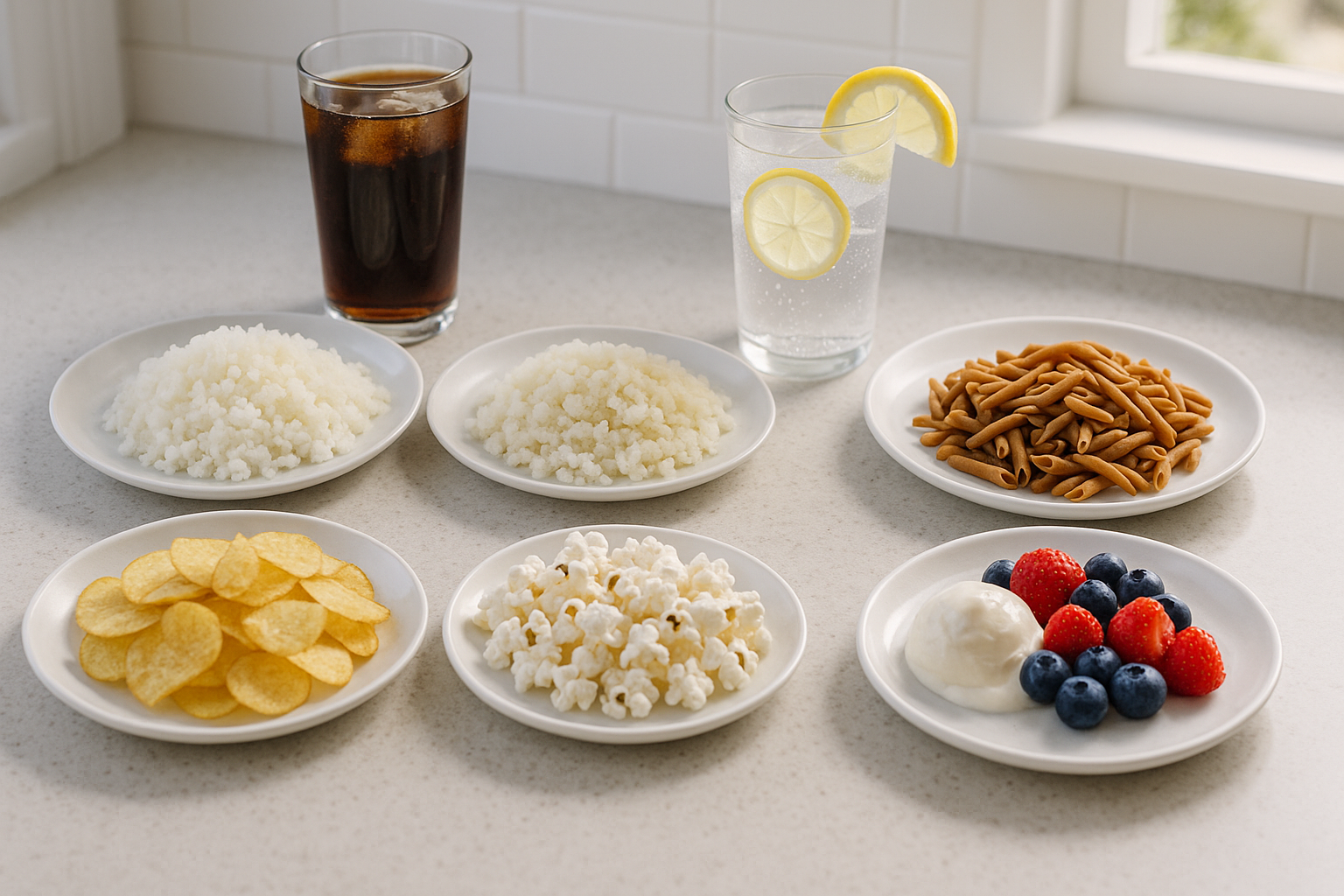
2. Swap White Rice for Cauliflower Rice or Brown Basmati (or Half-and-Half)
If rice is your comfort carb, you don’t need to eliminate it; change the ratio. White rice is easy to overeat because it’s soft, low in fiber, and energy dense. Swapping to cauliflower rice cuts calories dramatically while keeping the texture close enough for stir-fries and curries. If you prefer grains, brown basmati or parboiled rice retains its bran and offers more fiber and a gentler glucose response. A practical, culturally friendly approach is a 50/50 bowl: mix equal parts cooked rice and sautéed cauliflower rice—volume and satisfaction stay high, calories drop, and the dish still tastes like rice.
2.1 Region-specific notes (South Asia)
With daal, karahi, or qorma, try brown basmati for aroma and separate grains. For biryani/pulao (special meals), keep traditional rice but pair with salad/raita and portion consciously. In Pakistan and neighboring regions, this half-and-half method fits family cooking without calling attention to “diet food.”
2.2 Practical steps
- Start with a ½ cup cooked white rice and ½ cup sautéed cauliflower rice per plate.
- Season cauliflower rice like your base (jeera, garlic, green chilies, or soy/ginger).
- For brown basmati: rinse well; soak 30 minutes; cook with a 1:1.25–1.5 ratio (rice:water).
- Add peas, carrots, or chopped spinach for extra fiber and color.
- Plate once; keep the pot off the table to minimize mindless refills.
Numbers & guardrails: 1 cup cooked white rice ≈ 200–220 kcal, ~0–1 g fiber. 1 cup cauliflower rice ≈ 25–35 kcal. A 50/50 cup blend often saves ~80–100 kcal per serving. Bottom line: Keep the rice experience while lowering energy density and improving fiber.
3. Swap Sugary Sodas and Juices for Sparkling Water and Unsweetened Tea
Replacing sugary beverages is one of the highest-impact swaps for weight loss. A single 12-oz (355 ml) regular soda typically contains around 35–40 g of sugar (≈140–160 kcal) and provides zero satiety. Fruit juices—even “no sugar added”—can deliver similar sugars per glass because the fiber is removed. Instead, use unsweetened sparkling water with citrus, mint, or berries for aroma; brew iced tea or cold-brew coffee and add milk if you like. The carbonation and acidity give you that “bite” many people crave from soda, without the calorie payload.
3.1 Flavor hacks that stick
- Citrus wheels (lemon, lime, orange) + a pinch of salt for a “nimbu soda” vibe.
- Ginger slices + mint in sparkling water for a mock-mule refresh.
- Green, black, or hibiscus tea brewed strong, chilled, and finished with lemon.
- For creamy: iced Americano with a splash of milk; avoid syrups and whipped toppings.
- If you need sweetness: use ½ teaspoon honey or a non-nutritive sweetener, measured.
3.2 Common pitfalls
- “Vitamin waters” or kombucha can still hide 8–16 g sugar per bottle; read labels.
- Fruit juice “spritzers” become sugary fast if the juice ratio creeps above 1:3.
- Diet sodas reduce calories but may keep sweetness cravings; test your response.
Numbers & guardrails: Replacing just one sugary drink daily can trim ~1,000 kcal/week—enough to influence weight over time. Bottom line: Hydrate with zero- or very-low-calorie options so calories come from satisfying foods, not your glass.
4. Swap Deep-Fried Favorites for Air-Fried or Oven-Baked Versions
Deep frying drenches food in hot fat, inflating calories quickly. Air-frying or oven-baking with convection achieves crisp textures using a fraction of the oil. You still get the salty crunch you love from fries, pakoras, or chicken pieces, but with far fewer calories per bite. This swap also keeps your kitchen workflow simpler: you measure oil (or use a spray), season assertively, and let hot air do the work. The key is learning a few crisping tricks—drying surfaces thoroughly, using coatings like chickpea flour/panko, and not crowding the tray.
4.1 How to do it
- Pat foods dry; toss with 1–2 teaspoons oil per serving (or light spray).
- Use a high-heat oven (220°C / 425°F) or air fryer (185–200°C / 365–390°F).
- For fries: parboil batons 4–5 minutes, drain well, coat, and roast 20–30 minutes.
- For pakora vibes: chickpea flour + spices + onion/spinach; brush or mist with oil.
- Flip once; finish with fresh lemon, chaat masala, or vinegar for punch.
4.2 Numbers & guardrails
Deep-fried potatoes can reach 300–400 kcal per cup; oven fries made with 1–2 tsp oil per serving often land around 150–220 kcal, depending on cut and coating. Protein coatings (egg white, yogurt) help crusts adhere without soaking up oil. Bottom line: Master hot air + measured oil and you’ll keep crunch while slashing calories.
5. Swap Refined-Flour Naan/Paratha for Whole-Grain Chapati or Multigrain Rotis
Refined white flour (maida) rotis and buttery parathas are delicious but easy to overeat because they’re soft, low in fiber, and often brushed with ghee. Switching to whole-wheat chapati (atta) or multigrain blends (atta + besan/chickpea flour, jowar, barley) adds fiber and protein that improve fullness per bite. The taste stays familiar, and with a little practice, texture can be tender and pliable. If paratha is non-negotiable, try a dry-roasted version or a lightly brushed “paratha-lite,” keeping oil measured by teaspoon.
5.1 Tools/Examples
- Mix 75% whole-wheat atta + 25% besan for a higher-protein, nutty roti.
- Add psyllium husk (½–1 tsp per cup flour) for softness and extra fiber.
- Roll chapatis slightly smaller (14–16 cm) and count pieces before the meal.
- Pair with high-protein fillings: egg, paneer bhurji, shredded chicken, or daal.
5.2 Numbers & guardrails
A typical restaurant naan can exceed 250–300 kcal (more with butter). A home-made 40–50 g whole-wheat chapati is roughly 120–150 kcal with 3–4 g protein and 3–4 g fiber, especially when paired with legumes/meat. Bottom line: Whole-grain rotis increase satiety and control portions without losing cultural fit.
6. Swap Creamy, Mayo-Heavy Sauces for Yogurt, Tomato, or Tahini Bases
Sauces are stealth calorie carriers. Mayonnaise, cream, and buttery roux multiply calories quickly, especially in pasta, sandwiches, and dips. Swapping to Greek-yogurt bases, tomato reductions, or tahini-lemon emulsions preserves creaminess and mouthfeel while cutting energy density. Yogurt adds protein tang; tomato contributes glutamates (umami) and color; tahini brings sesame richness with fiber and unsaturated fats—all easier to portion than free-pouring cream.
6.1 How to do it
- Yogurt sauces: whisk Greek yogurt + garlic + lemon + herbs; temper with a spoon of olive oil.
- Tomato bases: slow-cook onions/garlic, deglaze with stock; add tomato paste for depth.
- Tahini dressings: thin tahini with lemon and water; season with cumin or smoked paprika.
- Pasta sauces: combine tomato + a dollop of yogurt off heat for a “rosa” creaminess.
- Sandwich spreads: mix yogurt with mustard or harissa instead of pure mayo.
6.2 Numbers & guardrails
Two tablespoons mayonnaise ≈ 180–200 kcal; the same volume of Greek-yogurt sauce ≈ 20–40 kcal (before any oil). Tomato-based pasta sauce is usually 40–80 kcal per ½ cup; Alfredo often exceeds 250–400 kcal for the same volume. Bottom line: Change the base, not the flavor profile—creamy satisfaction, fewer calories.
7. Swap Processed or Fatty Meats for Lean Proteins and Lentils
Protein is a cornerstone of appetite control, but the source matters. Processed meats (sausages, hot dogs, deli meats) and fatty cuts deliver a lot of saturated fat and calories with minimal fiber. Lean meats (skinless chicken, turkey), fish, eggs, low-fat dairy, tofu, and legumes (daal, chickpeas, beans) provide protein and, in the case of legumes, fiber that keeps you full longer. Using pulses 3–4 times per week supports weight management and cardiometabolic health while keeping costs down.
7.1 Mix-and-match examples
- Replace beef mince with 50/50 mince + lentils in keema, chili, or pasta sauce.
- Choose grilled fish or baked chicken over fried versions; finish with lemon/herbs.
- Use paneer in measured portions; try low-fat versions in curries.
- Batch-cook daal with tempered spices; portion with a ladle instead of guessing.
7.2 Numbers & guardrails
100 g cooked chicken breast ≈ 30–32 g protein for ~165 kcal. 1 cup cooked lentils ≈ 18 g protein and 15 g fiber for ~230 kcal. Processed sausages can run 250+ kcal per 100 g with high sodium. Bottom line: Favor protein sources that contribute fullness and nutrients, not just calories.
8. Swap Chips and Crisps for Air-Popped Popcorn or Roasted Chickpeas
Crunch cravings derail many diets because chips combine salt, fat, and melt-in-mouth starch. Air-popped popcorn and roasted chickpeas scratch the same itch with far better volume and fiber. Popcorn is a whole grain; three cups air-popped typically hover around 90–100 kcal, which visually looks generous. Roasted chickpeas are heartier, offering protein and fiber that carry you to the next meal. The key is measured fat and strong seasoning so you don’t miss the bag.
8.1 How to do it
- Popcorn: air-pop or microwave in a paper bag; mist with oil; season (nutritional yeast, chili-lime, za’atar).
- Chickpeas: drain well, dry thoroughly, toss with 1–2 tsp oil/cup, roast at 200°C/400°F until crisp; season hot.
- Keep servings visible: 3 cups popcorn or ½ cup roasted chickpeas per snack.
- Pair snacks with protein (e.g., a skyr/yogurt cup or a boiled egg) for extra staying power.
8.2 Numbers & guardrails
28 g (1 oz) potato chips ≈ 150–160 kcal and vanishes quickly. 3 cups popcorn ≈ 90–100 kcal; ½ cup roasted chickpeas ≈ 120–140 kcal with 6–7 g protein and ~6 g fiber (depending on oil and roast level). Bottom line: Choose crunchy snacks with fiber and volume so “snack” doesn’t become a stealth meal.
9. Swap Ice Cream and Pastries for Fruit-Forward Treats and Dark Chocolate
Dessert can stay—change the matrix. Ice cream, donuts, and pastries deliver sugar plus fat (and in pastries, butter-rich dough) that stack calories rapidly. Swapping to fruit-forward desserts shifts sweetness toward fiber and water content, which increase fullness per calorie. Options include frozen fruit + yogurt (“nice cream”), baked apples/pears with spice, chia puddings, or a square or two of dark chocolate for a concentrated, mindful treat.
9.1 Tools/Examples
- “Nice cream”: blend frozen banana + berries + splash of milk/yogurt; top with cacao nibs.
- Baked fruit: core apples, add cinnamon and a teaspoon of brown sugar; bake until soft.
- Chia yogurt cups: ¾ cup yogurt + 1 tbsp chia + vanilla; rest 30+ minutes.
- Traditional sweets: portion barfi/gulab jamun for special occasions; enjoy slowly.
9.2 Numbers & guardrails
A typical ½ cup premium ice cream often runs 250–350 kcal; a generous bowl of “nice cream” can land near 150–220 kcal, depending on add-ins. Dark chocolate at 70–85% cocoa offers intense flavor, encouraging smaller portions (10–20 g). Bottom line: Retain satisfaction by emphasizing fruit and intensity over volume and sugar-fat combos.
10. Swap Heaping Oils and Ghee for Measured Sprays and Heart-Healthy Oils
Fat is flavorful and essential, but it’s energy dense—about 120 kcal per tablespoon of oil and ~100–115 kcal per tablespoon of ghee or butter. The problem isn’t fat itself; it’s unmeasured fat. Swapping to measured pours (teaspoons), oil misters, or nonstick cookware trims hundreds of weekly calories with zero taste penalty when you season boldly. When you do add fat, prefer unsaturated oils (olive, canola, peanut) most of the time for heart health.
10.1 Practical steps
- Keep a 5 ml teaspoon by the stove; actually measure.
- Use an oil mister to coat pans lightly; add more only if food sticks.
- Finish dishes with a teaspoon of good olive oil for aroma instead of cooking in 2–3 tbsp.
- For desi tadka: heat 1 tsp oil with whole spices; pour over daal—big flavor, controlled calories.
10.2 Numbers & guardrails
Switching from 2 tbsp oil per person to 2 tsp can save ~200 kcal per meal. Over a week of home cooking, that’s easily 1,000+ kcal. Bottom line: Keep the flavor but meter the pour; the teaspoon is your stealth weight-loss tool.
11. Swap Sugary Coffeehouse Drinks for Simple Coffee with Milk and Spice
Café beverages can hide a dessert’s calories under foam. Flavored lattes, frappes, and mochas often contain multiple pumps of syrup, sugary sauces, and whipped toppings. Swapping to an Americano, long black, or brewed coffee with a splash of milk (dairy or fortified plant milk) removes most of the sugar while keeping the ritual. For a cozy treat, order a small latte unsweetened, add cinnamon or unsweetened cocoa, and sweeten yourself if truly needed—measured.
11.1 How to order smarter
- “Grande latte, no syrup, extra cinnamon.”
- “Iced Americano, splash of milk, one sugar packet.”
- “Cold brew, plain, side of milk.”
- Skip whipped cream and caramel/chocolate drizzles; they add 100–200 kcal fast.
11.2 Numbers & guardrails
A caramel or mocha-style blended drink can hit 300–500+ kcal. An Americano with 30–60 ml milk is ~15–40 kcal; a small unsweetened latte ranges 100–150 kcal depending on milk choice. Bottom line: Keep your coffee habit, not the syrup habit.
12. Swap White Pasta for Whole-Grain or Legume Pasta (or Veggie Noodles)
White pasta is satisfying but easy to over-serve. Whole-grain pasta and legume pastas (chickpea, lentil) deliver more fiber and often more protein per serving, which helps appetite control. If texture is your obstacle, try a “blend” method: mix 50% whole-grain or legume pasta with 50% regular pasta to acclimate. Or go fully veggie with spiralized zucchini or spaghetti squash under a robust sauce. Sauce choice matters too; tomato-based or pesto-lite beats cream sauce for calories.
12.1 How to do it
- Boil pasta to just shy of al dente; finish in sauce for better starch binding.
- Portion dry pasta at 56–75 g (2–2.6 oz) per person; weigh once to learn your eye.
- For legume pasta, rinse gently after cooking to remove sticky foam.
- Bulk with veg (mushrooms, peppers, spinach) and lean protein (chicken, shrimp, tofu).
12.2 Numbers & guardrails
A standard 2-oz dry serving of white pasta ≈ 190–210 kcal, ~2–3 g fiber; whole-wheat often gives 5–7 g fiber; legume pasta frequently provides 12–20 g protein and 6–8 g fiber per serving (brand-dependent). Bottom line: Upgrade the noodle and the sauce, and pasta nights can live happily in a calorie deficit.
FAQs
1) Do healthy food swaps really make a difference if my total calories are the same?
Yes—primarily through satiety and adherence. Swaps that raise protein and fiber, and lower energy density, help you feel full on fewer calories, making it easier to stay in a deficit over weeks. Even if two meals match in calories on paper, the higher-protein/higher-fiber option tends to reduce later snacking and “calorie creep,” improving your weekly totals.
2) How many swaps should I implement at once?
Start with two or three you’re confident you’ll use daily—often a breakfast swap, a beverage swap, and a cooking-fat swap. This keeps friction low and progress visible. After 1–2 weeks, add another swap or improve consistency with the first set. Momentum matters more than perfection.
3) Can I still eat my cultural favorites and lose weight?
Absolutely. The key is portion awareness and strategic substitutions (e.g., brown basmati or half-cauli rice, whole-wheat rotis, daal more often, grilled kebabs vs deep-fried snacks). Save traditional festival or restaurant dishes for intentional occasions and balance with lighter meals around them.
4) Do I need to count calories if I focus on swaps?
Not necessarily. Many people lose weight by consistently using swaps that lower energy density and by measuring key items (oil, grains, nuts). If progress stalls, loosely track for a week to recalibrate portions. Think of tracking as a thermometer, not a forever plan.
5) Are “diet” or zero-calorie sweeteners okay?
They can reduce sugar intake and calories for some people. Others find sweeteners maintain cravings for intense sweetness. Use them as a transitional tool and pay attention to your appetite and habits. Unsweetened options (sparkling water, tea, coffee with milk) are safest for long-term palate training.
6) What’s the ideal protein target for weight loss?
A practical range is 1.2–1.6 g protein per kg body weight per day (or ~0.54–0.73 g/lb), spread across meals. Many do well with 15–30 g protein per meal. Prioritize whole foods first; supplement with protein powders if needed for convenience.
7) How do I handle social meals or eating out?
Use the same swap logic: grilled or baked over fried; tomato-based sauces over creamy; swap fries for salad or steamed veg; soda for sparkling water. Share desserts, and consider a protein-forward starter to curb hunger. One meal won’t derail you; patterns matter.
8) Will whole-grain or legume pasta upset my stomach?
Higher fiber can cause bloating if you jump too fast. Increase gradually, drink water, and cook pasta properly (don’t overcook). If legumes bother you, rinse well and try smaller portions alongside regular pasta until tolerance improves.
9) Are nuts a good swap for chips if they’re so calorie-dense?
Yes, as long as you measure. A 28 g (1 oz) handful of almonds or pistachios is satisfying due to fat, fiber, and crunch, and pairs well with fruit for volume. Pre-portion into small containers to avoid mindless eating from a family bag.
10) How soon should I expect results from these swaps?
Many people notice appetite changes and easier calorie control within a week. Visible weight change depends on your overall deficit and water shifts; aim for 0.25–0.75 kg (0.5–1.5 lb) per week on average. Track progress with multiple measures: weight trend, waist, energy, and consistency.
Conclusion
Weight loss gets easier when meals still feel like your meals. The swaps above don’t demand perfection, only repetition: boost protein and fiber, lower energy density, and measure fats and fun foods. Start with breakfast, beverages, and cooking fat—three high-leverage levers that ripple through your week. Then upgrade staples like rice, rotis, pasta, sauces, and snacks. Expect experimentation; taste and texture matter. Plate intentionally, season boldly, and celebrate “good enough” choices that you can repeat on busy days. Commit to two swaps today, prep them once, and let your routine do the heavy lifting tomorrow.
Try two swaps for the next seven days, and share which ones stuck—that’s your blueprint.
References
- Healthy Drinks. Harvard T.H. Chan School of Public Health. Updated 2024. https://www.hsph.harvard.edu/nutritionsource/healthy-drinks/
- Carbohydrates and Fiber. Harvard T.H. Chan School of Public Health. Updated 2023. https://www.hsph.harvard.edu/nutritionsource/carbohydrates/
- Protein. Harvard T.H. Chan School of Public Health. Updated 2022. https://www.hsph.harvard.edu/nutritionsource/what-should-you-eat/protein/
- Added Sugars. American Heart Association. Updated 2023. https://www.heart.org/en/healthy-living/healthy-eating/eat-smart/sugar/added-sugars
- Sugars Intake for Adults and Children: Guideline. World Health Organization. 2015. https://www.who.int/publications/i/item/9789241549028
- FoodData Central (general database for nutrient profiles of common foods like yogurt, rice, oils, popcorn, chips, and pasta). U.S. Department of Agriculture. Accessed Aug 2025. https://fdc.nal.usda.gov/
- Processed Meat, Red Meat and Cancer. American Institute for Cancer Research. Updated 2024. https://www.aicr.org/cancer-prevention/food-facts/processed-and-red-meat/
- Whole Grains. Harvard T.H. Chan School of Public Health. Updated 2022. https://www.hsph.harvard.edu/nutritionsource/what-should-you-eat/whole-grains/
- Oils and Fats: The Nutrition Source—Healthy Oils. Harvard T.H. Chan School of Public Health. Updated 2022. https://www.hsph.harvard.edu/nutritionsource/what-should-you-eat/fats-and-cholesterol/healthy-oils/
- Air Frying: Is It Healthy? Cleveland Clinic Health Essentials. Updated 2024. https://health.clevelandclinic.org/air-fryer-healthy-cooking/