























You crushed your session—now protect your glow. “Workout skincare” simply means the steps you take right after exercise to remove sweat and grime, reduce friction and heat triggers, and reset your skin barrier. The short answer: rinse off promptly, change into clean, dry clothes, and use simple, non-comedogenic products. If you can’t shower, do a quick wipe-down and swap your gear until you get home. This guide is educational and not a substitute for medical care—see a clinician for persistent or severe concerns.
Quick post-workout flow (summary): 1) Rinse or shower soon; 2) Cleanse face and body gently; 3) Change into dry, clean clothes; 4) Moisturize smart; 5) If you’re outdoors, reapply SPF; 6) Disinfect/clean gear and mind locker-room hygiene.
1. Shower promptly with lukewarm water—don’t scrub hard
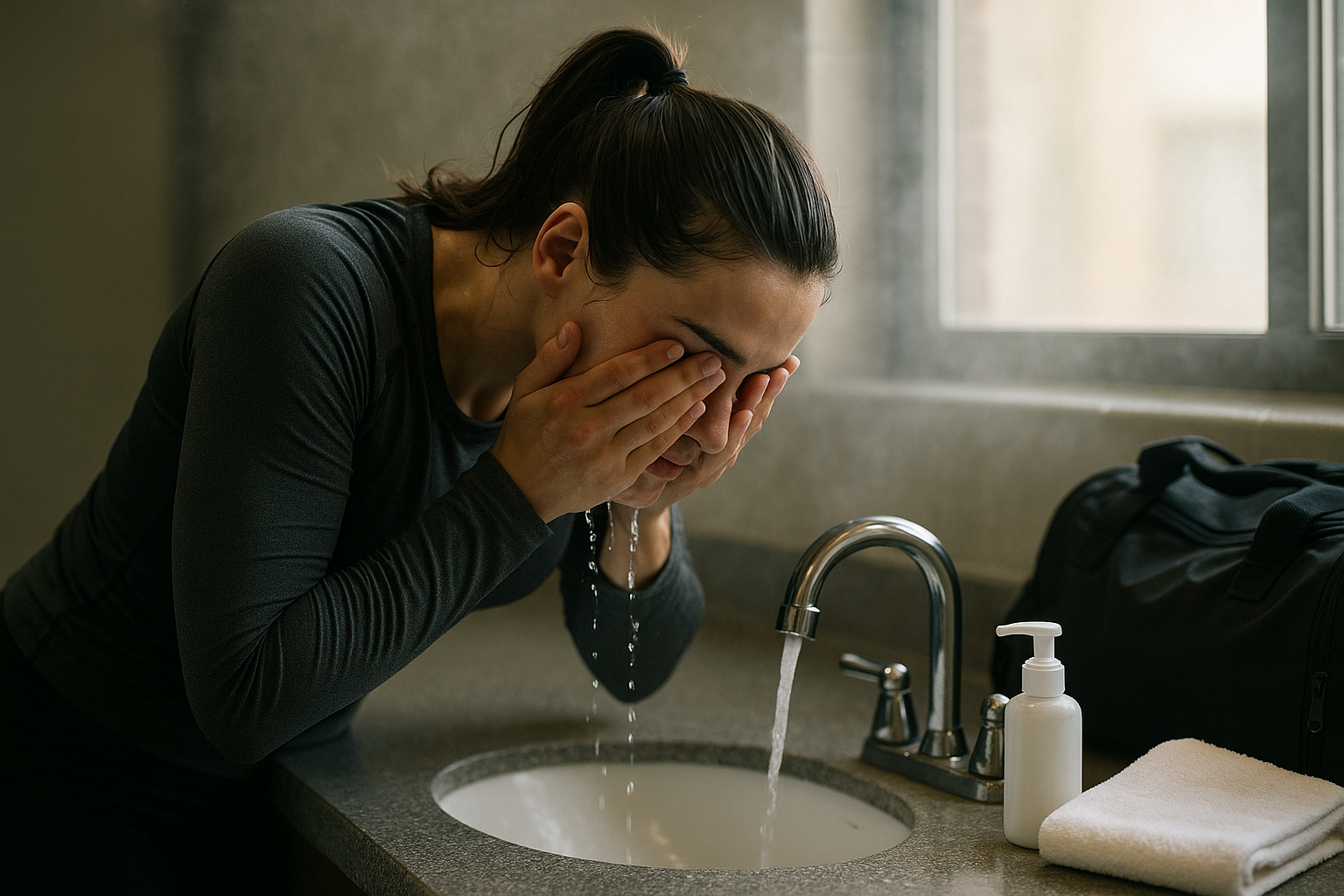
The best first step after training is simple: get sweat, oil, and debris off your skin as soon as you reasonably can. A quick, lukewarm shower helps clear pores and reduce the mix of sweat and occlusion that can lead to breakouts or irritation. Go easy on temperature and pressure—very hot water and aggressive scrubbing can strip your barrier when it’s already warm and flushed from exercise. If a full shower isn’t possible, prioritize a face cleanse and a complete clothing change, then shower when you’re able. Pat skin dry with a clean towel rather than rubbing to avoid friction on primed, post-workout skin.
1.1 How to do it
- Keep the water lukewarm, not hot.
- Use a gentle, non-fragranced, non-comedogenic cleanser.
- Pat dry with a clean towel; avoid harsh rubbing.
- Change into dry, clean clothes immediately.
- If no shower is available, at least cleanse the face and hands, swap clothes, and plan a proper rinse ASAP.
Healthy skin loves consistency; even a 2–3 minute rinse beats waiting around in sweaty gear.
2. Use targeted cleansers (salicylic acid or benzoyl peroxide) where you break out
For acne-prone areas (face, chest, back), choose cleansers with salicylic acid (oil-soluble to decongest pores) or benzoyl peroxide (reduces acne-causing bacteria). You don’t need both at once—pick based on your pattern: salicylic if you’re congested/blackhead-prone; benzoyl peroxide if you get inflamed papules and body acne. Sensitive skin? Start with a gentle base cleanser and patch-test actives. These ingredients are well-established standards in acne care and are commonly recommended specifically after workouts.
2.1 Numbers & guardrails
- Look for salicylic acid 0.5–2% in face cleansers.
- Benzoyl peroxide washes commonly range 2.5–10%; higher strengths can be drying—start low.
- Avoid using multiple drying actives back-to-back on freshly heated skin; keep it simple.
- Rinse well; light fabrics can bleach with benzoyl peroxide residue.
A calm, single-active approach after training reduces irritation while still preventing breakouts.
3. Change out of sweaty gear immediately and choose moisture-wicking fits
Sweaty, tight gear traps heat and moisture against skin, priming breakouts and folliculitis on high-friction zones (back, shoulders, thighs). Swapping damp clothing for dry, breathable layers right after training does more for your complexion than any fancy serum. For next time, choose moisture-wicking synthetics (nylon/poly blends) in a looser fit to reduce rubbing and help sweat evaporate. That change alone lowers the risk of “acne mechanica,” the friction/pressure-related acne common in athletes.
3.1 Mini-checklist
- Pack a full change (top, bottoms, underwear, socks) in your gym bag.
- Pick moisture-wicking labels; avoid heavy cotton for intense sessions.
- Skip re-wearing “yesterday’s” kit—residual oil/bacteria can re-seed pores.
- If you must commute in gym gear, add a breathable over-layer and change soonest.
Less occlusion and friction means fewer post-workout bumps—small textile choices pay off.
4. If you can’t shower: do an “interim clean-up” kit
No showers? You still have options. Cleanse your face with a gentle, non-comedogenic cleanser or salicylic acid pads, wash your hands, and change into dry clothes. Gently pat sweat—don’t rub—with a clean towel during your session to limit pore congestion and friction. This stopgap won’t replace a proper rinse, but it meaningfully reduces breakouts until you can shower at home. Keep a small pouch in your bag so the routine is effortless.
4.1 What to pack
- Travel-size gentle cleanser or micellar water.
- Salicylic acid pads (0.5–2%).
- Clean microfiber towel; spare T-shirt/underwear/socks.
- Lightweight moisturizer (see Tip 6).
- Flip-flops for shared showers (see Tip 10).
A quick wipe-down plus a clothing swap is the difference between “fine” and “flare-up” on busy days.
5. Reapply sunscreen if you’ll be outdoors—sweat breaks it down
Finished your workout and heading outside? Reapply a broad-spectrum SPF 30+. Sunscreen effectiveness drops with time, toweling, and sweating; water-resistant formulas are rated for 40 or 80 minutes and still require reapplication. Look for “non-comedogenic” labels if you’re acne-prone. If you used a benzoyl peroxide wash, dry thoroughly before SPF to avoid fabric bleaching. Reapplication every 2 hours (and after heavy sweat) is the standard guidance.
5.1 How to make it easy
- Keep a travel SPF in your bag.
- Prefer water-resistant if you’re a heavy sweater.
- Use stick or lotion around hairline/ears; mist for scalp.
- Don’t forget hands, neck, chest.
Post-workout SPF protects your progress and prevents post-acne dark marks from deepening.
6. Moisturize to reset the barrier—choose textures by body area
After cleansing, lock in hydration with a light, non-fragranced moisturizer. For the face, gels or lotions with glycerin, hyaluronic acid, or ceramides replenish without clogging. For the trunk, those prone to “folliculitis” or acne often do better with lighter lotions than heavy occlusives. In hot, humid climates or high-sweat routines, occlusion from thick emollients and some sunscreens can aggravate Malassezia (yeast) folliculitis—itchy, acne-like bumps on the upper trunk. Keep products non-comedogenic and avoid heavy occlusion if you’re prone.
6.1 Mini-checklist
- Apply moisturizer within minutes of cleansing.
- Prefer non-fragranced, non-comedogenic formulas.
- If you get itchy, uniform “pimples” on the trunk, consider yeast folliculitis—see Tip 12.
- Swap very heavy creams for light lotions post-workout.
A right-sized layer of moisture speeds recovery while keeping pores happy.
7. Cool the flush—especially if you have rosacea
Heat and a spike in core temperature can trigger rosacea flares. Post-workout, bring the temperature down gently: take a cool (not icy) rinse, use a fan, sip cool water, and avoid steam rooms. If exercise is a frequent trigger, consider shorter, lower-intensity intervals or cooling the room—many rosacea patients report fewer symptoms with these tweaks. Manage the cool-down before layering actives to minimize sting and redness.
7.1 Practical options
- Cool rinse; avoid hot showers/saunas immediately after.
- Fan or AC during stretch/cool-down.
- Break sessions into shorter blocks with rest.
- Apply bland moisturizer first; delay actives until the skin settles.
Controlling heat load lets you enjoy exercise benefits without the flare.
8. Stop friction at hot spots (straps, bands, helmets): acne mechanica 101
Where gear rubs—helmet straps, sports bras, waistbands—acne mechanica can bloom. Post-workout, cleanse those zones first, then dry thoroughly. For prevention next time, cushion pressure points (soft fabric under straps), choose looser fits, and keep gear clean and dry. If breakouts cluster exactly under equipment contact, that’s a clue you’re dealing with friction-pressure acne, not just oiliness. A salicylic or benzoyl peroxide wash in the shower can help.
8.1 Tools/Examples
- Thin cotton layer under chin/helmet straps.
- Wider, softer bands to distribute pressure.
- Rotate gear so items fully dry between sessions.
- Clean contact points after use (see Tip 11).
Less heat + less pressure = fewer bumps in predictable gear patterns.
9. Keep hair and hairlines from re-seeding breakouts
Sweat and oily hair products that migrate to skin can clog follicles along the forehead, temples, and back (“pomade acne”). After workouts, rinse sweat from the scalp/edges and keep hair off the face while skin cools. If you use waxes, pomades, or heavy oils, try applying them away from the hairline or switch to lighter, non-comedogenic stylers. Wash headbands, hats, and pillowcases frequently to reduce residue transfer.
9.1 Mini-checklist
- Pull hair back during/after training.
- Cleanse hairline during your post-workout face wash.
- Apply stylers one inch back from hairline when possible.
- Launder headbands/hats after sweaty use.
Controlling product migration pays dividends right where many athletes break out first.
10. Practice locker-room hygiene: sandals on, don’t share, disinfect
Gyms and locker rooms are high-traffic spaces. Post-workout, don’t go barefoot in communal showers; wear flip-flops to reduce the risk of fungal infections and warts. Avoid sharing towels and razors, and cover nicks/cuts. Wipe down shared equipment, and wash or sanitize hands after handling it—MRSA and other microbes can persist on surfaces and spread through contact. These basics protect your skin and help the community.
10.1 What to remember
- Flip-flops in showers/locker rooms.
- No sharing of towels, razors, bars of soap.
- Disinfect equipment before/after use.
- Cover cuts; wash hands often.
Hygiene is skincare—simple steps reduce infections that derail your training.
11. Wash clothes and clean gear after each session
Re-wearing unwashed kit re-introduces oil, sweat, and microbes to freshly cleansed skin. Wash clothes, socks, and towels after each workout; let mats and equipment dry fully before storage. If you use a personal mat, clean it per the manufacturer’s instructions and keep a barrier towel over shared surfaces. Even small tears or worn textures can harbor grime—repair or replace items that are hard to clean.
11.1 Routine you’ll actually do
- Toss gear straight into a separate bag compartment.
- Keep a small spray for mat handle wipe-downs; deep clean weekly.
- Own two of your most-used items so one can fully dry.
- Choose fragrance-free detergents if you’re irritation-prone.
A consistent laundry cadence keeps your post-workout skin reset from being undone by yesterday’s kit.
12. When bumps won’t clear: consider folliculitis or see a dermatologist
Not all post-workout bumps are classic acne. Folliculitis—bacterial or yeast (Malassezia)—can mimic acne, especially on the trunk, and often itches. If clusters are uniform, itchy, and resistant to standard acne routines, ask your clinician about Malassezia folliculitis; management differs (often antifungals and reducing occlusion). Persistent body acne may also need prescription retinoids or other therapies—don’t wait months in discomfort. Seek professional help if lesions are painful, spreading, or look infected.
12.1 Red flags to act on
- Rapidly spreading, tender bumps or abscesses.
- Fever or feeling unwell with skin lesions.
- No improvement after 6–8 weeks of consistent care.
- Itchy, uniform “pimples” on the trunk despite acne products.
A correct diagnosis speeds relief and steers you to treatments that actually fit the cause.
FAQs
1) Do I really have to shower immediately after every workout?
As close to “yes” as practical. A short, lukewarm rinse removes sweat, oil, and debris that can clog pores and irritate the barrier. If you can’t shower, cleanse your face, wash your hands, change into dry clothes, and plan a proper rinse ASAP. Even quick steps meaningfully reduce breakouts.
2) Are cleansing wipes enough if there’s no shower?
They’re a useful stopgap, not a replacement. Use gentle, non-comedogenic wipes or salicylic acid pads on the face and any breakout-prone zones, then change into clean, dry clothes. Follow with a full shower when you can to rinse residue from sweat and products.
3) What’s best for body acne after workouts—salicylic acid or benzoyl peroxide?
Both have roles. Salicylic acid helps unclog pores (great for comedones). Benzoyl peroxide reduces acne-causing bacteria and is often favored for inflamed back/chest acne. Many start with one active in the shower and evaluate response over a few weeks.
4) Does sweat itself cause acne?
Sweat isn’t “dirty,” but trapped sweat + friction + occlusion can drive breakouts (acne mechanica), especially under gear and tight clothing. Prompt cleansing and reducing friction/occlusion make a big difference.
5) How soon should I reapply sunscreen after a sweaty session?
When you head outdoors post-workout, reapply broad-spectrum SPF 30+. Standard guidance: every 2 hours, and after sweating or toweling. Water-resistant formulas are rated for 40 or 80 minutes, but they still need reapplication.
6) How do I tell acne from folliculitis after workouts?
Acne tends to mix blackheads/whiteheads and inflamed pimples; folliculitis can appear as uniform, itchy follicular bumps, often on the upper trunk. If bumps persist despite acne care—or itch intensely—ask about Malassezia folliculitis, which often needs antifungals and less occlusive products.
7) Is the sauna or steam room okay for my skin post-workout?
If you have rosacea or are flush-prone, added heat/steam often worsens redness. Cool down first, keep sessions brief if you choose to go, and prioritize hydration and gentle moisturizers. Many rosacea patients do better with lower-intensity, shorter workouts and active cooling.
8) Can I share towels or razors with my gym buddy if we wash them later?
Best to avoid it. Shared textiles and razors can transmit microbes, including MRSA, which can survive on surfaces for long periods. Use your own items, launder promptly, and cover cuts.
9) How should I clean my yoga mat and gear?
Follow the manufacturer’s instructions for cleaners so you don’t damage materials. Disinfect high-touch surfaces after each use and allow them to fully dry—damaged, porous gear is harder to sanitize and should be repaired or replaced.
10) My forehead breaks out where my helmet strap sits—what should I do?
That pattern suggests acne mechanica. Post-workout, cleanse and dry the area, cushion or widen contact points, choose looser fits if safe, and keep gear clean/dry. Salicylic or benzoyl peroxide washes can help. American Academy of Dermatology
11) Are antibacterial body washes necessary after the gym?
Not usually. Gentle, non-fragranced cleansers plus acne actives (salicylic or benzoyl peroxide where appropriate) are typically sufficient. Save harsher antiseptics for clinician guidance; overuse can irritate and harm your barrier.
12) How long should I try a post-workout routine before deciding it works?
Give a consistent routine 6–8 weeks—skin cycles take time. Address friction/occlusion now (gear, fabrics, hygiene), and if bumps persist or itch, see a dermatologist to rule out folliculitis or adjust treatment. American Academy of Dermatology
Conclusion
Great workout skincare is less about complicated products and more about timing, textiles, and temperature. Rinsing off promptly, swapping into dry clothes, and using targeted, non-comedogenic basics remove the triggers that workouts can amplify: sweat, friction, and heat. Smart prevention—moisture-wicking fabrics, clean gear, sandals in shared showers—keeps you from fighting repeated flare-ups, while thoughtful actives like salicylic acid or benzoyl peroxide handle the rest. If your bumps are uniform and itchy or don’t respond, consider folliculitis and get professional input; a correct diagnosis changes everything. Put these 12 tips on repeat for four to eight weeks, track your skin’s response, and fine-tune based on what you see. You’ll keep the health benefits of exercise—and the glow—without the post-gym drama. Ready to try it? Pack your quick clean-up kit today and make it a habit after your next session.
References
- How your workout can affect your skin, American Academy of Dermatology (AAD), last updated May 27, 2021 — American Academy of Dermatology
- Is your workout causing your acne?, AAD, (accessed Aug 2025) — American Academy of Dermatology
- How to decode sunscreen labels, AAD, Apr 25, 2024 — American Academy of Dermatology
- Back acne: How to see clearer skin, AAD, Sep 12, 2023 — American Academy of Dermatology
- Athletes: MRSA Prevention and Control, Centers for Disease Control and Prevention (CDC), Jun 27, 2025 — CDC
- Preventing MRSA infections, CDC, Jun 27, 2025 — CDC
- Athletic Facilities: MRSA Prevention and Control, CDC, Jun 27, 2025 — CDC
- Coping with Common Rosacea Triggers, National Rosacea Society, (accessed Aug 2025) — Rosacea.org – National Rosacea Society
- Exercise May Cause Flare-Ups but Can Be Controlled, National Rosacea Society, Apr 23, 2013 — Rosacea.org – National Rosacea Society
- Malassezia (pityrosporum) folliculitis, DermNet NZ, (updated c. 2023; accessed Aug 2025) — DermNet®
- Folliculitis, DermNet NZ, (updated c. 2023; accessed Aug 2025) — DermNet®
- Are your hair care products causing breakouts?, AAD, (accessed Aug 2025) — American Academy of Dermatology