









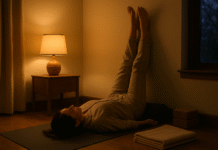
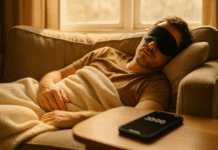
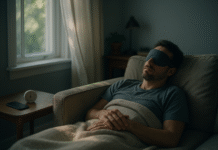

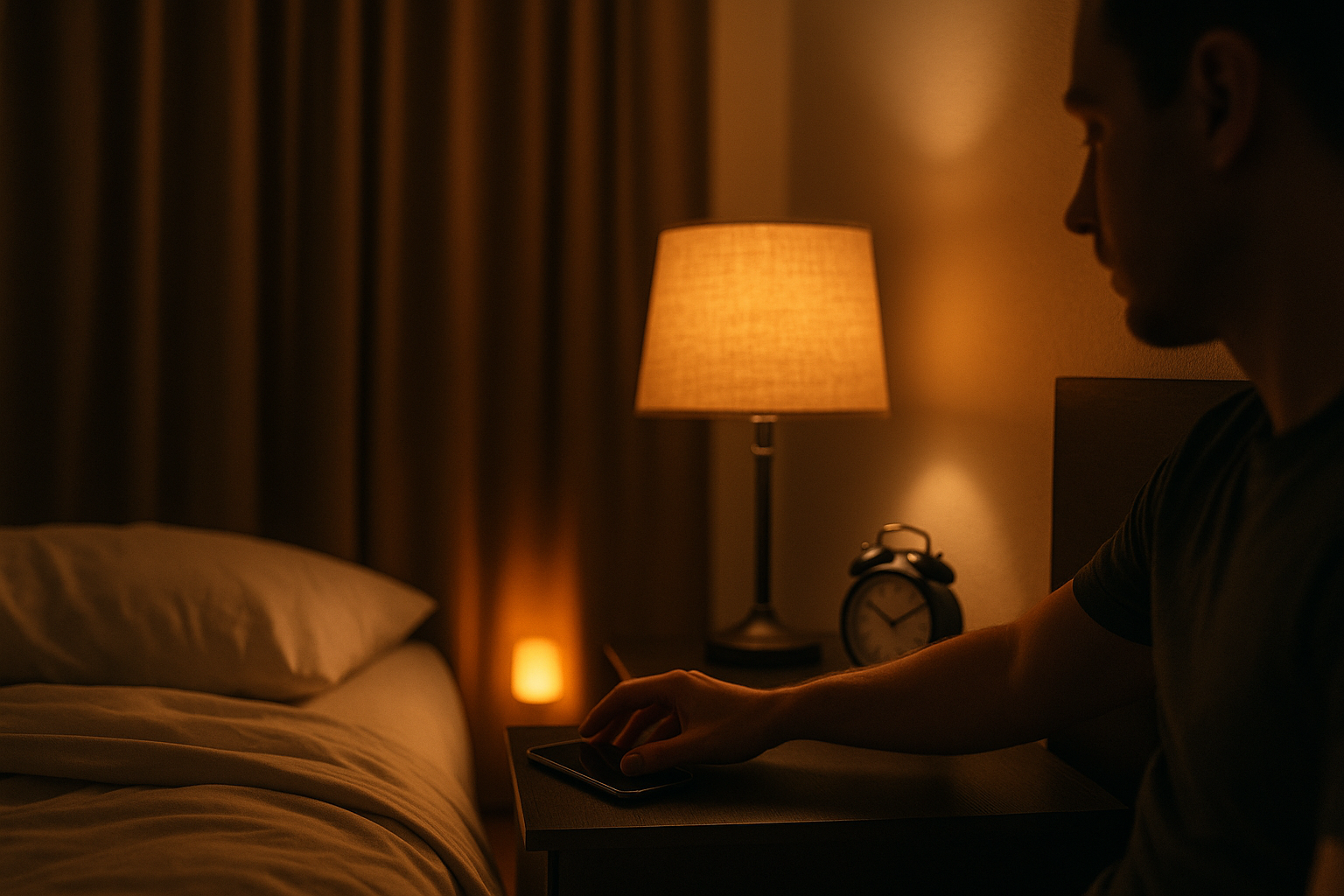
Blue light isn’t the villain—it’s a powerful daylight signal. The problem is timing. When blue-rich light hits your eyes late in the evening, it can suppress melatonin, shift your internal clock later, and make it harder to fall asleep and wake refreshed. This guide unpacks the science behind the impact of blue light on sleep and practical ways to counteract it, then gives you 10 evidence-based strategies to make light work for your body instead of against it. Quick answer: blue-heavy light before bed delays the “sleep signal,” while darker, warmer, dimmer light supports melatonin and earlier sleep timing.
Medical note: This article is educational, not medical advice. If you have persistent sleep issues or a possible sleep disorder, consult a qualified clinician.
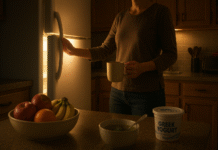
1. Set an Evening “Light Curfew” with Concrete Targets
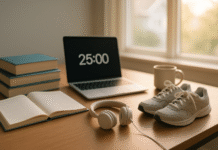
The most reliable way to blunt blue light’s impact is to limit circadian-effective light for several hours before bed. Start by deciding on a “light curfew” (for example, 3 hours pre-bed), then aim for very low circadian stimulus in that window. A 2022 consensus recommends keeping melanopic equivalent daylight illuminance (melanopic EDI) at the eye to ≤10 lux in the evening and ≤1 lux during the biological night; these values directly map to the sensitivity of melanopsin-containing retinal cells that set your clock. In practice, that means dim, warm, indirect lighting—think lamps and string lights at low output, not bright overheads. You don’t need perfect lab gear: approximations with a phone lux app and common-sense steps will get you close enough to feel the difference within a week.
1.1 Why it matters
The circadian system “reads” brightness and spectrum via melanopsin. Blue-rich light in the evening suppresses melatonin and delays sleep timing; minimizing evening melanopic EDI reduces this effect and helps your body wind down on schedule. Standards bodies now define α-opic metrics (like melanopic EDI) precisely so designers and consumers can target the biology, not just aesthetics.
1.2 Numbers & guardrails
- Evening (≈3 h pre-bed): target ≤10 melanopic lux at the eye.
- Night: target ≤1 melanopic lux (or pitch-black).
- Daytime anchor: get abundant daylight (hundreds to thousands of lux; see Strategy 5).
- If measuring only visual lux: as a rough rule, very warm low-output lighting kept to a few meters away typically lands under 30–50 visual lux at the eye in living spaces.
Checklist
- Replace bright overheads with low-output lamps.
- Use bulbs labeled 2000–2700K for evening.
- Place light sources below eye level and out of direct line of sight.
- Install dimmers or smart-home schedules to automate the curfew.
Bottom line: clock-friendly lighting isn’t about vibes; it’s about hitting low melanopic numbers at predictable times so your biology knows it’s night.
2. Tame Your Screens Beyond “Night Mode”
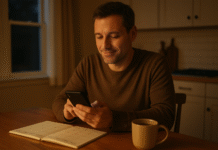
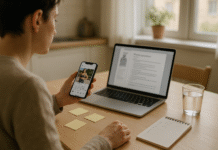
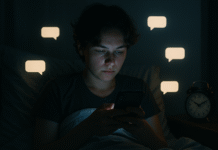
Switching on Night Shift (or similar) warms color temperature, but by itself it often doesn’t fix sleep. Research in young adults found no significant sleep improvements from iPhone Night Shift compared with regular settings; abstaining from screens performed best for those already sleeping adequately. That doesn’t mean screen settings are pointless—just that brightness, duration, distance, and content matter as much as spectrum. If you must use screens in the last hour or two, stack mitigations: turn brightness way down, enlarge text to avoid squinting, use dark mode, and increase viewing distance. And if you can, set a hard stop and pivot to off-screen wind-down activities.
2.1 How to do it
- Brightness first: set the lowest comfortable brightness; avoid auto-brightness hunting.
- Color second: enable Night Shift/blue-reduction to shift output toward warmer hues.
- Distance & angle: hold phones >40 cm (16 in) from eyes; keep displays below eye level to reduce direct retinal hit.
- Dark interfaces: activate Dark Mode and grayscale (bonus: reduces engaging color cues).
- Time box: set app limits or a “digital sunset” alarm 60–90 minutes before bed.
2.2 Mini case
Two weeks of low-brightness + dark mode + 60-minute cutoff commonly trims sleep onset latency by a few to several minutes for people sensitive to evening light, even if Night Shift alone didn’t help. The biggest effect shows up when the late-night habit is highly stimulating (fast-scroll social feeds, gaming).
The takeaway: think “less, dimmer, farther, warmer—then shorter” for screens. Hardware and software help, but self-imposed boundaries move the needle most.
3. Swap Overheads for Lamps and Choose Sleep-Smart Bulbs
Overhead fixtures are efficient at lighting rooms—and at telling your brain “it’s daytime.” Switching to low, indirect, warm sources drastically cuts circadian impact. Standards like WELL recommend keeping evening lighting at or below 50 equivalent melanopic lux in living areas (measured at ~30 inches above the floor), which is easier to hit with lamps than with ceiling cans. For bedrooms and hallways, favor amber or red nightlights and keep illuminance just high enough for safety.
3.1 Tools & examples
- Bulbs: pick 2000–2200K “amber” LEDs for wind-down spaces; 2700K as a warm default elsewhere with dimming.
- Smart bulbs/dimmers: program scenes (e.g., “Evening 10%”) that auto-activate nightly.
- Placement: table/floor lamps with opaque shades; bounce light off walls.
- Nightlights: motion-activated amber/red strips to avoid switching on bright lights.
3.2 Numeric example
A typical living room with four 9-W 3000K LEDs at full power can exceed 100 visual lux at the eye. Replacing two fixtures with lamps at 10–20% brightness and switching bulbs to 2200K can bring you under 50 EML with similar perceived comfort.
Swap architecture first, then settings. Design that defaults to dim and warm after sunset makes good sleep effortless.
4. Make Your Wind-Down Analog (and Ditch the Backlit E-reader)
If you only change one habit, make the last hour device-free. A controlled study comparing light-emitting e-readers with paper books found e-readers suppressed melatonin, delayed circadian timing, lengthened time to fall asleep, and reduced next-morning alertness—despite similar content. The backlight’s spectrum and the device’s proximity compound the effect. If you love e-books, try e-ink models without frontlights—or at minimum, use warmest frontlight, lowest brightness, and hold it farther away. But paper wins at bedtime.
4.1 Mini checklist
- Paper > pixels in the last hour.
- If using e-ink: frontlight off or warmest, lowest brightness, larger font, greater distance.
- No tablets/phones for reading in bed.
- Keep bedside lamps warm and dim.
4.2 Why it works
You’re removing both circadian-effective light and cognitive arousal (notifications, hyperlinks, blue light). It’s the simplest lever with the biggest upside: more melatonin, faster sleep onset, better morning alertness.
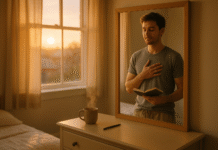
5. Anchor Your Clock with Bright Morning Daylight
Evenings are for subtraction; mornings are for addition. Robust morning light exposure strengthens your circadian rhythm so stray evening light does less damage. Aim for 30–60 minutes outdoors within the first 1–2 hours after waking. Cloudy days still deliver thousands of lux—orders of magnitude more than indoor lighting—which helps advance circadian timing and supports nighttime melatonin. Consensus guidance highlights daytime melanopic exposure as a counterbalance to keep rhythms aligned.
5.1 How to do it (year-round)
- Walk, commute, or coffee outside soon after waking.
- Face the open sky; remove sunglasses briefly if safe and comfortable.
- Desk near a window if outdoor time isn’t possible.
- Use bright-light boxes cautiously and correctly (see Strategy 6).
5.2 Region notes
High latitudes in winter? Stack indoor bright light (≥5,000–10,000 lux at source; follow device instructions) with any available daylight to approximate morning cues.
Morning light is your daily reset button. Use it consistently and your nights get easier.
6. Use Bright-Light Therapy and Melatonin Strategically (for Shift Work, Jet Lag, or Circadian Disorders)
For stubborn misalignment—shift work, jet lag, or delayed sleep-wake phase—timed bright-light therapy and low-dose melatonin can nudge your clock. Evidence suggests bright light helps reduce nighttime wakefulness in some insomnia populations and improves sleep measures in certain groups; guidelines emphasize tailoring timing to your chronotype and schedule. Because mistimed light or melatonin can push your clock the wrong way, work from a plan (ideally with a clinician), especially if you have eye conditions, bipolar spectrum disorders, or are on photosensitizing medications.
6.1 Practical guardrails
- Light boxes: Typical 10,000-lux devices used 20–30 min soon after waking to advance timing; avoid evening exposure.
- Melatonin: 0.5–1 mg several hours before desired bedtime is common in phase-advance protocols; higher doses aren’t always better.
- Travel: For eastward trips, shift earlier with morning light + early melatonin; for westward, delay with evening light and avoid early morning light.
6.2 Mini case (shift worker)
A rotating-shift nurse uses pre-shift bright light and post-shift dark glasses for the commute home, plus blackout sleep during the day; melatonin is timed to the intended sleep window. Result: fewer nights of “can’t fall asleep” after rotations and improved daytime sleep.
Targeted countermeasures can work wonders—but timing is the therapy. PubMed
7. Be Realistic About Blue-Blocking Glasses
Blue-blocking glasses are everywhere, but the best current evidence shows little to no benefit for typical computer use regarding eye strain or sleep. A 2023 Cochrane review across randomized trials found blue-light filtering lenses didn’t meaningfully improve visual performance, eye fatigue, or sleep versus standard lenses. That said, a few small trials in people with insomnia reported modest improvements when amber lenses were worn for 2+ hours before bed. Translation: they’re not a cure-all, but if you have evening digital habits you can’t change, a time-limited trial may be worth it—especially alongside the other strategies in this guide.
7.1 How to test them
- Choose high-transmission amber/orange lenses from a reputable manufacturer.
- Wear them 2–3 hours pre-bed for 10–14 nights.
- Keep lighting dim and warm; don’t rely on glasses alone.
- Track sleep onset and wake quality in a diary.
7.2 When to skip
If you’ve already limited evening light, dimmed screens, and set an early wind-down, glasses add little. Save your budget for better bulbs or blackout gear.
Glasses can be a supporting act, not the headliner; prioritize environmental fixes first.
8. Make Your Bedroom Truly Dark (and Cover Sneaky LEDs)
Even small amounts of room light at night can suppress melatonin and reduce its duration. Research shows ordinary room light before bedtime both shifts circadian timing and acutely suppresses melatonin. Treat darkness as a feature: seal light leaks with blackout curtains, apply opaque tape to LEDs on chargers and power strips, and put your phone face-down or outside the room. If you need a nightlight, choose red/amber at the lowest setting and position it out of sightline. Aim for ≤1 melanopic lux at the eye in the sleep environment.
8.1 Mini checklist
- Blackout the window; check from bed for leaks.
- Cover LEDs (router, TV standby, chargers).
- Door sweep or draft blocker for hallway light.
- Keep the bathroom light warm and dim with a motion-activated amber nightlight.
Night is for darkness. Protect it, and you protect melatonin.
9. Mind the Content: Calm Beats Stimulating in the Last 90 Minutes
Light is one half of the story; what you do with your screens matters too. Even with dim, warm light, interactive or emotionally arousing content (doomscrolling, competitive games, intense shows) can raise arousal and delay sleep. Public-health guidance recommends turning off electronics pre-bed and avoiding upsetting media; if you use screens, choose passive, familiar, calming content. Pair this with dim light and you’ve removed both circadian and cognitive brakes on sleep. CDC Blogs
9.1 Practical swaps
- Replace social feeds with gentle playlists or audiobooks.
- Choose slow-TV or nature clips over fast-cut shows.
- Use read-later apps to time-shift stimulating articles to daytime.
- Keep push notifications off in the evening.
Changing the tone of your evening can be as powerful as changing the tone of your light.
10. Track, Test, and Personalize (Without Obsessing)
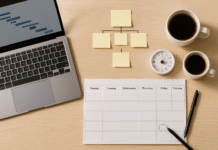
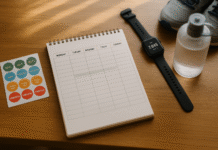
People vary in light sensitivity. The optimal plan is the one you actually follow and that measurably improves your nights. Use a sleep diary or a wearable/app to track bedtime, sleep latency, awakenings, and wake time for 2–3 weeks while you implement 2–3 strategies. Large surveys show many people find trackers help them change sleep behavior; just avoid “orthosomnia” (getting anxious about perfect scores). Review your data weekly and iterate—tighten the light curfew, move the phone out of the room, or add morning light until your pattern stabilizes.
10.1 Mini plan (2-week sprint)
- Week 1: Evening light curfew + analog wind-down + darker bedroom.
- Week 2: Morning light + stricter screen limits + content calming.
- Track outcomes, then keep what works and discard what doesn’t.
Personalization beats perfection. Build a sustainable routine, not a fragile rulebook.
FAQs
1) What exactly is “blue light,” and why does it affect sleep?
Blue light refers to short-wavelength visible light (~450–490 nm) that strongly stimulates melanopsin in retinal ganglion cells. Evening exposure suppresses melatonin and delays your circadian clock, which can lengthen the time it takes to fall asleep. Managing timing, spectrum, and brightness helps align your internal night with the external one.
2) How long before bed should I avoid screens?
Public-health advice commonly suggests 30–90 minutes—with better results the longer you give yourself. If you’re very sensitive or trying to shift your schedule earlier, aim for ~3 hours of low melanopic exposure and screen limits. Pair that with morning light to consolidate the shift over several days.
3) Do “Night Shift” or “blue-light filter” modes fix the problem?
They help a bit by warming the spectrum, but studies show Night Shift alone often does not significantly improve sleep outcomes. Dim brightness, shorten usage, increase distance, and avoid stimulating content for a meaningful change. Abstaining in the last hour is best.
4) Are blue-blocking glasses worth buying?
For everyday screen use and general eye strain, high-quality evidence shows little to no benefit versus standard lenses. Some small trials in people with insomnia show modest improvements when glasses are worn for 2–3 hours pre-bed. If you try them, combine with dim, warm light and track your own response. PubMed
5) How bright should my evening lights be?
Aim for very dim—consensus guidance recommends ≤10 melanopic lux in the evening and ≤1 melanopic lux at night. If you don’t measure melanopic lux, use warm, low, indirect lamps and judge visually: the room should feel calm and subdued, never “office bright.”
6) Does morning sunlight really help my sleep at night?
Yes. Morning daylight is a strong circadian signal that advances your internal clock and makes earlier sleep easier. Try 30–60 minutes outside within 1–2 hours of waking. On dark winter mornings, supplement with a bright-light box used correctly and safely.
7) What about backlit e-readers—are they better than phones?
Not at bedtime. Controlled research found e-readers suppressed melatonin, delayed circadian timing, and worsened next-day alertness compared with reading paper. If you love e-books, pick e-ink without (or with very warm, very low) front lighting.
8) Are tiny LEDs on chargers and routers really a problem?
Individually they’re dim, but cumulative light can add up—especially if shining directly into your eyes at night. Because even room-like light can suppress melatonin before bed, cover or remove LED sources and keep the bedroom very dark.
9) I work rotating shifts. Where should I start?
Use timed bright light to align with your target sleep window, wear dark glasses after night shifts on the commute home, blackout your bedroom, and consider low-dose melatonin timed to the intended sleep period. Because timing is critical (and safety matters), consult a clinician or sleep specialist if possible. NHLBI, NIH
10) I’ve done everything and still can’t sleep. What next?
If you’ve optimized light and routine for 2–3 weeks without progress, consider CBT-I (cognitive behavioral therapy for insomnia) and seek an evaluation for medical issues like sleep apnea, restless legs, or depression. Light is foundational, but it’s only one piece of the sleep puzzle.
Conclusion
Light is the most powerful environmental lever for your sleep, and blue-rich light late at night is a predictable saboteur. The fix isn’t complicated: darken evenings, brighten mornings, and tame screens. If you set a nightly light curfew, re-arrange your lamps, make your wind-down analog, and step outside early each day, you’ll give your brain the unambiguous time-of-day cues it evolved to expect. For tricky scenarios—shift work, travel, or chronic misalignment—deploy bright-light therapy and carefully timed melatonin with guidance. Don’t over-rely on gadgets like blue-blocking glasses or Night Shift; they can support your plan but rarely substitute for it. Most importantly, measure what matters: how fast you fall asleep, how often you wake, and how you feel in the morning. Start with two or three strategies this week, track results, and adjust. Your goal isn’t perfect darkness or perfect data—it’s predictable, restorative nights.
Ready to start? Tonight, dim the lights three hours before bed, put the phone away an hour early, and set a morning sunlight date for tomorrow.
References
- Chang AM et al. Evening use of light-emitting eReaders negatively affects sleep, circadian timing, and next-morning alertness. PNAS (2015). PNAS
- Gooley JJ et al. Exposure to Room Light before Bedtime Suppresses Melatonin Onset and Shortens Melatonin Duration in Humans. J Clin Endocrinol Metab (2011). PMC
- Brown TM et al. Recommendations for daytime, evening, and nighttime indoor light exposure to best support physiology, sleep, and wakefulness. PLOS Biology (2022). PMC
- Lucas RJ Lab (University of Manchester). Measuring melanopic illuminance and melanopic irradiance (CIE S 026). (accessed 2025). Lucas Group
- International WELL Building Institute. Circadian Lighting Design (WELL v2). (accessed 2025). standard.wellcertified.com
- Duraccio KM et al. Does iPhone Night Shift mitigate negative effects of smartphone use on sleep? Sleep Health (2021). PubMed
- Cochrane Eyes and Vision. Blue-light filtering spectacle lenses for visual performance, sleep and macular health. Cochrane Review (Aug 18, 2023). Cochrane Library
- CDC. About Sleep — What to do. (May 15, 2024). CDC
- Blume C et al. Effects of light on human circadian rhythms, sleep and mood. Somnologie (2019). PMC
- Silvani MI et al. The influence of blue light on sleep, performance and circadian rhythms: A review. Sleep Sci Pract (2022). PMC
- American Academy of Sleep Medicine. One in three Americans have used electronic sleep trackers… (Jul 29, 2024). AASM
- International WELL Building Institute (v3 reference). Circadian Lighting Design. (accessed 2025). standard.wellcertified.com