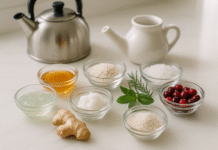
























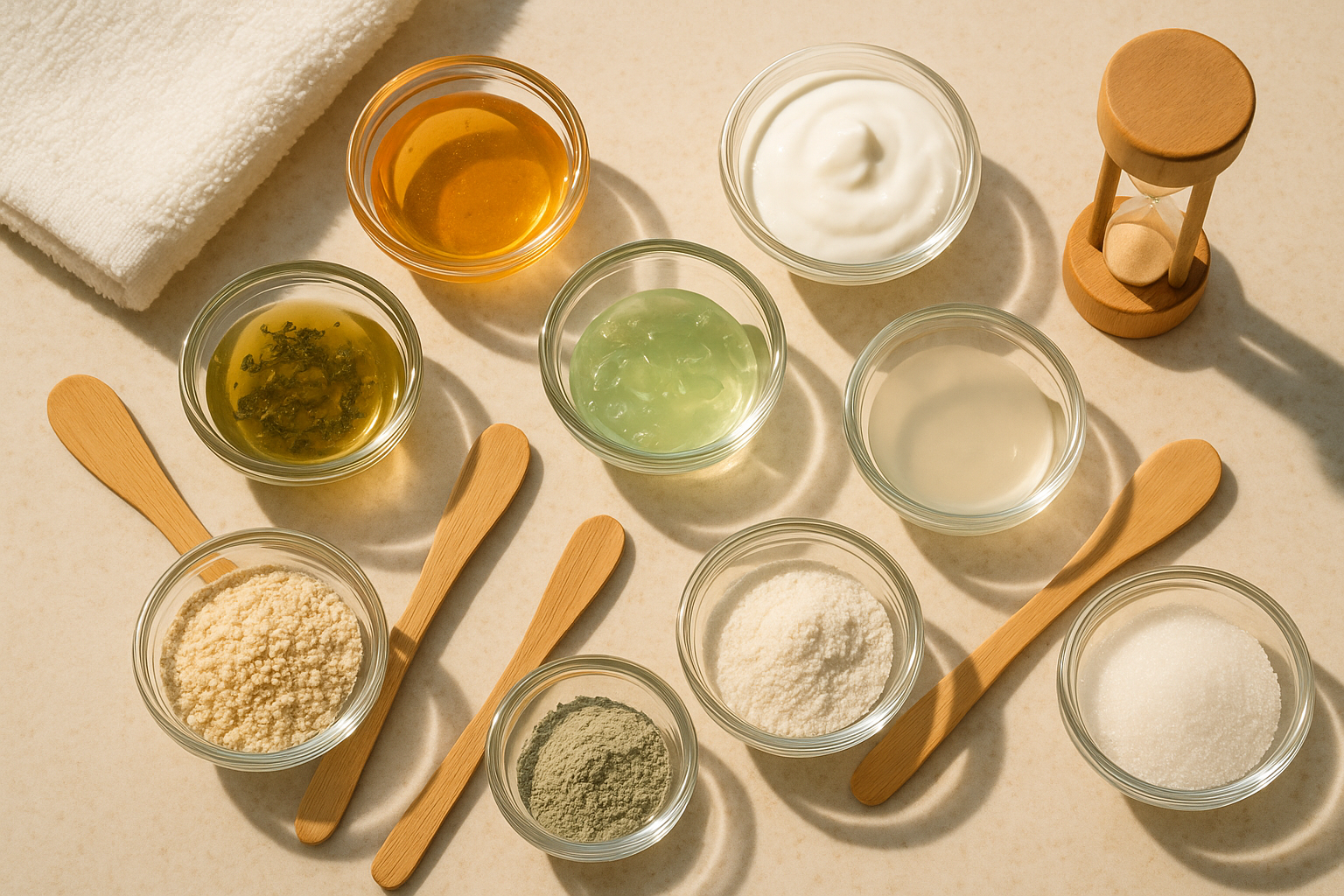
Skin can absolutely benefit from a few simple, well-chosen kitchen-cupboard ingredients—if you use the right ones, at the right strengths, and skip the risky trends. This guide gathers practical, science-supported at-home recipes designed to hydrate, calm, or gently clarify without wrecking your barrier. You’ll learn exact ratios, when to use masks vs. scrubs, how often, and what to avoid (like citrus or undiluted essential oils). Quick answer: safe DIY masks and scrubs rely on gentle humectants and soothing agents (oatmeal, glycerin, aloe, honey), mild clays for oil control, and extra-fine polishes; harsh acids, strong abrasives, and irritants don’t belong in at-home facials. For best results, always cleanse first, patch test new mixes, time your contact, and moisturize after.
Friendly safety note (not medical advice): If you have an active skin condition, wounds, allergies, or you’re using prescription topicals, check with a dermatologist before trying DIY. Discontinue anything that stings, burns, or leaves prolonged redness.
1. Barrier-Soothing Colloidal Oatmeal Mask
Colloidal oatmeal is one of the few pantry-adjacent ingredients with decades of dermatology use for itch and irritation relief. It contains phenolic compounds called avenanthramides that show anti-inflammatory and anti-itch activity and can help calm reactive skin while supporting the barrier. In practice, a well-hydrated oat paste softens roughness within minutes and reduces after-wash tightness. It’s a go-to for windburned cheeks, post-cold dryness, or over-exfoliated skin. You’re not “treating” disease at home—but you are leaning on a widely studied, gentle skin protectant that pairs well with any routine and most moisturizers. Use this when skin feels fragile or looks blotchy and you want a quick comfort reset.
1.1 How to make it
- 1 tablespoon colloidal oatmeal (finely ground; not chunky oats)
- 1–2 teaspoons cool distilled water or aloe juice to a creamy paste
- Optional: 2–3 drops glycerin for extra humectancy
1.2 Numbers & guardrails
- Apply to clean, damp skin for 10–15 minutes; do not let it fully dry.
- Rinse with lukewarm water, pat dry, moisturize.
- Frequency: up to 3×/week for dryness or sensitivity.
- Patch test first on the jawline; skip if you have an oat allergy.
Why it works: avenanthramides and beta-glucans can soothe irritation and dryness; clinical and review data support colloidal oatmeal as a skin protectant and adjunct for irritated skin. PMC
2. Hydrating Glycerin “Sheet” Mask (Cotton Compress)
If your skin feels dehydrated, few things beat humectants at binding water in the stratum corneum. Glycerin is a gold-standard, widely used humectant with solid evidence for improving skin hydration and helping barrier function when used at sensible percentages. Instead of mixing random foods, this recipe uses a precise glycerin-water solution and a clean cotton pad or reusable sheet-mask fabric to deliver uniform hydration. It’s fast, cheap, and friendly to almost all routines. You’ll feel an immediate plumpness from water uptake and better “slip” under moisturizer. Keep the percentage modest to avoid tackiness and don’t overdo time—humectants work best with balance.
2.1 How to make it
- Mix 2.5 mL glycerin into 97.5 mL distilled water (~2.5%).
- Saturate a clean compressed sheet mask or several cotton pads.
- Apply to face for 5–10 minutes; keep moist; then remove and seal with moisturizer.
2.2 Mini-checklist
- Use 2–5% glycerin for comfort; higher can feel sticky.
- Ideal after flights, AC exposure, or gentle retinoid routines.
- If air is very dry, follow with an occlusive moisturizer to lock in water.
Bottom line: controlled-strength glycerin boosts hydration measurably and safely at home when you keep contact time short and moisturize afterward. PubMed
3. Plain Honey Humectant Mask (Not for Acne Treatment)
Honey is a natural humectant and has documented antimicrobial properties in medical-grade forms for wound care. As a simple soothing, hydrating mask, plain (pasteurized) honey can soften flaky areas and support skin comfort—especially in dry climates. However, evidence that topical honey treats facial acne is weak; a randomized controlled trial of 90% medical-grade kanuka honey did not outperform antibacterial soap for acne severity at 12 weeks. Use honey for moisture and comfort—not as your primary acne remedy. PMC
3.1 How to make it
- 1 teaspoon pasteurized honey (thin layer)
- Optional: 3–4 drops glycerin to reduce stickiness and enhance hydration
- Leave for 10 minutes, then rinse and moisturize.
3.2 Common mistakes
- Raw, unfiltered honey can vary; choose pasteurized to reduce contamination risk.
- Don’t use on broken skin or if you have bee-product allergies.
- Avoid adding essential oils—they raise irritation risk with no clear benefit.
Takeaway: honey is great as a short, hydrating softener; for breakouts, stick with proven acne actives and view honey as a comfort add-on.
4. Yogurt-and-Oat Calm-and-Soften Mask
Unsweetened, full-fat plain yogurt offers a cool, occlusive vehicle with milk proteins and lipids that can make skin feel temporarily softer. While “lactic acid from yogurt” is often overhyped (its free-acid content is low and variable in foods), pairing a tablespoon of yogurt with colloidal oatmeal creates a gentle paste that calms after sun-exposure (not burns), winter dryness, or post-exercise redness. Don’t expect exfoliation fireworks; do expect smoother feel and less tightness. It’s also easy to rinse and unlikely to disrupt active routines if used sparingly. For most people, this is a pleasant, low-risk “comfort” mask more than a treatment.
4.1 How to make it
- 1 tablespoon plain yogurt
- 1 teaspoon colloidal oatmeal
- Optional: a few drops glycerin if air is very dry
- Mix, apply 8–10 minutes, rinse, and moisturize.
4.2 Numbers & guardrails
- Frequency: 1–2×/week.
- Skip if you’re dairy-sensitive on skin or you’re acne-prone and reactive to dairy topicals.
- Always patch test first (jawline, 24 hours).
Summary: an easy, soothing combo—oats supply the science, yogurt supplies the feel and short-term softness.
5. Green Tea Gel or Compress for Oil and Redness
Green tea’s star catechin EGCG shows sebosuppressive and anti-inflammatory actions in human studies; topical 2–5% formulations improved acne lesion counts in small trials. Your brewed tea isn’t that concentrated, but a cool compress or lightweight aloe-tea gel can still provide a calming, low-risk refresh and may modestly reduce surface oil. This is particularly nice mid-day in hot weather or before makeup. Expect a temporary, comfortable matte effect—not a cure. If you want stronger results, look for leave-on products that disclose EGCG percentages. PMC
5.1 How to make it (two ways)
- Compress: Brew 1 green tea bag in 100 mL hot water; cool completely. Soak cotton pads; apply 5 minutes.
- Aloe gel mask: Whisk 1 teaspoon brewed, cooled green tea into 1 tablespoon plain aloe gel; leave 10 minutes.
5.2 Tips & cautions
- Use freshly brewed, cooled tea; discard leftovers after 24 hours.
- If you’re highly sensitive, patch test—tea polyphenols are generally gentle but not universal.
- Oily T-zone? Use localized compresses to avoid over-drying cheeks.
Bottom line: green tea DIYs are gentle “finishers” that can add a calm, lightly mattified look, with stronger evidence reserved for higher-strength topical formulations.
6. Kaolin Clay “Gentle Clarify” Mask (Normal-to-Oily)
For occasional polish without harsh scrubbing, kaolin clay is the mildest common cosmetic clay. It helps lift oil and surface debris and can leave skin feeling smoother without the tight, cracking dryness stronger clays cause. Dermatology guidance for oily skin includes clay-based options as part of a simple routine. Use a thin, even layer, watch the time, and rinse while the mask is still slightly tacky—completely dried clay can over-dehydrate. Follow with a light moisturizer. If your skin is dry or sensitive, consider kaolin only on the T-zone.
6.1 How to make it
- 1 tablespoon kaolin clay
- 1–2 teaspoons distilled water (or cooled green tea) to a yogurt-like cream
- Optional: ½ teaspoon aloe gel for slip
6.2 Numbers & guardrails
- Time: 5–8 minutes—rinse before fully dry.
- Frequency: 1×/week for normal-oily; spot-treat T-zone if combo.
- Do not scrub during removal; soak and slide off.
Takeaway: kaolin offers a controlled, gentle “reset” for shine management when used with time discipline and post-mask moisture.
7. Bentonite Clay “Deep Clarify” Mask (Very Oily Areas Only)
If you get persistent midday slickness or clogged look on the nose, chin, or back, bentonite provides stronger oil absorption than kaolin. It’s best reserved for very oily zones and thicker skin (upper back, chest; avoid thin or sensitive areas). Keep the layer thin and clock the time—long, fully dried sessions are what cause that brittle, over-stripped feel. Use this as a weekly targeted treatment, not a daily habit. Always moisturize afterward to restore flexibility. Emerging data also explores clay masks’ roles in acne care, mainly for oil management and texture, not as stand-alone therapy.
7.1 How to make it
- 1 tablespoon bentonite clay
- 1–2 teaspoons distilled water (never vinegar on skin)
- Optional: 2–3 drops glycerin for comfort
7.2 Mini-checklist
- Apply only to oily zones; avoid dry/sensitive patches.
- Time: 5–7 minutes; rinse before fully dry.
- Frequency: 1×/week or every other week; less is more.
In short: bentonite is powerful; use with precision on oily areas and keep sessions brief for a clean—but not stripped—finish. PMC
8. Rice Flour Micro-Polish (Ultra-Fine, Light Pressure)
“Scrub” doesn’t have to mean scratchy. Ultra-fine rice flour mixed with a slip agent creates a micro-polish that’s closer to a soft buff than a scrub, helpful for dullness on resilient skin. There’s also research on rice starch baths supporting barrier function in irritated or atopic skin—while that’s not the same as a facial scrub, it suggests rice-derived powders can be skin-friendly in gentle formats. Keep pressure feathery, use lots of slip, and limit frequency to avoid micro-damage. If you’re sensitive, skip physical polishing and use a soft cloth instead.
8.1 How to make it
- 1 teaspoon rice flour (super-fine; sieve if needed)
- 1 tablespoon plain yogurt or aloe gel for slip
- Optional: ½ teaspoon colloidal oatmeal for extra cushion
8.2 How to use it safely
- Massage with just fingertip weight for 20–30 seconds total.
- Rinse thoroughly; do not polish over active breakouts or sunburn.
- Frequency: every 10–14 days max.
Bottom line: use rice flour as a barely-there buff with ample slip; its heritage in soothing baths reinforces a gentle approach—not aggressive scrubbing. Medical Journals SwedenPMC
9. Sugar-and-Oil Body Scrub (Not for the Face)
Granulated white sugar (fine) plus a skin-compatible oil makes an excellent body polish for rough elbows, knees, and heels. On the face, coarse particles can create micro-tears and irritate acne or rosacea—dermatologists caution that exfoliation must be gentle and not for everyone. Keep grains fine, pressure light, and always work on damp skin. Rinse thoroughly to keep shower surfaces safe. Facial exfoliation is better handled by mild chemical options or ultra-fine powders; keep sugar scrubs waist-down.
9.1 How to make it
- 2 parts fine white sugar
- 1 part jojoba oil (light, non-sticky)
- Optional: ½ teaspoon colloidal oatmeal to soften edges
9.2 Numbers & guardrails
- Time: Massage 30–60 seconds per area; rinse well.
- Frequency: 1×/week; reduce if skin gets squeaky-tight.
- Avoid shins after shaving and any nicks or bites.
Summary: sugar+oil makes a safe, effective body polish when kept fine and gentle; save your face for kinder methods.
10. Low-Stain Turmeric Spot Mask (Short Contact, Low Dose)
Turmeric (Curcuma longa) contains curcumin, an anti-inflammatory polyphenol with growing (but varied) dermatology literature. While bold claims abound, what’s realistic at home is a low-dose, short-contact spot mask to calm look of transient redness on sturdy skin. Keep powder concentration tiny (it stains), pair with yogurt or honey for slip, and limit contact to a few minutes. Patch test is essential; a small subset develops contact dermatitis. In South Asia, kasturi (wild) turmeric is sometimes favored for lighter staining—still patch test and keep expectations modest.
10.1 How to make it
- ¼ teaspoon plain yogurt or honey
- ⅛ teaspoon (a pinch) turmeric powder (~0.5–1% in mix)
- Dab only on target areas for 3–5 minutes, then rinse.
10.2 Common mistakes
- Over-concentrating (staining + irritation risk).
- Spreading over fabrics; protect towels.
- Using daily—reserve for occasional use.
Takeaway: turmeric can be a cautious, occasional spot soother; respect low concentrations and brief contact to keep things stain-free and comfortable.
FAQs
1) How do I patch test a DIY mask safely?
Apply a pea-sized amount to the jawline or behind the ear, leave 10–15 minutes, rinse, and observe for 24–48 hours. Look for itching, stinging, welts, or lingering redness. If none occur, try a shorter-than-normal first face use (e.g., 5 minutes) before a full session. If you’re using actives like retinoids, patch test on an off night and space at least 24 hours from strong actives.
2) Are DIY masks okay if I have acne?
Yes—as add-ons, not as treatment. Opt for soothing options (oatmeal, glycerin, aloe) and non-abrasive formats. For acne control, rely on proven actives (benzoyl peroxide, salicylic acid, adapalene) and see DIY as comfort care. Honey, for example, did not beat antibacterial soap in an RCT for acne; it’s fine for hydration but not core therapy.
3) Clay masks: kaolin vs. bentonite—how do I choose?
Kaolin is milder and suits normal-to-oily or combination skin for a quick clarifying reset. Bentonite is stronger and best for very oily areas or the back/chest. In both cases, apply a thin layer and rinse before fully dry to avoid over-dehydration; moisturize afterward.
4) Why do you recommend “not for face” on sugar scrubs?
Facial skin is thin and easily irritated. Dermatology guidance emphasizes safe exfoliation, gentle techniques, and that exfoliation isn’t for everyone—especially if you’re sensitive or acne-prone. Keep sugar scrubs to tougher body areas and use feather-light pressure.
5) Is yogurt really exfoliating because of lactic acid?
Food yogurts don’t disclose free-acid % and vary widely, so at-home lactic “peels” with yogurt are unreliable. In this guide, yogurt is used as a soothing, emollient base, not as a primary exfoliant. If you want predictable AHA results, choose a formulated lactic acid product that lists the percentage and pH.
6) Can I add essential oils to these recipes?
It’s safer to skip essential oils in DIY skincare. They add fragrance but also raise the risk of dermatitis, phototoxicity (citrus), and stinging with minimal skin-health upside. If you insist, keep to well-diluted (<0.5%) and avoid leave-on face products—still, the safest option is fragrance-free.
7) How often can I mask each week?
Most people do well with 1–3 masks/week total. Hydrating masks (oatmeal, glycerin) can be used more often than oil-absorbing clays. Avoid stacking scrubs, peels, and retinoids in the same 24-hour window to reduce irritation risk. Listen to your skin: tightness or flaking means back off.
8) Are these safe in hot, humid climates?
Yes—just adjust timing. In humidity, humectants (glycerin, honey) feel better and may work more efficiently; in dry climates, follow them with a moisturizer to trap water. Clay masks are helpful in heat for shine control, but keep contact short to avoid rebound oil.
9) What should I absolutely avoid in DIY face care?
Skip lemon juice, baking soda, cinnamon, undiluted essential oils, and toothpaste. They’re common on social media but can burn or disrupt the barrier. Gentle, fragrance-free, and time-limited is the safer DIY rule.
10) Can I store leftover mixes?
Best practice is single-use for anything water-based to minimize contamination. Dry mixes (oatmeal, clays) can be portioned and stored airtight; add water right before use. Brewed tea should be discarded after 24 hours in the fridge.
11) Do these work with prescription retinoids?
Yes—space them out. Use soothing masks (oats, glycerin) on off nights to reduce dryness. Avoid physical scrubs and strong clays immediately before or after retinoids. If irritation spikes, reduce frequency and tell your prescriber.
12) How do I know if I’ve over-exfoliated?
Signs include stingy cleansing, shiny-tight skin, flushy patches, or makeup pilling on flakes. Stop scrubs and clays for 7–10 days, switch to oatmeal/glycerin masks, and use a bland moisturizer. If symptoms persist, consult a dermatologist.
Conclusion
The safest, most effective DIY skincare sticks to simple, well-studied ingredients and clear guardrails. Colloidal oatmeal, glycerin, aloe, honey (for hydration), and mild clays each serve a defined purpose when used at the right strength, for the right time, and in the right zones. Ultra-fine polishes like rice flour can gently refresh texture on resilient skin, while coarser scrubs are best saved for the body. Recipes here prioritize barrier respect over buzz—short contact, gentle removal, and a moisturizer to finish. If you want more dramatic change (for acne marks, deep congestion, or pigment), layer these comfort masks around evidence-based leave-ons or professional care rather than replacing them. Above all, patch test, go slowly, and listen to what your skin tells you; consistency beats intensity every time.
Ready to try? Start with the oatmeal mask tonight, set a 10-minute timer, and follow with your favorite moisturizer.
References
- How to Safely Exfoliate at Home, American Academy of Dermatology (AAD), updated 2025. American Academy of Dermatology
- How to Control Oily Skin, AAD, Sep 3, 2024. American Academy of Dermatology
- Oatmeal in Dermatology: A Brief Review, Indian Journal of Dermatology, Venereology and Leprology, 2012. IJDVL
- Anti-Inflammatory Activities of Colloidal Oatmeal (Avena sativa), Journal of Drugs in Dermatology, 2015. JDD Online
- Randomised Controlled Trial of Topical Kanuka Honey for the Treatment of Acne, BMJ Open, 2016. PubMed
- Honey as a Topical Treatment for Acute and Chronic Wounds, Cochrane Review, Mar 6, 2015. Cochrane
- The Efficacy of Topical 2% Green Tea Lotion in Mild-to-Moderate Acne Vulgaris, Journal of Drugs in Dermatology, 2009. PubMed
- Green Tea and Other Tea Polyphenols: Effects on Sebum Production and Acne, Antioxidants, 2016. MDPI
- Glycerol and the Skin: Holistic Approach to Its Origin and Functions, Journal of the European Academy of Dermatology and Venereology, 2008. PubMed
- 24-Hour Skin Hydration and Barrier Function Effects of a Humectant Combination, Clinical, Cosmetic and Investigational Dermatology, 2017. PMC
- Effect of Rice Starch as a Bath Additive on the Barrier Function of Healthy but SLS-Damaged Skin and Skin of Atopic Patients, Acta Dermato-Venereologica, 2002. PubMed
- Effects of Turmeric (Curcuma longa) on Skin Health: A Systematic Review, Phytotherapy Research, 2016. PubMed