




























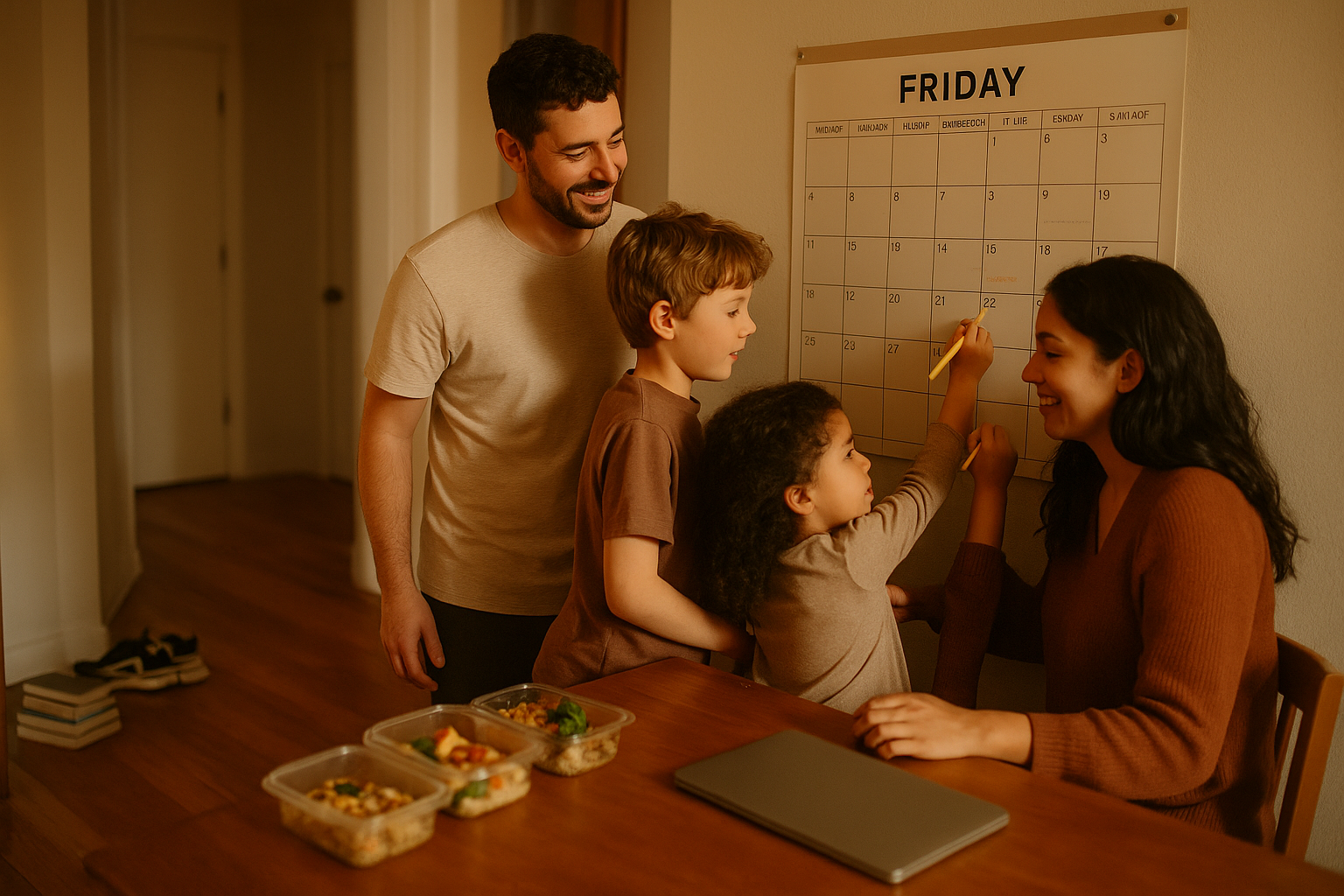
You don’t have to choose between being present on weeknights and truly recharging on weekends. With a little structure, you can have both: short, meaningful “micro-rituals” on weekdays and longer, lower-pressure “anchor” blocks on weekends. Put simply: weekday quality time is about intentional, bite-size connection that fits a busy schedule; weekend relaxation is about deeper recovery and richer experiences that refill the tank for the week ahead. Quick start: map your energy, pick three micro-rituals for weeknights, book two weekend anchors, protect sleep, and do a 10-minute Sunday review. As of August 2025, time-use and well-being research backs this rhythm—weekends naturally allow more socializing and recovery, while regular connection during the week supports relationships and mood.
Brief note: This guide offers general information about routines, well-being, sleep, and exercise. It’s not medical advice. If you have health concerns, talk to a licensed professional.
1. Set a Weekly Rhythm: Weekday “Micro-Rituals,” Weekend “Anchors”
Design your week so short, reliable touchpoints happen on workdays, while longer recovery and play happen on days off. The key is intentionality: decide ahead of time where connection lives (15–60 minutes on weeknights) and where restoration lives (2–4 hour blocks on weekends), then protect those slots like meetings. This mirrors how people actually use time: on average, adults socialize far more on weekends than weekdays, which means you can lean into a natural social “tailwind” on your days off and keep weeknights light and sustainable. Start with a 15-minute planning moment every Friday or Sunday to place three micro-rituals and two anchors. The plan gives weekdays purpose without pressure and reserves weekends for the deeper exhale.
1.1 How to do it
- Choose 3 weeknight micro-rituals (e.g., co-cooking on Tuesday, 20-minute walk on Wednesday, phones-off tea on Thursday).
- Choose 2 weekend anchors (e.g., 3-hour hike, museum + picnic, unhurried brunch with family).
- Put them on a shared calendar; default to the same days so it becomes a rhythm.
- Add a 10-minute weekly review (Friday afternoon or Sunday morning).
- Keep one weeknight completely free to reduce burnout.
1.2 Numbers & guardrails
- Weeknight micro-rituals: 15–60 minutes each.
- Weekend anchors: 2–4 hours each; cap at 2–3 anchors to avoid over-scheduling.
- One “buffer block” per weekend day: 60–90 minutes of nothing—really nothing.
Synthesis: A clear rhythm lowers decision fatigue, keeps weeknights humane, and lets weekends do what they do best: restore and reconnect.
2. Use the “Magic Six Hours” to Keep Your Relationship Strong
If you share life with a partner, devote roughly six intentional hours each week to the relationship. Research inspired by the Gottman Institute shows that small, repeated behaviors—a brief “parting” ritual, a warm “reunion,” appreciation, a weekly “state of the union,” and a date—correlate with stronger bonds. Practically, that means sprinkling most of those minutes on weekdays (micro-rituals you can keep), then using the weekend for a longer date or adventure. Treat the six hours as a floor you can stand on, not a ceiling that pressures you. If your schedules are wild, scale the weekday pieces down and let an unhurried weekend date carry more of the load.
2.1 A sample six-hour breakdown
- Partings: 2 min × 5 weekdays (10 min)
- Reunions: 20 min × 5 weekdays (100 min)
- Appreciation/Affection: 5 min × 7 days (35 min)
- Weekly check-in: 60 min (weeknight or Sunday)
- Date: 120 min (weekend)
- Flex “fun” buffer: 55 min wherever it fits
2.2 Mini checklist
- Schedule the check-in first (it protects everything else).
- Save the date for the weekend when energy is higher.
- Use a shared notes app for appreciations and “fun backlog”.
- If you miss a piece, don’t “make it up”—just restart next day.
Synthesis: Six consistent hours, split smartly across weekdays and weekends, turn connection from an aspiration into a practiced rhythm.
3. Make Weeknight Quality Time Work in 30–60 Minutes
Yes, quality time can be short and still feel rich. The trick is choosing activities that are high-signal (connection, novelty, movement, or meaning) with almost no ramp-up: co-cooking a new 20-minute recipe, a phone-free neighborhood loop, reading side-by-side, or a “rose-thorn-bud” debrief over tea. Evidence suggests that companionship during everyday activities—and time spent together in shared leisure—is associated with better mood and relationship satisfaction. So, prioritize formats that create eye contact, laughter, or collaboration rather than passive coexistence. Pick one “default” weeknight activity and one rotating option to keep it fresh, then prepare tiny props (cards, playlists, a book stack) so you can start in under two minutes.
3.1 A ready-to-go weeknight menu
- “20-minute co-cook & eat” (choose recipes with ≤8 ingredients).
- “Silent read-in” for 30 minutes; share one highlight each.
- “Micro-walk talk” loop (1–2 km / 15–25 min).
- “Two-song dance” or “three-song stretch” at home.
- “Screen-free tea” with three questions from a card deck.
3.2 Mini case
- Tuesday 7:30–8:00 p.m.: co-cook noodles + vegetables.
- Wednesday 8:15–8:45 p.m.: walk + one open question.
- Thursday 9:00–9:25 p.m.: read-in; each shares a passage.
Synthesis: When the setup is near zero, 30–60 minutes becomes enough—consistency beats extravagance for weekday connection.
4. Build an After-Work “Off-Ramp” to Protect Evenings
Weekday quality time collapses when work bleeds into the night. Research on recovery from work shows that psychological detachment—mentally switching off—is central to well-being, motivation, and next-day performance. Small boundary rituals create that switch: a commute decompression playlist, a 10-minute “brain dump” in a notes app, and a rule that the laptop stays closed after a set hour. Pair this with sleep-friendly cues (dim lights, reduce notifications) because late-evening work and scrolling can disrupt both connection and sleep quality. Adults generally benefit from at least seven hours of sleep and consistent timing; your off-ramp helps both.
4.1 Tools & examples
- “Work shutdown” checklist (5 minutes): capture tasks, pick tomorrow’s first action, close apps.
- Two-location rule: work stuff lives in one area; after hours, avoid it.
- “10–3–2–1–0” evening cue: no caffeine 10h before bed, no heavy food 3h, no work 2h, no screens 1h, 0 snoozes.
- Auto-send a “day’s end” message to your partner when you leave work.
4.2 Common mistakes
- “Just one more email” that becomes 90 minutes.
- “Half-present” multitasking that frustrates loved ones.
- Bright overhead lighting at 10 p.m. that wakes the brain.
Synthesis: A reliable off-ramp guards the two things weeknights need most: attention for people and a decent night’s sleep.
5. Keep Sleep Regular: Tame Social Jetlag Without Killing the Weekend
Weekend lie-ins feel amazing, but large swings in bedtime and wake time can produce “social jetlag”—a mismatch between biological and social clocks linked with grogginess and lower functioning. Aim for regularity: keep weekend wake time within about 60–90 minutes of weekdays, and protect 7–9 hours of sleep most nights. If you’re sleep-deprived, a modest “catch-up” helps, but overshooting by several hours can make Monday rough and squeeze quality time. Think “gentle stretch,” not “time zone.” Combine that with low-light, low-screen evenings and a cool, quiet bedroom. These simple guardrails support weekend fun without wrecking your circadian rhythm. Sleep Education
5.1 Numbers & guardrails
- Adults: 7+ hours/night recommended (many do best at 7–9).
- Weekend shift: keep changes ≤90 minutes when possible.
- Bedroom: dark, quiet, cool (roughly 18–20°C / 65–68°F).
5.2 Mini checklist
- Plan morning sunlight both days (10–20 minutes outdoors).
- Cap naps at 20–30 minutes before 3 p.m.
- If you stay up late, set an earliest wake-time “floor” (e.g., never past 09:30).
Synthesis: Protecting sleep regularity lets weekends restore you without sabotaging Monday.
6. Move Your Body: “Weekend Warrior” Is Fine—With Smart Limits
If weekday schedules crush gym time, you can still meet activity guidelines on the weekend and reap major health benefits. Recent research and expert roundups indicate that concentrating most exercise into one or two days delivers similar protective benefits as spreading it across the week—so long as total weekly minutes hit the mark (≈150 minutes moderate or 75 minutes vigorous). The catch is injury risk from going “zero to hero.” Warm up, mix intensities, and avoid stacking aggressive new activities back-to-back. Use weeknights for mobility or brisk 10-minute walks; save longer cardio or hikes for Saturday/Sunday. Health
6.1 How to do it (starter plan)
- Weeknights: two 10–15 minute walks + one 10-minute mobility session.
- Saturday: 60–90 minutes moderate cardio (cycle, swim, hike).
- Sunday: 45–60 minutes moderate cardio + light strength (20–30 minutes).
6.2 Common pitfalls
- All-out intensity after a sedentary week.
- Skipping warm-ups; aim for 8–10 minutes dynamic work.
- No strength at all; include basic push/pull/squat/hinge.
Synthesis: When weekdays are slammed, a thoughtful “weekend warrior” plan keeps fitness moving without hijacking rest.
7. Use Shared Meals and Micro-Gatherings as Weekday Connection Multipliers
If you’re juggling kids, caregiving, or late shifts, shared meals are the highest-leverage weekday connector because they combine nourishment, conversation, and routine in 25–40 minutes. A growing body of research links family meal frequency with better diet quality and family functioning, and couples’ everyday companionship is associated with better affect and relationship quality. Set a low bar—phones away, everyone shares a “rose-thorn-bud,” and keep cleanup simple. On weekends, extend the idea: host a casual brunch potluck or a park picnic to turn relaxation into relationship-building without heavy logistics.
7.1 Tools/Examples
- “Pan-sheet dinner” rotation (20–25 minutes).
- Prep a “conversation jar” (values, ideas, travel daydreams).
- Sunday batch-cook two mains to free up weeknights.
7.2 Mini checklist
- One device-free meal on two weeknights + one extended weekend meal.
- Rotate “chef,” “DJ,” and “clean-up lead” roles.
- Keep a “five-ingredient” list on the fridge.
Synthesis: Shared meals punch above their weight for weekday connection and scale beautifully into unhurried weekend gatherings.
8. Solve the “Sunday Scaries” Without Sacrificing Rest
Dread on Sunday can steal the joy from a whole weekend. Normalize it, then tame it with a 30-minute plan-and-prep ritual earlier in the day (not at night): glance at your calendar, write a 5-item Monday list, lay out clothes or backpacks, and prep easy breakfasts. Pair that with one soothing activity that signals closure—an early walk, a stretch session, or a quiet read. Surveys suggest many adults report Sunday sleep trouble and anticipatory anxiety; small, earlier routines reduce rumination at bedtime and protect sleep regularity. Keep Sunday evening low-stimulus: dim lights, light dinner, no high-stakes conversations, and screens down 60 minutes before bed.
8.1 A simple Sunday playbook
- 15–20 min: calendar + 5-item Monday list + pack bags.
- 10 min: tidy “launchpad” (keys, chargers, water bottles).
- 30–60 min: outdoors or gentle movement; put screens away at dusk.
8.2 Guardrails
- No work apps after the plan-and-prep window.
- Keep bedtime within 60–90 minutes of weekday timing.
- If anxiety spikes, do a 5-minute pen-and-paper brain dump.
Synthesis: Earlier planning plus gentle rituals preserve your weekend and help you glide into Monday.
9. Buy Back Time: Automate, Swap, and Simplify
When bandwidth is tight, “buying time” (outsourcing or automating low-value tasks) can increase happiness and free capacity for both weekday connection and weekend rest. Studies show that paying to save time—like getting groceries delivered—can boost well-being, especially for time-poor parents. If money is tight, trade with neighbors (kid-watch swaps), pool errands, or simplify standards (capsule wardrobes, repeatable meal rotations). Use weekday automation (subscriptions, recurring reminders) so weekends don’t drown in chores. Then, choose a “signature” weekend indulgence (long bath, coffee date, solo art hour) and defend it. The message to yourself and your people: time is the asset; protect it together.
9.1 How to do it
- List your three most hated chores; automate or batch them first.
- Adopt a “default” grocery list and online order template.
- Create a 10-item capsule meal plan; rotate weekly.
9.2 Mini numbers
- Start with one outsourced task/month.
- Cap Saturday chores at 90–120 minutes total.
- Reserve one 2–4 hour recovery anchor every weekend day.
Synthesis: Time-saving choices turn good intentions into available hours—fuel for both weekday connection and weekend restoration.
FAQs
1) How many hours of “quality time” do couples really need each week?
There’s no magic number for every couple, but a practical, research-inspired benchmark is around six intentional hours weekly—spread across small daily rituals plus one longer weekly date or check-in. This cadence helps you stay attuned on busy weekdays and deepen connection on weekends. Treat six hours as a floor to build from, not a rigid rule; the mix can flex with seasons of life.
2) Is it okay to sleep in on weekends?
A modest weekend sleep-in can help if you’re short on sleep, but keep the shift within roughly 60–90 minutes of weekday wake times. Large swings contribute to social jetlag, making Monday groggy and disrupting your circadian rhythm. Aim for 7–9 hours most nights, dim evening light, and a cool, quiet bedroom to guard sleep quality without sacrificing weekend ease. PMCSleep Foundation
3) I don’t have energy for “activities” after work. What’s the lowest-effort weekday quality time?
Choose formats with near-zero setup but high connection: co-cooking a 20-minute meal, a 20-minute walk-and-talk, or a phones-down tea with three prompt questions. Evidence points to benefits from everyday companionship and shared leisure—even brief, ordinary moments—so make them the default. IAAP Journals
4) Are “weekend warrior” workouts safe?
Packing most of your activity into weekends can deliver similar health benefits to spreading it out, provided you meet weekly volume targets. To lower injury risk: warm up, mix intensities, and maintain light movement on weekdays (walks, mobility). If you have a medical condition or are new to exercise, get personalized advice first.
5) How can parents balance kid schedules with weekend relaxation?
Stack kid logistics near one weekend anchor and batch chores in a 90-minute “power block.” Use shared meals as a weekday connection multiplier and keep one weekend buffer with no commitments. Research links family meals to better diet quality and family functioning, so lean on that low-effort, high-impact habit during the week.
6) What if my “weekend” is midweek (shift work, hospitality)?
The principles stay the same: micro-rituals on workdays, anchors on days off, and sleep regularity. If your off-days rotate, run a 15-minute planning ritual before each “weekend,” and protect sleep by keeping bedtime/wake windows as consistent as possible across the whole cycle. (Shift-work sleep resources emphasize choosing a compromise schedule you can repeat.) CDC
7) How do I stop work from invading evenings?
Use an end-of-day shutdown (task capture + tomorrow’s first step), move work devices out of shared spaces, and set app limits after a specific hour. Research on recovery highlights psychological detachment as essential for well-being and performance; small boundary rituals are worth it.
8) Are there data-backed reasons to favor social plans on weekends?
Yes. Time-use data show people spend roughly twice as much time socializing on weekends versus weekdays, creating a natural context for deeper connection. You can ride that tailwind by booking one social anchor (brunch, park hang, family visit) most weekends and keeping weeknights lighter.
9) I get anxious on Sundays—any specific fix?
Move planning earlier in the day, create a short Monday launchpad (bags packed, five-item list), and close with a calming ritual. Many adults report Sunday sleep trouble and anticipatory anxiety; low-stimulus evenings and earlier prep can help you fall asleep and preserve your weekend mood.
10) What if my partner and I want different things—one social, one restful?
Negotiate “Yours, Mine, Ours”: one anchor for each person and one shared. On weekdays, use micro-rituals both enjoy (walks, co-cooking) and trade off higher-preference activities weekly. The shared-time research suggests it’s the companionship—doing ordinary things together—that carries a lot of the benefit, so center that common ground.
11) How can I get more hours without spending more money?
Batch chores, automate errands, and lower standards where it won’t hurt (capsule meals, repeated outfits). Swaps with neighbors (childcare, rides) and grouping social time (potluck brunch) create connection plus efficiency. Evidence suggests that “buying time,” when possible, improves well-being; the same principle applies to free “time trades.”
12) Does all this structure kill spontaneity?
Structure protects the space for connection and rest; you still decide what fills it. Think of your week as a frame—micro-rituals and anchors hold room open so you can be spontaneous inside it. When energy dips or plans change, your defaults (walk, tea, read-in) let you pivot without losing the moment.
Conclusion
Balancing weekday quality time with weekend relaxation is less about squeezing more in and more about choosing what matters—and when. On workdays, short, reliable micro-rituals keep relationships close and evenings calm; on days off, a couple of bigger anchors let you recover, explore, and feel human again. The rhythm is supported by what the data already show: weekends are naturally more social; regular sleep and real detachment boost well-being; companionship in everyday life strengthens bonds; and buying back small pockets of time pays emotional dividends. Start with one planning ritual, three weeknight micro-rituals, and two weekend anchors. Add a shutdown routine after work and basic sleep guardrails. In a few cycles, the benefits compound: calmer nights, warmer connections, more energy on Mondays, and weekends that truly restore you.
Take the first step today: pick one micro-ritual for the coming week and one weekend anchor—put both on the calendar now.
References
- American Time Use Survey — 2024 Results. U.S. Bureau of Labor Statistics (News Release), June 26, 2025. Bureau of Labor Statistics
- Weekends, Work, and Well-Being: Psychological Need Satisfactions and Day-of-the-Week Effects on Mood, Vitality, and Physical Symptoms. Ryan, R. M., Bernstein, J. H., & Brown, K. W., Journal of Social and Clinical Psychology, 2010. Self Determination Theory
- Recovery from Work: Advancing the Field Toward the Future. Sonnentag, S., Annual Review of Organizational Psychology and Organizational Behavior, 2022. Annual Reviews
- Seven or More Hours of Sleep per Night: A Health Necessity for Adults. American Academy of Sleep Medicine/Sleep Research Society, July 30, 2024. AASM
- Social Jetlag: Misalignment of Biological and Social Time. Wittmann, M. et al., Chronobiology International, 2006. PubMed
- How Much Sleep Do You Need? Sleep Foundation (overview), updated July 11, 2025. Sleep Foundation
- Weekend Warriors May Gain the Same Health Benefits as People Who Spread Out Exercise. American Heart Association News, Sept. 26, 2024. www.heart.org
- Time Spent Together in Intimate Relationships. Hogan, J. N., et al., Family Process, 2021. PMC
- Systematic Review: Family Meal Frequency, Diet, and Family Functioning. Robson, S. M., et al., Journal of Nutrition Education and Behavior, 2020. ScienceDirect
- 6 Hours a Week to a Better Relationship. The Gottman Institute (blog), June 26, 2024. Gottman Institute
- Buying Time Promotes Happiness. Whillans, A. V., et al., Proceedings of the National Academy of Sciences, 2017. PubMed
- One-Third of Adults Lose Sleep to ‘Sunday Scaries’. Sleep Foundation (survey summary), Sept. 21, 2022. Sleep Foundation