




























Before we dive in, a quick, practical disclaimer: home remedies can support comfort and recovery for minor issues, but they’re not a replacement for urgent medical care. If symptoms are severe, persist, or you have underlying conditions (pregnancy, infants, immunocompromised status, anticoagulant use, etc.), talk to a clinician first.
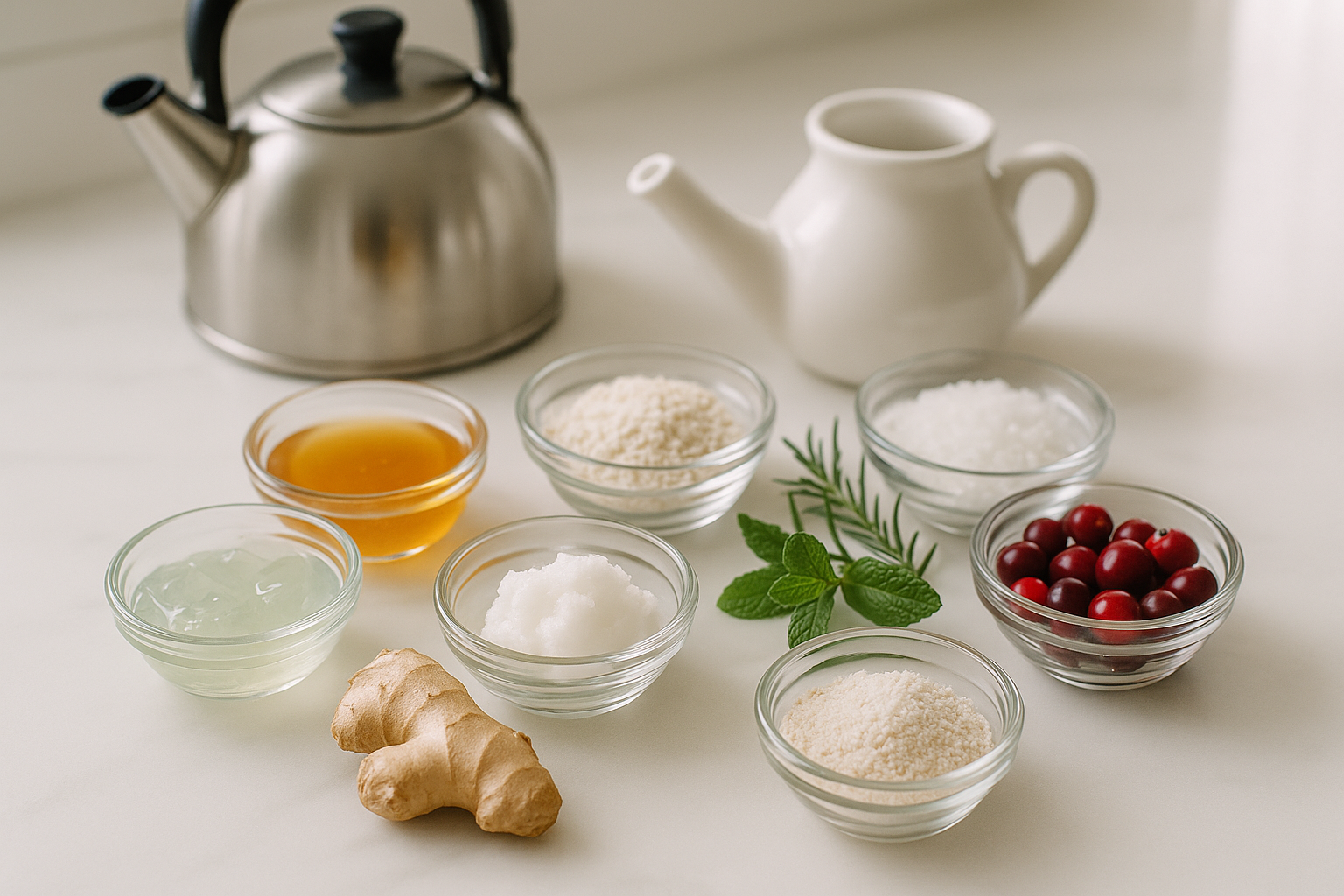
What this guide covers (as of August 2025): evidence-backed ways to use common kitchen and household ingredients—aloe, honey, coconut oil, ginger, peppermint oil, tea tree oil, oats, saline, prunes, cranberries, and probiotics—for specific, everyday problems. In short: evidence-backed natural remedies are household ingredients with clinical support for specific uses, when applied or taken correctly and safely.
Quick-start safety checklist (use before any remedy):
- Patch test topicals (inside forearm, 24 hours).
- Dilute essential oils; avoid ingestion unless advised by a clinician.
- Use sterile/distilled or previously boiled-and-cooled water for any nasal rinse.
- Never give honey to children under 1 year.
- Stop and seek care if symptoms worsen, spread, or don’t improve in 48–72 hours (earlier for eye involvement, high fever, severe pain, or breathing trouble).
1. Aloe Vera Gel for Minor Burns and Sunburn Relief
Aloe vera can soothe sunburned or mildly burned skin and may modestly support healing when used alongside core first aid. Start by cooling the skin (cool—not icy—compresses or showers), then apply a fragrance-free moisturizer containing aloe vera to lock in hydration and reduce discomfort. Dermatology guidance specifically recommends aloe-containing moisturizers for sunburn care, while systematic reviews suggest the overall wound-healing evidence is mixed but promising for certain superficial burns. The key is using aloe as a helper—not the whole plan—along with hydration and sun avoidance while the skin recovers.
How to do it
- Cool first, moisturize second: Take a 10–15-minute cool shower, gently pat dry, then apply an aloe-containing moisturizer while skin is damp.
- Reapply for comfort: 2–3× daily as needed.
- Avoid irritants: Skip alcohol-containing gels, benzocaine/lidocaine, or fragrance on compromised skin.
- Protect and hydrate: Drink extra water and cover the area from sun until healed.
Why it matters
Sunburn pulls fluid to the skin’s surface and disrupts the barrier. Aloe’s polysaccharides act as humectants (water-binding), helping comfort while the barrier resets. Evidence for speeding healing is variable, but patient comfort and supportive care are consistent wins.
Common mistakes
- Using petroleum jelly immediately (can trap heat early on).
- Popping blisters (infection risk).
- Applying pure plant latex (the yellow sap) from aloe leaves—can irritate skin.
Bottom line: Use aloe as part of standard sunburn/burn care to soothe and support; seek care for deep, blistering, or extensive burns.
2. Honey for Cough (Age ≥1 Year)
For viral upper-respiratory coughs, honey can reduce cough frequency/severity and improve sleep compared with usual care in older children and adults. UK guideline bodies suggest honey as a first-line self-care option for acute cough; more recent systematic reviews in pediatrics also show benefit, though evidence quality is low to moderate. It’s inexpensive, accessible, and gentle—ideal for that end-of-day throat tickle.
How to do it
- Dose (common home use): ½–1 teaspoon straight or in warm water/lemon up to 3–4× daily.
- Bedtime dose: 1 teaspoon about 30 minutes before sleep can be particularly helpful.
- Never for infants <1 year: risk of botulism.
Why it matters
Honey’s demulcent (soothing) viscosity coats irritated mucosa; antimicrobial and antioxidant activity may contribute to symptom improvement.
When to call a clinician
- Cough >3 weeks, high fever, shortness of breath, chest pain, coughing blood, or in people with high pneumonia risk.
Bottom line: For self-limited coughs, honey is a safe, practical first step (for ages ≥1 year).
3. Medical-Grade Honey for Minor Wounds and Superficial Burns
Beyond coughs, topical medical-grade honey (e.g., standardized, sterile honey dressings—not pantry honey) can aid healing of certain superficial wounds and partial-thickness burns, according to Cochrane data. It helps maintain a moist wound environment and may reduce bacterial growth (via osmotic effect and low pH).
How to do it
- Use medical-grade honey dressings or ointments per label; change as directed (often daily or every other day).
- Wound basics first: Clean gently with saline; avoid harsh antiseptics on healthy tissue.
- When to avoid: Deep, heavily contaminated, or diabetic foot wounds—get medical care.
Numbers & guardrails
- Expect days to weeks, not hours.
- Reassess if redness spreads >1–2 cm, pain spikes, or pus develops.
Bottom line: For small, superficial wounds, medical-grade honey is a reasonable adjunct; pantry honey isn’t appropriate for wound care.
4. Virgin Coconut Oil for Dry Skin and Mild Eczema
Virgin coconut oil (VCO) works well as an emollient: it reduces transepidermal water loss and can improve mild atopic dermatitis severity scores in RCTs compared with mineral oil. Lauric-acid-rich lipids may contribute antibacterial activity against S. aureus, a common eczema complicator. It’s not a cure, but as part of daily moisturization, it’s effective, affordable, and widely available.
How to do it
- Apply thinly to damp skin after bathing, 1–2× daily.
- Pair with gentle cleansers and fragrance-free routines.
- Eczema flares: Use VCO as a base moisturizer; still follow your clinician’s plan (e.g., topical steroids or calcineurin inhibitors for flares).
Common mistakes
- Over-applying (greasy occlusion, folliculitis risk).
- Using cooking coconut oil with fragrance/additives.
- Applying on acne-prone facial skin without patch testing (comedogenic risk).
Bottom line: VCO is a solid, evidence-supported moisturizer—especially for dry, eczematous skin—used alongside standard eczema care.
5. Ginger for Nausea (Pregnancy, Motion, Post-op)
Ginger has consistent evidence for reducing nausea in settings like pregnancy, motion sickness, and after surgery. Reviews and clinical resources suggest divided doses totaling around ~1,000–1,500 mg/day of ginger (capsules or standardized extracts) can be helpful; ginger tea is a gentler culinary option.
How to do it
- Tea: Simmer 2–3 thin slices (or ½–1 tsp grated) in a mug of hot water for 5–10 minutes; sip 2–4× daily.
- Capsules: Follow product labeling; typical research doses aggregate to ~1 g/day.
- Pregnancy: Discuss with your clinician first; many OBs consider ≤1 g/day reasonable in early pregnancy.
Safety & interactions
- May mildly thin blood—caution with anticoagulants or bleeding disorders.
- Heartburn can occur; take with food.
Bottom line: Ginger is a practical, well-tolerated first step for everyday nausea in many people when used within typical doses.
6. Enteric-Coated Peppermint Oil for IBS Cramps
Enteric-coated peppermint oil (so it dissolves in the intestine, not the stomach) has guideline-level support for improving global symptoms and abdominal pain in irritable bowel syndrome. The menthol component has antispasmodic effects on smooth muscle.
How to do it
- Look for enteric-coated softgels; take per label (often 2–3× daily before meals).
- Trial period: 2–4 weeks to judge benefit.
Common pitfalls
- Non–enteric-coated products can cause heartburn.
- Avoid in severe reflux, bile duct issues, or hiatal hernia without clinician input.
Mini-checklist
- Combine with soluble fiber, stress reduction, and symptom-directed diet (e.g., low-FODMAP trials) for best results.
Bottom line: If IBS cramps dominate, enteric-coated peppermint oil is a sensible, evidence-supported option to trial.
7. Tea Tree Oil (Topical, Diluted) for Mild Acne Spots
Tea tree oil has limited but positive evidence for mild acne when used topically (never orally). It shows antimicrobial and anti-inflammatory activity and, in small RCTs and reviews, has improved lesion counts compared with placebo. Because it’s a potent essential oil, dilution and patch testing are non-negotiable.
How to do it
- Start at ~5% dilution: Mix 1 part tea tree oil with 19 parts carrier oil (e.g., jojoba).
- Spot-apply 1–2× daily on closed skin (no open sores).
- Alternate with benzoyl peroxide or adapalene on other days if using conventional acne care.
Safety notes
- Do not ingest—tea tree oil is toxic if swallowed.
- Can cause allergic contact dermatitis; discontinue if redness/itching occurs.
- Keep away from pets and young children.
Bottom line: As a spot treatment for mild, non-inflamed lesions, diluted tea tree oil can help—used carefully and alongside proven acne routines.
8. Colloidal Oatmeal Baths for Itch and Eczema
Colloidal oatmeal (finely ground, water-dispersible oats) is FDA-recognized as a skin protectant and helps calm itch, redness, and dryness. Clinical and patient-guidance sources support oatmeal baths as a safe, accessible add-on for eczema and irritated skin.
How to do it
- Bath: Add ~1 cup colloidal oatmeal to a standard tub of lukewarm water; soak 10–15 minutes.
- Frequency: 2–3× weekly; up to daily during severe itch (short term).
- Afterward: Pat dry and moisturize within 3 minutes to seal hydration.
Why it works
Oat’s avenanthramides and beta-glucans provide anti-inflammatory and barrier-support effects, easing itch while reducing water loss.
Common mistakes
- Hot water (worsens dryness).
- Using fragranced bath products; stick with gentle, fragrance-free options.
Bottom line: Oat baths are a gentle, evidence-supported way to reduce itch and improve comfort during flares.
9. Saline Nasal Irrigation for Congestion & Sinus Symptoms
Rinsing with sterile saline helps thin mucus, reduce congestion, and improve sinus symptoms; systematic reviews and practice guidelines support it for chronic rhinosinusitis and as supportive care for colds. The water quality rule is critical: always use distilled, sterile, or boiled-and-cooled water to avoid rare but serious infections.
How to do it
- Use a squeeze bottle or neti pot with pre-measured saline packets.
- Lean over a sink, mouth open, and irrigate one nostril until solution flows from the other; switch sides.
- Frequency: 1–2× daily during symptom flares.
Safety & region notes (important)
- As of July 2025, CDC guidance: use distilled/sterile water, or boil tap water for at least 1 minute (3 minutes at elevations >2,000 m), then cool before use.
- Clean and air-dry devices after each use.
Bottom line: Done correctly with safe water, saline irrigation is a low-risk, high-return way to breathe easier.
10. Prunes or Prune Juice for Constipation
Prunes (dried plums) and prune juice are time-tested options with RCT support for increasing stool frequency and softening hard stools. Their mix of sorbitol (osmotic), fiber, and polyphenols improves stool consistency and regularity. Trials show dried prunes can outperform psyllium in mild–moderate constipation; more recent placebo-controlled work with prune juice also reports benefits without causing diarrhea.
How to do it
- Whole prunes: Try 4–6 prunes daily (adjust to effect); some studies used ~100 g/day in divided doses.
- Prune juice: Start with 60 mL (2 oz) daily; titrate to 120–240 mL as tolerated.
- Combine with: Hydration, fiber-rich foods, and movement.
Watch-outs
- Gas/bloating at higher intakes; adjust dose gradually.
- If you have IBS-D, prunes may aggravate loose stools.
Bottom line: For occasional constipation, prunes/prune juice are inexpensive, gentle, and evidence-supported first-line options.
11. Cranberry Products to Help Prevent Recurrent UTIs
For prevention (not treatment) in people prone to recurrent UTIs, cranberry products show benefit in updated systematic reviews and are conditionally supported in urology guidelines. Proanthocyanidins (PACs) in cranberries may reduce bacterial adhesion to the urinary tract lining.
How to do it
- Forms: Juice, capsules, or tablets; choose reputable products with standardized content.
- Expectations: Benefits are preventive and modest; not a treatment for active UTI.
- Pairs well with: Hydration, timed voiding, and clinician-recommended strategies.
Who may benefit most
- Women with recurrent UTIs; some evidence also supports children and people post-urologic procedures.
Safety
- Can interact with warfarin; discuss with your clinician.
Bottom line: Cranberry is a reasonable, evidence-backed prevention tool for recurrent UTIs; don’t use it to treat an active infection.
12. Probiotics or Fermented Foods to Reduce Antibiotic-Associated Diarrhea (AAD)
Multiple reviews find selected probiotic strains can reduce the risk of antibiotic-associated diarrhea, with timing (early in the antibiotic course) and strain specificity affecting outcomes. Professional guidelines vary: some suggest use in at-risk populations or for C. difficile prevention, while others are more cautious. Fermented foods (yogurt, kefir) are a food-first way to add live cultures, though they’re not equivalent to tested strains.
How to do it
- Start within 48 hours of antibiotics; continue through the course and several days after.
- Choose proven strains/combos (check labels and clinical resources), or incorporate live-culture yogurt/kefir daily if supplements aren’t an option.
- Avoid in severely immunocompromised states unless advised by a clinician.
Practical tips
- Separate probiotic and antibiotic doses by 2–3 hours.
- Monitor for gas/bloating; adjust or switch products if needed.
Bottom line: For many people on antibiotics, early, strain-specific probiotics—or daily cultured dairy—can lower AAD risk; discuss the best fit with your clinician.
FAQs
1) Are “natural” remedies always safer than medications?
Not necessarily. “Natural” refers to origin, not risk. Tea tree oil can cause dermatitis if overused, honey is unsafe for infants under 1, and essential oils can be toxic if swallowed. Follow dilution, dosing, and age-appropriateness, and involve a clinician if you have medical conditions or take prescription drugs.
2) How long should I try a home remedy before deciding it’s not working?
Give most topical remedies 3–7 days and oral comfort measures 2–3 days. If symptoms worsen, spread, or include red flags (fever, shortness of breath, severe pain, eye involvement), stop and seek medical care immediately.
3) Can I use kitchen aloe straight from the leaf?
You can, but remove the yellow latex (it’s irritating). Many people find aloe-containing moisturizers more convenient and gentler. Avoid homemade gels on deep, dirty, or surgical wounds.
4) Is any honey okay for wounds?
For wound care, use medical-grade, sterilized honey dressings—these are standardized for safety and consistency. Pantry honey is fine for cough (age ≥1 year) but not for wounds.
5) I have eczema—should I pick coconut oil, colloidal oatmeal, or both?
Use both: oat baths for itch relief and VCO as a daily emollient on damp skin. Still treat flares with your prescribed medications. Patch test first if you’re sensitive.
6) What’s the biggest safety mistake with nasal rinsing?
Using tap water straight from the faucet. Always use distilled/sterile water or tap water that has been boiled and cooled. Clean and air-dry your device after each use.
7) Which probiotic should I choose for antibiotics?
Evidence is strain-specific. Ask your clinician/pharmacist for options with proven strains for AAD or consider daily yogurt/kefir if supplements aren’t suitable. Start within 48 hours of the first antibiotic dose.
8) Do peppermint oil capsules help reflux?
Peppermint can worsen reflux if not enteric-coated. Look for enteric-coated capsules and avoid if reflux is severe or uncontrolled. Stop if heartburn increases.
9) Can prunes cause diarrhea?
Yes—at higher doses. Start with 2–4 prunes or ~60 mL prune juice daily and increase gradually. Reduce the dose if you develop cramping or loose stools.
10) Do cranberries cure a UTI?
No. Cranberry is for prevention, not treatment. If you have UTI symptoms (burning, urgency, fever), seek evaluation; antibiotics are often needed for active infections.
Conclusion
Natural remedies work best when they’re targeted, specific, and used safely. Aloe and oatmeal soothe disrupted skin barriers; medical-grade honey supports healing in certain superficial wounds; coconut oil is a reliable emollient for dry, eczematous skin. For internal symptoms, ginger and enteric-coated peppermint oil shine for nausea and IBS cramps, respectively—while prunes help keep you regular, cranberries can reduce recurrent UTI risk, and timely probiotics may lower antibiotic-associated diarrhea. Across all of these, smart guardrails—patch testing topicals, respecting age limits (no honey for infants), and using sterile water for nasal rinses—turn “natural” into safe and effective.
Ready to try one? Pick the remedy that matches your exact symptom, start with the lowest effective dose, and track your response for 3–7 days—then keep what works and drop what doesn’t.
CTA: Save this guide, pick one remedy to test this week, and set a reminder to check your results in 3 days.
References
- How to treat sunburn — American Academy of Dermatology, May 20–21, 2024. (see also news page update) American Academy of Dermatology
- Aloe vera for treating acute and chronic wounds — Cochrane Database of Systematic Reviews, Dat AD et al., 2012 (updated abstract pages accessed 2021–2024). https://www.cochranelibrary.com/cdsr/doi/10.1002/14651858.CD008762.pub2/full (and PMC overview) Cochrane LibraryPMCCochrane
- Cough (acute): antimicrobial prescribing (NG120) — National Institute for Health and Care Excellence, Feb 7, 2019 (current page 2024). NICE
- Honey as a topical treatment for wounds — Cochrane Review, Jull AB et al., Mar 6, 2015. (PMC summary) Cochrane LibraryPMC
- The effect of topical virgin coconut oil on SCORAD index… in pediatric atopic dermatitis (RCT) — International Journal of Dermatology, Evangelista MT et al., 2014 (PubMed 24320105). PubMed
- Ginger: Usefulness and Safety — National Center for Complementary and Integrative Health (NCCIH), 2024. (see also systematic review: Bodagh MN et al., 2018, PMC6341159) NCCIHPMC
- ACG Clinical Guideline: Management of Irritable Bowel Syndrome — American Journal of Gastroenterology, Lacy BE et al., 2021 (with PDF slide/summary resources). (see also PDF) Lippincott JournalsGiboard Review
- Peppermint Oil: Usefulness and Safety — NCCIH, 2024; IBS: What You Need to Know — NCCIH, 2024. ; https://www.nccih.nih.gov/health/irritable-bowel-syndrome-what-you-need-to-know NCCIH
- Tea Tree Oil: Usefulness and Safety — NCCIH, 2024; Tea Tree Oil: Properties…(review) — Nascimento T et al., 2023, Molecules (PMC10295805). ; NCCIHPMC
- Should You Try a Colloidal Oatmeal Bath for Your Eczema? — National Eczema Association, 2025; Bathing for Eczema — NEA, 2025; Efficacy of Colloidal Oatmeal Cream — J Drugs Dermatol, 2020 (PMC7103792). ; https://nationaleczema.org/treatments/bathing/ ; National Eczema AssociationPMC
- How to Safely Rinse Sinuses — CDC, updated July 16, 2025; Preventing Waterborne Germs at Home — CDC, 2024; Saline irrigation for chronic rhinosinusitis — Cochrane Review, 2016 (PDF). ; https://www.cdc.gov/drinking-water/prevention/preventing-waterborne-germs-at-home.html ; CDCUCL Discovery
- Randomised clinical trial: dried plums vs psyllium for constipation — Attaluri A et al., Alimentary Pharmacology & Therapeutics, 2011; Prune juice RCT (placebo-controlled) — Koyama T et al., 2022. ; PubMedEurope PMC
- Cranberries for preventing urinary tract infections — Cochrane Review update, Williams G et al., Nov 10, 2023; AUA Guideline: Recurrent Uncomplicated UTIs in Women — 2022 PDF. ; Cochrane LibraryAmerican Urological Association
- AGA Clinical Practice Guidelines on the Role of Probiotics — Gastroenterology, 2020; Probiotics for Prevention of AAD (review) — Kopacz K & Phadtare S, 2022 (PMC9408191). https://www.gastrojournal.org/article/S0016-5085(20)34729-6/fulltext ; GastrojournalPMC