












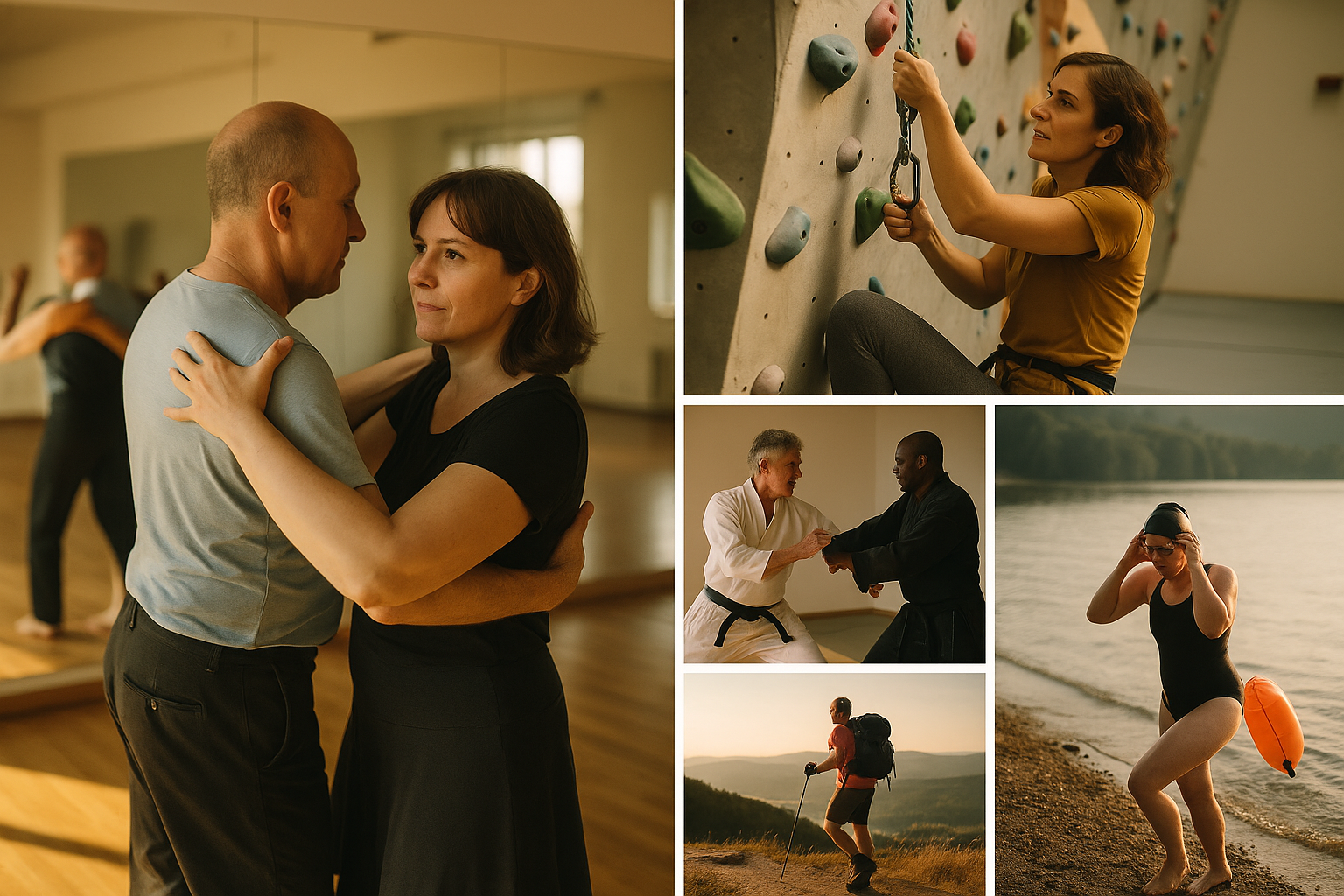
If treadmills and dumbbells feel stale, you’ve got options. “Physical hobbies beyond the gym” are movement practices you can do in studios, parks, water, or the wild—often social, skill-based, and way more fun than counting reps. In this guide, you’ll learn how to start nine rewarding activities, what they demand, how to stay safe, and how each fits into weekly training so you still meet evidence-based activity targets (at least 150 minutes of moderate or 75 minutes of vigorous exercise weekly, plus two strength days, as of August 2025).
Fast answer: Pick one activity you’ll actually look forward to, learn basic technique from a coach or credible tutorial, start with short sessions (20–45 minutes), and progress load or complexity by ~10–20% per week. Use simple metrics (session RPE, heart rate, or distance/time) to track progress and keep it sustainable. For medical concerns or past injuries, speak with a clinician first.
Quick-start steps (skim-friendly):
- Choose one hobby from the list that excites you.
- Book a beginner class or lesson and borrow gear where possible.
- Set a starter cadence: 2×/week for 4–6 weeks.
- Log sessions and recovery; cap jumps in volume to ~10–20% weekly.
- Layer in strength/mobility on two non-consecutive days to stay injury-resilient.
Short safety note: The ideas here are educational, not medical advice. If you’re pregnant, managing a condition, or returning from injury, get personalized clearance.
1. Dance (From Zumba to Salsa): Fitness That Feels Like a Night Out
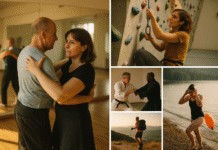
Dance is a high-enjoyment path to cardio, coordination, and community; for many adults it’s the easiest consistent alternative to gym workouts. Most forms—salsa, bachata, hip-hop, contemporary, Zumba—hit moderate intensity, and partnered or group formats boost accountability. Research suggests dance training can improve cardiovascular fitness, balance, and psychological outcomes like motivation and social cognition, often rivaling or exceeding other exercise for adherence and affect. Beginners thrive by choosing a style whose music they love and focusing on rhythm before complexity. Expect 45–60-minute classes; after six to eight sessions, your footwork feels automatic and you’ll notice stamina gains (lower perceived effort at the same pace).
1.1 How to start
- Sample styles via intro passes; many studios offer first class free.
- Wear supportive footwear; for spins/turns, pivot-friendly soles help.
- Ask the instructor for a “beginner track” or slower tempo playlist.
1.2 Numbers & guardrails
- Intensity: Often moderate (RPE 4–6/10); bursts can be vigorous.
- Frequency: 2–3×/week meets much of your aerobic target.
- Progression: Add 10–15 minutes or a second class weekly after week 2.
- Cross-train: Add two brief strength sessions for hips/ankles/core.
Mini case: A 36-year-old takes two 50-minute salsa classes/week plus one at-home practice. In 8 weeks, resting HR drops from 74 to 67 bpm; they also report better balance on single-leg tasks (subjective), aligning with benefits seen in dance literature.
Bottom line: If you like the music, dance turns “working out” into play—and consistency does the rest.
2. Martial Arts (Striking or Grappling): Skill, Confidence, Conditioning
Martial arts offer a structured path to conditioning plus technical mastery. “Hard” styles like taekwondo, karate, and kickboxing emphasize striking and controlled impact; judo and Brazilian jiu-jitsu focus on throws, leverage, and ground control. Evidence in adults shows improvements in balance, cognitive function, psychological health, and cardiorespiratory fitness—with benefits across ages of entry. Classes are periodized, coach-led, and progression-based, which helps adherence. Start where the vibe fits—striking for rhythmic combos and footwork, grappling for problem-solving and isometrics. Wear appropriate protective gear (mouthguard, wraps, shin pads) and respect contact levels.
2.1 How to do it
- Trial 2–3 gyms; watch a class first, then try a beginner session.
- Confirm fundamentals curriculum (stance, guard, breakfalls) and hygiene rules.
- Use “technical rounds” (light intensity) your first month to groove skills.
2.2 Numbers & guardrails
- Intensity: Moderate to vigorous depending on sparring/rolling.
- Frequency: 2×/week covers most skill retention; add mobility on rest days.
- Safety: Tap early in grappling; in striking, start with pad/bag work before contact.
- Gear: Mouthguard and groin protection for contact days; clean, trimmed nails.
Mini checklist: Warm up (joint circles, light shadowboxing), learn falls, monitor fingernails/toenails, disinfect gear post-class. Reassess goals at belt/stripe intervals.
Bottom line: Martial arts build competence and calm under pressure, with broad physical and cognitive benefits when training is scaled intelligently. PubMed
3. Rock Climbing (Bouldering, Top-Rope, Lead): Strength + Problem Solving
Climbing blends finger/forearm strength with whole-body tension and movement puzzles. Indoor gyms make it approachable; you can start bouldering (short walls without ropes) or top-roping (harness and rope belay) on day one. Epidemiology suggests injury risk is relatively low compared with many field sports, though bouldering carries higher injuries per 1,000 hours than roped disciplines; using proper fall technique and progressive grading mitigates risk. Helmets are standard outdoors, and UIAA-certified gear provides tested safety margins. Begin on the easiest grades to learn footwork, body positioning, and planned down-climbs.
3.1 How to start
- Take a belay class at a gym; rent shoes/harness first.
- Bouldering? Practice controlled down-climbs and “butt-first” mat landings.
- Track sessions by attempts, sends, and rest time; stop before skin tears.
3.2 Numbers & guardrails
- Typical session: 60–90 minutes with generous rest between attempts.
- Progress: Limit grade jumps to ~1 level/week; prioritize technique drills.
- Safety: Use a spotter for high boulders; check knots, partner calls, and anchors every climb.
- Outdoors: Use UIAA/CE-rated rope/helmets; inspect wear and retire gear per manufacturer/UIAA guidance. UIAA
Mini case: New climber logs 2 bouldering sessions/week for 6 weeks, from V0 to consistent V1–V2 with no finger pain—thanks to “two on/one off” scheduling and tendon warmups (e.g., easy hangs). This progression aligns with evidence that careful load management keeps injuries uncommon.
Bottom line: Climbing is a cerebral strength sport; master fundamentals and safety systems and you’ll progress fast with low injury risk.
4. Parkour (Urban Movement): Agility, Landing Mechanics, Flow
Parkour trains efficient movement—vaulting, precision jumps, climbs, and safe landings—turning urban spaces into obstacle courses. For adults, it’s a powerful way to reclaim agility and elasticity lost to sedentary routines. Research suggests overall injury rates can be modest with coaching and structured progressions; most issues are ankle sprains or knee contusions linked to excessive load jumps. That makes technique (land softly, absorb with hips) and volume control non-negotiable. Beginners should practice in supervised classes or with experienced traceurs, starting with balance work and low-impact flow drills.
4.1 How to do it
- Warm up with joint preps (ankles, hips, wrists), then practice landing mechanics from 20–40 cm heights.
- Build a “tech library”: step vault, safety vault, precision jump, cat hang.
- Film reps to check alignment and silent landings.
4.2 Numbers & guardrails
- Session length: 45–75 minutes; cap jump volume early.
- Progression: Increase drop height/complexity gradually (10–15% weekly).
- Surfaces: Prefer rubberized tracks, grass, or safe gym setups.
- Footwear: Flexible, grippy trainers; replace when outsole hardens.
Mini checklist: Land quietly, knees track over toes, keep spine long on impact, and stop before fatigue degrades form.
Bottom line: Parkour builds cat-like control and confidence—start low, move well, and your environment becomes a playful playground.
5. Hiking & Trekking (Trail Time): Cardio, Mood, and Nature Exposure
Hiking is deceptively potent: it blends steady-state cardio with incline strength and exposure to restorative environments. Systematic reviews show associations between time in green spaces and improved mental health markers (lower stress, higher vitality) while hiking itself is a low-cost, accessible way to accumulate weekly activity minutes. Terrain grade and pack weight are your “dials”; start on local loops, then extend distance, elevation, or load. Poles can reduce knee load on descents; footwear choice depends on terrain and preference (trail runners vs boots).
5.1 How to do it
- Choose waymarked trails; start with 3–6 km and <200 m elevation gain.
- Bring the 10 essentials (navigation, hydration, layers, light, first aid, etc.).
- Use poles for steep descents; practice short, quick steps uphill.
5.2 Numbers & guardrails
- Pace: Conversational (RPE 3–5/10) for most hikes; steeper climbs may feel vigorous.
- Progression: Add 1–2 km or 100–200 m vertical per week.
- Safety: Check weather, daylight, and share your route; start early.
- Recovery: Post-hike calf/quad/hip flexor mobility prevents soreness.
Mini case: A weekend hiker moves from 5 km to 11 km over 5 weeks, maintaining a talk-test pace, and reports better sleep and mood—effects consistent with outdoor exercise research.
Bottom line: Hiking reliably improves cardio and well-being with minimal gear—scale distance and elevation, not suffering.
6. Open-Water Swimming (Lakes, Rivers, Sea): Calm Mind, Serious Respect
Open-water swimming delivers low-impact cardio and a unique sense of calm, but the environment demands respect. Cold water shock can rapidly impair breathing and movement below ~15 °C, so equipment (wetsuit, bright tow float, cap) and conservative entry matter. Safety organizations recommend swimming near lifeguards where possible, staying within depth, and tracking exit points as wind and currents can drift you off line. Beginners should acclimatize gradually and never swim alone; start parallel to shore and build tolerances through short dips.
6.1 How to do it
- Start with bank-side entries; float first to control breathing (“float to live”).
- Wear a wetsuit appropriate to local temps; use a tow float for visibility.
- Join supervised sessions or local clubs; learn sighting every 6–8 strokes.
6.2 Numbers & guardrails
- Session: 10–20 minutes at first; extend by 2–5 minutes as comfort grows.
- Temperature cue: Below 15 °C, limit time and exit before shivering.
- Route: Swim parallel to shore; mark an exit and check wind/waves.
- Buddy system: Mandatory for beginners; carry a whistle.
Mini checklist: Cap/goggles, tow float, thermometer, warm dry layers, hot drink. If breathing spikes on entry, float on your back until control returns.
Bottom line: Open water is meditative and joint-friendly—add safety layers and progress slowly for a lifetime sport.
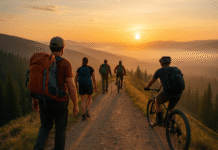
7. Cycling & Bikepacking: Aerobic Engine, Everyday Adventure
Cycling scales from short city spins to weekend tours, letting you accumulate aerobic volume without pounding. Large cohort data link cycle commuting with reduced risks of cardiovascular disease, cancer, and all-cause mortality versus non-active commuting, making even utility rides meaningful training. For fitness, mix easy spins with hills or intervals; for adventure, try one-night bikepacking with minimal gear. Helmets, front/rear lights, and bright clothing improve conspicuity; learn basic roadside fixes (tube change, quick-link).
7.1 How to do it
- Fit check: Saddle height approximately at greater trochanter; fine-tune to avoid knee pain.
- Start with 30–60-minute easy rides; sprinkle 3–5 × 1–2-minute climbs.
- For bikepacking, begin with 30–60 km overnighters on familiar routes.
7.2 Numbers & guardrails
- Frequency: 2–4 rides/week; one can be a commute.
- Intensity mix: 80% easy, 20% harder efforts for durability.
- Safety: Lights day and night; obey local traffic laws; ride predictably.
- Maintenance: Lube chain weekly; check tire pressure pre-ride.
Mini case: A new commuter cycles 2×12 km round trip, 3 days/week. In 12 weeks they reach 72 km weekly, meeting aerobic targets without dedicated “workouts”—and saving transport costs.
Bottom line: Bikes turn errands into training; start easy, maintain the machine, and the fitness sneaks up on you.
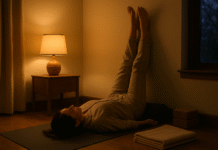
8. Yoga & Mobility (Hatha, Vinyasa, Pilates-style): Range, Breath, Control
Yoga and mobility practices improve flexibility, balance, and body awareness—excellent complements to higher-impact hobbies. Evidence suggests yoga can help chronic, non-specific low back pain over months compared with no exercise, though effects are modest and adverse events (usually transient pain increases) can occur; this underscores starting gently and listening to your body. Group classes provide cues and accountability; home sessions extend consistency. Equipment can be minimal: mat, strap, blocks; Pilates-style work adds controlled core strengthening. PubMed
8.1 How to do it
- Begin with beginner Hatha or slow Vinyasa; avoid hot classes early.
- Learn 6–8 foundational moves: cat-cow, low lunge, bridge, plank, hamstring floss, breathing drills.
- Use props generously to keep ranges pain-free.
8.2 Numbers & guardrails
- Dose: 10–20 minutes daily or 2–3 × 45-minute classes weekly.
- Effort: Easy-moderate; prioritize nasal breathing and smooth control.
- Safety: Discomfort is okay; sharp pain is not—back off or modify.
- Integration: Do 5–10 minutes post-run/ride/hike to maintain range.
Mini checklist: Set two cues—“lengthen” and “breathe”—and pair them with exhale tempo. Progress range only when form stays calm.
Bottom line: Yoga/mobility keeps joints cooperative and supports every other hobby—start slow and personalize poses to your anatomy.
9. Aerial Arts (Silks, Hoop, Pole): Strength Meets Artistry
Aerial disciplines look intimidating but are surprisingly scalable with good coaching. They train grip, shoulders, core, and coordination through climbs, hangs, and shapes. Injury research in circus arts is still emerging; rates vary by discipline and exposure, with aerial and pole showing higher counts per session than some ground skills—so progressive loading and strict spotting are key. Start with studio-based beginner classes where mats, rigging checks, and progressions are standard. Expect rapid grip adaptations but be patient with skin conditioning and overhead mobility. PMC
9.1 How to do it
- Choose a reputable studio; ask about rigging inspections and coach credentials.
- Build basics: dead hangs, hollow holds, foot locks, controlled descents.
- Log climbs (distance/time) and limit big jumps in volume.
9.2 Numbers & guardrails
- Session: 60 minutes with frequent rest; pair with 1–2 general strength days.
- Safety: Warm shoulders thoroughly; avoid maximal hangs in early weeks.
- Skin: Use tape only as instructed; prioritize hygiene to avoid abrasions.
- Progression: Add 1–2 new shapes/week while refining exits and grips.
Mini case: Over 10 weeks at 2 sessions/week, a beginner builds from 10-second to 30-second controlled hangs and completes a safe 3-meter climb—mirroring strength and skill adaptations typical in aerial cohorts.
Bottom line: Aerial arts are theatrical strength training; choose a safety-first studio and progress deliberately.
FAQs
1) How do I choose the “right” hobby if I like several?
Pick the one you’re most likely to do twice a week for the next month. Enjoyment predicts adherence; once it’s a habit, you can add a second hobby. If you’re undecided, rotate 2–3 trial classes in week one, then commit to the winner for six weeks so your brain and tissues can adapt. Use the CDC 150/75+2 framework to ensure your weekly mix still hits health targets.
2) How do these hobbies fit into the 150/75 guideline?
Two 60-minute classes (dance or martial arts) plus a 90-minute hike typically covers most moderate minutes; add a short strength session twice weekly and you’ve checked the full box. Alternatively, three 45-minute bike rides with one being hilly can hit the vigorous bucket. The key is cumulative minutes at appropriate intensity.
3) I’m worried about injuries—what’s realistically “safe”?
No activity is zero-risk, but indoor climbing has low acute injury rates per 1,000 hours, especially with good fall/belay practice; bouldering sits a bit higher than roped climbing. Parkour injuries concentrate at ankles/knees and correlate with rapid load increases; coaching and progress caps help. Always scale volume and complexity gradually.
4) How should I warm up?
Use 5–10 minutes of activity-specific prep: joint circles and rhythm drills for dance, technical rounds for martial arts, easy traverses for climbing, light mobility and landing mechanics for parkour. Warm-ups raise temperature, improve coordination, and reduce “first-set stiffness,” priming tissues for load.
5) Do I need special gear to start?
Usually not. Borrow or rent first: climbing shoes/harness at the gym, wetsuit/tow float from a club, poles for hiking. Invest after 4–6 sessions when you know fit and preferences. For cycling, a helmet and lights are non-negotiable; for martial arts, a mouthguard and wraps/shin pads for contact days.
6) How do I manage progress without overdoing it?
Track three simple metrics: frequency (sessions/week), volume (minutes, climbs, kilometers), and intensity (RPE or heart rate). Increase only one metric by ~10–20% per week. If soreness or sleep worsens, hold or reduce load. Deload every 4–6 weeks, then rebuild.
7) What about cross-training and recovery?
Two 20–40-minute strength sessions (push, pull, hinge, squat, carry) bolster resilience for all nine hobbies. Add 10–15 minutes of mobility after hard days and protect sleep. Easy walks or spins aid circulation without adding stress. These layers reduce injury risk and support faster skill acquisition.
8) I can’t swim well—can I still try open-water?
Yes—with instruction and caution. Start in supervised, calm water with a coach or club. Practice breathing control and sighting in a pool first. Use a bright cap and tow float, and learn local hazards (rip currents, boat traffic, water temperature). Respect cold water shock and never go alone.
9) Are there mental health benefits beyond the physical?
Absolutely. Dance shows improvements in motivation and aspects of social cognition; green-space exposure from hiking correlates with reduced stress and fatigue; cycling commuters report well-being gains alongside health risk reductions. Social connection in classes amplifies these effects.
10) How do I budget time for this around work/family?
Anchor your hobby to an existing routine (e.g., Tuesday/Thursday classes after work, Saturday morning hike), then guard it like an appointment. If commute cycling is feasible, you can turn travel time into training and free evenings for family or recovery. Small, consistent blocks beat rare epic sessions.
Conclusion
You don’t need a gym to build a capable, resilient body. Pick one of these nine hobbies—dance, martial arts, climbing, parkour, hiking, open-water swimming, cycling, yoga/mobility, or aerial arts—and you’ll stack skill, community, and confidence on top of fitness. Start with honest self-assessment (what seems fun, what your week allows), get beginner instruction, and progress deliberately. Use evidence-based guardrails—150/75 aerobic targets, plus two strength days—and scale only one training variable at a time. Respect the environments (especially cold water and outdoor conditions), invest in foundational technique, and let enjoyment drive consistency. Over a few months you’ll feel and move differently: steadier on uneven ground, calmer under effort, and eager for the next session.
CTA: Choose one hobby and book your first beginner session this week—put it on the calendar now.
References
- Adult Activity: An Overview, Centers for Disease Control and Prevention (Dec 20, 2023). CDC
- What Counts as Physical Activity for Adults, Centers for Disease Control and Prevention (Dec 20, 2023). CDC
- American Heart Association Recommendations for Physical Activity in Adults, American Heart Association (2023). www.heart.org
- The Effectiveness of Dance Interventions on Psychological Health Outcomes: A Systematic Review and Meta-analysis, Am J Health Promotion (2024). PMC
- The Physiological and Psychological Benefits of Dance: A Review, Frontiers in Psychology (2022). PMC
- Analyzing Injury Patterns in Climbing: A Comprehensive Review, Sports (2024). PMC
- Acute Injury Risk and Severity in Indoor Climbing: A Prospective Study, Wilderness & Environmental Medicine (2013). PubMed
- Safety Standards, International Climbing and Mountaineering Federation (UIAA) (2023). UIAA
- Cold Water Shock, Royal National Lifeboat Institution (RNLI) (2024). rnli.org
- Open Water Swimming: Safety Advice & Tips, Royal National Lifeboat Institution (RNLI) (2024). rnli.org
- Association between Active Commuting and Incident Cardiovascular Disease, Cancer, and All-Cause Mortality, BMJ (2017). BMJ
- Yoga for Chronic Non-Specific Low Back Pain, Cochrane Review (Nov 18, 2022). Cochrane Library
- Training Habits and Lower Limb Injury Prevention in Parkour, Science & Motricité (2022). mov-sport-sciences.org
- Prospective Cohort Study on Injuries and Health Problems among Circus Artists, BMJ Open Sport & Exercise Medicine (2018). PMC
- Adult Recreational Aerial Circus Arts: Injury Characterization, The Journal of Emerging Sport Studies (2023). Michigan Publishing
- The Health Benefits of the Great Outdoors: Systematic Review and Meta-Analysis of Green Space Exposure, Environmental Research (2018). PMC