








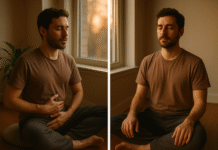



















Gratitude isn’t about ignoring challenges; it’s about deliberately noticing progress and support so you can keep going. In health journeys, that mindset reduces stress, improves sleep, and makes healthy behaviors easier to repeat. In simple terms, the role of gratitude in health journeys is to refocus your attention on what’s working—turning small wins into fuel for long-term change. This article is educational and not medical advice; please work with your clinician for personal guidance. For clarity, psychologists define gratitude as a sense of thankfulness in response to benefits received or favorable circumstances, and recent large cohort and clinical studies link it with better well-being and even longevity.
1. Gratitude Turns “All-or-Nothing” Into “Progress-Adds-Up”
Gratitude helps you immediately answer a critical question on any health journey: “What’s going right that I can repeat tomorrow?” By orienting your attention toward completed actions (you prepped one vegetable, walked 10 minutes, took your meds on time), you replace perfectionism with proof that progress is happening. That shift matters because what you notice guides what you do next; grateful reflection increases optimism and self-efficacy, both of which predict follow-through in behavior change. Classic experiments show that people assigned to “count blessings” report higher life satisfaction and more health-promoting actions compared to those focused on hassles. Over weeks, that attention pattern snowballs—wins feel more salient than misses—so you keep showing up without white-knuckling it.
1.1 Why it matters
- Motivation becomes evidence-based: Gratitude spotlights completed behaviors, which your brain treats as credible proof you can do it again.
- Prevents perfectionism spirals: Seeing partial wins reduces “I blew it, so why try?” thinking.
- Amplifies reinforcement: Positive emotions after a healthy action make the next repetition likelier.
1.2 How to do it (2 minutes)
- After any health task, write one line: “Grateful I ___ today because ___.”
- End your day with 3 progress notes (behaviors, not outcomes).
- Add a “done list” to your tracker so finished actions get as much space as to-dos.
- Once a week, re-read the week’s notes and circle the most repeatable win.
Mini example: If your goal is 7k steps but you walked 3,400, log: “Grateful I walked 3,400 steps because I turned a meeting into a phone-walk.” That line makes the cue (phone call) and action (walk) easier to reuse. Over a month, you’ll accumulate 20–40 such cues you can redeploy.
Takeaway: Gratitude reframes success as a streak of repeatable micro-behaviors—exactly what long-term health needs.
2. Gratitude Buffers Stress and Supports Heart-Healthy Recovery
Stress isn’t just a feeling; it’s physiology that affects blood pressure, inflammation, and recovery. Psychological well-being—including gratitude—is linked to better cardiovascular health, and health organizations now emphasize screening for and improving psychological factors in routine care. Gratitude practices won’t replace treatment, but they can help downshift your stress response and nudge daily choices (like walking, cooking, or taking meds) in the right direction. Over time, a steadier nervous system means better adherence and fewer “stress derails my plan” days. PubMed
2.1 Numbers & guardrails
- Physiology: Reviews note gratitude’s association with lower stress and improved mood; some clinical samples show links to lower inflammatory markers.
- Scope: Think adjacent benefit—gratitude helps you do the things (sleep, movement, connection) that improve cardiometabolic risk.
- Guardrail: If anxiety, panic, or depression symptoms persist, prioritize professional care; use gratitude as an add-on, not a substitute.
2.2 Quick applications
- Thanks-walk: During a 10-minute walk, quietly note three supports you have today (e.g., “clear weather,” “a friend checking in”).
- Stress reframe: After a spike, ask, “What helped me cope even 1%?” and log it.
- Warm-handoff text: Thank a supporter (coach, friend), which strengthens your accountability loop.
Synthesis: Gratitude steadies the system that makes healthy choices possible, especially on high-stress days.
3. Gratitude Improves Sleep, Making Next-Day Choices Easier
Poor sleep undermines appetite signals, impulse control, and exercise energy. Gratitude helps by quieting negative pre-sleep thoughts and increasing positive ones, which is associated with better sleep quality, longer sleep, and less time to fall asleep. People with higher dispositional gratitude tend to report fewer sleep problems, and simple practices—like a short “3 good things” note—can shift your mind toward restful cues at night. Better sleep is not merely “nice to have”; it powers virtually every other health habit tomorrow.
3.1 How to do it tonight
- Timing: Two hours before bed, write 3 things you’re grateful for about today, focusing on specifics (a crisp apple at lunch, a neighbor’s hello).
- Format: Single sentence each; avoid phones after the list.
- Pairing: Add one calming cue (dim lights, warm shower, or 10 slow breaths).
- If mind races: Add “What went less badly than expected?” to nudge realistic positivity.
3.2 Mini checklist
- Keep a pen-and-paper card by the bed.
- Pre-decide your three prompts (people, body, environment).
- Reread yesterday’s card before writing today’s.
Example (hypothetical): A reader who averaged 45 minutes to fall asleep began a 3-item evening log; after two weeks, their average sleep latency self-report fell to ~30 minutes with fewer 3 a.m. wake-ups. Individual results vary, but the direction aligns with sleep-gratitude research.
Synthesis: If tomorrow’s habits matter, start by making tonight’s mind a friend, and gratitude is a short, repeatable entry point.
4. Gratitude Makes Healthy Behaviors Stick by Reinforcing Them
Behavior change thrives on immediate rewards; the problem is that many health payoffs are delayed. Gratitude supplies a near-term reward—a micro-burst of positive emotion—right after you act. Experimental work shows people who “count blessings” report more health-promoting behaviors; practical guides from major medical schools suggest thank-you notes and brief journaling to keep going. In the real world, that means your brain learns, “When I do my PT or meal prep, I feel better now,” which increases the odds you’ll do it again tomorrow.
4.1 Tools & examples
- Habit pairing: “After brushing teeth, I write one line: grateful I booked my dental checkup.”
- Streak-with-meaning: Track days you wrote a gratitude line about a health behavior, not just the behavior itself.
- Apps: Any notes app works; if you prefer structure, try a simple journal or habit tracker that supports prompts.
4.2 Mini case (hypothetical)
- Week 1: Two gym visits → two gratitude lines (“grateful my knees felt stable on squats”).
- Week 4: Five gym visits, each logged with a reason you’re grateful (coach, pain-free set, playlist).
- Result: The log becomes a personalized “why it’s worth it” archive you can reread when motivation dips.
Synthesis: Gratitude turns healthy actions into positively reinforced habits—tiny, immediate rewards that compound.
5. Gratitude Strengthens Social Support and Accountability
Health is social. Expressing gratitude signals warmth and responsiveness, which helps form and deepen relationships, from walking buddies to care teams. Studies show that being thanked can increase closeness and future helping; gratitude also predicts better relationship quality months later. Practically, a quick “thank you” to a partner, coach, or clinic staff can fortify the trust that makes reminders, car-pools, or joint workouts easier to accept. Your support system becomes sturdier because you actively maintain it. PMC
5.1 How to do it
- Weekly thank-you: Text one supporter why their help mattered (“Your check-in got me out the door”).
- Gratitude huddle: Open group chats or team meetings with one sentence of appreciation.
- Care loop: After appointments, note one thing you appreciate about your clinician’s guidance.
5.2 Why it works
- Find-Remind-Bind: Gratitude helps you find supportive people, remind each other of mutual value, and bind the relationship.
- Pro-helping cascade: People who feel appreciated are more likely to help again.
Synthesis: Gratitude is social glue; stronger bonds make health plans more doable and more enjoyable. ggsc.berkeley.edu
6. Gratitude Calms Emotional Eating and “Urgent Fixes” by Adding Space
When stress spikes, many of us reach for quick comfort—scrolling, snacking, skipping workouts. Gratitude can add a small pause between urge and action by drawing attention to what is already helping (supportive coworker, a prepared snack, a walk you did earlier). Meta-analyses find gratitude practices boost well-being and reduce anxiety, which indirectly lowers the drive for impulsive coping. Pairing a 10-second “thanks for…” with a slow exhale is not a cure-all, but it can be just enough friction to choose the planned behavior (drink water, set a timer, step outside). If you’re dealing with an eating disorder, work with a specialist; gratitude is a complement, not treatment.
6.1 Pause-Plan Protocol (60 seconds)
- Pause: “Thanks for the signal, body.” (Name the feeling.)
- Plan: Choose one tiny action aligned with your goal (250 ml water, 3 breaths by the window, set a 5-minute walk).
- Proof: Write one line afterward: “Grateful I ___; it helped by ___.”
6.2 Mini checklist
- Keep fast, healthy defaults visible (prepped fruit, nuts).
- Use calendar nudges labeled “Thanks → Tiny Next Step.”
- End tough days by listing 3 helpers that reduced the load.
Synthesis: Gratitude steadies emotions enough to make your planned coping skills more likely in the moment.
7. Gratitude Supports People Managing Chronic Illness and Pain
Chronic conditions add daily friction—appointments, symptoms, side effects—that can erode motivation. In patient samples (e.g., heart failure), higher gratitude has been associated with better mood, sleep, and self-efficacy; small intervention studies show potential for improved inflammation markers and heart-rate variability during gratitude journaling. The mechanism isn’t magic; it’s about resilience—feeling supported, noticing workable days, and reinforcing adherence behaviors when energy is limited. Use gratitude to highlight what helps you function (pill organizers, a lift from a neighbor, a good clinic day), alongside medical care.
7.1 How to apply it with symptom tracking
- Pair each symptom entry with one helpful factor (slept 7h, paced the morning, asked for help).
- Keep a “good hours” log: note the window when energy/pain was most manageable and what enabled it.
- Share one gratitude line with your care team to surface what’s working.
7.2 Region-specific note
- If access to therapy or cardiac rehab is limited, ask clinics about group education, peer support, or tele-rehab options; bringing a gratitude line about what’s helped can clarify what to scale.
Synthesis: For chronic illness, gratitude spotlights functional wins and the supports worth repeating.
8. Gratitude Helps You Recover Faster From Setbacks
Relapses happen—missed weeks, rebound weight, flare-ups. Gratitude keeps setbacks from becoming identity statements. Instead of “I failed,” you can ask, “What held together despite the wobble?” That question reveals the starting footholds for your next step (a friend who texted, a shorter walk you managed, a meal you still cooked). Reviews of the field show gratitude interventions reliably boost positive affect and well-being; in practice, that uplift translates into quicker re-engagement after detours. The goal isn’t to sugarcoat; it’s to extract useful data and restart sooner.
8.1 Post-Setback Debrief (5 minutes)
- Name the slip without drama.
- List 3 things that still helped (even 1%).
- Pick one repeatable action for the next 24 hours.
- Thank the helper(s) who made the smallest difference.
8.2 Example (hypothetical)
- After two weeks off PT: “Grateful my knee tolerated a 5-minute mobility video and that my partner reminded me kindly.”
- Next 24 hours: Book the next session; set clothes out; send a thank-you text to reinforce support.
Synthesis: Gratitude turns setbacks into signal, not verdict, so you restart based on what still works.
9. Build a Sustainable Gratitude Practice (That Doesn’t Slide Into Toxic Positivity)
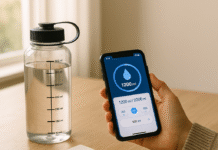
The best practice is the one you’ll keep. Evidence-based options include brief weekly gratitude lists, daily “three good things,” and one-time gratitude letters—each has been studied and shown benefits. Frequency can be daily or weekly; choose the cadence that feels fresh, not forced. Combine gratitude with your existing tracking tools: add a one-line field in your habit app, or keep a physical card by your water bottle. Most importantly, be specific and process-focused (“grateful I walked the first 5 minutes despite rain”), not vague (“grateful for health”). Gratitude should coexist with honest emotions; if you’re struggling, log that too and seek care.
9.1 Starter toolkit
- Prompts: “What helped me move 1%?” “Who made today easier?” “What will future-me thank present-me for?”
- Cadence: 3 lines nightly or 5 lines weekly; test each for 2 weeks.
- Formats: Pocket notebook, notes app, or a sticky on your fridge.
- Trigger pair: After medication, after brushing teeth, or after setting tomorrow’s alarm.
- Review: On Sundays, circle one theme (e.g., “walk-and-talk calls”), and plan to repeat it twice next week.
9.2 Keep it grounded
- Allow ambivalence: “Grateful I finished the workout, even though I was tired and grumpy.”
- Name constraints: Appreciation doesn’t erase barriers; it helps you navigate them.
- Stay brief: Two minutes is enough; depth beats length.
Synthesis: Sustainable gratitude is small, specific, and honest—and it integrates seamlessly with your health tools.
FAQs
1) What’s the simplest definition of gratitude in health?
It’s the practice of recognizing benefits, supports, and small wins that help you move toward your health goals. Psychologists define gratitude as a sense of thankfulness for benefits received or good fortune; in health contexts, that becomes a lens for noticing actionable progress and support you can repeat.
2) Is there hard evidence that gratitude improves health?
Evidence ranges from lab experiments to clinical and population studies. Trials show gratitude practices boost well-being and reduce anxiety; sleep studies link gratitude with better sleep quality; a 2024 cohort of ~49,000 older women found higher gratitude associated with lower all-cause mortality (association, not causation). Use gratitude as a helper alongside standard care.
3) Daily or weekly—what’s the best frequency?
Both are studied. Early experiments used weekly lists; others used daily “three good things.” Choose the cadence that feels most sustainable and non-performative. If daily starts to feel rote, try weekly; if weekly feels too distant, switch to daily for two weeks. Scott Barry Kaufman
4) How does gratitude help me stick with workouts or PT?
It creates an immediate positive payoff for the right behavior (a micro-reward), which increases repetition. People asked to count blessings reported more health-promoting actions in classic experiments, and many clinical resources recommend brief thank-you notes or journals because they’re fast, scalable, and reinforcing.
5) Can gratitude lower my blood pressure or cholesterol?
Treat those goals with medical plans first. Gratitude influences psychological factors (stress, mood, sleep) that support healthy behaviors and may indirectly benefit heart health. Authoritative statements tie psychological well-being to cardiovascular outcomes, but gratitude is an adjunct, not a replacement for medication or diet therapy.
6) I tried gratitude journaling and felt fake. Any fixes?
Make it specific and honest: “Grateful I did the first 10 minutes of the video though I hated it.” You can also switch to a once-weekly recap or send a genuine thank-you text instead of journaling. The goal is a realistic lens, not forced positivity.
7) Does gratitude help with emotional eating?
Indirectly. By reducing anxiety and increasing positive affect, gratitude can widen the pause before you act, making planned coping skills more reachable (water first, quick walk, mindful bite). Pair gratitude with professional care if binge patterns or eating disorders are present.
8) What about sleep—when should I write?
Within 2–3 hours of bedtime works well: write three specific “good things” from today. Research links gratitude with better sleep quality and shorter time to fall asleep, likely by shifting pre-sleep thoughts.
9) How do I bring gratitude into clinical visits?
Before appointments, note one intervention or tip that helped since last time and thank your clinician for it. This highlights what to scale and strengthens rapport, which improves adherence and communication—especially in chronic care.
10) Can gratitude really extend life?
One large cohort study (JAMA Psychiatry, 2024) found that people in the highest tertile of gratitude had a 9% lower risk of death over ~4 years than those in the lowest tertile. It’s observational, so it can’t prove causation, but it suggests gratitude may be part of a longevity-supporting lifestyle.
Conclusion
Gratitude is not a rose-colored filter; it’s a practical tool that redirects attention to what’s working so you can repeat it. That shift makes difficult health behaviors feel more rewarding, safeguards sleep and stress response, and strengthens the relationships that carry you when willpower wobbles. Across experiments, reviews, and clinical samples, the signal is consistent: noticing and appreciating progress improves mood and well-being and helps you return to the plan after setbacks. Your implementation can stay tiny—two minutes a day or five minutes a week—so long as it’s specific, honest, and tied to behaviors you want to repeat. Start tonight: write three lines about what helped your health today, circle one theme on Sunday, and schedule it twice next week. Future-you will be grateful you did.
CTA: Write one gratitude line about a health action you did today—and set a reminder to do it again tomorrow.
References
- Counting blessings versus burdens: an experimental investigation of gratitude and subjective well-being in daily life. American Psychological Association / Journal of Personality and Social Psychology, Feb 2003. PubMed
- Gratitude influences sleep through the mechanism of pre-sleep cognitions. Journal of Psychosomatic Research, 2009. (PDF, Greater Good Science Center). Greater Good
- Thankful for the Little Things: A Meta-Analysis of Gratitude Interventions. Journal of Counseling Psychology, 2016. (PubMed). PubMed
- The effects of gratitude interventions: a systematic review and meta-analysis. BMC Psychology, 2023. (PMC). PMC
- The Role of Gratitude in Spiritual Well-Being in Asymptomatic Heart Failure Patients. Spirituality in Clinical Practice, 2015. (PubMed / PDF). ; PDF: PubMedCHI
- A grateful heart is a healthier heart. American Psychological Association news release, Apr 6, 2015. American Psychological Association
- Psychological Health, Well-Being, and the Mind-Heart-Body: A Scientific Statement From the American Heart Association. Circulation, Jan 25, 2021. AHA Journals
- APA Dictionary of Psychology: Gratitude. American Psychological Association, accessed 2025. APA Dictionary
- Giving thanks can make you happier. Harvard Health Publishing, reviewed 2021. Harvard Health
- Gratitude and Mortality Among Older US Female Nurses. JAMA Psychiatry, Oct 2024. (PMC). PMC
- Gratitude and well-being: a review and theoretical integration. Clinical Psychology Review, 2010. (PDF via Greater Good Science Center). Greater Good
- The social functions of the emotion of gratitude via expression. Emotion, 2013. (PubMed / PMC overview). ; Related review: PubMedPMC