




























An air quality alert means outdoor pollution has crossed a threshold where it’s smart to change your plans, not panic. Check your local Air Quality Index before heading out, move hard exercise indoors once it passes 100, and shift to a sealed room with a HEPA cleaner once it passes 150, sooner if you have asthma, heart disease, or are pregnant.
By Noah Sato
Who This Protocol Is For
This is for anyone who has opened a weather app, seen an orange or red air quality banner, and had no idea what it actually meant for their day. Parents deciding whether soccer practice is safe. Runners wondering if today’s the day to move the workout indoors. People with asthma who need a faster trigger than “it looks a bit hazy outside.”
It’s not a replacement for medical advice. If you’ve been told by a doctor to avoid outdoor exertion above a specific pollution level, follow that guidance over anything general written here.
You can skip most of this if you already have a working system: a saved AirNow bookmark, a phone alert set up for your county, and a household habit of checking it before big outdoor plans. This is written for the much larger group who only think about air quality once an alert already showed up on their phone and they weren’t sure what, if anything, to actually change.
A note on scope: This article covers everyday planning around outdoor air pollution and wildfire smoke. It is educational information, not a substitute for personalized medical advice. If you have a diagnosed lung or heart condition, are pregnant, or are caring for a young child with respiratory symptoms, talk to a clinician about your own trigger points. They may be lower than the general guidance below.
What an Air Quality Alert Actually Measures
An air quality alert is issued by a state or regional agency when the Air Quality Index, or AQI, is forecast to reach a level that can affect health. The AQI itself runs from 0 to 500 and tracks five pollutants: ground-level ozone, particle pollution, carbon monoxide, sulfur dioxide, and nitrogen dioxide. In practice, ozone and fine particles (PM2.5) drive most alerts.
Each 50-point band carries a color and a specific meaning, according to the U.S. Environmental Protection Agency’s AirNow program (2026 guidance).
Good
Moderate
Sensitive Groups
Unhealthy
Very Unhealthy
Hazardous
AQI categories and color coding: U.S. EPA AirNow, “AQI Basics” (2026).
At 0–50, air pollution poses little or no risk. At 51–100, it’s acceptable for almost everyone, though unusually sensitive people may notice symptoms. Cross 100 and the calculation changes: people with asthma, COPD, or heart disease start feeling real effects, even though most healthy adults still won’t notice anything. Cross 150 and the general public starts to be affected too, according to AirNow’s official category descriptions.
This is the single most useful thing to remember: 100 is the line for sensitive groups, and 150 is the line for everyone else. Most daily planning decisions come down to which side of those two numbers today’s forecast falls on.
How the U.S. AQI Compares to WHO’s Health Guidelines
Here’s something most AQI explainers skip entirely: a “Good” day on the U.S. index isn’t the same thing as a day the World Health Organization would call safe for long-term exposure. The two systems measure the same pollutant, PM2.5, but set the bar in different places.
In its September 22, 2021 update, the WHO tightened its global air quality guideline for PM2.5 to an annual average of 5 µg/m³ and a 24-hour average of 15 µg/m³, a sharp drop from the 10 µg/m³ and 25 µg/m³ limits it had used since 2005. The WHO’s own reasoning was blunt: the evidence no longer supports the idea of a truly safe threshold, only a lower-risk one.
The EPA moved in the same direction, but not as far. Effective May 6, 2024, it lowered the PM2.5 concentration that marks the top of the “Good” AQI category from 12 µg/m³ to 9.0 µg/m³. That’s real progress, and it’s still nearly double the WHO’s annual guideline.
| Standard | PM2.5 Threshold | What It Represents |
|---|---|---|
| WHO annual guideline (2021) | 5 µg/m³ | Long-term exposure level linked to lowest measurable health risk. |
| WHO 24-hour guideline (2021) | 15 µg/m³ | Short-term spike level the WHO recommends staying under. |
| U.S. AQI “Good” ceiling (2024 revision) | 9.0 µg/m³ | Top of the range the U.S. still labels risk-free for the general public. |
In practice, this means a day your weather app calls “Good” can still sit above what the WHO considers a low-risk long-term average. That’s not a reason to distrust the AQI. It’s still the best real-time planning tool available, but it’s worth knowing the U.S. scale is calibrated for immediate, visible health effects, not the WHO’s more conservative, long-term-exposure standard. If you’re managing a chronic lung or heart condition, that gap is one more reason to treat “Good” as a green light for today, not a guarantee about the whole season.
Why the Air Feels Worse Than It Used to Some Years
This isn’t just perception. The American Lung Association’s “State of the Air” 2026 report, published May 20, 2026, found that 152.3 million Americans, or 44% of the population, live in counties that received a failing grade for at least one type of pollution. Among children specifically, the figure is 46%, or roughly 33.5 million kids in failing-grade counties.
Ozone pollution got measurably worse in the 2026 report compared with the year before, adding close to 4 million more people to unhealthy-ozone counties. Short-term particle spikes, the kind wildfire smoke causes, affected 61.5 million people. Communities of color made up 54.2% of people living in failing-grade counties despite being 42.1% of the population, a gap the report’s authors flagged directly.
None of that means every day is bad. It means alerts are common enough now that having a plan beats reacting from scratch each time.
How Do I Check Today’s Air Quality Before I Plan My Day?
Three things, in order, take under two minutes:
- Check the current AQI at AirNow.gov or your phone’s built-in weather app; most now show it automatically.
- Check the forecast, not just the current reading. Ozone typically peaks in mid-afternoon on hot, sunny days. If you’re planning a 4 p.m. run, the 9 a.m. number won’t tell you much.
- Check for an active alert in your area. These are typically issued when regulators expect the AQI to cross 100 or 150 within the next 24 hours, giving you a heads-up before it happens.
The Daily Decision Flow
What to Actually Change at Each AQI Level
This is the protocol itself. Match today’s number to a row.
| AQI Today | General Public | Sensitive Groups* |
|---|---|---|
| 0–50 (Good) | No changes needed. | No changes needed. |
| 51–100 (Moderate) | No changes needed. | Watch for symptoms during long or intense outdoor activity. |
| 101–150 (Sensitive Groups) | Reduce prolonged or heavy exertion outdoors. | Move exercise indoors; shorten outdoor time; keep rescue medication on hand. |
| 151–200 (Unhealthy) | Cut back on prolonged outdoor exertion. | Avoid outdoor exertion entirely; stay indoors with filtration if possible. |
| 201–300 (Very Unhealthy) | Avoid outdoor exertion; move activities indoors. | Stay indoors; run air cleaner; avoid opening windows. |
| 301+ (Hazardous) | Stay indoors; treat as an emergency air day. | Stay indoors; seek medical advice if symptoms appear. |
*Sensitive groups: people with asthma or COPD, heart disease, older adults, children, pregnant people, and outdoor workers. Category actions adapted from EPA AirNow’s published AQI health statements (2026).
Building It Into a Weekly Routine
A single day’s check is useful. A standing habit is better, especially during ozone season (late spring through early fall in most of the U.S.) or wildfire season in the West. The goal isn’t to obsess over a number every hour. It’s to attach the check to something you already do, so it survives busy weeks instead of quietly dropping off after the first alert passes.
| When | What to Do | Time Needed |
|---|---|---|
| Sunday evening | Check the 5-day AQI forecast; flag any high-ozone or smoke-risk days for the week ahead. | 2 minutes |
| Each morning | Check the current reading before deciding on outdoor exercise timing. | 30 seconds |
| Before afternoon outdoor plans | Re-check: ozone typically peaks in mid- to late-afternoon on hot days. | 30 seconds |
| Start of wildfire season | Confirm your HVAC filter is MERV 13 (or the highest your system supports) and that you know where a portable air cleaner is. | 15 minutes, once |
Adjusting the Protocol for Your Situation
The 100/150 rule is a starting point, not a fixed law. A few groups need a tighter version.
Parents of young children. Kids breathe faster relative to their body size and spend more time outdoors, which raises their exposure. Many pediatric guidelines suggest treating the “Sensitive Groups” threshold (101) as the general-public threshold for children under six, and moving vigorous outdoor play indoors once it’s crossed.
People with asthma or COPD carry a rescue inhaler on any day the forecast touches 100, not just days it’s already there; forecasts shift. Runners and cyclists in training shift hard interval work to early morning, before ozone builds, on days forecast to reach the Moderate range, and move indoors entirely above 100.
Outdoor workers, understandably, have the least flexibility. Where indoor relocation isn’t possible, the EPA and OSHA both recommend more frequent breaks in filtered indoor air, N95 respirators during heavy smoke events, and shifting the most strenuous tasks to the coolest, lowest-ozone part of the day.
Endurance athletes deserve their own note. Marathon and triathlon training plans are usually built around consistency, which makes it tempting to push through a Moderate-AQI day rather than break the streak. The problem is dose: ozone exposure scales with both concentration and how hard and how long you’re breathing it in, so a two-hour tempo run at AQI 90 can deliver a meaningfully higher pollutant dose than a short walk at the same reading. On forecast-Moderate days, shifting the hardest interval or tempo work to the earliest available window, before ozone builds through the afternoon, preserves most of the training benefit while cutting real exposure. It’s a small scheduling change that keeps the workout intact without ignoring the exposure math.
What to Do Indoors When the Air Outside Turns Bad
Closing the windows helps, but it’s not the whole answer. Indoor air tracks outdoor air within hours unless you’re actively filtering it. The EPA’s wildfire smoke guidance lays out a specific approach.
- Upgrade your HVAC filter to MERV 13, or the highest rating your system can handle without straining the blower.
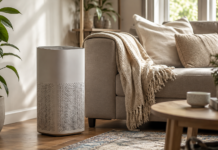
- Use a portable air cleaner sized for the room, run on its highest fan speed, positioned where people actually spend time.
- Confirm it doesn’t generate ozone by checking the California Air Resources Board’s certified device list. Some older ionizing models add pollution rather than removing it.
- Pick one “clean room,” usually a bedroom, where doors and windows stay shut and the air cleaner runs continuously during a multi-day smoke event.
- During ash cleanup after a fire, wear an N95 respirator, long sleeves, and gloves; don’t dry-sweep, which re-airborne fine particles.
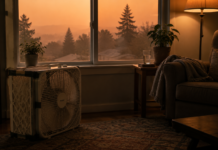
A DIY box-fan-and-filter cleaner is a legitimate backup when a commercial unit isn’t available or affordable, but the EPA specifically recommends using a box fan manufactured in 2012 or later, since older motors have been linked to fire risk when run continuously with an attached filter.
Mistakes That Undo the Whole Plan
A few habits quietly cancel out an otherwise good routine, and most of them come from treating air quality like weather you can eyeball rather than a number you check.
| Mistake | Why It Backfires |
|---|---|
| Judging air quality by eye | Ozone is invisible. A clear blue sky can still carry an AQI above 100. |
| Checking once in the morning only | Ozone climbs through the day; a 9 a.m. “Good” reading can be “Unhealthy” by 4 p.m. |
| Cracking a window “for a bit of fresh air” during smoke events | Even brief openings let indoor PM2.5 levels climb back toward outdoor levels. |
| Wearing a cloth or surgical mask for wildfire smoke | Only a properly fitted N95 or better filters out fine particles; cloth masks don’t. |
| Ignoring the forecast, only reacting to today’s number | Alerts exist specifically to warn you before the AQI crosses a threshold, not after. |
What Public Health Professionals Do Differently
People who work in environmental health rarely check the AQI once and move on. They build it into an existing habit, glancing at it alongside the weather forecast rather than as a separate task, and they pay closer attention to the forecast trend than the single number. A “Moderate, rising” reading gets treated more cautiously than a “Moderate, falling” one, even though both show the same AQI right now.
Most also keep a standing supply of N95 respirators and a spare HVAC filter on hand before wildfire season starts, rather than shopping for them once smoke has already arrived and shelves are empty. That single habit, buying early, is probably the most practical difference between people who handle smoke events smoothly and people who scramble.
They also tend to separate “annoying” from “dangerous” more carefully than the general public does. Eye irritation, a faint smoky smell, or a scratchy throat at Moderate AQI is unpleasant but not typically a signal to change plans. Chest tightness, a persistent cough, or shortness of breath is a different category entirely and calls for moving indoors regardless of what the number says. The number is a planning tool. Your body’s actual response, especially if you’re in a sensitive group, overrides it.
Copy-Ready Daily Checklist
- ☐ Check current AQI and today’s forecast before finalizing outdoor plans
- ☐ Identify which category applies: Good, Moderate, 100+, or 150+
- ☐ If 100+, sensitive-group members shift exercise indoors or shorten outdoor time
- ☐ If 150+, everyone reduces prolonged outdoor exertion
- ☐ Re-check before afternoon or evening outdoor activity
- ☐ During smoke events, keep windows shut and run a HEPA cleaner in one sealed room
- ☐ Keep an N95 respirator and a spare MERV 13 filter on hand before smoke season starts
Safety Limits and When to Call a Clinician
This protocol covers everyday planning, not emergencies. Get medical help right away if you or someone with you develops chest pain, difficulty breathing, wheezing that doesn’t ease with rescue medication, dizziness, or a racing heartbeat during a poor air quality day. Older adults, infants, and people with existing heart or lung disease are at the highest risk of these acute effects, according to EPA and CDC guidance on air pollution health effects.
If you’re pregnant, ask your provider what threshold they’d like you to use. Some recommend the sensitive-group cutoff (100) rather than the general-public one (150), particularly during the third trimester. Growing evidence links high prenatal air pollution exposure to lower birth weight, which is why several providers prefer the more cautious cutoff.
Key Takeaways
- An air quality alert means the AQI is forecast to cross 100 or 150 in your area within roughly 24 hours.
- 100 is the threshold for sensitive groups; 150 is the threshold for the general public.
- Ozone typically peaks in mid- to late afternoon, so a clean morning reading can turn unhealthy by evening.
- Clear skies don’t guarantee clean air: ozone and fine particles are both invisible.
- A MERV 13 HVAC filter and a properly sized portable air cleaner are the two most effective indoor defenses during smoke events.
- Only a well-fitted N95 (not a cloth or surgical mask) meaningfully filters wildfire smoke particles.
- 44% of Americans live in counties with at least one failing air-quality grade, per the American Lung Association’s 2026 report. This isn’t a rare edge case anymore.
Frequently Asked Questions
What AQI level should I stop my kids from playing outside?
Most pediatric health guidance treats 101 (the start of the “Sensitive Groups” category) as the cutoff for children, rather than waiting for the general-public threshold of 150. Move vigorous outdoor play indoors once the AQI crosses 100, especially for children with asthma.
Can I trust my phone’s built-in AQI number, or should I check AirNow.gov directly?
Most phone weather apps now pull from the same government monitoring network AirNow uses, so the number is usually reliable. During fast-moving wildfire smoke, though, AirNow.gov’s real-time and forecast maps update more frequently and are worth checking directly.
Do air quality alerts apply to indoor air too?
Not directly. Alerts measure outdoor air. But indoor air quality tracks outdoor pollution within hours unless windows stay shut and you’re filtering, so an outdoor alert is still a signal to check your indoor setup, particularly during wildfire smoke.
What does an “Ozone Action Day” mean?
It’s a specific type of air quality alert, used by many U.S. metro areas, issued when ground-level ozone is forecast to reach unhealthy levels, typically on hot, sunny, low-wind days. Local agencies often pair it with requests to delay refueling cars or mowing lawns with gas equipment until evening, since both add ozone-forming pollutants at the worst possible time of day.
Is it safe to exercise outdoors at AQI 120?
At 120, healthy adults can generally still exercise outdoors, though shortening the session and lowering intensity is a reasonable precaution. People with asthma, COPD, or heart disease should move that workout indoors or postpone it.
What’s the difference between an “Air Quality Alert” and a “Red Flag Warning”?
An air quality alert is about pollution levels people are breathing right now or soon will be. A Red Flag Warning is a fire-weather forecast about conditions favorable for fire to spread quickly. The two often overlap during wildfire season but measure different things.
Do cloth masks help during wildfire smoke?
Not meaningfully. Cloth and surgical masks are designed to catch droplets, not the much smaller fine particles in wildfire smoke. A properly fitted N95 or P100 respirator is the level of protection public health agencies actually recommend.
References
- U.S. EPA AirNow, “AQI Basics” and category health statements, 2026.
- U.S. EPA, “Wildfires and Indoor Air Quality (IAQ),” accessed 2026.
- World Health Organization, “WHO Global Air Quality Guidelines,” published September 22, 2021.
- American Lung Association, “State of the Air 2026” report, published May 20, 2026.
- California Air Resources Board, certified air cleaner device list, “Smoke Ready California.”