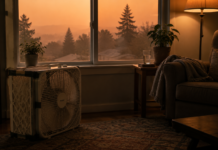




























A cold home is a measurable health risk, not just a comfort issue: indoor temperatures below roughly 18°C are linked to higher blood pressure, worse respiratory symptoms, and a documented rise in winter deaths. The CDC recorded 1,024 U.S. deaths attributed to excessive cold or hypothermia in 2023, and nearly a fifth of those happened in January alone.
By Sophie Taylor
Who This Matters Most For
This is for anyone who has ever kept the thermostat low to save money and wondered whether it actually matters for health, and especially for households with older adults, infants, or anyone managing a heart, lung, or circulatory condition. It’s also relevant if your home is drafty, poorly insulated, or heated unevenly, since the health effects of cold indoor air have less to do with the outdoor forecast than with what’s actually happening inside your walls.
If your home already stays reliably above 18°C through the coldest months, most of what follows will simply confirm you’re in a reasonable range. This is written for the much larger group who has never actually checked.
A note on scope: This is educational information about general household health and cold indoor environments, not personalized medical advice. If you or someone in your household has a heart, lung, or kidney condition, ask a clinician what indoor temperature and precautions apply specifically to you.
How Cold Indoor Temperatures Actually Affect the Body
The World Health Organization’s housing and health guidelines recommend keeping living spaces at a minimum of 18°C, rising to 20 to 21°C in rooms used by elderly residents, infants, or anyone with a chronic illness. A WHO-commissioned systematic review found that people living in homes heated below 18°C had a measurably greater risk of high blood pressure, and that risk rose substantially once indoor temperatures dropped below 16°C.
The mechanism is straightforward: cold exposure triggers blood vessels near the skin to constrict, which raises blood pressure and increases the workload on the heart. For someone with existing cardiovascular disease, that added strain during a cold spell can be enough to tip a stable condition into an acute event. Public Health England’s own review concluded that heating a home to at least 18°C poses minimal risk to a sedentary, appropriately dressed person, which is effectively the floor most public health guidance now uses.
US deaths from cold/hypothermia, 2023
Share of those deaths in January alone
US cold-related deaths, 1999–2022
Systolic BP gap, coldest vs. warmest homes
Sources: CDC MMWR, Vol. 74; NIH-published cold-mortality research; UCL/Journal of Hypertension, 2018.
What Counts as a Cold Home?
“Cold” isn’t a single line, it’s a gradient of rising risk. The bands below reflect WHO guidance and the research it’s built on.
A home doesn’t need to feel icy to sit in the elevated-risk band. Many older houses with single-pane windows or minimal insulation routinely drop into the 16 to 18°C range overnight without anyone noticing, especially in bedrooms that get less attention than main living areas.
The Blood Pressure Connection, in More Detail
A 2018 study published in the Journal of Hypertension, led by researchers at University College London, measured home blood pressure and indoor temperature across 4,659 participants. The findings were consistent enough to shape public guidance: every 1°C drop in indoor temperature was associated with a 0.48 mmHg rise in systolic and a 0.45 mmHg rise in diastolic blood pressure.
| Home Temperature Group | Average Blood Pressure |
|---|---|
| Coldest homes | 126.6 / 74.5 mmHg |
| Warmest homes | 121.1 / 70.5 mmHg |
The researchers specifically recommended keeping living rooms at 21°C or above as a general health measure, particularly for people who spend long, sedentary stretches at home, a description that fits many older adults and people managing chronic illness.
Respiratory Risk: Cold, Damp, and Mold Travel Together
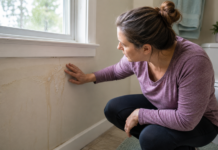
Cold homes and damp homes are frequently the same home. When indoor air stays cold, moisture condenses on colder surfaces, walls, window frames, and poorly insulated corners, creating conditions where mold takes hold. A systematic review and meta-analysis published in PLOS ONE, covering 16 separate studies, found that any dampness or mold exposure raised the risk of a child developing asthma by roughly 31 to 50 percent, depending on how conservatively the estimate was calculated.
| Exposure Type | Increased Asthma Risk |
|---|---|
| General dampness | About 33% higher |
| Visible mold | About 29% higher |
| Detectable mold odor | About 73% higher (strongest link) |
| Water damage alone, no visible mold | Not statistically significant |
A separate line of research on children with asthma found that lung function measurably improved as room temperature rose above roughly 9°C, reinforcing that this isn’t only about comfort at the margins; it shows up in objective breathing measurements.
The Carbon Monoxide Risk Hiding in Winter Heating
Trying to fix a cold home introduces its own risk if it’s done with the wrong equipment. The Consumer Product Safety Commission’s most recent trend report estimated 250 consumer-product-related carbon monoxide deaths in a single recent year, with more than half occurring during the four coldest months: November, December, January, and February. Home heating equipment accounted for roughly 28% of those deaths, and portable generators, often used during winter power outages, accounted for around 40% of all product-related CO deaths going back over a decade.
Never do this to warm a cold home:
Run a generator, gas grill, or camp stove indoors or in an attached garage, even with a door or window cracked open. Carbon monoxide is odorless and builds up faster than most people expect. Battery-powered CO detectors on every level of the home are inexpensive insurance against a risk that spikes precisely during the months this article is about.
How This Compares to Other Winter Health Risks
Cold indoor temperatures rarely make headlines the way ice storms or flu season do, but the underlying data suggests they deserve comparable attention from a household planning perspective.
| Winter Risk | What Drives It | Who’s Most Affected |
|---|---|---|
| Cold indoor temperature | Underheating, poor insulation, cost-driven thermostat setbacks | Older adults, cardiovascular patients, low-income households |
| Carbon monoxide exposure | Malfunctioning or improperly used heating equipment and generators | Anyone in the home; entire households at once |
| Damp and mold | Condensation on cold surfaces, poor ventilation | Children and anyone with asthma or allergies |
| Outdoor cold exposure | Time spent outside without adequate layers, especially for people experiencing homelessness | Outdoor workers, unhoused individuals, anyone stranded during travel |
The useful takeaway isn’t that any one of these risks matters more than the others; it’s that they compound. A cold, damp home with an aging furnace during a hard freeze stacks several of these risks on top of each other for the same household at the same time.
Who Is Most at Risk?
| Group | Why the Risk Is Higher |
|---|---|
| Adults 75 and older | Reduced ability to sense and generate body heat; highest cold-mortality rate of any age group |
| People with cardiovascular disease | Cold-triggered vessel constriction adds direct strain to an already compromised heart |
| Infants and young children | Limited ability to regulate body temperature; more vulnerable to damp-related respiratory effects |
| Low-income households | Higher likelihood of underheating to manage energy costs; older, less-insulated housing stock |
| People with asthma or COPD | Cold, damp air is a documented trigger for worsened respiratory symptoms |
The Household Cold-Weather Protocol, Step by Step
- Check your actual indoor temperature, not your guess. A $10 digital thermometer in the coldest room, often a bedroom or an exterior-facing corner, tells you more than the thermostat display alone.
- Set a floor, not just a target. Aim to never let occupied rooms drop below 18°C, and 21°C in rooms used by infants, older adults, or anyone with a chronic condition.
- Have your heating system serviced before the season starts. A malfunctioning furnace is both a cold-home risk and a carbon monoxide risk.
- Apply for heating assistance early. LIHEAP and similar programs exist specifically to prevent underheating driven by cost, and applications submitted before peak season move faster.
- Install carbon monoxide detectors on every level of the home if you don’t already have them, and test existing ones at the start of the season.
Before a Cold Snap Hits
A Weekly and Seasonal Structure
| When | What to Do | Time Needed |
|---|---|---|
| Start of autumn | Service the furnace, check weatherstripping, test CO detectors, confirm LIHEAP eligibility | 1–2 hours, once |
| Weekly during winter | Check indoor thermometer readings in the coldest room; check the extended forecast for hard freezes | 5–10 minutes |
| During a hard freeze or cold snap | Check in daily with at-risk household members and neighbors; confirm heating is functioning in every occupied room | 5–10 minutes/day |
| End of winter | Inspect for any damp or mold that developed during the coldest months and address it before it spreads | 30–60 minutes, once |
Adapting the Plan for Common Constraints
Renters with an unresponsive landlord on a broken furnace. Many cities and counties treat adequate heat as a habitability issue, with specific minimum-temperature requirements landlords must meet, especially during declared cold-weather emergencies. Local housing departments can point you to the specific ordinance that applies where you live, since requirements vary by jurisdiction.
Tight budgets. Heating-assistance programs exist specifically because winter energy costs are a genuine barrier to keeping a home in the safe range. Weatherstripping and door draft stoppers are inexpensive, do-it-yourself measures that reduce heat loss without touching the thermostat.
Older housing stock with poor insulation. Even without a full renovation, sealing obvious gaps around windows and doors, and adding heavy curtains, meaningfully reduces how hard a heating system has to work to hold a room above 18°C.
Multigenerational households. The warmest, best-insulated room in the home should default to whoever is most cold-vulnerable, typically the oldest resident or an infant, rather than whoever has the largest bedroom. It’s a small reallocation with a real safety payoff.
What Actually Helps, Beyond Turning Up the Thermostat
- ☐ Weatherstrip doors and windows; this often cuts heat loss more cheaply than raising the thermostat
- ☐ Close curtains at dusk and open them for direct sun during the day
- ☐ Concentrate heating in the rooms actually occupied, especially where vulnerable household members spend the most time
- ☐ Address any damp or condensation spots promptly, since they’re both a mold risk and a sign of heat loss
- ☐ Layer clothing and bedding rather than relying on temperature alone for warmth
- ☐ Check eligibility for LIHEAP or local utility assistance before the season peaks
Worked Example: An Older Adult Living Alone
Consider a 78-year-old living alone in an older two-bedroom home with a working but aging furnace. Her plan: a digital thermometer in the living room and bedroom, both set to alert her if either drops near 18°C; a LIHEAP application submitted in October, before the winter rush; a neighbor who checks in twice a week during any stretch of hard freezes; and a serviced furnace with a tested CO detector in the hallway outside her bedroom.
Total added cost: the thermometer and detector batteries run under $30, and LIHEAP assistance offsets a meaningful share of her winter heating bill. Total added routine: two check-in calls a week during cold stretches. That’s a complete plan built around her actual risk profile.
Mistakes That Undermine an Otherwise Good Plan
| Mistake | Why It Backfires |
|---|---|
| Heating only the room you’re sitting in and letting bedrooms go cold overnight | Overnight is exactly when cold-related cardiovascular strain accumulates, especially for older adults |
| Using an oven with the door open as a room heater | A meaningful carbon monoxide and fire risk, and not an efficient heat source |
| Assuming a home “feels warm enough” without ever measuring it | Perceived warmth and the 18°C health threshold don’t always line up, especially for people who’ve adapted to a cooler baseline |
| Waiting until a cold snap to apply for heating assistance | Application volume and processing time both spike exactly when help is needed fastest |
What Public Health Officials Do Differently
People who track winter mortality professionally treat indoor temperature as a measurable exposure, the same way they’d treat air pollution or water quality, rather than a matter of personal preference. They watch for the combination of factors that predicts risk: a hard freeze, a household with an older or chronically ill resident, and a home with known heating problems, and they prioritize outreach accordingly rather than treating every cold day the same way.
They also emphasize that the most dangerous cold snaps are often not the single coldest night of the year, but the first hard freeze of the season, before households have serviced heating systems or adjusted routines. The same early-season vulnerability shows up in heat-related illness data during the first hot stretch of summer, and the underlying reason is similar: bodies and households alike need a period of adjustment.
This is also why outreach programs targeting older adults living alone tend to front-load their check-ins around the calendar’s first significant cold snap rather than spreading effort evenly across the whole winter. A household that hasn’t yet serviced its furnace, sealed obvious drafts, or confirmed heating assistance is at its most vulnerable in exactly that early window, before any of those routine fixes have had a chance to take effect.
Copy-Ready Cold-Weather Health Checklist
- ☐ Measure actual indoor temperature in the coldest room, don’t rely on the thermostat alone
- ☐ Keep occupied rooms at 18°C minimum, 21°C for infants, older adults, or chronic illness
- ☐ Service the heating system and test CO detectors before the season starts
- ☐ Apply for LIHEAP or local heating assistance before peak-season demand
- ☐ Address damp or condensation spots promptly
- ☐ Never run a generator, grill, or camp stove indoors or in an attached garage
- ☐ Set up check-ins for older relatives or neighbors living alone during hard freezes
Safety Limits and When to Seek Help
Seek medical attention for confusion, slurred speech, drowsiness, or shivering that stops even though someone is still cold; these can be signs of hypothermia and require urgent care. Call 911 for anyone showing these signs, especially older adults, infants, or anyone found in a cold home who seems unusually unresponsive.
If you suspect carbon monoxide exposure, headache, dizziness, nausea, or confusion in multiple household members at once, leave the home immediately and call 911 from outside. If you manage a chronic heart or lung condition, ask your provider what indoor temperature range is appropriate specifically for you.
Key Takeaways
- WHO guidance sets 18°C as the minimum healthy indoor temperature, rising to 21°C for vulnerable groups.
- Every 1°C drop indoors is linked to measurable increases in blood pressure.
- The CDC recorded 1,024 US cold or hypothermia deaths in 2023, with the largest share in January.
- Cold and damp homes travel together, and both raise the risk of childhood asthma.
- Winter heating equipment and generators are a leading cause of carbon monoxide deaths, concentrated in the coldest months.
- Applying for heating assistance before peak season beats waiting for a cold snap.
- Measuring actual room temperature, rather than guessing, is the single most useful habit in this article.
Frequently Asked Questions
What is the minimum safe indoor temperature in winter?
The World Health Organization recommends at least 18°C for general occupied rooms, rising to 20 to 21°C for rooms used by infants, older adults, or anyone with a chronic illness. Public health reviews consider heating to at least 18°C to pose minimal risk for a sedentary, appropriately dressed adult.
Can a cold home actually raise blood pressure?
Yes. Research published in the Journal of Hypertension found every 1°C drop in indoor temperature was linked to roughly a half-point rise in systolic blood pressure, with the coldest homes in the study averaging about 5.5 mmHg higher systolic pressure than the warmest homes.
Is it safe to use a generator indoors to stay warm during a power outage?
No. Generators should never run indoors, in a garage, or near open windows, even briefly. Carbon monoxide from generators is a leading cause of winter poisoning deaths, and the gas builds up faster and more silently than most people expect.
Why do cold homes lead to mold problems?
Cold surfaces cause warm, moist indoor air to condense, creating the damp conditions mold needs to grow. Homes that run cold, especially in poorly insulated corners or near single-pane windows, are disproportionately likely to develop dampness and, eventually, visible mold.
Who is most at risk from a cold home?
Adults 75 and older face the highest cold-related mortality rate of any age group, and people with cardiovascular disease, infants, and anyone with asthma or COPD face elevated risk as well. Low-income households are more likely to underheat their homes to manage energy costs.
How can I tell if my home is actually cold enough to be a health risk?
A basic digital thermometer placed in your coldest occupied room, often a bedroom or an exterior-facing corner, is the most reliable way to know. Relying on how a room “feels” can be misleading, since people adapt to a cooler baseline over time without realizing their risk has changed.
What help is available if I can’t afford to heat my home adequately?
The Low Income Home Energy Assistance Program (LIHEAP) helps eligible households cover heating costs, and some utilities restrict winter shutoffs for qualifying customers. Applying through your state’s LIHEAP office or a local community action agency before winter demand peaks improves the odds of approval landing in time.
References
- World Health Organization, WHO Housing and Health Guidelines, systematic review on the effect of indoor cold on health.
- CDC MMWR, “Percentage Distribution of Deaths Attributed to Excessive Cold or Hypothermia,” Vol. 74, 2025.
- Journal of Hypertension, “Cross-Sectional Analysis of the Relationship Between Home Blood Pressure and Indoor Temperature in Winter,” UCL/Nationwide Smart Wellness Housing Survey, 2018.
- U.S. Consumer Product Safety Commission, trend report on carbon monoxide fatalities from consumer products.
- PLOS ONE, “Residential Dampness and Molds and the Risk of Developing Asthma: A Systematic Review and Meta-Analysis.”
- U.S. Department of Health and Human Services, Low Income Home Energy Assistance Program (LIHEAP) program guidance.