




























Streetlights, signage, and neighboring windows can push a city bedroom well past the light levels linked to melatonin suppression in sleep research. Studies tracking indoor light exposure find measurable increases in insomnia symptoms and shortened sleep tied to even low levels of light at night, and blackout curtains, blinds, and simple window audits meaningfully reduce that exposure.
By Noah Sato
Who This Is For
This explainer is for anyone living in an apartment, condo, or house where streetlights, illuminated signs, security lighting, or neighboring windows reach the bedroom after dark. It is written for renters who cannot control exterior lighting, parents trying to darken a child’s room near a busy street, shift workers sleeping during daylight hours, and anyone who has noticed that a hotel room, with its heavier curtains, produces noticeably better sleep than home. It assumes no background in sleep science and walks through the biology, the research, and the practical fixes in plain language.
A note on scope: This article summarizes published research on artificial light at night, circadian biology, and sleep, and translates it into practical home fixes. It is educational and does not replace personalized medical advice. If you have persistent insomnia, suspected sleep apnea, or another sleep disorder, talk with a doctor or a board-certified sleep medicine specialist rather than relying on lighting changes alone.
What “Light Pollution” Actually Means Once You’re Indoors
Researchers use the term artificial light at night, usually shortened to ALAN, to describe any human-made light present during hours when a location would otherwise be dark. Outdoors, that includes streetlights, illuminated signage, vehicle headlights, security floodlights, and the general sky glow that collects over built-up areas. In 2016, an international team led by Fabio Falchi published the first satellite-based World Atlas of Artificial Night Sky Brightness in Science Advances, and the numbers were larger than most people expected. More than 80 percent of the global population lives under a light-polluted sky, and in the United States and Europe that figure rises to about 99 percent of residents. Roughly a third of humanity, and more than three-fifths of the U.S. population, can no longer see the Milky Way from where they live.
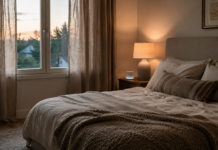
That outdoor glow matters for sleep because a meaningful share of it does not stop at the property line. It comes through window glass, gaps in curtains, and blinds left partially open, turning what should be a dark bedroom into a room with a persistent, low-level light source. Sleep researchers distinguish this from screen use before bed, which is light a person chooses to look at directly. ALAN in the bedroom is often ambient and passive, arriving from a streetlight outside, a neighbor’s porch light, or an illuminated sign down the block, without anyone in the room turning anything on. Both categories affect the same biological system, but they call for different fixes, which is why this article treats them separately later on.
How a Few Lux Can Rewire Your Night
Light reaches the sleep-wake system through a small population of retinal cells called intrinsically photosensitive retinal ganglion cells, or ipRGCs, which sit alongside the rods and cones used for ordinary vision. These cells are most sensitive to short-wavelength blue light, and research published by West and colleagues in the Journal of Applied Physiology in 2011 pinpointed the wavelength band eliciting the strongest melatonin-suppressing response at roughly 446 to 477 nanometers, squarely inside the blue part of the visible spectrum. When these cells detect light, they send a signal to the suprachiasmatic nucleus, a cluster of neurons in the hypothalamus that functions as the body’s master clock. The suprachiasmatic nucleus then relays that signal to the pineal gland, which produces less melatonin, the hormone that helps initiate and maintain sleep. The practical result, according to guidance published by the CDC’s National Institute for Occupational Safety and Health for nurses managing shift-work sleep, is that the master clock interprets blue-rich light exposure at night as a daytime signal, regardless of the actual time on the clock.
What is striking in the research is how little light this system needs to respond. A study published in the International Journal of Molecular Sciences in October 2020 exposed 33 healthy young adults to very low, controlled light levels overnight in a laboratory setting. At 5 lux, roughly the brightness of a night-light or a dim streetlight glow filtering through a curtain, 12 of 16 participants, or 75 percent, showed a measurable drop in a urinary melatonin metabolite the following morning, averaging a 23.4 percent reduction. Even at just 1 lux, a level barely perceptible to most people, melatonin was not significantly suppressed, but the same participants showed significantly more fragmented sleep and more brief awakenings than during dark control nights. The researchers concluded that the body is more sensitive to low-level nighttime light than earlier research had assumed, and that melatonin output and sleep continuity respond to light through somewhat different pathways.
How light becomes a delayed bedtime: the signal path
What the Research Actually Shows
Beyond laboratory studies of melatonin, several large population studies have tracked light exposure and sleep or health outcomes over time. The table below summarizes five of the more substantial ones, spanning cohort sizes from dozens of lab participants to more than 100,000 women, so the numbers below carry different levels of certainty. Associations in large observational cohorts show that light exposure and poor sleep tend to occur together; they do not, on their own, prove that light caused every outcome measured.
| Study & Year | Population | What Was Measured | Key Result |
|---|---|---|---|
| Sister Study analysis, SLEEP journal, 2024 | 47,765 U.S. women | Self-reported light sources while sleeping (TV, room light, outside light, nightlight) | Sleeping with a TV on was linked to 38% higher prevalence of short sleep and 50% higher prevalence of insomnia symptoms versus no light |
| Int. J. Molecular Sciences, October 2020 | 33 healthy young adults, lab setting | Overnight exposure to 1 lux and 5 lux light | At 5 lux, 75% of participants showed a 23.4% average drop in a melatonin metabolite; 1 lux fragmented sleep without suppressing melatonin |
| Chang, Czeisler et al., PNAS, 2015 | 12 adults, five-night crossover design | Reading a light-emitting eReader vs. a printed book for four hours before bed | eReader evenings delayed the internal circadian clock by about 1.5 hours and reduced evening melatonin and next-morning alertness |
| Frontiers in Neuroscience, September 2024 | U.S. state and county-level satellite data, Medicare records | Outdoor nighttime light intensity (VIIRS satellite, 2012–2018) vs. Alzheimer’s disease prevalence | Light intensity correlated with Alzheimer’s prevalence (r=0.557, p<0.001); association stronger in adults under 65 than most other risk factors examined |
| Breakthrough Generations Study, Am. J. Epidemiology, 2014 | Over 100,000 UK women | Self-reported light levels while sleeping vs. obesity measures | Odds of obesity by BMI, waist-hip ratio, and waist circumference rose with increasing light-at-night exposure (p<0.001) |
Sources: Falchi et al., Science Advances (2016); International Journal of Molecular Sciences (2020); Chang et al., PNAS (2015). See References below.
The Bedroom Light Scale
Because the melatonin-suppression research above was measured in lux, a unit of illuminance, it helps to see where common bedroom conditions land on that scale. The bands below are a general reference built from the light levels described in the studies cited in this article, not a precise medical threshold, since individual sensitivity to light varies with age and other factors.
Streetlights and the LED Conversion Effect
Much of the light pollution reaching city bedrooms has changed character over the past decade, not just intensity. Many municipalities have replaced older sodium-vapor streetlights, which cast an orange-tinted glow, with white LED fixtures that are more energy efficient but often spectrally richer in blue wavelengths, the part of the spectrum ipRGCs respond to most strongly. In 2016, the American Medical Association’s Council on Science and Public Health issued a report on the human and environmental effects of LED community lighting, recommending that municipalities install LED streetlights with a correlated color temperature of 3000 Kelvin or lower, use proper shielding to limit glare, and dim lighting during off-peak overnight hours. The AMA’s stated concern was the effect of blue-rich white light on melatonin regulation and on glare for drivers and pedestrians, and the report drew some pushback from lighting engineers who argued that color temperature alone does not fully capture a fixture’s biological impact.
For a renter or homeowner, the practical takeaway is not about relitigating municipal lighting policy. It is that a bedroom window facing a recently converted LED streetlight, an illuminated sign, or a security floodlight is likely receiving more blue-rich light than the same window received a decade ago, even if the fixture looks similarly bright to the eye. That shift is part of why window coverings rated for light-blocking, rather than simply light-softening, matter more in many neighborhoods than they used to.
Screens Before Bed: A Related but Different Problem
It is worth separating outdoor light pollution from screen use, because they are frequently discussed together but are not the same exposure. A streetlight outside the window is ambient and typically dim, arriving from several feet or yards away and diffused through glass and fabric. A phone or tablet screen is a light source held inches from the face, often at a brightness far higher than the levels described in the lab studies above, viewed directly for extended periods.
The clearest evidence for the screen-specific effect comes from Chang, Aeschbach, Duffy, and Czeisler’s 2015 study in the Proceedings of the National Academy of Sciences. Participants spent five consecutive evenings reading either a light-emitting eReader or a printed book for four hours before bed, then switched conditions. On eReader evenings, participants took longer to reach REM sleep, had reduced evening melatonin secretion, and showed a roughly 1.5-hour delay in their circadian phase compared with book-reading evenings. The next morning, despite reporting similar sleepiness at bedtime, participants who had used the eReader were measurably less alert. Harvard Health has separately summarized related research showing that blue light suppresses melatonin for about twice as long as green light of equal brightness and produces roughly twice the circadian shift, which is consistent with the wavelength sensitivity range identified by West and colleagues in 2011.
Both exposures matter, but they call for different responses. Blocking outdoor light pollution is a one-time window treatment fix. Reducing screen light before bed is a behavior change that has to be repeated every night, which is part of why the two are worth addressing as separate habits rather than a single “block all light” instruction.
A Bedroom Light Audit, Step by Step
Worked example: a one-bedroom apartment facing a converted LED streetlight
A resident on the fourth floor of a mid-rise building, window facing a street with a newly converted LED streetlight roughly 30 feet away, ran through the following audit over one week.
Night 1, baseline: Standard curtains left as-is. Light visible on the ceiling and one wall after lights-out; a phone camera in night mode showed a distinct glow, and the resident woke twice overnight without an obvious cause.
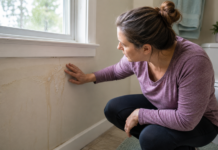
Night 2, gap check: The resident checked the curtain edges and top rail in daylight, then again after dark. Light was leaking through a two-inch gap at the top of the curtain rod and along both side edges, which is a common failure point rather than a fabric problem.
Night 3, hardware fix: Adding a simple side track or Velcro strip along the curtain edges, plus a valance or extended rod to cover the top gap, removed most of the visible glow without replacing the curtains themselves.
Night 4, remaining sources: With the window addressed, a charging phone LED and a hallway light under the door were still contributing a faint glow. Covering the phone LED with tape and adding a draft stopper under the door addressed both.
Night 7, follow-up: The resident reported falling asleep faster and no longer waking to check the time in the middle of the night, consistent with the pattern of reduced overnight fragmentation seen in the lab research above, though a single self-reported case is illustrative, not a controlled study.
Common Mistakes With Blackout Curtains and Window Treatments
| Mistake | Why It Fails | Better Approach |
|---|---|---|
| Buying curtains labeled “blackout” without checking width | Standard panels are often sized for the window opening, leaving light-leaking gaps at the sides where fabric doesn’t overlap the frame | Choose panels at least 4–6 inches wider than the window on each side, or add a side track |
| Ignoring the top rail gap | Light often enters above the rod, which is invisible from the couch but at eye level from a pillow | Mount an extended rod close to the wall, or add a valance or ceiling-mounted track |
| Assuming blinds alone are enough | Standard slat blinds still pass significant light between and around slats even fully closed | Pair blinds with a blackout curtain or cellular shade rated for room-darkening |
| Fixing the window but ignoring devices | Chargers, routers, and smoke detectors often have small LED indicators that add low-level light directly in the sleeper’s field of view | Cover or relocate indicator lights, or choose devices with a dim or off setting |
| Treating the fix as permanent | Seasonal sun angle changes, new streetlights, or a neighbor’s new porch light can reintroduce light months later | Recheck the room after dark twice a year, especially around daylight saving time changes |
What Sleep Researchers Do Differently at Home
Researchers who study circadian biology tend to treat their own bedrooms as a controlled environment rather than a decorating decision. A few patterns show up repeatedly in published sleep-hygiene guidance and in interviews with sleep researchers: they test darkness at night, not during the day, since window coverings that look opaque in daylight can still leak light once the sun sets and exterior lights turn on. They check the room from the pillow, at eye level, rather than standing in the middle of the room, because light leaks at curtain edges and door gaps are often only visible from a lying position. They address device indicator lights as seriously as window light, since a charging cable’s LED sits only a foot or two from the face, closer than most streetlights ever get. And they separate “can’t fall asleep because of light” from “can’t fall asleep for other reasons,” since treating every sleep problem as a light problem can delay addressing issues like stress, caffeine timing, or an underlying sleep disorder.
A Copy-Ready Bedroom Darkness Checklist
- ☐ Turn off all room lights and check the window after dark, not during the day
- ☐ Look for light leaks from the pillow, at eye level, along curtain edges and the top rail
- ☐ Add a side track, Velcro strip, or wider panel to close curtain-edge gaps
- ☐ Use an extended rod, valance, or ceiling track to cover the top-rail gap
- ☐ Pair slat blinds with a blackout curtain or cellular shade rather than relying on blinds alone
- ☐ Cover or dim charger, router, and electronics indicator lights near the bed
- ☐ Add a draft stopper or towel at the door if hallway light is visible underneath
- ☐ Set phones and tablets to do-not-disturb and keep them out of arm’s reach at bedtime
- ☐ Re-check the room twice a year, especially around daylight saving time changes
- ☐ If light can’t be fully blocked, consider a sleep mask as a low-cost backup
Safety Limits and When to Seek Help
Darkening a bedroom is a reasonable, low-cost first step, and the research summarized above supports it as one contributor to better sleep continuity. It is not a treatment for a diagnosed sleep disorder, and it will not resolve every sleep complaint. Consider talking with a doctor or a board-certified sleep medicine specialist if insomnia persists for more than a few weeks despite a dark, quiet bedroom, if you experience loud snoring, gasping, or witnessed pauses in breathing during sleep, which can indicate sleep apnea, if daytime sleepiness is severe enough to affect driving or work safety, or if mood, memory, or concentration problems accompany ongoing poor sleep. Children, older adults, shift workers, and people managing other medical conditions may need individualized guidance rather than general lighting advice, since sensitivity to light and appropriate sleep targets vary by age and health status. This article is educational and does not replace a clinical evaluation.
Key Takeaways
- More than 80% of the world’s population, and about 99% of people in the U.S. and Europe, live under a light-polluted night sky, per satellite mapping research published in 2016.
- Light reaches the sleep-wake system through retinal cells most sensitive to blue wavelengths, which signal the suprachiasmatic nucleus and reduce melatonin output from the pineal gland.
- A 2020 lab study found that even 5 lux, roughly a dim night-light, measurably suppressed melatonin in 75% of participants overnight.
- A 2024 analysis of over 47,000 women found sleeping with a TV on was associated with 38% higher prevalence of short sleep and 50% higher prevalence of insomnia symptoms.
- Many cities have converted streetlights to LED fixtures that can be spectrally richer in blue light, which is part of why the AMA recommended lower color-temperature fixtures in 2016.
- Screen light before bed is a related but distinct exposure; a 2015 study found five evenings of eReader use delayed the circadian clock by about 1.5 hours.
- Most light leaks come from curtain edges, top rails, and device indicator lights rather than the window glass itself, so a room-by-pillow audit catches problems a standing glance misses.
- Lighting fixes support sleep but do not replace medical evaluation for persistent insomnia, suspected sleep apnea, or other sleep disorders.
Frequently Asked Questions
Does light pollution actually cause insomnia, or is it just correlated with it?
Most large population studies, including the Sister Study analysis, are observational, meaning they show a strong association rather than proof of direct cause in every case. Controlled lab studies, such as the 2020 dim-light research, add stronger evidence for a causal pathway by measuring melatonin directly under controlled light exposure, which is why both types of study are cited together in this article.
How dark does a bedroom actually need to be?
Research summarized above suggests that even single-digit lux levels can affect melatonin or sleep continuity in some people, so the practical goal is as close to full darkness as reasonably achievable, verified by checking the room from the pillow after your eyes adjust, rather than a specific numeric target.
Are blackout curtains better than blackout blinds?
Each has different failure points. Curtains can leak light at the edges and top rail if not fitted correctly, while rigid blinds mounted inside the window frame tend to seal the perimeter better but can pass light between slats. Many households get the best result by combining both rather than choosing one.
Is screen light before bed worse than a streetlight outside my window?
They are different exposures rather than directly comparable. A screen is viewed at close range and often at higher brightness, which the 2015 eReader study linked to a measurable circadian delay, while outdoor light pollution is typically dimmer but persists passively all night if left unblocked. Addressing both gives the clearest benefit.
Will a sleep mask fix the problem instead of curtains?
A well-fitted sleep mask can substitute for window darkening in many cases, since it blocks light regardless of its source. Some people find masks uncomfortable for all-night wear or find them shift during sleep, which is why this article treats a mask as a useful backup alongside window fixes rather than a full replacement.
Do LED streetlights really affect sleep more than older streetlights did?
Many LED streetlight conversions produce whiter, more blue-rich light than the orange-toned sodium-vapor lights they replaced, which is the spectral range the sleep-wake system responds to most strongly. This is part of why the AMA’s 2016 report recommended lower color-temperature LED fixtures, though brightness, shielding, and distance from the window all factor in too.
When should I see a doctor instead of just adjusting my bedroom?
See a doctor if insomnia persists for more than a few weeks despite a genuinely dark and quiet room, if you notice loud snoring or breathing pauses during sleep, if daytime sleepiness is affecting safety, or if mood or memory problems accompany ongoing poor sleep. These patterns can point to a sleep disorder that lighting changes alone will not resolve.
References
Falchi, F., Cinzano, P., Duriscoe, D., et al. (2016). The new world atlas of artificial night sky brightness. Science Advances, 2(6).
Xiao, Q., et al. (2024). Exposure to indoor light at night in relation to multiple dimensions of sleep health: findings from the Sister Study. SLEEP, 47(2), zsad100.
International Journal of Molecular Sciences (2020). Impact of dim light at night on urinary 6-sulphatoxymelatonin concentrations and sleep in healthy humans.
Chang, A. M., Aeschbach, D., Duffy, J. F., & Czeisler, C. A. (2015). Evening use of light-emitting eReaders negatively affects sleep, circadian timing, and next-morning alertness. Proceedings of the National Academy of Sciences, 112(4), 1232–1237.
Frontiers in Neuroscience (2024). Outdoor nighttime light exposure (light pollution) is associated with Alzheimer’s disease.
McFadden, E., et al. (2014). The relationship between obesity and exposure to light at night: cross-sectional analyses of over 100,000 women in the Breakthrough Generations Study. American Journal of Epidemiology.
American Medical Association, Council on Science and Public Health (2016). Human and Environmental Effects of Light Emitting Diode (LED) Community Lighting.
Centers for Disease Control and Prevention, National Institute for Occupational Safety and Health. Blue light and sleep: What nurses need to know.
West, K. E., et al. (2011). Blue light from light-emitting diodes elicits a dose-dependent suppression of melatonin in humans. Journal of Applied Physiology, 110(3), 619–626.
Harvard Health Publishing, Harvard Medical School. Blue light has a dark side.