


























By Grace Watson
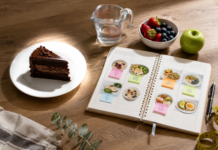
Most people who try to lose fat start the same way: they download a tracking app, weigh their food for a week, and quit somewhere around day nine. That’s not a discipline problem. Logging every gram of food for months on end is a genuinely demanding habit, and for a lot of people it collides with work schedules, restaurant meals, cooking for a family, or just the mental fatigue of measuring everything they eat. The good news is that calorie counting is a tool, not the only path. Portion-based systems, structured plates, and hunger-awareness practices can produce real, sustained fat loss without a single logged number.
This guide walks through the evidence-based alternatives to tracking, how to combine them into a system you can actually keep up for years, the mistakes that derail people who try this approach, and the specific situations where short-term tracking is still worth doing.
It’s worth being clear about what “without tracking” actually means here. It doesn’t mean eating without any structure or paying no attention to what’s on the plate. It means replacing a numeric log with a set of repeatable visual and physical cues, hand portions, plate proportions, and a hunger scale, that require far less daily mental effort while still producing the deficit needed for fat loss. The underlying physics of energy balance doesn’t change. What changes is the interface between the person and that physics: a simpler, more durable one that fits around a job, a household, and a social life instead of competing with them.
Why Calorie Tracking Breaks Down for So Many People
Tracking works in controlled research settings, but daily life is messier than a lab. A few structural problems show up again and again:
- Estimation error compounds. Portion-based coaching research points out that calorie counting carries roughly 25% error on the “calories in” side of the equation, and another roughly 25% error on the “calories out” side used to estimate daily burn. Stack those together and the number on the app can be off by a wide margin even when someone logs diligently.
- It’s a high-maintenance habit. Weighing food, scanning barcodes, and estimating restaurant meals takes time and attention every single day. Habits with a high daily cost tend to get dropped first when life gets busy.
- It can crowd out hunger awareness. When a number on a screen decides whether a meal is “done,” some people stop paying attention to whether they’re actually satisfied, which can backfire once the tracking stops.
- Social eating doesn’t fit neatly into a log. Shared meals, potlucks, and travel are hard to measure precisely, which pushes some people to avoid those situations altogether or abandon tracking during them.
None of this means tracking is bad. It means it’s one tool among several, and for a large share of people, portion- and awareness-based methods fit daily life better while still producing a calorie deficit.
There’s also a psychological cost that’s harder to measure but still real for many people. Constant tracking can shift eating from something driven by appetite and preference into something driven by whether a number fits inside a target. For some people that shift is neutral or even helpful. For others, it creates a preoccupation with food that lingers well past mealtime, shows up as guilt after an untracked meal, or triggers a swing toward eating past comfortable fullness once the log is closed for the day. None of this is a moral failing. It’s a predictable result of turning a biological process into a bookkeeping task, and it’s exactly the gap that portion-based and awareness-based methods are built to fill.
The Hand-Portion Method
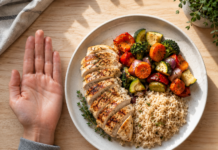
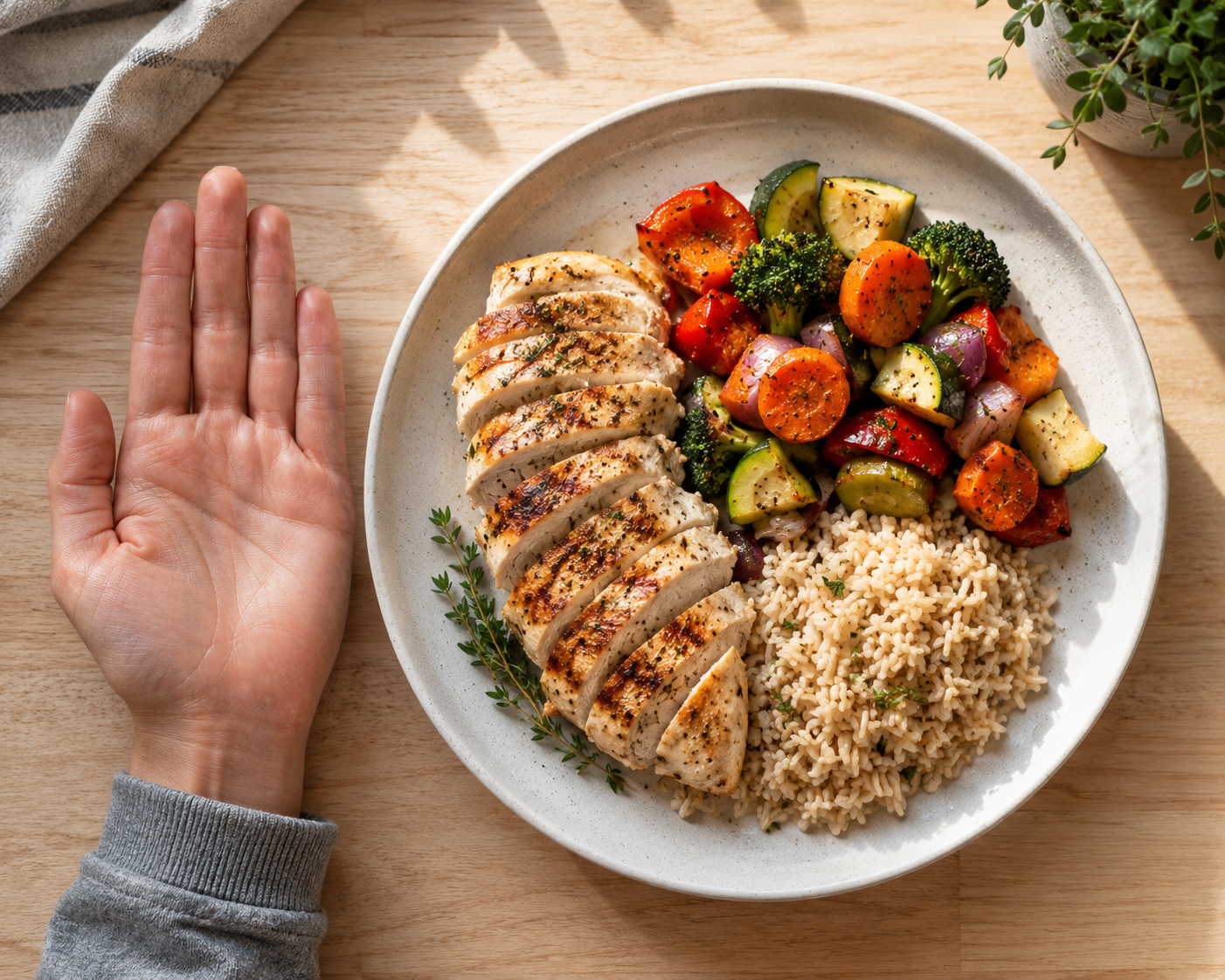
The hand-portion method is a simple substitute for a food scale: instead of weighing meals, you use your own hand as a built-in measuring tool. Because hand size scales roughly with a person’s overall body size, including muscle and frame, it works as a personalized guide rather than a one-size-fits-all number.
A common starting point for someone aiming at fat loss is one to two palms of protein, one to two fists of vegetables, one cupped hand of carbohydrates, and one thumb of fats per meal, adjusted by activity level and hunger. This is deliberately approximate. The point isn’t precision to the gram; it’s consistency that’s easy to repeat at a kitchen table, a work cafeteria, or a friend’s dinner party.
The Plate Method
Public health guidance from several national bodies converges on a similar visual structure for a balanced plate, even though the exact wording differs. The UK’s Eatwell Guide splits daily intake into roughly a third fruits and vegetables, roughly a third starchy carbohydrates, and smaller sections for protein foods, dairy, and oils. Rather than hitting those proportions at every single meal, the guidance is explicit that balance can be achieved “over a day or even a week,” which takes pressure off any one meal being perfect.
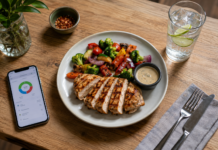
The American Heart Association takes a related but distinct approach: instead of a single plate diagram, it publishes daily serving targets built around a reference 2,000-calorie diet (about 2½ cups of vegetables, 2 cups of fruit, 3-6 ounces of grains, and a protein target measured in ounce-equivalents), and it explicitly recommends averaging intake over two to three days rather than hitting exact numbers daily. Both approaches share the same underlying idea for fat loss without tracking: fill roughly half the plate with vegetables and fruit, a quarter with lean protein, and a quarter with starchy carbohydrates or whole grains, then adjust portion size up or down instead of counting.
Building Your Own Plate Template
- Start with a standard dinner plate, not a serving platter. Plate size alone changes how much people naturally serve themselves.
- Fill half with non-starchy vegetables, salad, or a mix of both.
- Fill one quarter with a protein source about the size of a palm.
- Fill the remaining quarter with a starchy carbohydrate, using a cupped hand as the visual guide.
- Add a thumb-sized portion of added fat, like a drizzle of olive oil or a handful of nuts, if the meal doesn’t already include one.
Hunger and Fullness Awareness
Portions answer the “how much” question. A hunger-fullness scale answers the “when to stop” question, which portion methods alone don’t fully solve. The basic version most clinicians and dietitians teach runs from roughly 1 (uncomfortably empty, shaky, irritable) to 10 (uncomfortably full, sluggish), with the target eating range typically framed as starting a meal around a 3 or 4 and stopping around a 7, which is described as satisfied rather than stuffed.
Using this scale in practice means checking in partway through a meal, not just at the beginning and end. A short pause, even ten to fifteen seconds, before deciding on a second helping is often enough to notice whether the body wants more food or whether eating has continued out of habit, taste, or social momentum. Cleveland Clinic and similar clinical nutrition programs teach this scale specifically as a tool for people who find rigid tracking unsustainable, since it shifts the decision-making from an external number to an internal signal that’s available at every meal, indefinitely, with no app required.
Protein-First Structuring
Protein has a well-established effect on satiety compared to fat or carbohydrate calories of equal size, which is why hand-portion and plate-based systems both put protein first when building a meal rather than as an afterthought. In practice, protein-first structuring means:
- Choosing the protein source before deciding on the rest of the plate, rather than building a meal around a carbohydrate and adding protein on the side.
- Aiming for a palm-to-two-palms portion at each main meal, adjusted for body size and activity.
- Eating the protein and vegetable portions of a meal first when eating out, which naturally leaves less room for bread baskets, chips, or dessert without any conscious restriction.
This ordering approach doesn’t require calculating grams of protein. It requires a habit: protein and vegetables land on the plate, or the fork, before the rest of the meal.
A Step-by-Step System for Building the Habit
Combining these tools into a repeatable system matters more than any single method on its own. Here’s a sequence that works for building the habit over several weeks rather than trying to adopt everything at once.
Pick one meal to practice on
Start with dinner, since it’s usually the most controllable meal. Build it using the plate template for two weeks before touching breakfast or lunch.
Build the plate by hand
Protein first (palm), vegetables second (fist), then carbohydrate (cupped hand) and fat (thumb) if needed.
Rate hunger before eating
Note a number from 1-10 before the first bite. This builds the habit of checking in rather than eating on autopilot.
Pause at the midpoint
Stop for ten seconds halfway through the meal and rate hunger again. Decide whether to keep eating based on that number.
Stop around a 7
Aim to finish the meal satisfied, not stuffed. Leftover food on the plate is a normal, expected outcome, not a failure.
Expand to other meals
Once dinner feels automatic, usually after two to four weeks, apply the same plate-and-scale system to lunch, then breakfast.
Check in with the scale, not the mirror
Weigh in weekly if that’s useful, but treat trend over three to four weeks as the real signal, not any single day’s number.
Adjust portions, not the method
If progress stalls after four to six weeks, reduce carbohydrate or fat portions by one hand-size unit before changing the whole system.
This mirrors the general structure the CDC recommends for behavior-based weight management: start from a clear personal reason for change, build baseline awareness of current habits, set specific and realistic goals such as a defined portion adjustment, involve some form of support or accountability, and review progress on a regular schedule rather than daily.
Setting Up a Kitchen That Makes This Easier
Portion methods work better when the environment supports them, since willpower alone tends to lose to a cupboard full of family-size snack bags. A few practical changes make hand portions and plate structuring close to automatic:
- Use a smaller dinner plate for meals eaten at home. A 10-inch plate filled according to the template above looks and feels like a full meal in a way that the same food on a 12-inch plate does not.
- Pre-portion snack foods into single servings when they first come into the house, rather than eating straight from a large bag. This turns a portion decision into a one-time task instead of a decision at every snack.
- Keep protein and vegetables visible and accessible in the refrigerator, front and center, while less structured foods sit further back. People tend to eat what’s easiest to see and reach first.
- Batch-cook a base protein and a base vegetable once or twice a week. Having a palm-sized portion of chicken, tofu, or beans already cooked removes the most common excuse for skipping the plate template on a busy weekday.
- Plan for restaurant meals in advance rather than reactively. Most restaurant entrees comfortably contain two to three times a standard protein and carbohydrate portion, so mentally splitting the plate into thirds at the table, or boxing up a portion before eating, keeps the same structure intact away from home.
None of these changes require tracking anything. They shift the easiest available option toward what the plate template already recommends, which is a more durable form of behavior change than relying on in-the-moment decisions at every single meal.
Common Mistakes With Portion-Based Fat Loss
Treating hand portions as universal instead of personal. A palm-sized protein portion for a 5’2″ office worker and a 6’4″ warehouse worker are genuinely different in absolute terms, which is the entire point of using a self-referential measure. Comparing portions to someone else’s hands, or to a portion size seen online, defeats the purpose of a method that’s supposed to scale to the individual body using it.
Skipping the hunger check-in. Building the plate correctly but eating past a 7 or 8 out of habit removes most of the benefit of the whole system. The plate answers “how much to serve,” while the hunger scale answers “when to stop eating what’s been served,” and those are genuinely different questions. Relying on only one of the two tools usually produces weaker results than using both together.
Changing every meal on day one. Trying to apply hand portions, plate structure, and hunger tracking to breakfast, lunch, and dinner simultaneously is a lot of new decision-making at once, and it tends to produce the same early burnout that derails calorie tracking. Starting with one meal, usually dinner since it’s the most controllable, keeps the habit small enough to stick through the first few weeks.
Ignoring liquid calories. Portion and plate systems are built around solid food sitting on a plate. Sugary drinks, alcohol, sweetened coffee, and juice sit outside that structure entirely, and they can undo careful portion discipline without anyone noticing, since a drink doesn’t visually compete for space on the plate the way food does.
Expecting linear weekly progress. Water retention, sodium intake, sleep quality, and hormonal cycles move the number on a scale day to day, sometimes by several pounds, independent of actual fat loss. The CDC’s own guidance frames sustainable loss at roughly 1 to 2 pounds a week on average, not a fixed number every single week, and a flat or even upward week inside that average is normal rather than a sign the method has failed.
Abandoning the system after one off day. A single meal or day that doesn’t fit the plate template, a holiday, a stressful week, a vacation, isn’t a failure of the method. The entire strategy is built around returning to the same simple structure at the very next meal rather than waiting for a Monday or a fresh start.
When Tracking Might Still Be Worth Doing Temporarily
Portion-based systems aren’t a replacement for tracking in every situation. A short, defined period of calorie or macro logging can still be useful for:
- Calibration. Logging honestly for one to two weeks at the start gives a rough sense of current intake and where the biggest gaps are, without committing to logging forever.
- Plateaus that don’t respond to portion adjustments. If reducing portions for four to six weeks produces no change, a short tracking period can identify whether portion estimates have drifted upward, a phenomenon sometimes called portion creep.
- Competitive or clinical contexts. Athletes preparing for a weigh-in, or people working with a dietitian on a specific medical condition, may need more precision than hand portions can offer.
- Learning new foods. Logging unfamiliar meals for a few days when travelling or trying a new cuisine can recalibrate portion instincts faster than guessing.
In each case, tracking functions as a temporary diagnostic tool rather than a permanent daily requirement, which is a different relationship with it than open-ended, indefinite logging.
Putting It Together
Fat loss without tracking every calorie isn’t a shortcut or a workaround for people who dislike math. It’s a different set of tools aimed at the same underlying goal: eating less energy than the body uses, in a way that can actually be sustained for months and years rather than abandoned after a few weeks. Hand portions replace a food scale. Plate structure replaces a nutrition label. A hunger-fullness scale replaces the decision rule that a logged number used to provide. Each one is simpler to carry into a real day than a running tally of numbers, and together they cover the same ground that tracking is meant to cover.
The system described here isn’t the only way to get there, and it isn’t guaranteed to outperform tracking for every individual. Some people genuinely prefer the precision of a log, and for them, tracking remains a reasonable long-term choice. For everyone else, especially people who’ve started and stopped tracking multiple times, a portion-based system built around one meal at a time gives fat loss a structure that can survive a busy week, a family dinner, or a vacation without falling apart. Pick one meal, build the plate, check in with the hunger scale, and let the habit expand from there.
Frequently Asked Questions
Can you actually lose fat without counting calories?
Yes. Fat loss ultimately depends on eating less than the body uses over time, but a calorie deficit can be created through portion control, plate structuring, and hunger awareness just as it can through logging. The mechanism is the same; the method of getting there differs.
How long does it take to see results with the hand-portion method?
Most people who apply it consistently at one or two meals a day notice changes in clothing fit or the scale within three to six weeks, similar to the timeline expected with calorie tracking, since both approaches work by creating a deficit.
Is the hunger-fullness scale the same as intuitive eating?
They overlap but aren’t identical. The hunger-fullness scale is one specific tool, a numeric check-in before and during meals. Intuitive eating is a broader framework that includes the hunger-fullness scale alongside other principles like rejecting diet rules and honoring fullness without guilt.
What if my portions look different from the standard hand-portion chart?
That’s expected and fine. The chart is a starting point. Someone with a larger frame, higher activity level, or specific training goals may need two palms of protein instead of one, or a smaller cupped hand of carbohydrate. Adjust based on hunger, energy, and progress over several weeks.
Do I need to give up tracking apps completely?
No. Some people use portion methods most of the time and log intake occasionally, such as when trying new restaurants or after a few weeks of stalled progress. The two approaches aren’t mutually exclusive.
Does this work for vegetarian or vegan diets?
Yes, with adjustments. Plant-based protein sources like tofu, tempeh, lentils, and beans can fill the palm-sized protein portion, though volumes may need to be somewhat larger since plant proteins are often less calorie-dense per gram than animal protein.
References
- Centers for Disease Control and Prevention. Losing Weight guidance, Healthy Weight and Growth program.
- Precision Nutrition. Calorie Control Guide (hand-portion method).
- UK National Health Service. The Eatwell Guide, food guidelines and food labels.
- American Heart Association. Suggested Servings from Each Food Group, Eat Smart nutrition basics.