
























By Ellie Brooks
Medical Disclaimer
This article is general educational information about stretching during pregnancy and postpartum recovery. It is not medical advice and does not replace an individualized assessment from an obstetrician, midwife, or pelvic floor physical therapist. Pregnancy and postpartum bodies vary enormously, and a movement that is fine for one person may not be appropriate for another. Please get personal clearance from your own prenatal or postpartum care provider before starting or changing any stretching routine, especially if you have a high-risk pregnancy, pelvic girdle pain, a history of preterm labor, diastasis recti, or a complicated delivery.
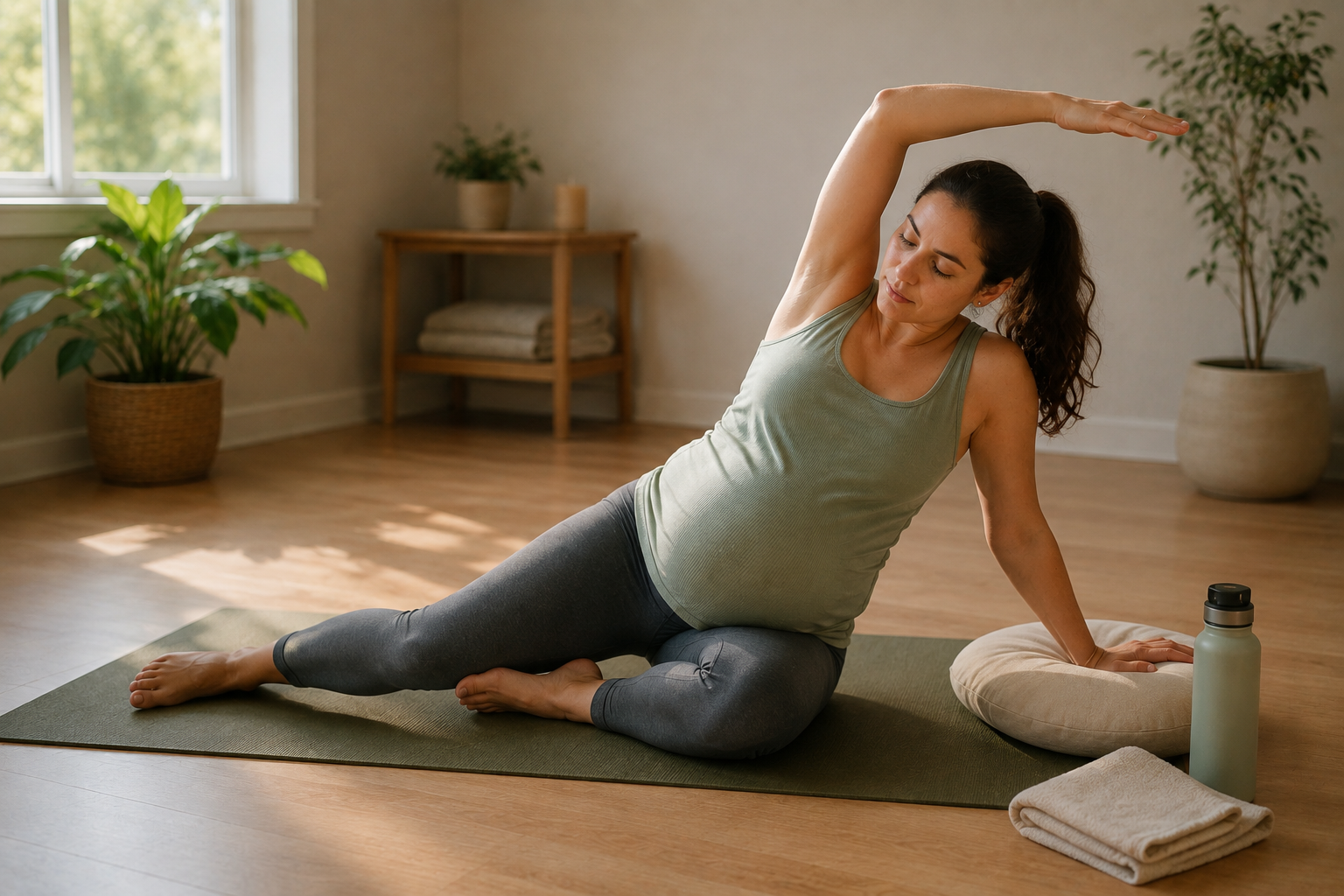
Stretching can feel like one of the few forms of movement that stays comfortable through most of pregnancy and the months after birth. It can ease tight hips, calm a sore lower back, and give you a few quiet minutes to check in with your body. But pregnancy changes connective tissue, balance, and blood flow in ways that make some familiar stretches riskier than they used to be, and postpartum recovery brings its own list of considerations, from abdominal separation to pelvic floor healing. This guide walks through the physiology behind those changes, what cautious stretching can look like trimester by trimester and after birth, which positions deserve extra care, and the warning signs that mean you should stop and call your provider. Nothing here is a substitute for guidance from the clinician who knows your pregnancy or your delivery history.
Why Pregnancy Changes Flexibility and Stretching Safety
Several physiological shifts happen at once during pregnancy, and together they explain why stretching guidance for pregnant and postpartum bodies looks different from general fitness advice.
The Role of Relaxin and Joint Laxity
Relaxin is a hormone produced by the ovaries and the placenta that loosens ligaments and connective tissue so the pelvis and uterus can accommodate a growing baby. According to the Cleveland Clinic, relaxin levels typically peak around 12 to 14 weeks of pregnancy, and the loosening effect touches joints well beyond the pelvis, including the knees, ankles, wrists, and shoulders. That added laxity is exactly why a stretch that once felt like a healthy edge of tension can quietly slide into overstretching without much warning, since the ligaments offer less resistance and less feedback than they did before pregnancy. The Cleveland Clinic also notes that relaxin does not disappear right after delivery; it can take up to twelve months for levels to return to a pre-pregnancy baseline, and the timeline may extend further for people who are breastfeeding. That is one reason postpartum stretching deserves the same caution as prenatal stretching, not a quick return to pre-pregnancy ranges of motion.
Postural, Circulatory, and Balance Shifts
As the uterus grows, the center of gravity moves forward, the lower back curve tends to increase, and the abdominal wall stretches to accommodate the baby. These changes shift how load moves through the hips, pelvis, and spine during even gentle stretches. Blood volume and circulation also change substantially, which is part of why prolonged time lying flat on the back becomes a concern in later pregnancy. The NHS advises against remaining flat on the back for long periods, “particularly after 16 weeks, because the weight of your bump presses on the main blood vessel bringing blood back to your heart and this can make you feel faint.” Balance also shifts as the pregnancy progresses, so stretches that involve standing on one leg or deep forward bends may need extra support, such as a wall, chair, or partner, well before they feel unsteady.
Why Gentle Stretching Is Worth Doing at All
With so many cautions on the list, it is fair to ask whether stretching is worth the effort during pregnancy and postpartum recovery. For most people without complications, the answer is yes, as long as the approach stays gentle. Round ligament pain, a sharp or achy sensation along the lower belly or groin that many people notice in the second trimester as those ligaments stretch to support the growing uterus, often responds well to slow, supported hip and side stretches. Low back tightness from the shifting curve of the spine, tight calves from extra weight and swelling, and shoulder tension from changed posture are all common complaints that gentle stretching can ease without adding meaningful risk when done with the cautions above in mind. Stretching paired with slow breathing can also help with the general stress and disrupted sleep that often come with late pregnancy and the newborn period, though it is not a treatment for clinical anxiety or depression, which deserve direct conversation with a provider.
A few simple habits make cautious stretching easier to sustain. Move into each position slowly and stop at a point of mild, comfortable tension rather than pushing toward a deeper stretch than you would have attempted before pregnancy. Breathe steadily throughout rather than holding your breath, since breath-holding can spike blood pressure and makes it harder to notice early warning signals from your body. Use props such as a wall, sturdy chair, bolster, or folded blanket generously, since they reduce the balance and joint demands of a position without reducing its benefit. Keep sessions short, five to fifteen minutes is plenty for most people, and treat consistency as more valuable than intensity. If a position ever feels wrong even though it matches a general guide like this one, trust that feeling and stop.
Trimester-by-Trimester Guidance for Cautious Stretching
General guidance can help you understand the broad shape of what changes trimester to trimester, but your provider’s clearance always takes priority over anything written here, particularly if you have pelvic girdle pain, a marginal or low-lying placenta, symptoms of preterm labor, or any other complication.
First Trimester (Weeks 1 to 13)
In the first trimester, many people can continue whatever gentle stretching routine they were doing before pregnancy, adjusted for fatigue and nausea. Relaxin is rising toward its peak, so this is a reasonable time to start noticing that your usual range of motion may feel slightly different, and to back off any stretch that produces pinching, sharp, or shooting sensations rather than a mild, tolerable pull.
Second Trimester (Weeks 14 to 27)
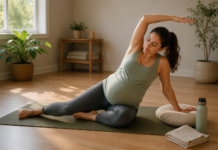
This is the window when supine positioning becomes a bigger consideration, since the NHS and the CDC both flag the period after roughly the first trimester as the time to avoid lying flat on the back for stretches that take more than a minute or two. Side-lying, seated, hands-and-knees, and supported reclined positions (propped up on a wedge or bolster rather than flat) become the more comfortable defaults for hip, chest, and back stretches. Balance also starts to shift more noticeably, so standing stretches benefit from a wall or sturdy chair nearby.
Third Trimester (Weeks 28 to 40)
Joint laxity and the size of the belly are both at their highest by this stage, so stretch intensity generally needs to come down, not up. Deep twists, deep forward folds that compress the abdomen, and any stretch that requires lying face down are typically set aside in favor of gentler, more supported versions. Many people find that a few minutes of supported hip and calf stretching, plus gentle pelvic tilts, is plenty at this stage, and that is a reasonable place to stop rather than push further.
| Stage | Generally More Comfortable | Approach With Extra Caution | Notes |
|---|---|---|---|
| First trimester | Most pre-pregnancy stretches, done gently | Pushing to a pre-pregnancy end range as relaxin rises | Fatigue and nausea may limit tolerance more than flexibility does |
| Second trimester | Side-lying, seated, hands-and-knees stretches | Extended flat-on-back positions; unsupported balance stretches | Prop up with a wedge if reclining is needed |
| Third trimester | Supported hip, calf, and gentle upper-back stretches | Deep twists, prone (face-down) positions, forceful forward folds | Shorten hold times and lower intensity as the belly grows |
| Early postpartum (0 to 6 weeks) | Breathing work, gentle neck and shoulder release, walking | Any deep abdominal stretch or core-loading movement before clearance | Wait for your six-week (or provider-specified) check before resuming general stretching |
| Later postpartum (6 weeks and beyond) | Gradual return to full-body stretching, guided by symptoms | Rapid return to pre-pregnancy intensity; unassessed diastasis recti | Consider a pelvic floor physical therapy evaluation, especially after a complicated delivery |
Positions and Movements That Deserve Extra Caution
A few categories of movement come up repeatedly in prenatal and postpartum exercise guidance as ones to approach carefully rather than avoid outright in every case, since individual clearance can change the picture:
- Prolonged flat-on-the-back stretching after roughly the first trimester, since it can compress the vein that returns blood to the heart and cause lightheadedness, per NHS guidance.
- Deep, forceful stretching at end range, since relaxin-related joint laxity reduces the ligament feedback that normally tells you when to stop.
- Prone (face-down) positions in the second and third trimesters, which become impractical and uncomfortable as the belly grows.
- Fall-risk positions, including deep single-leg balance stretches without support, since the NHS notes that activities carrying a fall risk warrant extra caution during pregnancy.
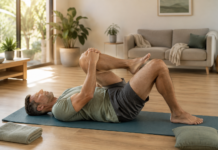
- Aggressive abdominal or core stretching in the early postpartum weeks, before a provider has assessed healing and, where relevant, diastasis recti.
- Hot yoga or stretching in significant heat, since overheating is generally discouraged during pregnancy regardless of the specific stretch involved.
None of this means gentle movement is off-limits. It means the goal shifts from increasing flexibility to maintaining comfortable, pain-free range of motion, and any specific concern (such as pelvic girdle pain, sciatica, or a prior injury) should go through your own provider rather than a general list.
Postpartum-Specific Considerations
Diastasis Recti
Diastasis recti is a separation of the rectus abdominis muscles along the connective tissue (the linea alba) that stretches to accommodate the growing uterus. The Cleveland Clinic reports that roughly six in ten women experience diastasis recti after childbirth, and about 45 percent still have it at six months postpartum. Signs include a visible bulge or “pooch” above or below the belly button, a soft or jelly-like feeling around the midline, and doming or coning when the abdominal muscles engage. Cleveland Clinic guidance specifically advises avoiding crunches, sit-ups, planks, and double leg lifts while this is unaddressed, since those movements can worsen the separation, and instead recommends gentle, provider- or physical-therapist-guided abdominal engagement. If you notice these signs, a physical therapist experienced in diastasis recti can assess the gap and build a plan that fits your recovery rather than a generic timeline.
Pelvic Floor Recovery
The pelvic floor absorbs significant load during pregnancy and delivery, whether birth was vaginal or cesarean. Common signs that the pelvic floor needs dedicated attention include lower back, hip, or pelvic pain, pain at the pubic bone with single-leg movements such as getting out of bed, leaking urine, bowel changes, pain with intercourse, and a sensation of pelvic pressure, bulging, or heaviness. Postpartum recovery resources note that these symptoms do not need to become severe before it makes sense to see a pelvic floor physical therapist, and that treatment can improve muscle coordination, strength, and safe movement patterns well before symptoms would resolve on their own.
Cesarean Recovery Considerations
Recovery after a cesarean birth adds another layer of caution because the incision runs through several layers of abdominal tissue, including muscle and fascia, that need time to heal. Stretches or movements that pull on the lower abdomen, such as deep back bends or full forward folds, are typically approached far more slowly after a cesarean, and many providers recommend avoiding any core-loading stretch until the incision has been checked and cleared. Gentle walking, careful posture support when standing from a seated position, and shallow breathing exercises are usually the first steps, with abdominal or hip-flexor stretching added back in gradually and only with provider guidance. Scar tissue mobility work, when appropriate, is generally best introduced by a pelvic floor or postpartum-trained physical therapist rather than attempted independently in the early weeks.
A Gradual Return to Stretching After Birth
Many providers suggest waiting around six weeks after delivery before resuming general exercise, though this varies by delivery type, any complications, and pre-pregnancy fitness level, and your own provider’s timeline should always take priority over a general number. In the earliest weeks, gentle breathing work, short walks, and light neck or shoulder movement are usually the safer starting point, with fuller stretching routines layered back in gradually and only after clearance. Because relaxin can remain elevated for months and even longer while breastfeeding, it is reasonable to keep the same “stop at a comfortable edge, not a deep pull” approach for a good while after birth, not just during pregnancy.
Gentle Sample Sequences (General Guidance Only)
The sequences below are general examples of the kind of gentle, low-intensity stretching many people tolerate at each stage. They are not a personalized plan, and they assume no complicating factors such as pelvic girdle pain, placenta concerns, preterm labor risk, unresolved diastasis recti, or pelvic floor dysfunction. Confirm with your obstetrician, midwife, or pelvic floor physical therapist that stretching in general, and any position below in particular, is appropriate for you before trying it.
Early to Mid-Pregnancy Sample Sequence
- Seated neck and shoulder rolls, 5 to 8 slow repetitions each direction
- Cat-cow on hands and knees, moving with the breath, 8 to 10 rounds
- Seated figure-four hip stretch (ankle resting gently above the opposite knee), 20 to 30 seconds per side, stopping well before any pinching
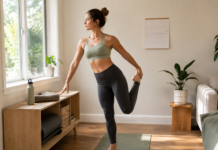
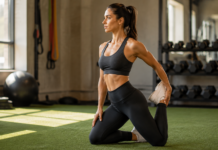
- Standing calf stretch against a wall, 20 to 30 seconds per side
Late-Pregnancy Sample Sequence
- Supported side-lying stretch for the outer hip, using a pillow between the knees
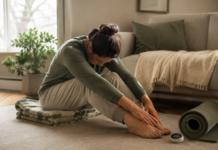
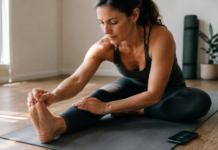
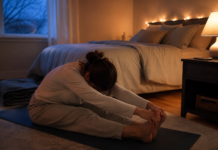
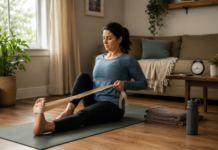
- Seated forward reach with a rounded lower back kept comfortable, not forced, holding the stretch lightly for a few breaths
- Wall-supported chest opener, hands on the wall, gentle lean, 20 to 30 seconds
- Ankle circles and gentle pelvic tilts in a supported side-lying or seated position
Early Postpartum Sample Sequence (After Clearance)
- Diaphragmatic breathing in a supported seated or side-lying position, several slow rounds
- Gentle neck stretches, seated, holding briefly to each side
- Ankle pumps and light walking as tolerated
- Any abdominal or core-adjacent stretching introduced only with provider or pelvic floor physical therapist guidance
Red Flags That Require Immediate Medical Attention
Stop stretching and contact your obstetric provider, midwife, or seek urgent care right away if you notice any of the following during pregnancy or postpartum recovery:
- Vaginal bleeding or fluid leaking
- Sudden, severe, or persistent abdominal or pelvic pain
- Dizziness, faintness, chest pain, or shortness of breath that does not resolve quickly with rest
- Calf pain, swelling, or redness in one leg, which can signal a blood clot
- Regular contractions or tightening before your expected delivery window
- A noticeable decrease in your baby’s usual movements
- New or worsening urinary or bowel incontinence, or a sensation of pelvic bulging, after birth
- A headache that is severe, will not go away, or comes with vision changes or swelling
These signs warrant a call to your provider rather than a wait-and-see approach, regardless of how mild the accompanying stretch or activity was.
Bringing It Together
Stretching through pregnancy and the postpartum months can be a genuinely comfortable, grounding habit, and for many people it stays that way with a few thoughtful adjustments: favoring side-lying or seated positions over long stretches flat on the back after the first trimester, backing off end-range intensity because relaxin reduces your ligaments’ usual feedback, treating diastasis recti and pelvic floor symptoms as reasons to seek a physical therapist rather than push through, and returning to fuller routines gradually after birth. None of this replaces individualized care. Please talk with your OB-GYN, midwife, or a pelvic floor physical therapist before beginning or resuming any stretching routine, and reach out promptly if you notice any of the red flags above.
If you take one idea away from this guide, let it be this: cautious does not mean fearful. Most pregnant and postpartum bodies can move comfortably and safely with a few adjustments, some patience, and a care team that knows your specific history. Bring this guide, or your own questions about it, to your next prenatal or postpartum appointment and ask directly which stretches and positions make sense for you at this stage. That single conversation will do more for your safety and comfort than any general list, including this one.
Frequently Asked Questions
Is it safe to stretch every day during pregnancy?
Gentle, pain-free stretching is generally well tolerated daily for most pregnancies, but “safe” depends on your individual history and any complications, so confirm with your provider, especially if you have pelvic girdle pain or a high-risk pregnancy.
When should I stop stretching while lying on my back?
The NHS advises against lying flat on the back for long periods, particularly after 16 weeks, because it can compress a major blood vessel and cause faintness. Many people shift to side-lying or supported reclined positions around the same point.
How long does joint looseness from relaxin last after delivery?
The Cleveland Clinic notes relaxin can take up to twelve months to return to pre-pregnancy levels, and the timeline may extend further with breastfeeding, so a cautious approach to stretching intensity is reasonable well into the postpartum period.
Can stretching help with diastasis recti?
Gentle, guided abdominal engagement can be part of a recovery plan, but movements like crunches, sit-ups, planks, and double leg lifts are generally discouraged while diastasis recti is unaddressed. A physical therapist experienced in this condition can build an appropriate plan.
When can I start pelvic floor–focused stretching or exercise after birth?
Many providers suggest waiting around six weeks, though this varies by delivery type and any complications. A pelvic floor physical therapist can assess your specific recovery and guide timing rather than relying on a single general number.
What should I do if a stretch causes sharp pain?
Stop immediately. Mild, tolerable tension is the general aim; sharp, pinching, or shooting pain is a signal to ease off and mention it to your provider, particularly if it recurs.
References and Sources
- American College of Obstetricians and Gynecologists (ACOG), “Physical Activity and Exercise During Pregnancy and the Postpartum Period,” Committee Opinion, 2020 — acog.org
- NHS, “Exercise in pregnancy” — nhs.uk/pregnancy/keeping-well/exercise/
- Centers for Disease Control and Prevention (CDC), “Pregnant & Postpartum Activity: An Overview,” Physical Activity Basics — cdc.gov
- Cleveland Clinic, “Relaxin” — my.clevelandclinic.org/health/body/24305-relaxin
- Cleveland Clinic, “Diastasis Recti (Abdominal Separation)” — my.clevelandclinic.org/health/diseases/22346-diastasis-recti
- Hinge Health, “Should You See a Pelvic Floor Physical Therapist After Having a Baby?” — hingehealth.com