





















By Sophie Taylor
Every stride, whether it is a brisk morning walk or a six-mile training run, sends a jolt of force through two small but essential structures: the calf muscles and the Achilles tendon. Together they work as the spring that propels you forward, storing and releasing enormous loads with each step. When they are strong and well maintained, you barely notice them. When they are neglected, overloaded, or pushed too far too quickly, they can turn a simple daily habit into weeks of hobbling.
This guide covers the anatomy behind calf and Achilles pain, the injuries most common among walkers and runners, and the specific stretches, strengthening drills, and recovery habits that sports medicine physicians and physical therapists actually recommend. Strong calf and Achilles care for walkers and runners is not complicated, but it does require consistency, patience, and an understanding of how these tissues respond to load.
Understanding the Calf-Achilles Complex
The calf is made up of two primary muscles. The gastrocnemius is the larger, more visible muscle, and it crosses both the knee and ankle joints. Beneath it sits the soleus, a flatter muscle that crosses only the ankle. Both muscles taper into the Achilles tendon, the thickest and strongest tendon in the human body, which anchors into the heel bone, known as the calcaneus.
This arrangement lets the calf-Achilles complex act like a spring-loaded lever. Each time your heel lifts off the ground, the tendon stores elastic energy and then releases it, reducing the muscular effort needed to push off. It is an efficient system, but one that depends on adequate blood flow, tissue elasticity, and gradual conditioning. The Achilles tendon has a comparatively poor blood supply in the region a few centimeters above the heel, which is part of why it heals slowly once injured and why prevention matters more here than in almost any other lower-leg structure.
Because the gastrocnemius crosses the knee, tightness or weakness there often shows up during running, when the knee is more extended at push-off. The soleus, being more active during slower, sustained loading, tends to matter more during long walks, hiking, and steady-state jogging. Care routines that only address one muscle while ignoring the other are a common reason recovery stalls.
Why Walkers and Runners Are Vulnerable
Calf and Achilles problems are almost always overuse injuries rather than the result of one bad step. Tissue damage accumulates when the load placed on the muscle or tendon consistently outpaces its capacity to adapt and repair. For walkers and runners, several factors push that balance in the wrong direction.
Training errors are the most common trigger: a sudden jump in weekly distance, an abrupt return to hill routes, or switching from a cushioned treadmill to hard pavement without easing in. Footwear plays a role too. Worn-out shoes lose the cushioning and support that reduce peak tendon strain, and long-term high heels or sudden barefoot or minimalist-shoe transitions change the demand on the calf and Achilles considerably. Tight calf muscles, flat or high arches, and overpronation all add mechanical strain to the tendon. Age is another factor: tendon and muscle tissue naturally becomes less elastic over time, and according to physiotherapy research summarized by POGO Physio, plantar flexor (calf) strength declines by roughly one percent per year after age 30, which raises injury risk for masters-level walkers and runners even when training habits have not changed.
By the Numbers: Calf and Achilles Injury Facts
- Roughly one in four athletes will experience an Achilles tendon injury at some point in their athletic life, according to Cleveland Clinic.
- Calf muscle strains are the third most common running injury, trailing only hamstring strains and Achilles tendinopathy itself.
- The soleus muscle accounts for about 90 percent of recurring calf strains in runners.
- Average recovery time for a calf strain is roughly 25 days, longer than the average 19 days for a hamstring strain.
- Calf (plantar flexor) strength declines by about 1 percent per year after age 30, raising strain risk for masters athletes.
Walking-Specific vs. Running-Specific Risk Factors
Although walkers and runners share the same anatomy, the loads placed on it differ in ways worth understanding. Walking is a lower-impact, sustained activity in which the soleus works almost continuously to control the ankle through each stance phase, which is why long hikes or high daily step counts can produce a deep, steady soleus ache rather than a sudden strain. Running introduces far higher peak forces, sometimes several times body weight at push-off, along with an eccentric braking demand on the gastrocnemius each time the foot lands, particularly on downhill sections. That combination of speed, impact, and eccentric loading is why runners see a higher proportion of acute calf tears, while walkers more often develop the slower, cumulative irritation typical of early Achilles tendinopathy.
Terrain compounds these differences. Walkers on uneven trails load the calf and ankle stabilizers differently with every step, while runners on repetitive road loops apply the same stress pattern thousands of times per session. Recognizing which pattern applies to your own routine helps target prevention: walkers generally benefit most from calf endurance and ankle stability work, while runners benefit from a mix of eccentric strength and gradual exposure to hills and speed.
Calf Strain vs. Achilles Tendinopathy: Know the Difference
Calf strains and Achilles tendon problems are frequently confused because they sit so close together, but they behave differently and respond to different care strategies. The table below outlines the practical distinctions.
| Feature | Calf Strain | Achilles Tendinopathy |
|---|---|---|
| Onset | Sudden, often during a sprint, push-off, or lunge | Gradual, building over days to months |
| Location | Muscle belly, mid-calf, often the inner gastrocnemius or soleus | Tendon itself, either mid-portion or where it meets the heel bone |
| Sensation | Sharp grab, tear, or pop; bruising may follow | Dull ache, morning stiffness that loosens with movement |
| Typical cause | Explosive load, fatigue, insufficient warm-up | Repetitive stress, training volume spikes, tight calves |
| Recovery window | 8 to 48 days depending on strain grade | Weeks for mild cases, 3 to 6 months for chronic tendinopathy |
Recognizing the Warning Signs
Early Achilles irritation tends to announce itself quietly: a mild ache after a run that fades by the next day, or stiffness in the tendon during the first few steps out of bed that loosens as you move. Left unaddressed, that ache can progress to burning pain during activity, tenderness to touch, and visible thickening of the tendon.
Calf strains tend to be more dramatic in onset. A grade 1 strain feels like a tight cramp or grabbing sensation that allows you to keep walking, though running is uncomfortable. A grade 2 strain produces a sharper pain, some swelling, and a limp. A grade 3 strain, a complete or near-complete tear, often causes sudden, significant pain, an inability to rise onto the toes, and sometimes visible bruising within a day or two.
The warning sign that should never be ignored is a sudden snap or popping sensation at the back of the ankle, especially if it is followed by difficulty walking or pushing off. This can indicate an Achilles tendon rupture. Clinicians often check for this using the Thompson test, in which a provider squeezes the calf while the patient lies face down with feet hanging off the table’s edge. If the heel does not move in response to the squeeze, the tendon has likely ruptured, and prompt medical evaluation is essential even if you are still able to walk.
A Practical Care Routine for Sore or Injured Calves and Achilles Tendons
When calf or Achilles pain shows up, the temptation is either to push through it or to stop moving altogether. Neither extreme serves recovery well. The sequence below reflects the general phased approach used in sports physical therapy, moving from protection to progressive loading.
Protect and calm the tissue (days 1 to 3)
Reduce, but do not fully eliminate, weight-bearing activity. Ice the area for 15 to 20 minutes several times a day, use a compression sleeve if it feels supportive, and elevate the leg when resting. Gentle ankle circles and pain-free range-of-motion movement help maintain circulation without stressing the injured tissue.
Restore flexibility (once acute pain settles)
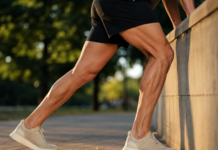
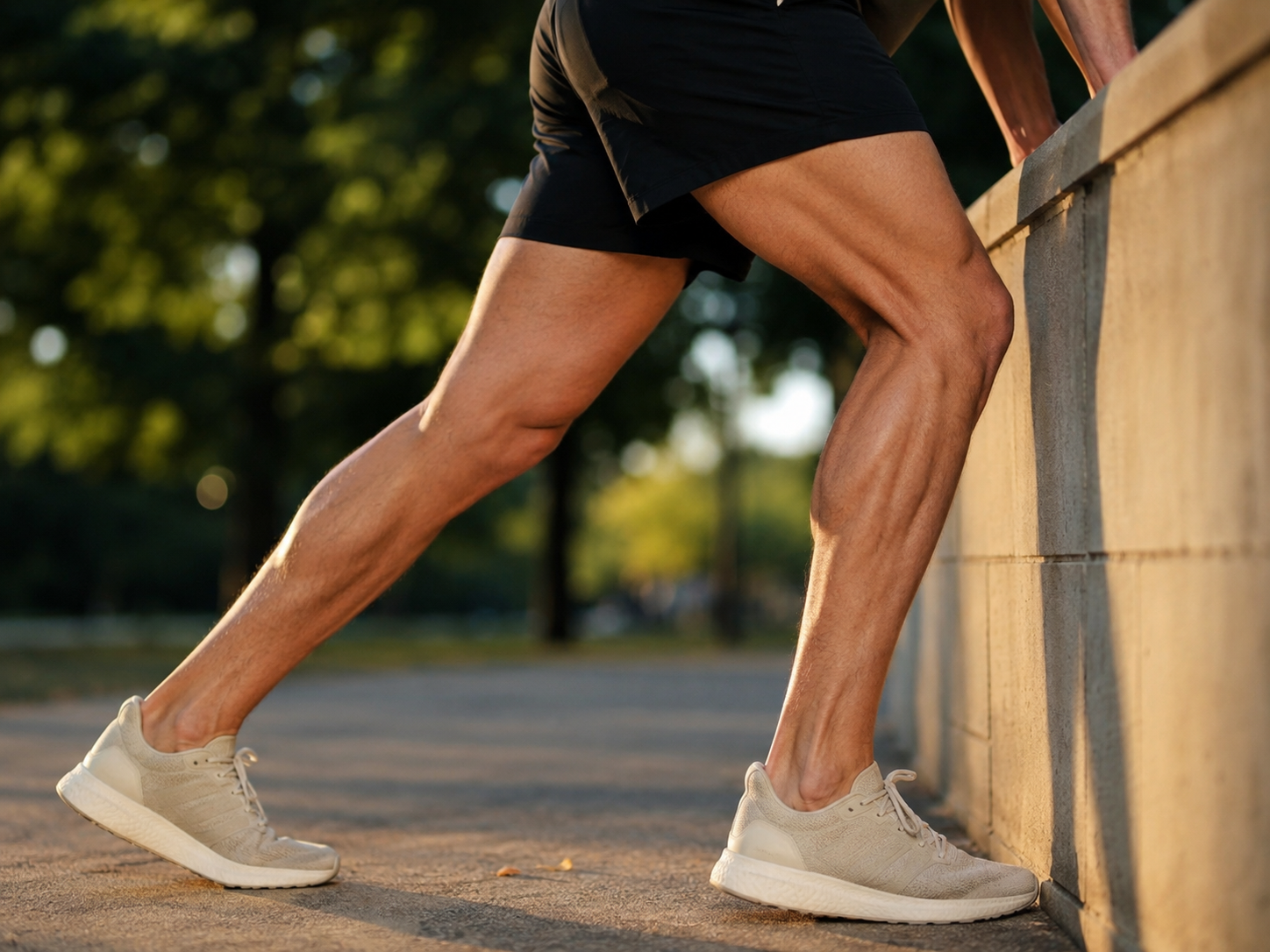
Perform a standing calf stretch against a wall, keeping the back leg straight with the heel grounded to target the gastrocnemius, then bend the back knee slightly to shift emphasis to the soleus. Hold each position for 30 seconds and repeat roughly 5 times per leg, once or twice daily.
Rebuild strength with eccentric loading
For mid-portion Achilles tendinopathy, stand with the forefoot on a stair edge, rise onto both toes, then slowly lower the heel below the step over a count of three to four seconds. A common protocol uses 3 sets of 15 repetitions, twice daily, with both a straight-knee and bent-knee variation, adding light hand-held weight as tolerated. This eccentric-loading approach has strong support in orthopedic sports physical therapy research.
Reintroduce walking and running gradually
Begin with short intervals of 50 to 100 meters at an easy effort, run every other day rather than daily to allow tissue recovery, and favor firmer, even surfaces over soft trail terrain in the early stages. Avoid stacking hill work and speed sessions in the same week while you are rebuilding capacity.
Progress back to full training
Increase weekly volume in small increments, keep exertion pain at or below roughly 3 out of 10, and confirm each new distance or intensity is tolerated for 48 hours before advancing again. Full return to unrestricted training is appropriate once you can walk, jog, and climb stairs pain-free and single-leg heel raises match strength on the uninjured side.
Building Long-Term Resilience: Prevention Strategies
Preventing calf and Achilles trouble is largely about managing training load intelligently and keeping the tissue strong enough to absorb the demands placed on it.
Progress training gradually
The familiar guideline of increasing weekly mileage by no more than about 10 percent is a reasonable starting heuristic, though research reviews have found the relationship between training load changes and injury risk is more nuanced than a single fixed percentage. The safer practical takeaway is to avoid sharp week-to-week spikes in distance, intensity, or hill volume, and to build in periodic recovery weeks.
Rotate footwear and replace worn shoes
Running and walking shoes typically lose meaningful cushioning and support after roughly 300 to 500 miles. Rotating between two pairs with slightly different heel-to-toe drop can vary the load pattern on the calf and Achilles rather than repeating the exact same stress every session.
Strengthen the calf directly
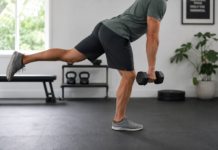
Two sessions per week of calf-specific strength work, such as standing and seated heel raises, single-leg calf raises, and eccentric heel drops, builds the tendon’s capacity to tolerate load. Strength training is not just for recovery from injury; it is one of the more effective tools for preventing the injury in the first place.
Warm up and vary your terrain
A short dynamic warm-up, including ankle circles, walking lunges, and a few strides of easy jogging, raises tissue temperature and elasticity before harder efforts. Mixing surfaces and avoiding constant uphill or downhill routes reduces repetitive strain on the same fibers.
Cross-train during heavy training blocks
Swimming, cycling, and elliptical work maintain cardiovascular fitness while giving the calf and Achilles a break from repetitive impact, which is especially useful for masters walkers and runners managing age-related declines in tendon elasticity.
Support tissue repair with sleep and nutrition
Tendon and muscle tissue remodel primarily during rest, not during the workout itself, so consistent sleep is one of the least glamorous but most effective recovery tools available. Adequate protein intake throughout the day supports the collagen synthesis needed to repair and strengthen tendon fibers, and staying well hydrated helps maintain the elasticity of both muscle and connective tissue. None of this replaces a proper loading program, but skipping it undermines the results of even a well-designed one.
Common Mistakes Walkers and Runners Make
- Stretching only after pain appears. Calf flexibility work is most valuable as a daily habit, not a reaction to soreness.
- Dismissing morning stiffness. Tendon stiffness that eases within a few minutes of walking is often an early warning sign, not a normal quirk of aging.
- Returning to full mileage too soon. Resuming a prior training load right after pain subsides, rather than building back gradually, is one of the most common causes of repeat injury.
- Wearing worn-out or unsuitable shoes. Continuing to log miles in shoes past their usable life adds avoidable strain to the tendon.
- Skipping strength work. Many walkers and runners focus entirely on distance and pace while neglecting the calf-strengthening exercises that build tendon resilience.
- Choosing total rest over active recovery. Complete inactivity can allow tissue to stiffen and deconditioning to set in; gentle, pain-free movement usually supports healing better than total immobility.
When to See a Professional
Most mild calf tightness and early tendon irritation responds well to the self-care steps above. It is time to see a physical therapist, sports medicine physician, or podiatrist when pain persists beyond two weeks despite rest and stretching, when swelling or bruising is significant, or when pain changes how you walk. A sudden snap, pop, or the inability to rise onto your toes after an injury needs urgent evaluation, since it may indicate a partial or complete Achilles tendon rupture. Numbness, pain that radiates beyond the calf, or a leg that feels cold or discolored also warrants prompt medical attention, since these can point to a circulatory or nerve issue rather than a straightforward muscle or tendon strain.
Returning to Walking and Running After Calf or Achilles Pain
Recovery timelines vary considerably by injury type and severity. Research summarized in sports physiotherapy literature links strain grade to recovery duration: minor strains may resolve in about a week, while more significant grade 2 and grade 3 tears can take from three and a half to nearly seven weeks before a full return to sport. Achilles tendinopathy follows a slower arc, with mild cases improving within weeks of consistent loading and chronic cases often requiring three to six months of structured rehabilitation.
Rather than chasing a fixed date, most clinicians recommend using pain and function as your guide. If a given distance, pace, or surface produces exertion pain above roughly 3 out of 10, causes symptoms the next morning, or changes your gait, that is a signal to hold at the current level rather than advance. Consistency in this graded approach, more than any single stretch or supplement, is what separates walkers and runners who fully recover from those who cycle through repeat injuries.
Frequently Asked Questions
What is the difference between a calf strain and Achilles tendinitis?
A calf strain is a tear within the gastrocnemius or soleus muscle belly, often felt as a sudden grabbing or tearing sensation during a push-off or sprint. Achilles tendinitis, more accurately called tendinopathy when it becomes chronic, is irritation or degeneration of the tendon itself, usually building gradually as a dull ache near the heel that stiffens overnight and loosens with movement.
How long does it take for Achilles tendon pain to heal?
Mild, early-stage Achilles pain can improve within a few weeks of load management, stretching, and eccentric strengthening. Chronic tendinopathy that has been present for months often takes three to six months of consistent rehabilitation to resolve, and a full rupture typically requires surgical repair or immobilization followed by months of structured recovery.
Should I keep stretching a strained calf muscle?
Gentle stretching is appropriate once the acute pain and swelling from the first 48 to 72 hours have settled, but stretching a fresh, actively healing strain too early can aggravate the tear. In the initial days, prioritize relative rest, ice, and gentle range-of-motion movement, then progress to stretching and loading as pain allows.
Can I keep walking or running through mild Achilles pain?
Many clinicians use a simple pain-monitoring guideline: activity is generally acceptable if discomfort stays at or below roughly 3 out of 10 during exercise, does not worsen the next morning, and settles within 24 hours. Pain that climbs higher, lingers, or changes your gait is a signal to scale back and seek an evaluation.
What shoes help prevent calf and Achilles injuries?
Supportive shoes with adequate heel cushioning and a fit appropriate to your foot type and training surface reduce excess tendon strain, and rotating between two pairs of shoes can vary the load pattern on your calves. Shoes with roughly 300 to 500 miles of use have typically lost meaningful cushioning and are worth replacing.
Are eccentric heel drops safe to do at home?
Eccentric heel drops are a well-studied, home-friendly exercise for mid-portion Achilles tendinopathy and are generally safe when introduced gradually, starting with body weight and a controlled tempo. They are not appropriate for a suspected tendon rupture or an acute calf tear, and anyone with sharp, sudden pain should be evaluated before starting a loading program.
Final Thoughts
The calf and Achilles tendon absorb an extraordinary amount of force for such a small area of the body, and small, consistent habits do more for their long-term health than any single fix. A daily stretch, two weekly strength sessions, sensible shoe rotation, and a willingness to scale back training when early stiffness appears will prevent the majority of calf and Achilles problems walkers and runners face. When pain does show up, respond early, load the tissue progressively rather than resting completely or pushing through, and treat a sudden snap or inability to push off as the medical emergency it is. Durable lower legs are built one patient, well-managed week at a time.
References
- Mayo Clinic. “Achilles tendinitis – Symptoms and causes.” mayoclinic.org
- Cleveland Clinic. “Achilles Tendinitis.” my.clevelandclinic.org
- Cleveland Clinic. “Thompson Test for Achilles Tendon Rupture.” my.clevelandclinic.org
- OrthoInfo, American Academy of Orthopaedic Surgeons. “Achilles Tendinitis.” orthoinfo.aaos.org
- POGO Physio. “Calf Muscle Strain Injuries in Runners (2025 update).” pogophysio.com.au
- Journal of Orthopaedic & Sports Physical Therapy. “Effectiveness of the Alfredson Protocol Compared With a Lower Repetition-Volume Protocol for Midportion Achilles Tendinopathy.” jospt.org
- PMC, National Library of Medicine. “The Association Between Running Injuries and Training Parameters: A Systematic Review.” pmc.ncbi.nlm.nih.gov