



























By Mateo Rivera
Why Where Your Fat Sits Matters More Than How Much You Have
Two people can weigh the same, wear the same size jeans, and still carry very different amounts of risk inside their bodies. The scale and the mirror cannot tell you where your fat lives, and that turns out to be one of the most important variables in long-term health. Fat stored just under the skin behaves very differently than fat packed around your liver, pancreas, and intestines.
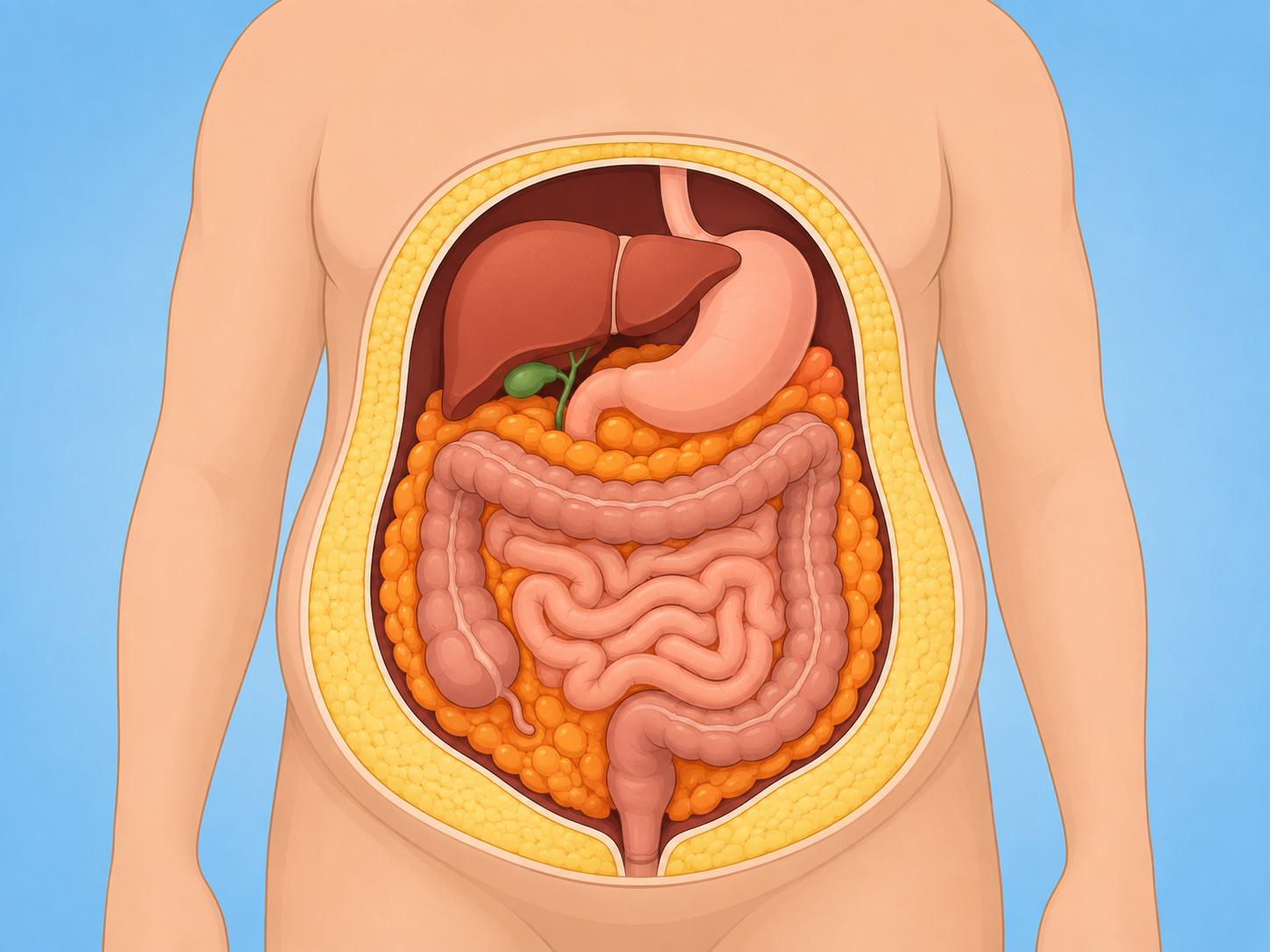
This is the core idea behind the visceral vs subcutaneous fat distinction. Visceral fat wraps around internal organs deep in the abdominal cavity, while subcutaneous fat sits in the layer between skin and muscle, the kind you can pinch on your arms, thighs, or belly. Research from Harvard Health Publications notes that visceral fat typically makes up only about 10% of total body fat, with subcutaneous fat accounting for roughly 90% — yet that smaller portion drives a disproportionate share of cardiometabolic disease risk.
Understanding this difference changes how you should think about training, nutrition, and even how you interpret your own waistline. Total body fat percentage is useful, but it does not tell the full story. A person with a lean frame and a thick waist can carry more metabolic risk than someone with a higher total body fat percentage stored mostly under the skin of the hips and thighs.
The Biological Differences Between Visceral and Subcutaneous Fat
Location and Structure
Subcutaneous fat forms the soft padding beneath your skin across the entire body. It cushions, insulates, and stores energy in a relatively passive way. Visceral fat, by contrast, occupies the spaces around your abdominal organs and infiltrates the omentum, the apron-like membrane that drapes over the intestines. It sits closer to the portal vein, the blood vessel that carries nutrients and byproducts directly to the liver.
Metabolic Activity
Fat tissue is not inert storage. It functions as an endocrine organ, releasing hormones and signaling molecules that affect distant tissues. Visceral fat cells are especially active in this regard. They produce elevated levels of inflammatory cytokines that contribute to low-grade, chronic inflammation, a known contributor to heart disease. Visceral fat also generates a precursor to angiotensin, a compound that narrows blood vessels and raises blood pressure.
Because of its proximity to the portal vein, visceral fat releases free fatty acids directly into circulation feeding into the liver, which can disrupt normal lipid processing and contribute to fatty liver changes. Subcutaneous fat, sitting farther from major organs, does not have this same direct metabolic pipeline.
Hormonal Signaling Differences
Visceral and subcutaneous depots also differ in how they respond to hormones like cortisol and insulin. Visceral fat cells tend to have a higher density of cortisol receptors, which may explain why chronic stress is so consistently linked to central abdominal fat gain. Subcutaneous fat, especially in the lower body, appears to respond differently to estrogen and other reproductive hormones, which is part of why fat distribution patterns often shift after menopause.
Cell Size and Turnover
Visceral adipocytes tend to be smaller but more numerous per unit of tissue than subcutaneous adipocytes, and they turn over, meaning old cells die and new ones form, at a faster rate. Faster cellular turnover means visceral tissue is more responsive to short-term changes in energy balance, which partly explains why it can shrink relatively quickly once training and diet changes take hold. Subcutaneous adipocytes, particularly in the hip and thigh region, tend to be larger, more stable, and slower to release stored triglycerides, which is one reason those areas often feel more resistant to change even when someone is losing weight elsewhere.
Sex-Based and Age-Related Variation
Fat distribution patterns differ between men and women, largely because of sex hormones. Testosterone tends to favor central, visceral storage, while estrogen tends to favor peripheral, subcutaneous storage in the hips and thighs. This is part of why premenopausal women often show a lower visceral-to-subcutaneous ratio than men of similar total body fat. After menopause, as estrogen levels fall, many women see a shift toward more central fat storage even without a change in overall weight, which helps explain why waist measurements can climb during midlife independent of the number on the scale. Aging more broadly is associated with a gradual shift toward visceral storage in both sexes, tied partly to declining muscle mass and reduced activity levels.
| Trait | Visceral Fat | Subcutaneous Fat |
|---|---|---|
| Location | Deep abdominal cavity, around organs | Just beneath the skin, body-wide |
| Approx. share of total body fat | Roughly 10% | Roughly 90% |
| Metabolic activity | High; secretes inflammatory cytokines and angiotensin precursors | Lower; more passive energy storage |
| Blood supply route | Drains toward the portal vein and liver | Drains into general systemic circulation |
| Disease associations | Heart disease, insulin resistance, fatty liver, dementia, certain cancers | Weaker independent disease links |
| Response to caloric deficit | Tends to mobilize relatively quickly | Often more stubborn, slower to shrink |
| Detectable by | Waist circumference, CT/MRI, DEXA | Skinfold calipers, visual inspection |
Health Risks Specifically Tied to Visceral Fat
Cardiometabolic Disease
The clearest signal from the research is cardiovascular. Harvard Health has reported that women with the largest waist measurements faced more than double the risk of developing heart disease compared with those carrying the least abdominal fat. That risk tracks with waist circumference more closely than with overall weight or BMI, since BMI cannot distinguish between fat stored around organs and fat stored under the skin.
Insulin Resistance
Visceral fat is consistently associated with insulin resistance, a state in which cells respond less effectively to insulin’s signal to absorb glucose from the blood. Studies examining visceral adipose tissue in people with metabolic syndrome have found it to be a strong, independent predictor of impaired insulin sensitivity, and combining visceral fat estimates with insulin resistance markers improves prediction of who will go on to develop type 2 diabetes. The mechanism appears to involve the inflammatory cytokines and free fatty acids visceral fat releases directly into the liver’s blood supply, which interferes with normal glucose and lipid handling.
Liver, Cognitive, and Cancer Associations
Because visceral fat feeds fatty acids straight into the liver, it is closely linked to metabolic dysfunction-associated steatotic liver disease. The associations extend further than most people expect. Harvard Health has also noted that people with the highest levels of abdominal fat were nearly three times more likely to develop dementia later in life, and women with high visceral fat were 37% more likely to develop asthma. Research on colorectal health has found that individuals with the highest visceral fat levels had roughly three times the risk of developing colon adenomas compared with those carrying the least.
Metabolic Syndrome
Visceral fat is one of the core components clinicians look at when assessing metabolic syndrome, alongside elevated blood pressure, high fasting glucose, high triglycerides, and low HDL cholesterol. Because visceral fat contributes mechanistically to several of these markers at once, it functions almost like a hub around which the rest of metabolic syndrome develops.
Why Total Body Fat and BMI Miss the Picture
Body mass index was designed as a population-level screening tool, not a measure of fat distribution, and it cannot separate visceral mass from subcutaneous mass. Two people with an identical BMI of 26 can have very different visceral fat volumes depending on genetics, sex, age, and activity history. This is precisely why waist circumference and waist-to-height ratio have gained traction as complementary screening tools alongside BMI in primary care settings. A single body-composition number, whether from a bathroom scale or a basic BMI calculation, simply cannot substitute for a measurement that accounts for where fat sits rather than only how much exists.
What Genuinely Reduces Visceral Fat
Aerobic Exercise Has the Strongest Evidence
A meta-analysis published in PLOS One, pooling 15 randomized controlled trials with 852 participants, found that exercise without any dietary intervention reduced visceral adipose tissue with a standardized mean difference of -0.497. When the researchers broke results down by training type, aerobic exercise showed the strongest and most consistent effect (Hedge’s g of -0.550, p<0.001), while resistance training alone showed a smaller but still significant effect (-0.529, p=0.049). Combined aerobic-plus-resistance programs, interestingly, did not reach statistical significance in that pooled analysis, likely reflecting variation in how those combined programs were structured across studies.
Intensity mattered too. Moderate-intensity training produced a significant reduction (-0.473), and high-intensity training produced an even larger one (-0.588), while low-intensity training showed no measurable effect on visceral fat. In practical terms, several of the controlled trials in that analysis found visceral fat area reductions greater than 30 square centimeters in women and greater than 40 square centimeters in men, with changes measurable within about 12 weeks of consistent training.
A Sustained Caloric Deficit
Visceral fat tends to mobilize relatively early during weight loss compared with stubborn subcutaneous depots in areas like the hips and thighs. This is one reason people often notice their waistband loosening before they see much change on a body-fat scale reading elsewhere. A modest, sustained caloric deficit combined with adequate protein intake supports this process while helping preserve lean muscle mass.
Sleep Quality and Duration
Sleep is not a minor factor here. A controlled study published in the Journal of the American College of Cardiology, involving 12 healthy adults who completed two separate 21-day inpatient sessions, restricted one group to 4 hours of sleep nightly for two weeks versus 9 hours for the control group. Total abdominal fat area increased by 9% and visceral fat specifically increased by 11% in the sleep-restricted group, who also consumed over 300 additional calories per day. Notably, average body weight increased by only about a pound, meaning the visceral fat gain would have gone undetected without CT imaging. Poor sleep appears to redirect where the body stores excess energy, favoring visceral depots.
Reducing Alcohol Intake
Higher alcohol consumption has been associated with greater visceral fat mass accumulation in population research, independent of total caloric intake from other sources. Alcohol is calorically dense, tends to reduce inhibition around other food choices, and may influence how the liver processes and stores incoming fat, given its direct route through the same hepatic circulation that visceral fat feeds into.
Stress Management
Because visceral fat cells carry a relatively high density of cortisol receptors, chronically elevated cortisol from ongoing stress may preferentially direct fat storage toward the abdominal cavity rather than subcutaneous depots elsewhere. Practices that reliably lower baseline cortisol, including regular exercise, adequate sleep, and structured relaxation practices, support visceral fat reduction indirectly through this hormonal pathway.
Diet Composition, Not Just Calorie Count
Mayo Clinic’s guidance for reducing abdominal fat emphasizes an eating pattern built around plant-based foods, lean protein, and moderate amounts of unsaturated fat, while limiting processed meats, refined carbohydrates, and sugary beverages. Diets structured this way, such as Mediterranean-style or DASH-style eating patterns, have shown favorable effects on abdominal fat in clinical research, independent of their effect on overall calorie intake. Part of the mechanism appears to be reduced insulin spikes from refined carbohydrates and added sugar, since chronically elevated insulin promotes fat storage and can blunt the body’s ability to mobilize stored fat for energy. Swapping sugar-sweetened drinks for water alone has been shown to meaningfully reduce added sugar intake over a day, which compounds over weeks and months.
A Realistic Training Structure
Translating the exercise research into a workable routine does not require a complicated program. A useful starting structure looks like three to five sessions of moderate-to-vigorous aerobic activity per week, such as brisk walking, cycling, swimming, or jogging, combined with two full-body resistance training sessions on non-consecutive days. Given that the PLOS One meta-analysis found low-intensity training ineffective for visceral fat specifically, sessions should be demanding enough to raise heart rate and breathing noticeably, not merely a leisurely stroll. Consistency across months matters more than any single workout, since the meta-analysis measured changes over a minimum of several weeks of sustained training rather than isolated sessions.
Risk-Reduction Checklist: What the Evidence Supports
- 150+ minutes of moderate aerobic activity weekly, or 75+ minutes of vigorous activity, per general physical activity guidelines cited by Mayo Clinic
- Strength training at least twice weekly, in addition to aerobic work
- Consistent sleep of roughly 7-9 hours nightly
- A modest, sustained caloric deficit rather than extreme short-term restriction
- Limiting alcohol intake, since it is linked to greater visceral accumulation
- Tracking waist circumference over time, not just body weight
What Does Not Reduce Visceral Fat
The Spot Reduction Myth
No amount of targeted abdominal exercise, whether crunches, planks, or ab-focused machines, selectively burns fat from the midsection. Muscles use fuel from wherever the body mobilizes it, not preferentially from the fat directly overlying the muscle being worked. Studies comparing localized ab-training programs against general fitness programs have consistently failed to find greater abdominal fat loss from the targeted approach. Visceral fat responds to overall energy balance, training volume, and the factors described above, not to which muscle group is contracting.
Fad Detox Products and Extreme Fasting Protocols
Products marketed as fat flushes, detox teas, or waist trainers have no credible evidence of reducing visceral fat specifically. Waist trainers may temporarily compress subcutaneous tissue and change the appearance of the waistline in a mirror, but they do nothing to the fat surrounding internal organs. Extreme, unsustainable fasting protocols can produce short-term weight loss, but much of that loss frequently comes from water and lean tissue, and the effect on visceral fat specifically has not been shown to exceed what a moderate, sustained deficit achieves.
Weight Loss Alone, Without Attention to Composition
Rapid weight loss through severe caloric restriction, without resistance training or adequate protein, risks losing lean muscle alongside fat. Since muscle tissue supports metabolic rate and insulin sensitivity, this kind of weight loss can leave someone lighter on the scale without meaningfully improving the underlying cardiometabolic risk profile that visceral fat represents.
How to Estimate Visceral Fat Risk at Home
Waist Circumference
Clinical guidance points to waist circumference as the most practical at-home proxy for visceral fat risk. Cleveland Clinic and Mayo Clinic both cite a threshold of 40 inches (102 cm) or more for men and 35 inches (88 cm) or more for women as indicating increased health risk. To measure accurately, wrap a tape measure around your bare abdomen at the level of your belly button, after exhaling normally, without pulling the tape tight enough to compress the skin.
Waist-to-Hip and Waist-to-Height Ratios
A waist-to-hip ratio above roughly 0.85 for women and 0.90 for men is generally considered a marker of abdominal obesity. A waist-to-height ratio above 0.5 has also been associated with elevated circulatory and metabolic disease risk, and some researchers consider it a more universally applicable screening tool since it naturally adjusts for body frame size.
Tracking Change Over Time
Because visceral fat can change meaningfully even when body weight barely moves, as the sleep study above illustrates, tracking waist circumference monthly gives a more honest picture of progress than the scale alone. A consistent measuring routine, same time of day, same landmark, same posture, produces the most reliable trend data.
When Clinical Imaging Adds Value
Waist circumference is a screening tool, not a diagnostic measurement, and it can be thrown off by factors like bloating, measurement technique, or unusual torso proportions. For a precise breakdown of visceral versus subcutaneous fat volume, CT and MRI scans remain the reference standard, and DEXA scans, which are more widely available and lower in radiation exposure than CT, can also estimate visceral fat area with reasonable accuracy. These imaging methods are generally reserved for research settings or specific clinical situations, such as when a physician is evaluating unexplained metabolic abnormalities in someone with an otherwise unremarkable waist measurement. For most people, waist circumference tracked consistently over time provides enough information to guide lifestyle decisions without needing a scan.
Putting It Together
Fat location changes the health calculation in ways that total body fat percentage cannot capture on its own. Visceral fat’s proximity to the liver, its role as an active endocrine tissue, and its links to inflammation, insulin resistance, and cardiovascular disease put it in a different risk category than the subcutaneous fat under your skin. The good news is that visceral fat responds well to a fairly standard set of interventions: regular aerobic exercise, resistance training, sufficient sleep, moderate alcohol intake, and a sustainable caloric deficit. None of these require gimmicks, and all of them are supported by controlled research rather than marketing claims. A tape measure around your waist, tracked consistently over months, remains one of the most useful and low-cost tools for monitoring this specific type of risk.
Frequently Asked Questions
Can you have a healthy weight and still have high visceral fat?
Yes. Mayo Clinic research on waist circumference and mortality has found that people classified as normal weight by BMI but carrying excess abdominal fat showed elevated health risks, sometimes higher than people with a higher BMI but less central fat. BMI alone cannot detect this pattern.
How quickly can visceral fat decrease with exercise?
Controlled trials summarized in the PLOS One meta-analysis found measurable visceral fat reductions within about 12 weeks of consistent moderate-to-high intensity aerobic training, though individual results vary based on starting levels and program adherence.
Does belly fat always mean high visceral fat?
Not necessarily. Some people carry more subcutaneous fat in the abdominal area without a proportionally high visceral component. Waist circumference is a reasonable proxy but imaging methods like CT or MRI remain the only way to directly distinguish the two depots.
Is visceral fat easier or harder to lose than subcutaneous fat?
Visceral fat generally mobilizes somewhat faster during a caloric deficit than deeper subcutaneous stores in areas like the hips and thighs, which is why waistlines often shrink before other areas visibly change.
Do genetics determine how much visceral fat a person carries?
Genetics influence fat distribution patterns, including tendencies toward central versus peripheral storage, but lifestyle factors such as activity level, diet composition, sleep, and alcohol intake remain the primary levers a person can actually adjust.
Is a home bioelectrical impedance scale reliable for measuring visceral fat?
Consumer bioelectrical impedance scales can offer a rough visceral fat estimate and are useful for tracking your own trend over time, but their absolute numbers vary by hydration status, recent food intake, and the specific device, so they should be treated as a directional indicator rather than a precise measurement. Waist circumference measured with a simple tape measure remains a more consistent low-cost benchmark for most people.
References
- Harvard Health Publications, “Taking Aim at Belly Fat,” Harvard Medical School
- Cleveland Clinic, “Visceral Fat: What It Is & How It Affects You”
- Mayo Clinic, “Belly fat in men: Why weight loss matters”
- Mayo Clinic Proceedings, “A Pooled Analysis of Waist Circumference and Mortality in 650,000 Adults”
- Mayo Clinic News Network, “Lack of sleep increases unhealthy abdominal fat,” reporting on a study published in the Journal of the American College of Cardiology
- PLOS One, “The Effect of Exercise on Visceral Adipose Tissue in Overweight Adults: A Systematic Review and Meta-Analysis”
- PubMed, “The combination of insulin resistance and visceral adipose tissue estimation improves the performance of metabolic syndrome as a predictor of type 2 diabetes”
- International Journal of Obesity, “Greater visceral fat mass accumulation with high alcohol consumption”