

























By Ada L. Wrenford
A person can eat, train, and sleep exactly the same for four straight weeks and still produce two progress photos that look like they belong to different bodies. Nothing about their fat mass or muscle mass has to change for that to happen. A window opened. The photo got taken at 9 p.m. instead of 7 a.m. A leg workout finished twenty minutes earlier. A plate of pasta sat in the stomach. None of that is dishonest in the sense of intent, but it produces a dishonest comparison, because the two images were never measuring the same thing in the first place.
Progress photos are one of the more useful tools available for tracking body composition change over time, precisely because a camera does not round numbers or get fooled by a good hair day the way a mirror sometimes does. Research on self-monitoring in weight management has repeatedly found that people who track consistently, whether through food logs, body weight, or visual records, tend to do better than people who track sporadically or not at all (Burke, Wang, & Sevick, 2011). But that advantage only holds if the tracking method itself stays stable. A ruler that changes length between measurements is not a ruler. A photo protocol that changes lighting, timing, and pose between shots is not a protocol, it is a collection of unrelated snapshots that happen to feature the same person.
This guide walks through the specific variables that distort progress photos, gives a standardized shooting protocol that removes most of that noise, and explains how to read photos alongside other data points without letting any single metric run the show.
Why Inconsistent Photos Create a False Narrative
The core problem is that a photograph collapses a three-dimensional, constantly fluctuating body into a flat, static image, and then asks the viewer to compare that single frame against another single frame taken under different conditions. Body weight itself can swing several pounds within a single day from water and food in the digestive tract, and that swing shows up visually as a fuller or flatter midsection well before it shows up as a meaningful change in body fat.
When someone takes a photo under harsh overhead light on a Monday morning and another under a softbox lamp on a Friday night after a leg session, the resulting comparison is contaminated by at least four or five independent variables at once. The viewer, often the same person judging their own progress, tends to attribute the entire visual difference to fat loss or muscle gain, when in reality most of it came from lighting, pump, hydration status, or the angle of the shoulders. That misattribution matters because it shapes decisions: someone might cut calories further after a photo that looks “worse” purely because of harsher light, or feel unjustified confidence after a photo flattered by a strong pump and a favorable shadow.
The Variables That Distort Every Photo
Before building a protocol, it helps to understand exactly what is doing the distorting. Six variables account for most of the visible difference between two photos of the same body taken a week apart.
Lighting Direction and Intensity
Light coming from directly overhead creates shadows under the brow, cheekbones, and abdominal muscles that exaggerate definition, sometimes dramatically. Light coming from below or straight-on flattens those same shadows and can make a lean midsection look softer than it actually is. Diffused, even light from the side, roughly the kind that comes through a window on an overcast day, tends to be the most neutral option because it reveals shape without manufacturing extra contrast. Switching between a bathroom’s yellow-toned overhead bulb and a bedroom window’s blue-toned daylight between two photo sessions can change apparent muscle definition more than two weeks of actual training will.
Time of Day and Fluid Shifts
Most people are visibly leaner first thing in the morning, after an overnight fast and before any food or fluid has entered the stomach and intestines. By evening, a full day of meals, water, and swallowed air sits in the digestive tract, and the abdomen looks measurably fuller even with zero change in fat tissue. Taking one photo at 7 a.m. and a follow-up at 8 p.m. compares a mostly empty gut to a full one, which is a comparison of digestion, not physique change.
Training Pump and Vasodilation
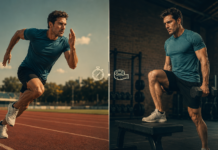
A muscle that was just trained fills with blood, a phenomenon commonly called “the pump,” driven by increased blood flow and fluid shifting into the muscle tissue. This transient swelling can make arms, shoulders, or legs look noticeably larger and more vascular for an hour or two after a workout, and it fades as blood flow normalizes. A photo taken straight after a shoulder session, next to one taken on a rest day with no recent training, is not a fair test of shoulder growth, it is a test of whether the muscle was recently pumped.
Water Retention: Sodium, Carbohydrates, and Hormones
Every gram of stored muscle glycogen holds roughly three grams of water alongside it, which is part of why a high-carbohydrate meal or a carb-loading protocol can visibly smooth out and fill a physique within a day, an effect documented in research on glycogen supercompensation following carbohydrate loading (Arnall, Herb, DeHart, Fortune, & Coast, 1998). A high-sodium meal the night before, a new supplement, or a stretch of poor sleep can each shift fluid balance enough to change how defined someone looks the next morning. For anyone who menstruates, hormonal fluctuations across the cycle also drive measurable changes in body fluid, an effect studied as far back as the 1970s in research on menstrual cycle variation in body fluid composition (Bell, Christie, & Venables, 1975). None of these shifts reflect fat loss or muscle gain, yet all of them are visible on camera.
Posing, Angle, and Camera Distance
A slight rotation of the hips, a raised chin, arms held a few inches further from the torso, or a camera positioned a foot closer can each change apparent waist size, shoulder width, and muscle separation more than most people expect. A wide-angle phone lens held too close will also distort proportions, typically making whatever is nearest the lens (often the torso or thighs) appear larger. Someone who unconsciously improves their posing skill over months of taking photos, standing taller, learning which angle flatters their frame, can look “more improved” than their actual body composition change would justify.
Camera Mode, Filters, and Automatic Editing
Modern phone cameras rarely capture a raw, unprocessed image. Portrait mode adds artificial background blur and can subtly reshape edges. HDR blending and automatic “beauty” processing smooth skin texture and can soften the exact abdominal or muscle definition someone is trying to track. Front-facing cameras often use a wider lens than the rear camera, which distorts proportions differently depending on which one gets used. Switching between the front and rear camera, or between a plain camera app and one with built-in retouching, introduces a variable that has nothing to do with the body and everything to do with the software processing the image. The fix is simple: pick one device, one camera (rear-facing is usually less distorted at a fixed distance), one mode, and turn off any automatic beautification or portrait effects before starting a photo log.
A Standardized Photo Protocol You Can Repeat
The fix for all six variables above is the same: lock down every condition that is not the thing being measured, so the only thing left to change between photos is the body itself. The following protocol is built to be repeatable with nothing more than a phone, a wall, and a consistent routine.
Step 1 — Pick one fixed time slot
Choose a consistent point in your daily routine, ideally first thing in the morning after using the bathroom and before eating or drinking anything. This controls for digestive fill and overnight fluid loss, the two biggest daily swing factors.
Step 2 — Shoot on a rest day, or 24+ hours after training that body part
Avoid photographing muscles within a few hours of training them directly, so pump and localized swelling are not part of the comparison.
Step 3 — Mark your spot and camera position
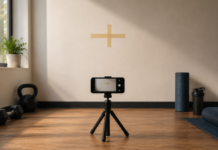
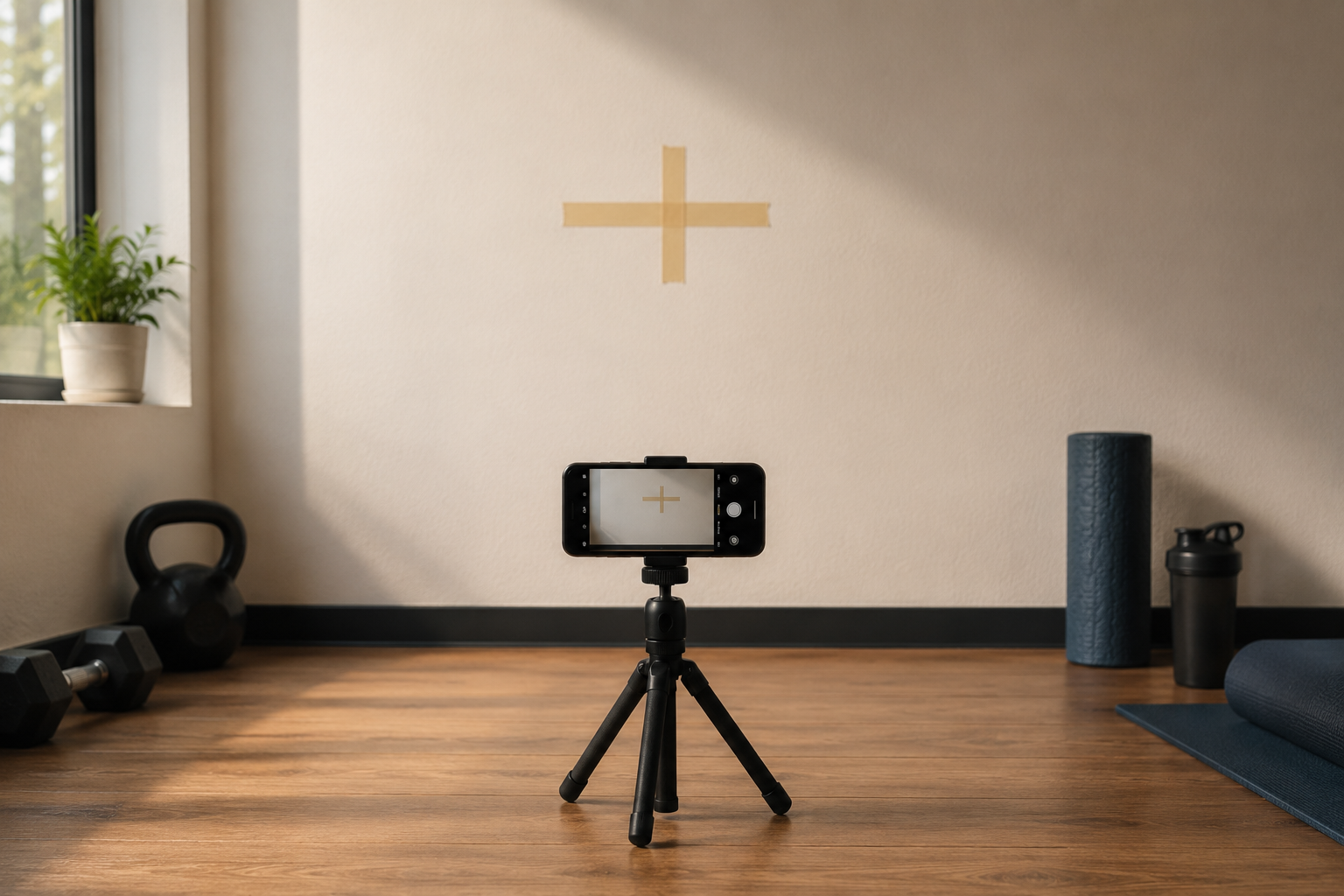
Put a small piece of tape on the floor for your feet and another mark on a tripod, shelf, or wall at a fixed camera height and distance, typically 6 to 8 feet away. Photograph against a plain, uncluttered background.
Step 4 — Standardize the light
Use the same light source every time, ideally soft, even, diffused light from the side, such as daylight through a window at the same hour. Avoid mixing a bright bathroom bulb one week with dim overhead lighting the next.
Step 5 — Repeat the same three poses every time
Front, side, and back, arms relaxed at the sides, weight distributed evenly on both feet, neutral facial expression. Avoid flexing, sucking in, or intentionally angling the hips to look leaner.
Step 6 — Shoot on a fixed weekly or biweekly schedule
Daily photos amplify noise from water and food; a body needs at least one to two weeks to show a real visual change from fat or muscle. Weekly or every-other-week photos, taken on the same day, capture trend without drowning it in daily fluctuation.
Step 7 — Log the context next to each photo
Note sleep quality, sodium intake the night before, training the day prior, and where someone is in their menstrual cycle if applicable. This turns the photo set into a dataset instead of a slideshow.
The Standardization Checklist
Use this checklist before every session to confirm nothing has quietly drifted from the original setup.
| Variable | Standard to Hold Constant | Why It Matters |
|---|---|---|
| Time of day | Same hour, ideally fasted morning | Controls digestive fill and overnight fluid loss |
| Training proximity | 24+ hours since training the shown muscle group | Removes pump and localized swelling |
| Light source and direction | Same light, same angle, diffused if possible | Prevents shadow-created or shadow-hidden definition |
| Camera distance and height | Fixed mark, 6 to 8 feet, same lens | Prevents lens distortion from changing proportions |
| Pose and expression | Relaxed, neutral, same three angles | Stops posing skill from mimicking body change |
| Sodium and carbohydrate intake | Note the prior day’s intake, avoid extreme swings | Controls glycogen and sodium-driven water shifts |
| Cycle phase (if applicable) | Log the phase or shoot at a consistent point | Accounts for hormone-driven fluid retention |
| Photo interval | Weekly or biweekly, same day of the week | Gives real change time to outpace daily noise |
Reading Photos Alongside Other Metrics, Without Over-Focusing on Any One
Even a well-standardized photo protocol works best as one input among several, not the sole verdict on progress. Body weight, a tape measure at the waist and hips, how clothes fit, training performance, and photos each measure a slightly different slice of reality, and each has its own noise pattern. Weight fluctuates daily from water and food. A tape measurement depends on tension and exact placement. Photos depend on the standardization habits described above. When two or three of these sources agree over a two- to four-week window, that agreement is far more trustworthy than any single week of any single metric.
Daily self-weighing research offers a useful parallel here. A randomized trial found that daily self-weighing did not produce the adverse psychological effects some had worried about, and in fact many participants adapted well to it, particularly when the practice was framed as data collection rather than a verdict on self-worth (Steinberg, Tate, Bennett, Ennett, Samuel-Hodge, & Ward, 2014). The same framing applies to photos: they work best when treated as a data point to log and review over weeks, not a mirror to judge in the moment right after taking it. Separate research on self-weighing frequency similarly found that people who weighed themselves consistently, and reviewed trends rather than single readings, maintained weight loss better than inconsistent trackers (Brockmann, Eastman, & Ross, 2020), and earlier work found the same consistency effect on initial weight loss itself (VanWormer, Martinez, Martinson, Crain, Benson, Cosentino, & Pronk, 2009). Consistency, not frequency alone, is the variable doing the work.
It is also worth separating the act of taking a standardized photo from the act of scrolling through other people’s images for comparison. Research on fitness-themed imagery found that exposure to idealized “fitspiration” content increased body dissatisfaction and lowered mood in women who viewed it, even when the stated intent of the images was motivational rather than aspirational in an unhealthy sense (Tiggemann & Zaccardo, 2015). A related study of adult men found that appearance comparison on image-based social platforms, along with editing or manipulating one’s own posted photos, was associated with greater body dissatisfaction (Modica, 2020). The practical takeaway is not to avoid photos altogether, but to keep personal progress photos in a private, protocol-driven log rather than a public feed where they invite comparison against other people’s best-lit, best-posed, and sometimes edited images.
A simple review rhythm helps keep any one photo from carrying too much weight in someone’s mood or decisions: look at photos in sets of four to six, spaced weekly or biweekly, side by side, rather than judging the newest one in isolation. A single photo can be thrown off by any of the distorting variables above. A run of six photos, taken under matched conditions, mostly cancels that noise out and reveals the actual trend underneath it.
A basic log makes this review easier than it sounds. A spreadsheet row or a notes app entry with four columns, date, body weight, waist measurement, and a short note on sleep and food the day before, sitting next to the matching photo, turns a folder of images into something closer to a lab notebook. Reviewing that log every two to four weeks, rather than reacting to any single day, is what separates someone using photos as a genuine feedback tool from someone using them as a source of daily anxiety. The goal is a body of evidence built up slowly, not a verdict handed down after one glance in bad light.
The Bottom Line
Progress photos are only as honest as the process that produces them. Lighting, time of day, training pump, water retention, and posing can each shift how a body looks in a single frame without any real change in fat or muscle underneath. Locking down those variables with a fixed time, a fixed spot, matched light, a consistent pose, and a steady interval turns a photo series from a set of misleading snapshots into a genuinely useful record. Paired with body weight trends, measurements, and how training is going, standardized photos become one honest piece of a larger, more reliable picture rather than a source of daily judgment.
Frequently Asked Questions
How often should I actually take progress photos?
Weekly or every other week is enough for most people. Visible fat or muscle change typically needs at least one to two weeks to outpace normal water and food fluctuation, so daily photos mostly capture noise rather than signal.
What is the best time of day for a progress photo?
First thing in the morning, after using the bathroom and before eating or drinking, is the most consistent option because the digestive tract is at its emptiest and most repeatable state.
Why do I look more defined right after a workout?
Increased blood flow to the trained muscle causes temporary swelling, often called a pump. It fades within a couple of hours, so photos taken immediately post-training are not comparable to rest-day photos.
Does eating carbohydrates or salty food really change how I look the next day?
Yes. Carbohydrate intake increases stored glycogen, which holds water alongside it in muscle tissue, and high sodium intake can shift fluid retention as well. Both can visibly smooth or fill out a physique within a day without any fat or muscle change.
Should I compare my photos to other people’s photos online?
It is best avoided. Research on fitness-related imagery and appearance comparison links frequent exposure to idealized photos, and comparing oneself against them, with lower body satisfaction. Keep comparisons limited to your own standardized photo log.
What if my photos and my scale weight seem to disagree?
Look at both as trends over two to four weeks rather than single readings. Weight can shift daily from water and food while a photo trend confirms visual change, or vice versa. Agreement across several weeks between weight, measurements, and photos is a stronger signal than any one metric on its own.
References
- Burke, L. E., Wang, J., & Sevick, M. A. (2011). Self-Monitoring in Weight Loss: A Systematic Review of the Literature. Journal of the American Dietetic Association, 111(1), 92–102. https://doi.org/10.1016/j.jada.2010.10.008
- Steinberg, D. M., Tate, D. F., Bennett, G. G., Ennett, S., Samuel-Hodge, C., & Ward, D. S. (2014). Daily Self-Weighing and Adverse Psychological Outcomes. American Journal of Preventive Medicine, 46(1), 24–29. https://doi.org/10.1016/j.amepre.2013.08.006
- Brockmann, A. N., Eastman, A., & Ross, K. M. (2020). Frequency and Consistency of Self-Weighing to Promote Weight-Loss Maintenance. Obesity, 28(7). https://doi.org/10.1002/oby.22828
- VanWormer, J. J., Martinez, A. M., Martinson, B. C., Crain, A. L., Benson, G. A., Cosentino, D. L., & Pronk, N. P. (2009). Self-Weighing Promotes Weight Loss for Obese Adults. American Journal of Preventive Medicine, 36(1). https://doi.org/10.1016/j.amepre.2008.09.022
- Tiggemann, M., & Zaccardo, M. (2015). “Exercise to be fit, not skinny”: The effect of fitspiration imagery on women’s body image. Body Image, 15, 61–67. https://doi.org/10.1016/j.bodyim.2015.06.003
- Modica, C. A. (2020). The Associations Between Instagram Use, Selfie Activities, Appearance Comparison, and Body Dissatisfaction in Adult Men. Cyberpsychology, Behavior, and Social Networking, 23(2). https://doi.org/10.1089/cyber.2019.0434
- Arnall, D., Herb, R., DeHart, T., Fortune, P., & Coast, R. (1998). Maintenance of Muscle Glycogen Supercompensation 3, 5, & 7 Days Post Peak Carbohydrate Loading. Medicine & Science in Sports & Exercise, 30(Supplement). https://doi.org/10.1097/00005768-199805001-01399
- Bell, B., Christie, M. J., & Venables, P. H. (1975). Menstrual cycle variation in body fluid potassium. Journal of Interdisciplinary Cycle Research, 6(2), 113–120. https://doi.org/10.1080/09291017509359473