



























By Olivia Bennett
Your mother hasn’t taken a real walk in months. Your father used to garden every weekend and now spends most afternoons in his recliner. You’ve noticed the change in how they get up from a chair, the way they wince climbing stairs, the quiet acceptance that this is just what happens now. You want to help. You also know that if you say the wrong thing, you’ll get a flat “I’m fine” and a closed door that stays closed for weeks.
Why This Conversation Feels So Hard
Getting an inactive parent moving again is rarely a fitness problem first. It’s a relationship problem wearing a fitness costume. Three forces usually stand in the way before a single step gets taken.
The first is autonomy. Your parent spent decades making their own decisions, running a household, raising you. Being told what to do by their own child, even gently, can land as a loss of status rather than an act of care. Adult children who lead with instructions instead of questions often get resistance that has nothing to do with exercise and everything to do with who gets to decide.
The second is fear, and it comes in more than one flavor. Some older adults are afraid of falling, especially if they’ve had a close call or watched a friend break a hip and never fully recover. Others fear looking frail in front of neighbors, or fear that trying and failing will confirm what they already suspect: that their body has changed for good. According to the CDC’s STEADI initiative, more than one in four adults over 65 falls each year, and over 3 million are treated in emergency departments annually for fall-related injuries, so this fear is grounded in something real, not simply stubbornness.
The third is history. Maybe your parent tried a gym membership that went unused. Maybe a doctor once told them to “move more” with no follow-up plan, and the advice evaporated into a life that kept being busy, painful, or discouraging in other ways. Every failed attempt adds a small layer of learned helplessness, and that layer is what you’re actually negotiating with, not their fitness level.
None of this means the situation is hopeless. It means the approach has to start somewhere other than “you should exercise more.”
Step 1: Start the Conversation the Right Way
The words you choose in the first five minutes often determine whether your parent hears an invitation or an accusation. Behavioral researchers who study motivational interviewing, an approach originally developed for addiction treatment and now widely used in chronic disease and aging care, have found that people move toward change more readily when they feel heard and in control of the decision, not lectured at. Open-ended questions and reflective listening tend to outperform direct advice, especially when the topic touches on independence.
Instead of leading with a solution, lead with curiosity about their experience. Ask what a typical day feels like physically. Ask what they miss being able to do. Ask what would make moving around easier, not what they should be doing differently. The goal in this first conversation is not to get a commitment. It’s to understand their internal picture of their own body and capabilities, because that picture, not your opinion of it, is what governs their behavior.
Timing matters as much as wording. A conversation started in the middle of a frustrating moment, like watching them struggle to stand up, tends to feel like criticism. A conversation started over coffee, unconnected to a specific failure, tends to feel like connection.
Conversation Starters That Open Doors (and Ones That Close Them)
| Instead of saying | Try saying | Why it works better |
|---|---|---|
| “You really need to start exercising.” | “How are your legs and knees feeling these days?” | Invites a personal answer instead of triggering defensiveness about a directive. |
| “The doctor said you have to move more.” | “What did the doctor say about staying active, and what did you think about it?” | Puts them in the position of interpreting the advice, not just receiving orders. |
| “I worry about you sitting all day.” | “Is there anything you used to enjoy doing outside that you miss?” | Connects movement to something meaningful rather than to a health warning. |
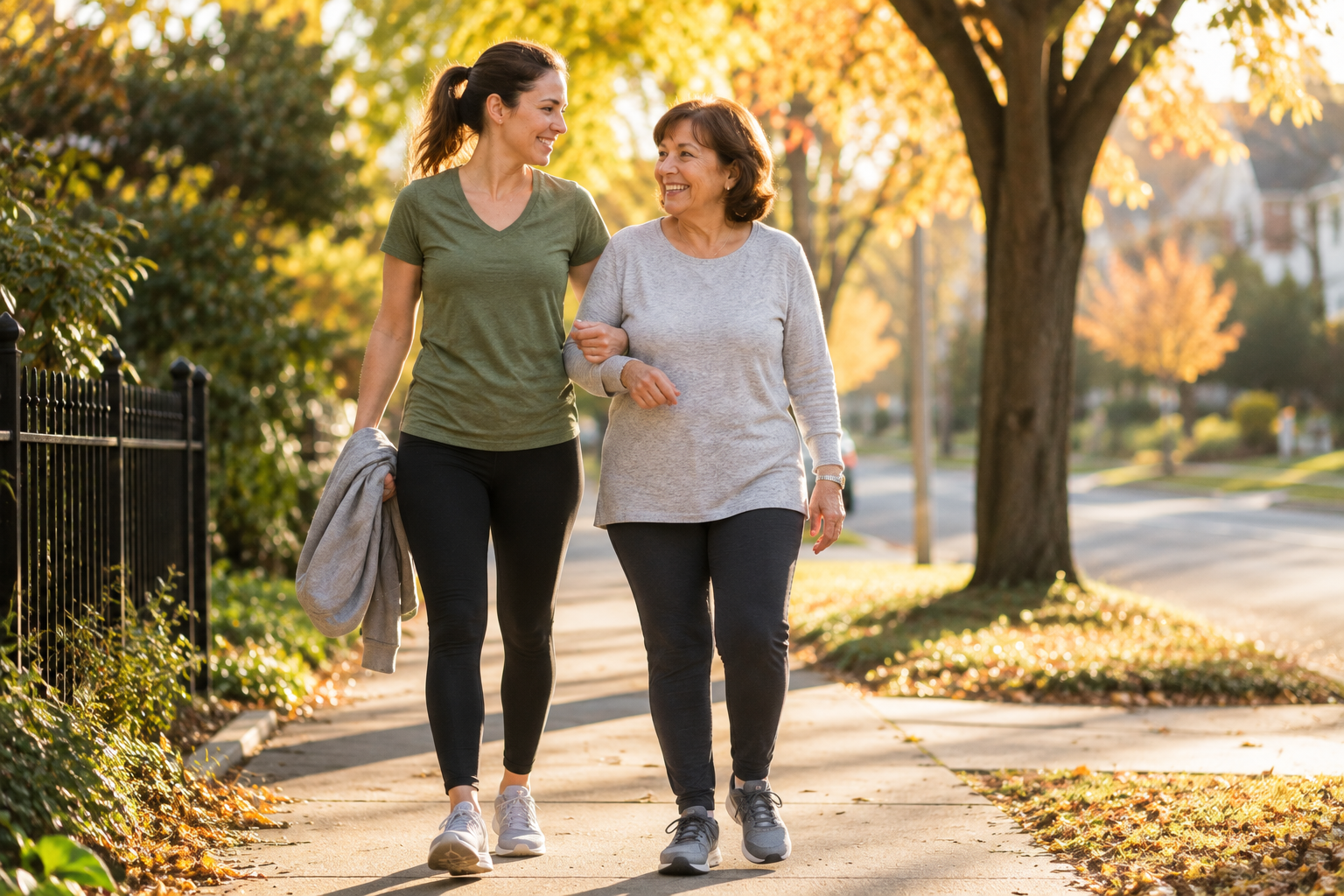
| “You should join a gym.” | “Would you want company on a short walk sometime, just to see how it feels?” | Lowers the stakes to a single, reversible, social step instead of a program. |
| “You’re going to fall if you don’t build strength.” | “What would make you feel steadier getting around the house?” | Names the underlying fear without accusing them of ignoring it. |
Step 2: Understand What’s Actually Stopping Them
Before proposing anything, get specific about the barrier. “Inactive” covers a wide range of situations, and the right next step looks different depending on which one you’re facing.
- Physical pain or discomfort that makes movement genuinely unpleasant, such as arthritis, back pain, or breathlessness.
- Fear of falling, particularly after a fall, a near-fall, or watching it happen to a peer.
- Loss of a former activity partner, such as a spouse who used to walk with them or a friend group that has scattered.
- Depression or grief, which can flatten motivation for almost everything, not just exercise.
- Practical obstacles, like no safe sidewalk nearby, no transportation to a class, or a home layout that discourages movement.
- Simple loss of habit, where inactivity became the default after retirement, an injury, or a long illness, and nothing ever restarted it.
You can surface which of these applies by asking directly and listening without jumping to fix it in the same breath. If pain is the driver, the plan needs to route through a doctor or physical therapist before anything else. If isolation is the driver, the plan needs a social component more than an exercise plan. If fear is the driver, the plan needs reassurance and a very low starting point. Guessing wrong here is the single most common reason well-intentioned family efforts stall out.
It also helps to notice what your parent says about their own body, since the language often reveals the barrier before they name it directly. A parent who says “I just get tired” may be describing deconditioning that improves with gradual activity, while a parent who says “I don’t trust my legs” is describing a confidence problem that needs reassurance and support more than exertion. Slowing down to hear the difference saves weeks of offering the wrong kind of help.
Step 3: Get Medical Clearance First
This step is not optional, and it should come before you and your parent settle on any specific activity. If your parent has an existing condition, such as heart disease, diabetes, osteoporosis, a recent surgery, or a history of falls, encourage them to talk with their doctor before increasing activity, and go with them or help set up the conversation if that would help. A doctor or physical therapist can flag movements to avoid, medications that affect balance or blood pressure, or reasons a symptom needs attention before exercise begins.
This is not about creating a barrier to getting started. It’s about making sure the plan fits their actual body, not a generic one. A physical therapist in particular can also assess balance and gait directly, which is more precise than guessing from the outside, and can recommend a starting point that’s genuinely safe rather than one that merely sounds cautious.
If your parent is resistant to bringing this up with a doctor, frame it as information gathering rather than permission-seeking: “Let’s find out what your doctor thinks is safe, so we’re not guessing.” That framing keeps the decision-making with them while still getting the medical input the plan needs.
Step 4: Choose Low-Barrier First Activities
The first activity should be almost impossible to fail at. This is not the moment for a fitness goal. It’s the moment for a single repeatable action that produces a small, noticeable win. The CDC’s physical activity guidelines note that for older adults who can’t yet meet the standard targets, being “as physically active as your abilities and conditions allow” still produces meaningful benefit, and that some activity is always better than none. That’s the standard to build from, not the 150-minutes-a-week target most guidelines eventually aim for.
Good first activities share a few traits: they take ten minutes or less, they don’t require special equipment or a membership, they can happen close to home, and they can be stopped at any point without it feeling like quitting.
Low-Barrier First Activities to Suggest
- A slow 5-to-10-minute walk around the block or driveway, timed to good weather and daylight.
- Standing up and sitting back down from a sturdy chair, 5 to 8 times, once a day.
- Marching in place near a countertop or chair for support while watching a favorite show.
- A short seated stretching routine, done in the same chair every morning.
- Carrying light groceries in from the car instead of asking someone else to do it, if cleared for lifting.
- Walking heel-to-toe along a hallway wall for balance practice, a movement the CDC specifically lists among balance-building activities for older adults.
None of these look like exercise in the traditional sense, and that’s the point. The goal at this stage is to interrupt a pattern of complete stillness, not to hit a fitness benchmark. Once one of these becomes routine, it’s far easier to add the next small layer than it would have been to start with a structured program.
Step 5: Build Social and Accountability Structures
Motivation that depends entirely on willpower tends to fade within a few weeks, for anyone, at any age. Research on physical activity adherence in sedentary middle-aged and older adults points to social support as one of the strongest predictors of whether new activity sticks, working through several channels at once: companionship, a sense of obligation to show up for someone else, and simple encouragement along the way.
Practical ways to build this structure include:
- Setting a standing time to walk or move together, even if it’s only twice a week, so it becomes a shared appointment rather than a solo task.
- Connecting your parent with a peer, neighbor, or sibling who is also trying to move more, so the accountability doesn’t rest on you alone.
- Looking into community or senior-center programs built specifically for older adults, where a group setting and a trained instructor can provide structure you can’t replicate at home.
- Using a simple shared check-in, like a daily text or a paper calendar with a checkmark, that takes ten seconds and creates a small sense of momentum.
If you live far away, accountability can still work by phone. A five-minute call after a walk, focused on how it felt rather than whether it happened, keeps the relationship supportive instead of supervisory.
Step 6: Celebrate Small Wins
Progress at this stage is measured in consistency, not intensity. A parent who walks five minutes three times this week has done something more durable than a parent who walks thirty minutes once and then stops for a month. Recognize the small version of success out loud, specifically and without exaggeration: “You’ve walked every day this week, that’s a real streak,” lands better than a vague “good job.”
Avoid tying praise only to visible physical change, since that timeline is slow and unpredictable and can make your parent feel like the effort isn’t registering. Praise the behavior itself. Showing up, choosing to move on a day they didn’t feel like it, or simply mentioning that a walk felt a little easier than last week are all worth naming.
Step 7: Avoid Nagging, and What to Do Instead
Repeated reminders tend to produce the opposite of what you want. Once a parent starts anticipating a reminder, they can start resisting the activity itself just to reclaim the sense of control the reminder took away. A few adjustments help keep the relationship intact while still supporting the goal.
- Ask instead of remind. “Did you get out today?” invites a report. “You need to get out today” invites resistance.
- Set the expectation once, then let the routine carry it. A standing Tuesday and Thursday walk needs less ongoing negotiation than a daily ad hoc request.
- Let missed days pass without commentary. One skipped walk is not a crisis, and treating it like one raises the emotional stakes of every future request.
- Separate your worry from their choice. You can say you care about their strength and balance without attaching a specific behavior demand to every conversation.
- Model rather than monitor. Walking together, or simply being active in ways your parent can see, often influences behavior more than any spoken reminder.
The line between supportive and controlling is often about who’s driving the schedule. When your parent picks the day, the time, or the route, the activity stays theirs. When you’re the one initiating every single instance, it starts to feel like a chore assigned by someone else, which is exactly the dynamic that erodes autonomy and, eventually, participation.
A Sample Gentle Progression
There’s no single correct pace, and medical clearance should shape the specifics for your parent’s situation. This progression is meant as a template to adapt, not a script to follow exactly.
- Weeks 1 to 2: One low-barrier activity, most days, for 5 to 10 minutes. Chair stands, a short hallway walk, or seated stretches. The goal is simply establishing the habit.
- Weeks 3 to 4: Extend the same activity slightly, to 10 to 15 minutes, and add a second short session on alternating days, such as a morning stretch and an afternoon walk.
- Weeks 5 to 6: Introduce one new element, ideally something social, like a walk with a neighbor or a chair-based class at a senior center, alongside the existing routine.
- Weeks 7 to 8: Add light strengthening movements cleared by a doctor or physical therapist, such as seated leg lifts or resistance band work, aiming toward the CDC’s benchmark of muscle-strengthening activity at least two days a week.
- Ongoing: Build toward accumulating movement most days of the week, checking in periodically on how it feels rather than fixating on a specific minute count, and adjusting downward without guilt if pain, fatigue, or health changes require it.
Setbacks should be expected rather than treated as failure. Illness, weather, travel, or simply a low-motivation stretch will interrupt the routine at some point. Restarting at whatever the last comfortable level was, instead of trying to make up for lost time, keeps the whole effort sustainable.
Moving Forward, Together
Helping an inactive parent move again is less about designing the perfect workout and more about rebuilding trust in their own body, one small, repeatable win at a time. The conversation matters as much as the activity. Curiosity works better than correction, medical guidance keeps the plan grounded and safe, and consistency beats intensity every time. Your role isn’t to manage your parent’s fitness. It’s to make the first step small enough that taking it feels obviously worth it, and then to stay close enough that they don’t have to keep taking the next one alone.
Frequently Asked Questions
My parent refuses to talk about exercise at all. What should I do?
Stop framing it as exercise. Ask about comfort, independence, or something they miss doing, and let movement come up as a natural part of that conversation rather than the stated topic. Pushing the word “exercise” itself sometimes triggers more resistance than the actual activity would.
Is it safe for my parent to start moving without seeing a doctor first?
Encourage a conversation with their doctor before starting anything new, especially if they have an existing heart, joint, balance, or chronic condition, take medications that affect blood pressure or coordination, or have fallen recently. A doctor or physical therapist can identify what’s safe for their specific situation, which general advice can’t do.
What if my parent has already fallen and is now afraid to move at all?
This fear is common and deserves to be taken seriously rather than talked out of. Starting with very small, supported movements, such as standing near a sturdy chair or walking with a hand on a counter, can rebuild confidence gradually. A physical therapist can also design a fall-specific plan, since balance training is one of the more effective tools for reducing future fall risk.
How do I encourage my parent without sounding like I’m nagging?
Ask rather than remind, let them set the schedule, and let missed days pass without comment. Save your input for check-ins your parent invites, and consider modeling activity together instead of directing it from the sidelines.
What if my parent lives far away from me?
Accountability can still work by phone or video call, focused on how an activity felt rather than a checklist of whether it happened. Helping set up a local option, such as a senior center class, a walking neighbor, or a home-visit physical therapist, can fill the in-person gap you can’t cover from a distance.
How long does it usually take to see a change?
Consistency, not speed, is the early marker of success. Many people notice small improvements in stamina or steadiness within a few weeks of regular short activity, but the more meaningful outcome in the first month or two is simply that the habit holds. Physical changes tend to follow later and unfold at their own pace, and they often show up first in ordinary daily tasks, such as rising from a chair with less effort or climbing a short flight of stairs without pausing halfway, before they show up on any formal measure of fitness.
References
- Centers for Disease Control and Prevention. “Older Adults: Adding Activity Recommendations.” Physical Activity Basics. cdc.gov/physical-activity-basics/adding-older-adults
- Centers for Disease Control and Prevention. “Older Adult Activity: An Overview.” Physical Activity Basics. cdc.gov/physical-activity-basics/guidelines/older-adults
- Centers for Disease Control and Prevention. “About STEADI.” STEADI – Older Adult Fall Prevention. cdc.gov/steadi/about
- King, A.C., et al. “When Adults Don’t Exercise: Behavioral Strategies to Increase Physical Activity in Sedentary Middle-Aged and Older Adults.” Innovation in Aging, Oxford Academic. academic.oup.com/innovateage
- “Motivational Interviewing, Readiness for Change, Walking, and Functional Ability in Older Adults.” PubMed. pubmed.ncbi.nlm.nih.gov/35201925
This article is for general educational purposes and is not a substitute for individualized medical advice. Encourage your parent to consult their doctor or a physical therapist before starting any new activity, particularly if they have an existing health condition.