



























Meditation doesn’t need incense, silence for hours, or perfect posture. This practical, people-first guide shows you exactly how to start Mindfulness Meditation for Beginners in small, sustainable steps that fit real life. You’ll learn how to choose a spot, sit comfortably, focus your attention, handle thoughts and emotions, and turn a single session into a steady habit that actually changes your day. This guide is educational and not medical advice; if you live with trauma, severe anxiety, or other conditions, speak with a qualified clinician before starting or if practice becomes distressing. Research suggests mindfulness can reduce stress and anxiety for many people, though it’s not a cure-all.
What is mindfulness meditation? It’s training your attention to rest in the present moment—typically on the breath or body—while noticing thoughts and feelings without judgment. In short: pay attention, on purpose, in the present moment, nonjudgmentally (a widely used definition tracing to Jon Kabat-Zinn).
Quick-start steps (at a glance):
- Sit comfortably and set a clear intention.
- Pick a quiet-ish spot and a posture you can keep without pain.
- Choose a simple anchor (usually the breath).
- Use a timer; start with 3–5 minutes and increase gradually.
- Practice breath awareness.
- Label thoughts and emotions gently (“noting”).
- Do a short body scan.
- Work skillfully with common distractions.
- Close with kindness (loving-kindness/compassion).
- Build a realistic routine you’ll keep.
1. Set Your Intention and Define Success
Mindfulness works best when you know why you’re doing it. In one or two sentences, define your goal—maybe “reduce stress before bed,” “feel less reactive in meetings,” or “be more present with family.” Start by accepting that your mind will wander; success is gently coming back each time. Clear intentions make it easier to choose duration, time of day, and tools, and to notice progress. Intentions are different from outcomes; you can’t force calm, but you can choose to practice showing up today.
1.1 Why it matters
A simple intention anchors your practice emotionally and cognitively. It turns a vague “I should meditate” into a chosen habit with meaning, which improves adherence. Observational and clinical work around mindfulness emphasizes regular, structured practice (like in MBSR’s 8-week format) as a driver of benefits; your “why” is what keeps you returning.
1.2 How to do it
- Write one sentence starting with “I practice to…”.
- Decide on a realistic daily window (e.g., after morning tea).
- Pick a comfortable, honest metric: “minutes sat” or “sessions per week.”
- Commit to a tiny, non-negotiable minimum (e.g., 3 minutes).
- Keep a visible reminder (sticky note, phone widget).
Synthesis: Clarity lowers friction; a 10-second check-in before you sit makes the next 10 minutes vastly more likely to happen.
2. Choose a Quiet Spot and Comfortable Posture
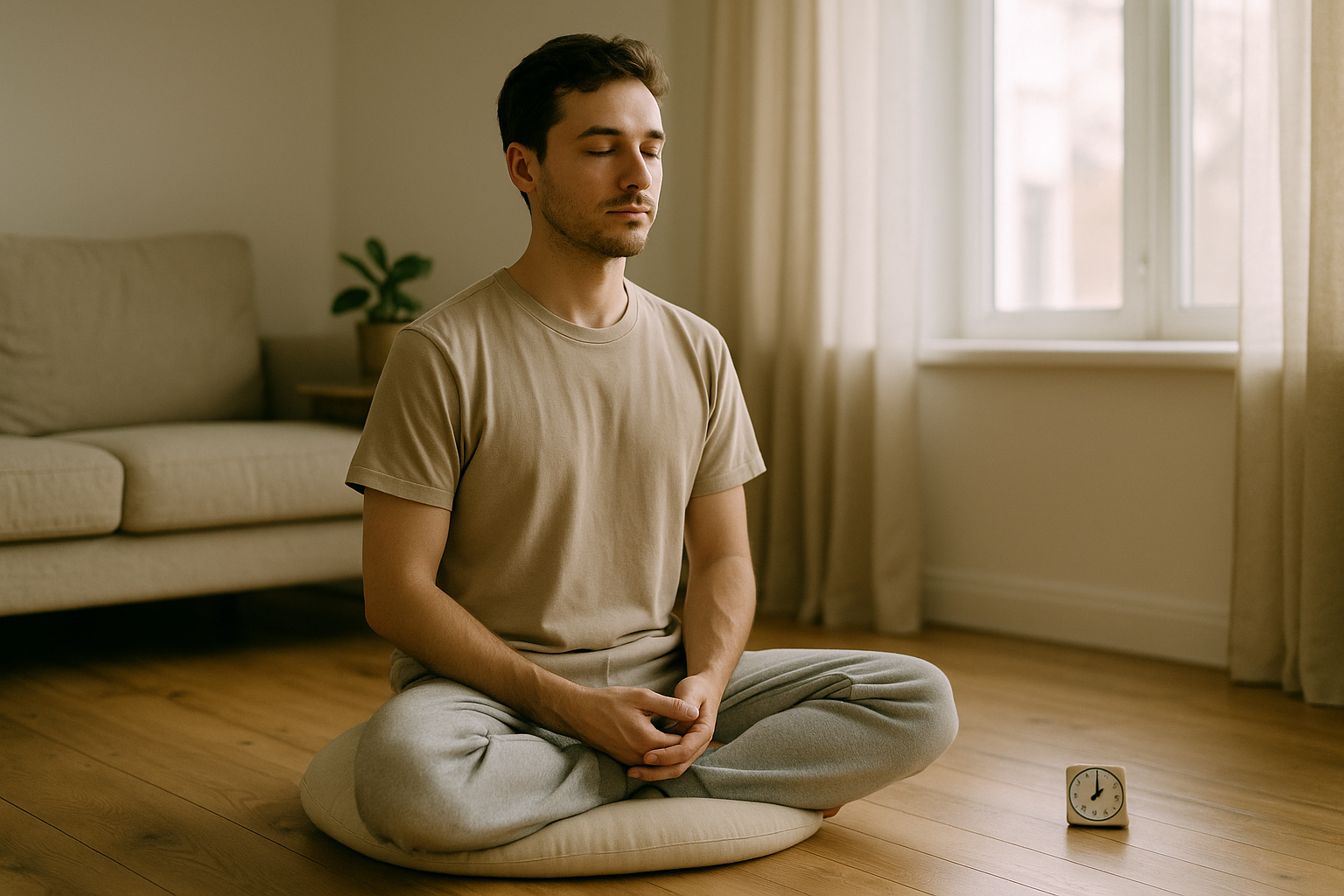
The best place is the one you’ll actually use. You don’t need silence—just fewer interruptions. Aim for a spot where you can sit with a long spine and relaxed shoulders for several minutes. Use a cushion, chair, or sofa; lying down is fine if you’re alert. Adjust lighting to soft and warm, and consider simple cues like a plant or blanket to make the area inviting. Comfort supports consistency; pain or strain will dominate your attention and discourage practice.
2.1 Numbers & guardrails
- Noise tolerance: Moderate background sounds are okay; treat them as part of the field.
- Posture time: If you can’t stay relaxed for 3–10 minutes, switch props/posture.
- Chair setup: Feet flat, knees ~90°, sit bones grounded, head balanced over shoulders.
2.2 Common mistakes
- Chasing perfect silence (leads to paralysis).
- Rigid posture causing pain (creates resistance).
- Cluttered visual field (distracts attention).
Mini-checklist: Chair or cushion? Neutral spine? Relaxed jaw? Gentle gaze or eyes closed? Timer ready? If yes—sit. Synthesis: A good-enough setup you can repeat daily beats an ideal one you never use.
3. Pick a Simple Anchor (Usually the Breath)
Your anchor is where attention rests and returns. The breath is the simplest: it’s portable, always present, and neutral. Choose one sensory point—the cool air at the nostrils, the rise-fall at the chest, or belly expansion. You’re not controlling respiration; you’re feeling it. When the mind wanders (it will), note that kindly and return to the anchor. Over days and weeks, this “wander → notice → return” loop strengthens attentional control and emotional regulation.
3.1 How to do it
- Set the timer.
- Place attention at a chosen point (nostrils/chest/belly).
- Track one full in-breath and out-breath at a time.
- When thoughts intrude, mentally label “thinking” and return.
3.2 Tools/Examples
Free guided tracks and timers on apps like Insight Timer, Headspace, or Calm can scaffold this step. Start with “breath awareness” sessions for beginners. (Choose evidence-informed programs when you can.)
Synthesis: The anchor is home base; every gentle return is the rep that builds your mindfulness “muscle.”
4. Use a Timer and Start Small
A short, fixed duration makes practice concrete and less negotiable. For most beginners, 3–5 minutes is an ideal starting point; add 1–2 minutes each week until you reach 10–15 minutes per session, then reassess. Timers prevent clock-watching and help you meet your intention without overshooting into discomfort. If life is full, consider two micro-sessions of 3–5 minutes instead of one longer sit. Consistency matters more than heroic length.
4.1 Numbers & guardrails
- Starter plan: 5 minutes per day × 5–6 days/week for 2 weeks.
- Progression: Add 1–2 minutes weekly to a comfortable cap (10–20 minutes).
- Reset rule: If you miss ≥3 days, drop back 2 minutes and rebuild gradually.
4.2 Common mistakes
- Jumping to 30 minutes (overload).
- Skipping a day and abandoning the streak (all-or-nothing thinking).
- Using a harsh alarm tone (startle response).
Synthesis: Small, steady reps create durable change; your timer makes mindfulness measurable and doable.
5. Practice Breath Awareness (Core Technique)
Breath awareness is the cornerstone practice for Mindfulness Meditation for Beginners. The method is straightforward: feel the breath as it is, moment by moment, and return when distracted. Start with 3–5 natural cycles, counting quietly if helpful (“one” on the out-breath up to ten, then restart). Don’t manipulate the speed or depth; the goal is awareness, not performance. Over time, you’ll notice micro-sensations (temperature shifts, subtle pauses) and a calmer baseline between sessions. Controlled trials suggest mindfulness curricula that center breath and body awareness can reduce perceived stress and anxiety for many participants.
5.1 How to do it (stepwise)
- Settle your body; soften the belly.
- Choose the nostrils, chest, or belly as your focus.
- Track sensations for one inhale and one exhale.
- If counting, count only on exhales up to 10.
- When you drift, note “thinking/hearing/feeling,” then return.
- End with three slightly deeper breaths to transition.
5.2 Common mistakes
- Forcing slow breaths (creates strain).
- Treating counting as a competition.
- Judging distractions as failure.
Synthesis: Breath awareness is simple, not easy; the win is in noticing the drift and choosing to return kindly.
6. Label Thoughts and Emotions Gently (“Noting”)
Once you can stay with breath sensations for short spans, add noting. When a thought, emotion, or sensation pulls attention, name it softly—“thinking,” “remembering,” “worry,” “planning,” “sadness,” “tightness”—and return to the breath. Noting creates a millisecond of space, which often dissolves reactivity. It’s not suppression; it’s recognition. This skill generalizes off-cushion: in a tense conversation, silently noting “anger rising” can help you pause before speaking.
6.1 How to do it
- Keep notes short (one or two words).
- Use neutral, descriptive labels (avoid stories).
- If a label repeats frequently, get curious, not judgmental.
- For strong emotion, note it and briefly move the anchor to the lower belly or feet to stabilize.
6.2 Numbers & guardrails
- Frequency: Expect to note dozens of times in 5–10 minutes—this is normal.
- Intensity: If distress spikes, stop, open the eyes, and ground attention in the room. If symptoms persist or worsen, consult a professional, especially if you have PTSD or severe anxiety; mindfulness isn’t always the right tool, or the timing may be off. Health Quality VA
Synthesis: Noting is mindfulness with labels; it helps you see experience clearly and choose your response.
7. Do a Short Body Scan
A body scan trains interoceptive awareness—feeling the body from the inside out. It’s especially useful if breath feels subtle or agitating. Start at the crown or toes and sweep attention slowly through regions (forehead, jaw, shoulders, chest, hands, belly, hips, legs, feet), noticing contact, temperature, pressure, tingling, or nothing at all. You’re not trying to fix sensations; you’re learning to be with them. Body scans are core to structured programs like MBSR and are commonly used in clinical and wellness contexts.
7.1 How to do it
- Sit or lie down; if lying, stay alert (eyes slightly open helps).
- Move attention in small zones (e.g., left hand thumb → fingers → palm → wrist).
- For discomfort, widen attention to include surrounding areas.
- If you get sleepy, sit up and shorten segments.
7.2 Tools/Examples
Many reputable organizations provide free body scan audios (10–20 minutes). WHO’s Doing What Matters offers brief, portable exercises for stress that align with mindful awareness skills.
Synthesis: Body scanning builds a friendly, granular map of your internal world—useful for catching stress signals earlier.
8. Work Skillfully with Common Distractions
Itches, sounds, restlessness, sleepiness, and racing thoughts are part of the terrain, not bugs in the system. Treat each as an object in awareness. For physical discomfort, adjust once deliberately, then settle. For sleepiness, open your eyes slightly, lengthen the spine, or stand for a few breaths. For racing thoughts, shrink the task: one breath, one belly rise, one foot on the floor. The stance is curious, kind, persistent.
8.1 Mini-toolkit
- Itch/ache: Note “itching/pressure,” wait 1–3 breaths; if needed, adjust mindfully.
- Noise: Label “hearing,” let sound come and go like weather.
- Sleepiness: Eyes partially open; inhale a bit deeper; try standing practice.
- Restlessness: Soften belly; count breaths to 10.
- Racing mind: Switch to body scan for 2 minutes; return to breath.
8.2 Numbers & guardrails
- Micro-adjustment rule: One intentional adjustment per 5–10 minutes avoids fidget spirals.
- Sleepiness threshold: If you nod off twice, stop and switch to a brief walking meditation.
Synthesis: Distractions become training partners; each one gives you a chance to practice returning without drama.
9. Close with Kindness (Loving-Kindness/Compassion)
End sessions by intentionally shifting from bare attention to kind attention. For 1–3 minutes, repeat simple phrases silently: “May I be safe. May I be healthy. May I be peaceful. May I live with ease.” Then include a loved one, a neutral person, and, if appropriate, a difficult person. You’re not forcing a feeling; you’re planting a direction of care. This practice counters harsh self-judgment and widens the circle of awareness you’ve cultivated on the breath and body.
9.1 How to do it
- Choose 2–4 phrases that feel authentic.
- Sync phrases with the out-breath.
- Visualize the person or sense them generally.
- If resistance arises, note it; return to phrases.
9.2 Why it helps
Compassion practices can complement mindfulness by cultivating warmth alongside clarity, which some people find stabilizing—especially when breath focus feels dry or edgy. Health agencies describe mindfulness and related skills (including kindness practices) as part of accessible stress-management toolkits for the general public.
Synthesis: Ending with kindness “seals” the session so you carry patience and goodwill into the next minutes of your day.
10. Build a Sustainable Routine (Habit That Sticks)
Lasting benefit comes from regularity. Treat mindfulness like brushing your teeth: short, daily, automatic. Pair it with a trigger (after tea, post-shower), track it lightly (calendar tick, app streak), and expect lapses (have a re-entry plan). Consider guided meditations for the first 2–4 weeks, then mix in silent sits. If you want structure, sample an 8-week MBSR course or app-based curricula; these offer progressive sessions, community, and accountability, with evidence that structured training can reduce stress and anxiety for many participants.
10.1 Habit recipe
- Trigger: After morning tea, sit on the chair.
- Action: 10 minutes mindful breathing (timer).
- Reward: One line in a journal: “Sat 10; felt scattered → settled by minute 6.”
- Re-entry plan: If you miss 3 days, do 3 minutes today—no guilt, just begin.
10.2 Tools/Examples
Apps like Headspace, Calm, and Insight Timer provide beginner paths and timers; many offer free trials. Choose what you’ll actually open. Health organizations (NHS, NCCIH) provide free primers that align with safe, realistic expectations—avoid hype.
Synthesis: Make mindfulness obvious, easy, and satisfying; small daily deposits compound into calmer, clearer days.
FAQs
1) How long should beginners meditate each day?
Most people do well starting with 3–5 minutes and adding 1–2 minutes weekly until they reach 10–15 minutes. The key is daily (or near-daily) consistency rather than long, sporadic sits. A short, predictable window—often morning or just before bed—reduces decision fatigue and builds momentum.
2) Do I need to stop my thoughts to meditate “correctly”?
No. The mind produces thoughts like lungs produce breath. In mindfulness, success is noticing when attention wanders and returning kindly to your anchor. You’ll often repeat that loop dozens of times per session. Over time, you’ll likely experience more space between thoughts and less automatic reactivity.
3) Is mindfulness safe if I have trauma, PTSD, or severe anxiety?
It can be helpful for some and challenging for others. If you have trauma, begin gently, consider trauma-sensitive guidance, and consult a clinician. Some patients may benefit more from therapies tailored to PTSD; clinical guidelines emphasize evidence-based treatments and careful screening. If practice triggers distress, stop and seek support.
4) Which posture is best—cushion, chair, or lying down?
Whichever allows a long spine and relaxed ease without pain for the chosen duration. Chairs are great for many beginners. Lying down is fine if you can stay alert; if you get sleepy, sit up or keep the eyes slightly open. Comfort supports continuity; strain undermines it.
5) What should I focus on—the breath, sounds, or body?
Start with the breath because it’s simple and always available. If breath is subtle or agitating, switch to body sensations (body scan) or ambient sounds. The anchor is a training tool, not a rule; pick the one that best supports stable, kind attention today.
6) Do apps help or distract?
Apps can help build structure, track minutes, and offer quality guidance—especially for the first few weeks. If you find yourself scrolling instead of sitting, switch to airplane mode and use a basic timer. Favor programs grounded in established curricula and realistic claims.
7) When will I notice benefits?
Some people feel a little more calm or clarity after the very first sit. More commonly, noticeable changes emerge over 2–8 weeks of regular practice. Structured programs like MBSR (8 weeks) have demonstrated reductions in stress and anxiety for many participants, but individual results vary.
8) What if I get sleepy every time?
Sleepiness is common, especially in the evening. Try practicing earlier, open your eyes slightly, sit up taller, or do 3 minutes of standing/walking meditation before sitting again. If chronic fatigue is an issue, address sleep hygiene alongside practice.
9) Can mindfulness replace therapy or medication?
Mindfulness is a supportive skill, not a universal replacement. For some anxiety disorders, structured mindfulness training has shown outcomes comparable to medication; for others, it’s best used alongside professional care. Always work with your clinician before changing any treatment.
10) Is there evidence that mindfulness really works?
Systematic reviews and randomized trials suggest mindfulness-based programs can reduce stress, anxiety, and depressive symptoms for many people, with small to moderate effect sizes, while evidence in some areas remains mixed. Reputable health agencies offer balanced summaries so expectations stay realistic.
11) How do I handle strong emotions during practice?
Shift to grounding: open the eyes, feel the feet, place a hand on the belly, and take 3 slower, deeper breaths. Note the emotion (“sadness,” “anger”), then shorten the session or stop. Consider guided practices with trauma-sensitive teachers and seek professional support as needed.
12) What’s the difference between mindfulness and concentration?
Concentration narrows attention on a single object (like the breath). Mindfulness includes the quality of awareness—curious, open, nonjudgmental—allowing you to notice thoughts, feelings, and sensations as events in the mind and body. In practice, they support each other: concentration stabilizes; mindfulness clarifies. PMC
Conclusion
Starting Mindfulness Meditation for Beginners is less about perfect technique and more about friendly repetition. Ten focused steps—clarify your intention, set up a comfortable spot, choose an anchor, use a timer, practice breath awareness, label experience, scan the body, work with distractions, close with kindness, and protect a simple routine—will take you from “I should meditate” to “I actually sit.” Keep expectations realistic: some days feel settled, others scattered. What matters is how you meet each moment and return, kindly, again and again. If you want more structure or community, try an 8-week course or a well-designed app; if you have specific mental health concerns, loop in a clinician and tailor the approach. Begin small today, and let calm and clarity compound.
CTA: Sit for 3 minutes right now—set a timer, feel one breath at a time, and return kindly when you wander.
References
- Meditation and Mindfulness: Effectiveness and Safety — National Center for Complementary and Integrative Health (NCCIH). Updated June 3, 2022. NCCIH
- Mindfulness meditation: A research-proven way to reduce stress — American Psychological Association. October 30, 2019. American Psychological Association
- Mindfulness-Based Stress Reduction vs Escitalopram for Anxiety Disorders — JAMA Psychiatry. 2023. JAMA Network
- Doing What Matters in Times of Stress: An Illustrated Guide — World Health Organization. 2020. (see also PDF versions) World Health OrganizationIrisWHO Apps
- What is mindfulness? — NHS Every Mind Matters. Accessed 2025. nhs.uk
- Mindfulness — NHS mental health self-help. Accessed 2025. nhs.uk
- Effectiveness of mindfulness-based interventions on the psychological health of working adults: A systematic review and meta-analysis — BMC Psychology (PMC). 2024. PMC
- Mindfulness and Attention: Current State-of-Affairs — Frontiers in Human Neuroscience (PMC). 2020. PMC
- Mindfulness-Based Stress Reduction (MBSR) — UMass Memorial Health, Center for Mindfulness. Accessed May 2025. UMass Memorial Health
- Management of Posttraumatic Stress Disorder and Acute Stress Disorder: 2023 VA/DoD Clinical Practice Guideline — VA/DoD. 2023. (full guideline PDF available) Health Quality VA
- Mindfulness: Do-it-yourself medicalization of everyday life? — Social Science & Medicine. 2014. (Definition cited: Kabat-Zinn). ScienceDirect
- Mindfulness: Tips and primers — NCCIH “8 Things to Know About Meditation and Mindfulness.” Accessed 2025. NCCIH