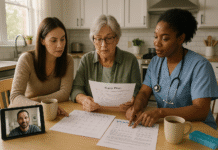





























Finding the right support group can make a hard season feel less isolating and more manageable. This guide walks you through exactly how to identify your goals, compare formats, check safety and privacy, and evaluate fit—so you can join a group that actually helps. It’s written for anyone navigating illness, grief, caregiving, mental health, recovery, identity-based stressors, or major life transitions. Brief note: this is educational information, not a substitute for professional medical or mental health care or emergency help. If you’re in crisis, seek local emergency services or a verified crisis line.
What is a support group? A support group is a peer or professionally facilitated meeting where people with a shared challenge offer one another emotional support, information, and practical coping strategies. It’s different from group therapy, which is a clinical treatment led by a licensed mental health professional and follows a therapeutic model. The right choice depends on your goals, symptoms, and preferences for structure.
Quick-start checklist (skim first, decide fast):
- Clarify your goal (coping, skills, information, community, recovery).
- Pick a focus (condition, role, identity, stage).
- Choose format (in-person/online), cadence, and group size that fits.
- Confirm ground rules, privacy, and facilitator training.
- Trial one meeting; use the red-flag list below before committing.
1. Define Your Goal—and Whether You Want Peer Support or Therapy
Start by naming the outcome you want, because that single decision narrows your options and prevents “group hopping.” If you need skills practice, structured feedback on interpersonal patterns, or treatment of diagnosable symptoms, clinician-led group therapy may be a better match. If you primarily want mutual understanding, lived-experience wisdom, and practical tips, a support group can be ideal. Both can coexist in your care plan, and many people attend a support group while in individual therapy. Write down one to three goals—for example, “reduce isolation,” “learn relapse prevention skills,” or “cope with anticipatory grief.” Next, consider how much structure you prefer: open sharing versus a topic-based agenda. Finally, think about vulnerability: are you comfortable being seen by neighbors in a local group, or do you prefer the relative anonymity of online?
1.1 Why it matters
- Goals inform whether you should search directories for support groups or group therapy.
- Correct matching improves retention and benefit; mismatches lead to drop-off.
- Clarity helps you evaluate facilitation style and curriculum later.
1.2 How to do it
- Write a one-sentence goal (“I want to feel less alone and learn coping ideas from peers.”).
- Decide therapy vs. support upfront (talk to your clinician if unsure).
- Pick preferred structure: open share, topic series, or skills practice.
Mini-checklist: If you want diagnosis-specific treatment goals, choose group therapy; if you want shared lived experience and resources, choose support groups.
2. Choose the Focus: Condition, Role, Identity, or Stage
Pick a primary lens so the group is relevant from day one. Focus areas include condition-specific (e.g., bipolar disorder, long COVID, breast cancer), role-based (caregivers, spouses/partners, parents), identity-affirming (LGBTQ+, faith-based, veterans), and stage-of-journey (newly diagnosed, survivorship, bereavement year one). A well-defined peer group increases the odds you’ll hear practical tips you can use immediately. For complex situations, consider a secondary lens—e.g., “young-adult caregivers” or “newly diagnosed plus identity-specific.”
2.1 Tools/Examples
- NAMI affiliates run peer and family support groups in many communities.
- Cancer Support Community and American Cancer Society offer condition-specific programs, including online communities.
- Verified global helpline directories can point you to local nonprofits hosting groups.
2.2 Common mistakes
- Picking a group that’s too broad or too narrow (leads to either low relevance or tiny attendance).
- Ignoring identity fit; cultural or language mismatch can reduce perceived safety.
- Overlooking caregiver-only spaces when caregiving is your main stressor.
Synthesis: A good focus means you hear “me too” and “here’s what helped” within the first two meetings.
3. Decide on Format and Logistics: In-Person, Online, or Hybrid
Select the meeting style that you’ll actually attend consistently. In-person groups can create strong bonds through shared physical space and rituals; they may also offer transportation or hospital-based navigation support. Online groups reduce travel time, widen access for rural or mobility-limited participants, and allow anonymity (camera off, display name). Hybrid models provide flexibility but require clear facilitation to keep remote attendees equally engaged. Consider session length (60–120 minutes is common), frequency (weekly/biweekly/monthly), and group size (many programs aim for ~6–15 participants). Finally, test drive the time of day, platform reliability, and your internet setup before you commit.
3.1 Numbers & guardrails
- Expect 60–120 minutes per meeting; weekly or biweekly cadence is typical.
- Online forums or asynchronous communities complement live meetings.
- Hospital-affiliated programs may add practical navigation and caregiver support. Mayo ClinicAmerican Cancer Society
3.2 Mini-checklist
- Can you attend at least 3 sessions in the next 6 weeks?
- Do you have a quiet space/headphones for online groups?
- Is the group capped at a size that allows everyone to share?
Synthesis: The best format is the one you’ll show up for—consistency beats perfection.
4. Vet the Facilitation Model: Peer-Led, Clinician-Led, or Co-Facilitated
Choose a facilitation style aligned with your goals and comfort. Peer-led groups center lived experience; facilitators are usually trained volunteers who keep time, uphold guidelines, and model mutuality. Clinician-led groups are run by licensed professionals and may incorporate psychoeducation or skills practice. Co-facilitated groups blend both. Ask about training, supervision, and how crises are handled. Evidence on peer support shows benefits such as empowerment and reduced service use in some contexts, though effect sizes vary by population and program design; it’s appropriate to ask about the group’s aims and what “better” looks like for members.
4.1 What to look for
- Clear ground rules and a repeatable meeting structure.
- Timekeeping, equitable airtime, and gentle redirection of cross-talk.
- Facilitator backup plan for absences or tech failures.
4.2 Common mistakes
- Assuming “peer-led” means unstructured.
- Expecting therapy-level interventions from a support space.
- Joining a group where facilitators talk far more than members.
Synthesis: Well-run groups feel predictable, spacious, and member-centered—regardless of who holds the clipboard.
5. Check Safety, Privacy, and Confidentiality (Including HIPAA Realities)
Safety is non-negotiable. Before you join, read the group’s guidelines: confidentiality, respectful listening, no advice-giving without consent, no cross-talk, start/stop on time, and how conflicts are handled. Understand that HIPAA protects your protected health information (PHI) when handled by covered entities (e.g., clinics, hospitals). Many peer-run community groups are not HIPAA-covered; they rely on social/contractual confidentiality. Ask whether sign-in sheets, recordings, or chat logs are stored and who can access them. Online, confirm whether the platform uses waiting rooms, passwords, and private chat controls. If any part feels vague, it’s okay to pass and keep looking. NAMI Montgomery County
5.1 Mini-checklist
- Written guidelines? Posted and enforced?
- No recording policy and clear data practices?
- Facilitator explains what’s confidential—and its limits?
5.2 Region note
- Data-privacy laws differ across countries; if you’re outside the U.S., ask the host which laws/policies govern data storage and confidentiality.
Synthesis: Real safety is visible in how rules are explained, modeled, and enforced—not just listed.
6. Verify Credibility, Affiliation, and Crisis Pathways
Affiliation doesn’t guarantee quality, but it helps. Groups hosted by hospitals, established nonprofits, or national networks typically have training standards, supervision, and clear crisis pathways (what happens if someone is at risk). Look for organizations that publish guidelines, facilitator training, and referral options. In the U.S., SAMHSA offers helplines and directories; NAMI affiliates host widely available peer and family groups; condition-specific nonprofits run tailored programs. Internationally, verified directories like Find a Helpline can connect you to reputable local services. Ask facilitators exactly how they handle emergencies and warm handoffs. SAMHSA
6.1 What to ask
- “Who trains/supervises facilitators?”
- “What’s your escalation plan if someone is in danger?”
- “Are there partnerships with local clinicians or hospitals?”
6.2 Examples
- NAMI peer and family groups; hospital-based disease-specific groups; Cancer Support Community helpline and online community.
Synthesis: Credible hosts make it easy to see how the group protects members—and how it connects them to more help when needed.
7. Compare Accessibility and Cost (Money, Time, and Practical Barriers)
Good fit includes affordability and access. Many peer groups are free; some clinician-led programs charge fees or accept insurance. Consider indirect costs: transportation, parking, childcare, data/Wi-Fi for online sessions, time off work, and emotional energy. Hospital and nonprofit programs sometimes offer navigation support, stipends, or transportation (e.g., volunteer ride programs). If cost is a barrier, ask about sliding scales or scholarships, or choose an online option to reduce travel time. Accessibility also includes disability accommodations (captions, ASL, step-free access) and language support. Let organizers know what you need; many can adapt.
7.1 Mini-checklist
- Direct fee? Sliding scale? Insurance accepted?
- Hidden costs (transport, childcare, data)?
- Accessibility features (captions, ramps, seating, lighting)?
7.2 Region note
- Some national organizations list local programs and assistance by state or province. American Cancer Society
Synthesis: A “perfect” group that you can’t afford or reach isn’t the right group—practical fit is part of care.
8. Evaluate Online Safety and Digital Etiquette
If you choose online, treat privacy like a skill, not a hope. Use unique meeting links, individual accounts, and updated software. Prefer platforms with waiting rooms, host controls, and no auto-recording. Don’t post meeting links publicly; avoid sharing screenshots; and use a neutral display name if you want extra privacy. Be cautious with direct messages and off-platform contacts until trust is established. Learn to spot common phishing and social-engineering tactics in case bad actors target public communities. If a group’s digital practices feel lax, let the host know—or find a safer space.
8.1 Mini-checklist
- Password-protected meeting? Waiting room enabled?
- Recording disabled by default?
- Clear policy on off-topic links and DMs?
8.2 What to do if something feels off
- Leave the meeting, message the facilitator privately, and document concerns.
- Report suspicious messages through platform tools; never click unfamiliar links.
Synthesis: A psychologically safe space also needs basic cyber-safety.
9. Sample a Meeting and Watch for Green Flags (and Red Ones)
A trial meeting tells you more than any webpage. In the first session, watch for green flags: warm welcome, clear rules, equitable airtime, gentle timekeeping, explicit confidentiality, resources shared responsibly, and optionality (no forced disclosure). Red flags include pressure to buy products, medical or legal advice presented as fact, shaming, identity-based disrespect, uncontrolled cross-talk, or leaders who dominate the conversation. Remember that a single off night can happen; look for patterns across two or three meetings before deciding.
9.1 Mini-checklist (what “good” looks like)
- You spoke (if you wanted) and were heard without interruption.
- You left with one concrete idea or resource.
- You felt emotionally steadier within 24 hours.
9.2 Small numeric example
- After 3 sessions, many people can name 2–3 coping ideas they actually used that week; if not, consider another group.
Synthesis: Trust your nervous system—calm, clarity, and consistency are better predictors than branding.
10. Prepare for Your First Meeting: Scripts, Boundaries, and Follow-Through
Preparation reduces jitters. Draft a one-minute intro (name, what brings you, one hope for the group). Decide what’s off-limits to share for now (e.g., identifiable details about others). If you’re attending online, test audio/video and set a neutral background; keep water/tissues nearby. Plan for a decompression routine after the meeting (walk, journaling, a call to a friend). If you need immediate support after a difficult session, use verified crisis lines in your region or contact your clinician. Many groups share resource lists—bookmark what’s relevant and schedule time to try one action before the next meeting.
10.1 Mini scripts
- “Hi, I’m A., caregiving for my dad. I’m here to feel less alone and learn pacing strategies.”
- “Hi, I’m M., newly diagnosed. I’m hoping to hear how others navigated work conversations.”
10.2 After-meeting follow-through
- Write down one thing you’ll try this week.
- Note one feeling you want to unpack with a friend or therapist.
Synthesis: A 5-minute plan before and after each meeting multiplies the benefits.
11. Track Outcomes and Adjust (When to Stay, Switch, or Step Up Care)
Measure whether the group is helping. Over 4–6 weeks, track a few indicators: perceived isolation (0–10), stress (0–10), number of coping actions/week, and whether you’re learning new information. If scores stagnate—or worsen—consider a different focus, format, or facilitation model. If you notice persistent safety concerns, escalate feedback or leave. Know your step-up options: clinician-led group therapy, individual therapy, specialized programs (e.g., intensive outpatient), or condition-specific education courses. Keep crisis pathways handy: local emergency services, national helplines, and verified directories. In the U.S., 988 and SAMHSA’s National Helpline are 24/7; internationally, use verified directories to find local numbers.
11.1 Mini-checklist
- Are you practicing at least one new coping skill weekly?
- Do you feel safer/more connected after meetings than before?
- Do you know how to get more help if needed?
Synthesis: You’re looking for a steady “drip” of support that compounds—small gains, week after week.
FAQs
1) What’s the difference between support groups and group therapy?
Support groups offer peer or professional facilitation for mutual emotional support and practical tips; they’re not clinical treatment. Group therapy is a treatment modality led by licensed clinicians, often with a specific therapeutic model and goals. Some people benefit from both: support groups for community and group therapy for skills and symptom change.
2) Do support groups actually help?
Yes—many participants report reduced isolation, better coping, and improved quality of life. Research on peer support finds benefits in empowerment and reduced urgent service use in certain populations, though results vary by design and diagnosis. What matters most is fit: goal alignment, safety, and facilitator quality. Cochrane
3) How do I find credible groups near me?
Start with national nonprofits (e.g., NAMI), hospital programs, and condition-specific organizations (e.g., Cancer Support Community, American Cancer Society). In the U.S., SAMHSA lists support options and helplines; globally, Find a Helpline can route you to local services. Ask your clinician for referrals, too. Cancer Support Community
4) What should I expect in the first session?
A welcome, brief guidelines review, and an optional check-in round. You choose how much to share. Plan a decompression routine afterward (walk, tea, journaling). If anything feels unsafe, message the facilitator or leave; you can always try a different group next time.
5) Are online support groups safe?
They can be, if the host uses waiting rooms, passwords, and no-recording policies—and members practice good digital hygiene (unique passwords, avoiding unfamiliar links). Prefer established organizations; don’t share personally identifying details until you trust the space.
6) What do groups cost?
Peer groups are typically free; clinician-led groups may charge or accept insurance. Don’t forget indirect costs (transportation, childcare, data). Ask about sliding scales or online formats to reduce barriers. American Cancer Society
7) Will my information be confidential?
Expect social/contractual confidentiality in peer groups and legal/ethical confidentiality in clinician-led settings. HIPAA applies to covered entities (e.g., clinics) but not necessarily to community-run groups. Ask about sign-in sheets, recordings, and chat logs before you share.
8) Can I bring a friend or partner?
Some groups allow supporters; others restrict attendance to maintain psychological safety. Check eligibility rules in advance and consider whether a separate family/caregiver group might serve your supporter better.
9) What if I have social anxiety?
Try an online group first or attend as a “listener” for your first session. Prepare a one-minute intro and a back-pocket sentence (“I’m passing today, just listening”). Gentle exposure over 3–4 sessions often reduces anticipatory anxiety.
10) How do I know it’s working?
You should feel modestly more connected and steadier after sessions, learn new coping ideas, and see small week-to-week improvements (sleep, routines, self-advocacy). If not, revisit steps 1–4 to adjust focus, format, or facilitation.
11) Where can I find crisis help now?
Use local emergency services or verified helplines. In the U.S., call/text 988 for the Suicide & Crisis Lifeline or 1-800-662-HELP for SAMHSA’s National Helpline (treatment referral/information). Outside the U.S., use a verified directory to find your country’s numbers.
Conclusion
The right support group is less about luck and more about a deliberate match across your goals, the group’s focus, facilitation quality, safety practices, and practical access. When those pieces line up, members tend to stick around long enough to see real benefits—less isolation, more coping skills, and a steadier daily rhythm. Use the 11 steps in this guide to shorten the trial-and-error phase: clarify your outcome, choose a focus, pick a format you can attend consistently, verify guidelines and privacy, and sample a session with a clear red-flag list in hand. Track simple metrics over 4–6 weeks to ensure the group is doing what you need it to do. And remember, your support plan can include multiple layers: a peer group for community, therapy for skills, and crisis resources for emergencies. You deserve a space where you can exhale, be understood, and keep moving forward—one meeting at a time.
CTA: Choose one step above, act on it today, and put your first meeting on the calendar.
References
- Support groups: Make connections, get help. Mayo Clinic. Updated March 27, 2025. https://www.mayoclinic.org/healthy-lifestyle/stress-management/in-depth/support-groups/art-20044655
- Help for Mental Illnesses (Find Help). National Institute of Mental Health (NIMH). Accessed August 2025. https://www.nimh.nih.gov/health/find-help
- Find a Support Group or Local Program. Substance Abuse and Mental Health Services Administration (SAMHSA). Last updated April 24, 2023. https://www.samhsa.gov/find-support/health-care-or-support/support-group-or-local-program
- SAMHSA’s National Helpline. Substance Abuse and Mental Health Services Administration (SAMHSA). Accessed August 2025. https://www.samhsa.gov/find-help/helplines
- Support Groups. National Alliance on Mental Illness (NAMI). Accessed August 2025. https://www.nami.org/support-education/support-groups/
- Support group (definition). APA Dictionary of Psychology. American Psychological Association. April 19, 2018. https://dictionary.apa.org/support-group
- Psychotherapy: Understanding group therapy. American Psychological Association. October 31, 2019. https://www.apa.org/topics/psychotherapy/group-therapy
- Peer support for people with schizophrenia or other serious mental illness. Cochrane Database of Systematic Reviews. April 4, 2019. https://www.cochranelibrary.com/cdsr/doi/10.1002/14651858.CD010880.pub2/information
- Peer Support in Mental Health: Literature Review. Shalaby RAH, Agyapong VIO. (Open-access review). 2020. https://pmc.ncbi.nlm.nih.gov/articles/PMC7312261/
- Summary of the HIPAA Privacy Rule. U.S. Department of Health & Human Services (HHS). Updated March 14, 2025. https://www.hhs.gov/hipaa/for-professionals/privacy/laws-regulations/index.html
- Online Privacy and Security (Consumer Advice). Federal Trade Commission. Accessed August 2025. https://consumer.ftc.gov/identity-theft-and-online-security/online-privacy-and-security
- Mental Health Resources—Caring for Your Mental Health. Centers for Disease Control and Prevention (CDC). Updated June 4, 2025. https://www.cdc.gov/mental-health/caring/index.html
- Find Support Programs and Services in Your Area. American Cancer Society. Accessed August 2025. https://www.cancer.org/support-programs-and-services.html
- Find a Helpline. Global directory. Accessed August 2025. https://findahelpline.com/