















Across climates, religions, and work rhythms, many societies build a deliberate pause into the hottest, sleepiest slice of the day. This guide tours nine enduring nap traditions—how they work, when they happen, and how to experience them respectfully as a visitor or global professional. Quick definition: cultural naps are socially sanctioned midday rest periods (often after lunch) embedded in local routines, laws, or beliefs. They may range from a 10–30 minute doze to a longer lunch-break lull; not all involve literal sleep, but all acknowledge an afternoon dip and the value of recovery.
Note: This article is cultural and educational—not medical advice. If you have sleep, health, or work-safety concerns, consult a qualified professional.
1. Spain’s Siesta: Myth, Reality, and the Split Day
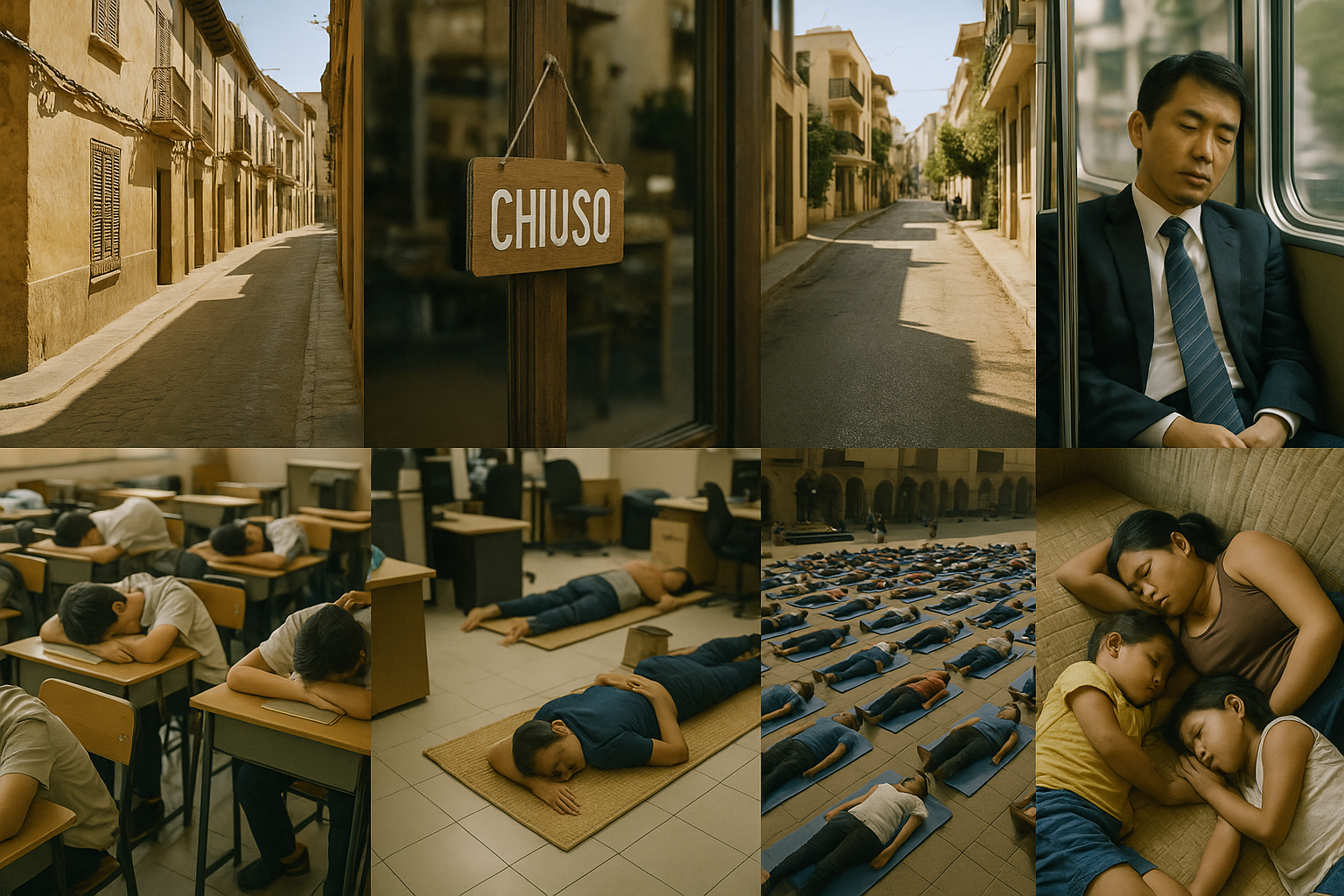
Spain’s “siesta” is famous, but modern practice is more nuanced than postcard clichés. Today, most working adults don’t nap daily, even if many towns still slow down in the mid-afternoon and some small businesses close for a long lunch. Survey data often cited in Spain shows that only a minority nap every day; siesta is strongest among older adults, during summer heat, and on weekends. You’ll still encounter shuttered doors in smaller cities and rural areas between roughly 2–5 p.m., while big-city office life tends to follow a standard lunch break and late evening culture. The concept remains woven into the “jornada partida” (split shift) that stretches the workday into the evening—one reason dinner feels so late to visitors.
1.1 Why it matters
Understanding Spain’s siesta helps with scheduling: banks, pharmacies, and municipal offices may keep long mid-day closures in some regions; museums and supermarkets less so. Culturally, siesta signals that recovery and family time matter—especially in torrid summers—yet Spain’s economy has modernized past the stereotype. Media debates about time-zone alignment and work-life balance recur, but the on-the-ground picture is mixed, not monolithic.
1.2 Numbers & guardrails
- In a widely reported poll, 16.2% of Spaniards said they nap daily; 58.6% said “never.”
- Siesta closures are likelier outside major metros and during summer.
- Expect late dining (often after 9 p.m.) in many regions due to the split day.
Checklist for visitors
- Plan errands before 2 p.m. or after 5 p.m. in smaller towns.
- Verify hours on official sites; tourist zones often stay open.
- Don’t assume every Spaniard naps—avoid stereotypes.
Bottom line: Spain’s siesta endures as rhythm more than routine—less a daily nap than a cultural respect for a midday lull.
2. Italy’s Riposo & Pennichella: The Art of the Quick Doze
In Italy you’ll hear riposo (the midday pause) and pennichella/pennica (the short, post-lunch doze). Especially in central and southern regions—and in small towns—shops may close for several hours after lunch, the streets grow quiet, and families regroup before the cooler evening. The pennichella is not a sprawling sleep; it’s a 20–30 minute reset on a sofa or armchair, often joked about but widely cherished by older generations. Over recent decades, continuous hours in big-city retail and services have eroded riposo, yet the habit remains a recognizable cultural comfort, and the language around it—abbiocco (post-meal drowsiness), cecagna (torpor)—shows how Italians narrate that sleepy dip with humor and finesse.
2.1 How to spot it (and not get stuck)
- Expect closures 12:30/13:00–16:00 in small towns; tourist centers vary.
- Restaurants may re-open for dinner around 19:30–20:00.
- Offices can keep split shifts; artisans often follow seasonal hours.
2.2 Tools & examples
If you’re working with Italian partners in July–August, build in afternoon flexibility. For travelers, plan museum time in the morning, then enjoy a long pranzo before a slow amble—or a pennichella yourself. Think of riposo as part of the day’s design, not a service failure.
Synthesis: Italy’s nap culture is less about a bed and more about a civil pause—brief, restorative, and social in its ripple effects.
3. Greece’s Mesimeri: Legally Quiet Midday Hours
Greece pairs cultural rest with codified quiet hours. As of April–September (summer), “house rules” set quiet hours from 15:00–17:30 and overnight 23:00–07:00; in winter (October–March) they’re 15:30–17:30 and 22:00–07:30. These aren’t mere suggestions: police regulations empower enforcement, and local news outlets publish seasonal reminders each April and October. Practically, many shops close early afternoon and reopen in the evening; neighborhoods dim soundscapes; and apartments post house rules for guests. Visitors often call this a “siesta,” but locals say mesimeri—midday.
3.1 Why it matters (as of April 2025)
- Noise during quiet hours can incur penalties, particularly in residential zones.
- Tourists should avoid loud music or power tools mid-afternoon.
- Many errands resume after 17:30; dining skews later.
3.2 Mini-checklist
- Confirm hours with accommodations; many display posted rules.
- Schedule naps or swims during 15:00–17:30 in summer—locals do.
- Keep balconies and courtyards low-key in quiet windows. Nikana.grTornosNews.GR
Takeaway: Greece’s midday lull is both tradition and law—a societal way to beat heat, reset, and make evenings last.
4. Japan’s Inemuri: “Present While Sleeping”
Japan’s inemuri—literally “being present while sleeping”—isn’t a scheduled nap like siesta, but a social script that tolerates brief dozing in public spaces: on trains, in lectures, occasionally even at desks. The key is decorum: inemuri signals diligence rather than laziness—someone is so committed they’ve earned a micro-doze without fully “checking out.” Scholars like Brigitte Steger have documented how inemuri is superficial sleep, with awareness sufficient to wake at a stop or rejoin a meeting. You’ll see office workers nodding on the Yamanote Line, students propping chins at lectures, and workers cat-napping on breaks. It’s shorthand for a society that prizes presence and endurance.
4.1 How it differs from a nap
- Not a planned, horizontal sleep; posture stays upright.
- Social license depends on context (commuting vs. client meeting).
- It’s a micro-rest, not a lunch-break siesta.
4.2 Mini case
A commuter dozes three stops, eyes shut, phone in hand, posture stable—then snaps awake exactly at Shinjuku. That’s inemuri: surface-level, socially legible, and brief.
Bottom line: inemuri is Japan’s culturally fluent micro-rest—functional, face-saving, and bound by etiquette.
5. China’s Noon Break (午休): From Canteen Naps to Convertible Desks
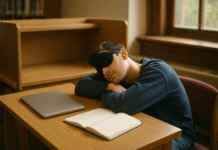
China’s wǔxiū (“noon rest”) is an entrenched midday break: offices dim lights, workers recline in chairs, and students historically nap at desks after lunch. In recent years, schools in several provinces have introduced adjustable desk-chair combos that tilt into recliners to support healthier naps, with local education bureaus recommending 30–50 minutes lying-down standards by grade. Coverage in domestic and regional media highlights a broader push to protect student sleep and optimize afternoon alertness. While practices vary widely across workplaces, the cultural baseline remains: after lunch, rest is normal. #SixthTone
5.1 Region-specific notes (as of 2024–2025)
- Schools: rollouts of nap-friendly furniture in Zhejiang and beyond signal institutional support.
- Workplaces: lunch breaks of 60–120 minutes are common in many sectors; rest at desks or in break rooms is widely tolerated, though not universal.
5.2 Quick tips
- If collaborating with Chinese teams, expect slower response 12:00–14:00.
- For students and teachers, naps are structured and supervised in some districts.
Takeaway: China’s noon break blends practicality and policy—rest is a routine part of the school and workday, often with purpose-built setups.
6. Vietnam’s Nghỉ Trưa: The Countrywide Midday Snooze
In Vietnam, nghỉ trưa (midday rest) is everywhere: office workers roll out thin mats, lights go off after lunch, and motorbike drivers catch shade-side dozes before the afternoon rush. News and commentary describe an accepted, even expected pause from roughly 12:00–14:00, with construction crews, shop staff, and corporate teams recharging before returning to duty. It maps neatly onto Vietnam’s early mornings and sultry afternoons. In offices without nap pods, people improvise—yoga mats, folded jackets, soft eye masks. The mood is practical: rest, refresh, resume. VnExpress Intl
6.1 How to work with it
- Schedule meetings at 10:00–11:30 or 14:30 onward.
- Expect dimmed floors post-lunch; Slack/Teams may go quiet.
- Field visits with crews often resume after 14:00.
6.2 Mini-checklist for travelers
- Museums and cafes in major cities may stay open; small vendors often rest.
- Carry a packable mat if you’ll adopt local rest culture between trains or client meetings.
Synthesis: Vietnam’s nap culture is pragmatic, heat-savvy, and proudly normal—an energy bridge to the evening.
7. Mexico’s Siesta, Reimagined: From Myth to “Mass Nap”
While “siesta” reached Mexico via Spain, 21st-century urban life rarely stops completely—yet public events show the tradition’s cultural pull. On World Sleep Day 2024, Mexico City hosted a “mass siesta” at the Monument to the Revolution: hundreds stretched out on blue mats with sleep masks to highlight rest as a public health need and protest overwork. That playful spectacle reflected a broader conversation about weekly hours and sleep equity. In daily life, you’ll find naps more at home and among shift workers than as a universal midday shutdown, especially in big cities. Mexico News Daily
7.1 Why it matters
Mexico’s siesta today is cultural shorthand for balance—less a mandated nap than a symbol used by organizers, clinicians, and families to legitimize recovery in a hard-working society.
7.2 If you’re visiting
- Don’t expect blanket closures in CDMX; tourist businesses run through lunch.
- In smaller towns and hot regions, some shops may slow or close mid-afternoon.
Takeaway: The Mexican siesta lives on in spirit and in community events even as urban schedules keep moving—culture adapts, the case for rest remains.
8. The Philippines’ Siesta: A Spanish Legacy That Stuck
In the Philippines, siesta became a household word during centuries of Spanish rule and remains a familiar post-lunch habit, especially outside the biggest cities and in family settings. Columnists and cultural commentators describe idlip (short doze) after lunch as a Filipino take on siesta—shorter and homier than Spain’s historic long break. Recent coverage in Spanish media even argues that siesta is more alive in the Philippines today than in Spain, particularly in rural provinces where noon heat and family rhythms keep the tradition strong. While offices in Metro Manila generally run through lunch, the idea that kids and grandparents nap after a hearty meal persists.
8.1 Region notes
- Rural Luzon and Visayas communities report more visible siesta than dense business districts.
- Family banig (woven mat) naps and post-fiesta dozes are common cultural images.
8.2 Respectful practice
If you’re staying with Filipino hosts, don’t be surprised if a warm lunch is followed by a gentle “pahinga muna” (rest first). Offer help, accept a fan, and keep noise low—then reconvene for merienda.
Bottom line: Philippine siesta is domestic and intergenerational—less a commercial schedule, more a cozy, living tradition.
9. The Muslim World’s Qailulah: A Sunnah Midday Rest
In many Muslim societies, the qailulah—a short noon-time rest before or after the sun’s zenith—is grounded both in climate and religious tradition. Classical jurists and modern fatwa councils describe qailulah as a brief nap or even just a quiet rest that supports night prayers and afternoon productivity. Contemporary reviews in the medical literature discuss midday napping’s effects on alertness and memory, while religious guidance clarifies timing (often near Zuhr) and intention. Practically, you’ll see qailulah most around Friday congregational prayers, in hotter months, and in households that align daily life with worship rhythms.
9.1 How communities frame it
- Religious lens: encouraged as a Sunnah-aligned rest; timing varies by school.
- Health lens: short naps can restore performance; communities emphasize moderation.
9.2 Mini-checklist
- Keep it brief (often ~20–30 minutes) to avoid grogginess.
- Tie rest to prayer windows in observant households.
- Respect quiet times in neighborhoods near mosques around noon.
Synthesis: Qailulah blends faith and physiology—a mindful pause that readies body and spirit for the second half of the day.
FAQs
1) What’s the difference between a cultural nap and an ordinary nap?
A cultural nap is embedded in social norms, schedules, or laws—think Spain’s siesta rhythm, Greece’s legally defined quiet hours, or China’s school noon-nap policies. An ordinary nap is just an individual choice. Cultural naps shape shop hours, meeting times, and sound levels; they make your planning part of the local flow.
2) Does “everyone” in Spain still nap?
No. Modern polls show most Spaniards don’t nap daily; napping is more common in summer, among older adults, or on weekends. Yet the day may still split around a long lunch, and smaller towns keep mid-afternoon closures. So the stereotype is outdated, but the rhythm remains.
3) Are Greece’s quiet hours actually enforced?
They can be. Seasonal quiet hours (3:00–5:30 p.m. in summer; 3:30–5:30 p.m. in winter, plus nighttime windows) are published and can carry penalties for disturbance, especially in residential areas. Hotels and rentals often post house rules—follow them.
4) What’s unique about Japan’s inemuri compared to siesta?
Inemuri is a socially legible micro-doze while still “present,” usually upright and brief—more etiquette than schedule. Siestas and riposo are planned pauses, often horizontal, tied to lunch and heat. Think “being present while dozing” vs. “going offline to rest.”
5) Do Chinese offices really nap after lunch?
Practices vary by sector and city, but noon breaks are common and culturally accepted. Schools in several districts now provide reclining desks or formal standards for lying-down naps, signaling official support for structured midday rest.
6) Is Mexico’s siesta still a thing?
Urban life rarely pauses fully, but the siesta idea remains culturally resonant—visible in public “mass siesta” events spotlighting sleep health. Outside megacities and in hot regions, you may still find slower afternoons and home naps.
7) How long is a typical cultural nap?
It ranges. In many places (Italy’s pennichella, office naps in Asia), 10–30 minutes is common; in rural heat or family homes, rests can be longer. Laws (Greece) govern quiet—not nap length. When in doubt, keep it short to avoid grogginess and missed schedules.
8) What etiquette should travelers follow during siesta/quiet hours?
Lower noise, avoid deliveries or drilling, and schedule errands around posted hours. If hosted by families (Philippines, Spain), accept offers to rest; reconvene later for coffee or merienda. When renting apartments in Greece, heed posted quiet times.
9) Are cultural naps healthy?
Short naps can boost alertness and mood, and educational authorities in China explicitly connect midday rest to student wellbeing. That said, individual needs vary—if you have sleep disorders or safety-sensitive jobs, seek professional guidance.
10) How do employers navigate naps internationally?
Policies range from informal tolerance (Vietnam, parts of China) to strict quiet windows (Greece). Global teams that plan around local rhythms—avoiding 12:00–14:00 for non-urgent calls—report smoother collaboration.
Conclusion
Cultural naps aren’t quaint relics; they’re time-tested responses to heat, biology, and community life. Spain’s siesta rhythm persists even as daily naps wane; Italy slows for riposo to savor the evening; Greece formalizes hush to beat the heat; Japan dignifies micro-dozing as inemuri; China and Vietnam mainstream noon rest at school and office scale; Mexico reframes siesta as advocacy; the Philippines preserves a familial idlip; and the Muslim world’s qailulah blends faith with function. If you’re traveling or teaming across borders, thinking in local day rhythms—not just time zones—pays off. Respect the pause and you’ll discover an economy of energy: more alert afternoons, richer evenings, warmer hospitality.
Try this next: Pick one tradition above and plan a respectful, 20-minute midday rest into your day this week—then note what it does to your evening focus.
References
- The Spanish siesta: myth or reality? — EL PAÍS (Verne), Apr 7, 2016. EL PAÍS English
- Spain’s siesta: British press has field day with news… — EL PAÍS (English), Apr 6, 2016. EL PAÍS English
- Robson, D. The Japanese art of (not) sleeping — BBC Future, May 2016. https://www.bbc.com/future/article/20160506-the-japanese-art-of-not-sleeping Wikipedia
- Cerini, M. The Art of the Pennica: the Italian Afternoon Nap — Italy Segreta, May 22 (year as published on page). Italy Segreta
- Greece’s summer quiet hours begin: noise restrictions in effect — To Vima, Apr 1, 2025. tovima.com
- Common quiet hours in effect for winter — To Vima, Oct 2, 2024. tovima.com
- Quiet hours change as of tomorrow, April 1 — Proto Thema (English), Mar 31, 2025. ProtoThema English
- Chinese schools better equipped for students’ midday nap — Xinhua (english.news.cn), Sept 3, 2024. Xinhua News
- Better sleep in class: more Chinese schools put recliner chairs… — The Straits Times, Sept 2, 2024. The Straits Times
- Midday Snooze: Vietnam’s Nap Culture, Explained — Vietcetera, Apr 10, 2023. Vietcetera
- Napping through noon, a very Vietnamese pastime — Việt Nam News, Jul 14, 2022. vietnamnews.vn
- Hundreds of people in Mexico City stretch out for a ‘mass nap’… — Associated Press, Mar 15–16, 2024. AP News
- Reyes, M. May’s siesta and fiesta — Philippine Daily Inquirer (Opinion), May 23, 2018. Inquirer Opinion
- Zarco García, H. España pierde el trono con la siesta… — HuffPost España, Jun 24, 2025. ElHuffPost
- Tumiran, M.A. et al. The Concept of Qailulah (Midday Napping) from Neuroscientific and Islamic Perspectives — Journal of Religion and Health, 2018. PubMed
- AL-KAFI #1032: Qailullah and Its Time — Office of the Mufti Wilayah Persekutuan (Malaysia), Jan 9, 2019. Mufti WP
- BaHammam, A.S. Sleep from an Islamic perspective — Annals of Thoracic Medicine (PMC), 2011. PMC