



















Mental health isn’t a fixed trait; it’s a set of capacities you can cultivate over time. Lifelong learning for mental wellness is the ongoing practice of building skills—like journaling, therapy literacy, mindfulness, and sleep mastery—that help you cope with stress, relate well, and live with purpose. In this guide, you’ll learn nine practical, research-supported strategies you can start today and keep refining for decades. This article is educational and not a substitute for diagnosis or treatment. If you’re in crisis or considering self-harm, seek local emergency care immediately or contact your region’s crisis resources. For context, the World Health Organization defines mental health as a state that enables us to cope with stress, realize abilities, learn and work well, and contribute to community.
Quick takeaway: Lifelong learning for mental wellness means deliberately acquiring, practicing, and updating psychological skills across your lifespan—so you’re better equipped to handle life’s changes and protect your well-being.
1. Journaling: Turn Reflection Into a Weekly Mental Fitness Class
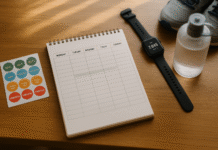
Journaling improves awareness, organizes worries, and can reduce symptoms when used consistently with a clear method. Start by framing journaling as a weekly mental fitness class you teach yourself: you set an intention, run a short “drill,” then reflect on what you learned. Evidence suggests expressive or structured journaling can benefit mental health in certain populations, though effects vary by method, duration, and context—so your technique matters. Aim for a simple, repeatable practice and treat entries as data to iterate on, not a diary to perfect. If you’ve tried journaling before and it “didn’t work,” consider switching the format (gratitude, cognitive reframe, values check-in) rather than abandoning the habit. The point isn’t beautiful prose; it’s building a reliable loop of noticing → naming → nudging your behavior toward what helps. Meta-analytic findings indicate journaling and expressive writing can yield improvements in mental health outcomes, though long-term effects depend on dosage and design; set expectations accordingly.
1.1 How to do it (10–15 minutes, 3–5 days/week)
- Pick a frame: gratitude (3 specifics); CBT reframe: thought → evidence for/against → alternative; values check: value, one action today.
- Use prompts: “What did I feel? What triggered it? What helped even a little?”
- Keep it tiny: one half page is enough; consistency beats length.
- Close with an action: one tweak you’ll test before the next entry.
- Review weekly: star entries where a tactic clearly helped.
1.2 Common pitfalls
- Treating journaling as rumination (replay) rather than reflection (insight → action).
- Expecting instant relief; look for small, cumulative gains over 2–6 weeks.
- Writing only when distressed (include neutral/good days to balance learning).
Synthesis: Use journaling as a lightweight experiment log—capture, clarify, commit—so you steadily learn what works for your mind and context.
2. Therapy Literacy: Use Evidence-Based Methods (CBT, DBT, ACT) and Choose the Right Fit
Therapy is guided learning for the mind: you acquire skills in thinking, feeling, and relating under the supervision of a trained professional. Cognitive behavioral therapy (CBT) helps you identify and test unhelpful thoughts; dialectical behavior therapy (DBT) blends acceptance, mindfulness, and change skills; acceptance and commitment therapy (ACT) builds psychological flexibility through values-based action. Matching approach and therapist to your goals is critical—fit predicts engagement and outcomes. Before booking, clarify your target (e.g., panic attacks vs. grief vs. perfectionism), your preferences (in-person vs. telehealth), and your constraints (time, budget, language, cultural match). Use a brief consultation to assess how the therapist structures sessions, measures progress, and handles setbacks; the right clinician will welcome these questions. National institutes and professional bodies provide plain-language overviews of modalities and checklists for choosing clinicians; use them to become an informed consumer.
2.1 Questions to ask (fit & safety)
- What’s your training and license? Do you use CBT/DBT/ACT for my concern?
- How will we measure progress (e.g., PHQ-9, GAD-7, session goals)?
- What happens if I plateau or feel worse—how will we adjust?
- What are the estimated timeline and frequency (e.g., 8–16 weekly CBT sessions)?
- How do you handle crises, after-hours needs, and referrals?
2.2 Numbers & guardrails (as of August 2025)
- CBT and DBT are recommended or used widely for anxiety, suicidality risk, BPD and more by NIMH/NICE; expect structured skill-building and homework.
- If cost is a barrier, ask about sliding-scale fees, group formats, or training clinics.
- Telehealth increases access but confirm privacy and licensure across regions. NICENational Institute of Mental Health
Synthesis: Treat therapy like enrolling in a targeted skills course—clear goals, evidence-based methods, and a coach you trust—and you’ll maximize learning and outcomes. National Institute of Mental Health
3. Mindfulness & MBSR: Train Attention to Reduce Stress and Improve Mood
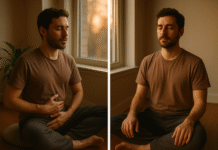
Mindfulness is attention training: learning to notice experiences without getting stuck in them. The standard eight-week Mindfulness-Based Stress Reduction (MBSR) course blends breath/body awareness, pacing, and gentle movement to reduce distress and improve quality of life. For students and adults under chronic stress, meta-analyses and trials show MBSR can reduce anxiety and depressive symptoms and improve well-being; effect sizes vary by population, adherence, and instructor quality. If you’ve tried “just breathe” apps and felt underwhelmed, consider a structured program with practice logs, group discussion, and weekly commitments. Expect the first 2–3 weeks to feel awkward; the payoff arrives as you build daily micro-pauses that change how you respond under pressure. For accessibility, many health systems and universities offer hybrid MBSR with sliding fees. Frontiers
3.1 How to do it
- Commit: 8 weeks, one 2–2.5h class + 20–30 min/day home practice.
- Alternate: seated attention, body scan, walking practice; log 3 insights/week.
- Integrate: pair 3 mindful breaths with routine cues (doorway, emails, meals).
- Measure: track stress (0–10), sleep onset time, and reactivity incidents weekly.
3.2 Common mistakes
- Expecting instant calm; aim for earlier noticing + wiser response, not zero stress.
- Practicing only on “good” days; difficult days are your curriculum.
- Skipping reflection; write one sentence: “What did I learn about my mind today?”
Synthesis: Think of mindfulness as strength training for attention—consistent reps build the capacity to respond, not react, in the moments that matter.
4. Movement for Mood: Use Exercise as a Proven, Scalable Antidepressant Adjunct
Physical activity is one of the most robust, accessible levers for mood regulation and resilience. Recent high-quality reviews find exercise—especially walking/jogging, strength training, and yoga—can significantly reduce depressive symptoms, often with effects comparable to talk therapy for mild to moderate depression. Benefits appear at doses lower than traditional fitness goals, so “some is better than none,” and intensity can be tailored to preference and mobility. Mechanistically, activity improves sleep, increases positive reinforcement, and enhances self-efficacy—key ingredients for sustaining mental health practices. If you’re restarting after a low period, define a tiny baseline: 10-minute walks, 2 sets of bodyweight moves, or chair yoga. Track mood before and 30–90 minutes after as your personal N=1 trial; many people notice a short-term lift that compounds when repeated across weeks.
4.1 Mini-checklist
- Start where you are: 10–20 min/day on 3 days/week; progress by +5 minutes weekly.
- Blend modes: one walk/jog, one strength session, one mobility or yoga.
- Pair with cues: calendar holds, buddy texts, or outdoor habit after work.
- Log outcomes: mood (0–10), sleep latency, energy, stress events.
4.2 Numbers & guardrails
- Systematic reviews (2024) support exercise for depression; higher intensity often helps, but any increase yields mental health benefits.
- If you have medical conditions or are postpartum/pregnant, consult a clinician for modifications.
Synthesis: Treat movement as a mood-medicine you can dose daily, with flexible formats that meet you where you are and scale with your energy. PMC
5. Sleep as Skill: Protect the Brain’s Night School for Emotion and Memory
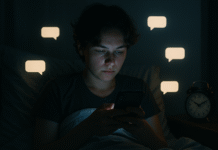
Sleep is when your brain consolidates learning and recalibrates emotion circuits; poor sleep and poor mental health reinforce each other in a two-way loop. Longitudinal and recent accelerometer-based studies show bidirectional associations between sleep quantity/quality and internalizing symptoms: worse sleep predicts later distress, and distress predicts worse sleep. The implication for lifelong learning is clear: you can’t learn mental wellness without learning sleep. Master basics like regular wake time, light exposure, caffeine timing, and wind-down routines; then consider structured CBT-I for persistent insomnia. Digital options such as Sleepio—an NHS-recommended program—expand access when in-person services are scarce, and are supported by randomized evidence and cost-effectiveness analyses. If daytime sleepiness, snoring, or gasping occur, seek assessment for sleep disorders before self-treating.
5.1 Practical guardrails (as of August 2025)
- Anchor wake time (±30 min) and get morning light within 1 hour of waking.
- Caffeine cut-off 8–10 hours before bed; alcohol disrupts sleep architecture.
- Wind-down 30–60 minutes (dim lights, paper book, stretch, breathe).
- For chronic insomnia, consider CBT-I (in-person or digital) before meds.
5.2 When to get help
- Loud snoring, choking/gasping, restless legs, or persistent 3+ months insomnia.
- Co-occurring anxiety/depression that worsens despite sleep hygiene steps.
Synthesis: Build a sleep-skills curriculum—consistency, light, timing, CBT-I—to stabilize mood and lock in the gains from your daytime mental health work. NICE
6. Social & Community Learning: Use Groups, Classes, and Peer Support to Build Resilience
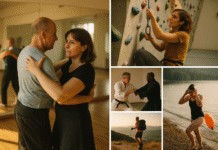
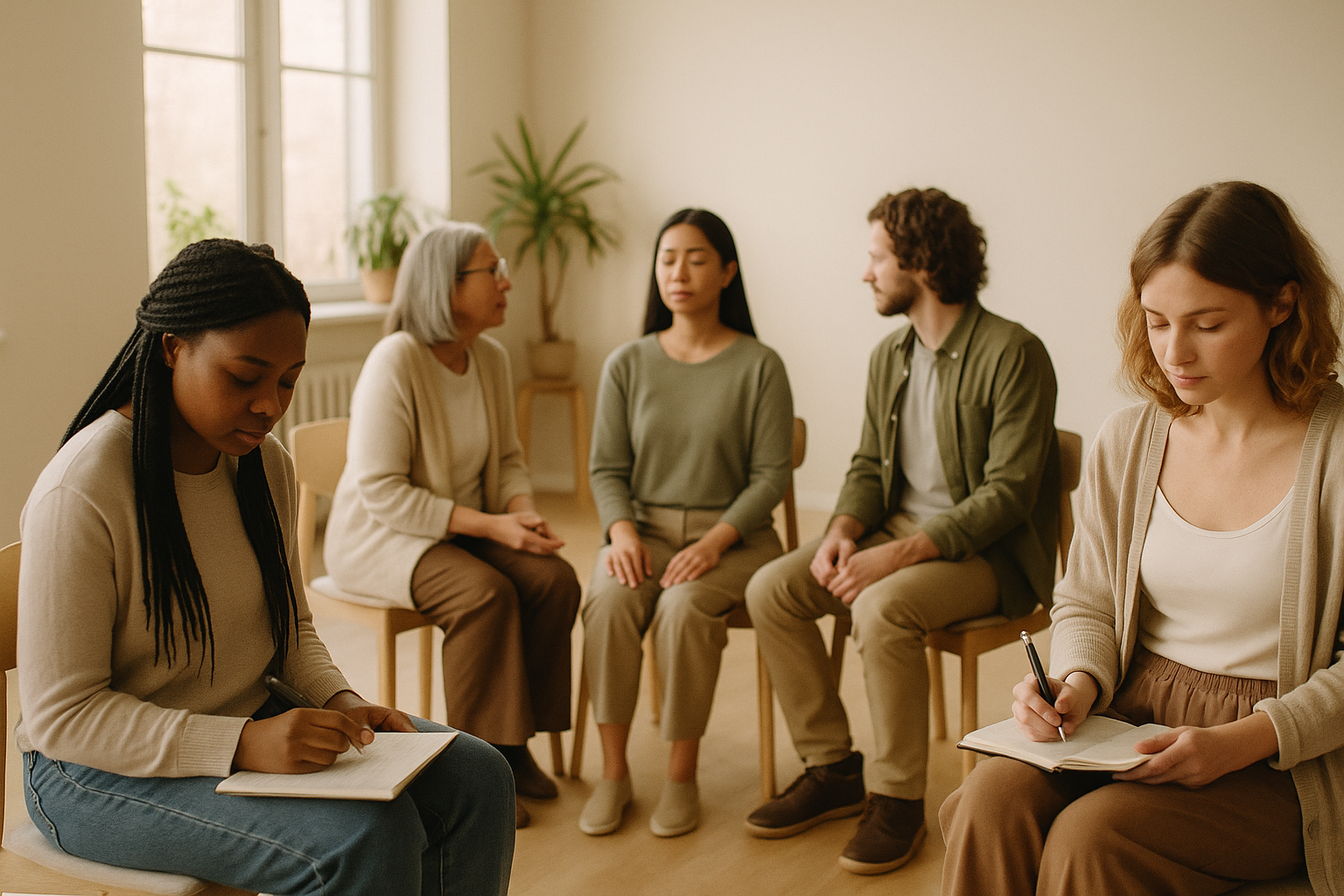
Humans learn emotional skills in community. Courses, clubs, and peer groups provide structure, accountability, and belonging—protective factors for mental health across the lifespan. Adult and continuing education has been associated in population research with improved well-being, social relationships, and cognitive performance, suggesting that learning environments can be catalysts for recovery and growth. In mental health services, involving people with lived experience as peer providers can support engagement and modestly reduce crisis use with no evidence of harm. For many, joining a class (language, art, dance) or a moderated support group becomes a safe weekly anchor where skills are practiced with others. If you’re hesitant, try a short, low-stakes series (4–6 weeks) and pair it with a personal goal like “meet two new people” or “practice one listening skill per session.” LSHTM Research Online
6.1 Where to look
- Community colleges, adult education institutes, libraries, and online OLLI/extension programs.
- Condition-specific peer groups via reputable nonprofits or clinical services.
- Skill classes that blend creativity + movement (e.g., ceramics, choir, tai chi).
6.2 Make it sticky
- Buddy up; schedule rides or walk-and-talks after class.
- Set a simple “show-up” metric (e.g., 80% attendance for 8 weeks).
- Reflect weekly: “What did I learn from others that I can try this week?”
Synthesis: Pair social learning with your personal practice to multiply support, accountability, and joy—fuel that keeps long-term change going. CT Insider
7. Psychoeducation & Skills Courses: Build Mental Health Literacy You Can Use
Psychoeducation means learning the “why” and “how” behind symptoms and treatments so you can make better decisions. Global guidelines (WHO’s mhGAP) recommend psychoeducation across conditions, and evidence shows benefits for patients and families—such as symptom reduction and fewer relapses in some disorders—when programs are structured and actionable. For depression or anxiety, short courses often cover basics like cognitive models, behavior activation, and relapse prevention; for bipolar disorder or psychosis, family-inclusive education is standard. Look for curricula that include practice assignments, monitoring tools, and plain-language explanations of risks and options. If you prefer online formats, choose programs that show their evidence base and are aligned with recognized frameworks (NICE, WHO). World Health OrganizationPubMed
7.1 What good programs include
- Clear learning objectives and weekly skills (e.g., thought records, activation plans).
- Clinician or trained-facilitator support, even if brief.
- Measurement (baseline and follow-up questionnaires).
- Family modules for communication, crisis plans, and boundaries.
7.2 Red flags
- Vague promises (“cure your depression in 7 days”).
- No references, measurement, or safety protocols.
- Pressure to stop effective treatments abruptly.
Synthesis: Treat psychoeducation like driver’s ed for your mind—understand the dashboard, practice the maneuvers, and you’ll handle the road with more confidence. World Health Organization
8. Digital Tools & Therapeutics: Build a Safe, Evidence-Aligned Tech Stack
Mental health apps can help you learn skills, track progress, and access structured care when services are limited—but choose wisely. As of August 2025, regulators and evaluators (FDA, NICE, PHTI/ICER) are sharpening evidence standards for digital health tools. In the UK, NICE recommends Sleepio (digital CBT-I) as a cost-saving alternative to pills for insomnia, supported by randomized trials and economic analyses. In the U.S. and elsewhere, look for tools that are transparent about clinical validation, data privacy, and regulatory status (e.g., SaMD, DTx). Use apps to augment (not replace) professional care when needed, and prefer programs that include measurement-based care (regular symptom tracking) and clear crisis guidance. U.S. Food and Drug AdministrationNICEPMC
8.1 Build your stack (roles, not brands)
- Core habit app: mood/sleep tracking + reminders (weekly trend review).
- Skills coach: CBT/ACT/DBT exercises with prompts and homework.
- Sleep program: CBT-I if insomnia persists 3+ months.
- Telehealth portal: secure messaging, scheduling, and measures.
8.2 Safety & evaluation
- Check for published evidence, guideline alignment, and privacy policy clarity.
- Prefer tools with clinician oversight or referral pathways if risk emerges.
- If an app makes medical claims, look for regulatory status or independent reviews. PMC
Synthesis: Use digital tools as practice platforms that reinforce your therapy, sleep, and mindfulness skills—choosing those that meet modern evidence and safety bars. ICER
9. Design Your Personal Curriculum: Habits, Sprints, and Cognitive Reserve
The most powerful mindset is to treat your mental wellness as a lifelong curriculum you design and revise. Research on adult education and cognitive reserve suggests that sustained learning, social engagement, and skill acquisition are linked with better mental health and reduced risk of cognitive decline—likely by strengthening brain networks and lifestyle habits. Translate that into practice with quarterly “learning sprints” (8–12 weeks) where you pick a theme (e.g., sleep skills, assertive communication), define simple metrics, and run small weekly experiments. Add a capstone review to decide what to keep, drop, or scale. Over years, these cycles compound into resilience: you’ve tested dozens of tools and know which ones work for your life stages. Make space for seasons—periods of intensity and periods of consolidation—to avoid burnout.
9.1 Sprint template (repeat every quarter)
- Theme: one capability (e.g., “Sleep Efficiency from 80% → 88%”).
- Inputs: 2 practices, 1 resource (course/book/app).
- Measures: 2–3 metrics (e.g., ISI score, weekly steps, PHQ-9).
- Reviews: 15-minute Friday check-in; end-of-sprint synthesis.
9.2 Lifelong guardrails
- Mix cognitive, physical, and social learning to diversify “brain investments.”
- Keep stakes low (tiny habits) and feedback high (weekly metrics + reflection).
- Revisit values yearly to ensure your curriculum serves what matters now.
Synthesis: A personal curriculum—grounded in values, run in sprints—turns good intentions into a sustainable pathway that grows both mental health and meaning. PMC
FAQs
1) What does “lifelong learning for mental wellness” actually mean?
It’s the ongoing process of acquiring and practicing skills—like journaling, therapy tools, sleep habits, and mindfulness—that improve coping, relationships, and purpose. Rather than one-off fixes, you build a portfolio of practices you can adjust across life stages. The WHO definition of mental health emphasizes abilities to cope, learn, work, and contribute—learning supports all four.
2) I feel overwhelmed. Where should I start?
Pick one starter skill for 2–4 weeks: 10-minute walks, a 5-minute journal, or a fixed wake time. Track one metric (mood 0–10), and do a weekly review to adjust. Early wins build momentum; then layer in therapy literacy or an MBSR course when ready. The goal is consistency, not perfection.
3) How long before I notice benefits?
Timelines vary. Many people feel a same-day lift after activity or social connection, but larger shifts often take 4–8 weeks of consistent practice. Therapies like CBT commonly run 8–16 sessions; MBSR is 8 weeks. Keep expectations realistic, celebrate small gains, and measure progress so you don’t miss it. PubMed
4) Can apps replace therapy?
They can augment care or deliver structured programs (e.g., CBT-I for insomnia) but don’t replace comprehensive clinical assessment, crisis planning, or complex case management. Look for tools with published evidence and clear safety practices, and use them alongside professional guidance when needed.
5) What if journaling makes me feel worse?
Switch the method. If unstructured writing slides into rumination, use a prompted format (gratitude, three good things, CBT thought record) and time-box to 10 minutes. If distress persists, stop and discuss with a clinician. Evidence shows effects vary by technique and context; fit matters.
6) I can’t sleep. Should I ask for sleeping pills?
Short-term medication has a place, but leading guidelines recommend CBT-I first for chronic insomnia. If you can’t access in-person care, digital CBT-I (e.g., Sleepio) is NICE-recommended and supported by trials. Rule out medical sleep disorders with a clinician. NICE
7) How do I choose a therapist quickly and safely?
Confirm license, training, and modality fit; ask how progress will be measured and handled if you plateau. Use a brief consultation to assess rapport and cultural competence. Reputable checklists from APA and Harvard Health outline key questions to ask. American Psychological Association
8) Does exercise help anxiety too, or just depression?
While the strongest evidence is for depression, exercise can reduce anxiety symptoms for many people, especially when practices include breath-paced movement and moderate intensity. Start small, track your response, and combine with therapy or mindfulness if anxiety is prominent.
9) What’s “cognitive reserve,” and why does it matter?
Cognitive reserve is the brain’s ability to adapt and compensate. Lifelong learning, complex work, and social engagement are associated with greater reserve and lower risk of cognitive decline. Building reserve won’t guarantee protection, but it supports resilience across aging.
10) I don’t have supportive people around me. How can I find community?
Start with interest-based groups (language, coding, art, hiking) or moderated online communities hosted by reputable organizations. Many adult education programs and libraries have low-cost classes that double as social anchors. Try a short series first (4–6 weeks) and evaluate how you feel.
Conclusion
Lifelong learning for mental wellness is an investment account you grow with small, regular deposits. Journaling gives you a place to notice patterns and test changes. Therapy provides structured coaching and accountability. Mindfulness strengthens your attention so you can act on your values under stress. Movement reliably shifts mood and energy. Sleep locks in daytime gains and regulates emotion. Community multiplies motivation. Psychoeducation equips you to make informed choices, and digital tools can extend access when used thoughtfully. Finally, framing your efforts as a personal curriculum—with quarterly sprints and simple metrics—keeps you adapting as life changes.
You don’t need to master everything at once. Choose one strategy from this guide and give it an honest, measured trial for 4–8 weeks. Then review, refine, and add the next skill. Over time, your toolkit will become both broader and more precise—a living curriculum that supports a steadier, more meaningful life. Start your first sprint today: pick one practice, one measure, one week.
References
- Mental health: strengthening our response — World Health Organization (June 17, 2022). World Health Organization
- Mental health (Overview page) — World Health Organization (accessed Aug 2025). World Health Organization
- Efficacy of journaling in the management of mental illness: a systematic review and meta-analysis — JMIR Mental Health (2022). PMC
- Therapeutic Journaling (Evidence Summary) — U.S. Department of Veterans Affairs, Whole Health Library (c. 2022). Veterans Affairs
- Understanding psychotherapy and how it works — American Psychological Association (Nov 1, 2012; updated web page). American Psychological Association
- 10 questions to ask when choosing a therapist — Harvard Health Publishing (Mar 5, 2024). Harvard Health
- Effect of exercise for depression: systematic review and meta-analysis — BMJ (2024). BMJ
- Association Between Physical Activity and Risk of Depression: Systematic Review and Meta-analysis — JAMA Psychiatry (2022). PubMed
- A meta-analysis of longitudinal studies on the interplay between sleep, mental health, and well-being in adolescents — Int J Clin Health Psychol (2024). PubMed
- Sleepio to treat insomnia and insomnia symptoms — Medical technologies guidance (MTG70) — National Institute for Health and Care Excellence (May 20, 2022; accessed Aug 2025). and Evidence section. https://www.nice.org.uk/guidance/mtg70/chapter/3-Evidence NICE
- Evidence standards framework for digital health technologies (ESF) — NICE (original 2018; updated Aug 9, 2022). NICE
- Digital Health Technologies (DHTs) for Drug Development — U.S. FDA (July 31, 2025). U.S. Food and Drug Administration
- Involving adults who use mental health services as providers (peer support) — Cochrane (Dec 1, 2021). https://www.cochrane.org/evidence/CD004807 Cochrane
- Adult Education: Important for Health and Well-Being (Report) — University of Warwick / Learning and Work Institute (Jan 24, 2018). University of Warwick
- What is cognitive reserve? — Harvard Health Publishing (Feb 1, 2024). Harvard Health
- Cognitive reserve over the life course and risk of dementia — Alzheimer’s Research & Therapy (2024). PMC
- Mindfulness-based stress reduction: meta-analytic evidence — Frontiers in Psychology / Psychology Research and Behavior Management (2024). PMC