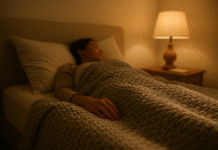
























If your energy crashes in the afternoon, you usually have two options: grab caffeine or take a short nap. This guide compares naps vs caffeine head-to-head so you can pick the right tool for the job—whether you need sharper focus, safer driving, or better sleep later. Quick answer: a well-timed 10–20 minute nap often matches or outperforms a typical 100–200 mg caffeine dose for alertness and memory, with fewer side effects; caffeine starts fast and is portable, but is more likely to disrupt night sleep if taken late. As always, this is educational information, not medical advice—if you have health conditions, are pregnant, or take medications, talk to your clinician before changing caffeine or sleep habits.
How to decide in 10 seconds
- Need fast, short-term alertness and you can rest? Take a 10–20 minute nap.
- Need alertness but can’t nap safely? 100–200 mg caffeine (about 1–2 cups coffee) early in the day.
- Driving drowsy? Drink coffee, then nap ~20 minutes in a safe spot (the “coffee nap”).
1. Onset and Duration of Alertness
A short nap provides a rapid, clean lift in alertness that can last for hours, while caffeine typically kicks in within 15–30 minutes and peaks within 45–120 minutes. For many people, the most noticeable benefits from a 10–20 minute nap begin almost immediately upon waking, especially after the first few minutes as sleep inertia fades. The classic aviation research that popularized “power naps” showed that a ~26-minute nap markedly improved alertness and performance in fatigued pilots. Meanwhile, a standard 100–200 mg caffeine dose usually starts helping within half an hour and sustains vigilance for 2–4 hours, depending on your tolerance and what you’ve eaten. The key difference: naps reduce homeostatic sleep pressure (adenosine build-up), whereas caffeine mainly blocks adenosine receptors—so you feel less sleepy without actually “repaying” any sleep debt.
1.1 Numbers & guardrails
- Nap: 10–20 minutes for speed; ~90 minutes if you can run a full sleep cycle.
- Caffeine: 1–3 mg/kg for most tasks; avoid exceeding daily 400 mg (healthy adults).
- Peak timing: Caffeine alerting peaks around 45–120 minutes post-ingestion; short nap benefits rise immediately after waking and can persist up to ~3 hours in some studies.
1.2 Mini-checklist
- If you have 20 minutes and a quiet spot, nap.
- If you need instant portability and can’t lie down, caffeine is simpler.
- Combine for driving or critical vigilance: coffee → 15–20 min nap.
Bottom line: naps tend to provide steadier, side-effect-light alertness; caffeine is faster to deploy anywhere but doesn’t reduce sleep pressure.
2. Learning, Memory, and Skill Acquisition
For memory and learning, naps generally win. Sleep—yes, even short bouts—supports memory consolidation, stabilizing and strengthening new information. Controlled studies show that brief daytime sleep can enhance perceptual learning and later recall compared with placebo and, in several cases, outperform or equal caffeine. One influential experiment found that a nap improved recall over both caffeine and placebo after a long retention interval, and caffeine impaired motor learning relative to nap and placebo. In practical terms, if you’re cramming vocabulary, prepping for a coding interview, or learning a new motor skill (e.g., surgical suturing patterns, instrument fingering), a short nap is more likely to deepen retention than another coffee.
2.1 Why it matters
- Consolidation during stage N2 and REM can occur during daytime sleep, which naps can capture—caffeine cannot replace those sleep-dependent processes.
- Caffeine may sharpen attention, helping you take in material, but it does not reliably consolidate that material into long-term memory. PMC
2.2 How to do it
- Study 30–60 minutes → nap 10–20 minutes → review for 10 minutes to reinforce.
- If you must use caffeine, keep it small (≤100 mg) and early; avoid near practice that requires fine motor learning.
Takeaway: for durable learning and motor skills, sleep beats stimulation—use naps strategically around study/practice blocks.
3. Reaction Time, Vigilance, and Driving Safety
When the stakes are safety—especially driving—both naps and caffeine help, and together they’re even better for short stretches. Landmark simulator studies showed that a short nap, 200 mg caffeine, or the combination reduced lane drifting and EEG-defined drowsiness in sleep-restricted drivers versus placebo, with combination strategies often extending benefits. U.S. highway safety guidance explicitly recommends drinking 1–2 cups of coffee and then taking a ~20-minute nap at a safe rest stop when sleepiness hits—critical because microsleeps can appear without warning and last several seconds, enough to miss a hazard at highway speeds. Note that these are temporary countermeasures; they don’t substitute for a full night’s sleep.
3.1 Practical protocol for road trips
- Pull over safely. Set a 20-minute timer.
- Drink coffee (150–200 mg caffeine).
- Eye mask/seat recline. Nap up to your timer.
- Wake, stretch, assess. Do not immediately drive if you feel groggy; give it a few minutes.
3.2 Common mistakes
- Powering through without stopping (“just one more exit”).
- Relying solely on loud music, AC blasts, or conversation—ineffective.
- Using alcohol or sedating meds the night before a long drive. NHTSA
Bottom line: for vigilance-critical tasks, a coffee-then-nap can meaningfully cut risk in the short term, but plan real sleep as soon as possible. PubMed
4. Mood, Stress, and Anxiety
Caffeine can enhance alertness and mood at moderate doses, but it also raises anxiety for sensitive individuals and at higher intakes. Recent meta-analytic and clinical evidence associates caffeine with elevated anxiety—even in people without psychiatric diagnoses—and it can trigger panic in those with panic disorder at high doses. Naps, by contrast, tend to normalize mood by relieving sleep pressure and reducing irritability. If you’re prone to jitteriness, palpitations, or rumination, a power nap (or a caffeine-free break) may produce a clearer, calmer lift.
4.1 Numbers & guardrails
- Many people do well at 50–150 mg caffeine. Exceeding 400 mg/day increases insomnia and anxiety risk for most adults.
- If you’re anxiety-sensitive, consider decaf or low-caffeine teas, and shift toward naps for afternoon slumps.
4.2 Mini case
A graduate student reported escalating pre-presentation anxiety with 2–3 strong coffees after lunch. Switching to a 15-minute nap at 1:30 p.m. and capping morning caffeine at 100 mg cut afternoon jitters and improved delivery scores over four weeks—consistent with data linking higher caffeine to increased anxiety and poorer sleep.
Takeaway: If anxiety or stress reactivity is your limiter, naps (or no-caffeine breaks) are often the safer uplift.
5. Nighttime Sleep: How Much Do They Backfire Later?
Late-day caffeine is a sleep saboteur; even a standard dose taken six hours before bedtime can shorten total sleep time and fragment sleep architecture. That effect aligns with caffeine’s 3–7 hour half-life in adults, meaning a 200 mg dose at 4 p.m. can still leave ~100 mg in your system at 10 p.m. Short afternoon naps can delay sleep a little for some people, but their impact is typically milder and more controllable: keep them before ~3 p.m. and ≤20 minutes to minimize sleep inertia and nighttime disruption. If you’re troubleshooting insomnia, cut caffeine after late morning, and replace afternoon cups with 10–20 minute naps or non-caffeinated strategies (light walk, hydration, bright light earlier in the day).
5.1 Evidence snapshot
- Caffeine 0, 3, or 6 hours pre-bed: significant sleep disruption even at 6 hours.
- Half-life: 3–7 hours in healthy adults (longer with pregnancy, meds, or liver disease). Journal of Clinical Sleep Medicine
5.2 Checklist for sleep-friendly daytime boosts
- If it’s after 2–3 p.m., favor naps over caffeine.
- Keep naps ≤20 minutes to reduce inertia.
- Avoid caffeine within 6–8 hours of planned bedtime.
Verdict: for protecting your sleep tonight, short, early-afternoon naps beat late caffeine every time.
6. Physiology, Tolerance, and Side Effects
Caffeine’s primary mechanism is adenosine receptor antagonism, which reduces the feeling of sleepiness and can raise heart rate and blood pressure transiently. With frequent use, you may develop tolerance, needing more to get the same effect; stopping suddenly can cause withdrawal headaches and sleepiness. Naps, by contrast, lower adenosine itself and restore alertness without pharmacologic stimulation, which means fewer systemic side effects. Still, naps can produce sleep inertia (grogginess) if you sleep too long or wake from slow-wave sleep; timing prevents most issues.
6.1 Numbers & guardrails
- Daily limit: up to 400 mg/day is generally considered safe for healthy, non-pregnant adults; many feel best at 100–300 mg/day.
- High doses: risk palpitations, tremor, anxiety, GI upset; toxic and lethal doses are far higher but have been reported with concentrated caffeine products—avoid these entirely. NCBI
6.2 Practical swaps
- Replace a second afternoon coffee with a 10–15 minute nap.
- If you need caffeine, pair with food, sip slowly, and track total mg.
- Prefer brewed coffee/tea over powders or “shots” with unclear labeling.
Bottom line: naps refresh physiology; caffeine overlays stimulation. Respect dosage, timing, and your own sensitivity.
7. Individual Differences: Chronotype, Genetics, and Life Stage
Your response to naps vs caffeine is shaped by chronotype, genetics, health status, and even shift schedule. Fast caffeine metabolizers (often linked to CYP1A2 variants) may clear caffeine sooner and feel fewer jitters; slow metabolizers feel stronger, longer effects at the same dose. Some people experience meaningful benefits from 50–100 mg, while others require more—yet higher doses raise the odds of anxiety and sleep disruption. Pregnancy and certain conditions warrant stricter limits; many authorities advise ≤200 mg/day during pregnancy. If you’re an evening chronotype, you may tolerate slightly later naps, but late caffeine still risks pushing bedtime later. Shift workers often benefit from planned pre-shift naps and strategic light exposure to protect alertness without wrecking off-shift sleep.
7.1 Guardrails by situation
- General adults: Cap at ≤400 mg/day; test the smallest effective dose.
- Pregnancy: Aim ≤200 mg/day total unless otherwise advised.
- Shift work: Use planned naps before/during nights; deploy caffeine early in the shift.
7.2 Self-experiment template (2 weeks)
- Track dose, time, task, and sleep.
- Alternate days of nap vs caffeine for the same task window.
- Keep bedtime constant; compare performance and sleep quality notes.
Takeaway: personalize the mix. Your best “boost profile” depends on biology and schedule—measure, don’t guess.
8. Work and School Practicality: Access, Culture, and Policy
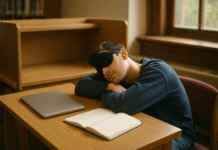
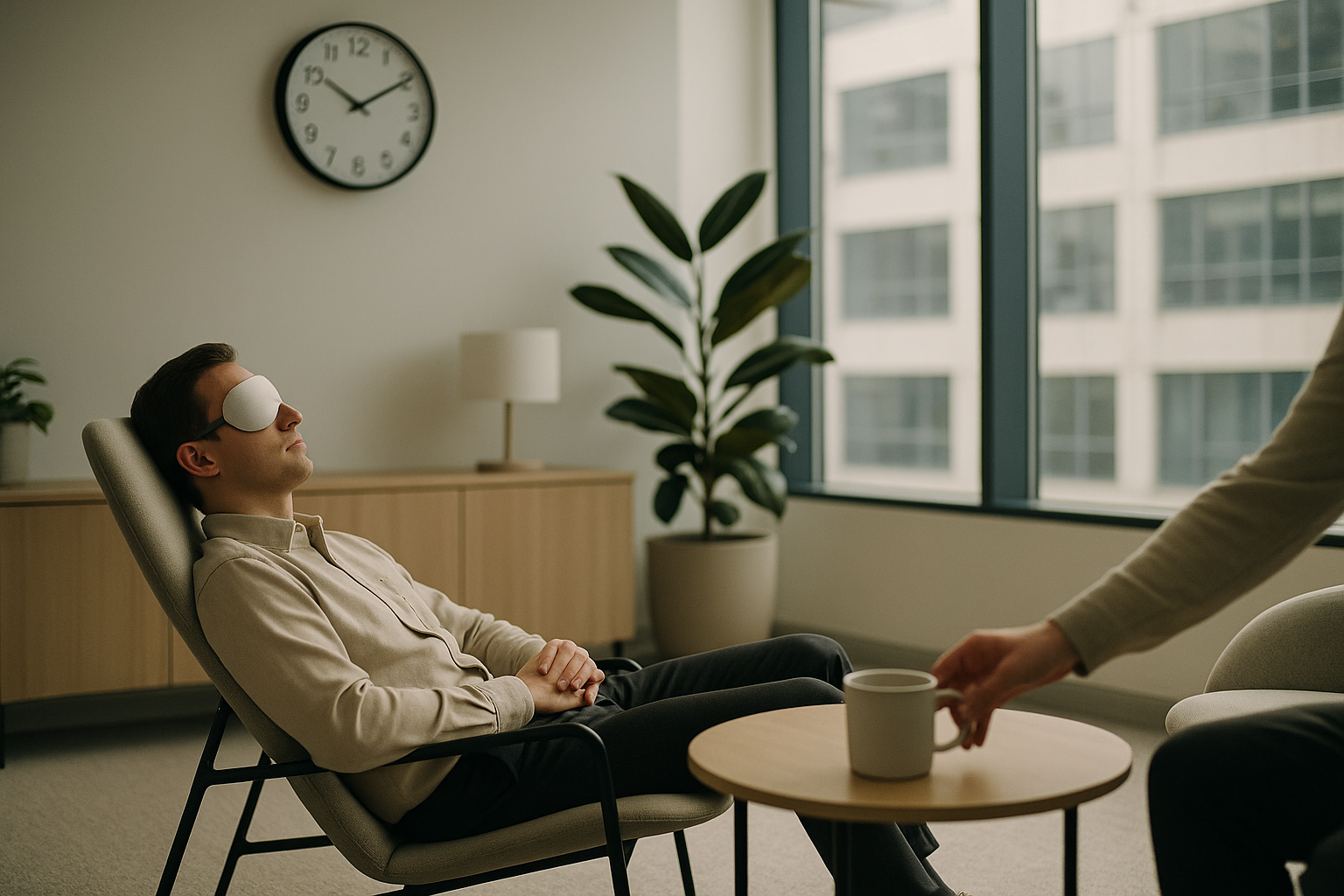
Naps can be politically or logistically tricky at work or school, but evidence-based policies are emerging—especially for healthcare and night-shift roles. Occupational health training from the U.S. CDC/NIOSH encourages brief on-shift naps (15–30 minutes) to maintain alertness and reduce errors, and some guidance explicitly supports coffee-then-nap breaks when feasible. If your organization allows it, designating quiet rooms with reclining chairs, dimmable lights, and timers improves both safety and productivity. For students, even a head-down rest with earplugs and an eye mask can approximate a micro-nap between classes; longer naps belong earlier in the afternoon to protect nighttime sleep.
8.1 Implementation tips for teams
- Create nap-friendly spaces: quiet, cool, low light, timers available.
- Schedule relief windows: 20–30 minutes around circadian dips (post-lunch).
- Normalize breaks: educate staff on sleep inertia and safety protocols.
8.2 If naps are impossible
- Use natural light exposure, brief brisk walks, hydration, and breathing resets; keep caffeine early in the work block.
- For rotating shifts, pair pre-shift naps with strategic light to reduce circadian strain. CDC
Bottom line: when culture and logistics permit, structured nap options are a low-cost safety and performance lever; otherwise, use caffeine early and non-caffeinated boosters.
9. Protocols: Exactly When to Nap, Sip, or Combine (Coffee Nap)
Here’s how to run naps vs caffeine (and the combo) with confidence. For most knowledge work, a 10–20 minute nap between 1–3 p.m. aligns with the circadian dip and avoids deep sleep. If you can’t nap, 100–200 mg caffeine taken before noon offers a reliable lift; in smaller individuals, start at 50–100 mg and titrate up. For driving or urgent vigilance, the coffee nap—drink ~150–200 mg caffeine, then nap 15–20 minutes—leverages caffeine’s absorption window so you wake as it kicks in. As of August 2025, major health authorities suggest keeping total intake ≤400 mg/day for most healthy adults and avoiding caffeine within 6 hours of bedtime.
9.1 Step-by-step recipes
- Power nap (office-safe): Eye mask, white-noise app, 20-min timer, feet elevated. Wake, hydrate, stretch 2 minutes.
- Smart caffeine: 100–200 mg with food; log time; reassess 45–60 minutes later.
- Coffee nap: Drink quickly, recline immediately, set 20-min alarm, stand and move for 2–3 minutes on waking.
9.2 Do’s & don’ts
- Do track total daily mg (drinks + pills + energy products).
- Do keep naps short unless you can spare 90 minutes.
- Don’t use caffeine after mid-afternoon if sleep is a priority.
- Don’t rely on caffeine to mask chronic sleep debt—fix sleep first.
Bottom line: match the tool to the task, dose and time it precisely, and you’ll get a cleaner, safer energy boost—with better sleep at night.
FAQs
1) What’s better for studying—naps or caffeine?
For encoding and consolidation, naps generally win. Short sleep supports memory consolidation processes that caffeine can’t replicate; caffeine mainly helps attention. If you can, study → 10–20 minute nap → quick review. If you must caffeinate, keep it modest and early.
2) Is a coffee nap actually real?
Yes. Multiple driving-simulator studies show that caffeine + a short nap reduces sleepiness and lane drifting more than either alone for about an hour or two—useful for temporary boosts during long trips. Always pull over to a safe place first.
3) How late is too late for caffeine?
Data show that 6 hours before bedtime can still impair sleep duration and quality. Many sleepers should set a caffeine curfew 6–8 hours pre-bed to protect nighttime sleep.
4) What’s the safest daily caffeine limit?
For healthy, non-pregnant adults, authorities commonly cite ≤400 mg/day from all sources. Pregnancy and certain medical conditions warrant stricter limits—talk to your clinician.
5) I’m sensitive to caffeine—should I avoid it entirely?
Not necessarily, but consider lower doses (50–100 mg), earlier timing, or switching to naps and non-caffeinated strategies. If you experience palpitations, anxiety, or insomnia, cut back and discuss with a clinician, especially if you have heart, GI, or anxiety disorders. PMC
6) Do longer naps work better?
A 90-minute nap can be very restorative if you can complete a full cycle, but it’s impractical for many and may leave you groggy if interrupted. For most workdays, 10–20 minutes is the sweet spot. CDC
7) Does caffeine improve reaction time?
Yes, moderate doses typically speed simple reaction time and enhance vigilance, though effects vary by task and tolerance. That doesn’t guarantee better decision quality, and it won’t replace sleep. PubMed
8) Are energy drinks better than coffee for alertness?
Not really. The active driver is still caffeine, and doses vary widely. Some products add sugar and other stimulants. If you use them, read labels carefully, log total mg caffeine, and avoid late in the day.
9) What if I can’t fall asleep for a nap?
Eyes-closed quiet rest in a dark, cool space still helps. Use an eye mask, earplugs, and a 20-minute timer; practice daily for a week to shorten sleep onset. If you consistently can’t nap, rely on early caffeine plus light and movement breaks. CDC
10) How do shift workers balance naps and caffeine?
Plan pre-shift naps (60–180 minutes) and brief on-shift naps (15–30 minutes) where policy allows; keep caffeine to the first half of the shift and use bright light strategically. CDC
11) Does caffeine cause dehydration?
Caffeine is mildly diuretic in caffeine-naïve people, but typical coffee/tea amounts don’t meaningfully dehydrate regular users. Still, pair caffeine with water and avoid high doses. (General physiology consensus; stay within daily limits.)
12) Can I build a tolerance to naps?
You don’t build “tolerance” the way you do with caffeine. In fact, regular nappers often fall asleep faster and get reliable benefits. Keep naps short and consistent to minimize inertia. Nature
Conclusion
Caffeine is a powerful, portable alertness tool—but it masks sleepiness rather than resolving it. Naps, even very short ones, reduce sleep pressure and often outperform a standard caffeine dose for learning, memory, and stable alertness, with far fewer side effects. The trade-offs are practical: naps require a safe, quiet space and a few minutes of runway; caffeine is as easy as a mug and a kettle but carries a real cost to nighttime sleep—especially after mid-afternoon—and can stir anxiety in sensitive people. The smartest play is contextual: nap when you can, caffeinate early and lightly when you must, and combine them in high-risk scenarios like long drives where short-term vigilance matters. Over the next two weeks, run a personal experiment—log your tasks, nap vs caffeine choices, doses, timing, and sleep. You’ll quickly learn which strategy gives you the cleanest energy for your brain and your schedule. Ready to feel better by 3 p.m.? Pick today’s protocol and set a 20-minute timer.
References
- Drake, C. et al. “Caffeine Effects on Sleep Taken 0, 3, or 6 Hours before Going to Bed.” Journal of Clinical Sleep Medicine, Nov 2013. Journal of Clinical Sleep Medicine
- European Food Safety Authority. “Scientific Opinion on the Safety of Caffeine.” EFSA Journal, May 27, 2015. EFSA Journal
- U.S. Food & Drug Administration. “Spilling the Beans: How Much Caffeine is Too Much?” Aug 28, 2024. U.S. Food and Drug Administration
- Mednick, S. et al. “Comparing the Benefits of Caffeine, Naps and Placebo on Verbal, Motor and Perceptual Memory.” Behavioral Brain Research, 2008. PubMed
- Horne, J. & Reyner, L. “Counteracting Driver Sleepiness: Effects of Napping, Caffeine, and Placebo.” Psychophysiology, 1996. Wiley Online Library
- Reyner, L. & Horne, J. “The Combination of Caffeine with a Short Nap Reduces Sleepiness.” Journal of Sleep Research, 1997. PubMed
- Temple, J. “The Safety of Ingested Caffeine: A Comprehensive Review.” Frontiers in Psychiatry, 2017. PMC
- NHTSA. “Drowsy Driving: Avoid Falling Asleep Behind the Wheel.” Accessed Aug 2025. NHTSA
- CDC/NIOSH. “Module 7: Napping, an Important Fatigue Countermeasure” (Work-Hour Training). Accessed Aug 2025. and /02.html and /11.html CDC
- Hilditch, C. “The Benefits of Napping for Safety & How Quickly Can a 10-Minute Nap Help?” NASA/ICAS 2019 slide deck. NASA Technical Reports Server
- Harvard T.H. Chan School of Public Health. “Caffeine • The Nutrition Source.” July 23, 2020. The Nutrition Source
- AASM. “Late Afternoon and Early Evening Caffeine Can Disrupt Sleep at Night.” Aug 17, 2017. aasm.org