



























Nighttime snacks can help or hurt your sleep depending on what you eat, how much, and when. The short answer: finish dinner 2–3 hours before bed; if you’re truly hungry later, choose a small (about 150–200 calories), fiber-forward snack with a bit of protein 60–90 minutes before lights-out; avoid caffeine, alcohol, and heavy or spicy foods in the late evening. Follow the eight rules below to understand the impact of nighttime snacks on sleep quality and to make choices that help you fall asleep faster, stay asleep longer, and wake up rested. (General information, not medical advice. If you have GERD, diabetes, pregnancy, or other conditions, ask your clinician for personalized guidance.)
1. Time your last meal 2–3 hours before bed; keep any late snack small and simple
Eating a full meal close to bedtime raises the chance of reflux, increases digestive workload, and can fragment sleep. The most sleep-friendly timeline is to finish dinner 2–3 hours before bed and, only if needed, have a light snack later. The American College of Gastroenterology advises avoiding meals within 2–3 hours of bedtime to reduce nighttime reflux; sleep medicine guidance likewise recommends “don’t eat a large meal before bedtime—choose a light, healthy snack if you’re hungry.” In practice, that means prioritizing portion control and nutrients rather than going to bed uncomfortably full or uncomfortably hungry. Aim for 150–200 calories, mostly from fiber-rich carbs plus a little protein.
1.1 Numbers & guardrails
- Meals: finish 2–3 hours pre-bed.
- Snacks: ~150–200 kcal; avoid “second dinners.”
- Timing for a snack: 60–90 minutes before bed so digestion is underway.
- Stop caffeine: at least 6 hours pre-bed (see Rule 2).
- Alcohol: avoid in the 3–4 hours before sleep (see Rule 3).
1.2 Mini-checklist (pick one)
- 1 small apple + 1 tbsp peanut butter
- ¾ cup plain yogurt + berries
- 1 slice whole-grain toast + cottage cheese
- A small bowl of unsalted popcorn + a few almonds
Close by reminding yourself that small and early beats big and late for better sleep.
2. Cut caffeine (and hidden sources) at least 6 hours before sleep
Caffeine blocks adenosine and can delay sleep, lighten deep sleep, and increase nighttime awakenings—even when taken 6 hours before bedtime. Controlled studies show a 400 mg dose 6 hours pre-bed still reduces total sleep time and disrupts sleep architecture; sleep organizations recommend avoiding caffeine in the late afternoon/evening. Remember that later-day tea, chocolate, energy drinks, and “decaf” can add up. Practical takeaway: set a personal caffeine curfew—for many, around 2 p.m.–4 p.m.—and be skeptical of late-night chocolate or coffee-flavored desserts if sleep is a priority. Journal of Clinical Sleep MedicineSleep Education
2.1 Hidden caffeine checklist
- Chocolate/cocoa desserts and hot chocolate
- Green/black tea, matcha, yerba mate
- Sodas, energy drinks, some electrolyte powders
- Over-the-counter pain or cold meds with caffeine
- “Decaf” coffee (often 2–15 mg per cup)
One simple rule: if in doubt after noon, skip it or swap for herbal options.
2.2 Numeric example
If you consume 200 mg of caffeine at 4:00 p.m., and caffeine’s half-life averages ~5 hours, you can still have ~100 mg in your system at 9:00 p.m.—enough to affect sleep in sensitive people. Healthline
3. Don’t use alcohol as a “nightcap”—it fragments sleep and reduces REM
Alcohol can shorten sleep onset but disrupts REM and increases awakenings later in the night, leaving you less restored. Reviews and trials consistently show early-night sedation followed by sleep fragmentation, lighter sleep, and more bathroom trips. If you choose to drink, finish 3–4 hours before bed and hydrate earlier in the evening; avoid coupling alcohol with heavy, spicy, or high-fat snacks that further raise reflux risk. The bottom line: alcohol and high-quality sleep don’t mix. ScienceDirect
3.1 How to do it
- Cap drinks at dinner and stop by early evening.
- Alternate with water earlier, then limit fluids late (see Rule 8).
- Choose food at dinner, not a greasy “midnight bite” with drinks.
- If sleep suffers after alcohol, consider a dry evening routine instead.
3.2 Mini case
A person who has two glasses of wine at 9 p.m. falls asleep faster at 11 p.m. but wakes repeatedly at 2–4 a.m. and reports “light sleep.” Shifting those drinks to 6:30 p.m.—or skipping them—often normalizes REM and continuity.
4. Favor fiber and modest protein; avoid high sugar and heavy fat at night
Your snack’s macronutrient mix matters. A controlled crossover study found low fiber and high saturated fat/sugar led to lighter, more disrupted sleep; higher fiber was linked to more slow-wave (deep) sleep. For late snacks, build around fiber-rich carbs (fruit, whole grains) plus modest protein (yogurt, nuts) and keep added sugars and heavy fats low. This supports stable digestion and steadier overnight blood sugars without overloading your stomach.
4.1 Numbers & guardrails
- Fiber: include 3–6 g in a snack (fruit + nuts, whole-grain crackers + cheese).
- Protein: 8–15 g helps satiety without heaviness.
- Added sugar: keep to ≤10 g; avoid candy, frosted cereals, sugary drinks.
- Fats: prefer unsaturated fats in small amounts; avoid fried/greasy.
4.2 Mini-checklist (build a better bite)
- Plain Greek yogurt (½–¾ cup) + berries
- Whole-grain toast + cottage cheese + tomato
- Small banana + 1 tbsp peanut butter
- Air-popped popcorn + a few almonds
Finish thinking fiber first, sugar last—your deep sleep will thank you.
5. Steer clear of reflux triggers late: large, spicy, acidic, or high-fat foods
Heavy or spicy snacks can raise body temperature, slow gastric emptying, and trigger reflux, which in turn breaks up sleep and causes coughing or throat irritation. Gastroenterology guidelines recommend avoiding meals within 2–3 hours of bedtime, elevating the head of the bed for nocturnal symptoms, and cautiously limiting known triggers like tomato sauces, citrus, peppermint, chocolate, coffee, and fatty/fried foods. If you need to eat late, keep it small, bland, and lower in fat.
5.1 Region notes (South Asia)
If late dinners are the norm and you enjoy chai after meals, remember that black tea contains caffeine and many Pakistani/Indian dishes use chili and ghee. On nights you’re aiming for better sleep, swap chai for herbal infusions and choose milder, less oily portions. Keep achar/citrus-heavy items for lunch.
5.2 Mini-checklist: reflux-safer options
- Plain khichdi or a small bowl of yogurt + rice
- Whole-grain toast + a little paneer
- A baked potato (small) with plain yogurt
Close with the rule: lighter, earlier, and lower-spice beats heavy and late for sleep.
6. Use a small, protein-forward snack to prevent “3 a.m. hunger”—especially if active
A modest pre-sleep protein snack (with or without a small amount of carbs) can curb wake-ups from hunger and support next-morning metabolism, especially in people who train in the evening. Research suggests ~150 kcal protein-rich snacks before bed can improve overnight muscle protein synthesis and morning metabolic rate without harming sleep; in overweight women, ~140–150 kcal pre-sleep protein or carbohydrate increased satiety the next morning. Practical takeaway: if you routinely wake hungry, try 8–15 g protein with a high-fiber carb 60–90 minutes before bed. Cambridge University Press & Assessment
6.1 How to do it
- After evening workouts: 200 ml milk or soy milk + fruit
- Desk-day hunger insurance: ½ cup cottage cheese + whole-grain cracker
- Plant-based: small edamame bowl or tofu cubes with cucumber
- Diabetes note: pair protein with low-GI carbs; verify with your care team. PMC
6.2 Numeric example
- ¾ cup low-fat Greek yogurt (≈100–120 kcal, 10–12 g protein) + ½ cup berries (≈40–50 kcal, 3–4 g fiber) → ~150–170 kcal snack that’s gentle on digestion and holds you to morning.
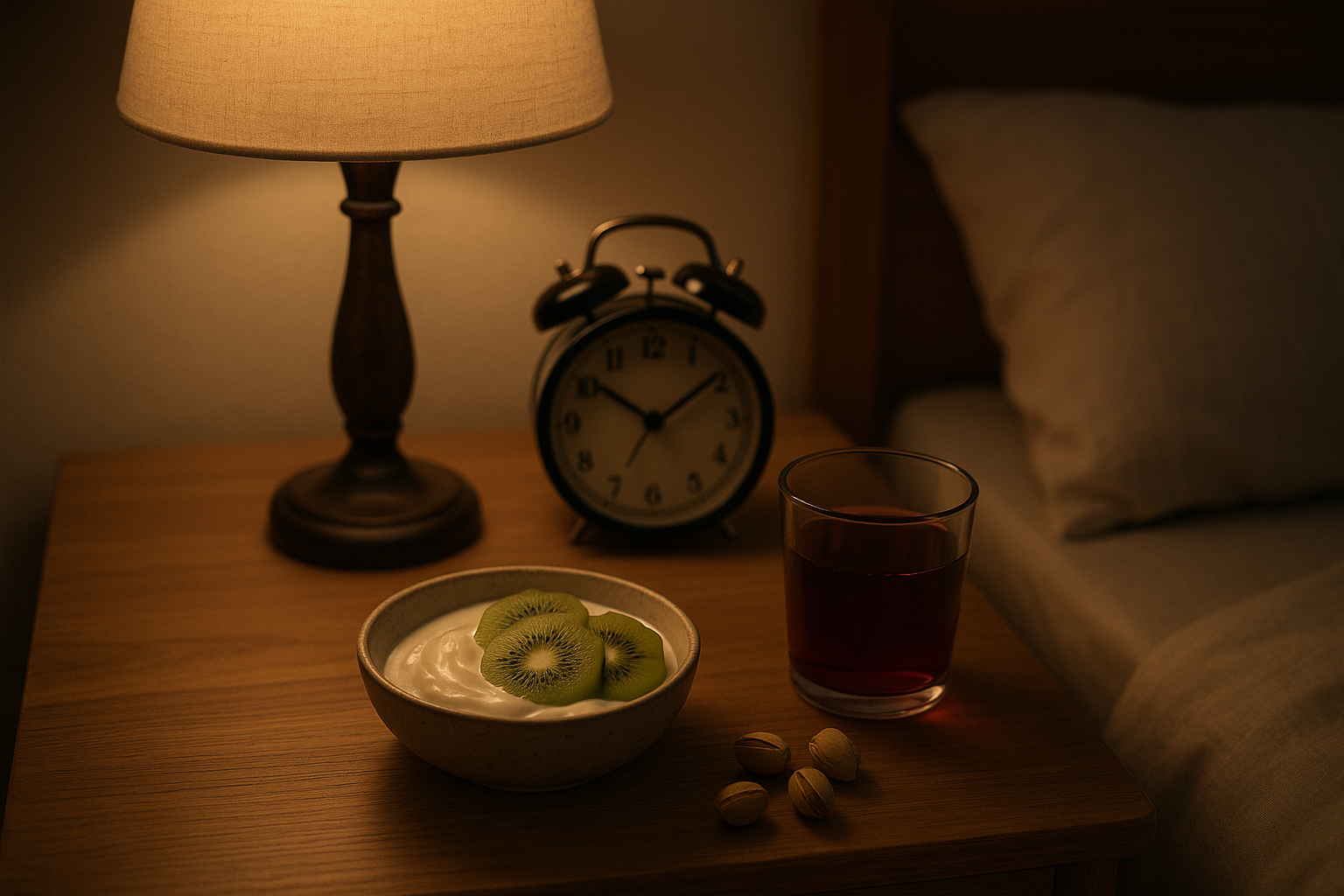
7. Consider melatonin/tryptophan-rich foods—tart cherry, kiwi, milk, and pistachios—without overdoing sugar
Some foods naturally contain melatonin or compounds that support its production. Small trials suggest tart Montmorency cherry juice and kiwifruit may improve sleep duration or efficiency in some adults; milk provides tryptophan; pistachios contain notable melatonin (amounts vary by study and extract). These aren’t magic bullets—and sugary versions can backfire—but as part of a small snack, they’re reasonable options. If you try them, keep portions modest and watch added sugars.
7.1 Numbers & guardrails
- Kiwifruit: 1–2 kiwis ~1 hour pre-bed (studies used 2 kiwis for 4 weeks).
- Tart cherry juice: choose unsweetened; some studies used 8 oz twice daily for 1–2 weeks in older adults with insomnia—start smaller and assess.
- Milk/yogurt: 150–200 ml plain dairy or fortified soy for tryptophan/protein.
- Pistachios: a small handful; extracts can be much higher in melatonin than whole nuts. Healthline
7.2 Common mistakes
- Treating juice as a large dessert (sugar load).
- Expecting supplement-like effects from foods alone.
- Ignoring timing—small and earlier still applies.
Use these foods as gentle nudges, not cures, within an overall smart routine. MDPI
8. Manage nighttime thirst and bathroom trips: sip smart, salt smart
Waking to urinate (nocturia) can wreck sleep continuity. Simple habits help: reduce fluids 2–3 hours pre-bed, limit evening alcohol and caffeine, and avoid salty snacks that trigger thirst. Urology and sleep resources recommend tapering fluids late and using the bathroom before bed; those with edema may benefit from leg elevation in the evening to shift fluid earlier. If you need a snack, pick lower-sodium choices and keep beverages to small sips, not full glasses. Urology Health
8.1 Mini-checklist
- 2–3 hours pre-bed: begin fluid taper
- 1 hour pre-bed: bathroom trip + small sip if needed
- Snack picks: fruit + yogurt, unsalted nuts, plain popcorn
- Avoid: salted chips, ramen, pickles, big mugs of tea late
A steady daytime hydration + evening taper is the quiet hero of solid sleep. Sleep Foundation
FAQs
1) Is it always bad to eat before bed?
No. The impact depends on what and how much you eat, and when. A small, nutrient-dense snack about 60–90 minutes before bed can be fine—especially if you’re actually hungry—while large or late meals increase reflux and sleep fragmentation. Follow the 2–3 hour dinner buffer and keep snacks around 150–200 kcal. Sleep Foundation
2) What’s the best macronutrient mix for a nighttime snack?
Aim for fiber-rich carbs + modest protein, minimal added sugar, and limited fat. This combo supports satiety and stable digestion without overloading the stomach. Evidence links higher fiber with deeper sleep and high saturated fat/sugar with lighter sleep.
3) Does caffeine in chocolate matter?
It can. Chocolate contains caffeine and theobromine; while amounts are lower than coffee, sensitive sleepers may notice effects—especially in the evening. Safer play: avoid chocolate desserts after mid-afternoon if sleep is a priority. Sleep Foundation
4) Can alcohol help me fall asleep?
Alcohol may make you drowsy, but it reduces REM and fragments sleep later in the night. Many people feel less restored after drinking near bedtime. If you drink, stop 3–4 hours before sleep. PMC
5) Are spicy foods at night always a problem?
They aren’t a problem for everyone, but spicy, acidic, and high-fat foods commonly worsen reflux at night. If you notice heartburn or coughing overnight, shift these foods earlier and keep late snacks bland and small. Cleveland Clinic
6) Do tart cherry or kiwi really help?
Small studies suggest tart cherry juice and kiwifruit can improve certain sleep measures in some people, but effects vary and sugar content matters. If you try them, choose unsweetened juice and modest portions. PubMed
7) How late is too late for caffeine?
At least 6 hours before bed is a solid cutoff per controlled studies. Highly sensitive people may need 8+ hours. Consider a personal curfew (e.g., 2–4 p.m.) and remember hidden sources like tea, sodas, and chocolate.
8) I work out at night—should I eat before bed?
A small protein-forward snack (e.g., milk, yogurt, tofu) can support recovery and morning metabolism without hurting sleep when kept modest (~150 kcal). Pair with a high-fiber carb and give yourself 60–90 minutes before bed. PMC
9) What if I wake up hungry at 3 a.m.?
First, check dinner timing and composition. If it persists, a planned small snack before bed (fiber + protein) may help. Limit fluids to avoid bathroom trips and avoid sugar-only snacks that can cause rebound wakefulness. Healthline
10) Any special considerations for GERD?
Yes: avoid late meals, elevate the head of the bed, and limit triggers like mint, chocolate, coffee, tomato, citrus, alcohol, and high-fat foods. Keep late snacks bland and small, and maintain the 2–3 hour dinner buffer.
11) How do late meals affect metabolism?
A controlled Cell Metabolism study found late eating increased hunger, decreased energy expenditure, and altered adipose tissue pathways—supporting an earlier eating window for metabolic health and, indirectly, better sleep.
12) How much should I drink before bed?
Hydrate throughout the day, then taper in the last 2–3 hours to reduce nocturia. Avoid caffeinated and alcoholic drinks late; empty your bladder before lights-out.
Conclusion
Your nighttime snack can be a sleep helper or a sleep saboteur. The difference comes down to timing (finish dinner 2–3 hours before bed and keep any snack small), composition (fiber-rich carbs + modest protein; low sugar and heavy fat), and substances (avoid late caffeine and alcohol). For reflux-prone sleepers, late spicy, fatty, or acidic foods are common culprits; if thirst or bathroom trips wake you, taper fluids in the evening and skip salty snacks. Curious about “sleep foods”? Tart cherry, kiwi, milk, and pistachios can be reasonable small-portion experiments—just watch added sugars and keep expectations realistic. Put these eight rules together and you’ll reduce awakenings, fall asleep faster, and give your body the best shot at deep, restorative sleep.
Tonight’s next step: plan tomorrow’s dinner to end 2–3 hours before bed and stock one 150–200 kcal snack you enjoy—then notice the difference in how you sleep.
References
- Vujović N, et al. “Late isocaloric eating increases hunger, decreases energy expenditure, and modifies metabolic pathways in adults with overweight and obesity.” Cell Metabolism, Oct 4, 2022. https://www.cell.com/cell-metabolism/fulltext/S1550-4131(22)00397-7 Cell
- Katz PO, et al. “ACG Clinical Guideline: Guidelines for the Diagnosis and Management of Gastroesophageal Reflux Disease.” American Journal of Gastroenterology (ACG), 2022. PMC
- “Acid Reflux/GERD.” American College of Gastroenterology (topic page), accessed 2025. American College of Gastroenterology
- Drake C, et al. “Caffeine effects on sleep taken 0, 3, or 6 hours before bedtime.” Journal of Clinical Sleep Medicine, 2013. PMC
- “Healthy Sleep Habits.” Sleep Education – American Academy of Sleep Medicine, 2021. Sleep Education
- St-Onge MP, et al. “Fiber and saturated fat are associated with sleep arousals and slow wave sleep.” Journal of Clinical Sleep Medicine, 2016. PMC
- Afaghi A, et al. “High–glycemic-index carbohydrate meals shorten sleep onset.” American Journal of Clinical Nutrition, 2007. PubMed
- Lin HH, et al. “Effect of kiwifruit consumption on sleep quality in adults with sleep disturbance.” Asia Pacific Journal of Clinical Nutrition, 2011. PubMed
- Losso JN, et al. “Pilot Study of Montmorency Tart Cherry Juice for the Treatment of Insomnia in Older Adults.” American Journal of Therapeutics, 2018. PMC
- Pigeon WR, et al. “Effects of a Tart Cherry Juice Beverage on the Sleep of Older Adults with Insomnia: A Pilot Study.” Journal of Medicinal Food, 2010. PMC
- “Nocturia: Causes and Treatments for Frequent Urination.” Sleep Foundation, updated 2025. Sleep Foundation
- Sleep, alcohol, and caffeine: selected reviews and updates. Song F, et al. Nature and Science of Sleep, 2023 (open-access review on alcohol’s REM suppression). PMC