


























By Ada L. Wrenford
Your training log says nothing has changed. Same gym, same routine, same effort. But your body is answering differently: recovery takes longer, the scale moves even though your plate looks the same, and a set of stairs suddenly announces itself in your knees. If you are between roughly 40 and 51, this is not a motivation problem. It is perimenopause, and it changes the physiological terrain your training has to work with.
Perimenopause is the transition leading up to menopause (defined as 12 consecutive months without a period), typically spanning four to eight years and marked by fluctuating, then declining, estrogen and progesterone. Those hormonal shifts touch nearly every system a training program depends on: muscle protein turnover, sleep architecture, joint tissue, fat storage patterns, and cardiovascular response. None of this means training stops working. It means the inputs that used to produce a given result now need to be recalibrated.
This guide walks through what the research actually shows about training during perimenopause, then lays out a concrete, step-by-step framework you can apply this week. It closes with a debunking of the myths that keep circulating in comment sections, plus answers to the questions readers ask most.
A note on scope: this article is educational and does not diagnose or treat any condition. Symptom severity, medical history, and risk factors vary enormously between individuals. If you have new or worsening symptoms, irregular bleeding, joint pain that limits daily function, or you are considering hormone therapy, talk with a physician or a menopause-certified specialist before changing your training or making treatment decisions.
What Actually Changes Physiologically During Perimenopause
1. Muscle mass and protein turnover shift
Estrogen supports skeletal muscle in several ways: it influences satellite cell activity (the stem cells muscle uses to repair and grow), affects protein synthesis, and has anti-inflammatory effects on muscle tissue. As estrogen becomes erratic and then declines through the menopause transition, the rate of age-related muscle loss tends to accelerate. Research on sarcopenia in menopausal women describes muscle mass declining by roughly 3–8% per decade after age 30, with postmenopausal status itself associated with meaningfully higher odds of sarcopenia compared with premenopausal women of similar age. This is not a reason to panic; it is the single strongest argument for prioritizing resistance training now rather than later, because muscle is far easier to maintain than to rebuild.
2. Fat distribution and energy expenditure move toward the midsection
A widely cited longitudinal study that tracked women through the menopausal transition found that resting and sleeping energy expenditure dropped more sharply in women who became postmenopausal than in those who stayed premenopausal, and fat oxidation fell by roughly a third in the postmenopausal group with no significant change in the premenopausal group. Visceral abdominal fat (the metabolically active fat around the organs) increased specifically in the women who transitioned through menopause, independent of overall weight change. This explains a common frustration: body composition can shift toward the midsection even when body weight and eating habits stay stable.
3. Sleep becomes less reliable, which changes recovery capacity
Night sweats, hot flashes, and hormonally driven changes in sleep architecture are well documented during perimenopause, and disrupted sleep has a direct downstream effect on training: less deep sleep means less growth hormone release, slower tissue repair, and reduced next-day readiness. Training as though sleep is guaranteed, with back-to-back high-intensity days and minimal deload planning, stops matching what the body can absorb.
4. Joint and connective tissue symptoms increase
Estrogen receptors are present in joint cartilage, tendons, and ligaments, and many women report new or worsened joint aches, stiffness, and tendon irritation during perimenopause. This is sometimes called “menopausal arthralgia” informally, though it is not a single diagnosis; it is a cluster of musculoskeletal symptoms tied to the hormonal transition, and it can overlap with or mimic other joint conditions, which is one reason a clinical evaluation matters if pain is new, one-sided, or worsening.
5. Bone density loss accelerates
Estrogen decline is a primary driver of the accelerated bone loss that begins in the final year or two before the last period and continues for several years after. This is a major reason resistance and impact-tolerant training (not just cardio) is emphasized so heavily for this life stage: bone responds to mechanical load, and the training window matters.
6. Mood, cognition, and training motivation
The NHS notes that mood swings, low mood, anxiety, and difficulty with memory or concentration are commonly reported during perimenopause, often worsened by poor sleep. These symptoms rarely show up in a training log directly, but they show up in adherence: a workout that used to feel routine can suddenly require more willpower to start, and a missed week can snowball into a longer break. Building slack into a program (shorter backup sessions, a standing “something is better than nothing” rule) tends to protect consistency better than an all-or-nothing schedule during this stage.
What the Research Supports for Training Adjustments
Resistance training frequency and structure
A network meta-analysis of 19 randomized controlled trials in postmenopausal women (919 participants) found that moderate-intensity resistance training performed three days per week produced the most favorable effects on lumbar spine and femoral neck bone mineral density, outperforming lower-frequency protocols. Interestingly, the advantage was clearest within the first year of consistent training; benefits plateaued somewhat beyond twelve months, which argues for consistency over sporadic intensity spikes.
Separately, research on sarcopenia management points to low-to-moderate volume resistance work, commonly cited as three sets of 8–12 repetitions at roughly 70% of one-rep max for major muscle groups, as sufficient to produce meaningful strength gains when performed consistently, alongside general activity guidelines of about 150 minutes of moderate aerobic activity per week.
Protein intake
Muscle protein synthesis becomes somewhat less responsive to a given protein dose as estrogen declines, which is part of why several nutrition reviews recommend distributing protein across meals rather than back-loading it at dinner. A commonly cited target from sarcopenia-focused research is roughly 20–25 grams of high-quality protein at each main meal, on top of meeting or exceeding the basic recommended dietary allowance. This is a general research-informed range, not an individualized prescription; a registered dietitian or physician can help tailor intake to kidney function, medications, and other individual factors.
Recovery management
Because sleep quality is less predictable, many coaches working with perimenopausal clients build in more flexible recovery structures: auto-regulated intensity (adjusting load based on how a session actually feels, not just what is written on paper), a planned deload every four to six weeks (rather than waiting for burnout), and protecting at least one true rest day between the hardest sessions.
Bone- and joint-conscious programming
Weight-bearing resistance work, controlled impact (like stair climbing or light jump variations, introduced gradually), and balance work all support the skeletal system during a period of accelerated bone turnover. For joints that are cranky, adjusting range of motion, tempo, and exercise selection (a hex bar deadlift instead of a straight bar, for example) can preserve training stimulus while reducing irritation.
Warm-up and tempo adjustments
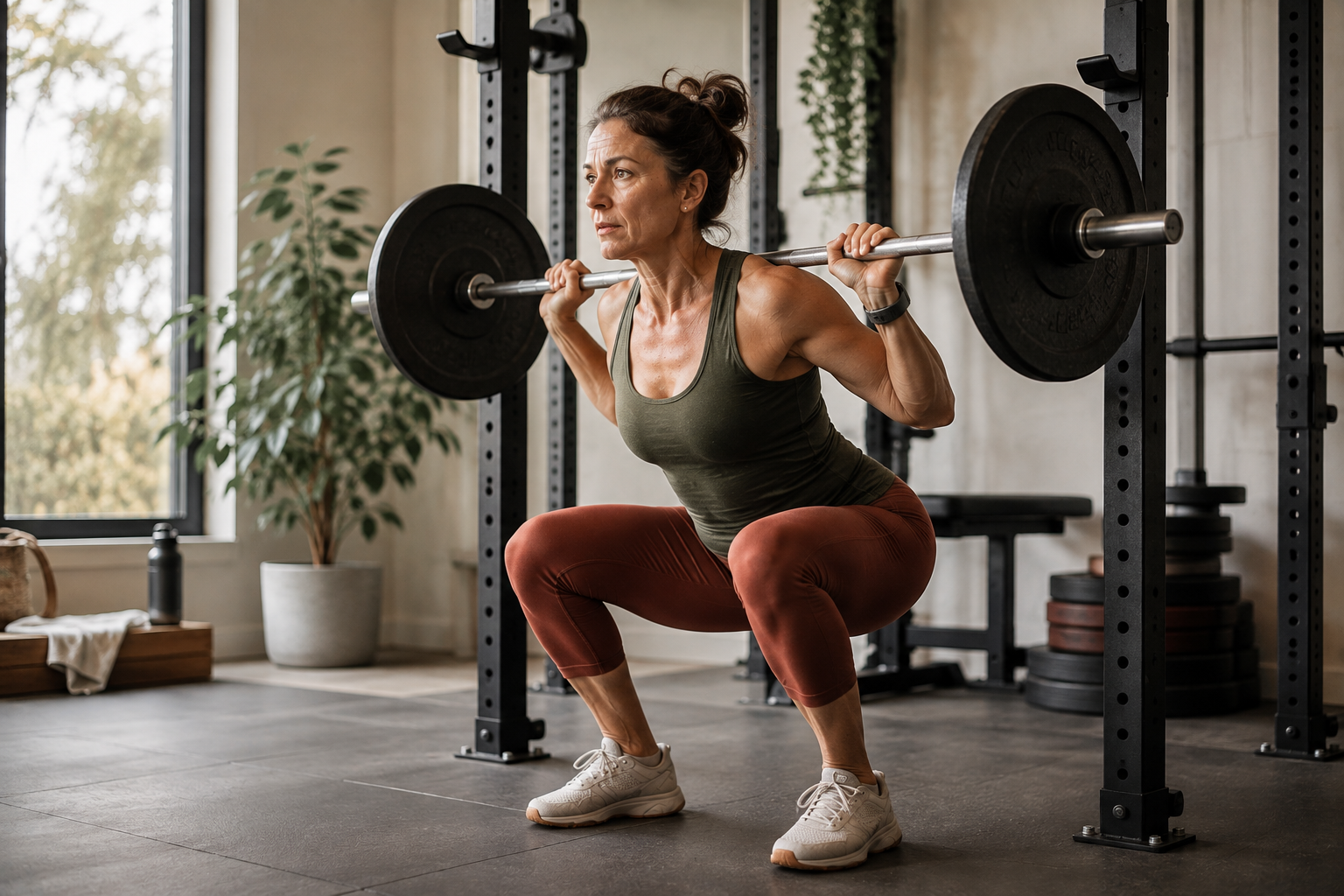
A longer, more deliberate warm-up tends to pay off more during perimenopause than it did a decade earlier. Five to ten minutes of light cardio followed by dynamic mobility work for the joints used in that day’s session helps compensate for connective tissue that may be less pliable due to hormonal changes. Slowing the eccentric (lowering) portion of a lift, for example a three-second descent on a squat or press, can also reduce joint stress while still providing a strong training stimulus, since time under tension contributes meaningfully to strength and muscle gains independent of how much weight is on the bar.
Symptom-to-Adjustment Quick Reference
| Symptom or Change | Likely Driver | Training Adjustment |
|---|---|---|
| Slower strength recovery between sessions | Reduced sleep quality, muscle protein turnover changes | Add a rest or active-recovery day; auto-regulate load by RPE instead of fixed percentages |
| New joint stiffness or tendon soreness | Estrogen-related connective tissue changes | Longer warm-ups, adjusted range of motion, swap high-impact for controlled tempo work |
| Midsection weight gain despite stable habits | Lower energy expenditure, visceral fat shift | Prioritize resistance training for metabolic tissue; avoid chronic under-fueling |
| Night sweats disrupting sleep | Hormonal fluctuation affecting thermoregulation | Shift the hardest session to the day after your best sleep; keep a flexible weekly plan |
| Noticeable strength or muscle loss | Accelerated sarcopenia risk post-estrogen-decline | Increase resistance training frequency to 3x/week; distribute protein across meals |
Exercise selection for common problem areas
When a specific joint or region is consistently irritated, exercise selection matters more than blanket avoidance. Shoulders that feel cranky overhead often tolerate landmine presses or neutral-grip dumbbell work better than a strict barbell overhead press. Knees that complain on deep barbell squats sometimes do better with box squats, leg press, or split squats performed through a comfortable range. Lower backs that flare with conventional deadlifts frequently respond better to trap bar or Romanian deadlift variations with lighter loads and stricter form. The goal in each case is the same: keep the muscle group training, change the lever arm or range that is causing irritation, and progress load conservatively once the movement feels stable.
A Step-by-Step Framework for Training Through Perimenopause
Step 1: Get a baseline picture, not just a feeling
Before adjusting anything, note your current training frequency, typical sleep hours, and any joint or recovery complaints for two weeks. Write down the last time you tested a real strength number on your main lifts and how your energy has trended over the past few months. If symptoms are new or significant (heavy or irregular bleeding, persistent joint pain, unexplained fatigue), see a physician or menopause specialist first to rule out other causes and discuss options, including whether hormone therapy is appropriate for you.
Step 2: Anchor the week around resistance training, three sessions minimum
Structure full-body or upper/lower split resistance sessions three times weekly, targeting the major muscle groups with compound movements (squats, hinges, presses, rows). This aligns with the frequency shown to support bone density and counters the accelerated muscle loss described above.
Step 3: Build in a deload every 4–6 weeks
Rather than training at maximum intensity indefinitely, plan a lighter week roughly every month to six weeks, with reduced volume or load, to keep pace with less predictable recovery.
Step 4: Adjust protein distribution
Spread protein across three to four meals rather than concentrating it at dinner, aiming for roughly 20–25 grams of quality protein per meal alongside adequate total daily intake, adjusted individually with professional guidance if you have kidney, liver, or metabolic conditions.
Step 5: Add low-impact cardio and one balance-focused session
Combine two to three sessions of moderate aerobic work (brisk walking, cycling, swimming) with one short balance or stability practice weekly to support both cardiovascular health and fall-prevention as bone density shifts.
Step 6: Track sleep alongside performance
Keep a simple log of sleep quality next to training performance. On weeks with several poor nights, plan for auto-regulated intensity: the same session structure, but with lighter loads or fewer sets, rather than forcing a fixed program.
Step 7: Reassess every 8–12 weeks with a professional if symptoms persist
Perimenopause is not static; symptoms and needs shift over months. Periodic check-ins with a physician, menopause specialist, or qualified coach help ensure the plan still matches what your body is doing, and provide a channel to discuss options like physical therapy for joint symptoms or medical management for disruptive symptoms.
Tracking Progress Beyond the Scale
Because body composition and water retention can shift week to week during perimenopause independent of training quality, relying on the bathroom scale alone tends to produce discouraging, misleading feedback. A more reliable set of markers includes strength benchmarks (the load or reps you can manage on a handful of key lifts, checked every few weeks rather than every session), how well-fitted clothes feel around the waist and hips, resting heart rate and how quickly it recovers after a hard set, sleep quality logged alongside training days, and simple functional markers like how stairs, carrying groceries, or getting up from the floor feel. None of these require special equipment, and together they give a far more honest picture of whether the training approach is working than weight alone.
It is also worth tracking symptom trends over time, not just training metrics. A simple monthly note on sleep quality, joint comfort, and energy levels creates a record that is genuinely useful to bring to a physician or menopause specialist appointment, since perimenopause symptoms fluctuate and a single snapshot in a doctor’s office rarely captures the full pattern.
Common Myths About Training and Perimenopause, Debunked
Myth: “Cardio is the best tool for the midsection weight gain.”
Cardiovascular exercise supports heart health and is genuinely valuable, but the research on energy expenditure and visceral fat during the menopausal transition points toward preserving and building metabolically active muscle tissue as a key lever, which is a resistance-training job and not primarily a cardio one.
Myth: “Joint pain means you should stop lifting.”
New joint symptoms deserve a clinical look to rule out other causes, but for symptoms linked to the hormonal transition, appropriately loaded resistance training (with adjusted range of motion or exercise selection) is generally supportive of joint and bone health rather than harmful; stopping training entirely tends to accelerate the muscle and bone changes perimenopause already puts in motion.
Myth: “You just need more willpower to keep your old results.”
The data on energy expenditure, fat oxidation, and muscle protein turnover shows measurable physiological shifts independent of effort or discipline. Adjusting the program is a rational response to a changed system, not a concession.
Myth: “Heavy lifting is dangerous once you’re in perimenopause.”
Properly programmed resistance training, including loaded compound lifts, is one of the more evidence-supported tools for protecting bone density and muscle mass during this transition. The key variables are appropriate progression and technique, not avoiding load altogether.
Myth: “If your workouts feel harder, something is wrong with your program.”
Some of the added difficulty reflects real physiological changes in sleep, recovery, and hormone-driven tissue repair, not a program failure. The fix is usually adjusting recovery structure and expectations, not abandoning the approach.
Myth: “Supplements can substitute for a structured training program.”
Collagen, creatine, omega-3s, and vitamin D each have some supporting research for specific outcomes such as joint comfort, strength, or bone health, but none of them replace the mechanical stimulus of regular resistance training or the recovery benefits of adequate sleep and protein. Supplements are, at best, a small addition on top of a solid training and nutrition foundation, not a foundation on their own.
Sample Week: A Perimenopause-Informed Training Structure
- Monday: Full-body resistance training (compound lifts, moderate-to-heavy load)
- Tuesday: 30–40 minutes moderate cardio (brisk walk, cycle, swim)
- Wednesday: Full-body resistance training + 10 minutes balance/stability work
- Thursday: Rest or gentle mobility session
- Friday: Full-body resistance training (adjust load based on sleep/recovery that week)
- Saturday: Moderate cardio or an active outdoor activity
- Sunday: Full rest
Conclusion
Perimenopause changes the physiological conditions your training operates under: recovery capacity, fat distribution, joint tolerance, bone turnover, and how your body uses protein. None of that erases the value of consistent resistance training; if anything, the research points toward resistance work becoming more central during this stage, not less. Structuring a week around three resistance sessions, deliberate deloads, protein spread across meals, and flexible intensity based on sleep gives you a framework that respects the biology instead of fighting it. Pair that framework with regular input from a physician or menopause specialist, especially if symptoms are new, severe, or affecting daily life, and training can remain a durable, effective part of this transition rather than a frustration. The goal is not to chase the exact program that worked in your thirties; it is to build one that matches the body you have now, tracks real markers of progress, and leaves room for the inevitable weeks when sleep, symptoms, or life simply do not cooperate.
Frequently Asked Questions
Is it normal to lose strength during perimenopause even while training consistently?
Some plateau or slower progress is common given the muscle protein turnover and recovery changes discussed above, but a significant, unexplained strength drop should be discussed with a physician to rule out other contributing factors.
Should I switch entirely from cardio to weightlifting?
No; both have distinct benefits. The evidence supports prioritizing resistance training frequency (around three sessions weekly) while keeping moderate cardio for cardiovascular health, rather than eliminating either.
How much protein do I actually need?
General research-informed guidance suggests roughly 20–25 grams of high-quality protein per main meal, though individual needs vary with body size, kidney function, and activity level; a registered dietitian or physician can personalize this.
Can exercise help with hot flashes and sleep disruption?
Regular moderate exercise is commonly associated with better sleep quality and mood during perimenopause, though it is not a guaranteed fix for hot flashes for every individual, and persistent, disruptive symptoms are worth discussing with a menopause specialist, including whether hormone or nonhormone therapies are appropriate.
Is high-intensity interval training safe during perimenopause?
It can be part of a program for many women, but given the recovery and sleep changes described here, it generally works best in smaller, well-recovered doses rather than as the dominant training style, with attention to how the body responds week to week.
When should I see a specialist instead of adjusting on my own?
See a physician or menopause-certified specialist for new or worsening joint pain, unexplained fatigue, irregular or heavy bleeding, symptoms significantly disrupting daily life, or before starting or stopping any hormone therapy; this article does not replace individualized medical care.
References
- NHS. “Menopause – Symptoms.” National Health Service, UK. nhs.uk/conditions/menopause/symptoms
- The Menopause Society (formerly North American Menopause Society). “Position Statements,” including 2021 Osteoporosis Management, 2022 Hormone Therapy, and 2023 Nonhormone Therapy statements. menopause.org/professional-resources/position-statements
- Sowers, M. et al. “Increased visceral fat and decreased energy expenditure during the menopausal transition.” International Journal of Obesity, via PubMed. pubmed.ncbi.nlm.nih.gov/18332882
- “Sarcopenia in Menopausal Women: Current Perspectives.” International Journal of Women’s Health, Dove Medical Press. dovepress.com: Sarcopenia in Menopausal Women
- Network meta-analysis of resistance training protocols and bone mineral density in postmenopausal women (19 RCTs, 919 participants). Frontiers in Physiology, 2023. frontiersin.org/articles/10.3389/fphys.2023.1105303