
























By Priya Nandakumar
Medical disclaimer: This article is educational and general in nature. It is not medical advice and cannot substitute for guidance from your oncologist, surgeon, cardiologist, physical therapist, or the rest of your care team. Cancer types, treatments, and side effects vary enormously from person to person, so any return to exercise should be reviewed and cleared by your care team first, and adjusted to your specific diagnosis, treatment history, and current health status.
Finishing active cancer treatment is a milestone, but it rarely means your body feels the way it did before diagnosis. Chemotherapy, radiation, surgery, hormone therapy, and extended rest can leave muscles weaker, joints stiffer, and energy lower than you remember. Many survivors want to get back to running, lifting, hiking, or simply walking the dog without stopping to catch their breath, and wonder where to start without overdoing it.
This guide walks through a general, gradual framework for rebuilding physical activity after cancer treatment, drawn from published guidance from the American Cancer Society (ACS), the American College of Sports Medicine (ACSM) exercise oncology roundtable, and peer-reviewed research indexed on PubMed and PMC. It is written for adults who have completed active treatment and been cleared for activity, not as a substitute for that clearance. If you are still in active treatment, ask your oncology team what level of activity is appropriate right now, since the guidance differs during treatment versus afterward.
Why Exercise Matters After Cancer Treatment
A large body of research supports physical activity as part of recovery for most cancer survivors, once cleared by their care team. The American Cancer Society states that exercise is generally safe and helpful before, during, and after cancer treatment, and that regular activity can reduce treatment-related fatigue, improve sleep quality, support mood, and help maintain a healthy body weight during recovery.
The ACS’s 2022 nutrition and physical activity guideline for cancer survivors recommends working toward at least 150 to 300 minutes of moderate-intensity activity per week, or 75 to 150 minutes of vigorous-intensity activity, along with muscle-strengthening activities on two or more days per week, mirroring general public health guidelines for adults. Critically, the ACS frames this as a target to build toward gradually, not a starting point, with explicit instructions to start slowly and increase activity over time.
Separately, a 2019 international roundtable of exercise oncology researchers, coordinated in part through ACSM, produced consensus guidance summarized by the National Cancer Institute: roughly three sessions per week of thirty minutes of moderate aerobic exercise were linked to improvements in anxiety, depression, fatigue, and quality of life across studies, and twice-weekly resistance training added benefits for strength and physical function. That panel also concluded that most survivors do not need extensive additional testing beyond their regular oncology follow-up before starting a moderate walking program, though individual exercise prescriptions still need to be tailored to cancer type, stage, treatment side effects, and personal health history, and should involve the treating physician.
None of this means exercise is risk-free or appropriate for everyone in the same way. Survivors recovering from major surgery, those with heart or lung complications from treatment, people with low blood counts, or anyone managing bone metastases need individualized guidance before increasing activity, which is why clearance from your care team comes before every step below, not after.
The Gradual Rebuild Framework
The following six-step framework describes a general approach many exercise oncology programs use to rebuild activity safely. It is not a fixed program with exact numbers for everyone; instead, it is a sequence of decisions to work through with your care team, adjusting pace and intensity to your own recovery.
Step 1: Get Clearance and Establish Your Starting Point
Before doing anything else, talk with your oncology team, and any relevant specialists such as a cardiologist or physical therapist, about what level of activity is appropriate for you right now. Ask specifically about restrictions related to your surgery site, any ongoing treatment such as hormone therapy, blood count trends, bone density, and heart or lung function.
Once cleared, take an honest inventory of where you currently stand. Consider your current walking tolerance, how quickly you fatigue, any balance or neuropathy issues affecting your footing, and pain or restricted range of motion near surgical sites. A physical therapist or exercise physiologist with oncology experience can perform a more formal functional assessment and is worth requesting a referral for if one is available through your treatment center.
Step 2: Begin with Gentle, Low-Demand Movement
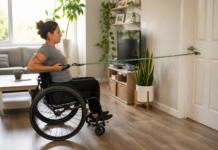
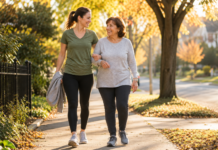
Most gradual rebuild plans start well below what feels like real exercise. Short, easy walks, ten minutes at a time, are a common and reasonable starting point for people who have been largely sedentary during treatment. Gentle range-of-motion work, light stretching, and seated or supported movement are also appropriate early options, particularly for anyone recovering from surgery near a joint or the chest wall.
The goal during this phase is to reintroduce movement without triggering significant fatigue, pain, or swelling. If ten minutes feels comfortable and doesn’t leave you wiped out for the rest of the day, that is a signal you’re ready to build, not a sign you should skip ahead.
Step 3: Increase Volume Before Intensity
Once gentle movement feels sustainable, most programs add more time or more frequency before adding more effort. That might mean walking fifteen minutes instead of ten, or walking most days instead of every other day, while keeping the pace easy. Only after volume feels comfortable does intensity typically increase, such as picking up the pace, adding gentle inclines, or introducing light resistance work.
A widely used rule of thumb in rehabilitation settings is to avoid increasing total weekly activity by more than about ten percent at a time, giving the body a chance to adapt before the next increase. This is a general guideline, not a strict formula, and your care team may recommend a slower pace depending on your treatment history.
Step 4: Reintroduce Resistance Training Carefully
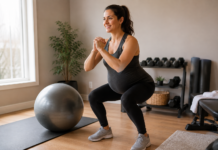
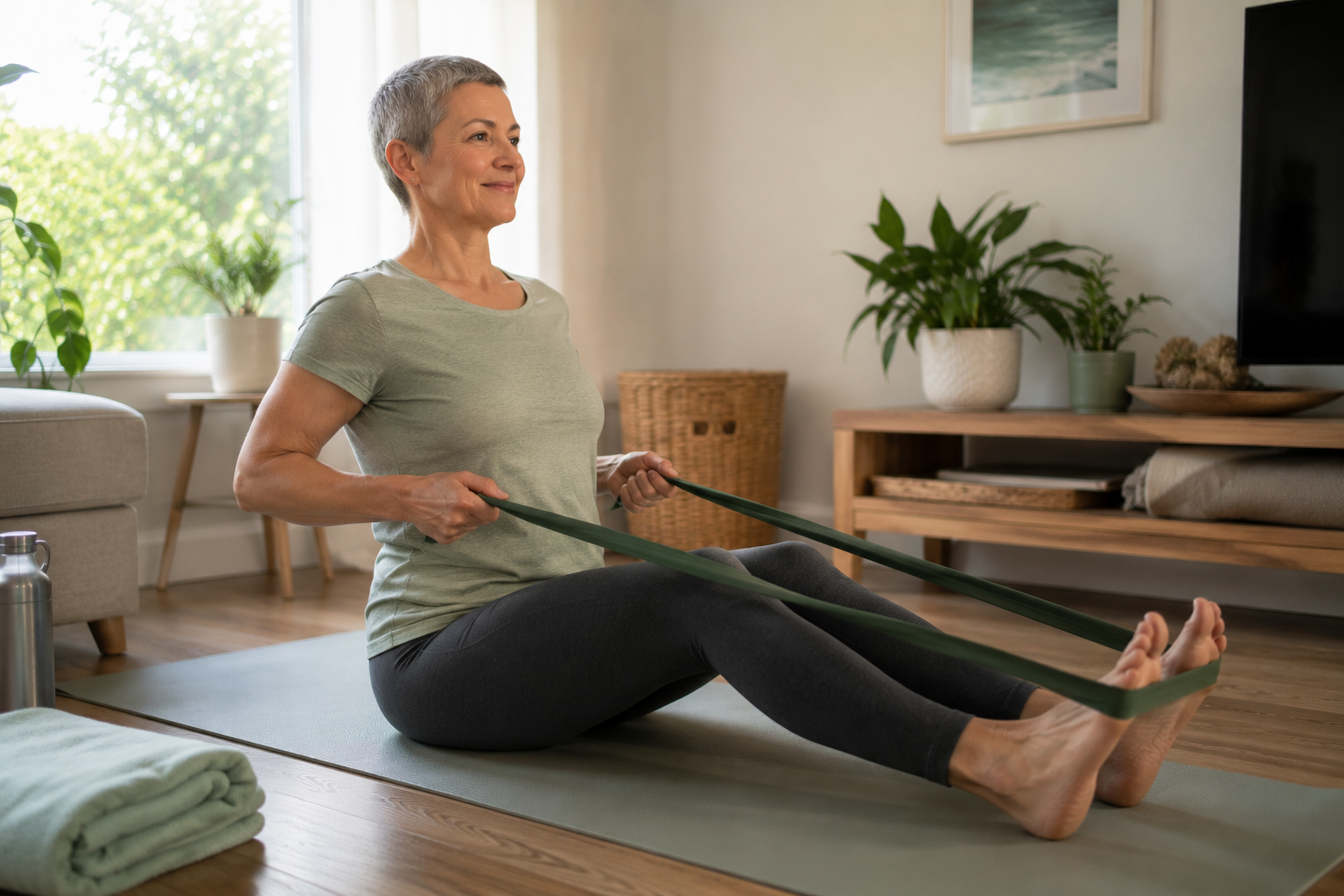
Muscle mass and strength often decline during treatment, especially with extended inactivity, corticosteroid use, or hormone therapy. Once cleared, light resistance training, using body weight, resistance bands, or very light hand weights, can help rebuild strength. The ACSM exercise oncology consensus found that twice-weekly resistance training benefited strength and physical function for many survivors and did not show an increased risk of lymphedema when introduced gradually and progressed slowly.
Start with low resistance and higher repetitions, focus on controlled movement rather than speed, and increase load only in small increments once a given weight feels comfortably manageable for all prescribed repetitions. Anyone with a lymph node dissection, radiation to the axilla or groin, or existing lymphedema should have this progression reviewed by a lymphedema-trained physical therapist or certified cancer exercise specialist.
Step 5: Monitor Fatigue, Recovery, and Symptoms
Cancer-related fatigue behaves differently from ordinary tiredness and doesn’t always resolve with rest alone; ironically, appropriately dosed exercise is one of the more effective tools for managing it over time. Still, tracking your response to each increase in activity matters. A simple approach is rating fatigue on a 0-to-10 scale before and after sessions, and noting how you feel the following day.
If fatigue is markedly worse the day after exercising, if soreness lingers beyond the usual one to two days, or if a joint or surgical site becomes more painful or swollen, that’s a cue to hold at the current level, or step back, rather than pushing forward on schedule. Recovery is not linear, and having a slower week is a normal part of rebuilding, not a failure.
Step 6: Reassess Regularly and Adjust the Plan
Revisit your plan every few weeks, ideally alongside your oncology follow-up appointments. Ask whether new information, such as updated blood counts, bone density scans, or cardiac function tests, should change your activity plan. As strength and endurance improve, many survivors gradually work toward the general activity targets described earlier, roughly 150 to 300 minutes of moderate activity weekly plus twice-weekly strength work, though the timeline for reaching that varies widely and some survivors, particularly those managing ongoing treatment effects, may have a different long-term target altogether.
Gradual Rebuild Stages at a Glance
| Stage | General Focus | Aerobic Activity | Resistance Work | Sign You May Be Ready to Progress |
|---|---|---|---|---|
| 1. Reintroduction | Gentle movement, mobility | 5-10 min easy walking, most days | None or light stretching only | Comfortable without next-day exhaustion |
| 2. Building volume | Longer or more frequent sessions | 15-20 min easy pace, most days | Body-weight or band work, 1x/week | Fatigue rating returns to baseline within a day |
| 3. Building intensity | Slightly harder effort | 20-30 min, brisker pace or mild incline | Light weights or bands, 2x/week | Consistent recovery, no swelling or new pain |
| 4. Approaching guidelines | Working toward general targets | Toward 150-300 min/week moderate activity | Progressive resistance, 2x/week | Ongoing check-ins with care team confirm progress |
Illustrative stages only. Timelines, loads, and appropriateness of resistance work depend on your specific diagnosis, treatment, and clearance from your care team.
Special Considerations by Treatment Type
Needs vary hugely depending on cancer type, treatment received, and individual recovery, and the three areas below are among the most common reasons an oncology team may adjust the general framework.
Lymphedema Risk
Survivors who have had lymph node removal or radiation to lymph node regions, common in breast cancer, melanoma, and some gynecologic and urologic cancers, carry an increased lifetime risk of lymphedema, a buildup of lymph fluid causing swelling, most often in an arm or leg. Older advice sometimes told survivors to avoid resistance training entirely near the affected limb. More recent research, including studies published on PMC, has found that carefully progressed resistance training, starting with very light loads and increasing gradually, does not appear to increase lymphedema risk for many survivors, and some report improved symptoms with supervised strength programs. This shift in evidence is a good example of why individualized guidance matters more than blanket rules; a lymphedema-trained physical therapist can help you determine safe starting loads and monitor limb volume as you progress.
Cardiotoxicity from Certain Treatments
Some chemotherapy agents, including anthracyclines such as doxorubicin, along with certain targeted therapies and chest radiation, can affect heart function, sometimes described under the umbrella of cardio-oncology. Research summarized on PMC suggests supervised aerobic exercise may help protect cardiovascular function and offset some treatment-related cardiac effects, but survivors who received these treatments should have cardiac function evaluated, and cleared, before starting or significantly increasing aerobic exercise intensity. Warning signs such as new shortness of breath at rest, chest tightness, irregular heartbeat, or unusual swelling in the legs warrant prompt medical attention rather than a wait-and-see approach.
Bone Health After Hormone-Suppressing Therapies
Treatments that lower estrogen or testosterone, such as aromatase inhibitors for breast cancer or androgen deprivation therapy for prostate cancer, are associated with accelerated bone density loss and higher fracture risk over time, according to research indexed on PMC. Weight-bearing and resistance exercise are commonly recommended as part of a broader bone health strategy, alongside calcium, vitamin D, and sometimes bone-protective medication, but survivors with significant bone loss, osteoporosis, or known bone metastases need individualized guidance on which movements and loads are safe, since high-impact activity or certain spinal loading positions may need to be modified or avoided.
Red Flags: Contact Your Care Team Immediately
Stop activity and seek prompt medical attention, rather than waiting for your next appointment, if you notice any of the following during or after exercise:
- New or worsening swelling in an arm, leg, hand, or foot, particularly on the side of prior lymph node surgery or radiation
- Chest pain, pressure, or tightness, or a racing or irregular heartbeat
- Shortness of breath that is new, severe, or occurs at rest
- Fever of 100.4°F (38°C) or higher, chills, or signs of infection
- Sudden or severe bone pain, especially with a history of bone metastases
- Dizziness, fainting, confusion, or a fall
- Unusual bruising, bleeding that doesn’t stop, or petechiae (tiny red or purple spots on the skin)
- A surgical site or port site that becomes red, warm, swollen, or draining fluid
Building a Sustainable Routine
Consistency over months tends to matter more than any single workout. Many survivors find it helpful to keep a simple log of activity, fatigue ratings, and any symptoms, both to share with their care team and to notice patterns, such as which days of a treatment cycle tend to be harder. Pairing sessions with a friend, family member, or a structured cancer rehabilitation program can add accountability and an extra set of eyes for safety.
It is also worth normalizing setbacks. Infections, scheduled scans, unrelated illnesses, and simply hard weeks are common, and stepping back to an earlier stage of the framework for a while is a sensible response, not a setback in the discouraging sense. Rebuilding capacity after cancer treatment is rarely a straight line, and most established exercise oncology programs are built around that expectation, with regular reassessment built in rather than a single fixed schedule.
Practical Tips for Getting Started
A few practical habits make the framework above easier to follow day to day. None of these replace medical guidance, but they tend to reduce friction for survivors trying to rebuild a routine while managing appointments, side effects, and unpredictable energy levels.
- Pick a consistent, low-barrier activity first. Walking around the block or in a nearby park requires no equipment or gym membership and is easy to shorten on a low-energy day, which makes it a practical default for the early stages of the framework.
- Time sessions around your energy patterns. Many survivors notice predictable dips in energy tied to a treatment cycle, medication timing, or time of day. Scheduling activity for a typically better window, rather than a fixed time regardless of how you feel, can improve consistency.
- Separate “hard day” plans from “good day” plans in advance. Deciding ahead of time what a shortened, gentler version of a session looks like removes the pressure to either push through or skip entirely when fatigue is higher than expected.
- Ask about supervised options. Many cancer centers and community organizations offer supervised exercise oncology programs, sometimes called cancer rehabilitation or prehabilitation programs, staffed by clinicians trained specifically in post-cancer exercise. These can be especially useful during the early stages of rebuilding, when close monitoring adds a layer of safety.
- Keep your care team in the loop. Mentioning your activity plan at follow-up visits gives your oncologist or nurse a chance to flag anything relevant from recent labs, scans, or exam findings before you increase intensity.
None of these tips are meant to replace individualized clinical advice, and a plan that works well for one survivor may not fit another with a different diagnosis or treatment history. Treat them as starting points to discuss with your care team rather than fixed rules.
Conclusion
Returning to physical activity after cancer treatment is achievable for most survivors once cleared by their care team, and the evidence, from the American Cancer Society, the ACSM exercise oncology roundtable, and peer-reviewed research on PubMed and PMC, consistently points to real benefits for fatigue, mood, strength, and overall function. The path there works best as a gradual one: starting from an honest assessment, building volume before intensity, monitoring how your body responds, and adjusting the plan with your oncology team as things change. Needs differ enormously by cancer type, treatment received, and individual recovery, so treat any general framework, including this one, as a starting conversation with your care team rather than a fixed prescription.
Frequently Asked Questions
How soon after finishing cancer treatment can I start exercising again?
There is no single timeline that applies to everyone. Some survivors are cleared for gentle walking within days of finishing treatment, while others recovering from major surgery, radiation, or with ongoing treatment side effects need a longer initial recovery period. Ask your oncology team when it is appropriate for you specifically to begin, and what level of activity is reasonable at that point.
Do I need medical clearance before starting to exercise after cancer treatment?
Yes. Most exercise oncology guidance, including the 2019 ACSM roundtable summarized by the National Cancer Institute, emphasizes that exercise programs should involve the treating physician, particularly for survivors with heart or lung complications, low blood counts, bone metastases, or recent major surgery. Clearance helps identify any restrictions specific to your treatment history before you increase activity.
Will exercise make my cancer-related fatigue worse?
Appropriately dosed activity is one of the more consistently supported tools for managing cancer-related fatigue over time, according to American Cancer Society guidance, even though it can feel counterintuitive when you are tired. The key is starting gently and increasing gradually rather than attempting a full return to pre-diagnosis activity levels right away, and backing off if fatigue is markedly worse the following day.
Is strength training safe if I am at risk for lymphedema?
Research summarized in studies on PMC has found that resistance training, introduced at low loads and progressed slowly, does not appear to increase lymphedema risk for many survivors, and some report symptom improvement with supervised programs. Anyone with a history of lymph node removal or radiation to lymph node regions should have their program reviewed by a lymphedema-trained physical therapist or certified cancer exercise specialist, and should watch for new or worsening limb swelling.
What if my treatment affected my heart? Can I still exercise?
Many survivors with treatment-related cardiac effects can still exercise, often benefiting from supervised aerobic activity as part of cardiac rehabilitation or cardio-oncology programs, but this requires cardiac function to be evaluated and monitored by your care team first. Report new chest pain, irregular heartbeat, or unusual shortness of breath immediately rather than pushing through it.
How do I know if I am progressing too fast?
Warning signs of progressing too quickly include fatigue that is markedly worse the day after exercise, soreness or pain lasting more than a couple of days, new swelling, or a decline in your ability to complete daily activities. If any of these appear, hold at your current level or step back a stage rather than continuing to add volume or intensity on schedule.
References
- American Cancer Society. Physical Activity When You Have Cancer
- American Cancer Society. American Cancer Society Guideline for Diet and Physical Activity for Cancer Survivors
- National Cancer Institute, Cancer Currents Blog. New Exercise Guidelines for Cancer Survivors Focus on Overall Fitness
- American College of Sports Medicine. Exercise Oncology: Ready for Prime Time
- PMC. Resistance Training and Lymphedema in Breast Cancer Survivors
- PMC. Exercise to Reduce Anthracycline-Mediated Cardiovascular Complications in Breast Cancer Survivors
- PMC. Aromatase Inhibitor-Associated Bone and Musculoskeletal Effects: New Evidence Defining Etiology and Strategies for Management
- National Comprehensive Cancer Network. NCCN Guidelines for Patients: Survivorship Care for Healthy Living