



























Walking Pace vs Step Count: Which Moves the Needle More
Walk into any conversation about daily movement and you will hear two competing pieces of advice. One camp says count your steps and chase a round number, usually 10,000. The other says forget the number and walk faster, because a brisk pace supposedly does more for your heart, your metabolism, and your long-term health than volume alone. Both camps have research behind them, which is exactly why the debate keeps circling without a clear winner.
This comparison looks at what large cohort studies actually found when researchers measured both variables in the same people at the same time. Some studies conclude that intensity, captured through peak cadence, predicts mortality risk on its own. Others conclude that once total step count is accounted for, pace adds little or nothing. The honest answer is that both bodies of work are correct within their own datasets, and the practical takeaway is that you do not have to pick a side. You can build a walking routine that uses volume as the foundation and pace as an accelerant.
What Large Cohort Studies Actually Measured
Before comparing pace and volume, it helps to know how researchers separated the two. Wearable accelerometers do not just count steps, they record a timestamp for each one, which lets scientists calculate cadence, the number of steps taken per minute during any window of the day. From that raw data, researchers built a metric called peak 30-minute cadence: the average stepping rate during a person’s most active 30 minutes, whether or not those minutes were consecutive. That single number became the proxy for walking intensity in several major mortality studies.
Here is what the evidence shows, drawn from peer-reviewed cohort research rather than fitness marketing claims.
- Total step count has a strong, well-replicated relationship with mortality. In a National Health and Nutrition Examination Survey (NHANES) cohort of roughly 4,840 adults aged 40 and older, Saint-Maurice and colleagues found that people averaging 8,000 steps a day had about 51 percent lower all-cause mortality risk than those averaging 4,000 steps, and people averaging 12,000 steps had about 65 percent lower risk, over roughly ten years of follow-up (Saint-Maurice et al., JAMA, 2020).
- In the same NHANES cohort, stepping intensity lost its statistical significance once total volume was controlled for. The Saint-Maurice study reported that step intensity, measured as cadence, was not independently associated with mortality after adjusting for total daily steps. Volume, not pace, carried the predictive weight in that dataset.
- A separate UK Biobank analysis reached a different conclusion. Del Pozo Cruz, Ahmadi, and colleagues followed roughly 78,500 adults wearing wrist accelerometers and found that at a given step count, people with higher peak-cadence stepping intensity had meaningfully lower cardiovascular and cancer mortality risk than people who accumulated the same number of steps at a slower pace (del Pozo Cruz et al., JAMA Internal Medicine, 2022).
- Older women showed a pattern closer to the volume-dominant result. In the Women’s Health Study, which tracked 16,741 women with a mean age of 72, Lee and colleagues found total daily steps strongly predicted lower mortality, while stepping intensity did not add independent predictive value once volume was accounted for (Lee et al., JAMA Internal Medicine, 2019).
- Pooled data across cohorts shows diminishing returns rather than a hard target. A meta-analysis of 15 international cohorts covering roughly 47,000 adults found mortality risk fell steadily as step counts rose, then leveled off around 6,000 to 8,000 steps a day for adults 60 and older, and around 8,000 to 10,000 for adults under 60 (Paluch et al., Lancet Public Health, 2022).
- Each additional 1,000 steps carries a measurable benefit up to a point. A dose-response meta-analysis of prospective cohorts estimated that each 1,000-step increase in daily average was associated with roughly a 15 percent reduction in all-cause mortality risk, with benefits continuing up to about 16,000 steps before flattening (Jayedi et al., British Journal of Sports Medicine, 2022).
- Short bursts of vigorous movement, not structured exercise, predicted large risk reductions. Research on vigorous intermittent lifestyle physical activity, brief one-to-two-minute bursts of harder effort woven into ordinary daily tasks like climbing stairs or rushing for a bus, found substantial drops in cardiovascular and all-cause mortality risk among adults who never formally exercise (Stamatakis and colleagues, Nature Medicine, 2022).
- A practical cadence threshold exists for defining “brisk.” A narrative review proposed roughly 100 steps per minute as a reasonable heuristic for moderate-intensity walking in adults aged 21 to 40, with adjustments downward for older or less-conditioned walkers (Tudor-Locke et al., British Journal of Sports Medicine, 2018).
Read together, these findings are not contradictory so much as context-dependent. Studies built around a general adult population sometimes find that pace adds an independent signal beyond volume. Studies built around older or more sedentary cohorts tend to find that once someone is moving at all, how much they move outweighs how fast. The disagreement is a feature of different populations and different accelerometer methods, not proof that one line of research is wrong.
Pace vs Volume: A Side-by-Side Comparison
The table below lines up what each approach is best supported for, based on the cohort evidence above, so you can see where the two metrics overlap and where they diverge.
| Factor | Walking Pace (Cadence / Intensity) | Step Count (Total Daily Volume) |
|---|---|---|
| What it measures | Steps per minute during your most active window | Total steps accumulated across the day |
| Strongest evidence for | Cardiovascular and cancer mortality reduction independent of volume (UK Biobank cohort) | All-cause mortality reduction across nearly every cohort studied |
| Typical benchmark | About 100+ steps per minute sustained for several minutes | 6,000 to 10,000 steps per day, with diminishing returns beyond that |
| Easiest to track | Requires a wearable that logs timestamps, not just a raw count | Any basic pedometer or phone step counter |
| Best suited to | People who already walk regularly and want to add a metabolic and cardiovascular edge | People building a movement habit from a low baseline |
| Time cost | Low: a few short bouts a day, often under 30 total minutes | Higher: reaching 8,000 to 10,000 steps typically takes 70 to 100 minutes of combined walking |
Why Intensity Appears to Matter on Its Own
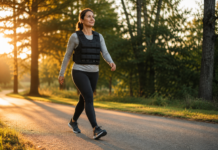
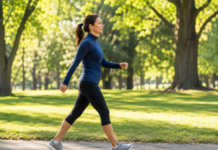
The physiological argument for cadence is straightforward. Walking faster raises heart rate, increases oxygen demand, and recruits more muscle fiber than a leisurely stroll at the same total distance. That places brisk walking closer to what exercise physiologists classify as moderate-intensity activity, which is the threshold used in most public health movement guidelines. A person who covers 6,000 steps at a brisk clip may be spending more time in a heart-rate zone associated with cardiovascular adaptation than a person who covers 10,000 steps spread across slow errands.
The UK Biobank findings support this mechanism at a population level: among people with similar total step counts, those with higher peak 30-minute cadence had lower rates of cardiovascular disease and cancer death. That pattern lines up with what is already known about moderate-to-vigorous physical activity guidelines, which specify minutes at a given intensity rather than total distance covered.
There is also a practical angle. Short bursts of faster walking, of the kind captured in vigorous intermittent lifestyle physical activity research, fit into schedules that cannot accommodate an hour-long walk. Climbing a flight of stairs quickly, walking briskly to catch a train, or picking up the pace for the last two minutes of a dog walk are all low-friction ways to touch a higher intensity zone without carving out dedicated exercise time.
Why Volume Still Carries Real Weight
Set against that, the volume-first evidence is broader and, in several studies, more consistent. The NHANES data used by Saint-Maurice and colleagues, and the Women’s Health Study data used by Lee and colleagues, both found that once total steps were in the statistical model, cadence added little or nothing extra. Two mechanisms likely explain this. First, total steps function as a rough proxy for total energy expenditure across the day, and energy expenditure has a long, well-documented relationship with reduced disease risk. Second, people who accumulate more steps overall tend to also spend more cumulative time upright and moving, which reduces the health penalties associated with prolonged sitting, regardless of how fast any individual segment of walking was.
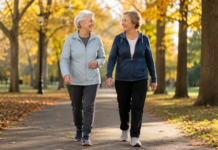
Volume is also more forgiving for people managing joint pain, deconditioning, or early-stage cardiovascular issues, for whom sustained brisk walking is not yet realistic. Building toward 7,000 to 8,000 steps a day, even at a comfortable pace, still produced meaningfully lower mortality risk in the pooled cohort data. That makes volume a safer starting target for anyone rebuilding a movement habit from near zero.
Combined Protocol: Volume as the Base, Pace as the Accelerant
Rather than treating pace and volume as competing goals, layer them:
- Set a daily volume floor. Aim for 7,000 to 8,000 total steps, tracked with any basic step counter.
- Add two to three brisk intervals. Within that total, insert 8 to 10 minutes of walking at a pace that noticeably raises your breathing rate, roughly 100+ steps per minute.
- Use short bursts on busy days. When time is tight, swap one brisk interval for two or three one-minute bursts of faster walking, such as a quick stair climb or a fast stretch to catch a crosswalk signal.
- Track trend, not perfection. A week averaging 7,500 steps with three brisk intervals beats a single 12,000-step day followed by three sedentary ones.
Sample Weekly Protocols
The three protocols below translate the research into routines for different starting points. Each one respects the volume floor supported by the cohort data while building in the cadence bump linked to added cardiovascular benefit.
Protocol A: Building a Base (New to Regular Walking)
- Daily target: 5,000 to 6,000 steps, comfortable pace
- Twice a week, add one 5-minute segment at a pace that makes conversation slightly harder
- Progress volume by roughly 500 steps a week until you reach 7,000 to 8,000
Protocol B: Established Walker Adding Intensity
- Daily target: 8,000 steps
- Three times a week, structure a 20-minute walk as 5 minutes easy, 10 minutes brisk (100+ steps per minute), 5 minutes easy
- On non-structured days, take stairs at a faster pace whenever available
Protocol C: Time-Constrained Schedule
- Daily target: 6,000 to 7,000 steps, accumulated in normal daily movement
- Four times a week, insert three separate 90-second brisk bursts, such as a fast walk to a meeting or a quick lap around the block
- One longer 25-minute walk on a weekend day at a brisk, sustained pace
None of these protocols require special equipment beyond a basic step tracker, and none assume access to a gym. That matters because adherence, not theoretical optimality, is what determines whether any of this research translates into a personal outcome. A moderately effective routine followed for a year outperforms a maximally optimized one abandoned after three weeks.
Reading Your Own Numbers
If your wearable reports cadence, you can approximate your own peak 30-minute figure by looking at your fastest sustained walking segment of the day and checking its average steps-per-minute reading. Most fitness trackers surface this under a “pace” or “cadence” tab rather than the main step-count screen, so it takes a little digging to find on the first try. If your device does not report cadence directly, a simple manual check works nearly as well: count your steps for 20 seconds during a normal brisk walk and multiply by three. Landing consistently above 100 puts you in the range associated with moderate intensity in the Tudor-Locke cadence review.
Total step count is easier to track and appears on nearly every phone and wearable by default. The useful habit is checking your seven-day average rather than any single day’s number, since the mortality research is built on sustained patterns measured over years, not isolated high-step days.
Practical Guidance for Balancing Both
A few principles pull the research together into something actionable:
- Do not let a low step day feel like failure. The cohort data reflects averages over years. One slow week will not meaningfully change your risk profile.
- Prioritize volume if you are starting from a sedentary baseline. The steepest risk reduction in the pooled step-count research happens in the jump from very low activity to a moderate daily total, well before pace becomes relevant.
- Add pace once volume is established. If you already reliably hit 7,000 or more steps a day, layering in brisk intervals is where the additional cardiovascular and cancer-mortality benefit identified in the UK Biobank data becomes accessible.
- Match intensity to joint and cardiovascular readiness. Anyone with knee, hip, or heart conditions should confirm with a clinician before adding sustained brisk intervals, even though short bursts are generally low risk for most adults.
- Use terrain and stairs as free intensity tools. An incline raises cadence-equivalent effort without requiring a faster literal stepping rate, which is useful for people with joint sensitivity to fast, flat-ground walking.
Common Mistakes When Comparing the Two
A few habits of thinking make this debate feel more contradictory than it actually is. Recognizing them makes it easier to apply the research to a real routine instead of getting stuck picking a side.
- Treating a single study as the final word. The NHANES cohort and the UK Biobank cohort used different populations, different accelerometer placements, and different age ranges. A finding that holds in one does not automatically transfer to the other. The honest reading of the literature is that both volume and intensity matter, with the relative weight shifting depending on who is being studied.
- Assuming a step counter and a cadence reading measure the same thing. A basic pedometer only tallies steps. It cannot tell you whether those steps happened over four hours of slow errands or 40 minutes of brisk walking. If your only data point is a daily total, you are missing half of what the research measures, which is why devices that log timestamps give a fuller picture.
- Chasing 10,000 steps as if it were an evidence-based cutoff. The figure originated from a 1960s Japanese pedometer marketing campaign, not a clinical trial. The cohort research described above points to a plateau closer to 6,000 to 10,000 steps depending on age, which is a range, not a fixed target.
- Ignoring intensity because it feels harder to track. Cadence requires slightly more effort to monitor than a raw step count, which leads some people to disregard it entirely. A 20-second manual count, done occasionally during a normal walk, is enough to get a rough sense of where your pace typically lands without needing a dedicated device.
- Expecting the two metrics to move in lockstep. It is entirely possible to log a high step count on a slow-paced day, or a modest step count on a day built around several brisk intervals. Tracking both, even loosely, gives a more complete picture than either number alone.
Reading Your Own Numbers, in More Detail
Most consumer wearables calculate cadence differently from the research-grade accelerometers used in cohort studies, so treat your device’s number as a directional signal rather than a clinical measurement. If your app reports an average daily cadence rather than a peak 30-minute figure, look instead at your workout or activity log for the single fastest sustained segment you completed that day, since that segment is closer to what the mortality research actually measured. Comparing that number week over week is more informative than comparing it to a fixed external benchmark, since baseline fitness, leg length, and terrain all shift what a “brisk” cadence feels like for a given person.
It also helps to separate incidental steps from intentional walking when you review your data. Steps taken while cooking, tidying, or moving around an office rarely reach a brisk cadence and were not the segments driving the intensity findings in the research above. The peak-cadence metric is built from your most active continuous stretch, so a realistic weekly review looks at whether you hit at least a few genuinely brisk stretches, not just whether your total step count looked respectable by bedtime.
Frequently Asked Questions
Is walking fast better than walking far?
Neither wins outright across all the research. Volume has the more consistent relationship with all-cause mortality across cohorts, while pace shows an independent benefit for cardiovascular and cancer mortality in at least one large UK Biobank study. The practical answer is to build a volume base first, then layer in pace.
What counts as a brisk walking pace?
A commonly used heuristic is around 100 steps per minute or more for adults in their twenties through forties, with a somewhat lower threshold reasonable for older or deconditioned walkers, based on the cadence review by Tudor-Locke and colleagues.
Do I need a fitness tracker to measure cadence?
Not necessarily. You can count your steps for 20 seconds during a normal brisk walk and multiply by three to get an approximate steps-per-minute figure. Most modern smartwatches and phone apps also report a pace or cadence metric if you look beyond the main step total.
How many steps a day is actually enough?
Pooled cohort data points to a plateau around 6,000 to 8,000 steps a day for adults 60 and older, and roughly 8,000 to 10,000 for adults under 60, with each additional 1,000 steps up to about 16,000 associated with further, smaller reductions in mortality risk.
Can short bursts of fast walking replace a longer walk?
They cannot fully replace total daily volume, since volume has its own independent relationship with health outcomes. But short bursts of vigorous movement, even just one to two minutes at a time, have been linked to meaningful reductions in cardiovascular and all-cause mortality risk in adults who do not otherwise exercise, making them a useful addition rather than a substitute.
Should older adults focus more on volume or pace?
The evidence in older cohorts, including the Women’s Health Study, leans toward volume as the stronger predictor once a person is already walking regularly. Older adults or anyone with mobility limitations should prioritize consistent daily movement and only add brisk intervals once that base feels stable and any relevant medical guidance has been confirmed.
Conclusion
The pace-versus-volume debate persists because the underlying research genuinely points in two directions depending on the population studied. NHANES and Women’s Health Study data favor total step count as the dominant predictor of mortality risk. UK Biobank data favors cadence as an independent contributor to cardiovascular and cancer mortality reduction, beyond what step count alone explains. Rather than treating this as an unresolved argument to referee, use it as permission to combine both: build a daily step floor around 7,000 to 8,000, then add short brisk intervals once that habit holds. That combination reflects what the strongest studies on each side actually measured, and it fits into a normal week without requiring a structured workout plan.
References
- Saint-Maurice PF, Troiano RP, Bassett DR Jr, et al. Association of Daily Step Count and Step Intensity With Mortality Among US Adults. JAMA. 2020;323(12):1151-1160.
- del Pozo Cruz B, Ahmadi MN, Lee IM, Stamatakis E. Prospective Associations of Daily Step Counts and Intensity With Cancer and Cardiovascular Disease Incidence and Mortality and All-Cause Mortality. JAMA Internal Medicine. 2022;182(11):1139-1148.
- Lee IM, Shiroma EJ, Kamada M, et al. Association of Step Volume and Intensity With All-Cause Mortality in Older Women. JAMA Internal Medicine. 2019;179(8):1105-1112.
- Paluch AE, Bajpai S, Bassett DR, et al. Daily steps and all-cause mortality: a meta-analysis of 15 international cohorts. The Lancet Public Health. 2022;7(3):e219-e228.
- Jayedi A, Gohari A, Shab-Bidar S. Daily step count and all-cause mortality: a dose-response meta-analysis of prospective cohort studies. British Journal of Sports Medicine. 2022;56(5):284-290.
- Stamatakis E, Ahmadi MN, Gill JMR, et al. Association of wearable device-measured vigorous intermittent lifestyle physical activity with mortality. Nature Medicine. 2022;28(11):2521-2529.
- Tudor-Locke C, Han H, Aguiar EJ, et al. How fast is fast enough? Walking cadence (steps/min) as a practical estimate of intensity in adults: a narrative review. British Journal of Sports Medicine. 2018;52(12):776-788.