


























By Noah Sato
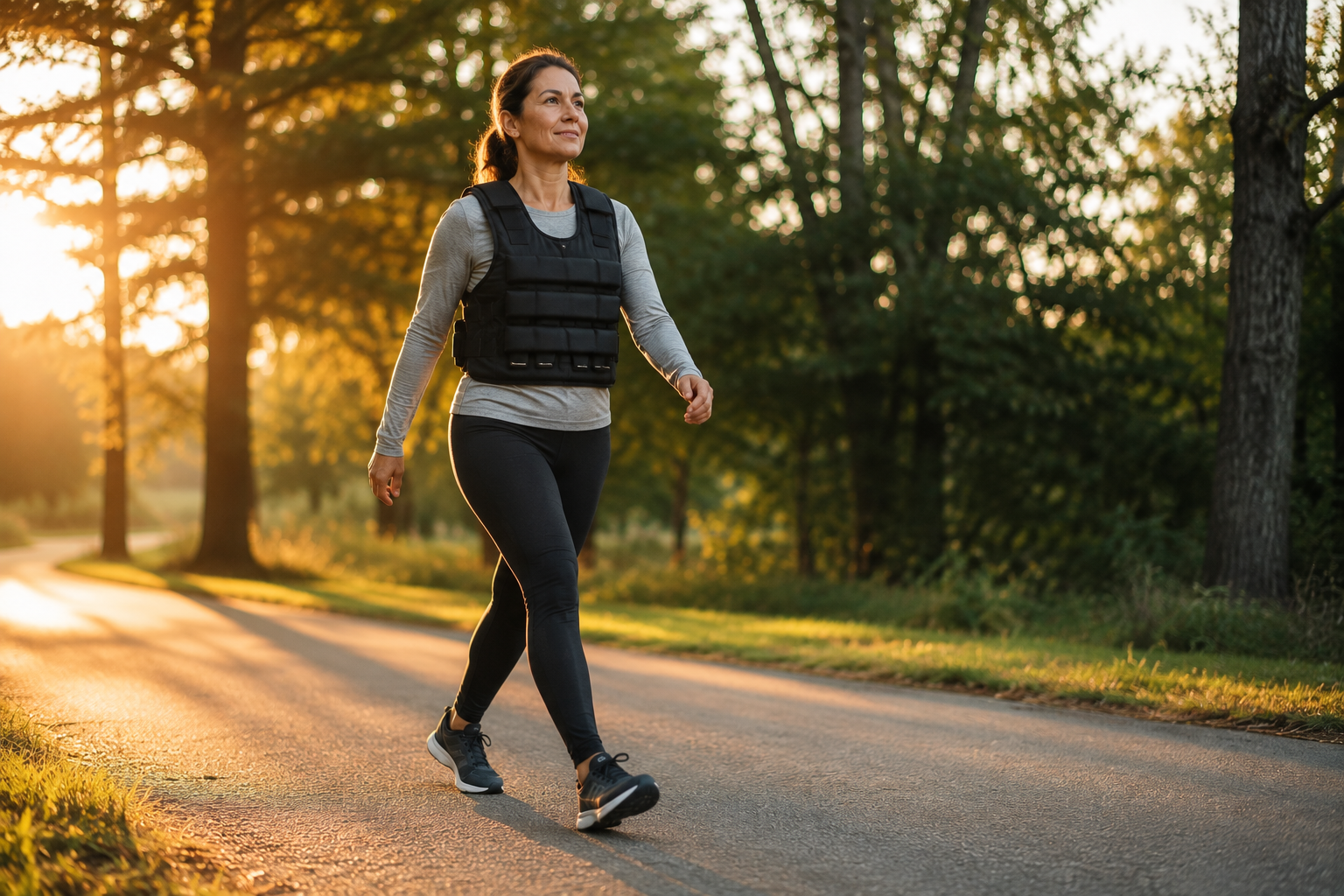
A weighted vest turns an ordinary walk into a loaded one. Add ten or fifteen pounds evenly across the torso, keep the same route and pace, and the body suddenly has to work against more resistance with every stride. That simple change is why weighted vest walking has moved from a niche training tool used by soldiers and search-and-rescue teams into mainstream fitness routines, retirement communities, and physical therapy clinics.
The appeal rests on two ideas. First, added load increases the metabolic cost of walking, so the same thirty-minute loop burns more energy and raises heart rate without requiring a faster pace or a longer route. Second, and arguably more interesting to researchers, is the concept of osteogenic loading: bone tissue responds to mechanical stress by remodeling itself and, over time, becoming denser in the areas that bear the load. This idea traces back to Wolff’s Law, a principle described by German surgeon Julius Wolff in the nineteenth century, which holds that bone architecture adapts to the forces placed on it. Walk under a bit of extra weight consistently, the reasoning goes, and the hips and spine receive a stimulus they would not get from bodyweight walking alone.
That reasoning has research behind it. Investigators at Oregon State University, led by bone health researcher Christine Snow, studied postmenopausal women who wore weighted vests as part of a structured exercise program and found the intervention was associated with preserved bone mineral density at the hip, a site especially vulnerable to fracture-related bone loss after menopause. A related study from the same research group reported that a weighted vest exercise program improved balance and fall-risk indicators in older women, which matters because falls, not just low bone density on its own, are what actually lead to fractures. These findings are part of why physical therapists and geriatric exercise specialists have taken an interest in vest walking beyond its use as a general conditioning tool.
None of that means more weight is automatically better. The same load that stimulates bone and muscle can also strain joints, alter gait, and increase fall risk if it is added too quickly or carried incorrectly. This article lays out what the available guidance actually supports: how much weight to start with, how to progress, who should get medical clearance first, and how to fit a vest so the load helps rather than hurts.
Why Weighted Vest Walking Has Caught On
Three trends converged to make this a popular habit rather than a fringe one. Walking itself has surged as a low-barrier form of exercise, particularly among people returning to fitness after a break or looking for something gentler than running. At the same time, interest in bone health has grown as more people, especially women approaching or past menopause, learn that bone density loss is largely silent until a fracture happens. Finally, “rucking,” the military-derived practice of walking with a loaded backpack, has crossed over into general fitness culture, popularized by veterans-turned-trainers and endurance athletes looking for a low-impact way to build strength and cardiovascular capacity at the same time.
Weighted vest walking sits at the intersection of these three trends. It requires no gym membership, no technical skill, and no more time than a regular walk already takes. It gives a workout that is easy to scale: a five-pound vest and a fifteen-pound vest turn the identical walking route into two very different training stimuli. And unlike a loaded backpack, a properly fitted vest distributes weight across the torso rather than pulling on the shoulders and lower back, which keeps posture more neutral during longer sessions.
There is also a practical appeal for people managing time. A twenty-minute vested walk can approximate the cardiovascular and muscular demand of a longer unweighted walk, which matters for anyone trying to fit meaningful activity into a packed schedule. Add the potential bone-loading benefit, and it is easy to see why physical therapists now sometimes prescribe vest walking as part of a broader bone health or fall-prevention plan, alongside resistance training and balance work rather than as a replacement for either.
The muscular side of the equation deserves its own mention. Walking under load recruits the glutes, hamstrings, calves, and core more than unweighted walking does, simply because those muscles have to stabilize and propel more mass with each step. For someone who finds traditional strength training intimidating or inaccessible, a weighted vest offers a way to build lower-body and postural strength using a movement pattern they already know how to do. It is not a substitute for dedicated resistance training with progressive loading through a full range of motion, but it does add a strength component to what would otherwise be a purely cardiovascular activity.
Convenience is a real factor too. A vest can be put on in the time it takes to tie a pair of shoes, requires no setup, and works on any route a person already walks, whether that is a neighborhood loop, a treadmill, or a hiking trail. That low barrier to entry is part of why the habit has spread quickly among people who tried a single walk with a vest and noticed the difference immediately, then kept it as a standing part of their routine rather than a one-time experiment.
How Much Weight Is Safe to Start With
The load guidance that shows up consistently across physical therapy and strength coaching sources centers on a percentage of bodyweight rather than a fixed number of pounds, because a fifteen-pound vest is a very different stimulus for a 130-pound person than for a 220-pound person. The general starting range recommended by trainers and rehabilitation specialists for healthy adults new to vest walking is about five to ten percent of bodyweight. For a 150-pound person, that works out to roughly seven and a half to fifteen pounds; for a 180-pound person, about nine to eighteen pounds.
This starting range is intentionally conservative. The goal in the first few weeks is not maximum stimulus but a load the body can carry through a full walk without changing stride length, rounding the shoulders forward, or leaning noticeably at the hips. Gait compensations like these are the clearest sign that a vest is too heavy for a given stage of training, and they tend to show up well before someone feels obviously overloaded.
Load-carriage research conducted with military populations, where soldiers routinely carry packs well above twenty percent of bodyweight over long distances, offers a useful contrast rather than a template. That research consistently shows that as carried load increases as a percentage of bodyweight, trunk lean increases, stride characteristics change, and joint loading at the hip, knee, and ankle rises. Soldiers train specifically to tolerate those loads over months of conditioning. Someone starting weighted vest walking for general fitness or bone health is not working toward a rucking load; the goal is a modest, sustainable stimulus, and the evidence for bone and cardiovascular benefit does not require anywhere near military carrying loads to be effective.
Starting Load Guidelines by Bodyweight
| Bodyweight | Beginner Load (5%) | Established Load (10%) | Upper General Limit (15-20%) |
|---|---|---|---|
| 120 lb | 6 lb | 12 lb | 18-24 lb |
| 150 lb | 7.5 lb | 15 lb | 22.5-30 lb |
| 180 lb | 9 lb | 18 lb | 27-36 lb |
| 210 lb | 10.5 lb | 21 lb | 31.5-42 lb |
These figures are general starting points for healthy adults, not fixed prescriptions. Trained individuals with a conditioning base may work toward the upper end over months; the upper limit is not a target for beginners and should not be approached without a clean progression history and, for many people, a clinician’s input.
A Progression Protocol That Builds Load Gradually
Progressive overload, the principle of gradually increasing training demand so the body has time to adapt, applies to vest walking the same way it applies to lifting weights or increasing running mileage. Jumping straight to a heavier vest because the first week felt easy is one of the more common ways people turn a useful tool into a source of knee or lower back irritation.
A workable protocol looks like this:
- Weeks 1-2: Walk with roughly five percent of bodyweight for twenty to thirty minutes, two to three times per week, on familiar flat terrain. The focus is entirely on maintaining normal posture and stride.
- Weeks 3-4: If posture and stride have stayed unchanged and there is no joint soreness the next day, add a small increment, generally no more than two to three pounds, or extend duration by five to ten minutes before adding weight.
- Weeks 5-8: Continue alternating between small load increases and duration increases, aiming to reach roughly eight to ten percent of bodyweight by the end of this block for most healthy adults.
- Beyond eight weeks: Further increases toward the fifteen to twenty percent range should be reserved for people with a solid conditioning base, no joint pain, and ideally guidance from a physical therapist or trainer familiar with load-carriage work. Many people find that ten percent already delivers a meaningful, sustainable training effect and never need to go higher.
Two rules apply throughout: change one variable at a time (load or duration, not both in the same week), and treat any new joint pain, not just general fatigue, as a signal to drop back to the previous load rather than pushing through it. A day of stiffness that resolves by the next morning is a normal adaptation response; pain that lingers or worsens during a walk is not.
Who Should Be Cautious or Get Medical Guidance First
Weighted vest walking is not appropriate for everyone to start without a conversation with a healthcare provider first. The added compressive and rotational forces through the spine, hips, and knees mean that certain conditions call for a more careful approach, and in one case, avoidance altogether.
Talk to a Clinician Before Adding Load If You Have:
- Osteoporosis or a prior fragility fracture. The Bone Health and Osteoporosis Foundation notes that people who have already broken a bone due to osteoporosis, or who are at high fracture risk, may need to avoid high-impact loading and should work with a healthcare provider or exercise specialist to confirm which activities are appropriate.
- Joint issues in the knees, hips, or ankles, including arthritis, prior joint replacement, or a history of recurring joint pain. Added vertical load increases joint compression with every step.
- Chronic back problems, including disc issues, spinal stenosis, or a history of low back injury. A vest changes trunk loading even when well fitted, and poor posture under load compounds that further.
- Balance concerns or a recent fall. Any load that shifts the body’s center of mass warrants caution in someone whose balance is already unreliable.
- Cardiovascular conditions that require medical clearance for changes in exercise intensity, since added load raises heart rate and metabolic demand at a given pace.
Pregnancy is a contraindication for weighted vest training. Pregnancy changes the body’s center of gravity, loosens ligaments through hormonal shifts, and increases fall risk on its own; adding external load compounds all three factors and offers no established benefit that outweighs the risk. Pregnant individuals who want to continue walking for fitness should do so without a weighted vest and should follow their obstetric provider’s activity guidance generally.
For everyone else, “caution” does not mean avoidance. It means starting lighter than the general guideline, progressing more slowly, and checking in with a physical therapist or physician, particularly one experienced in bone health or orthopedic rehabilitation, before adding meaningful load. A short conversation before starting is far less disruptive than an overuse injury three months in.
Vest Fit and Posture: The Details That Determine Whether It Helps or Hurts
A vest that fits poorly can undo the benefit of an otherwise sensible loading plan. A few fit and form details matter more than most people expect.
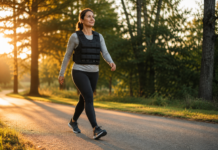
Weight distribution. Look for a vest with load spread evenly across the front and back panels rather than concentrated in a few heavy pockets. Uneven distribution creates a pull to one side that shows up as compensatory trunk rotation over the course of a walk.
Snugness against the torso. A vest that shifts or bounces with each stride does two unhelpful things: it wastes energy correcting the bounce instead of applying it to forward motion, and it can chafe or strain the shoulders over a longer walk. The vest should sit close to the body, roughly at the level a snug jacket would, without restricting rib expansion during breathing.
Placement relative to the hips. The bottom of the vest should stay clear of the hip bones so it does not interfere with the natural swing of the pelvis during walking. A vest that rides too low can dig into the hips and alter stride mechanics.
Posture cues during the walk. Keep the chest open and the gaze forward rather than down. A common compensation under load is a forward head and rounded upper back, which shifts stress onto the cervical spine and shoulders. Periodically check in: shoulders back and down, ribs stacked over the pelvis, core lightly engaged rather than braced hard.
Footwear and terrain. Supportive, well-cushioned shoes matter more with a vest than without one, since ground reaction forces increase with added weight. Uneven terrain, stairs, and downhill sections also load joints more under a vest, so it is reasonable to keep early sessions on flat, predictable surfaces and introduce varied terrain only after several weeks of adaptation.
None of these details require special equipment beyond the vest itself, but they are the difference between a walk that builds strength and one that quietly builds a repetitive strain injury.
Breathability and heat. Some vest materials trap heat against the torso, which matters more on warmer walks or in humid climates. Look for a vest with mesh panels or moisture-wicking fabric, and treat overheating or unusual shortness of breath as a reason to stop and remove the vest rather than push through the session. Hydration needs also rise slightly with added load, so it is worth carrying water on longer vested walks even in mild weather.
Checking in periodically. Every few weeks, it helps to reassess how the current load feels against the same benchmarks used at the start: normal stride length, level shoulders, no next-day joint soreness. Bodies adapt at different rates, and a load that felt appropriately challenging in week two may feel easy by week six, which is the natural cue to consider a small increase rather than a fixed calendar-based progression.
Bringing It Together
Weighted vest walking is a low-cost way to add cardiovascular and musculoskeletal stimulus to an activity most people already do. The research on weighted vest programs in postmenopausal women, the established physiology of bone remodeling under mechanical stress, and the practical simplicity of the tool explain why it has moved from a specialty training method into a mainstream habit. The guidance that makes it work safely is straightforward: start around five to ten percent of bodyweight, progress in small increments over weeks rather than days, fit the vest so weight sits close and even, and get medical input first if joint disease, osteoporosis, back problems, or pregnancy are part of the picture. Approached that way, a weighted vest turns a familiar walk into a genuinely useful piece of a long-term fitness and bone health plan rather than a shortcut that invites injury.
Frequently Asked Questions
How heavy should a weighted vest be for a beginner?
Start around five percent of bodyweight, roughly six to ten pounds for most adults, and hold that load for at least two weeks before adding more. The first goal is walking normally under load, not maximizing weight.
Can weighted vest walking actually improve bone density?
Research on structured weighted vest programs in postmenopausal women has found an association with preserved bone mineral density at the hip, a common fracture site. Bone responds to mechanical loading over time, so consistency across months matters more than the load used in any single walk.
How often should I walk with a weighted vest?
Two to three sessions per week is a reasonable starting frequency, with at least one rest day between vested walks early on so joints and connective tissue can adapt. Frequency can increase gradually once the body tolerates the current load well.
Is a weighted vest safe for someone with knee arthritis?
It may be, but only after a conversation with a physical therapist or physician, since added vertical load increases joint compression with every step. Many people with joint conditions do better starting with a lighter load and shorter duration than the general guideline suggests, or skipping vest walking in favor of unweighted walking and separate strength work.
Can I wear a weighted vest while pregnant?
No. Pregnancy already shifts the body’s center of gravity and loosens ligaments, and adding external load increases fall risk without an established benefit that justifies it. Continue walking for fitness without added weight and follow guidance from an obstetric provider.
What is the maximum weight I should work up to?
Most healthy adults get a meaningful, sustainable training effect at eight to ten percent of bodyweight and never need to exceed it. Loads in the fifteen to twenty percent range are reasonable only for people with a solid conditioning base and no joint pain, ideally under guidance from a trainer or therapist familiar with load-carriage training.
References
- Snow, C.M., Shaw, J.M., Winters, K.M., Witzke, K.A. Weighted vest exercise research on bone mineral density outcomes in postmenopausal women, Oregon State University bone research program.
- Shaw, J.M., Snow, C.M. Weighted vest exercise and fall-risk indicators in older women, Oregon State University bone research program.
- Bone Health and Osteoporosis Foundation. Guidance on weight-bearing exercise, high-impact versus low-impact activity, and precautions for individuals with prior fragility fracture or high fracture risk.
- Wolff, J. Foundational principle of bone remodeling in response to mechanical loading (Wolff’s Law), foundational orthopedic physiology.
- Military and occupational load-carriage biomechanics research on gait changes, trunk lean, and joint loading associated with external load carried as a percentage of bodyweight.
- General strength and conditioning literature on progressive overload as applied to walking-based and load-carriage training.