

























By Amara Williams
Somewhere along the way, 10,000 became the number everyone associates with a good walking day. It shows up on fitness trackers, in workplace wellness challenges, and in casual advice from friends and family. The trouble is that this figure was never tested in a lab. It traces back to a 1965 marketing campaign in Japan for a pedometer called manpo-kei, which translates roughly to “10,000-step meter.” The name was catchy, not clinical, and it has outlived the product by six decades.
For an active 35-year-old, chasing 10,000 steps might be a fine, if arbitrary, target. For a 72-year-old managing arthritis, recovering from a hip replacement, or simply working with a body that moves differently than it did at 40, that same number can feel discouraging, unsafe, or flatly out of reach. And here is the part that rarely makes it into the conversation: research specifically on older adults suggests they don’t need anywhere close to 10,000 steps to see real, measurable reductions in health risk.
This article walks through what the research on older adults and step counts actually shows, why lower thresholds still produce strong benefits in this age group, and how to set a target that reflects your own mobility, health history, and goals rather than a number borrowed from a 1960s marketing slogan.
Why a One-Size Step Target Doesn’t Fit Older Adults
Step-count research has exploded over the past decade, and one consistent finding keeps surfacing: the relationship between steps and health outcomes is not a straight line, and it changes with age. Younger, healthier populations tend to see mortality risk continue dropping until somewhere around 8,000 to 10,000 steps a day before the curve flattens. Older populations, particularly those over 60, show a different pattern. Their risk reduction curve tends to flatten out earlier, often well below 8,000 steps.
This matters for two reasons. First, it means older adults who feel they are “failing” to hit a young adult’s target may already be capturing most of the available benefit. Second, it means that generic advice, the same 10,000-step banner slapped on every fitness app regardless of who is using it, can quietly discourage the people who stand to gain the most from walking more.
There is also a physiological piece to this. Muscle mass, cardiovascular capacity, joint cartilage, and balance systems all change with age, sometimes gradually and sometimes abruptly after an illness or injury. A step target that ignores these realities is not a neutral number. It is a number built for a different body.
What the Research Actually Shows
The most frequently cited study on this topic followed 16,741 women in the Women’s Health Study, with a mean age of 72, tracking their daily step counts with wearable monitors and following their health outcomes over an average of 4.3 years. The results, published in JAMA Internal Medicine by Lee and colleagues, are worth walking through in detail because they reshape the usual step-count narrative.
Researchers divided participants into four groups based on their average daily steps:
- Lowest group: a median of 2,718 steps per day
- Second group: a median of 4,363 steps per day
- Third group: a median of 5,905 steps per day
- Highest group: a median of 8,442 steps per day
Compared with the lowest group, women in the second group, averaging around 4,400 steps daily, had a mortality risk about 41 percent lower over the study period (hazard ratio of 0.59). Women in the highest group, averaging around 8,400 steps, saw mortality risk drop by about 58 percent (hazard ratio of 0.42). The relationship followed what researchers describe as an L-shaped curve: risk fell steeply between the lowest and second-lowest groups, then continued falling more gradually until leveling off around 7,500 steps per day.
Two details from this study deserve extra attention. The first is how early the benefit shows up. Moving from roughly 2,700 to roughly 4,400 steps, an increase well within reach for most people with mobility limitations, was associated with a substantial drop in mortality risk. The second is that step intensity, meaning how fast the steps were taken, did not appear to add much benefit once total step volume was accounted for. Total daily movement mattered more than pace in this older population.
This lines up with a broader pattern researchers have observed across multiple cohort studies: for adults in their 60s, 70s, and beyond, the steepest part of the benefit curve sits at a lower step count than it does for younger adults. That does not mean more steps stop mattering entirely. It means the point of diminishing returns arrives sooner, and the first few thousand steps carry disproportionate weight.
Age-Adjusted Step Targets: A Starting Framework
| Current activity level | Realistic starting target | Progression goal (8-12 weeks) |
|---|---|---|
| Mostly sedentary, recovering from illness or surgery, or new to regular walking | 1,500-2,500 steps/day | 3,000-4,000 steps/day |
| Light activity most days, some joint or balance concerns | 3,000-4,000 steps/day | 4,500-6,000 steps/day |
| Regular walker, generally stable health, no major mobility limits | 5,000-6,500 steps/day | 7,000-7,500 steps/day |
| Active older adult, strength and balance training already part of routine | 7,000-8,000 steps/day | 8,000-9,000 steps/day, if desired |
These ranges are a starting framework, not a prescription. They reflect the general pattern seen in older-adult step research, where the largest mortality-risk reductions occur between roughly 2,700 and 7,500 steps per day. Individual targets should account for existing conditions, medications, and guidance from a healthcare provider.
Setting a Target That Fits Your Actual Body
A useful step goal starts with a baseline, not a guess. Wear a phone or a basic pedometer for a normal week without trying to change anything, then look at the average. That number, not a headline figure from an app, is the honest starting point.
From there, a reasonable approach is to aim for a 10 to 15 percent increase over two to four weeks, then hold that new level for a while before increasing again. This mirrors how physical therapists typically progress walking programs after injury or surgery: small, sustainable jumps rather than large leaps that risk soreness, joint irritation, or burnout.
A few factors should shape where an individual lands within the ranges in the table above:
- Joint health. Osteoarthritis in the hips, knees, or feet can make a flat, cushioned surface far more comfortable than pavement, and can mean shorter, more frequent walks beat one long outing.
- Cardiovascular status. Anyone managing heart disease, uncontrolled high blood pressure, or a recent cardiac event needs a target set in coordination with a cardiologist or physician, not a fitness app default.
- Balance and fall history. A history of falls changes the calculus. Volume matters less here than stability, footwear, and terrain, at least until balance work has been added to the routine.
- Energy and fatigue patterns. Conditions like anemia, thyroid disorders, or certain medications can limit how much walking feels reasonable on a given day. Targets built around a “good day” average, not a best day, tend to hold up better over time.
- Weather and daylight. Shorter winter days and icy sidewalks are a real barrier for many older walkers. Indoor options, such as mall walking or a treadmill, deserve a place in the plan rather than being treated as a fallback.
None of this is about setting the bar low. It is about setting the bar where it will actually get cleared, consistently, for months and years, rather than for one motivated week in January.
Choosing a Way to Track Steps That You’ll Actually Use
The best tracking method is the one that gets checked. A basic clip-on pedometer costs little, requires no charging routine to remember, and does the one job it needs to do. A smartphone carried in a pocket or bag will count steps reasonably well for most people, though accuracy drops for anyone who uses a walker or rollator, since those devices change arm swing and stride pattern in ways that can undercount steps.
Wrist-worn fitness trackers and smartwatches add heart rate and sleep data, which some people find motivating and others find overwhelming. For someone managing a chronic condition, a tracker that also monitors heart rate can be genuinely useful for a physician to review at appointments. For someone who mainly wants a simple daily number, a basic pedometer avoids the distraction of extra metrics and notifications.
Whatever the device, the number on the screen should be read as a rough guide rather than a precise measurement. Step counters can misread very slow walking, shuffling, or step patterns altered by joint pain, sometimes undercounting by a meaningful margin. If a count seems consistently low relative to how much walking actually happened in a day, that is worth noting rather than treating as a personal shortfall.
A written or digital log, even a simple paper calendar with a number jotted down each evening, tends to outperform an app that nobody opens. The goal is a record accurate enough to spot a trend over weeks, not a perfectly precise tally of every single step.
How Common Conditions Change the Step-Goal Conversation
Step targets do not exist in a vacuum. Several conditions common in older adulthood change how a target should be set and progressed, and it helps to name a few directly.
- Osteoarthritis. Walking is generally safe and often beneficial for knee and hip arthritis, but shorter, more frequent walks on forgiving surfaces tend to work better than one long walk on pavement. Pain that lingers well past a walk, rather than easing within an hour or so, is a signal to scale back and check in with a provider.
- Type 2 diabetes. Regular walking supports blood sugar management, but anyone on insulin or certain other medications should understand how activity affects blood sugar and carry a fast-acting carbohydrate source on longer walks, per standard diabetes care guidance.
- Osteoporosis or low bone density. Weight-bearing walking supports bone health, but a history of vertebral fractures may call for guidance on posture and movement patterns from a physical therapist before increasing volume.
- Chronic obstructive pulmonary disease and other respiratory conditions. Step counts may need to be paced around breathing capacity, with shorter, more frequent bouts often working better than continuous long walks. Pulmonary rehabilitation programs, when available, can help establish a safe starting target.
- Peripheral neuropathy. Reduced sensation in the feet raises the stakes on footwear, terrain, and foot checks after walks, since injuries can go unnoticed without visible discomfort.
None of these conditions rule out walking as a goal. They simply mean the target and the progression pace should be set with the condition in mind, ideally with input from whoever manages that condition clinically.
Balance and Fall Prevention Belong in the Plan, Not on the Side
Walking builds cardiovascular fitness and leg strength, but it is not, on its own, a fall-prevention program. That distinction matters because falls are a serious risk for this age group. More than one in four older adults falls each year, and having one fall roughly doubles the likelihood of another. About 37 percent of falls result in an injury serious enough to require medical treatment or to limit activity for at least a day, and older-adult falls account for close to 3 million emergency department visits and around 1 million hospitalizations annually in the United States, according to the CDC. Hip fractures alone account for a large share of fall-related hospital stays and deaths.
The Centers for Disease Control and Prevention recommends that adults 65 and older get at least 150 minutes of moderate-intensity aerobic activity weekly, along with muscle-strengthening activities on two or more days, and activities specifically aimed at improving balance. The National Institute on Aging points to tai chi, yoga, Pilates, and resistance training with bands or light weights as effective ways to build the stability that walking alone does not fully address.
Fall-Prevention Checklist to Pair With Your Step Goal
- Add 10-15 minutes of dedicated balance practice at least twice a week (single-leg stands near a counter, heel-to-toe walking, tai chi).
- Include resistance training for legs and hips twice weekly to support the muscles that stabilize each step.
- Review footwear. Worn-out soles and loose slippers are a common, fixable fall risk.
- Walk familiar, well-lit routes when starting out, and save uneven or unfamiliar terrain for later in the progression.
- Ask a doctor or pharmacist whether any current medication affects dizziness, blood pressure, or balance.
- If a fall has happened in the past year, mention it at the next medical appointment. Many falls are preventable once the underlying cause is identified.
Integrating balance work does not need to compete with a step goal for time. A short balance routine before or after a daily walk adds only a few minutes and directly supports the stability needed to keep walking safely as step counts increase.
A Word on Medical Clearance
Older adults managing heart disease, diabetes, osteoporosis, chronic obstructive pulmonary disease, a recent joint replacement, or any condition affecting balance should talk with a doctor before increasing activity substantially, particularly before adding intensity, hills, or a large jump in daily distance. This is a standard, well-supported recommendation in geriatric exercise research, and it is not about discouraging movement. It is about making sure the plan matches the person. A physician or physical therapist can also flag specific precautions, such as blood sugar monitoring around exercise for someone with diabetes, or joint-loading limits after a recent surgery.
For most healthy older adults without major chronic conditions, a gradual increase in daily walking is low risk and well supported by the evidence. The caution here is aimed specifically at those with existing conditions who are planning a meaningful jump in activity, not at every older person considering a walk after dinner.
Making the Target Stick
A step count only helps if it turns into a habit. A few practical anchors tend to work well for older adults specifically:
- Anchor walks to existing routines. A walk after breakfast or before an evening show is easier to sustain than one that requires carving out a brand-new block of time.
- Track trends, not single days. A weekly average smooths out the days affected by weather, appointments, or fatigue, and gives a more honest picture than any one day’s total.
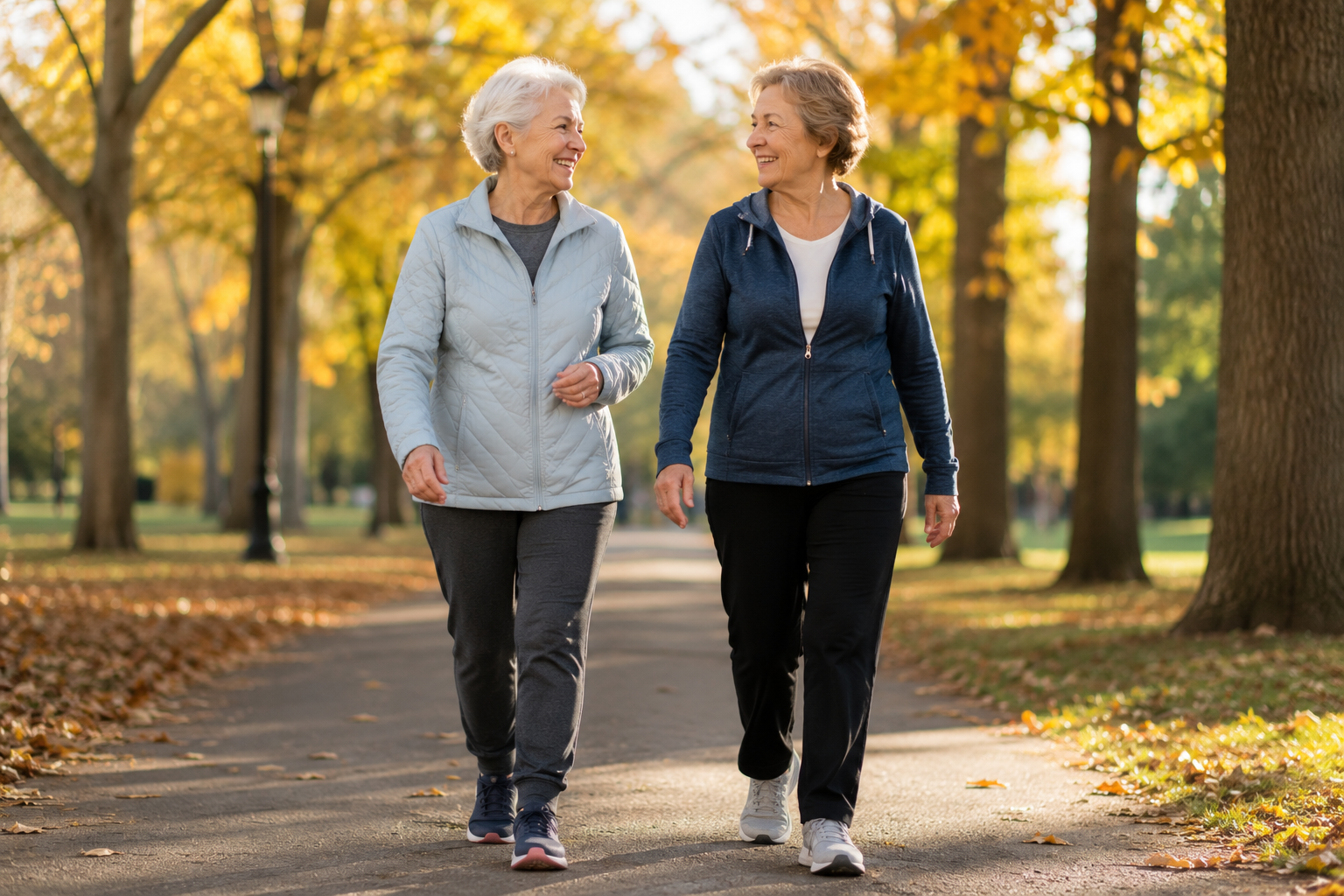
- Walk with someone when possible. Social walking groups, a neighbor, or a regular phone call during a walk all increase the odds of showing up, and add a safety benefit for those walking outdoors.
- Reassess after any health change. A new diagnosis, a hospital stay, or a medication change is a natural point to revisit the target rather than assuming the old number still fits.
- Celebrate consistency over totals. A week of steady 4,000-step days reflects a more durable habit than one 9,000-step day followed by three days of rest caused by soreness or fatigue.
It also helps to separate the idea of a “good” walking day from a single step total. A slower walk on a day with joint pain, a shorter loop because of weather, or a rest day after a poor night’s sleep are all normal parts of a sustainable routine, not failures against a number. Older adults who keep walking consistently for years tend to describe their routine in terms of habit and enjoyment first, with the step count serving as a helpful check-in rather than the entire point of the exercise.
Step goals for older adults work best when they are treated as a living framework rather than a fixed finish line. The research points to real, meaningful benefit well below 10,000 steps a day, especially for people starting from a lower baseline. A target built around an individual’s actual health, mobility, and daily life will do more for long-term wellbeing than any round number borrowed from a decades-old marketing campaign. The goal is not to match someone else’s fitness tracker. It is to move a little more than yesterday, safely, in a way that fits the life being lived today.
Frequently Asked Questions
How many steps a day should someone over 65 aim for?
There is no single number that applies to everyone. Research on older women found meaningful drops in mortality risk starting around 4,400 steps a day, with benefits leveling off near 7,500 steps. A reasonable starting range for most older adults is 3,500 to 7,000 steps a day, adjusted for current fitness and any health conditions.
Is 10,000 steps a day necessary for health benefits?
No. The 10,000-step figure came from a 1960s pedometer marketing campaign in Japan, not from clinical research. Studies in older populations show significant reductions in mortality risk at step counts well below 10,000, often in the 4,000 to 7,500 range.
What if I can only manage a few hundred steps a day right now?
Start where you are. Research on step counts and health outcomes consistently shows that moving from a very low baseline to even a modestly higher one produces the largest relative benefit. Small, consistent increases matter more than hitting a specific round number.
Should I talk to a doctor before increasing my step count?
If you have a cardiovascular condition, joint disease, diabetes, a recent fall, balance problems, or any condition managed with medication, check with your doctor before substantially increasing activity. This is especially true if you plan to add intensity, hills, or longer distances quickly.
Do steps alone prevent falls?
Walking more helps build general endurance and leg strength, but it is not a substitute for dedicated balance and strength training. The CDC and the National Institute on Aging both recommend pairing regular walking with balance-specific exercise, such as tai chi or standing balance drills, to reduce fall risk.
How should I adjust my step goal as I age or if my health changes?
Treat your step goal as a moving target tied to your current condition rather than a fixed lifetime number. Reassess every few months, after any illness, injury, or surgery, and after any medication change that affects energy or balance.
References
- Lee, I-M., et al. “Association of Step Volume and Intensity With All-Cause Mortality in Older Women.” JAMA Internal Medicine, 2019.
- Centers for Disease Control and Prevention. “Physical Activity Guidelines for Older Adults.” cdc.gov.
- Centers for Disease Control and Prevention. “Older Adult Falls: Data and Statistics.” cdc.gov.
- National Institute on Aging. “Fall-Proofing Your Home” and “Four Types of Exercise Can Improve Your Health and Physical Ability.” nia.nih.gov.