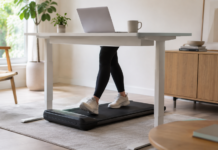





























A desk job does not leave much open space in the day. The calendar is full of meetings, the commute eats an hour or two, and by the time dinner is done, most people have little energy left for a workout. Building a weekly cardio plan around that reality means designing around fixed blocks of time instead of hoping a free hour will appear on its own.
This guide walks through a practical process for building that plan: mapping your actual free time, placing cardio into lunch breaks, before-work and after-work windows, and weekends, and folding movement into the commute itself. The result is a template you can copy, adjust to your own schedule, and use starting this week.
None of the steps below assume a gym membership, a personal trainer, or a flexible boss. They assume the ordinary constraints of a full-time office job: fixed hours, a set commute, a limited lunch break, and a body that is tired by 6 p.m. The plan is built to work inside those limits rather than around them.
Why a Desk Job Changes How You Should Plan Cardio
Most general fitness advice assumes an open schedule. Someone tells you to exercise for 30 minutes a day and leaves the timing up to you. For a person sitting at a desk from roughly 9 a.m. to 5 p.m., with a commute on either side, that advice is incomplete. The question is not just how much cardio to do, but where in the day it can physically fit.
The stakes are real. Research summarized by CNN found that people whose jobs keep them mostly seated have about a 16% higher risk of death from any cause compared with people who move more during the day, even when they exercise outside of work hours. Long, uninterrupted sitting appears to carry its own risk, separate from whether you hit a weekly exercise target. That means a cardio plan for desk workers has two jobs at once: build up cardiovascular fitness across the week, and break up the hours of continuous sitting that happen in between sessions.
The starting target most public health bodies agree on is straightforward. The CDC recommends 150 minutes of moderate-intensity aerobic activity a week, or 75 minutes of vigorous activity, plus at least two days of muscle-strengthening work. The American Heart Association echoes this and adds that spreading activity across the week, rather than saving it all for one day, produces the most consistent benefit, though it also notes that people who manage 300 minutes a week gain even more.
Step 1: Map Your Real Weekly Time Budget
Before assigning any workouts, write down where your time actually goes on a typical weekday. Most desk workers find four realistic windows: before work, the lunch break, after work, and the commute itself. Weekends open up longer blocks that weekdays cannot offer.
Time-Budget Callout: A Typical Desk-Job Weekday
- 6:00-7:00 a.m. – Before-work window (20-40 minutes usable after waking, showering, dressing)
- 7:00-9:00 a.m. – Commute (10-20 minutes of it can become active time)
- 9:00 a.m.-12:00 p.m. – Work block, seated
- 12:00-1:00 p.m. – Lunch break (25-40 minutes usable for cardio after eating and changing)
- 1:00-5:00 p.m. – Work block, seated
- 5:00-7:00 p.m. – Commute plus after-work window (30-60 minutes usable, energy permitting)
Add up the minutes you can realistically claim, not the minutes you wish you had. If your lunch break is 30 minutes total and you need 10 for eating, you have 20 minutes for movement, not 30. Being honest here is what makes the rest of the plan sustainable.
Step 2: Build Around Lunch-Break Sessions
The lunch break is often the most reliable window in a desk job because it repeats every single day and does not depend on how tired you are after work. Even a short session counts. A study published in Diabetes Care found that three 15-minute walks after meals improved 24-hour blood sugar control in older adults at risk for impaired glucose tolerance more effectively than one continuous walk of the same total length. That finding supports splitting cardio into shorter, meal-adjacent bouts rather than insisting on one long session.
For a desk job, that translates into a simple pattern: eat first, then walk briskly, use a stairwell, or do a short interval session on a treadmill or bike if your office has one. Fifteen to twenty-five minutes is enough to matter. If your building has stairs, five to eight minutes of repeated flights is one of the most time-efficient cardio options available during a workday, since it raises heart rate quickly without requiring a change of clothes.
Two to three lunch sessions a week is a reasonable target for most schedules. That leaves other weekdays open for meetings that run long or days when eating lunch at your desk is unavoidable.
Step 3: Use Before-Work and After-Work Windows
Morning sessions tend to be more consistent because they happen before the day has a chance to derail them. A meeting that runs late at 4 p.m. cannot cancel a workout you already finished at 6:30 a.m. The tradeoff is an earlier wake time, which not everyone can sustain long-term.
After-work sessions offer more flexibility in duration since there is no hard stop before the next scheduled event, but they compete with fatigue and the temptation to just go home. If you choose an after-work slot, put it directly after leaving the building, before you sit down again. Momentum matters more than motivation at that point in the day.
A workable pattern is to pick two weekday slots, either both in the morning, both after work, or one of each, and treat them the same way you would treat a recurring meeting: on the calendar, with a start time.
Step 4: Save Longer Sessions for the Weekend
Weekends are where a desk-job schedule finally opens up, and they are worth using for the cardio sessions that need more time: a longer run, a bike ride, a hike, or a swim of 45 to 75 minutes.
Research on the “weekend warrior” pattern supports this approach. A large cohort study published in JAMA Internal Medicine compared people who concentrated their exercise into one or two weekend sessions against people who spread the same total volume across three or more days per week. The concentrated group had a mortality hazard ratio of 0.70 compared with inactive people, while the more frequent group had a hazard ratio of 0.65, a small enough gap to suggest that total weekly volume matters more than how evenly it is distributed. For someone whose weekdays are already tightly booked, that is useful news: two solid weekend sessions plus a modest amount of weekday movement can approach the benefit of a more evenly spread routine.
Use the weekend to add variety, too. Cardio that feels different from a treadmill walk, such as a trail hike or a group cycling class, is easier to stay motivated for over months and years.
Step 5: Fold Cardio Into the Commute
The commute is dead time in most schedules, but small changes can turn part of it into cardio without requiring an extra block on the calendar. Options include biking part or all of the way to work, getting off public transit one or two stops early and walking the rest, or parking at the far end of the lot.
Beyond the commute itself, short movement breaks during the workday matter on their own. Research from Columbia University found that a five-minute walk every 30 minutes during a period of prolonged sitting reduced post-meal blood sugar spikes by 58% compared with sitting all day, and also lowered blood pressure by 4 to 5 mmHg, a reduction the lead researcher compared to what you would expect from six months of regular exercise. None of the other break patterns tested, including longer but less frequent walks, matched that result for blood sugar control.
Setting a phone reminder every 30 minutes to stand and walk for five minutes is not a replacement for your scheduled cardio sessions, but it is one of the few interventions with a specific, measured effect on the health risks tied to sitting itself.
Step 6: Assemble Your Sample Week
With the building blocks in place, here is a full week that fits a standard 9-to-5 desk job. Adjust the days and slots to match your own calendar; the structure is what matters.
| Day | Time Slot | Cardio Activity | Duration |
|---|---|---|---|
| Monday | Before work | Brisk walk or jog | 25 minutes |
| Tuesday | Lunch break | Stair repeats or fast walk | 20 minutes |
| Wednesday | Commute | Bike part of the route, or walk one extra transit stop | 15-20 minutes |
| Thursday | Lunch break | Treadmill or outdoor interval walk | 20 minutes |
| Friday | After work | Easy recovery walk or light cycling | 20 minutes |
| Saturday | Morning | Long run, hike, or bike ride | 60 minutes |
| Sunday | Flexible | Swim, group class, or active rest walk | 45 minutes |
That template adds up to roughly 205 minutes of dedicated cardio across the week, comfortably above the CDC’s 150-minute moderate-intensity target, plus regular five-minute movement breaks spread through each workday. Every weekday slot is 25 minutes or shorter, so the plan survives busy weeks even if only two or three sessions actually happen.
Choosing the Right Cardio Activity for Each Time Slot
Not every form of cardio fits every window. Matching the activity to the constraints of the slot is what makes the plan repeatable instead of something you abandon after one sweaty, rushed lunch hour.
For the lunch-break slot, choose activities that do not require a shower afterward unless your office has one. A brisk walk at a pace that still lets you talk in short sentences, a set of stair repeats, or 15 minutes on a stationary bike at a moderate pace all raise heart rate without leaving you drenched. Save anything genuinely vigorous, such as running intervals or a heavy circuit session, for a slot where you can change clothes and cool down before returning to your desk.
For before-work sessions, pick something that does not depend on daylight or weather if your mornings start before sunrise for part of the year. A treadmill, stationary bike, or a rowing machine at home removes that variable. If you prefer to be outside, keep a backup indoor option in reserve for the darker months.
After-work sessions are the place for equipment-based cardio that takes a bit longer to set up, such as a spin class, a swim, or a longer outdoor run, since there is no hard stop waiting on the other side. Weekend sessions are the best place to try activities that need travel time or daylight, like trail running, road cycling, or a hike, since the extra setup time is easier to absorb.
Keeping two or three go-to activities per slot, rather than trying to plan something new every day, also reduces the number of small decisions you have to make during an already busy week.
Adjusting the Plan as Your Fitness Improves
A weekly cardio plan built around a desk job should not stay static for months at a time. As base fitness improves, the same time slots can carry more work without adding extra minutes to the week.
The simplest early progression is intensity within the existing time blocks: a 20-minute lunch walk becomes a 20-minute walk with several one-minute pickups at a faster pace, then eventually a run-walk interval session of the same length. This keeps the schedule identical while increasing the training effect, which matters for a desk job where the time slots themselves are close to fixed.
A second progression is converting one flat-paced session per week into a structured interval session, since short bursts of higher effort followed by recovery periods can improve cardiovascular fitness efficiently within a compressed time window. A 20-minute lunch slot is enough room for a warm-up, six to eight rounds of harder effort alternated with easier recovery, and a short cool-down.
Reassess the plan roughly every four to six weeks. If a session has started to feel easy at the same duration and pace, that is the signal to add intensity, a small amount of extra time, or an additional short session during the week, rather than leaving the plan unchanged indefinitely.
Realistic Time Budgeting: What It Actually Costs
It helps to see the true weekly cost side by side with the guideline it is meeting. A person following the sample week above spends about 3 hours and 25 minutes on dedicated sessions, plus roughly 15-20 minutes a day on movement breaks, which adds another 75-100 minutes across five workdays. Total weekly time investment lands close to 4.5 to 5 hours, split across seven days rather than concentrated into one or two large blocks. For comparison, the AHA’s higher benchmark of 300 minutes a week for additional benefit is about 5 hours, so this plan sits right at that upper range once movement breaks are counted.
None of these blocks require a gym membership, special equipment, or a shower at the office, though access to any of those can make a session easier to fit in. The plan works because each piece is short enough to survive a bad week: missing one lunch session still leaves the before-work walk, the commute changes, and the weekend session intact.
Troubleshooting Common Obstacles
A meeting that runs past your lunch window is the most common disruption. Build in a backup slot, such as a 10-minute stair session right before you leave the office, so a missed lunch walk is not a lost day entirely.
Work-from-home days change the math in a useful way: no commute means the 15-20 minutes you would have spent getting to transit or your car can move straight into a walk or a short workout at the start or end of the day.
Travel weeks are the hardest to plan around. Treat them as a reset rather than a failure, and lean on the hotel stairwell or a walk around the block for a few days until your normal week resumes. Energy dips in the late afternoon are common; a short 10-minute walk before a workout, rather than sitting down first, tends to make it easier to start.
Weather is another frequent disruption for outdoor sessions. Keep one indoor backup activity, such as a set of stair repeats in your building or a home workout video, mapped to each outdoor slot so a rainy day does not turn into a skipped day. Illness and poor sleep call for a different response: scale the session down to a short, easy walk rather than skipping entirely, since a light session tends to be easier to resume from than a full week off.
Finally, treat the first two weeks of any new plan as a trial period. Note which slots actually happened and which ones repeatedly got skipped, then swap the ones that failed for a different time of day rather than assuming the entire plan needs to be scrapped.
Wrapping Up
A weekly cardio plan built around a desk job works best when it matches the shape of the week you actually have, not the week you wish you had. Short lunch sessions, a couple of before or after-work slots, one longer weekend session, and small changes to the commute add up to real weekly totals without requiring a schedule overhaul. Write the plan down, put the sessions on your calendar the same way you would a meeting, and adjust the slots as your work schedule changes.
Frequently Asked Questions
How much cardio do I actually need each week if I sit all day at work?
The CDC recommends 150 minutes of moderate-intensity aerobic activity a week, or 75 minutes of vigorous activity, for general health. Desk workers benefit from adding short movement breaks on top of that target, since research links prolonged uninterrupted sitting to health risks separate from total weekly exercise volume.
Is it better to do a little cardio every day or save it for the weekend?
Both approaches work. A large cohort study in JAMA Internal Medicine found that people who concentrated exercise into one or two weekend sessions had mortality outcomes close to those who spread the same volume across three or more days a week. The consistent factor was total weekly volume, not how it was distributed.
What can I do for cardio on days with back-to-back meetings?
Short options survive busy days better than long ones. Five minutes of stair climbing, a brisk walk to a coffee shop, or a five-minute walk every 30 minutes between meetings all count and are backed by research showing meaningful effects on blood sugar and blood pressure even in small doses.
Do lunch-break workouts need a shower and a change of clothes?
Not necessarily. A brisk 20-minute walk or a set of stair repeats can be done without changing clothes for most office dress codes. If your building has a gym or shower, a more intense session becomes practical, but it is not required to get real benefit.
How long before a weekly cardio plan around a desk job starts to feel manageable?
Most people find the plan becomes routine within three to four weeks, once the calendar slots feel like fixed appointments rather than optional extras. Starting with fewer, shorter sessions and adding time gradually tends to hold up better than starting with an ambitious schedule that gets abandoned after a rough week.
What if my job requires travel or unpredictable hours?
Build a simplified backup version of the plan: a 10-15 minute walk in the morning and one after dinner, using hotel stairs or a walk around the block. Treat travel weeks as maintenance mode rather than expecting the full weekly template to hold, then return to the regular plan once your schedule normalizes.
References
- CDC, Adult Activity: An Overview
- American Heart Association, AHA Recommendations for Physical Activity in Adults
- Columbia University Irving Medical Center, Rx for Prolonged Sitting: A Five-Minute Stroll Every Half Hour
- JAMA Internal Medicine / PubMed, Association of “Weekend Warrior” and Other Leisure Time Physical Activity Patterns With Mortality
- CNN, People Who Mostly Sit at Work Have a 16% Higher Risk of Mortality, Study Says
- Diabetes Care / American Diabetes Association, Three 15-min Bouts of Moderate Postmeal Walking Significantly Improves 24-h Glycemic Control
- Mayo Clinic, Sitting Risks: How Harmful Is Too Much Sitting?