















Recovery isn’t what you do when you’re “too tired to train”—it’s the other half of training. In practice, incorporating rest and recovery goals means planning specific habits (sleep, rest days, deloads, hydration, and light movement) to help your body adapt and come back stronger. Done well, these goals reduce soreness, stabilize performance, and prevent burnout over months, not just days. In short: write recovery into your program the same way you schedule workouts. For quick context, a simple definition: rest and recovery goals are the planned practices that restore your body and mind between sessions—sleep targets, rest days, active recovery, hydration, nutrition, and load management. Within a week, most people benefit from 1–2 true rest days, 1–2 easy/active recovery sessions, and consistent 7–9 hours of sleep (adults), adjusted for training and life stress.
At-a-glance steps: Set weekly rest days, lock in sleep hours, schedule active recovery, add a deload week every 4–8 weeks, hydrate with a plan, hit protein targets daily, use light mobility, track load (RPE/HRV), use recovery modalities wisely, adjust for heat/travel/illness, watch red flags, and review/iterate monthly.
Quick note: This guide is educational and not medical advice. If you’re injured, unwell, pregnant, or managing a condition, consult a qualified clinician before making changes.
1. Schedule 1–2 True Rest Days Each Week
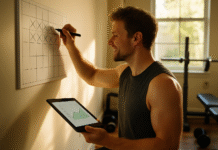
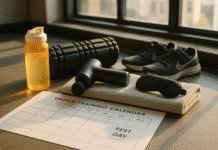
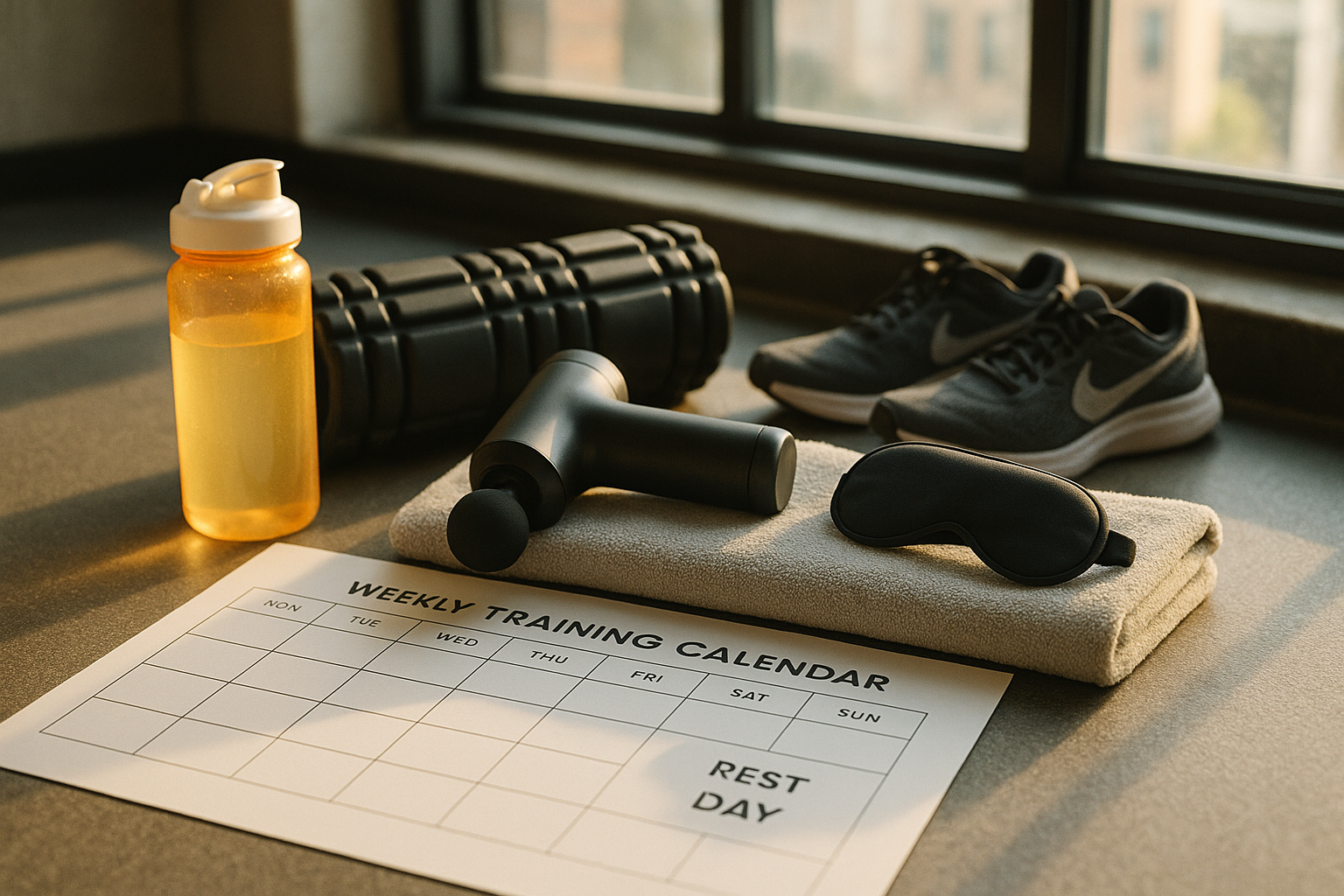
The simple, sustainable way to start incorporating rest and recovery goals is to calendar 1–2 true rest days each week. A rest day means you avoid hard training and let fatigue dissipate so adaptations can “take.” That doesn’t mean being sedentary; light movement helps you feel better and speeds recovery without adding stress. Aim for easy walking or gentle mobility that passes the talk test (you can speak comfortably in full sentences). Place rest days strategically—after your longest run, heaviest lift, or most stressful life day—to flatten fatigue spikes and keep your week consistent. If you’re new to planned rest, start with one day, assess soreness/energy, and progress to two. In hot or humid climates (or during Ramadan fasting windows), rest becomes even more valuable because heat stress and altered fueling increase recovery needs.
1.1 Why it matters
- Rest restores energy and reduces musculoskeletal strain that accumulates across sessions.
- It lowers injury risk by spacing loading on joints/tendons.
- It preserves motivation—planned breaks prevent “all-or-nothing” crashes.
- It’s flexible: walking, stretching, or simply doing less is still recovery.
1.2 How to do it
- Block it on your calendar like a workout.
- Keep movement easy: errands, 20–40 minutes of strolling, light housework.
- Use the talk test: if you can’t talk comfortably, slow down.
1.3 Mini-checklist
- 1–2 rest days/week
- Place after hardest session
- Keep steps/movement gentle
Bottom line: Regular, planned rest days are the anchor habit that keep every other recovery tactic working.
2. Make Sleep a Non-Negotiable Training Goal
Set a sleep target of 7–9 hours for most adults and protect it like a key workout. Sleep is when your body repairs tissues, consolidates skills, and normalizes hormones; missing sleep makes training feel harder and injury risk creep up. The CDC and expert consensus agree that adults should get at least 7 hours nightly for health and performance; athletes often benefit from the higher end (or occasional naps) during heavy phases. Caffeine, screens, travel, and stress are the usual culprits—so put guardrails in place. As of August 2025, evidence continues to show inadequate sleep worsens performance and injury risk; aim for consistency across the week rather than “catch-up” weekends.
2.1 Numbers & guardrails
- Duration: Adults ≥7 hours nightly; many lifters/endurance athletes thrive at 7.5–9 hours during hard blocks.
- Caffeine cut-off: Avoid substantial caffeine within 6–8+ hours of bedtime (study at 6 hours showed disrupted sleep; many people do best with even longer buffers). AASM
- Alcohol: Even small amounts can fragment sleep; avoid using it as a “nightcap” on training nights.
2.2 How to do it
- Set a fixed lights-out/wake-up aligned to your schedule.
- Create a 30–60 minute wind-down: dim lights, stretch, read, breathe.
- Mind caffeine & screens: last coffee by mid-afternoon; blue-light filters at night.
Bottom line: Sleep is a programmable performance enhancer—treat it like a session, not an afterthought.
3. Plan Active Recovery Sessions (Easy, Short, Intentional)
Active recovery means deliberately easy movement that promotes blood flow and loosens stiff tissues without adding training stress. Think 20–40 minutes of very easy cycling, walking, or mobility circuits. The rule of thumb: if you can speak in full sentences without breathing hard, you’re in the right zone. These sessions help clear residual soreness (DOMS), maintain habit momentum, and make the next hard day feel smoother. Keep them short and simple so they don’t turn into stealth workouts. If your resting heart rate or perceived effort is elevated, scale them back further or take full rest.
3.1 How to do it
- Choose low-impact options: easy spin, casual swim, gentle yoga, mobility flow.
- Cap duration at 20–40 minutes; stop sooner if you feel worse, not better.
- Use a talk-test pace; skip hills and intervals.
3.2 Common mistakes
- Going too hard (“accidental tempo day”).
- Stacking extras (core circuits, sprints) that defeat the purpose.
- Treating active recovery as a calorie-burner rather than a feel-better tool.
Bottom line: Keep it easy enough to recover—and short enough to want to repeat.
4. Build a Deload/Taper Week Every 4–8 Weeks
A deload (strength) or taper (endurance) is a planned reduction in training load so fitness consolidates and fatigue drops. The evidence base—especially in endurance—shows that reducing volume while maintaining some intensity improves performance. Practically, most people benefit from a 30–60% volume reduction for 5–10 days while touching key movements at easier loads or paces. Use deloads after progressive blocks or before milestones (races, testing). If you’ve never done one, schedule a lighter week every 4–8 weeks and track how you feel; many trainees notice steadier progress and fewer aches.
4.1 How to do it
- Strength: Drop sets/reps (or load) to ~50–70% of your usual weekly volume; keep technique sharp.
- Endurance: Cut mileage or time by ~40–60%; include a few short, fast strides to stay sharp.
- Lifestyle: Use the extra time for sleep and mobility.
4.2 Mini-checklist
- Schedule deload before big tests/events
- Reduce volume, keep a touch of intensity
- Reassess joints/energy before ramping
Bottom line: Strategic step-backs are how smart lifters and runners step forward.
5. Hydrate With an Actual Plan (Not Just “Drink More Water”)
Hydration affects performance and perceived effort; even modest dehydration can make sessions feel harder and recovery slower. Good news: you can set simple, evidence-based hydration goals. Before exercise, aim to start euhydrated; during, drink to replace sweat loss in long or hot sessions; after, replace what you lost. The American College of Sports Medicine notes performance is best when body weight loss stays <2%, and recommends roughly 1.5 liters of fluid per kilogram of body mass lost post-exercise to fully rehydrate. Salt/sodium helps retention if you’re a salty sweater or training in heat. Weighing yourself before/after long workouts can calibrate your needs without guesswork.
5.1 Numbers & guardrails
- Start hydrated (pale yellow urine is a quick heuristic).
- During long/hot sessions: sip regularly; individual needs vary widely.
- After: ~1.5 L per kg lost (e.g., lose 1 kg → drink ~1.5 L with some sodium).
5.2 Tools/Examples
- Keep an electrolyte packet in your gym bag for hot days.
- Use a 500–750 ml bottle and count refills.
- Track pre/post weights in a notes app for key sessions.
Bottom line: A small hydration plan goes a long way—especially in heat and long days.
6. Hit Protein (and Overall Nutrition) Targets for Repair
Muscle repair and adaptation need adequate protein across the day. A large meta-analysis found that protein intakes around ~1.6 g/kg/day maximize fat-free mass gains from resistance training (with an upper confidence band toward ~2.2 g/kg/day); more than that didn’t further improve lean mass in healthy adults. Distribute protein over 3–5 meals with 20–40 g per meal for most people, adjusted for body size. Pair this with overall energy and carbs appropriate to your sport so you aren’t under-fueling (which interferes with recovery). If appetite is low on rest days, prioritize protein and colorful whole foods; on heavy days, add carbs around training.
6.1 How to do it
- Set a daily target (e.g., 1.6 g/kg); split across meals.
- Build plates around lean proteins, whole grains/tubers, fruit/veg, and fluids.
- Consider a shake if you struggle to hit targets when busy.
6.2 Common mistakes
- “Saving” all protein for dinner.
- Under-eating on rest days (you still recover then).
- Cutting carbs too low during high-skill or endurance blocks.
Bottom line: Training breaks down tissue; protein and energy rebuild it. Plan both.
7. Track Training Load With Session RPE (and Consider HRV)
You can’t manage what you don’t measure. Session RPE (rating the whole session’s difficulty on a 0–10 scale and multiplying by duration) gives a simple “training load” number you can track across the week. Watching monotony (average daily load ÷ its variability) and strain (weekly load × monotony) helps flag weeks that are too same-y or too big, both linked to higher illness/injury risk. Meanwhile, heart rate variability (HRV) trends can reflect stress and readiness; studies suggest HRV-guided endurance training can improve outcomes by adjusting easy/hard days to your physiology. Start simple—log session RPE daily; if you use HRV, watch weekly trends, not single-day blips.
7.1 How to do it
- After each session, note RPE (0–10) and minutes; load = RPE × minutes.
- Review weekly totals and variability; avoid sudden spikes.
- If HRV drops several days with poor sleep or high stress, insert an extra easy day.
7.2 Mini-checklist
- Daily session RPE logged
- Weekly review of load/monotony
- Adjust plan when HRV/sleep flags stack
Bottom line: A two-minute log can prevent a two-week setback.
8. Use Recovery Modalities Wisely (Know What Each Actually Does)
Not all recovery tools are equal—and none can replace sleep, rest, and smart loading. Massage can modestly reduce soreness and perceived fatigue after hard work. Foam rolling reliably improves range of motion in the short term and may slightly ease soreness without hurting performance if kept brief. Cold water immersion (CWI) can reduce soreness, but frequent use after lifting may attenuate hypertrophy/adaptation; save it for tournament weekends or very hot blocks. Think of these as supportive options, not essentials. Pick the right tool for the job and use sparingly.
8.1 Tools/Examples
- Massage: 10–20 minutes post-race or on recovery days.
- Foam roll: 30–90 seconds per area pre/post; focus on quads, glutes, calves.
- CWI: 5–10 minutes for soreness relief during congested schedules; avoid after heavy lifting blocks if hypertrophy/strength are top priorities.
8.2 Common mistakes
- Using modalities to push through pain instead of adjusting load.
- Over-relying on CWI after every lift.
- Turning “recovery” into another exhausting checklist.
Bottom line: Modalities can help you feel better—just don’t let them replace fundamentals.
9. Add Short Mobility & Flexibility “Snacks”
Mobility and stretching are best used to improve or maintain range of motion you need for your sport and daily life. Evidence shows a single bout of stretching can produce small, acute ROM improvements; dynamic warm-ups tend to preserve performance, while long static holds pre-lift can transiently reduce power. Use dynamic moves before sessions and brief static stretches after or on rest days to target tight areas. Keep doses short and consistent; think 5–10 minutes, not 45. Over time, regular stretching can meaningfully improve flexibility.
9.1 How to do it
- Before training: dynamic mobility (leg swings, hip circles, T-spine rotations).
- After/easy days: 2–4 × 20–30-second static holds for tight muscles.
- Track needs: ankles for squats/running, hips for lunges, thoracic spine for pressing.
9.2 Numbers & guardrails
- Keep static stretching brief before explosive lifting; save longer holds for after.
- Expect small but useful ROM gains acutely; bigger changes come from months of practice.
Bottom line: Use the right type of mobility at the right time to move well and recover better.
10. Protect Sleep With Smart Stimulant Timing
Caffeine can boost performance—but mistimed caffeine wrecks sleep and undermines recovery. Research shows 400 mg is an upper daily limit considered safe for most healthy adults, but sensitivity varies. A controlled study found caffeine consumed even 6 hours before bedtime can reduce total sleep time and quality; many athletes do best cutting caffeine even earlier, especially in high-stress phases. Make a rule: no substantial caffeine after mid-afternoon, and consider lower-dose “micro-caffeine” (50–100 mg) in morning sessions instead of big hits late in the day.
10.1 Numbers & guardrails
- Daily cap: up to 400 mg for most healthy adults (individualize).
- Cut-off: at least 6 hours before bedtime; longer if you’re sensitive.
- Half-life varies: plan conservatively if you struggle with sleep. NCBI
10.2 Mini-checklist
- Log caffeine timing for a week
- Swap late coffee for herbal tea or water
- Reassess sleep after two weeks
Bottom line: Performance boosters should not steal tomorrow’s session—time them smartly.
11. Adjust for Heat, Travel, Stress, and Sickness
The best plan is flexible. Heat waves, travel across time zones, intense work weeks, or mild illness all raise recovery demands. In heat/humidity, elevate hydration/electrolytes and reduce intensity; during travel, prioritize sleep, daylight exposure, and short walks; when under heavy life stress or if you’re getting sick, swap hard days for easy movement or rest. These adjustments aren’t “slacking”—they’re how you keep momentum and avoid layoffs. Use your training log, RPE, and (if available) HRV to decide when to back off for a day or two.
11.1 How to do it
- Heat: pre-hydrate, sip electrolytes, shorten sessions or move indoors.
- Travel: anchor sleep/wake to destination time ASAP; walk after landing.
- Stress/sickness: reduce volume and keep intensity low until normal.
11.2 Mini-checklist
- Pre-hydrate in heat
- Light movement on travel days
- Auto-dial back when sleep/HRV tanks
Bottom line: Life-proof plans recover faster—and last longer.
12. Watch Red Flags and Stop Early When Needed
Finally, set “stop rules” for when to rest immediately: unusual, localized pain; persistent soreness that worsens; declining performance despite normal effort; irritability, poor sleep, or loss of appetite; elevated resting HR; or repeated minor illnesses. These can indicate non-functional overreaching or the road toward overtraining. The joint ECSS/ACSM consensus emphasizes that effective training balances overload and recovery; when the balance tips, backing off is necessary. If symptoms persist, consult a qualified professional. Logging symptoms alongside training load makes patterns obvious sooner.
12.1 Red flag list
- Sharp or escalating pain; altered mechanics
- Soreness that persists >72 hours without easing
- Sleep disturbances and mood changes
- Performance drop with normal effort for >1–2 weeks
12.2 How to respond
- Stop the session; switch to easy movement or rest.
- Deload for several days; prioritize sleep, hydration, and nutrition.
- Seek assessment if pain or fatigue persists.
Bottom line: The earlier you respect red flags, the quicker you’ll be back to training well.
FAQs
1) How many rest days do I actually need each week?
Most active adults do well with 1–2 rest days weekly, placed after your hardest workouts or life-stress days. If soreness, irritability, or sleep problems persist despite that, add an extra easy day for a week and reassess. Use the talk test for active recovery—if you can’t speak comfortably, it’s too hard.
2) Should rest days be completely off or include light movement?
Either works. Many people feel better with light, easy movement—walking, mobility, or an easy spin—because it reduces stiffness without adding stress. Keep it short (20–40 minutes) and truly easy so it remains restorative, not another hidden workout.
3) What’s the best sleep goal for lifters and runners?
Aim for ≥7 hours nightly; many athletes perform best at 7.5–9 hours during heavy blocks. Add a brief nap (20–30 minutes) if nights run short. Protect sleep by limiting caffeine at least 6 hours before bed and creating a wind-down routine.
4) How long should a deload or taper last—and how much should I reduce?
Common ranges are 5–10 days with ~30–60% volume reduction, while keeping some intensity to stay sharp. Use these before tests/races or after progressive blocks. Record how you feel and adjust next time.
5) How do I know if I’m hydrated enough?
Aim to avoid >2% body weight loss in long/hot sessions and replace ~1.5 L per kg lost after. Pale yellow urine is a quick everyday check. In heat or if you’re a salty sweater, include sodium.
6) How much protein do I need for recovery?
A meta-analysis suggests ~1.6 g/kg/day maximizes lean mass gains from resistance training; intakes beyond that offer diminishing returns for most. Spread protein over 3–5 meals (20–40 g each for many adults) and don’t neglect total calories and carbs.
7) Do foam rolling and massage really work?
They can reduce soreness modestly and improve short-term range of motion. Use them as supportive tools, not as substitutes for sleep and smart training. Keep sessions brief and targeted.
8) Is cold water immersion good or bad?
Both, depending on timing. CWI can reduce soreness, helpful during congested competition periods, but frequent use after strength training may attenuate hypertrophy. Use it strategically.
9) What’s the simplest way to monitor training load without fancy tech?
Log session RPE × minutes for each workout. Review weekly totals and variability to avoid big spikes. If you also track sleep or HRV, use trends to nudge easy/hard days.
10) What are early signs I need more recovery?
Unusual soreness >72 hours, persistent fatigue, elevated resting HR, poor sleep, and declining performance at normal effort are common early signs. Stop early, deload, and prioritize sleep/hydration; seek help if symptoms persist.
Conclusion
Training only works if your body can adapt to it. By incorporating rest and recovery goals—scheduled rest days, active recovery, sufficient sleep, smart deloads, hydration, protein, mobility, and simple monitoring—you turn good intentions into durable habits. The payoff is fewer dips, steadier progress, and more enjoyment. Start with the anchors: block 1–2 rest days on your calendar and set a sleep target. Then layer in active recovery, a hydration plan, and a deload week every 4–8 weeks. Keep a two-minute training log so your plan stays honest and flexible. When life gets hot, busy, or stressful, adjust without guilt. Respect red flags early.
CTA: Block your next rest day right now, set tonight’s lights-out time, and write “deload” into your calendar four weeks from today.
References
- Measuring Physical Activity Intensity (Talk Test), Centers for Disease Control and Prevention (Last Reviewed Jun 3, 2022). CDC
- About Sleep – Recommended Hours by Age, Centers for Disease Control and Prevention (May 15, 2024). CDC
- Sleep and Athletic Performance: Impacts on Physical Performance, Mental Performance, Injury Risk and Recovery, Sleep Medicine Clinics / NIH PMC (2023). PMC
- Exercise and Fluid Replacement – Position Stand (Summary), American College of Sports Medicine, PEPID Publisher (accessed 2025). https://www.pepid.com/inside/story/ACSM-Exercise-and-Fluid-Replacement
- NATA Fluid Replacement Recommendations: Sports Competitions and Practices, National Athletic Trainers’ Association (accessed 2025). https://www.nata.org/sites/default/files/FluidReplacementsforAthletes.pdf
- Morton et al. (2018). A systematic review, meta-analysis and meta-regression of the effect of protein supplementation on resistance training-induced gains in muscle mass and strength in healthy adults. British Journal of Sports Medicine 52(6):376–384. PubMed
- Mujika & Padilla; Tapering meta-analyses summaries, PodiumRunner (Aug 26, 2014) and Runner’s World (Oct 2014) summarizing Sports Medicine research on tapering. https://www.podiumrunner.com/training/tapering-strategies/ ; https://www.runnersworld.com/advanced/a20795812/scientific-taper/ PLOS
- Foster et al. Session RPE and Training Load/Monotony/Strain (1998–2001) – Scite profile with linked works. https://scite.ai/authors/a-GP0a PMC
- Aparicio-Ugarriza et al. (2021). Monitoring Training Status via HRV: Endurance Athletes – PubMed record. https://pubmed.ncbi.nlm.nih.gov/33942689/ PMC
- Cheatham et al. (2015). The Effects of Self-Myofascial Release Using a Foam Roll or Roller Massager on Joint Range of Motion, Muscle Recovery, and Performance. International Journal of Sports Physical Therapy. https://www.ncbi.nlm.nih.gov/pmc/articles/PMC4637917/ ResearchGate
- Wilke et al. / German Journal of Sports Medicine summary (2020). Recovery modalities overview including massage effects. https://www.thieme-connect.com/products/ejournals/abstract/10.1055/a-1084-1190
- Hohenauer et al. (2015). Cold-Water Immersion and Recovery from Eccentric Exercise: Meta-analysis. PLoS One. https://doi.org/10.1371/journal.pone.0117234 ; Roberts et al. (2015) Post-exercise cold water immersion attenuates hypertrophy. Journal of Physiology. https://pubmed.ncbi.nlm.nih.gov/26174323/ PMCPubMed
- Behm et al. (2016). Acute effects of muscle stretching on physical performance, ROM, and injury prevention. Appl Physiol Nutr Metab. ; Chaabene et al. (2019) Acute Effects of Static Stretching on Strength and Power – Review. https://www.ncbi.nlm.nih.gov/pmc/articles/PMC6895680/ ; Behm et al. (2023) Acute ROM improvements after stretching. Sports Medicine – Open. PubMedPMCSpringerOpen
- Spilling the Beans: How Much Caffeine is Too Much? U.S. Food & Drug Administration (Aug 28, 2024). U.S. Food and Drug Administration
- Drake et al. (2013). Caffeine Effects on Sleep Taken 0, 3, or 6 Hours before Bedtime. Journal of Clinical Sleep Medicine. PMC
- Meeusen et al. (2013). Prevention, diagnosis and treatment of overtraining syndrome – Joint consensus statement of ECSS & ACSM. Loughborough Univ. Repository. Loughborough University Repository
- Kreher & Schwartz (2012). Overtraining Syndrome: A Practical Guide. Sports Health. PubMed