


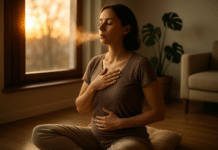
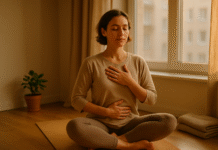










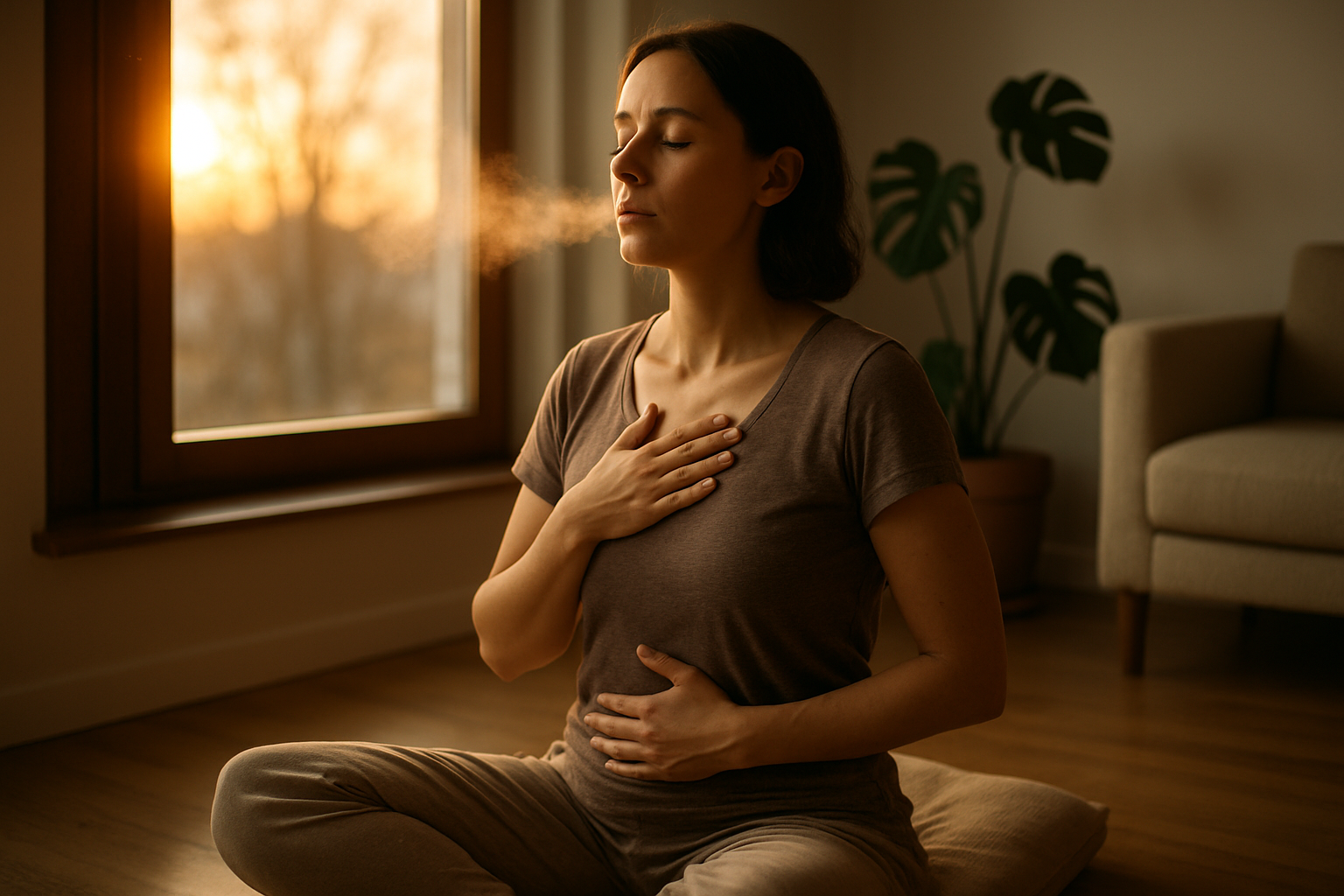
Breathing is the most portable mindfulness tool you own: always with you, always responsive, and surprisingly powerful when practiced with intention. In simple terms, daily breathing exercises for mindfulness are structured, slow, diaphragmatic breaths—often around 6–10 breaths per minute—that settle the nervous system and sharpen present-moment awareness. Used consistently, they can reduce stress, steady attention, and improve sleep, among other benefits. This guide distills the nine most useful, science-backed gains you can expect, plus step-by-step ways to apply them in real life. Brief note: this content is educational and not a substitute for medical care; if you have a respiratory or cardiovascular condition, consult a clinician before starting. For most healthy adults, however, a few minutes of slow, nasal, belly-led breathing is a safe, effective daily practice.
Quick-start (2 minutes):
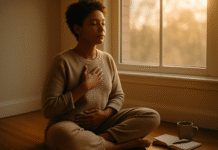
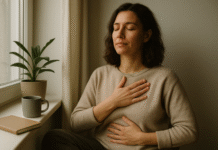
- Sit upright, relax your shoulders, and place one hand on your belly.
- Breathe in through your nose for ~4–5 seconds and out through your nose for ~5–6 seconds.
- Continue for 10–15 cycles, keeping exhalations slightly longer than inhales.
1. Lower Stress and Anxiety—Fast
Daily breathing exercises lower stress and anxiety by shifting your body from “fight or flight” (sympathetic) toward “rest and digest” (parasympathetic). In practice, this means slower heart rate, looser muscles, and a calmer mind within minutes, not hours. The mechanism is both mechanical and neural: as the diaphragm descends, vagus-nerve signaling increases, nudging the autonomic nervous system toward balance. Consistent daily sessions compound this effect, helping you recover from spikes of stress more quickly and return to baseline with less mental wear and tear. Randomized and controlled studies show that brief, structured breathwork can improve mood and reduce negative affect and state anxiety—often outperforming meditation alone for short-term emotional relief.
1.1 How to do it (Box Breathing, 2–5 minutes)
- Inhale 4 counts → hold 4 → exhale 4 → hold 4; repeat for 8–12 cycles.
- Keep shoulders soft; let the belly move more than the chest.
- If dizzy, shorten holds; comfort beats intensity.
1.2 Numbers & guardrails
- Aim for 1–2 short bouts daily; add a third during acute stress.
- If you’re new, start at 10 breaths/min and work down to ~6–8.
- Lightheadedness is a sign to pause; never force or strain.
Synthesis: When you need a reliable “reset” button—before a tough meeting or after tense news—box breathing is fast, discreet, and evidence-supported.
2. Sharpen Attention and Build Focus
Mindful breathing improves sustained attention, cognitive control, and working memory by reducing physiological noise (heart-rate and respiratory fluctuations) and anchoring awareness to a single, rhythmic target. The payoff is practical: fewer task-switches, smoother transitions back to focus after distractions, and a gentler inner dialogue when the mind wanders. Experimental work has linked diaphragmatic breathing to improved attention and lower negative affect, while slow-paced protocols around 6 breaths per minute (bpm) show benefits for moment-to-moment regulation that support complex tasks. In short: a few daily minutes of breath-anchored mindfulness trains the same attentional muscles you need for deep work. Frontiers
2.1 Mini-protocol for meetings (3 minutes)
- 6–8 breath cycles with quiet nasal inhales and longer nasal exhales.
- On each exhale, silently label “here,” reinforcing present-moment contact.
- Finish with one intentional stretch—neck or wrists—to ease into action.
2.2 Common mistakes
- Over-breathing (big, loud breaths) that lead to lightheadedness.
- Rigid counting; if your body wants a 5-7 rhythm, use it.
- No cool-down; give 10–15 seconds to notice the after-calm.
Synthesis: Treat breath practice like a focus warm-up; three minutes before cognitively demanding work often pays for itself in regained attention.
3. Sleep Better and Wind Down Faster
Breathing exercises help you fall asleep faster and sleep more soundly by lowering arousal, releasing muscle tension, and quieting cognitive chatter. When you practice daily—even outside bedtime—you build a conditioned association: slow exhale = safety signal. This becomes especially valuable during nighttime awakenings, when a simple breathing routine can prevent a mental spiral. School-based programs that include paced breathing have been linked with sizable increases in sleep duration and REM sleep in children over two years, and adults report similar wind-down benefits with simple slow-breathing drills. Translating this to your routine is straightforward: a low-effort 5-minute breathing ritual before lights out can steady your nights.
3.1 Bedtime sequence (5 minutes)
- 10 cycles of 4-7-8 (inhale 4, hold 7, exhale 8) or a gentle 5-5.
- Keep the mouth closed; nasal breathing humidifies and warms air.
- If you wake at night, do 6–10 quiet cycles instead of checking the time.
3.2 Numbers & guardrails
- As of August 2025, sleep research supports mindfulness plus paced breathing for reducing arousal; consistency beats single long sessions.
- Avoid long breath-holds if you have respiratory or cardiovascular issues.
Synthesis: Treat breathwork as your pre-sleep cue; with repetition, your nervous system learns to power down on demand.
4. Support Healthier Blood Pressure and Heart Rhythm
Slow, diaphragmatic breathing helps stabilize blood pressure by improving baroreflex sensitivity—the body’s built-in pressure-regulation loop—and by activating the parasympathetic system via the vagus nerve. Clinical reviews and guidance note moderate, meaningful reductions in blood pressure with daily practice, especially when exhalations are longer and pace is slow (about 6–10 breaths/min). While breathwork is not a replacement for prescribed treatment, it’s a low-risk adjunct that pairs well with exercise, salt reduction, and sleep hygiene. A Harvard Health review and a 2023 meta-analysis report significant (though varied) effects on blood pressure and heart rate with consistent training.
4.1 “Resonant” set (6 minutes)
- Use a pacer app or watch timer: inhale 4.5–5 sec, exhale 5–5.5 sec (≈6 bpm).
- Sit tall; breathe low and quiet; keep shoulders relaxed.
- Track weekly: log average home BP and how calm you feel post-session.
4.2 Common mistakes
- Forcing big breaths (raises BP temporarily); aim for slow, not large.
- Mouth-breathing by default; nasal breathing promotes nitric-oxide release and smoother airflow.
- Skipping follow-up; pair breathwork with regular BP checks.
Synthesis: Think of slow breathing as gentle “physio” for your cardiovascular reflexes—small daily inputs that keep the system responsive.
5. Lift Mood and Strengthen Emotional Regulation
Daily breath practice improves emotion regulation by giving you a simple lever: extend the exhale, and your physiology follows. Meta-analytic evidence links breathwork with small-to-medium reductions in stress, anxiety, and depressive symptoms; a Stanford-led experiment found brief, structured breathing produced bigger mood gains than mindfulness meditation alone in the short term. Mechanistically, longer exhalations amplify vagal activity and heart-rate variability, which are associated with greater flexibility when emotions surge. As you build the habit, you’ll likely notice fewer “runaway” reactions and quicker recovery after difficult moments. Nature
5.1 90-second reframe
- 10–12 breath cycles with a 1–2 second longer exhale.
- On each exhale, label the emotion (“anxious,” “annoyed”) without judgment.
- End with a values cue: “What’s the next helpful action?”
5.2 Tools/Examples
- Timers/pacers: Breathwrk, Othership, Insight Timer.
- Wearables: Apple Watch “Breathe/Reflect,” Garmin “Respiration,” Oura HRV trend.
- Journal: one line per day—situation → breaths → result.
Synthesis: You don’t need to suppress emotions; you can metabolize them—one measured exhale at a time.
6. Increase HRV and Vagal Tone (Resilience Marker)
Heart-rate variability (HRV) is a window into autonomic flexibility: higher HRV generally reflects a greater ability to adapt to stressors. Slow-paced breathing near your “resonant” rate (often ~6 bpm for adults) tends to maximize respiratory sinus arrhythmia and baroreflex engagement, nudging HRV upward over weeks. Protocols like HRV biofeedback (HRV-BF) pair paced breathing with live feedback to fine-tune your rate; studies and reviews describe improved HRV and stress symptoms across various groups, from students to frontline healthcare workers. While your exact resonance frequency can vary, practicing within a comfortable 5–7 bpm band captures most of the benefit.
6.1 How to do it (HRV-aware, 5–10 minutes)
- Use a pacer at 5.5–6 bpm for 2–3 weeks; note how you feel.
- If you have an HRV-capable wearable, watch for smoother, larger oscillations during practice.
- Reassess monthly; adjust ±0.5 bpm if practice feels strained.
6.2 Numbers & guardrails
- Expect subtle day-to-day variance; look for trends over 4+ weeks.
- Evidence supports benefits even without sensors; comfort and consistency matter most.
Synthesis: Treat slow breathing as resilience training—gentle, repeatable, and measurable if you want it to be.
7. Curb Rumination and Deepen Present-Moment Awareness
Mindfulness is the opposite of rumination: staying with what’s here rather than looping on what-ifs. Breath-anchored practice helps because the breath is always present, rhythmic, and neutral. Each time you notice your mind wandering and guide attention back to the inhale/exhale, you perform a repetition of meta-awareness. Over time, this repetition builds the skill of “noticing and returning,” which translates into fewer cognitive spirals, a more grounded sense of self, and less reactivity. Clinical guidance from NHS programs emphasizes controlled, regular breathing as a foundational self-help skill for anxiety and panic—precisely because it provides a simple, portable anchor. NHS inform
7.1 Rumination breaker (3 minutes)
- 6–10 slow nasal breaths; count only the exhale.
- When thoughts intrude, whisper “back to breath” and continue.
- Close with one conscious inhale before re-engaging the task.
7.2 Common mistakes
- Treating rumination like an enemy; the goal is redirect, not suppress.
- Using breathwork only in crises; build the baseline daily, then deploy during spikes.
Synthesis: The breath is a built-in attentional anchor; training with it daily inoculates you against unhelpful thought loops.
8. Ease Physical Tension and Pain Perception
Breathwork doesn’t cure pain, but it can change your experience of it. Slow, deep, diaphragmatic breathing reduces muscle guarding, improves oxygenation, and activates descending inhibitory pathways that modulate pain signals. Many people notice softer shoulders and jaw within a minute or two; over time, daily practice can lower your “default” tension and make movement feel easier. Major heart and health organizations suggest deep breathing as part of stress and pain self-management because the autonomic shift it creates dampens the alarm response associated with discomfort. Used alongside physical therapy, gentle mobility, or heat/cold, breathwork is a low-effort lever with outsized returns. www.heart.org
8.1 Mini-checklist
- Scan: forehead, jaw, neck, shoulders, belly, hips—release on the exhale.
- Try pursed-lip exhalations during flare-ups to lengthen the out-breath.
- Pair with movement: exhale on effort (e.g., standing, reaching).
8.2 Numbers & guardrails
- 2–3 short sessions/day build a lower-tension baseline.
- If pain worsens or you suspect injury, pause and consult a clinician.
Synthesis: By turning down the body’s alarm, you turn up your capacity to move and cope—breath by breath.
9. Boost Endurance and Everyday Energy
Counterintuitive but true: slowing your breath can help you feel less winded during daily life and, for active folks, improve endurance. Slow-paced, nasal breathing retrains the diaphragm, refines CO₂ tolerance, and promotes efficient gas exchange. In sports and rehab contexts, paced breathing has been associated with better sleep, emotional well-being, and endurance—useful during heavy training or high-stress periods. Even if you’re not an athlete, a comfortable 5–10 minutes of slow nasal breathing can reduce perceived exertion on stair climbs or long walks by smoothing your ventilatory pattern. Frontiers
9.1 “Everyday energy” drill (5 minutes)
- Sit or stand tall; tongue on the roof of the mouth.
- Inhale softly through the nose ~4–5 sec; exhale 5–6 sec (no breath-holds).
- Finish with three natural breaths and a shoulder roll.
9.2 Region notes & examples
- Hot/humid climates: shorten sessions or practice in the coolest room.
- During walks: sync inhale with 3–4 steps, exhale with 4–5 steps.
Synthesis: Slow, nasal breathing is quiet endurance training for your autonomic system—small daily inputs that make daily movement feel lighter.
FAQs
1) What exactly counts as “daily breathing exercises for mindfulness”?
Any intentional, repeatable protocol of slow, diaphragmatic breaths done to calm the nervous system and focus attention qualifies. Common patterns include box breathing (4-4-4-4), 4-7-8, and “resonance” breathing around 6 breaths per minute. You can practice sitting, standing, or lying down; the key is comfort and consistency.
2) How long should I practice each day to see benefits?
Most people notice immediate calm in 1–3 minutes; for sustained changes (sleep, focus, stress reactivity), aim for 5–10 minutes daily for 2–4 weeks. Like strength training, small, regular sets beat occasional marathons. If you use an HRV-capable wearable, look for smoother oscillations during practice and trendlines over time. Frontiers
3) Is 6 breaths per minute mandatory?
No. Six bpm is a common target because it often aligns with cardiorespiratory “resonance,” but your ideal pace can be anywhere from ~5–7 bpm. If 6 feels strained, choose the slowest comfortable rhythm. Evidence suggests benefits across this band. FrontiersNature
4) Can breathwork lower blood pressure on its own?
It can help, but it’s not a standalone treatment. Reviews and clinical guidance report moderate reductions when practiced consistently, especially as an adjunct to lifestyle changes and medication when prescribed. Always follow your clinician’s plan and monitor at home.
5) What if breathing exercises make me dizzy or anxious?
That usually means you’re over-breathing or holding too long. Shrink the breath size, shorten any holds, and keep exhales gently longer than inhales. Practice seated, and stop if symptoms persist—then check with a healthcare professional.
6) Which technique is best for sleep?
Any pattern that lengthens the exhale can help downshift, such as 4-7-8 or a simple 5-5 done quietly through the nose. Keep lights dim and screens off to strengthen the cue. Over a few weeks, your brain learns “slow exhale = sleep time.”
7) How does the vagus nerve fit into all this?
Slow, diaphragmatic breathing stimulates the vagus nerve, which increases parasympathetic activity (the relaxation response). This shift helps lower heart rate and blood pressure and steadies mood—one reason breathwork is a cornerstone of many mind-body therapies.
8) Do I need gadgets or apps?
No. A watch, a quiet corner, and your attention suffice. That said, pacer apps and HRV biofeedback tools can help you find a comfortable rhythm and track progress if you enjoy metrics. Use tools if they increase consistency; skip them if they add friction. PMC
9) Is there evidence breathwork beats mindfulness meditation?
For short-term mood shifts, a Stanford-led experiment found breathwork produced greater improvement than mindfulness meditation alone in healthy adults. Both help; breathwork may feel more “mechanical” and faster-acting for many people.
10) Can kids practice these exercises?
Yes—gently and playfully. School programs that included paced breathing improved children’s sleep over two years, suggesting meaningful benefits when taught well. Keep sessions short, use simple counts, and avoid long holds.
11) Are there risks or contraindications?
If you have uncontrolled asthma/COPD, significant cardiovascular disease, or you’re pregnant, get personalized guidance first. Avoid aggressive breath-holds or very forceful breathing. Mild fatigue or lightheadedness is a cue to stop and return to normal breathing.
12) How long do benefits last if I skip a day?
Acute calm can appear within minutes and fade over hours, while longer-term gains (sleep quality, perceived stress) accumulate over weeks. Missing a day isn’t fatal; just resume tomorrow. Think “practice most days,” not perfection.
Conclusion
Breathing might seem too simple to matter, but daily, mindful practice is a powerful way to change how you feel, focus, and function. Across nine benefits—calmer stress response, steadier attention, better sleep, healthier cardiovascular regulation, more resilient mood, higher HRV, less rumination, reduced tension and pain, and improved day-to-day energy—the through-line is the same: a slower, quieter, diaphragm-led breath sends your body a clear safety signal, and your nervous system responds. You don’t need a retreat or an hour on the cushion; you need a few minutes, most days, and a method you’ll repeat. Start tiny—two minutes after you wake or before bed—and build toward 5–10 minutes with longer exhales. Pair practice with cues you already do (coffee, commute, log-on). Track what changes: reaction time in tough conversations, how fast you fall asleep, morning BP, or simply how steady you feel. Small, consistent inputs compound.
One-line CTA: Take two minutes now—slow in, slower out—and let today’s first calm decision lead the rest.
References
- Breathing Practices for Stress and Anxiety Reduction — Advances in Integrative Medicine (Review), 2023. National Library of Medicine (PMC). https://pmc.ncbi.nlm.nih.gov/articles/PMC10741869/
- Brief Structured Respiration Practices Enhance Mood and Reduce Physiological Arousal Compared to Mindfulness Meditation — Scientific Reports, 2023. National Library of Medicine (PMC). https://pmc.ncbi.nlm.nih.gov/articles/PMC9873947/
- Breathing Exercises to Lower Your Blood Pressure — Harvard Health Publishing, Sep 1, 2023. https://www.health.harvard.edu/heart-health/breathing-exercises-to-lower-your-blood-pressure
- Breathing Exercises for Stress — NHS, Page last reviewed Aug 15, 2022. https://www.nhs.uk/mental-health/self-help/guides-tools-and-activities/breathing-exercises-for-stress/
- A School-Based Health and Mindfulness Curriculum Improves Children’s Objectively Measured Sleep: A Prospective Observational Cohort Study — Journal of Clinical Sleep Medicine, 2022. National Library of Medicine (PMC). https://pmc.ncbi.nlm.nih.gov/articles/PMC9435327/
- Effect of Breathing Exercises on Blood Pressure and Heart Rate: A Systematic Review and Meta-analysis — Journal of Family Medicine and Primary Care, 2023. National Library of Medicine (PMC). https://pmc.ncbi.nlm.nih.gov/articles/PMC10765252/
- A Practical Guide to Resonance Frequency Assessment for Heart Rate Variability Biofeedback — Frontiers in Neuroscience, 2020. https://www.frontiersin.org/articles/10.3389/fnins.2020.570400/full
- Assessing Effectiveness of Heart Rate Variability Biofeedback for Frontline Healthcare Workers — Frontiers in Physiology, 2023. https://www.frontiersin.org/articles/10.3389/fphys.2023.1147260/full
- The Vagus Nerve: A Key Player in Your Health and Well-Being — Mass General, Oct 16, 2024. https://www.massgeneral.org/news/article/vagus-nerve
- It’s Not Just Inspiration—Careful Breathing Can Help Your Health — American Heart Association News, Jul 7, 2023. https://www.heart.org/en/news/2023/07/07/its-not-just-inspiration-careful-breathing-can-help-your-health
- The Effect of Diaphragmatic Breathing on Attention, Negative Affect and Stress in Healthy Adults — Frontiers in Psychology, 2017. https://www.frontiersin.org/articles/10.3389/fpsyg.2017.00874/full
- Using Slow-Paced Breathing to Foster Endurance, Well-Being, and Sleep — Frontiers in Psychology, 2021. https://www.frontiersin.org/articles/10.3389/fpsyg.2021.624655/full