




























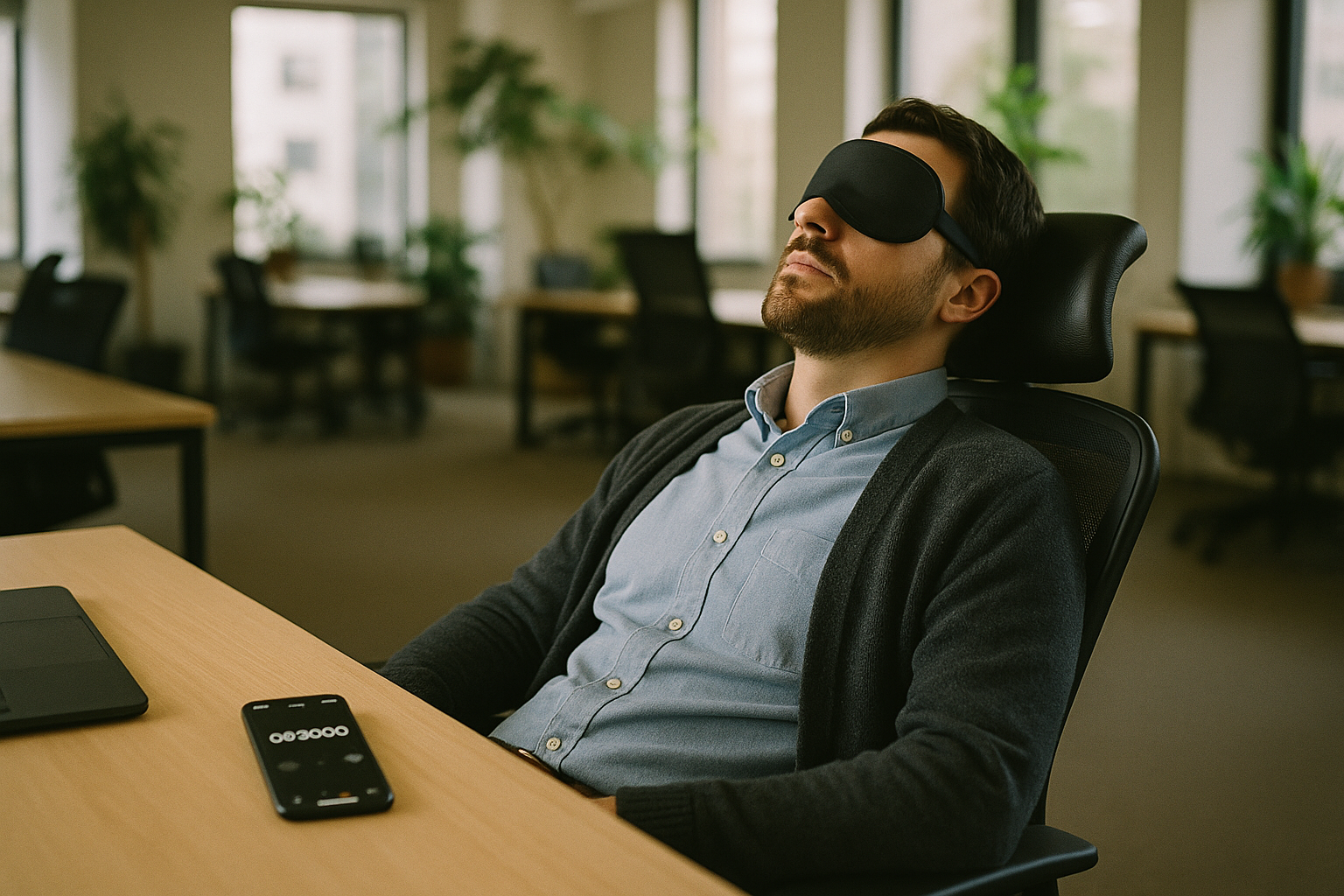
Napping isn’t laziness; it’s a precision tool for sharper thinking and steadier energy—when you use it correctly. Done right, a brief 10–20 minute “power nap” or a full 90-minute sleep-cycle nap can lift alertness, stabilize mood, and improve attention, with minimal disruption to night sleep. In plain terms: a short, well-timed nap gives you a safe, fast boost; a longer, strategically timed nap helps you recover from sleep loss. This guide explains exactly how naps enhance energy and focus and how to avoid the dreaded post-nap fog. (General information only—not medical advice. If you have excessive daytime sleepiness, talk to a clinician.)
1. Rapid alertness boost that you can feel within minutes
A well-timed short nap quickly increases vigilance so you can concentrate better on demanding tasks. The most reliable window is 10–20 minutes: short enough to avoid deep sleep (which causes grogginess) yet long enough to clear sleep pressure and refresh attention. In real-world settings—from flight decks to highways—brief naps reduce lapses, stabilize reaction time, and help you feel mentally “snapped back” for the next couple of hours. If you only remember one rule, make it this: short and early beats long and late for an immediate energy lift.
Why it works (Numbers & guardrails)
- NASA’s seminal work with pilots found a planned 26-minute nap increased alertness up to 54% and performance by ~34% versus no nap.
- Occupational guidance notes that brief naps raise alertness for “a couple of hours” with less grogginess and little risk to night sleep.
Mini-checklist
- Set a 15–20 minute timer; stop working 2 minutes early to settle.
- Sit reclined, eye mask in place; white noise if needed.
- Wake, stand, and move for 2–3 minutes to finish shaking off inertia.
A short, early-afternoon nap is the fastest, lowest-risk way to reclaim focus when your energy dips.
2. Longer-lasting focus for 2–4 hours after a short nap
If you need sustained concentration—not just a quick jolt—a short daytime nap can extend your “focus window” for hours. Controlled studies show that naps between 10 and 60 minutes reliably improve subjective alertness and positive mood for up to four hours after waking, with the most durable gains typically seen from 30–60 minute naps (though these carry a brief inertia period right after). Practically, that means you can schedule deep work after a nap and expect steadier attention with fewer dips.
Numbers & guardrails
- In laboratory tests, 10–60 minute mid-afternoon naps increased positive affect and reduced sleepiness for up to 240 minutes; memory encoding improved with ~30-minute naps. Expect ~5–30 minutes of grogginess after 30–60 minute naps, which resolves within half an hour.
How to use it
- If you can afford 30 minutes, plan a 5–10 minute wake-up buffer (water, light stretch) before diving into cognitively heavy tasks.
- Stack your nap before known “peak focus” slots in your calendar to make the most of the 2–4 hour afterglow.
Short naps don’t just revive you—they buy you a predictable block of sharper focus for real work.
3. Better memory encoding and learning (plus less reliance on caffeine)
Naps strengthen memory formation, which directly affects how efficiently you can learn, reason, and recall under pressure. Research shows naps can enhance perceptual and declarative memory and even outperform caffeine for certain learning tasks. In fMRI work, naps restore hippocampal function—key for encoding new memories—after partial sleep loss, while a large systematic review finds overall cognitive benefits across vigilance, processing speed, and memory. If you’re studying, drafting, coding, or onboarding new information, a planned nap is a legitimate performance aid. PMC
Tools & examples
- Learning sprint routine: Study 60–90 minutes → 15–20 minute nap → 5-minute review quiz → focused practice.
- Caffeine vs. nap: In controlled comparisons, caffeine impaired some motor learning; napping preserved or improved it. Use naps to boost learning without the jitter trade-offs.
Numbers & guardrails
- Meta-analyses and lab trials consistently show cognitive gains with short daytime naps; for memory encoding specifically, ~30 minutes shows advantages post-nap.
When the task is to absorb and apply new material, a short nap is often more effective—and cleaner—than another coffee.
4. Fewer mistakes and safer performance on shifts (especially at night)
Operational work suffers most when fatigue piles up: more lapses, slower reactions, and higher error risk. Strategic napping is a proven countermeasure. Reviews of shift work note that planned naps reduce sleepiness and performance deficits, particularly on night shifts. Field and lab studies show that pre-dawn or early-night naps can stabilize attention, while experiments comparing 30- and 90-minute naps suggest timing and sequencing matter for minimizing inertia and preserving performance into early morning hours. Shift leads and safety managers should treat naps as a standard control, not a perk.
How to do it (for teams)
- Schedule windows: Build 20–30 minute nap windows between 01:00–05:00 for night crews; stagger coverage.
- Set wake protocols: Bright light + brief movement upon waking.
- Pair with task design: Assign lower-risk tasks for 10–20 minutes post-nap if using 30–60 minute naps (inertia buffer).
Numbers & guardrails
- Napping during night shifts improves cognitive performance and reduces fatigue; 30-minute naps carry minimal inertia; 90-minute naps can help but require a buffer. ScienceDirect
Used consistently, short, planned naps cut errors and smooth performance across long, irregular shifts.
5. More stable mood and stress resilience—fuel for steadier focus
Focus isn’t just vigilance; mood and stress set the ceiling for your cognitive control. Naps reliably improve positive affect and reduce subjective sleepiness for hours, which translates to calmer, more sustained concentration and fewer “I can’t deal with this” moments. After 30–60 minute naps, the mood lift tends to last the longest, though you may feel briefly groggy right after waking—plan a short transition and you’ll keep the upside.
Why it matters
- Emotional reactivity and stress load sap working memory and selective attention. A nap moderates that background noise so your frontal networks can stay on task longer. Empirically, positive affect remains elevated for up to four hours after mid-afternoon naps.
Mini-checklist
- Keep naps earlier (1–3 pm); hydrate and eat lightly before; add 3–5 minutes of light movement after waking.
- If you’re prone to post-nap fog, aim for 10–20 minutes or finish a full 90-minute cycle.
By smoothing mood and dialing down sleep pressure, naps give you the emotional headroom that sustained focus requires.
6. Strategic recovery from sleep loss without wrecking your night
Sometimes you’re short on sleep—travel, deadlines, kids. A carefully chosen nap can restore attention and reduce sleepiness without derailing your night schedule. The general pattern: short naps (10–20 minutes) for quick recovery on normal days; longer naps (~90 minutes) when you’re paying back acute sleep debt, with awareness that longer naps create more inertia immediately after waking. Reviews of sleep inertia clarify why: waking from deeper sleep (more likely in longer naps) increases grogginess, especially under high sleep pressure—but that grogginess fades, while the recovery benefits persist.
Numbers & guardrails
- After partial sleep restriction, both 30- and 90-minute naps can restore performance; athletes and night workers may see larger gains with ~90 minutes—but plan a buffer before safety-critical tasks. PMCTaylor & Francis Online
Practical template
- Busy day: 15-minute nap at ~14:00, then sunlight exposure.
- After a short night: 90-minute nap ending before ~16:00; 20–30 minutes of light activity upon waking; keep bedtime consistent.
The takeaway: choose nap length for your reality that day—short for a tune-up, long for true recovery—while protecting your nightly sleep.
7. “Coffee nap” to speed the shake-off and sharpen attention
For people who feel heavy after napping, a “coffee nap” can reduce inertia and sharpen attention. The idea: drink caffeine, then nap for ~15–20 minutes so caffeine peaks as you wake. Controlled studies in drivers and shift workers show caffeine-before-nap improves vigilant attention and lowers subjective fatigue versus nap alone or caffeine alone; reviews also note caffeine can blunt sleep inertia on certain tasks. Do mind the trade-off: caffeine too late in the day can impair night sleep.
How to do it (safely)
- 100–200 mg caffeine (about 1–2 small coffees) → lie down immediately → 15–20 minute timer → brisk 2–3 minute walk after waking.
- Avoid after mid-afternoon; many adults sleep worse with late-day caffeine (FDA’s general guidance caps daily intake at ~400 mg). The Washington Post
Common mistakes
- Waiting to feel sleepy—drink and lie down promptly.
- Napping too long—keep it under 20 minutes so caffeine isn’t peaking while you’re still asleep.
Used sparingly and timed well, a coffee nap combines two quick countermeasures into one sharper, cleaner wake-up.
8. Smarter timing—ride the circadian dip, not your bedtime
Timing is everything. Most people feel a natural lull roughly 1–3 pm; napping here aligns with circadian biology, making it easier to fall asleep briefly and wake up refreshed. Late-day naps (after ~4 pm) are more likely to delay bedtime or fragment night sleep, especially if you already struggle with insomnia. Occupational guidance and consumer-friendly clinical sources converge on the same answer: nap earlier, keep it brief, and finish well before evening.
Numbers & guardrails
- Aim for 10–20 minutes most days; reserve 90 minutes for acute sleep loss, ending at least 4–6 hours before bed.
- If you’re on night shift, your “circadian dip” shifts—schedule short naps in the first half of the shift and protect a dark, cool environment.
Region & lifestyle notes
- Hot climates, heavy lunches, and long commutes can deepen the early-afternoon dip—build a predictable 15-minute micro-nap into that window rather than pushing through with sugar.
Match your nap to your body clock and calendar, and you’ll protect both energy now and sleep later.
9. Personalized dosing: get the benefits, avoid health-risk signals
Short, planned naps are generally safe; concerns arise with long (>60 minutes) or frequent unplanned naps, which in population studies correlate with higher risks of hypertension, stroke, and metabolic issues. Genetic analyses suggest habitual daytime napping may causally relate to higher blood pressure and waist circumference, though confounding (poor night sleep, illness) also explains part of the signal. The practical message is simple: use naps as a tool, but if you need long or frequent naps to cope, investigate your night sleep and health with a professional.
Numbers & guardrails
- Meta-analyses and cohort studies link >60 minute daytime naps or very frequent napping with higher risks of CVD and all-cause mortality; short naps (<30 minutes) do not show the same signal. Correlation ≠ causation, but don’t ignore the pattern. PLOS
Action steps
- Track nap length/frequency for two weeks.
- If you routinely exceed 60 minutes or feel exhausted despite adequate night sleep, screen for sleep apnea, depression, iron deficiency, or circadian disorders.
Use naps intentionally for energy and focus; treat escalating nap needs as data to discuss with your clinician.
FAQs
1) What’s the ideal nap length for focus?
For most people, 10–20 minutes offers the best balance: fast alertness with minimal grogginess and little risk to night sleep. If you’re sleep-deprived, a full 90-minute cycle can help restore performance—but expect brief sleep inertia after waking, so plan a buffer before complex tasks.
2) When is the best time to nap?
The early-afternoon circadian dip—roughly 1–3 pm—is ideal. Finishing your nap before late afternoon lowers the chance you’ll delay bedtime or fragment night sleep. Night-shift workers should place short planned naps in the first half of the shift and use bright light on wake.
3) How do I avoid post-nap grogginess (sleep inertia)?
Keep it short (10–20 minutes) or long enough to complete a full cycle (~90 minutes). If you choose 30–60 minutes, add a 10–20 minute transition with light movement and bright light. A “coffee nap” (caffeine just before a 15–20 minute nap) can also reduce inertia—use before mid-afternoon only. PubMed
4) Are naps better than coffee for concentration?
It depends on the task and timing. For some learning and memory tasks, naps outperform caffeine; for vigilance, combining caffeine with a brief nap can be superior. Caffeine late in the day can impair night sleep, so keep coffee naps early. PMC
5) Do naps hurt night sleep?
Brief, early-afternoon naps generally don’t. Long or late naps can delay bedtime and fragment sleep, particularly if you have insomnia. If you notice night sleep worsening, shorten the nap and move it earlier—or pause napping while you recalibrate your schedule.
6) Is there a health risk to napping?
Short, planned naps are safe for most healthy adults. However, frequent or long daytime naps are linked in large studies to higher risks of hypertension, stroke, and metabolic issues—often as a marker of underlying sleep or health problems. If you rely on long naps, get checked. ScienceDirect
7) What if I can’t fall asleep in 20 minutes?
Rest quietly anyway; light dozing can still reduce sleepiness and improve mood. Make the environment cool, dark, and quiet; try an eye mask and white noise. If you consistently can’t nap but feel sleepy, check your total sleep time and pre-nap caffeine timing.
8) How often should I nap?
As needed, not as a crutch. Many people do well with a brief nap on days with heavy cognitive work or after poor sleep. If “needing” a daily long nap becomes your norm, treat it as a signal to optimize night sleep or rule out conditions like sleep apnea.
9) Are naps useful for athletes or students?
Yes. Naps can improve learning, attention, mood, and some performance measures—especially after sleep restriction. Athletes may benefit from 30–90 minute naps timed early afternoon; students can use a 15–20 minute power nap to prime learning blocks. PMC
10) What’s the simplest nap routine for busy days?
Set a 15–20 minute daily window between 1–3 pm. Drink water, darken the room, set a timer, recline, and close your eyes. On wake, stand up, stretch, get light, and take a quick walk. Save 90-minute naps for travel days or acute sleep loss.
Conclusion
Used intentionally, naps are a high-leverage habit for better energy and focus. A 10–20 minute nap is your go-to tool for fast alertness with minimal downside; a ~90-minute nap is your periodic recovery option when you’re sleep-deprived, with a short buffer to shed inertia. Time naps for the early afternoon, engineer a sleep-friendly setup, and match nap length to the cognitive demand ahead. Just as important: watch the pattern. If you’re drifting into long or frequent unplanned naps, look upstream at your night sleep and overall health. With these guardrails, naps become a reliable, evidence-based way to protect attention, reduce errors, and steady your mood—so you can do your best work more of the time.
Try it today: schedule a 15-minute power nap in your calendar and stack your most demanding task right after.
References
- NASA Nap: How to Power Nap Like an Astronaut, Sleep Foundation, Oct 27, 2023. Sleep Foundation
- Sleep inertia: current insights, Nature and Science of Sleep (review), 2019. PMC
- Influence of mid-afternoon nap duration and sleep parameters on memory encoding, mood, and sleepiness, Sleep, 2023. and open-access summary: Oxford AcademicPMC
- Effects of a short daytime nap on cognitive performance: systematic review and meta-analysis, Int J Environ Res Public Health, 2021. PMC
- Napping and cognitive performance during night shifts, Sleep, 2020. Oxford Academic
- Effects of Napping on Sleepiness and Sleep-Related Performance in Shift Workers, Workplace Health & Safety (review), 2013. PMC
- The effects of coffee and napping on nighttime highway driving, Psychophysiology, 2006. PubMed
- Time to wake up: reactive countermeasures to sleep inertia, Industrial Health (review), 2016. PMC
- Association of nap frequency with hypertension or stroke, Hypertension (AHA), 2022. AHA Journals
- Genetic determinants of daytime napping and effects on cardiometabolic health, Nature Communications, 2021. Nature
- Nap duration—NIOSH training (nurses): brief naps and alertness, CDC, 2023 (module page). CDC
- Napping: Benefits and Tips, Sleep Foundation, 2024. Sleep Foundation