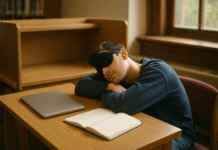





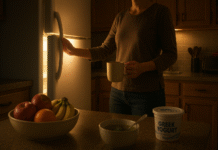












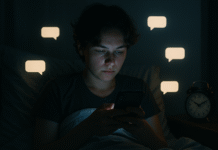



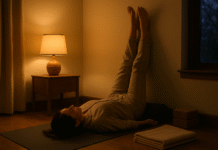
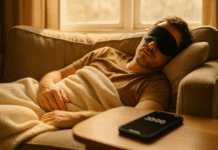
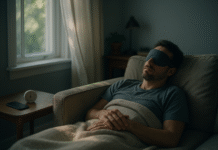

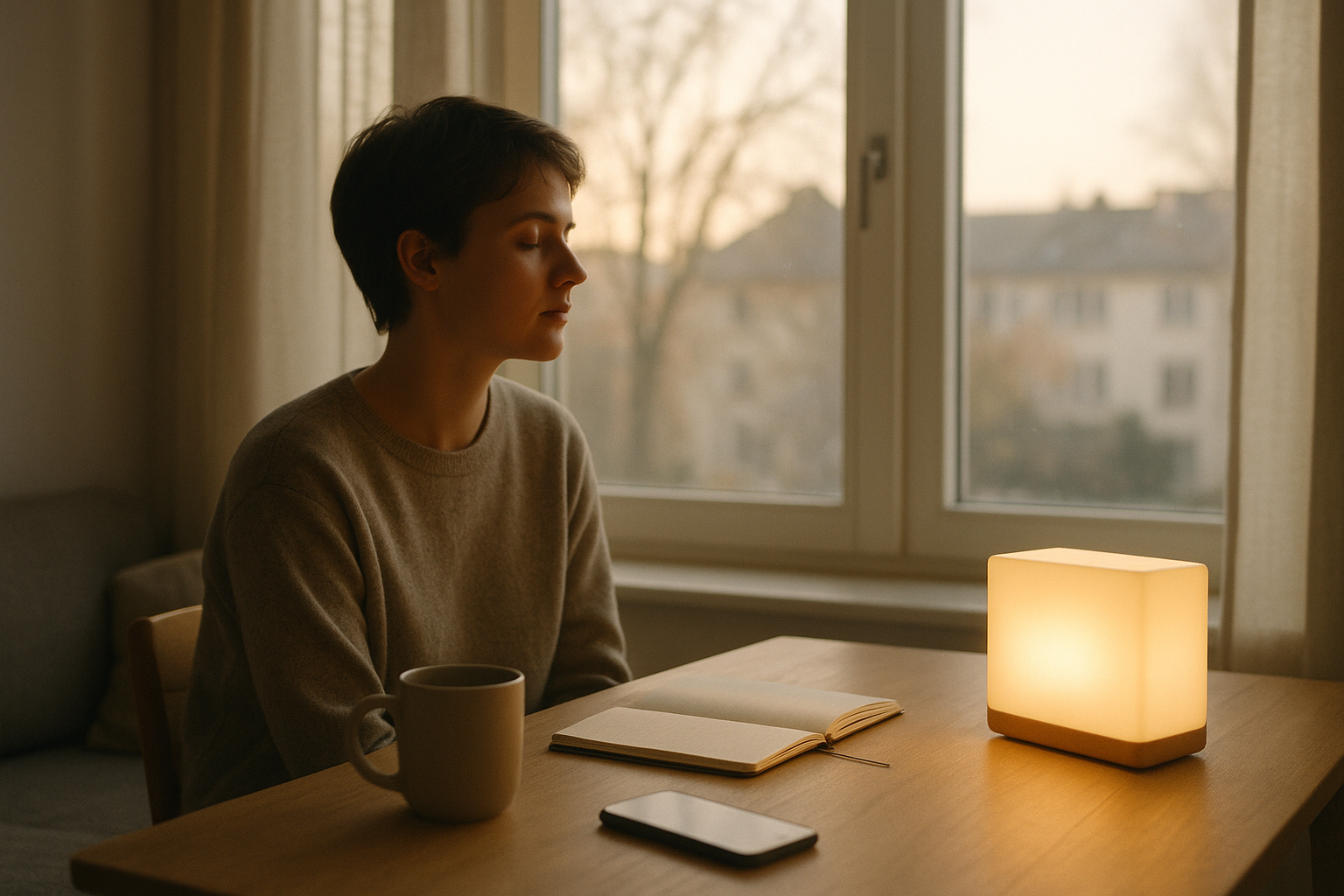
Your body keeps time. Circadian rhythms—roughly 24-hour cycles that coordinate sleep, hormones, metabolism, and mood—are set primarily by light and fine-tuned by behaviors like eating and movement. When these rhythms line up with your day, mood is steadier, stress is easier to manage, and sleep comes more naturally. When they drift or collide with social schedules, the risk of depression, anxiety, and burnout rises. In short: circadian alignment is mental-health hygiene you can practice daily. (This article is educational and not a substitute for personalized care; seek professional guidance for diagnosis or treatment.) A circadian rhythm is an internal, self-sustaining biological clock (located in the brain’s suprachiasmatic nucleus) that organizes physiology and behavior across 24 hours. National Institute of Mental Health
In one sentence: circadian rhythms and mental health are tightly linked—light, sleep timing, meals, and exercise shift your clock and shape mood, stress reactivity, and sleep quality.
1. Morning Light Anchors Your Clock—and Lifts Mood
Bright light soon after waking is the strongest daily cue (“zeitgeber”) for your brain’s master clock, helping cortisol peak on time, melatonin shut off, and mood circuits stabilize for the day. Practically, this means a consistent morning dose of daylight or a light box can brighten mood within days and improve sleep timing within a week. Conversely, dim mornings can leave you groggy, delay your whole schedule, and nudge evening alertness later—fueling stress and late-night rumination. As of August 2025, consensus guidance emphasizes robust daytime melanopic light and minimal evening light to reduce circadian misalignment.
Why it matters
- Daylight is orders of magnitude brighter than most indoor lighting; indoor spaces commonly measure a few hundred lux vs tens of thousands of lux outdoors, making outdoor morning exposure uniquely potent.
- Morning bright light improves seasonal and nonseasonal depressive symptoms in trials and meta-analyses; 10,000-lux light boxes for ~30 minutes are standard in SAD protocols.
How to do it
- Within 30–60 minutes of waking, get 20–30 minutes of outdoor daylight (no sunglasses if safe) or sit at a 10,000-lux light box angled toward your eyes (do not stare into it).
- Aim for ≥250 melanopic lux at the eye during the day (position near windows, open blinds, work by daylight where possible).
- Keep the timing consistent 7 days/week to reinforce your clock.
Numbers & guardrails
- Indoor ambient light is often <500 lux; outdoor shade frequently exceeds 10,000 lux.
- Improvements in seasonal depression with bright light often emerge within 1–2 weeks of daily use.
Bottom line: Treat morning light as daily medicine for steadier mood and earlier, easier sleep onset.
2. Nighttime Light Suppresses Melatonin and Primes Stress
Even modest evening light can suppress melatonin and delay your sleep gate, keeping you mentally “wired” at midnight and irritable by morning. Studies show ~50% melatonin suppression at <30 lux in adults—with wide individual variability—and strong sensitivity in children at single-digit lux levels. That’s roughly the brightness of a lamp across the room or a phone inches from your face. Reducing evening light is one of the fastest ways to improve sleep continuity and next-day mood. Taylor & Francis Online
Why it matters
- Late-night wakefulness is linked to cognitive and emotional dysregulation—the “Mind After Midnight” hypothesis—suggesting higher risk-taking, negative affect, and poorer decision-making during biological night. FrontiersPMC
- Evening bright light acutely boosts alertness but delays melatonin and sleep timing; that’s bad news for next-day mood and stress control. Nature
Mini-checklist (2-hour wind-down)
- T-120 min: switch to low, warm lighting; dim screens or enable night modes.
- T-90 min: stop intense work; avoid emotionally charged media.
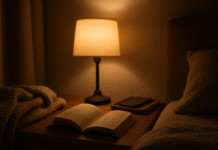
- T-60 min: light, tech-lite routine (shower, stretch, read).
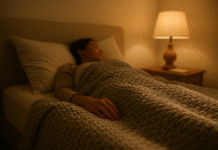
- T-30 min: bedroom lights ≤30 lux; no scrolling in bed.
Tools/Examples
- Use dimmable lamps, warm bulbs, and device night-shift features; consider screen limiters and blackout curtains to control neighborhood light.
Bottom line: If you do one thing for mood and stress tonight, dim the evening—your melatonin (and tomorrow’s mindset) will thank you.
3. Consistent Sleep Timing Beats “Catch-Up” Weekends for Mood
Going to sleep and waking up at similar times stabilizes your internal clock and daytime alertness. “Social jetlag”—shifting your sleep schedule on weekends—predicts worse mood, even after accounting for total sleep time. Recent meta-analyses (2025) show a statistically significant but small association between social jetlag and depressive symptoms; small effects still matter at population scale and can add up with other risk factors like short sleep and evening light.
Why it matters
- Even 1–2 hours of schedule drift boosts odds of low mood and fatigue; larger drifts carry higher risk. ClinMed Journals
- Adolescents and young adults are especially vulnerable due to delayed chronotype and early obligations.
How to do it
- Set a fixed wake time within a ±30-minute window every day; anchor light, meals, and activity to that time.
- If you need to adjust your schedule, shift by 15–30 minutes per day with earlier light and meals to advance the clock.
Common mistakes
- Sleeping in >90 minutes on weekends, then trying to snap back on Monday; relying on naps after 4 p.m.; bright screens at night.
Bottom line: Regularity is a mood stabilizer; protect your wake time and keep weekend drift modest.
4. Sleep Quality and Insomnia Treatment Improve Depression and Anxiety
Insomnia and fragmented sleep predict higher odds of developing anxiety and depressive disorders; treating insomnia often improves mood. Cognitive behavioral therapy for insomnia (CBT-I)—including stimulus control, sleep restriction, and cognitive techniques—reduces insomnia severity and comorbid depression/anxiety, with benefits sustained to at least 6 months. Digital CBT-I expands access with similar efficacy across formats.
Why it matters
- Chronic insomnia elevates anxiety-disorder risk (meta-analytic OR ≈ 3.2), and poor sleep quality heightens next-day threat perception and irritability. ScienceDirect
- Sleep continuity enables emotion-regulation networks to recalibrate overnight.
How to do it (CBT-I building blocks)
- Stimulus control: bed = sleep/sex only; get up if awake >20 minutes.
- Sleep restriction: match time in bed to average sleep time; stretch gradually.
- Consistent wake time: even after rough nights.
- Wind-down & light control: see Section 2.
- Worry buffer: schedule 10–15 min earlier in the evening to offload concerns.
Numbers & guardrails
- As of August 2025, AASM guidelines recommend CBT-I as first-line; melatonin is not recommended for chronic adult insomnia. Seek medical advice for complex cases or when using sedative medications.
Bottom line: Fixing insomnia is a two-for-one: better sleep and better mood.
5. Chronotype and Shift Work: When Your Social Clock Fights Your Biological Clock
Night-owl chronotypes forced into early schedules experience chronic misalignment—sleep debt on weekdays, over-correction on weekends—fueling stress and mood volatility. Shift workers face the toughest version: working against the strongest biological sleep drive (about 2–5 a.m.) while sleeping in daylight. This pattern is linked to higher rates of insomnia symptoms, irritability, concentration problems, and mood complaints. AASM
Why it matters
- Reviews and cohort studies associate shift work with worse sleep and mental-health outcomes, especially on rotating schedules. PMCScienceDirect
- Misalignment also impairs learning, attention, and emotion regulation—amplifying workplace and safety risks. Journal of Clinical Sleep Medicine
How to do it (for night/rotating shifts)
- Protect a fixed anchor sleep window (e.g., 7:30–13:30).
- Light strategy: bright light during shifts; blackout + ear protection for daytime sleep; minimal light on commute home.
- Rotate shifts clockwise (days → evenings → nights) when possible.
- Meal timing: consolidate main meals on the “daytime” of your shift; avoid large meals near intended sleep.
- Naps: 20–30 minutes strategically before night shifts.
Regional note
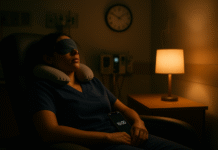
- In regions with strong early sunrise (e.g., South Asia in summer), invest in true blackout curtains and eye masks; prioritize cool, quiet sleeping environments.
Bottom line: Reduce misalignment by stabilizing your schedule, controlling light, and aligning food/activity with your working “day.”
6. Bipolar Disorder: Stabilizing Social and Biological Rhythms Reduces Relapse Risk
Bipolar mood episodes often coincide with rhythm disruptions—irregular sleep-wake patterns, night-time activity, or seasonal light changes. Interpersonal and Social Rhythm Therapy (IPSRT) targets these vulnerabilities by regularizing daily routines (sleep, meals, social contact) and improving interpersonal stress management. Trials show IPSRT can reduce affective morbidity and improve functioning versus usual care, though results vary by study design and setting.
Why it matters
- Circadian instability is a mechanistic risk factor for bipolar depression and mania; aligning rhythms is a core maintenance goal.
How to do it (with your clinician)
- Daily timing grid: track sleep/wake, meals, social Zeitgebers; hold steady to ±30–60 minutes.
- Light strategy: morning light to stabilize wake time; strict evening dimming.
- Travel plan: gradual shifts (30–60 min/day) and pre-shift light exposure before flights.
- Relapse prevention: identify personal rhythm triggers; build contingency plans.
Numbers & guardrails
- Two-year data suggest IPSRT improves relapse-related outcomes compared with standard approaches in some cohorts; however, pragmatic trials show mixed superiority vs medication management alone—reinforcing the need for individualized care.
Bottom line: In bipolar disorder, regularity is treatment—use structured daily rhythms alongside medication and psychotherapy.
7. Seasonal Light Deficits (SAD): Timed Bright Light Treats Winter-Pattern Depression
When daylight shortens, internal clocks can drift later while mood dips. Bright light therapy (BLT)—typically 10,000 lux for ~30 minutes soon after waking—has been a mainstay for winter-pattern Seasonal Affective Disorder since the 1980s. Head-to-head trials show BLT performs comparably to antidepressants for many patients and often works within 1–2 weeks. Safety is generally good when devices filter UV and are used as directed.
Why it matters
- BLT addresses the root driver—insufficient morning light—realigning circadian timing and improving daytime alertness and mood. PMC
How to do it
- Choose a 10,000-lux light box with UV filtering; sit at the manufacturer’s distance with eyes open but not staring at the light.
- Start at 20–30 minutes within 1 hour of waking; adjust by response.
- Combine with outdoor daylight on clear days and CBT-SAD where available. Psychiatry Online
Numbers & guardrails
- Typical intensity range 2,500–10,000 lux; higher intensity → shorter session. Check contraindications (e.g., certain eye conditions, photosensitizing medications). AAFP
Bottom line: For winter depression, morning bright light is evidence-based, fast-acting, and pairs well with psychotherapy or medication when needed.
8. Meal Timing (Chrononutrition) Shapes Mood and Stress via Metabolic Rhythms
Your brain’s master clock syncs mainly to light, but clocks in the liver, gut, and pancreas sync to food timing. Late, irregular eating can push these peripheral clocks later, worsening glucose excursions, sleep quality, and next-day mood. Reviews (2024–2025) propose chrononutrition—front-loading calories earlier, consolidating eating into a consistent daytime window—as an actionable tool to improve mental-health–relevant outcomes like energy, irritability, and sleep continuity. MDPI
Why it matters
- Erratic late-night eating conflicts with melatonin-regulated glucose handling and can promote restless sleep and morning low mood.
How to do it
- Anchor breakfast within 1–2 hours of waking; avoid heavy meals within 2–3 hours of bedtime.
- Consider a 10–12-hour daytime eating window aligned with your wake schedule.
- Keep meal timing consistent ±1 hour day-to-day; prioritize protein and fiber at earlier meals for satiety and stable energy.
Numbers & guardrails
- As of August 2025, evidence supports earlier-shifted and regular meal timing for metabolic and sleep benefits; psychiatric endpoints are promising but still developing—treat it as low-risk adjunctive care.
Bottom line: Eat earlier and consistently to support calmer energy, steadier mood, and better sleep.
9. Exercise Timing Is a Non-Light Zeitgeber That Eases Anxiety and Improves Sleep
Physical activity stabilizes circadian rhythms and reduces stress reactivity. Morning and afternoon sessions tend to advance or reinforce the clock; vigorous late-evening workouts can delay sleep in some people, though evidence is nuanced. Reviews show that evening exercise does not necessarily harm sleep quality, but stopping ~4+ hours before bedtime is a practical guardrail if you’re sensitive. Choose a time you can keep every day, then pair it with morning light and regular meals for maximal mood benefits.
Why it matters
- Exercise acts on temperature, adenosine, and autonomic balance—key pathways in sleep drive and anxiety relief.
How to do it
- If you want earlier sleep: try morning brisk walking or resistance training + outdoor light.
- If stress relief is the goal: afternoon training can offer strong mood benefits without risking sleep delay.
- If evenings are your only option: keep intensity moderate, finish ≥4 hours before bed, and dim lights after.
Mini case
- A professional on rotating shifts moved workouts to the first 2 hours after waking (whenever that fell), used bright light immediately post-wake, and shifted the largest meal to that first “daytime” block—reporting less anxiety before nights and quicker post-shift sleep over 3 weeks.
Bottom line: Make exercise predictable and clock-friendly; timing amplifies its anxiolytic and sleep-promoting effects.
FAQs
1) What exactly are circadian rhythms, and how do they influence mental health?
They’re 24-hour biological cycles coordinated by the brain’s master clock, syncing sleep, hormones, metabolism, and behavior. Light is the primary signal; food and activity fine-tune the timing. Misalignment—too little morning light, too much evening light, irregular sleep and meals—disrupts emotion regulation and stress pathways, raising risk for depression and anxiety. PubMed
2) How much morning light do I need to feel better?
Aim for 20–30 minutes of outdoor daylight within an hour of waking; on very dim days, consider 10,000-lux light therapy for roughly 30 minutes, especially for winter-pattern depression under clinician guidance. Consistency matters more than perfection—do it daily. Mayo Clinic
3) Are blue-light–blocking glasses enough at night?
They can help, but overall illuminance (brightness) is crucial; even low-level light can suppress melatonin. Combine glasses with dimming, warmer bulbs, screen night modes, and keeping bedroom light ≤30 lux in the last 30 minutes.
4) Does “sleeping in” on weekends fix a stressful week?
Extra sleep helps recovery, but big schedule swings (social jetlag) correlate with worse mood. Keep weekend wake time within ~90 minutes of weekdays and aim for regular light, meals, and activity to stabilize your clock.
5) I have insomnia and low mood—should I try melatonin?
For chronic adult insomnia, AASM guidelines do not recommend melatonin as first-line; CBT-I has stronger, longer-lasting evidence and also improves mood symptoms. Melatonin can be useful for circadian disorders (e.g., delayed sleep phase) at carefully timed low doses—work with a clinician. Oxford Academic
6) Is late-night exercise bad for mental health?
Not universally. Reviews show evening workouts don’t automatically harm sleep, but if you notice later bedtimes or restless nights, finish training ≥4 hours before sleep and dim lights after. Morning/afternoon sessions often make earlier sleep easier. PMC
7) What’s the fastest way to improve mood through circadian habits?
Combine morning bright light, consistent wake time, dim evenings, and a daytime eating window for one week. Many people notice earlier sleep onset and steadier mood in 7–10 days. (If symptoms are severe or persistent, seek care.)
8) How does bipolar disorder interact with circadian rhythms?
Episodes often follow rhythm disruptions. IPSRT and other structured routines that stabilize sleep, social activity, and light exposure can reduce relapse risk and improve functioning alongside medication—though effects vary across studies.
9) Does light therapy work outside of seasonal depression?
Evidence is growing that bright light can aid nonseasonal depression (as an adjunct to standard care). It should be used under clinical guidance to tailor intensity and timing and monitor side effects.
10) Can changing when I eat really affect my mood?
Indirectly, yes. Aligning meals earlier and consistently improves metabolic rhythms and sleep continuity, which support steadier energy and mood. Treat chrononutrition as a low-risk adjunct, not a standalone treatment for clinical depression or anxiety.
11) Are adolescents different when it comes to circadian health?
Yes—teens naturally run later (delayed chronotype) and are vulnerable to social jetlag from early school starts. Support with consistent wake times, morning light, and realistic bedtime routines; if insomnia or mood symptoms persist, seek pediatric guidance. PMC
12) What if my job requires nights?
Stabilize a repeatable sleep window, control light aggressively (bright on shift, blackout for sleep), rotate shifts clockwise when possible, and time meals to your working “day.” Consider strategic naps and discuss tailored plans with occupational health. AASMkiprc.uky.edu
Conclusion
Circadian rhythms and mental health are inseparable: the same daily cues that synchronize your internal clock—light, sleep timing, food, and movement—also set the stage for how you feel and cope. You don’t need a lab to start. Step into morning light for 20–30 minutes, protect an unwavering wake time, dim the evening to protect melatonin, front-load meals, and train at a consistent time most days. If you’re tackling insomnia, choose CBT-I; if your mood dips in winter, consider a properly used light box; if you work nights, treat light and timing like PPE for your brain. The science suggests that within a week or two of consistent practice, many people notice earlier, more refreshing sleep and steadier mood. For clinical conditions—major depression, bipolar disorder, severe anxiety—layer these circadian tools into evidence-based care with your clinician. Start today: get outside early, dim late, and keep your clock steady.
References
- Circadian Rhythms, National Institute of General Medical Sciences (May 20, 2025). NIGMS
- Circadian Rhythms and Mood Disorders: Time to See the Light, Frontiers in Psychiatry (2023). PMC
- Recommendations for daytime, evening, and nighttime light exposure, PLOS Biology (2022). PMC
- High sensitivity and interindividual variability in melatonin suppression by evening light, J Biol Rhythms (2019). PMC
- Seasonal Affective Disorder—NIH, National Institute of Mental Health (accessed Aug 2025). National Institute of Mental Health
- Can-SAD RCT: Light vs Fluoxetine, Am J Psychiatry (2006). PubMed
- Bright Light Therapy beyond Seasonal Depression, American Psychiatric Association (Jan 6, 2025). American Psychiatric Association
- Digital CBT-I meta-analysis, NPJ Digital Medicine / PMCID: PMC10039857 (2023). PMC
- Comparative efficacy of CBT-I settings: network meta-analysis, Scientific Reports (2023). Nature
- Clinical practice guideline: Pharmacologic treatment of chronic insomnia in adults, American Academy of Sleep Medicine (2017). Journal of Clinical Sleep Medicine
- AASM: Melatonin isn’t first-line for chronic insomnia (blog/summary with guideline link), American Academy of Sleep Medicine (2024). AASM
- Social jetlag and depressive symptoms meta-analyses (2025), BMC Public Health / PubMed summary (2025). ; PMCPubMed
- Interpersonal and Social Rhythm Therapy (IPSRT) efficacy review, Frontiers in Psychiatry (2020). PMC
- Two-Year Outcomes for IPSRT, JAMA Psychiatry (2005). JAMA Network
- Clinical effectiveness trial of adjunctive IPSRT (pragmatic), Psychotherapy (2020). Psychiatry Online
- Chrononutrition reviews (2024–2025), Frontiers in Nutrition (2024) and Annu Rev Nutr (2025). ; https://pmc.ncbi.nlm.nih.gov/articles/PMC12184280/ PMC
- Exercise and sleep/circadian link (review), Nature Reviews Sleep (2025). Nature
- Evening exercise and sleep timing (dose-response), Nature Communications (2025). Nature
- Ambient light levels indoors vs outdoors, Eye and Contact Lens (2021). PMC
- AASM patient resource: Shift work disorder, SleepEducation.org (2021). Sleep Education