










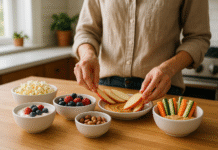
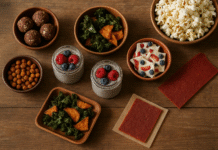
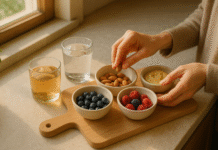













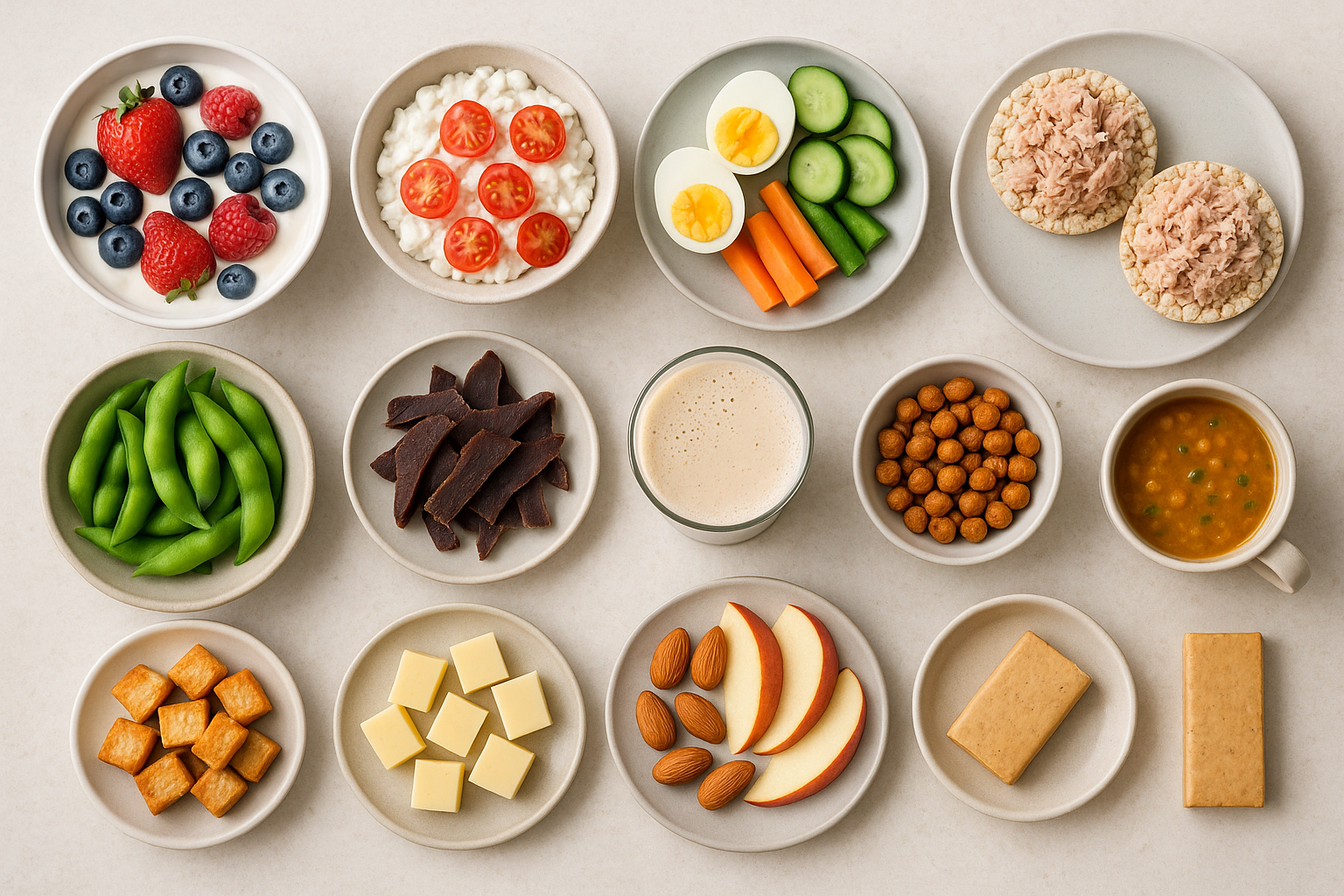
When your energy dips and cravings hit, the right snack can steady blood sugar, curb hunger, and keep you focused—without blowing your calories. This guide delivers 12 high-protein snacks that are fast, tasty, and practical for work, school, or travel. You’ll learn ideal portions, smart pairings, and how to choose options with 10–25 grams of protein to actually stay full. Short health note: this article is general education, not medical advice; if you have specific dietary needs or conditions, consult a qualified professional.
Quick definition: High-protein snacks are compact foods or combos that deliver 10–25 g protein per serving with sensible calories, ideally paired with fiber or healthy fats to extend satiety.
Fast picker’s checklist: Aim for 200–300 kcal, 10–25 g protein, ≤8 g added sugar, ≥3 g fiber (when possible), and a short, recognizable ingredient list.
1. Greek Yogurt (or Skyr) Power Bowl
Greek yogurt (or its Icelandic cousin, skyr) is a satiety superstar because it concentrates milk proteins, especially casein, which digests slowly and helps you feel full for longer. A single 170–200 g cup of plain nonfat Greek yogurt typically lands around 15–20 g of protein, while skyr is similar. The thick texture also adds to perceived fullness and makes a great base for both sweet and savory flavors. Start with plain versions to avoid added sugars, then layer toppings that add fiber, crunch, and micronutrients. This snack is fridge-friendly, affordable, and easy to portion. It’s also a strong option post-workout thanks to its rich amino acid profile. For the office, build it in a jar; for travel, choose sealed single-serve cups.
1.1 Numbers & guardrails
- Base: 170–200 g plain nonfat Greek yogurt = ~15–20 g protein, ~90–120 kcal.
- Add-ins: ¼ cup berries + 1 tbsp chopped nuts adds fiber + healthy fats.
- Keep added sugars low; use fruit or a light drizzle of honey if needed.
1.2 Quick builds
- Berry-crunch bowl: Yogurt + blueberries + sliced almonds + cinnamon.
- Savory bowl: Yogurt + diced cucumber + olive oil + dill + salt & pepper.
- Tropical: Yogurt + pineapple + toasted coconut flakes + chia.
Close with a spoonful of seeds (chia/hemp) for extra texture and omega-3 ALA; the creamy-protein + fiber combo slows digestion and keeps you satisfied.
2. Cottage Cheese, Two Ways (Sweet or Savory)
Cottage cheese packs 12–15 g of protein per ½ cup and offers a mellow flavor that pairs with fruit, vegetables, and herbs. Its curds provide a mix of casein and whey, supporting steady satiety and balanced amino acids. For a sweet take, fold in fruit for fiber and natural sweetness; for savory, add tomatoes, cucumber, or roasted peppers plus herbs and a touch of olive oil. The thicker, higher-protein “dry curd” styles feel particularly filling, while low-fat varieties help keep calories in check. If you’re sodium-sensitive, seek reduced-sodium tubs or portion carefully, since some brands are saltier than yogurt.
2.1 How to assemble (3-minute rule)
- Sweet bowl: ¾ cup cottage cheese + strawberries + 1 tsp honey + chia.
- Savory bowl: ¾ cup cottage cheese + cherry tomatoes + basil + black pepper + 1 tsp olive oil.
- Crunch factor: Add whole-grain crackers or sliced bell peppers.
2.2 Mini checklist
- Pick plain versions to control sugar.
- Stir to smooth out curds if texture bothers you.
- If sodium is a concern, compare labels and rinse curds briefly (optional) to reduce surface salt.
With 15–20 g protein in typical snack-sized portions, cottage cheese bowls bridge the gap between meals and stave off random grazing.
3. Hard-Boiled Eggs with Veggies & Whole-Grain Crunch
Eggs are a portable, nutrient-dense protein delivering about 6–7 g each plus choline, B12, and fat-soluble vitamins. Two eggs with crunchy vegetables and a few whole-grain crackers make a well-rounded mini-meal that holds you for hours. The yolk’s fat supports satiety and flavor; the whites contribute high-quality protein. Pre-boil a batch on Sunday and you’ve got grab-and-go snacks all week. For flavor without excess salt, lean on spice mixes (za’atar, everything bagel seasoning, smoked paprika) and a squeeze of lemon. If cholesterol is on your radar, align portions with your health professional’s guidance; many people include eggs comfortably in balanced diets.
3.1 Build it fast
- Base: 2 hard-boiled eggs (12–14 g protein).
- Veg: 1 cup sliced cukes, carrots, or bell peppers.
- Crunch: 2–3 small whole-grain crackers or a mini whole-wheat pita.
- Season: Pinch of salt, pepper, paprika, or a yogurt-herb dip.
3.2 Common mistakes
- Skipping the veg: fiber helps extend fullness.
- Over-salting: rely on acids and spices for brightness.
- Too few eggs: 1 egg may be insufficient protein; consider 2–3 based on needs.
A balanced egg plate with fiber and complex carbs brings steady energy and reduces the urge to raid the pantry later.
4. Tuna or Salmon Pouches on Rice Cakes (or Cucumber Boats)
Shelf-stable tuna or salmon pouches are a satiety cheat code: a 70–85 g pouch often provides ~15–20 g of protein with minimal prep. Spread onto whole-grain rice cakes for crunch and sustained energy, or scoop into cucumber “boats” for a lower-carb alternative. Salmon adds omega-3s; tuna is lean and budget-friendly. Choose plain or lightly seasoned pouches to control sodium and additives. For food safety in hot weather, keep pouches closed until you’re ready to eat; once opened, refrigerate leftovers and consume quickly.
4.1 Smart pairings
- Classic: Tuna + lemon + black pepper + dill on rice cakes.
- Spicy: Salmon + yogurt + harissa + parsley in cucumber boats.
- Crunch: Top with radish slices or pumpkin seeds.
4.2 Numbers & notes
- Protein: ~15–20 g per pouch; 2 rice cakes ~70–80 kcal.
- Look for lower-sodium labels if managing blood pressure.
- Rotate species; salmon and light tuna help diversify nutrients.
A protein-dense base plus crunch creates a satisfying texture contrast that keeps hunger at bay through the afternoon.
5. Steamed Edamame with Sea Salt & Citrus
Edamame (young soybeans) offers a rare combination: plant-based complete protein plus fiber in one simple snack. One heaping cup of shelled edamame can deliver ~17 g of protein with ~8 g fiber, making it both filling and gentle on blood sugar. It’s freezer-friendly, microwaves in minutes, and takes well to lemon, lime, or chili flakes. For those seeking vegetarian or halal options in office settings, edamame is a dependable staple that doesn’t require elaborate prep.
5.1 Flavor boosters
- Lemon zest + sea salt + chili flakes.
- Toasted sesame oil + garlic powder + scallions.
- Smoked paprika + lime + a pinch of cumin.
5.2 Mini case: meeting snack
Microwave 1 cup frozen edamame in a vented container, drain, season with lemon and salt, and you’ve got a tidy 17 g protein snack between calls—no utensils required.
The protein–fiber duo slows digestion, so you feel full longer than you would with chips or crackers alone.
6. Jerky or Biltong (Choose Lean, Low-Sugar)
High-quality beef, turkey, or fish jerky—and South African–style biltong—can provide ~9–15 g protein per 28–35 g serving with minimal carbs. They’re ultra-portable and shelf-stable, ideal for travel or hikes. The catch is sodium and sugar: some brands pack 5–8 g sugar per serving and 400–600 mg sodium. Read labels and pick lean cuts with short ingredient lists. For those who avoid pork or seek halal options, look for certified beef or poultry products; fish jerky (tuna, salmon) is another underused choice with omega-3s.
6.1 Label-reading checklist
- Protein: ≥10 g per 30 g serving.
- Added sugar: ≤3–4 g (or none).
- Sodium: Aim ≤400 mg per serving when possible.
- Ingredients: Meat, salt, spices; avoid long additive lists.
6.2 Pair for balance
- Add a small fruit (apple or orange) for fiber and hydration.
- A handful of raw veggies brightens flavor and volume.
- If you’re active, combine with a few whole-grain crackers.
Lean, lightly seasoned jerky or biltong tames hunger quickly and travels better than most protein foods.
7. Protein Shakes (Whey, Casein, Soy, or Pea)
A well-built protein shake is fast, customizable, and reliably satisfying, especially if you struggle to hit daily protein targets. Whey is widely available and quickly digested; casein digests more slowly and may better support between-meal satiety. Soy and pea blends offer complete or complementary amino acid profiles for plant-based diets. A typical scoop yields ~20–25 g protein; adding fiber (berries, flaxseed, oats) improves fullness. Keep sugars low by using unsweetened milk or water and whole fruit instead of syrups.
7.1 How to build a balanced shake
- Base: 1 scoop protein (20–25 g).
- Liquid: 240–300 ml water or milk/fortified plant milk.
- Fiber/fats: ½ banana or ¾ cup berries + 1 tsp flax or chia.
- Ice: Blend for volume and texture.
7.2 Practical tips
- For a longer-lasting snack, try casein or mix whey + casein.
- If using pea protein, choose blends with rice or added BCAAs for a complete amino profile.
- Aim for ~250 kcal for a snack; keep added sugars ≤8 g.
A protein-first shake with fiber-rich add-ins can bridge a long stretch between meals without a crash.
8. Roasted Chickpeas or Chana Chaat (Protein + Fiber Crunch)
Chickpeas bring a satisfying crunch when roasted and a bright, fresh bite in chaat—both with meaningful protein. A ¼ cup of roasted chickpeas offers ~6–7 g protein; a ¾–1 cup portion of cooked chickpeas in chana chaat lands around ~10–15 g. Combine with chopped onion, tomato, cucumber, cilantro, lemon juice, and chaat masala for a high-fiber, high-volume snack that feels like street food but fits your goals. To boost protein further, spoon on a dollop of Greek yogurt or crumble in paneer or baked tofu.
8.1 Roasted chickpea method (batch once, snack all week)
- Drain and dry cooked chickpeas very well.
- Toss with 1 tsp oil, cumin, paprika, and salt.
- Roast at ~200°C/400°F for 25–35 minutes, shaking the pan.
8.2 Chaat upgrades
- Add pomegranate for acidity and antioxidants.
- Mix in yogurt (2–3 tbsp) to add ~3–5 g protein and creaminess.
- Sprinkle toasted seeds for extra crunch.
The protein–fiber–acid trio satisfies both palate and stomach, making it easier to pass on ultra-processed nibbles.
9. Crispy Tofu Bites or Baked Tempeh
Firm tofu and tempeh are underrated snack proteins: budget-friendly, easy to batch cook, and versatile across cuisines. Tofu offers ~8–10 g protein per 100 g; tempeh brings ~18–20 g per 100 g with a nutty chew. Toss cubes in a light marinade, then air-fry or bake until crisp outside and tender inside. Serve with a quick dipping sauce (soy-lime, yogurt-chili, or tahini-lemon). Tempeh’s fermentation also makes it pleasantly savory and digestible for many people.
9.1 Simple marinade & bake
- Soy sauce (or tamari), garlic powder, ginger, and a touch of sesame oil.
- Bake at 200°C/400°F for 20–25 minutes, turning once.
- Air-fryer option: 190°C/375°F for 12–15 minutes.
9.2 Serving ideas
- Snack box with cherry tomatoes and snap peas.
- Rice-cake “toast” topped with tofu cubes and chili crisp.
- Wrap in lettuce leaves with a squeeze of lime.
With thoughtful seasoning and a crisp finish, tofu and tempeh deliver substantial plant protein that keeps you pleasantly full.
10. Cheese & Fruit with a Small Handful of Nuts
A measured portion of cheese offers ~6–8 g protein per 28 g (1 oz) plus calcium and flavor. Pairing with a fiber-rich fruit (apple, pear, berries) and 10–12 almonds or pistachios rounds the snack out with fiber and healthy fats. The combo hits multiple satiety levers—protein, fat, fiber, and crunch—without requiring cooking or refrigeration for more than a short trip. Choose naturally lower-sodium cheeses (fresh mozzarella, Swiss) if you’re watching salt, and keep portions honest since cheese is energy-dense.
10.1 Portion guide
- Cheese: ~28–40 g (1–1.4 oz).
- Fruit: ~1 small apple/pear or ¾ cup berries.
- Nuts: ~10–12 almonds or pistachios.
10.2 Tips for balance
- If you need a higher-protein hit, add 1–2 turkey slices or a skyr cup.
- For sweetness, rely on fruit; avoid sugared dried fruit for everyday snacking.
- Pre-portion nuts to avoid mindless handfuls.
This elegant, simple trio is easy to keep on hand and surprisingly satisfying between meals.
11. Mug of Lentil Soup (a.k.a. “Dal Shot”)
A small mug of lentil soup—or a thick dal—delivers steady, plant-based protein with fiber and warmth that blunts cravings. One heaping cup can provide ~12–18 g protein depending on the pulse. Keep a batch in the fridge or freezer, or use quality shelf-stable cartons for speed. For a “snack-size,” pour ~240 ml (1 cup) into a mug, microwave, and finish with lemon, herbs, and chili. If you prefer creaminess, whisk in 2–3 tbsp Greek yogurt for a protein bump and a silky finish.
11.1 Flavor & texture enhancers
- Lemon juice, cilantro, and black pepper.
- Cumin, turmeric, and garlic for complexity.
- A spoon of yogurt or grated ginger for brightness.
11.2 Mini case: late-afternoon rescue
At 4 p.m., heat a 1-cup portion of dal; add lemon and chili flakes. You’ll get ~15 g protein plus fiber and fluid volume—perfect to carry you to dinner without snacking again.
The warm, savory profile plus substantial protein makes this a comfort-forward way to conquer afternoon hunger.
12. Protein Bars (How to Pick a Good One)
Protein bars are convenient, but quality varies wildly. A good bar for satiety should hit 15–20 g protein with ≤8–10 g added sugar, contain fiber (≥3 g), and avoid long lists of sugar alcohols that can upset digestion. Whey or milk protein isolate concentrates deliver strong amino acid quality; soy or pea blends serve plant-based eaters. Calorie counts range from 180 to 260; choose based on your goals and whether the bar is a snack or meal replacement. For travel, bars shine where refrigeration isn’t possible.
12.1 Label red flags & green lights
- Green lights: 15–20 g protein, ≥3 g fiber, modest ingredient list.
- Proceed with caution: >10 g added sugar, lots of syrups, or heavy sugar alcohols.
- Allergens: Check for nuts, dairy, soy if sensitive.
12.2 Use cases
- Snack: Pair half a bar with fruit or yogurt.
- On the go: Whole bar when meetings stack up or on flights.
- Post-workout: Choose fast-digesting proteins; add fluid and a carb source.
Choose bars that fit your protein target and digestive comfort; they’re a backup plan, not your only plan.
FAQs
1) How many grams of protein should a snack have to keep me full?
Most people feel satisfied with 10–25 g of protein in a snack, especially when paired with fiber or healthy fats. Heavier snacks (closer to 20–25 g) may better bridge long gaps between meals or tougher training days, while lighter 10–15 g options work for shorter gaps or smaller appetites.
2) Are plant-based protein snacks as filling as animal-based ones?
They can be. Choose options with meaningful protein and fiber—edamame, lentils/dal, tofu/tempeh, or chickpeas. Plant proteins sometimes have different amino acid profiles; pairing foods (e.g., pea + rice, grains + legumes) and aiming for sufficient total protein across the day preserves fullness and supports muscle maintenance.
3) What’s a good calorie range for a protein snack during weight loss?
A common target is 200–300 kcal with 10–25 g protein, balanced with fiber and minimal added sugar. If you’re very active or have long stretches between meals, pushing closer to 300 kcal may better prevent rebound eating later.
4) Do I need a protein bar or shake, or can I stick to whole foods?
Whole foods (yogurt, eggs, fish, legumes) are great for micronutrients and often better satiety per calorie. Bars and shakes are tools for busy schedules or travel. Many people use a mix: whole-food snacks most days, with a bar or shake as a convenient fallback.
5) How do protein and fiber work together for satiety?
Protein slows gastric emptying and supports appetite-regulating hormones; fiber adds bulk and steadies blood sugar. Together they create a longer “full” signal. That’s why yogurt with berries or tuna with whole grains beats a plain cookie for staying power.
6) Is jerky healthy if it’s high in sodium?
Jerky can be a useful protein-dense snack, but sodium varies widely. Look for ≤400 mg per serving, minimal added sugar, and short ingredient lists. Pair with produce and adequate hydration. If you’re managing blood pressure, consider alternatives like tuna pouches, yogurt, or edamame.
7) What’s the difference between whey and casein for snacking?
Whey digests quickly and is popular post-workout; casein digests more slowly and may help you feel full longer between meals. Blends can offer a best-of-both approach. If you’re dairy-free, soy or pea-rice blends are solid alternatives with comparable protein amounts.
8) Can I rely on nuts as a high-protein snack?
Nuts are nutrient-dense and satiating, but protein per calorie is modest compared with yogurt, eggs, or fish. Use nuts as a supporting player—pair them with cheese, yogurt, or jerky to raise total protein, and pre-portion to avoid overdoing calories.
9) Are protein snacks safe for people with diabetes?
Protein-focused snacks with minimal added sugar and some fiber can help stabilize blood glucose. Options like Greek yogurt with berries, eggs with veggies, or edamame often work well. Always individualize with your clinician or dietitian, especially for medications that affect glucose dynamics.
10) How can I meal-prep high-protein snacks for the week?
Batch-cook eggs, roast chickpeas, bake tofu, and portion yogurt or cottage cheese into containers. Pre-chop veg and pack whole-grain crackers. Keep shelf-stable backups—tuna pouches, quality bars—at work or in your bag. Label portions so you can grab and go without guesswork.
11) What about late-night snacking—does protein help?
If you truly need a small late snack, protein-forward choices (casein yogurt/skyr, a small cottage cheese bowl, or a mini dal mug) can satisfy without spiking blood sugar. Keep portions moderate and avoid added sugars to protect sleep quality.
12) Do I need to hit a “leucine threshold” in snacks?
For muscle maintenance, ~2–3 g leucine per eating occasion is often cited in sports nutrition. Some snacks (25 g whey, ~200 g high-protein yogurt, or 3 eggs) can approach this. If body composition is a priority, structure snacks and meals to collectively reach your daily protein goal rather than fixating on single servings.
Conclusion
High-protein snacks work because they address the two big drivers of between-meal eating: physiological hunger and hedonic cravings. By centering 10–25 g of protein and layering in fiber, water-rich produce, and modest healthy fats, you build snacks that satisfy quickly and stay with you. The 12 options here cover every scenario—desk days, travel days, training days—and range from dairy-based bowls to plant-forward bites and truly portable solutions. The real win is consistency: when better choices are easy, you make them more often. Batch a few options on Sunday, keep shelf-stable backups in your bag, and rotate flavors to avoid boredom. Your future self—less hungry, more focused—will thank you.
Ready to feel the difference? Pick two snacks from this list, prep them today, and set yourself up for a calmer, fuller week.
References
- Protein and Satiety—What Does the Evidence Say?, Harvard T.H. Chan School of Public Health, 2023, https://www.hsph.harvard.edu/nutritionsource/what-should-you-eat/protein/
- FoodData Central: Greek Yogurt, Plain, Nonfat, U.S. Department of Agriculture (USDA), 2024,
- FoodData Central: Cottage Cheese, Low-Fat (1–2%), USDA, 2024,
- FoodData Central: Eggs, Whole, USDA, 2024,
- FoodData Central: Tuna, Light, in Water (Canned/Pouch), USDA, 2024,
- FoodData Central: Salmon, Canned/Pouch, USDA, 2024,
- FoodData Central: Edamame, Boiled, USDA, 2024,
- FoodData Central: Beef Jerky, USDA, 2024,
- Position Stand: Protein and Exercise, International Society of Sports Nutrition, 2017 (with ongoing updates referenced in ISSN resources), https://jissn.biomedcentral.com/articles/10.1186/s12970-017-0177-8
- FoodData Central: Tofu and Tempeh, USDA, 2024,
- FoodData Central: Chickpeas, Cooked/Roasted, USDA, 2024,
- FoodData Central: Cheese, Various Types, USDA, 2024, https://fdc.nal.usda.gov/