
























Hydration isn’t just about quenching thirst—it’s a core requirement for how your brain signals, allocates blood flow, regulates temperature, and sustains attention, memory, and mood. This guide translates current evidence into practical, safe steps for knowledge workers, students, athletes, and older adults. Brief note: this article is educational and not a substitute for personalized medical care—if you have heart, kidney, or endocrine conditions, or you’re on fluid-restricting medications, ask your clinician for tailored advice.
Quick definition: Adequate hydration supports brain function by maintaining electrolyte gradients for neuronal signaling and stabilizing cerebral blood flow; even mild water loss (~1–2% body mass) can measurably worsen attention, processing speed, and mood.
1. Hydration Maintains Neuronal Signaling and Electrolyte Balance
Hydration directly supports the electrical activity that lets neurons fire. In short, sufficient body water keeps sodium, potassium, and chloride concentrations in the right ranges so action potentials propagate reliably and synapses release neurotransmitters on time. When you’re even a little dehydrated, rising osmolality alters cellular volume and ion gradients, increasing neural “noise” and subjective effort. That’s why dehydrated people often report “brain fog” despite normal oxygen levels. Reviews of dehydration and cognition repeatedly note that modest fluid deficits degrade attention and psychomotor performance—the very domains most sensitive to perturbed signaling.
1.1 Why it matters
- Neuronal firing depends on tight ionic control; water loss shifts osmolality and membrane potentials.
- The first cognitive casualties tend to be attention, vigilance, and quick motor responses.
- Subjective effort rises: tasks feel harder at the same workload, a pattern observed in lab studies.
1.2 Mini-checklist
- Start the day hydrated (urine pale straw), then top up around cognitively demanding blocks.
- Pair water with meals and breaks rather than “chugging” irregularly.
- If sweating, add electrolytes proportionate to duration/intensity (see items 3 and 9).
Bottom line: Healthy neural signaling is water- and electrolyte-dependent; keeping osmolality in range protects the brain’s timing and signal fidelity.
2. Mild Dehydration (~1–2% Body Mass) Can Slow Attention, Processing Speed, and Mood
A small fluid deficit has outsized cognitive effects. Controlled trials show that ~1–2% body mass loss impairs attention, short-term memory, and psychomotor speed and worsens mood states (fatigue, tension), with effects detectable in everyday conditions—not just in extreme heat. Men and women both show decrements, though outcome patterns can differ by sex and protocol. These effects are relevant at desks, in classrooms, and during long meetings, not only in endurance sport.
2.1 Numbers & guardrails
- Threshold: ~1–2% body mass loss (e.g., 0.7–1.4 kg for a 70-kg person) can degrade performance.
- Domains impacted: attention, immediate memory, psychomotor speed; mood and perceived task difficulty.
- Context sensitivity: effects appear across lab and field settings, not solely with heavy exercise.
2.2 How to act on it
- Weigh yourself (same scale/time/clothing) before/after long work or training days to spot >1% losses.
- Build “sips per session” habits (e.g., 150–250 mL every 20–30 minutes in long meetings).
- If you feel unusual task effort, check hydration before blaming motivation.
Bottom line: “Just a little low” on fluid can measurably slow cognition and worsen mood—keep losses under ~1% whenever you can.
3. Hydration Supports Cerebral Blood Flow (CBF) and Heat Defense During Demanding Work
Dehydration reduces cerebral blood flow during strenuous tasks, especially in the heat, even when oxygen metabolism remains stable. The brain prioritizes cooling and systemic demands, so plasma volume loss and cardiovascular strain can outpace flow maintenance. The practical impact: your sustained thinking power, decision-making under load, and perception of effort all suffer sooner when dehydrated in hot, stressful conditions.
3.1 Why it matters
- Dehydration accelerates declines in CBF during prolonged exercise in the heat, limiting endurance and cognitive resilience.
- Reviews highlight demand-dependent effects: the higher the cardiovascular strain, the greater the CBF challenge.
- Peripheral blood flow and cardiac output also drop with dehydration under high load.
3.2 Heat-day checklist
- Pre-hydrate 2–3 hours before strenuous work; sip during activity.
- Include sodium with long (>60–90 min), sweaty sessions (see item 9).
- Cool the environment and skin (shade, fans, breaks); this protects both core temp and CBF.
Bottom line: Under heat and heavy demand, dehydration speeds CBF decline and fatigue—hydrate and cool to preserve mental performance.
4. Hydration Affects Brain Structure Acutely (MRI Measures Change With Fluid Status)
MRI studies show dehydration can transiently alter brain measures—ventricular spaces often enlarge and regional tissue metrics shift; rehydration reverses many of these changes. While total brain volume findings vary across protocols, converging work indicates that hydration state is a meaningful confound in neuroimaging and a plausible mechanism for “fog” sensations. Practically, this reminds us that fluid balance is not just systemic; the central nervous system responds measurably within hours.
4.1 What the scanners found
- Dehydration associated with ventricular enlargement and changes in regional density; many changes reverse after rehydration.
- Some studies report stable total brain volume but shifting CSF/gray/white matter metrics.
- Newer work confirms widespread density/homogeneity changes across regions.
4.2 Mini case
- Protocols with ~12–16 hours of restricted fluid or hot exercise produced MRI-detectable shifts in hours, not days—aligning with the quick return of clarity many people feel after rehydrating.
Bottom line: Hydration state influences what your brain looks like on MRI—and likely how efficiently it works day to day. Keep it steady.
5. Hydration Steadies Mood and Stress Reactivity
One of the clearest signals in the literature is mood: modest dehydration worsens tension, fatigue, and irritability, particularly in women in some protocols, with men also affected. This matters for performance because negative affect and perceived task difficulty can snowball into poorer decision-making and lower persistence. Keeping fluid balance stable reduces emotional friction and protects cognitive bandwidth.
5.1 What to watch
- Symptoms: headache, “heavy head,” lower concentration, higher perceived effort.
- Domains at risk: sustained attention, vigilance, and short-term memory.
5.2 Practical levers
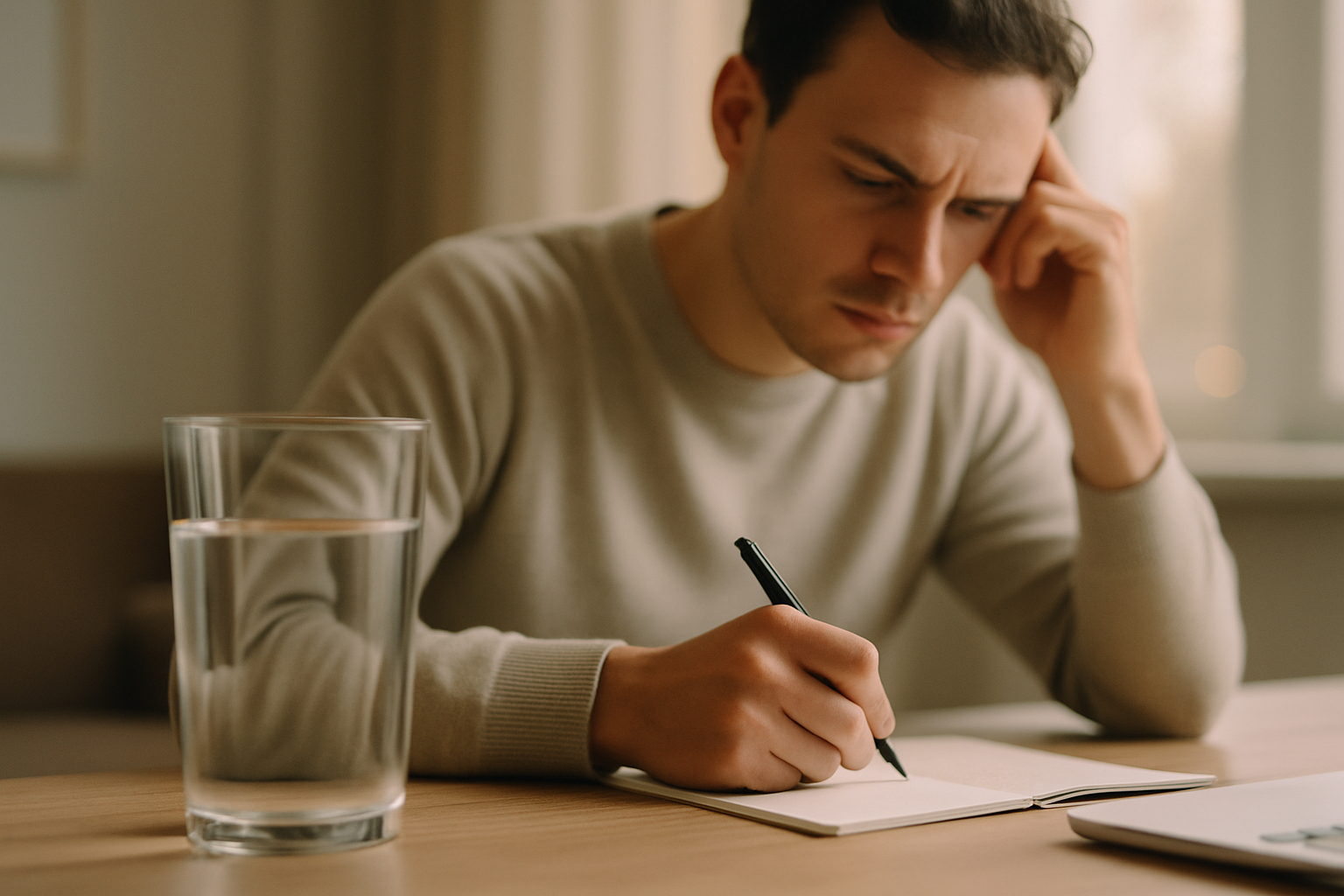
- Front-load 300–500 mL in the morning; keep water visible on your desk.
- Pair hydration with micro-breaks to reset affect (60–90 seconds of stretching, breathing).
- Nudge intake when cues appear (dry mouth, darker urine, sluggish focus).
Bottom line: Small fluid deficits amplify stress and negative mood—top up before high-stakes thinking.
6. Hydration Helps Attention and Short-Term Memory in Daily Work and Study
Reviews link adequate water intake with better attention and short-term memory, though results vary by population and protocol. What’s consistent: when tasks require quick updates (working memory) and fast responses, being euhydrated improves odds of performing near your baseline. The effect is subtle compared with sleep or training, but it’s dependable—and cheap—to optimize.
6.1 How to operationalize at work
- Before sprints: Drink 200–300 mL 15–20 minutes before focused blocks.
- During: Sip 100–150 mL every 20–30 minutes in long sessions; add electrolytes if you’re sweating.
- After: Replace losses (see item 10 for monitoring).
6.2 Mini example
- A 90-minute study block with two 150-mL sips (~10 and ~50 minutes) keeps intake steady without bathroom-overload or distraction—a pattern consistent with protocols in cognition studies.
Bottom line: For attention- and memory-heavy work, small, regular sips improve your chance of staying sharp.
7. Sleep and Hydration Are Linked—Short Sleep Predicts Inadequate Hydration
Short sleepers (≈6 hours) show higher odds of inadequate hydration the next day versus 8-hour sleepers, in US and Chinese cohorts using urinary biomarkers. Mechanistically, vasopressin rhythms may shift with curtailed sleep, reducing overnight water conservation. Practically, if you sleep short, plan for an early hydration “catch-up” and avoid mistaking sleep-debt grogginess for coffee-only cravings.
7.1 What to do on low-sleep mornings
- Within an hour of waking: 300–500 mL water; add breakfast sodium if you’ll be active.
- Pace caffeine (see item 9); don’t swap water for coffee.
- Keep an eye on urine color until it trends pale straw.
7.2 Guardrails
- If frequent night urination disrupts sleep, front-load fluids earlier in the day and taper after dinner.
Bottom line: Sleep short? You’re more likely to be underhydrated—plan the first 1–2 hours of the day accordingly.
8. In Older Adults, Hydration Status Tracks Cognitive Change Over Time
Hydration matters across the lifespan, but older adults face blunted thirst, medication effects, and reduced renal concentrating capacity. Prospective data show that lower physiological hydration (higher serum osmolarity) is associated with greater two-year declines in global cognition in older adults with metabolic risk. Coupled with reviews linking mild dehydration to attention and memory deficits in aging, it’s prudent to make hydration a deliberate daily behavior in later life.
8.1 Practical steps for older adults & caregivers
- Schedule “sip cues” around medication times and meals.
- Use high-water foods (fruit, soups, yogurt) if drinking volume is hard.
- Monitor urine color and daytime frequency; discuss limits with clinicians if on fluid restrictions.
8.2 Region-specific notes
- In hot seasons and humid climates, raise intake and add electrolytes prudently to offset sweat and reduced thirst signaling (see item 10 for safety).
Bottom line: With age, “set-and-forget” doesn’t work—proactive, scheduled hydration helps protect attention, speed, and day-to-day function.
9. Smarter Fluid Choices: Water First, Electrolytes When Needed, Caffeine in Context
For most days, plain water and water-rich foods are enough. During long, sweaty efforts or illness with fluid loss, sodium-containing beverages speed rehydration and help retain fluid. Meanwhile, moderate coffee isn’t dehydrating in habitual drinkers and can count toward daily fluids; the diuretic effect is modest at typical intakes. Keep added sugars low to avoid energy crashes and dental issues.
9.1 Numbers & examples (as of August 2025)
- Daily reference points: EFSA adequate intakes ≈ 2.0 L/day (women), 2.5 L/day (men) for total water (all beverages + food water). US NAM (IOM) AIs ≈ 2.7 L (women), 3.7 L (men)—contextual anchors, not prescriptions.
- Caffeine: Moderate coffee (e.g., ≤3–4 cups/day) shows no dehydration vs. water in habitual users.
- When to add electrolytes: >60–90 minutes of continuous sweating, very hot/humid environments, or GI losses.
9.2 Mini-checklist
- Prefer water and unsweetened tea; reserve sports drinks for sweat-heavy sessions; avoid routine high-sugar beverages.
- With longer efforts, include sodium to support retention and reduce cramping risk.
- If caffeinated, pair coffee with water—and avoid “coffee instead of water.”
Bottom line: Water covers most needs; add sodium strategically in heat or illness; moderate coffee can fit without drying you out.
10. Personalization & Safety: Monitor, Don’t Overdo (Hyponatremia Is Real)
Hydration is not a “more is better” contest. Overdrinking—especially low-sodium fluid during prolonged exertion—can cause exercise-associated hyponatremia (dangerously low sodium). A safer approach is to monitor and adjust: use morning urine color, body-mass change across long sessions, and thirst as converging signals. Aim to keep body-mass loss <2% on heavy days and urine a pale-straw color most of the time.
10.1 Tools & thresholds
- Urine color chart: Simple, validated, and useful; aim for 1–3 (pale straw).
- Body mass change: Replace ~1–1.5 L per kg lost after long workouts or hot shifts.
- Symptoms requiring caution: confusion, persistent nausea, severe headache—seek care.
10.2 Guardrails (as of August 2025)
- Respect hyponatremia consensus: avoid aggressive overdrinking; replace to thirst plus planned, not forced volumes; include electrolytes for long, sweaty efforts.
- Use EFSA/NAM AIs as anchors, then scale to size, climate, activity, and medical advice.
Bottom line: Calibrate, don’t guess—pair simple self-monitoring with context-appropriate electrolytes to stay in the safe, cognitively optimal zone.
FAQs
1) How much should I drink per day to think clearly?
Use AIs as anchors—about 2.0 L (women) / 2.5 L (men) in Europe and 2.7 L / 3.7 L in the US for total water (beverages + food water). Then adjust for body size, climate, sweat rate, and medication. Watching urine color (pale straw most of the day) is a practical way to keep your brain in the “steady state.”
2) What’s the fastest way to “clear my head” on a foggy day?
Front-load 300–500 mL water within an hour of waking, then sip regularly during the first work block. If you slept short, you’re at higher risk of underhydration—plan an early top-up. Pair fluids with light movement and natural light for a bigger lift.
3) Do I need a sports drink to think better?
Not for desk work. Sports drinks are for long, sweaty efforts or hot conditions. For routine cognitive tasks, water and electrolytes from food (soups, salty snacks, fruit) are sufficient. In true heat stress or >60–90 minutes of sweat, sodium-containing fluids help retention and performance.
4) Is coffee dehydrating and bad for cognitive performance?
Moderate coffee is not dehydrating in habitual drinkers and counts toward daily fluids. It can improve alertness; just pair it with water and avoid excess caffeine, which can raise anxiety and disrupt sleep.
5) What percentage of dehydration actually harms cognition?
Many studies observe decrements at ~1–2% body mass loss, especially for attention, short-term memory, and processing speed. Mood and perceived effort also suffer. Keep losses under ~1% when possible.
6) Can dehydration trigger headaches?
Evidence suggests that increasing water intake can reduce headache duration/intensity for some people, though high-quality trials are limited. Because it’s low risk, a hydration trial (within safe limits) is reasonable alongside medical evaluation for frequent headaches.
7) How do I self-check hydration without a lab?
Combine urine color (aim 1–3 on a standard chart) with context (heat, sweat, activity) and body mass changes after long sessions. These low-tech signals correlate reasonably with hydration status and are widely used by clinicians and sports programs.
8) I’m older—does hydration really affect my memory?
Prospective data in older adults link poorer physiological hydration (higher serum osmolarity) with greater two-year declines in global cognition. Build regular “sip cues,” use water-rich foods, and discuss fluid targets with your clinician if you have heart or kidney conditions.
9) Does sleeping poorly affect hydration—or the other way around?
Short sleep is associated with inadequate hydration the next day, possibly via vasopressin timing. Conversely, late-evening overdrinking can fragment sleep. Front-load fluids earlier, taper after dinner, and rehydrate early if you sleep short.
10) What’s a simple plan for hot, busy days?
Morning 500 mL; during work, 150–250 mL every 20–30 minutes; if sweating, add sodium (electrolytes/foods); aim for pale straw urine; replace ~1–1.5 L per kg lost. This keeps you out of the “1–2% down” zone linked to cognitive dips.
Conclusion
Cognitive performance is not just about training your mind—it’s about giving your brain the physiological conditions to work. Across lab and field settings, the picture is consistent: even modest water deficits tilt attention, speed, and mood in the wrong direction, while steady hydration stabilizes signaling, supports cerebral blood flow under load, and may help preserve function with age. In practice, the smartest strategy is simple: anchor to established intake ranges, pace fluids through your day, add electrolytes when sweat or illness demand it, and watch a few basic signals (urine color, body-mass change, thirst). That blend of evidence and self-monitoring helps you stay in the optimal zone—sharp, steady, and safe. Start today: fill a bottle, set two “sip cues,” and keep your thinking clear.
References
- Adan A. Cognitive Performance and Dehydration. Journal of the American College of Nutrition, 2012. https://www.tandfonline.com/doi/abs/10.1080/07315724.2012.10720011
- Masento NA et al. Effects of Hydration Status on Cognitive Performance and Mood. British Journal of Nutrition, 2014. https://www.cambridge.org/core/journals/british-journal-of-nutrition/article/effects-of-hydration-status-on-cognitive-performance-and-mood/1210B6BE585E03C71A299C52B51B22F7
- Ganio MS et al. Mild Dehydration Impairs Cognitive Performance and Mood of Men. British Journal of Nutrition, 2011. https://pubmed.ncbi.nlm.nih.gov/21736786/
- Armstrong LE et al. Mild Dehydration Affects Mood in Healthy Young Women. Journal of Nutrition, 2012. https://pubmed.ncbi.nlm.nih.gov/22190027/
- Trangmar SJ & González-Alonso J. New Insights into the Impact of Dehydration on Blood Flow and Metabolism During Exercise. Exercise and Sport Sciences Reviews, 2017. https://pubmed.ncbi.nlm.nih.gov/28419001/
- Trangmar SJ et al. Dehydration Affects Cerebral Blood Flow… Journal of Physiology, 2014. https://pubmed.ncbi.nlm.nih.gov/24835170/
- Kempton MJ et al. Dehydration Affects Brain Structure and Function in Healthy Adolescents. Human Brain Mapping, 2011. https://pubmed.ncbi.nlm.nih.gov/20336685/
- EFSA. Scientific Opinion on Dietary Reference Values for Water. EFSA Journal, 2010. https://www.efsa.europa.eu/en/efsajournal/pub/1459
- Institute of Medicine (NAM). Dietary Reference Intakes for Water, Potassium, Sodium, Chloride, and Sulfate. 2004/2005. https://www.nap.edu/read/10925/chapter/6
- Killer SC et al. No Evidence of Dehydration with Moderate Daily Coffee Intake. PLOS ONE, 2014. https://pmc.ncbi.nlm.nih.gov/articles/PMC3886980/
- Nishi SK et al. Water Intake, Hydration Status and 2-Year Changes in Cognitive Performance. BMC Medicine, 2023. https://bmcmedicine.biomedcentral.com/articles/10.1186/s12916-023-02771-4
- Rosinger AY et al. Short Sleep Duration Is Associated with Inadequate Hydration. Sleep, 2019. https://pubmed.ncbi.nlm.nih.gov/30395316/
- Hew-Butler T et al. Third International Exercise-Associated Hyponatremia Consensus Statement. 2015. https://digitalcommons.wcupa.edu/spomed_facpub/12/
- Feng Y et al. Validation of Urine Colour for Assessing Hydration. Frontiers in Nutrition, 2022. https://pmc.ncbi.nlm.nih.gov/articles/PMC9399725/
- Biller A et al. Responses of the Human Brain to Mild Dehydration and Rehydration. AJNR, 2015. https://www.ajnr.org/content/36/12/2277
- Spigt M et al. A Randomized Trial on the Effects of Regular Water Intake in Patients with Recurrent Headaches. Family Practice, 2012. https://pubmed.ncbi.nlm.nih.gov/22113647/