



















You’re juggling work, family, and a dozen tabs in your brain—so dinner shouldn’t add stress. This guide distills the most useful meal prep hacks for busy people into clear steps you can copy today. You’ll learn how to plan once and eat well all week, batch-cook faster, cool and store food safely, and assemble plug-and-play meals that actually taste good on day three. Quick note: this is general information only; for medical or nutrition advice tailored to you, consult a qualified professional.
Quick start (30-minute version): Pick 2 proteins, 2 grains, and 3 vegetables → batch-cook on one sheet pan + one pot → cool in shallow containers within 2 hours → label and refrigerate/freeze → reheat to 165°F (74°C) as needed. Keeping food out of the 40–140°F (4–60°C) “danger zone” for more than 2 hours increases risk; get cooked food chilled promptly.
1. Lock Your Plan in 10 Minutes with a 2-2-3 Grid
Start by deciding exactly what you’ll eat before you open a recipe tab. A simple 2-2-3 grid—two proteins, two starches, three vegetables—creates dozens of combinations without decision fatigue. In the first 1–2 minutes, check your calendar for late meetings or travel, then match meals to effort: faster options on busy nights, slower ones when you’ll be home. Next, review your pantry and freezer so you build around what you already have. Finally, write one short shopping list grouped by store section so you can get in and out quickly. This turns planning into a repeatable micro-ritual you can finish in under 10 minutes, yet it sets up the entire week.
- 2 proteins: e.g., roasted chicken thighs; spiced chickpeas
- 2 starches: e.g., brown rice; baby potatoes
- 3 vegetables: e.g., broccoli, peppers, carrots
- 4 sauces: e.g., yogurt-tahini, chimichurri, peanut-lime, tomato-basil
- Use the grid to generate 8–12 mix-and-match plates
1.1 Why it works
You reduce cognitive load and maximize reusability—one protein slots into multiple cuisines when paired with a different sauce or veg.
1.2 Mini-checklist
Calendar → inventory → 2-2-3 picks → list by aisle → done. Close by noting any dietary needs for the week (e.g., extra protein for training).
This “grid plus list” is the foundation that keeps the rest of your workflow light.
2. Batch-Cook Proteins with Dual-Use Marinades
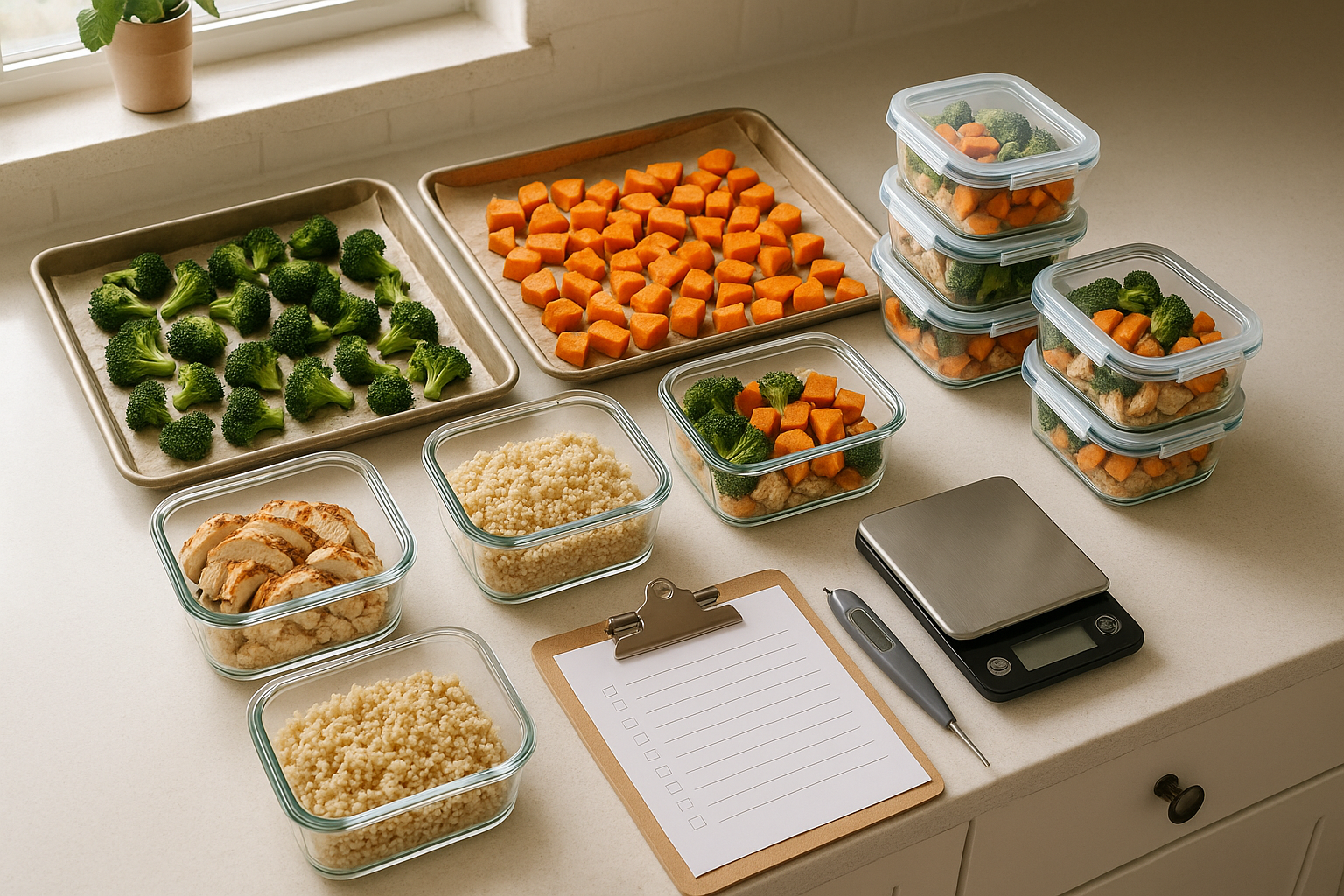
The fastest weeknights start with proteins ready to reheat. Choose cuts that cook evenly and stay juicy, like chicken thighs, salmon portions, tofu, or beans. Mix a base marinade or rub that works warm and cold (e.g., lemon-garlic + herbs), and divide it between poultry and vegetables to save time. Roast, pressure-cook, or air-fry in big batches so you do the cleanup once. If you’re cooking meat or poultry, use an instant-read thermometer to confirm safe minimum internal temperatures (as of August 2025: 165°F/74°C for poultry, 160°F/71°C for ground meats). Cool quickly and refrigerate; reheating is much faster than recooking from scratch.
Tech options (pick one):
- Oven (sheet pan): 220°C/425°F, ~20–30 min depending on thickness
- Pressure cooker: 8–12 min for boneless chicken thighs; let pressure drop naturally
- Air fryer: 190°C/375°F, 12–16 min; flip once
- Beans from dry (pressure cooker): Soak 4–8 hrs; cook 15–30 min under pressure
2.1 Common mistakes
Overcrowding pans (steams instead of browns), skipping the thermometer, and marinating everything identically (flavor fatigue by day three).
2.2 Mini case
Roast 1.2 kg chicken thighs + 2 tins chickpeas: split across three flavors (lemon-herb, smoky paprika, sesame-ginger). You just unlocked nine different meal combos with sauces and veg.
Wrap by portioning into single-meal packs so weeknights become assemble-and-eat.
3. Cook Starches Once, Use Thrice
Carbs become your productivity multiplier when you cook in bulk and store safely. Make a big pot of brown rice, quinoa, or bulgur; roast a tray of mini potatoes; or boil whole-grain pasta to al dente. Toss a small amount of oil through grains to prevent clumping, then cool in shallow containers before refrigerating. Batch-cooked starches turn into fried rice, grain bowls, and quick soups with almost zero friction. If you’re freezing, spread rice on a tray to cool, freeze in a thin layer, then break into bags—this lets you reheat exactly what you need.
Try these reuses:
- Day 1: Brown rice + roasted veg + chicken
- Day 3: Quick kimchi fried rice with egg
- Day 5: Grain salad with chickpeas, cucumbers, and tahini
3.1 Numbers & guardrails
Plan ~1 cooked cup (150–200 g) per adult serving. Freeze in 1–2 cup portions to speed defrosting. For pasta salads, dress just before eating to avoid sogginess.
3.2 Tools
A wide pot for even boiling, a sheet pan for chilling, and quart-size freezer bags for thin, stackable portions.
Close by labeling portions with weight and date so you can pull exactly what a recipe needs.
4. One-Sheet & One-Pot Rotations to Halve Cleanup
Limit the number of pans and your prep suddenly feels light. Pick two formats per week (e.g., one sheet-pan dinner, one one-pot soup) and rotate flavors. For sheet pans, pair a fast-cooking protein (shrimp, tofu, sausage coins) with quick veg (zucchini, peppers) and a starch (par-cooked potatoes) so everything finishes together. For one-pot meals, build layers—aromatics, spices, protein, liquid—then simmer hands-off. You’ll batch-cook 4–8 servings with only one or two things to wash.
Reliable pairings:
- Sheet pan: smoked paprika chicken + peppers + par-boiled potatoes
- One-pot: Moroccan-spiced chickpea and tomato stew
- Soup: Lentils with carrots and spinach (pressure cooker in ~15 min)
4.1 How to keep texture
Broil the last 2–3 minutes for browning; finish soups with citrus or vinegar to brighten; add tender greens at the end.
4.2 Mini-checklist
Preheat pan → don’t crowd → stagger add-ins by cook time → finish with acidity and herbs.
Cleanup takes minutes, and you’ll have lunches and dinners from one cook session.
5. Do a 30-Minute Mise Session (Cut Once, Eat All Week)
A short, focused prep sprint creates downstream speed. Wash and chop hardy vegetables (carrots, broccoli, cabbage), mince a whole head of garlic, slice onions, and pre-mix a couple spice blends. Portion snacks (nuts, yogurt, hummus) into grab-and-go containers. For delicate produce like herbs, cucumbers, or salad greens, prep closer to use to preserve texture. Store cut veg in sealed containers with a paper towel to absorb moisture; refresh greens in cold water if they wilt.
Your 30-minute flow:
- 8 min: Wash and chop hardy veg
- 5 min: Mince garlic/ginger, mix 2 spice blends
- 5 min: Portion snacks
- 5 min: Make a dressing (see Hack 9)
- 7 min: Container + label everything
5.1 Tools that pay off
A sharp chef’s knife, large cutting board, bench scraper, and stackable containers.
5.2 Regional note
In hot climates, keep cut produce chilled promptly and avoid leaving oils and dressings out; heat speeds spoilage.
End by setting a timer—30 minutes of focus makes the rest of your week frictionless.
6. Use the Freezer as a Pause Button (Quality vs. Safety)
Freezing is your best friend when schedules shift. If you won’t eat something within 3–4 days, freeze it in single-meal portions so you only thaw what you need. For quality, wrap tightly and push out air; for soups/stews, leave headspace. Safety note: Foods kept frozen continuously at 0°F (-18°C) remain safe indefinitely; recommended “storage times” are about quality, not safety. For quick answers on specific foods, use the Cold Food Storage charts and the FoodKeeper app.
Labeling format: dish name | servings/grams | date | reheat instructions (e.g., “Chili | 350 g | 2025-08-21 | thaw + simmer 8 min”).
6.1 How to prevent freezer burn
Cool food completely, package in thin, flat portions, and use within 2–3 months for best texture; keep a “use first” bin.
6.2 Mini case
Freeze cooked rice in 200 g flats. On weeknights, it microwaves in ~2 minutes and turns into stir-fried rice in ~5.
With a stocked freezer, future you always has dinner insurance.
7. Cool and Store Food Safely—Shallow, Fast, Labeled
Food safety is time-and-temperature management. Get hot food out of the danger zone (40–140°F / 4–60°C) within 2 hours; in hot rooms above 90°F/32°C, within 1 hour. Divide large batches into shallow containers (≈5 cm / 2 in deep) so heat dissipates quickly, then refrigerate uncovered until steam subsides and lids can seal without condensation. Label with dish name and date, and store ready-to-eat foods above raw meats to avoid drips. These small habits dramatically reduce risk and keep textures better for days 2–4. ScienceDirect
Fridge zones:
- Top shelf: cooked foods, dairy, leftovers
- Middle: eggs (in carton), drinks
- Bottom: raw meats in trays to catch juices
- Crispers: produce (high humidity for leafy greens; low for fruit)
7.1 Numbers & guardrails (as of Aug 2025)
Refrigerate leftovers within 2 hours; consume most cooked leftovers in 3–4 days; reheat leftovers to 165°F (74°C).
7.2 Mini-checklist
Shallow pans → quick cool → cover → label → store by risk level.
This is the single highest-leverage habit for safe, tasty meal prep.
8. Reheat Like a Pro (Microwave, Oven, Skillet)
Great reheating respects moisture and texture. For soups and stews, stovetop is simplest; for grains and saucy dishes, microwave with a splash of water and a vented lid. For proteins needing crisp edges (tofu, chicken skin, roasted potatoes), use a skillet or air fryer. Stir or rotate midway when microwaving to avoid cold spots, and always reheat leftovers to 165°F (74°C). If you’re unsure, take the temperature—thermometers aren’t just for grilling.
Technique menu:
- Microwave: add 1–2 tsp water, cover loosely, stir once
- Oven/air fryer: 160–190°C (320–375°F), check at 8–12 min
- Skillet: medium heat with a teaspoon of oil; add sauces at the end
8.1 Common mistakes
Microwaving in deep containers (uneven heating), cranking heat high without a lid (drying out), and reheating delicate greens too long.
8.2 Mini-checklist
Right tool → add moisture → cover/vent → stir halfway → check 165°F.
Dial in your method, and leftovers taste like they were cooked fresh.
9. Make 5 Modular Sauces to Change the Cuisine in 60 Seconds
Sauces transform repeats into “new” meals. Batch a few neutral bases that keep well and pair with almost anything. Think yogurt-tahini with lemon; chimichurri; peanut-lime; salsa verde; and a quick tomato-garlic pan sauce. Store in glass jars and add fresh herbs or citrus right before serving for pop. Most keep 3–5 days refrigerated; freeze pesto-style sauces in ice cube trays for later.
Five quick builds:
- Yogurt-tahini + lemon + garlic (Middle Eastern-leaning)
- Chimichurri (parsley, vinegar, oil, chili)
- Peanut-lime (peanut butter, lime, soy, chili)
- Salsa verde (cilantro, lime, onion, jalapeño)
- Tomato-garlic 10-minute skillet sauce
9.1 Why it matters
Flavor rotation prevents palate fatigue and lets a single protein feel different three times in one week.
9.2 Mini-checklist
Batch → jar → label → keep citrus/herbs for last-minute freshness.
One sauce cube can make leftovers exciting again.
10. Breakfast: 3 Fast Templates That Survive the Fridge
Mornings set the tone. Build breakfasts that hold texture and reheat well: overnight oats, egg muffins/frittata squares, and yogurt parfait kits. Pre-portion oats with milk and fruit; bake egg mixtures in a sheet pan and cut into squares; keep yogurt separate from crunchy toppings to preserve crunch. Aim for at least one fruit or veg serving; add nuts or seeds for staying power.
Three templates:
- Overnight oats: oats + milk/yogurt + chia + fruit (assemble 3–4 at once)
- Sheet-pan frittata: eggs + frozen spinach + feta → bake; cut into 8 squares
- Parfait kit: yogurt cups + fruit compote + granola packed separately
10.1 Mini case
Bake a 20-egg frittata on Sunday; you now have 8 breakfasts that microwave in ~45 seconds.
10.2 Guardrails
Keep dairy chilled; if packing to go, add an ice pack. For variety, rotate fruit and a different spice (cinnamon, cardamom) each week.
A predictable breakfast routine frees up decision space for the rest of the day.
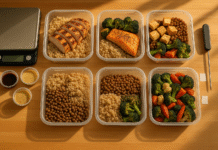
11. Workweek Lunch Kits: Grain + Protein + Veg + Sauce
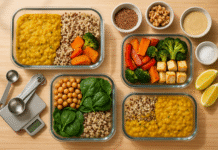
Build modular lunch boxes you can assemble in 5 minutes. Start with a grain bed (rice, quinoa, bulgur), add 120–180 g protein (beans, tofu, chicken), pile on two vegetables (one roasted, one raw), and finish with a sauce from Hack 9. Keep dressings in mini containers so greens stay crisp. Store boxes in the fridge and grab-and-go in the morning with an ice pack if they’ll sit at room temp.
Assembly pattern (per box):
- 1 cup grain
- ½–¾ cup protein
- 1–2 cups vegetables
- 2–3 Tbsp sauce or dressing
11.1 Texture insurance
Layer wet items away from grains; put sauces in a well or separate cup; add crunchy toppings at eating time.
11.2 Mini-checklist
Build 3–4 at once → label → keep sauce separate → add a fruit/snack.
This simple pattern keeps lunch interesting with minimal effort.
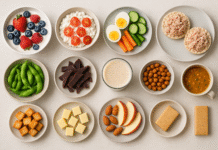
12. Snack Smarter with Pre-Portioned “Fuel Boxes”
Afternoon slumps vanish when smart snacks are at arm’s length. Pre-portion a mix of protein, fiber, and healthy fats to keep you full between meals. Think hummus with carrots, Greek yogurt with berries, cheese with whole-grain crackers, or roasted chickpeas. Avoid grazing from large bags by making single-serve containers; it preserves freshness and gives you a clear stop signal.
Fuel box ideas:
- Hummus (¼ cup) + carrots + cucumber
- Greek yogurt (150 g) + berries + 1 Tbsp nuts
- Apples + peanut butter packs
- Cheese (30 g) + whole-grain crackers
12.1 How to keep it fresh
Keep cut produce in airtight containers with a paper towel; rotate options each week to prevent boredom.
12.2 Mini-checklist
Pick 3 snack combos → portion once → place on the most visible fridge shelf.
Treat snacks like mini-meals and energy stays steady.
13. Put Small Appliances to Work (Pressure Cooker, Air Fryer, Rice Cooker)
Appliances collapse active time. A pressure cooker turns beans and tough cuts tender quickly; an air fryer reheats and crisps leftovers; a rice cooker keeps grains ready on autopilot. Choose one “hero appliance” per batch session to avoid counter chaos. While one runs, you can chop, label, or wash up—parallel processing without extra brainpower.
Appliance matches:
- Pressure cooker: beans, stews, pulled chicken
- Air fryer: crispy tofu, roasted veg, reheating fries/potatoes
- Rice cooker: set and forget grains (and steaming veg in the basket)
13.1 Safety note
Use manufacturer guidelines for liquid minimums and venting; for reheats, verify 165°F (74°C) in the center.
13.2 Mini-checklist
Pick one appliance → batch → set a second task (labeling or sauce) → finish with a quick clean cycle.
These tools trade supervision time for push-button reliability.
14. Go Digital: Lists, Calendars, and the FoodKeeper App
Digital tools save minutes that compound weekly. Keep a living grocery list (shared with your household) and a rotating “Week A/Week B” meal plan. Add calendar reminders for bulk-cooking and for freezer “use by for best quality” dates. For storage questions, the FoodKeeper app (web, iOS, Android) gives quality timelines and tips for 650+ foods—handy when you’re unsure whether to freeze or toss. It was developed by USDA FSIS with partners and helps reduce waste by guiding storage choices.
Template ideas:
- Notes app: “Always buy” staples list
- Spreadsheet: 2-2-3 grid with swaps
- Calendar: repeating event “Sunday 5–6 pm: batch cook + label”
14.1 Mini-checklist
List by store section → calendar the cook block → check FoodKeeper for timelines.
With systems in place, you plan once and repeat forever with small tweaks.
15. Containers, Labels, and Reheating Safety—Little Things, Big Payoff
Right containers and labels shave minutes and improve safety. Prefer glass or microwave-safe plastic with tight lids; check for a microwave symbol if you’ll reheat that way. The U.S. FDA’s current perspective is that BPA is safe at current food-contact levels, but you should still follow container instructions and avoid using damaged or unmarked plastics in the microwave. Always reheat leftovers to 165°F (74°C) and keep your fridge at or below 40°F (4°C) for safety. Label everything with name and date so you eat the oldest first.
Container kit:
- 4–6 glass 3-cup containers (mains)
- 4–6 1-cup containers (sides/sauces)
- Masking tape + marker for labels
- Ice packs for packed lunches
15.1 Mini-checklist
Match container to use (freezer/oven/microwave) → avoid overfilling hot foods → cool shallow and fast → label and stack by date.
Dialing in containers + labels is the tiny hinge that swings a big door.
FAQs
1) How many hours will a batch-cook session take if I’m new?
Plan on 60–90 minutes the first time, then aim for 45–60 minutes as you streamline. Use one oven sheet-pan dish, one pot of grains, a sauce, and a 30-minute mise sprint. Keep a checklist and reuse last week’s plan to shave planning time.
2) What are the safest storage timelines for leftovers?
As a general rule, refrigerate within 2 hours of cooking (1 hour if >32°C/90°F). Most cooked leftovers are best within 3–4 days; freeze what you won’t eat by then. Freezing keeps food safe indefinitely at 0°F (-18°C), though quality is best if used within a few months. Use the FoodKeeper app or Cold Food Storage chart to check specifics.
3) How do I cool big batches quickly without a blast chiller?
Divide into shallow containers about 5 cm (2 in) deep so heat dissipates faster; leave lids ajar until steam subsides, then seal and refrigerate. Stirring hot soups in an ice-bath sink speeds cooling. Label immediately so you don’t forget dates.
4) Is it okay to put hot food straight into the fridge?
Yes—modern fridges can handle it, and it’s safer than letting food linger in the danger zone. Transfer to shallow containers first to speed cooling, then refrigerate promptly. If your fridge is very full, consider a short countertop rest (10–15 minutes) to reduce steam before covering.
5) What minimum internal temperatures should I use for proteins?
As of August 2025, cook poultry to 165°F (74°C), ground meats to 160°F (71°C), whole cuts of beef/pork/lamb to at least 145°F (63°C) and rest, and reheat leftovers to 165°F (74°C). Use a thermometer; doneness color isn’t reliable.
6) Can I meal-prep salads without them going soggy?
Yes—layer smartly. Keep dressings separate, put sturdy ingredients (grains, beans) at the bottom, and delicate greens or herbs at the top. Add crunchy elements (nuts, croutons) right before eating. Store at the coldest spot in your fridge.
7) Are glass containers better than plastic for meal prep?
Both can work. Glass handles high heat and resists odors; microwave-safe plastics are lightweight for commuting. Check the container for a microwave-safe symbol and follow manufacturer instructions; avoid using damaged or unmarked plastics in the microwave.
8) How can I keep variety without cooking 7 different meals?
Use the 2-2-3 grid and modular sauces. One protein can feel new with a different sauce and veg—think chimichurri one night, peanut-lime the next. Swap one element each day (protein, veg, or sauce) for variety with minimal extra cooking.
9) What if my schedule changes mid-week?
Freeze portions you won’t eat within 3–4 days. Package meals flat for faster thawing. Keep a “freezer bank” of 3–4 emergency dinners so you’re never caught out.
10) How do I reheat rice safely?
Cool rice quickly after cooking (shallow containers), refrigerate, and reheat until steaming hot throughout. Avoid leaving rice at room temperature for long periods. When in doubt, discard and cook fresh.
11) How do I pack lunches safely if I don’t have office refrigeration?
Use an insulated bag with two ice packs (top and bottom). Keep dairy and meat chilled; choose shelf-stable extras (fruit, nuts). Eat within 4 hours and discard perishable leftovers that warmed above 40°F (4°C).
12) What’s the simplest weekly template to repeat?
Sun: batch-cook protein + grain + one soup; prep 2 sauces; chop hardy veg. Mon–Thu: assemble bowls/salads; Fri: freezer night. Save your plan and grocery list to reuse every other week with minor swaps.
Conclusion
Meal prep is a repeatable system, not a Sunday marathon. When you plan with a simple grid, batch-cook a few anchors, cool and store safely, and lean on modular sauces, your weeknight cooking becomes assembly—fast, flexible, and flavorful. The freezer acts as your pause button, appliances trade hands-on time for push-button results, and the right containers plus labeling make food rotation effortless. Start with a single 45-minute session this week. Next week, reuse the plan with two new sauces and a different veg. In a month, you’ll have a personal rotation that fits your schedule, your tastes, and your budget—without overwhelm.
CTA: Pick your 2-2-3 grid for the week and set a 60-minute batch-cook on your calendar—future you will say thanks.
References
- “Danger Zone (40°F–140°F),” USDA Food Safety & Inspection Service (FSIS), June 28, 2017. https://www.fsis.usda.gov/food-safety/safe-food-handling-and-preparation/food-safety-basics/danger-zone-40f-140f
- “Cook to a Safe Minimum Internal Temperature,” FoodSafety.gov (USDA/HHS), November 21, 2024. https://www.foodsafety.gov/food-safety-charts/safe-minimum-internal-temperatures
- “Cold Food Storage Chart,” FoodSafety.gov (USDA/HHS), September 19, 2023. https://www.foodsafety.gov/food-safety-charts/cold-food-storage-charts
- “Leftovers and Food Safety,” USDA FSIS, July 31, 2020. https://www.fsis.usda.gov/food-safety/safe-food-handling-and-preparation/food-safety-basics/leftovers-and-food-safety
- “Freezing and Food Safety,” USDA FSIS, (page currently maintained; accessed August 2025). https://www.fsis.usda.gov/food-safety/safe-food-handling-and-preparation/food-safety-basics/freezing-and-food-safety
- “FoodKeeper App,” FoodSafety.gov (USDA FSIS, Cornell University, FMI), April 26, 2019. https://www.foodsafety.gov/keep-food-safe/foodkeeper-app
- “4 Steps to Food Safety,” FoodSafety.gov (USDA/HHS), September 18, 2023. https://www.foodsafety.gov/keep-food-safe/4-steps-to-food-safety
- “Healthy Eating Plate,” Harvard T.H. Chan School of Public Health—The Nutrition Source, (ongoing resource; accessed August 2025). https://nutritionsource.hsph.harvard.edu/healthy-eating-plate/
- “Questions & Answers on Bisphenol A (BPA) Use in Food Contact Applications,” U.S. Food & Drug Administration, February 21, 2018 (updated), and “Bisphenol A (BPA): Use in Food Contact Application,” April 20, 2023. https://www.fda.gov/food/food-packaging-other-substances-come-contact-food-information-consumers/questions-answers-bisphenol-bpa-use-food-contact-applications and https://www.fda.gov/food/food-packaging-other-substances-come-contact-food-information-consumers/bisphenol-bpa-use-food-contact-application
- “The WHO Five Keys to Safer Food Manual,” World Health Organization, May 15, 2006. https://www.who.int/publications/i/item/9789241594639