


























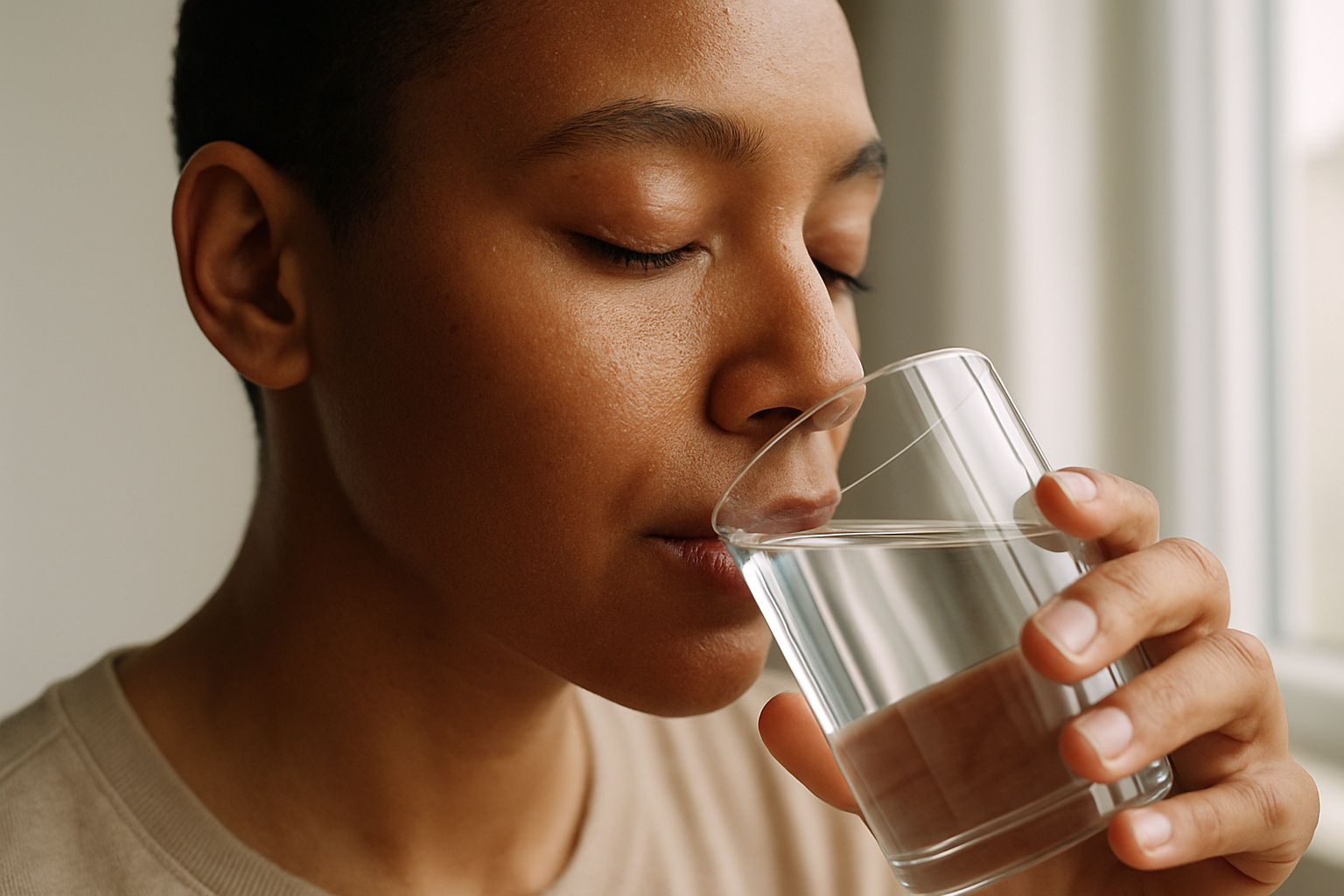
Healthy-looking skin starts deeper than your moisturizer. When your body is well hydrated, the stratum corneum (your outermost skin layer) tends to hold water more effectively, elasticity can improve, and your barrier copes better with heat, dry air, and daily stressors. In short: staying hydrated can improve your skin health and appearance—especially if your usual intake is on the low side—though it complements (not replaces) smart topical care. Below, you’ll find nine science-backed ways hydration shows up on your face, plus practical guardrails so you can build a routine that actually sticks.
Medical note: This article is educational and not a substitute for personalized medical advice. If you have a skin or kidney condition, or take diuretics, speak with your clinician about hydration targets.
1. Hydration Raises Stratum Corneum Water Content (Your Skin Feels Softer and Bouncier)
Well-hydrated bodies tend to maintain better water content in the stratum corneum, which translates to skin that feels less tight and looks more supple. Multiple human studies have found that increasing total water intake—particularly in people who typically drink less—can measurably increase superficial skin hydration and improve biomechanical parameters like elasticity. Practically, that means dry patches soften faster, makeup sits better, and post-cleansing tightness diminishes. The visible effect is subtle and gradual, but it’s real, and it’s most pronounced when you move from “under-hydrated” toward adequate daily intake.
1.1 Why it matters
Your stratum corneum acts like a brick-and-mortar wall: the “bricks” are corneocytes and the “mortar” is lipid matrix. Water inside this layer supports flexibility. When it dries out, tiny fissures form, light scatters unevenly (a dull look), and micro-flaking makes texture more visible. Raising internal hydration increases available water that can equilibrate with the outer layer, improving feel and optical smoothness.
1.2 How to do it
- Nudge total fluids toward established adequate intakes (roughly 2.7 L/day for many women, 3.7 L/day for many men, from all beverages + foods).
- If you’re far below that, add ~250–500 mL per day for a week, then reassess skin feel.
- Pair with a humectant-rich moisturizer (glycerin, hyaluronic acid) to trap that water at the surface.
- Watch for environmental drains (heat, air travel, long indoor heating days) and increase fluids accordingly.
- Track an easy signal: aim for pale-yellow urine most of the day.
Small numeric example: if you usually drink ~1.2 L/day and bump to ~2.0 L/day over 2–3 weeks, studies suggest you’re in the range where skin hydration metrics begin to shift—especially if you were low to start. Close with synthesis: Raise systemic fluids, then lock them in with humectants; you’ll feel softness before you see radiance.
2. A Stronger Skin Barrier (Lower TEWL) Supports Calm, Comfortable Skin
Hydration supports barrier performance indirectly by providing water to the top layers while you repair the “mortar” with topical lipids. Better-hydrated skin typically loses less water to the environment (lower transepidermal water loss, or TEWL) when the lipid matrix is intact, reducing that cycle of tightness → scratching → micro-damage. TEWL is a core marker of barrier integrity; keeping it in check helps calm reactivity and preserves that springy feel.
2.1 Numbers & guardrails
- TEWL is measured as water grams/m²/hour leaving your skin. Lower is better for comfort.
- Systemic hydration alone won’t fix a damaged barrier; combine with emollients/occlusives (ceramides, petrolatum, dimethicone).
- Expect improvements in feel first; visible redness reduction may lag by 1–2 weeks.
2.2 Mini-checklist
- Cleanse gently (lukewarm water, short contact).
- Moisturize within 2–3 minutes of bathing to trap water.
- Humectant + occlusive combo (e.g., 5% glycerin + petrolatum layer at night).
- Hydrate steadily (spread fluids from morning to evening).
- Humidify dry rooms (40–50% relative humidity sweet spot).
Synthesis: Think “inside-out” (fluids) plus “outside-in” (moisturizer). Together, they reduce water escape and keep the barrier quiet.
3. Better Microcirculation Aids Nutrient Delivery and Thermoregulation
Skin is a thermoregulatory organ. Adequate hydration helps your cardiovascular system manage heat and blood flow so your face doesn’t pay the price in flushed dryness or salt crusting after sweat. Research shows that fluid strategies during heat and exercise influence skin blood flow and temperature control, while oral hydration can alter microcirculatory measures like tissue oxygen tension—factors relevant to appearance and recovery from daily stress.
3.1 Region notes (hot & humid climates)
If you live in a hot climate (e.g., Karachi’s long, warm season), sweat rates and electrolyte losses rise. Underhydration can reduce skin perfusion and leave residual salt on the surface, stinging sensitive areas. Top up fluids, and consider an electrolyte drink during long, sweaty sessions.
3.2 Practical playbook
- Pre-hydrate before outdoor activity; don’t start behind.
- During heat/exercise, sip 150–250 mL every 15–20 minutes, adjusting for sweat rate.
- Rinse skin post-sweat and moisturize to avoid salt-induced irritation.
- Monitor urine afterward; aim for pale yellow within a few hours.
Synthesis: Good hydration keeps the conveyor belt of nutrients and heat dissipation working, supporting a calmer, less blotchy look after exertion.
4. Subtle “Plumping” of Fine Lines via Water Content and Elasticity
While hydration is not a substitute for retinoids or sunscreen, enough body water can subtly increase superficial plumpness by improving stratum corneum hydration and elastic response. Trials have documented changes in skin thickness, density, and biomechanical descriptors when people increased daily water intake over several weeks. The visible effect is modest—think makeup settling less into lines rather than wrinkles “disappearing.”
4.1 How to amplify the effect
- Pair internal hydration with topical humectants (hyaluronic acid, glycerin, polyglutamic acid).
- Occlusive seal at night (thin layer of petrolatum or a silicone-based cream) to reduce overnight TEWL.
- Consistent SPF daily; UV drives most visible aging.
- Avoid over-washing; twice daily is plenty for most.
4.2 Mini case
A person increases fluids from ~1.5 L/day to ~2.5 L/day for 4 weeks, adds a 2–3% glycerin moisturizer AM/PM, and notices less foundation settling in perioral lines. Instrumental measures in studies show changes before the eye sees them; consistency matters.
Synthesis: Hydration gives skin a better water reservoir; humectants and occlusives make that reservoir cosmetically meaningful.
5. A More Stable Surface pH and Reduced Stinging
Some studies observe small shifts in skin surface pH with increased water intake. While hydration won’t overhaul your acid mantle, a steadier water environment plus gentle cleansers can reduce that “everything burns” phase many experience in dry seasons. A well-hydrated barrier generally tolerates actives better and stings less after cleansing or shaving.
5.1 Common mistakes
- Stripping cleansers (high-foaming sulfates) + low fluids = sting city.
- Scalding-hot showers increase TEWL and redness.
- Skipping moisturizer after cleansing wastes the water you just added.
5.2 Quick routine tweak
- Use a pH-balanced cleanser once at night, splash-rinse AM.
- Moisturize damp skin within minutes.
- Layer actives after moisturizer if sensitized (retinoid sandwich).
Synthesis: Keep fluids steady, cleanse smart, moisturize promptly—your acid mantle will feel less volatile.
6. Fewer Dehydration Triggers for Acne and Eczema Flares (Indirect Help)
Hydration isn’t an acne cure, and evidence doesn’t show a direct sebum reduction from drinking more water. But underhydration and salt-laden sweat residue can irritate acne-prone skin, and dry, compromised barriers worsen eczema symptoms. By improving barrier comfort and making sweat management easier, hydration reduces environmental triggers that exacerbate these conditions.
6.1 Tools/Examples
- Post-sweat rinse (plain water) + moisturizer reduces salt irritation on cheeks and jawline.
- Humectant + ceramide lotion supports barrier in eczema-prone areas.
- Lukewarm showers (5–10 minutes) to avoid TEWL spikes.
- Soft T-shirt fabrics during workouts to limit friction on body acne.
6.2 Numbers & guardrails
- Expect indirect improvements: fewer stingy, flaky episodes; better tolerance of leave-on treatments.
- Maintain prescribed meds (benzoyl peroxide, retinoids, topical steroids) and consult your clinician for flares.
Synthesis: Hydration helps by lowering the background noise—less sting, less flake—so prescribed treatments can shine.
7. Faster Recovery From Environmental Stress (Flights, Heatwaves, Indoor Heating)
Airplane cabins, winter heating, desert wind—these environments strip surface moisture. Systemic hydration provides the water, while topical occlusives keep it from evaporating. You’ll feel fewer “paper-dry” patches, and your skin rebounds faster the next day.
7.1 Travel/seasonal checklist
- Day before travel: increase fluids by ~300–500 mL.
- In-flight: sip 100–150 mL every 30–45 minutes; avoid excess alcohol.
- Mask + moisturizer before takeoff and midflight (if long-haul).
- At destination: quick cleanse, humectant serum, richer cream; run a humidifier overnight in dry hotels.
7.2 Heatwave plan
- During local heat advisories, schedule outdoor time early/late, sip steadily, and replace electrolytes on long, sweaty days.
- Moisturize after every shower; your skin will hold onto the hydration you drink.
Synthesis: Pair steady sipping with smart topical habits and you’ll weather harsh environments with less visible toll.
8. Hydration Supports Healthy Aging Pathways That Show Up in Skin
Large cohort research links markers of better hydration with healthier aging and lower risk of chronic disease. While these studies are observational and don’t prove cause, the message for skin is consistent: the healthier the whole system (cardiovascular, renal, metabolic), the more resilient and vibrant your skin tends to look. Well-hydrated adults often report better energy for habits that truly change skin—like consistent sunscreen use and nutrient-dense diets.
8.1 Why it matters
Skin reflects systemic health. Hydration underpins blood volume, nutrient delivery, and waste removal—all upstream of how your skin looks and heals. If a hydration habit helps you feel better and stick to sunscreen and sleep, that compounds in your complexion.
8.2 Guardrails
- Don’t overinterpret: healthy-aging hydration data use serum sodium as a proxy and call for intervention trials.
- Treat hydration as a foundation—not a miracle. Keep sunscreen, diet, sleep, and stress care front and center.
Synthesis: You can’t out-moisturize poor systemic health; hydration is a simple, low-risk lever that supports the whole picture.
9. “Glow Logistics”: Simple Habits That Make Hydration Visible
Consistency is what turns hydration into visible skin changes. Spreading fluids across the day, eating water-rich foods, and using the right moisturizer at the right time make your internal water status matter at the mirror. These are small logistics that compound.
9.1 Mini-checklist
- Front-load a glass on waking; keep a bottle at your desk.
- Eat your water: cucumbers, citrus, melons, tomatoes, yogurt, soups.
- Time it: sip with meals/snacks; increase around workouts and in hot weather.
- Electrolyte sense: use an electrolyte drink for >60–90 minutes of heavy sweating; water is fine otherwise.
- Urine color: aim for pale yellow most of the day.
9.2 Tools/Examples
- A 500 mL reusable bottle refilled 4–6×/day often covers many adults’ needs.
- Pair a 2–3% glycerin or low–mid weight hyaluronic acid serum with a ceramide cream; seal with petrolatum on very dry nights.
Synthesis: The “glow” isn’t a single hack; it’s steady fluids plus simple product timing that helps your skin show the work.
FAQs
1) Does drinking more water clear acne?
Not directly. Studies don’t show a strong link between water intake and sebum production. Hydration helps your barrier tolerate acne treatments better and reduces salt residue irritation from sweat, which can indirectly calm breakouts. Keep using evidence-based acne treatments (benzoyl peroxide, retinoids) and sunscreen, and use hydration as supportive care.
2) How much should I drink for skin benefits?
Follow established adequate intake ranges (about 2.7 L/day for many women and 3.7 L/day for many men from all beverages and foods) and let thirst and urine color guide you. If you’re currently low, adding ~250–500 mL/day and reassessing over a few weeks is a realistic start. Extreme volumes aren’t necessary and can be unsafe.
3) Will hydration replace my moisturizer?
No. Systemic hydration supplies water; moisturizers (humectants + occlusives) retain it where you want it. Using both is additive: you’ll feel softer skin sooner and reduce transepidermal water loss more effectively than with either alone.
4) Can I overhydrate?
Yes—rarely, but it happens, especially with rapid high-volume drinking during endurance exercise. Overhydration can dilute blood sodium (hyponatremia), which is dangerous. Avoid chugging large volumes quickly; replace electrolytes during long, sweaty efforts; and seek medical care for concerning symptoms (headache, confusion, nausea).
5) Do coffee and tea dehydrate the skin?
Mild caffeine has a modest diuretic effect in non-habitual users, but regular coffee and tea drinkers typically adapt. These beverages still count toward total fluid intake. If you notice frequent urination or jitteriness, balance with water and hydrating foods.
6) How long until I see changes?
Expect feel changes (less tightness) within 1–2 weeks of steady hydration and moisturizer use, especially if you were underhydrated. Visible texture and makeup improvements are subtle and accumulate over several weeks.
7) What about electrolyte drinks for better skin?
Electrolytes don’t directly “plump” skin, but they help you maintain fluid balance during heavy sweating, which indirectly supports comfort and appearance. Use them for long, hot workouts or outdoor work; plain water is usually fine for everyday activities.
8) Does hydration help wrinkles?
Hydration can soften the appearance of fine lines by improving surface water and elasticity, but it doesn’t remodel collagen or replace sunscreen and retinoids. Think of it as making texture look its best, not reversing structural aging.
9) Are urine color charts legit for hydration?
They’re a practical cue—aim for pale yellow most of the day. Medications, vitamins, and foods can tint urine, so use color as one signal alongside thirst and how you feel.
10) I have eczema. Will drinking more water fix it?
Hydration supports comfort, but eczema is primarily a barrier and immune condition. Keep using prescribed treatments and moisturize diligently; hydration helps reduce environmental triggers and stinging but isn’t a cure.
Conclusion
Hydration is one of those unglamorous fundamentals that quietly amplifies everything else you do for your skin. Adequate body water improves stratum corneum hydration, supports a steadier barrier, and helps your skin cope with heat, flights, and active days. You’ll feel the difference first—less tightness, fewer stingy moments—then notice makeup gliding on a little better and fine lines looking softer. The real win is how hydration enables the habits that matter most: daily sunscreen, consistent moisturizers, balanced diet, and steady sleep. Put simply: drink enough, moisturize smarter, and let your skin show the results.
Copy-ready next step: Fill a 500 mL bottle now—finish it twice by lunch, twice by dinner, moisturize damp skin tonight, and reassess how your face feels in two weeks.
References
- Dietary water affects human skin hydration and biomechanics, Clinical, Cosmetic and Investigational Dermatology (L. Palma et al.), 2015. https://pmc.ncbi.nlm.nih.gov/articles/PMC4529263/
- Effect of fluid intake on skin physiology: distinct differences between drinking mineral water and tap water, International Journal of Cosmetic Science (S. Williams et al.), 2007. https://onlinelibrary.wiley.com/doi/10.1111/j.1467-2494.2007.00366.x
- Does dietary fluid intake affect skin hydration in healthy humans? A systematic review, Skin Research and Technology (M. Akdeniz et al.), 2018. https://onlinelibrary.wiley.com/doi/10.1111/srt.12454
- Effect of Amount of Daily Water Intake and Use of Moisturizer on Skin Barrier Function, Annals of Dermatology (J.E. Seol et al.), 2024. https://anndermatol.org/DOIx.php
- Transepidermal water loss (TEWL): Environment and pollution, Environmental Research and Public Health review (M. Green et al.), 2022. https://pmc.ncbi.nlm.nih.gov/articles/PMC9168018/
- Transepidermal water loss and stratum corneum hydration: Not always inversely related, Skin Research and Technology (H.N. Mayrovitz et al.), 2023. https://pmc.ncbi.nlm.nih.gov/articles/PMC10155802/
- Dry skin: Who gets it and causes, American Academy of Dermatology Association, updated May 16, 2024. https://www.aad.org/public/diseases/a-z/dry-skin-causes
- Water | Dietary Reference Intakes for Water, Potassium, Sodium, Chloride, and Sulfate, National Academies Press, 2004. https://nap.nationalacademies.org/read/10925/chapter/6
- Effect of oral hydration on skin microcirculation in healthy young and midlife/older adults, Wound Repair and Regeneration (D.D. Wipke-Tevis et al.), 2007. https://onlinelibrary.wiley.com/doi/abs/10.1111/j.1524-475X.2007.00202.x
- Good hydration linked to healthy aging, NIH News Release, Jan 3, 2023. https://www.nih.gov/news-events/news-releases/good-hydration-linked-healthy-aging
- Exercise-Associated Hyponatremia, StatPearls (E. Buck et al.), updated 2023. https://www.ncbi.nlm.nih.gov/books/NBK572128/
- Emollients and moisturisers, DermNet NZ, updated ~2023. https://dermnetnz.org/topics/emollients-and-moisturisers