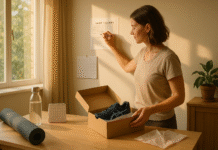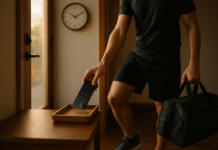


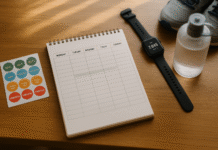





















Your to-do list can double as your workout plan. “Task batching fitness” means grouping errands and pairing them with built-in movement—so you meet activity targets without carving out extra gym time. In short: plan the route, overlay movement, and let daily life become training. A helpful definition: task batching fitness is the practice of combining multiple daily errands into a single block and intentionally adding walking, cycling, stair climbing, or quick strength moves to raise your total activity and reduce sedentary time. Most adults benefit from at least 150–300 minutes of moderate or 75–150 minutes of vigorous activity weekly, plus 2+ days of strength training—and any movement counts toward that goal.
Quick start (5 steps): pick 2–4 errands on one route; choose your movement overlay (walk, bike, stairs, carry); pack micro-gear (shoes, backpack, water); schedule a 45–90-minute block; track steps or minutes as you go. As of August 2025, guidelines no longer require 10-minute bouts—accumulated micro-bursts add up.
Friendly reminder: This guide is educational and fitness-focused, not medical advice. If you have injuries, chronic conditions, or are new to exercise, consult a qualified clinician first.
1. Bike or Walk the “Last Mile” of Your Commute
Swapping the final leg of your commute for walking or cycling turns necessary travel into daily cardio. Start by parking farther away, getting off the bus or train one or two stops early, or using a bike for the last 1–3 km (0.6–2 miles). This simple habit reliably adds 10–30 minutes of moderate activity and can be scaled by pace, distance, or incline. Research links active commuting—especially cycling—with lower risks of cardiovascular disease, certain cancers, and all-cause mortality. Even partial active commuters see meaningful benefits, which is great news if only some days are practical. For safety, plan routes with protected lanes or quieter streets and use lights after dusk; if heat or air quality is a concern, shift to earlier or later hours and hydrate.
How to do it
- Pick a safe “last mile.” Map a protected path or quiet streets near work or your transit stop.
- Stage gear. Keep foldable shoes, a compact lock, and a reflective strap in your bag.
- Build consistency. Start with 2 days/week, then add days as traffic and schedule allow.
- Weather plan. Have a rainy-day walking route through covered corridors or malls.
Numbers & guardrails
- Time: 10–30 minutes each way at a moderate pace.
- Effort: Conversational pace (you can talk, not sing).
- Progression: Add one extra block per week or increase pace by small increments.
A commuter who adds two 15-minute walks five days a week reaches 150 minutes—enough to hit baseline targets without extra gym hours.
2. Make Stairs Your Default for Errands in Multi-Level Buildings
Choosing stairs over elevators is the fastest way to spike heart rate during routine stops—banks, parking garages, offices, and malls. The first one or two flights warm you up; by flight three or four you’re at a measurable training effect while still “on task.” Stairs are particularly efficient for people with tight schedules because each bout lasts 20–90 seconds yet adds up across the day. To make it habitual, walk past the elevator and put your foot on the first step before your brain negotiates otherwise. If you carry items, use one handrail and keep your torso tall to protect your back; switch arms on alternating floors to balance the load. People with knee pain can try slower eccentric descents (coming down carefully) and faster, shorter ascents.
How to do it
- “Stair-first” rule: If it’s ≤5 floors up or any floors down, take the stairs.
- Use micro-sets: Climb 2–4 flights at each stop; add one extra flight weekly.
- Posture & safety: Keep ribs stacked over hips; avoid twisting under load.
- Accessibility plan: If stairs aren’t feasible, do 60–90 seconds of brisk walking on level ground instead.
Mini checklist
- Comfortable shoes, balanced loads, one hand free for the rail, avoid phone use on stairs.
After two weeks of consistent stair choices during errands, most people notice better leg endurance and breath control—gains achieved entirely inside moments you already “spend” moving from A to B.
3. Turn Grocery Runs into Strength Training (Carries and Squats)
Groceries are ready-made weights. Instead of defaulting to a cart all the way to the car, carry bags for short intervals or perform box-squats while loading items into the trunk. Carries build grip and core strength; squats reinforce hip and knee mechanics. If you live within a 10–20-minute walk, switch to a backpack or rolling cart to train “rucking” (walking with a load), which raises energy expenditure more than unloaded walking. The Compendium of Physical Activities classifies “carrying groceries upstairs” as a significantly higher intensity than level walking—proof that everyday loads are potent when used intentionally. Start light, keep the load close to your body, and take frequent rest stops as needed.
Tools/Examples
- Farmer’s carries: Two bags in hands, 20–40 meters, rest, repeat x 4–6.
- Front-loaded carries: One backpack (5–10% of bodyweight) hugged to chest for 1–2 minutes.
- Trunk squats: Touch hips to the bumper edge with a neutral spine for 6–10 controlled reps.
Numbers & guardrails
- Load: Start with 5–10% bodyweight total; progress by 5% every 1–2 weeks.
- Tempo: Slow and steady; if you can’t breathe through your nose, lighten the load.
- Posture: Shoulders down and back; avoid rounding under load.
With one grocery trip per week, 10–15 minutes of accumulated carries and squats create a beginner-friendly strength plan embedded in routine life.
4. Build a Walking Errand Loop (Cluster Tasks in One Route)
A walking errand loop strings together the pharmacy, post office, ATM, tailor, and a produce stand on a single footpath. The goal is to batch small stops into a 30–60-minute brisk walk that covers 2–5 km (1.2–3.1 miles). This format works in dense cities and suburban town centers alike—park once, then move. By planning a loop, you remove decision friction, save fuel, and securely hit your daily steps. Large cohort studies show that higher daily step counts are associated with lower risks of all-cause mortality and major disease, with benefits climbing toward roughly 7,500–10,000 steps per day depending on age and cohort. That makes foot-based errand loops not just efficient, but protective over the long run.
How to do it
- Map it: Use a mapping app to drop pins for 3–5 stops within a compact area.
- Sequence smartly: Put refrigerated items last; do returns/exchanges first.
- Pace it: Aim for brisk walking where speech is possible but slightly breathy.
- Track: Use your phone or watch to confirm you covered 3,000–6,000 steps in the loop.
Region note
In hot, humid climates, schedule loops before 10 a.m. or after 6 p.m., carry water, and favor shaded streets and indoor corridors.
Once or twice weekly, a well-planned loop ensures you meet activity targets while completing life admin—no extra time slot required.
5. Practice “Chore Micro-Workouts” at Home (Laundry, Dishes, Cleaning)
Household chores are perfect triggers for micro-workouts—short bouts of movement that accumulate across the day. Modern guidelines recognize that any duration of physical activity counts, so 30–90-second “exercise snacks” between tasks can meaningfully contribute to your totals. Pair laundry sorting with 10–12 squats, loading the dishwasher with rear-foot elevated split squats, or sweeping with 60 seconds of brisk marching. The Compendium lists many home tasks—like putting away groceries or caring for pets—as light-to-moderate intensity; adding structured sets increases the training effect without extending chore time. For variety, rotate movements by day (push, pull, legs, core) and log reps on the fridge.
Micro-workout menu
- During laundry: 10–15 goblet squats with a detergent bottle.
- During dishes: 8–10 split squats per leg, holding the sink lightly.
- During sweeping/mopping: 60–90 seconds of brisk marching every 10 minutes.
- Post-cleaning finisher: 30-second plank; rest; repeat x 2–3.
Why it works
- Reduced sedentary time, better movement patterns, and cumulative minutes add up across the week.
- “Exercise snack” research (as of 2025) supports brief, frequent bouts for cardiometabolic benefits and adherence.
A month of chore micro-workouts often yields noticeable stamina for daily life and makes fitness adherence feel effortless—not one more thing on your list.
6. Walk Your Phone Calls and Schedule “Walking Meetings”
If a call doesn’t require screens, make it walking time. For workdays, convert at least one 20–30-minute meeting into a walking meeting. The movement improves creativity, energy, and breaks up long sitting blocks that sap focus. Pilot workplace studies show walking meetings are feasible and acceptable for sedentary workers, and guidelines encourage breaking up sitting wherever possible. Use earbuds, keep notes via voice memo, and pick a quiet loop to minimize background noise. Over a week, two or three walking meetings can add 60–90 minutes of moderate activity without touching your calendar otherwise. PubMed
How to do it
- Set an agenda: 3 bullet points max; send a voice memo recap afterward.
- Choose the route: Quiet streets or indoor corridors; avoid intersections.
- Tech: Earbuds + wearable for steps; enable “noise reduction” settings.
- Safety: If outside, keep one ear open and eyes up.
Numbers & guardrails
- Pace: Brisk, but speech-friendly.
- Time: 20–30 minutes per meeting.
- Goal: 2 walking meetings/week = ~40–60 minutes moderate activity.
You’ll protect your health, improve attentiveness, and often end with clearer decisions—wins across the board.
7. Turn the School Run into a Family Fitness Block
The school run (drop-off/pick-up) is prime for movement stacking. Park a 5–10-minute walk away, then walk together at a conversational pace. If waiting at dismissal, use that window for light mobility, step-ups on a curb, or a 5-minute walk loop around the block. With older kids, walk or bike the entire route on suitable days. You’ll model an active lifestyle and add predictable minutes without crowding the evening. Adjust for weather by using covered paths or indoor malls on heavy-rain days, and consider a reflective band for low light. Over time, this rhythm builds into a dependable 30–60 minutes of weekly movement for parents and children alike—without extra planning.
How to do it
- Park-and-pace: Arrive 10 minutes early, park farther, walk in.
- Wait-time mobility: Neck rolls, calf raises, hip circles for 2–3 minutes.
- Playground circuit: 5 push-ups on a bench, 10 step-ups, 15 bodyweight squats.
Mini checklist
- Comfortable shoes in the car; pocket umbrella; reflective wrist strap for low-light days.
Turning the school run into fitness protects your calendar while building family habits that pay compounding dividends over years.
8. Use Public Transport as a Built-In Interval Session
Buses and trains create structure: you walk to stops, stand when possible, and get off early for a brisk finishing segment. Waiting on a platform? Do gentle calf raises or a 60-second wall sit away from crowds. The stop-and-start flow mirrors interval training: short bouts of brisk walking book-end restful rides. Add one extra stop’s worth of walking (5–10 minutes) on days with fewer errands. If your city has stairs to platforms, climb them; if escalators are the only option, walk them at a safe, steady pace. This approach significantly boosts daily step counts and chips away at sedentary time that accumulates during long commutes. Larger studies associate more steps per day with lower mortality and disease risk—so every extra block pays off.
How to do it
- Alight early: One stop sooner for a 6–12 minute brisk finish.
- Stance: Stand on transit for 1–2 stops, engaging glutes and core.
- Escalator etiquette: Walk on the “go” side where permitted; hold the rail.
Numbers & guardrails
- Pace: Slight breathiness is okay; slow in crowds to stay safe.
- Goal: +1,000–2,000 steps per commuting day.
Public transport turns travel time into reliable training time—no extra scheduling required.
9. Batch a “Parking Lot Circuit” Between Multiple Stops
When errands require driving, use the parking lot to your advantage. Park once in a central spot and walk briskly between stores, adding a 2–3 minute mini-circuit before you reenter the car: 10 bodyweight squats, 8 push-ups on the bumper, 20-second wall sit, and a 60-second brisk lap around the row. These controlled bouts raise heart rate without attracting attention or demanding special gear. Keep movements low-impact and mind your surroundings; traffic awareness is part of the workout. Over 3–4 stops, you’ll accumulate 10–20 minutes of moderate activity that fits neatly into errands you already planned.
How to do it
- Central parking: Choose a midpoint spot to maximize walking distance.
- Circuit cadence: 1 micro-circuit per store; keep total under 3 minutes.
- Form focus: Quality over speed; stop if any pain appears.
Mini checklist
- Flat shoes; clothing you can move in; small towel or hand wipes.
A parking lot circuit lifts your daily movement floor, improves mobility for lifting and carrying, and makes car-heavy days feel less sedentary.
10. Reframe Yardwork and Car Care as Functional Training
Raking, pruning, washing the car, and sweeping are multi-joint, rotational, and hinge-dominant movements—excellent “functional training” when done mindfully. Alternate sides every few minutes to avoid overuse, hinge at the hips (not the lower back), and use a split stance for stability. The Compendium of Physical Activities lists many home and yard tasks in the light-to-moderate intensity range; extending bouts or adding tempo (e.g., raking briskly for 2 minutes, then easy for 2 minutes) raises the training effect. Use a timer for intervals, and log sessions like you would any workout. If heat or air quality is poor, split the job into two 20-minute sessions rather than one long push.
How to do it
- Interval raking: 2 minutes brisk, 2 minutes easy, repeat x 5–8 cycles.
- Car-wash circuit: 3 rounds of 60-second scrub, 30-second rinse, 10 lunges per leg.
- Rotation balance: Switch lead leg and hand every 2 minutes.
Safety & posture
- Neutral spine; hip hinge; avoid twisting under load; gloves for grip and skin protection.
Approached intentionally, yardwork and car care can deliver 30–60 minutes of moderate training that leaves both your space and your body better.
11. Make Lunch-Break Errands a Mobility and Cardio Combo
Instead of eating at your desk, batch a 30–40-minute lunch block that includes a brisk 15–20-minute walk to a nearby errand plus a 10–15-minute mobility routine (hips, thoracic spine, ankles). Breaking up prolonged sitting has emerging evidence for benefits in mood and cardiometabolic markers, and it resets posture for the afternoon. Pack a simple mobility sequence you can do in office attire—hip flexor stretches, wall angels, ankle circles—and set a recurring calendar reminder. Even two such blocks per week total 60–80 minutes of movement while checking off personal tasks like mailing a parcel or grabbing market essentials. Nature
How to do it
- Route: Pick an errand 8–12 minutes away on foot for a round-trip walk.
- Mobility kit: Mini loop band and a soft ball; store both in your bag.
- Sequence: Walk → 3 mobility drills → errand → 2 mobility drills → walk back.
Numbers & guardrails
- Frequency: 2–3 days/week.
- Intensity: Moderate walk; gentle, pain-free ranges on mobility.
You’ll return sharper, less stiff, and measurably closer to weekly activity goals—without extending your workday.
12. Use “Exercise Snacks” Between Batches to Boost Totals
Between errands—before driving off, after unloading, while a kettle boils—do a 60–90-second “exercise snack” (e.g., 8–12 squats, 6–10 incline push-ups, 20 hinge reps with a backpack). These brief bursts improve fitness and adherence by reducing the psychological barrier to exercise. As of 2025, systematic reviews and controlled trials suggest that short, frequent bouts can improve VO₂max, blood pressure, waist circumference, and lipids, even when total time is modest. Treat snacks as connective tissue between your task batches, not a full session. Aim for 4–8 snacks spread through the day, logging them like checkboxes on your list.
Snack ideas (rotate)
- Lower body: 12 chair squats or 10 step-ups on a curb.
- Upper body: 8–12 countertop push-ups.
- Core: 20-second suitcase carry (one heavy bag) per side.
- Cardio pop: 60 seconds of brisk stair climbs.
Guardrails
- Keep form crisp; stop shy of pain; avoid high-impact moves on slippery surfaces.
- Snacks supplement (not replace) your two weekly strength days and overall minutes.
With snacks bridging the gaps, your day becomes one continuous opportunity to move—proof that fitness is a system, not a slot on the calendar.
FAQs
1) What is “task batching fitness,” in one sentence?
It’s the deliberate practice of grouping errands into a single time block and layering movement—walking, cycling, stairs, or micro-strength work—so you hit weekly activity targets while getting life admin done. Because current guidelines count any duration of physical activity, even short bouts during errands now contribute to your totals.
2) How many minutes should I aim for if I rely on errands for exercise?
Use the same targets as structured workouts: 150–300 minutes moderate or 75–150 minutes vigorous activity per week, plus 2+ days of strength training. If your errands are mostly walking and stairs, plan for 25–45 minutes of movement most days, tracked with a watch or phone.
3) Do ultra-short “exercise snacks” actually work?
Growing evidence suggests yes: brief, frequent bouts improve fitness markers like VO₂max and blood pressure, and they’re easy to adhere to because they fit into natural task transitions. They’re complements to—not replacements for—overall weekly volume and two strength days. FrontiersPMC
4) Is walking enough, or do I need to add cycling and strength?
Brisk walking is an excellent base—especially if you accumulate 7,000–10,000 steps on many days—but adding cycling (for intensity) and short strength sets (for muscle and bone) fills the program. Older adults, in particular, see benefits from step counts well below 10,000, with mortality reductions starting near 4,400 steps/day.
5) What if I live in a car-dependent area?
Park-once strategies, parking-lot circuits, and “last-mile” walking still work. Cluster stops in the same shopping center; walk between stores briskly; add a 2–3 minute micro-circuit at the car. Consider one “errand loop day” per week near a walkable area to lock in 30–60 minutes.
6) How do I stay safe when biking or walking errands?
Prioritize protected lanes and familiar streets, wear visible clothing, use lights at dawn/dusk, and keep one ear free if listening to audio. In hot or polluted conditions, go early or late, shorten distance, and hydrate. If you carry loads, keep them close to your body and avoid twisting.
7) I have knee or back pain—can I still do this?
Often yes, with modifications: choose flatter routes, favor cycling over running, use stair descents sparingly, and keep loads light and close. Add gentle mobility at lunch and consider supportive footwear. Always seek personalized guidance from a clinician if pain persists.
8) How do I measure progress without a formal program?
Track minutes of movement, total steps, and weekly strength snack counts. For example, target 150+ minutes, 50,000–70,000 steps per week, and 4–8 snack bouts per day. Review weekly and nudge one variable upward by 5–10% as you adapt.
9) Does it still count if my walking is broken into short segments?
Yes. The current U.S. guidelines removed the old 10-minute minimum; any duration counts. That’s exactly why task batching fitness is so powerful—those 60–120-second bursts you sneak between stops genuinely add up.
10) What simple gear makes task batching easier?
A small backpack, foldable walking shoes, reflective strap, compact lock (if cycling), and a mini loop band for mobility cover almost everything. Keep a water bottle and hand wipes in the car or bag. Optional: a step counter or smartwatch for effortless tracking.
Conclusion
Task batching fitness reframes your day: errands become training lanes, and minutes you already spend moving between places become the backbone of your health routine. By designing loops, choosing stairs, carrying smart loads, and sprinkling in exercise snacks, you’ll accumulate the weekly activity most adults need—without expanding your schedule. The approach scales beautifully: beginners can start with “last-mile” walking and simple micro-sets, while seasoned exercisers layer in cycling, rucking, and stair intervals. Track minutes and steps, progress gradually, and safeguard joints with good form. Most importantly, choose movements that match your life—routes you enjoy and habits you can repeat. Start with two upgrades this week (say, a school-run walk and a grocery carry), and expand from there. Your to-do list is now your training plan—batch it, move it, and check it off.
Copy-ready CTA: Batch two errands into a 30-minute walking loop this week and log the steps—you’ll feel the difference by Friday.
References
- World Health Organization 2020 Guidelines on Physical Activity and Sedentary Behaviour, WHO/BMJ (Bull et al.), 2020. https://pmc.ncbi.nlm.nih.gov/articles/PMC7719906/
- Physical Activity Guidelines for Americans, 2nd Edition, U.S. Department of Health and Human Services, 2018. https://health.gov/sites/default/files/2019-09/Physical_Activity_Guidelines_2nd_edition.pdf
- Adult Physical Activity Basics, Centers for Disease Control and Prevention, updated December 20, 2023. https://www.cdc.gov/physical-activity-basics/guidelines/adults.html
- The Influence of Removing the Ten-Minute Bout Requirement on Physical Activity Levels, CDC Preventing Chronic Disease (Ussery et al.), 2020. https://www.cdc.gov/pcd/issues/2020/19_0321.htm
- Association Between Active Commuting and Incident Cardiovascular Disease, Cancer, and All-Cause Mortality, The BMJ (Celis-Morales et al.), 2017. https://www.bmj.com/content/357/bmj.j1456
- Association of Step Volume and Intensity With All-Cause Mortality in Older Women, JAMA Internal Medicine (Lee et al.), 2019. https://pubmed.ncbi.nlm.nih.gov/31141585/
- Associations of Daily Steps With Cancer, Cardiovascular Disease, and Mortality, JAMA Internal Medicine (del Pozo Cruz et al.), 2022. https://jamanetwork.com/journals/jamainternalmedicine/fullarticle/2796058
- 2011 Compendium of Physical Activities: Classification of Energy Costs of Human Physical Activities, Medicine & Science in Sports & Exercise (Ainsworth et al.), 2011 (supplemental codes PDF). https://cdn-links.lww.com/permalink/mss/a/mss_43_8_2011_06_13_ainsworth_202093_sdc1.pdf
- Home Activities – Compendium of Physical Activities (2024 update), Compendium Project, accessed August 2025. https://pacompendium.com/home-activities/
- Walking Meetings Pilot Study, Preventing Chronic Disease (Kling et al.), 2016. https://pmc.ncbi.nlm.nih.gov/articles/PMC4927270/
- Technology-Enabled Exercise “Snacks” Are Feasible to Improve Cardiometabolic Health, Frontiers in Cardiovascular Medicine (Babir et al.), 2025. https://pmc.ncbi.nlm.nih.gov/articles/PMC12330779/