



























By Sophie Taylor
Sciatica is the term people use for pain that travels along the path of the sciatic nerve, the thick nerve that runs from the lower back through the buttock and down the back of each leg. When something in the spine presses on or irritates one of the nerve roots that feeds into this nerve, the result can be a burning ache, an electric jolt, numbness, or tingling that reaches all the way to the foot. Because the sciatic nerve is so long, the pain can show up far from where the actual problem is sitting.
That distance between cause and symptom is exactly why generic stretching advice can backfire. A stretch that eases pressure on one nerve root can increase pressure on another. A movement that feels fine for a mild disc bulge might be a poor choice for spinal stenosis. And in rare cases, what looks like ordinary sciatica is actually a sign of a more serious problem, such as cauda equina syndrome, that needs emergency care rather than a stretching routine. This article walks through the common causes of sciatica, stretches that are generally considered helpful for nerve-root-related pain alongside ones that are often best avoided, a cautious beginner routine, and the red-flag symptoms that mean it is time to stop stretching and get evaluated. None of this replaces an assessment from a doctor or physical therapist.
What Sciatica Actually Involves
The sciatic nerve forms from several nerve roots that exit the lower spine, mainly in the L4 through S3 region. When one of these roots is compressed, inflamed, or irritated, the brain often perceives the resulting signal as coming from further down the leg rather than from the spine itself. According to the Cleveland Clinic, sciatica is very common, and many adults experience it at some point in their lives. Most episodes tied to a herniated disc improve substantially within a matter of weeks, often without surgery.
It helps to think of sciatica as a symptom rather than a standalone diagnosis. The pain pattern tells you that a nerve root is unhappy, but it does not by itself tell you which structure is causing the irritation. That is part of why a proper evaluation, rather than a one-size-fits-all stretch list, matters so much before starting any new routine.
How Nerve-Root Pain Differs From Ordinary Muscle Soreness
One reason sciatica confuses people is that it does not always feel like a typical strain. Ordinary muscle soreness tends to stay localized, eases with light movement fairly quickly, and rarely produces numbness or tingling. Nerve-root pain, by contrast, can travel a specific path down the leg, sometimes reaching the calf or foot, and it can be accompanied by pins-and-needles sensations or a feeling of weakness when lifting the foot or standing on the toes.
This distinction matters for stretching because muscle soreness generally responds well to almost any gentle movement, while nerve-root irritation can be sensitive to the direction and depth of a stretch. A position that lengthens or compresses the nerve pathway even slightly can change how the leg feels, sometimes within seconds. Paying attention to whether a stretch changes the leg symptoms, rather than just the back sensation, is one of the more useful habits to build when managing sciatica cautiously.
Common Causes of Sciatica
Several distinct conditions can produce sciatic nerve irritation, and each one may respond differently to stretching or exercise. Understanding the general categories can help you have a more informed conversation with a clinician, even though only a professional exam or imaging can confirm which one applies to a given case.
Herniated or Bulging Disc
The spinal discs act as cushions between vertebrae, each one built from a tougher outer ring surrounding a softer center. Mayo Clinic notes that sciatica most often occurs when a herniated disk or a bone spur on the spine compresses part of the nerve. A herniation happens when part of that softer center pushes through a weakened section of the outer ring, and depending on where it pushes, it can press directly against a nearby nerve root. People between roughly 20 and 50 years old are more commonly affected by disc herniation, while bone spurs tend to develop with age as the spine undergoes ordinary wear over time.
Spinal Stenosis
Spinal stenosis is a narrowing of the space within the spine that can put pressure on the nerve roots that form the sciatic nerve. This narrowing can develop gradually as ligaments thicken, discs lose height, or small bone spurs form along the edges of the vertebrae. This condition is more common in older adults and is one of several structural causes the Cleveland Clinic lists alongside degenerative disc disease and spondylolisthesis. Because stenosis often narrows the space further when the spine is extended or arched backward, some stretches that feel fine for a disc-related issue may not suit this cause as well, which again points back to the value of an individual assessment.
Piriformis Syndrome
The piriformis is a small muscle deep in the buttock that sits close to, and in some people even crosses over, the sciatic nerve. When this muscle becomes tight, inflamed, or goes into spasm, it can irritate the nerve in a pattern that mimics disc-related sciatica, even though the spine itself may be unaffected. This distinction matters because piriformis-related irritation and disc-related irritation do not always respond to the same stretches; a stretch that lengthens the piriformis may ease one type of case while doing little for a disc-related one, and vice versa.
Spondylolisthesis and Degenerative Changes
Spondylolisthesis occurs when one vertebra slips forward over the one below it, which can narrow the space available for nerve roots and place uneven stress on the surrounding joints and ligaments. Along with general osteoarthritis of the spine, this is another structural cause identified by the Cleveland Clinic. These degenerative changes tend to develop slowly, and symptoms can fluctuate with posture, activity level, and time of day.
Pregnancy and Other Contributing Factors
Pregnancy can shift posture, loosen supporting ligaments, and put extra pressure on the lower spine and surrounding muscles, sometimes triggering sciatic symptoms as the growing uterus changes the body’s center of gravity. Mayo Clinic also lists excess body weight, occupations involving heavy lifting or prolonged twisting of the back, long periods of sitting such as extended driving, and diabetes (which raises the risk of nerve damage) as contributing risk factors. The Cleveland Clinic adds weak core muscles, poor posture, and tobacco use to this list. None of these factors guarantee that sciatica will develop, but they do help explain why the condition is so common across such a wide range of ages and lifestyles.
General Principles Before Trying Any Stretch
Before looking at specific stretches, a few general principles apply across nearly every cause of sciatica. First, pain that stays in the back or buttock is generally a different signal than pain that spreads down the leg; the latter deserves more caution. Second, slow and controlled movement almost always beats fast or forceful movement, since sudden motions give the nerve root less chance to adapt. Third, a stretch that feels fine on the first attempt but produces symptoms twenty minutes later should still be treated as a stretch to modify or drop, not one to repeat unchanged. Finally, consistency in small doses, a few gentle minutes several times a day, tends to be favored over a single long session, particularly in the early, more irritable stage of an episode.
Stretches Generally Helpful vs. Stretches to Avoid
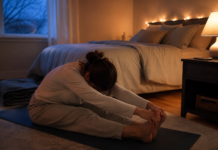
There is no universal stretch that helps every case of sciatica, because the underlying cause changes what the nerve root needs. In broad terms, gentle stretches that open space around the nerve root and avoid compressive or high-load positions are more often well tolerated, while deep forward-folding stretches, aggressive twists, and anything that reproduces sharp, shooting pain down the leg are more often problematic, particularly for stenosis or acute disc irritation. The table below is general information, not a personalized treatment plan, and a physical therapist can tailor this list to a specific diagnosis.
| Often Well Tolerated (General Information) | Often Best Avoided or Approached With Caution |
|---|---|
| Gentle knee-to-chest stretch, performed slowly and stopping well short of pain | Deep, unsupported forward toe-touch stretches that round the entire lower back |
| Cat-and-camel (cat-cow) spinal mobility movement done within a comfortable range | Aggressive spinal twists or high-torque rotational stretches, especially first thing in the morning |
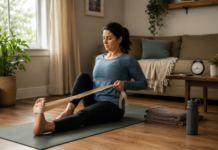
| Seated or lying piriformis stretch, moved into slowly with the pain-free range respected | Bouncing or ballistic stretching of any kind in the lower back or hip region |
| Gentle standing or lying hamstring stretch with a slightly bent knee | Straight-leg, aggressive hamstring stretches that pull sharply on the nerve itself |
| Bridging to gently activate glutes and core without spinal loading | Heavy loaded forward-bend lifting motions or deep squats during a flare-up |
| Short, frequent walks at a comfortable pace | Prolonged static stretching held to the point of sharp, radiating, or worsening leg pain |
A general pattern worth remembering: gentle, short-duration stretches that stay well inside a comfortable range and are stopped the moment leg pain increases tend to be lower risk than long, forceful holds. If a stretch makes the pain travel further down the leg, or makes numbness or tingling worse, that is a signal to stop, not to push through it.
A Cautious, Step-by-Step Gentle Routine
The following sequence is offered as general educational information about movements commonly used in early-stage, mild sciatic discomfort. It is not a substitute for a personalized program from a physical therapist or physician, and it should be skipped entirely if any of the red-flag symptoms described in the next section are present.
- Warm up with walking. Begin with three to five minutes of easy, flat-ground walking to warm the tissues, encourage blood flow, and give the nervous system a low-intensity signal that movement is safe before any stretching begins.
- Cat-and-camel, 8 to 10 slow repetitions. On hands and knees, gently arch and then round the spine within a pain-free range, moving slowly and breathing steadily throughout rather than holding the breath at either end of the motion.
- Gentle knee-to-chest stretch, one leg at a time. Lying on your back, slowly draw one knee toward your chest using your hands under the thigh, holding for 15 to 20 seconds only if it feels comfortable, then lower with control and switch sides.
- Seated piriformis stretch, brief hold. Sitting in a chair, cross one ankle over the opposite knee and lean forward gently from the hips only until a mild stretch is felt in the buttock, holding briefly and easing off immediately if any leg symptoms appear.
- Bridging, 8 to 10 slow repetitions. Lying on your back with knees bent and feet flat, gently lift the hips a small amount, squeezing the glutes at the top, then lower slowly with control rather than dropping down.
- Short cool-down walk. Finish with another few minutes of easy walking rather than sitting immediately, since prolonged static positions can aggravate nerve irritation for some people.
Throughout this sequence, the guiding rule is simple: any movement should stay well within a comfortable range, and nothing should be pushed through pain that travels down the leg. Stopping a stretch is always an acceptable choice, and it is far safer than persisting through worsening nerve symptoms. A single session should feel unremarkable rather than intense; the aim is gentle, repeatable movement rather than a demanding workout.
Lifestyle Factors That Support Recovery
Stretching is only one part of managing sciatica, and a few everyday habits can support the same goal of reducing unnecessary nerve irritation. Alternating between sitting and standing throughout the day, rather than remaining in one position for hours, tends to be favored over strict bed rest, which research summarized by the NHS suggests can slow recovery rather than speed it. Supportive footwear, a firm-enough mattress, and a pillow arrangement that keeps the spine in a relatively neutral position during sleep can also reduce nighttime discomfort for some people. Maintaining a moderate body weight and building general core and hip strength over time, once the acute phase has settled, may help reduce the load placed on the lower spine during daily activities. None of these habits replace a diagnosis, but they form a reasonable backdrop alongside any gentle stretching routine and any care a physical therapist recommends.
⚠ Red-Flag Symptoms: Seek Emergency Care Immediately
Stop stretching and seek urgent medical attention (call your local emergency number or go to an emergency department) if you notice any of the following:
- New or worsening loss of bladder or bowel control
- Numbness in the saddle area (inner thighs, genitals, or around the anus)
- Severe or rapidly progressing weakness in one or both legs
- Sciatica symptoms affecting both legs at the same time
- Difficulty walking, standing, or a sudden inability to urinate
These symptoms can indicate cauda equina syndrome, a compression of the nerve bundle at the base of the spinal cord. The Cleveland Clinic notes that the faster this condition is treated, the lower the likelihood of permanent damage such as incontinence or paralysis; the NHS specifically advises against driving yourself to the hospital in this situation and instead recommends calling emergency services or having someone else drive you.
When to See a Professional
Beyond the emergency red flags above, several situations call for a scheduled evaluation with a doctor or physical therapist rather than continued self-management:
- Pain that persists beyond a few weeks despite gentle activity and rest
- Pain that is getting worse rather than gradually improving
- Numbness, tingling, or weakness that is new, spreading, or intensifying
- Sciatica following a fall, accident, or other trauma
- A history of cancer, unexplained weight loss, or fever alongside back pain
- Symptoms in someone with diabetes, osteoporosis, or a weakened immune system
A physical therapist can assess movement patterns, identify which structures seem to be contributing, and build a stretching and strengthening program suited to the specific presentation rather than a generic list. Research summarized by the American Physical Therapy Association found that physical therapy started within days of an initial primary care visit improved outcomes for patients with acute back pain and sciatica, which supports the value of getting a professional opinion early rather than waiting out a prolonged flare-up alone.
A Measured Approach to Stretching for Sciatica
Sciatica covers a wide range of underlying problems, from a straightforward muscle-related irritation that resolves in days to structural issues that need imaging and specialist input. Generic stretching advice cannot account for that range, so the most useful mindset is a cautious one: start gently, stop at the first sign of worsening leg symptoms, and treat persistent or severe pain as a reason to get evaluated rather than to push harder. The stretches and routine described here are general educational information, not a treatment plan, and they are not a substitute for a diagnosis. If pain is severe, spreading, or accompanied by any of the red-flag symptoms listed above, professional and, where appropriate, emergency care should always come first.
Recovery from sciatica is rarely a straight line. Some days will feel noticeably better than others, and a stretch that felt comfortable yesterday may feel different today depending on posture, activity, sleep, and stress. Tracking which movements ease symptoms and which ones aggravate them, even in a simple notebook, can give both you and any clinician you see a clearer picture over time. Patience paired with caution, rather than an aggressive push toward a fast fix, tends to serve people better while the underlying cause is identified and properly addressed.
Frequently Asked Questions
Is it safe to stretch every day if I have sciatica?
Gentle, pain-free movement is generally well tolerated on a daily basis, and both the NHS and Cleveland Clinic describe staying reasonably active as helpful during a sciatica flare. That said, any stretch that increases leg pain, numbness, or tingling should be stopped, and a clinician should confirm that daily stretching is appropriate for your specific cause of sciatica.
Can stretching make sciatica worse?
Yes, certain stretches, particularly deep forward folds, aggressive twists, and straight-leg hamstring pulls, can increase nerve irritation in some people, especially with spinal stenosis or an acute disc herniation. If a stretch causes pain to travel further down the leg, it should be stopped immediately.
How long does sciatica usually last?
According to the Cleveland Clinic, sciatica linked to a herniated disc often improves within four to six weeks, frequently without medical intervention. Mayo Clinic similarly notes that most people recover fully. Symptoms lasting longer than this, or worsening over time, warrant a professional evaluation.
What is the difference between sciatica and cauda equina syndrome?
Sciatica refers to irritation of a single nerve root, typically causing one-sided leg pain, numbness, or tingling. Cauda equina syndrome is a rare but serious compression of the bundle of nerve roots at the base of the spinal cord, and it can cause bladder or bowel dysfunction, saddle numbness, and bilateral leg weakness. It is a surgical emergency, not something to manage with stretching.
Should I stretch during a severe sciatica flare-up?
During a severe flare, very gentle movement such as short walks is often more appropriate than deep stretching. Pushing into stretches during acute, severe pain can aggravate symptoms. A physical therapist or physician can advise on timing once the acute phase has settled.
Can weight or posture affect sciatica risk?
Yes. Mayo Clinic lists excess body weight, occupations involving heavy lifting or prolonged sitting, and diabetes as risk factors, while the Cleveland Clinic adds weak core muscles and poor posture to that list. Addressing these factors alongside professional guidance can support long-term management.
Is bed rest recommended for sciatica?
Generally, no. Guidance from the NHS favors staying as active as comfortably possible over prolonged bed rest, since gentle movement tends to support recovery better than extended inactivity. This does not mean pushing through severe pain; it means avoiding long stretches of complete stillness when milder symptoms allow for gentle activity.
References and Sources
- Mayo Clinic. “Sciatica – Symptoms and causes.” mayoclinic.org
- Cleveland Clinic. “Sciatica: What It Is, Causes, Symptoms, Treatment & Pain Relief.” my.clevelandclinic.org
- Cleveland Clinic. “Cauda Equina Syndrome: What It Is, Symptoms & Treatment.” my.clevelandclinic.org
- NHS. “Sciatica.” nhs.uk
- American Physical Therapy Association. “Research Review: Early Physical Therapy Works for Sciatica.” apta.org