


























This article is educational and does not replace medical advice. Always get clearance from your oncology team, meaning your oncologist, oncology nurse, or a physical therapist familiar with your case, before starting or changing any activity during chemotherapy. Every treatment protocol and blood count pattern is different, and your care team can tell you what is safe for your specific situation.
Chemotherapy-related fatigue is one of the most common and most misunderstood side effects of cancer treatment. It is not the kind of tired that a good night’s sleep fixes, and it can make even a short walk feel like a monumental task. Many patients assume rest is the only answer. Research on cancer-related fatigue points to a different, more nuanced picture. For many people, carefully chosen, low-dose movement, done with oncology clearance and adjusted around blood counts and treatment cycles, is one of the few interventions with real evidence behind it. This guide walks through what that looks like in practice, step by step, without minimizing how hard active treatment can be.
Understanding Cancer-Related Fatigue vs. Normal Tiredness
The National Cancer Institute’s PDQ supportive care summary defines cancer-related fatigue (CRF) as a distressing, persistent, subjective sense of physical, emotional, and cognitive tiredness or exhaustion related to cancer or its treatment that is not proportional to recent activity and interferes with usual functioning. That last part matters: ordinary tiredness has a clear cause-and-effect relationship with exertion, and it resolves with rest. CRF frequently does not follow that pattern. A person can sleep nine hours and still wake up feeling as though they never lay down.
This distinction is not just semantic. It’s why fatigue during chemotherapy is treated as its own clinical symptom rather than dismissed as “being tired.” The scale of the problem is significant: NCI data indicate that roughly 80% of people receiving chemotherapy or radiation therapy report fatigue during treatment, with reported rates ranging from 39% to over 90% depending on the study population and how fatigue was measured. For some, the effects linger well past the last infusion. One commonly cited finding is that more than 30% of breast cancer survivors reported severe fatigue at one, two, and even four years after diagnosis, which is why fatigue management is worth taking seriously from the start of treatment rather than treating it as something to simply wait out.
Because CRF is a recognized medical symptom and not simply low motivation, it’s worth naming clearly with your care team rather than working around it silently. Oncology teams have validated fatigue scales they can use to track severity over time, and persistent or worsening fatigue can sometimes signal something else going on, such as anemia, thyroid changes, dehydration, poor sleep, or depression, alongside medication side effects. Any of these deserves its own evaluation rather than being folded into “expected chemo tiredness.”
Why Light-to-Moderate Activity Often Helps Rather Than Worsens Fatigue
It sounds counterintuitive: if you’re exhausted, shouldn’t you conserve every bit of energy for rest? For decades, that was the default advice. It has since been revised for most patients, in most circumstances, with individualized clearance.
Physical activity is now classified by the National Comprehensive Cancer Network as a Category 1 recommended intervention for managing cancer-related fatigue, which is the highest level of evidence category the NCCN assigns. An international multidisciplinary roundtable convened by the American College of Sports Medicine reviewed more than 2,500 randomized controlled trials published since 2010 and concluded that “exercising during and after cancer treatment improves fatigue, anxiety, depression, physical function, and quality of life.” That is a broad, direct statement from a body of research spanning well over a decade.
The mechanism isn’t fully settled, but the leading explanations include: preserved cardiovascular and muscular capacity (so daily tasks require a smaller percentage of total capacity), improved sleep quality, reduced inflammatory signaling, and psychological benefits from maintaining some sense of normal routine and control during a period that can otherwise feel entirely dictated by the treatment schedule.
None of this means pushing through exhaustion or “exercising away” fatigue that has a medical cause. It means that appropriately scaled movement, whether that is walking, gentle resistance work, or stretching, is generally not harmful for most patients and is often beneficial, when cleared by the treating oncology team and adjusted to how a person is actually feeling that day.
Step-by-Step Approach to Training During Chemotherapy
Step 1: Get Explicit Clearance from Your Oncology Team First
Before doing anything else, talk to your oncologist, oncology nurse navigator, or a physical therapist who specializes in oncology rehabilitation. This is not a formality. Certain cancer types, treatment combinations, and complications (such as low platelet counts, bone metastases, cardiac toxicity risk from specific chemo agents, or recent surgery) change what is safe. Ask directly: “Is it safe for me to walk or do light strength work right now, and are there any specific restrictions I should know about?” Get this in writing or documented in your chart if possible, and revisit the conversation at each new cycle, since your blood counts and side-effect profile can shift from one cycle to the next.
Step 2: Check Blood Counts and Immune Status Before Each Session
Chemotherapy affects bone marrow function, which can lower white blood cell counts (specifically neutrophils), red blood cells, and platelets on a predictable cycle tied to your infusion schedule. Ask your care team when your counts typically hit their lowest point (the “nadir,” often 7–14 days after infusion, depending on the regimen) and when they recover. This matters directly for exercise choices:
- Low white blood cell / neutrophil counts (neutropenia): your infection risk rises substantially. Avoid public gyms, crowded fitness classes, and shared equipment during this window.
- Low platelet counts: bruising and bleeding risk increases, so avoid contact activities, anything with a fall risk, and heavy resistance loads.
- Low red blood cell counts (anemia): shortness of breath and dizziness during exertion become more likely, which is a reason to scale intensity down further.
If you don’t already know your latest counts, ask for them. Many patients track their labs alongside their exercise log so the two can be adjusted together.
It also helps to understand roughly why these numbers move the way they do. Chemotherapy targets rapidly dividing cells, and bone marrow, which constantly produces new blood cells, is one of the tissues most affected. That’s why blood counts don’t stay flat during treatment; they dip after each infusion and slowly climb back before the next one is scheduled. Some regimens cause a sharper, deeper dip than others, and some patients receive supportive medications, such as growth factor injections, specifically to help white blood cell counts recover faster between cycles. None of this is something to estimate on your own. Ask your care team for your specific pattern, including approximately when your counts are expected to be lowest and when it’s typically safe to be around more people or return to a public gym setting.
Also ask whether your specific chemotherapy drugs carry any additional exercise-relevant risks beyond blood counts. Some regimens are associated with peripheral neuropathy (numbness or tingling in the hands and feet), which can affect balance and grip, making certain equipment or uneven walking surfaces riskier. Others carry a small risk of cardiac effects, which may change how intensity should be capped. Your oncology team can flag these specifics for your protocol.
Step 3: Choose Low-Infection-Risk Settings
During periods of neutropenia, oncology guidance is consistent: minimize exposure to environments where pathogens are harder to control. That means favoring home-based movement, private outdoor walks away from crowds, or one-on-one sessions with a cleared physical therapist over public gyms, group fitness classes, or public pools and hot tubs, which may not be cleaned frequently enough to eliminate the organisms that pose a real risk to an immunocompromised person. Even simple precautions carry more weight now than before treatment: wash hands before and after equipment use, wear supportive shoes rather than going barefoot, since a scraped foot is an entry point for infection you do not want during a low-count week, and avoid exercising around anyone with cold or flu symptoms.
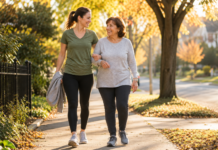
Outdoor activity deserves the same care. A quiet neighborhood walk is generally lower risk than a crowded park or trail, and gardening or yard work should be avoided, or done with gloves and closed shoes, since soil and plant matter carry organisms that a healthy immune system handles easily but a neutropenic one may not. If you enjoy cycling or hiking, ask your care team whether the fall risk and the potential for cuts or scrapes make sense given your current platelet and neutrophil counts. Timing matters as much as location. The same walk that’s reasonable during a week when counts are recovering may be worth postponing, or shortening substantially, during the week your counts are expected to be at their lowest.
Step 4: Start at a Genuinely Low Volume
This is the step most people get wrong by overestimating their capacity based on pre-diagnosis fitness. A commonly cited starting point from cancer care organizations is as modest as 10 minutes of light activity a day: a slow walk around the block, a few laps of the living room, or seated range-of-motion movements. From there, progress gradually toward a broader target many oncology exercise programs use as a longer-term goal, which is roughly 30 minutes of moderate-intensity aerobic activity most days, alongside light resistance work two to three times a week, built up over weeks, not days. On harder days, splitting movement into three 10-minute blocks instead of one continuous session provides similar benefit with less cumulative strain.
“Moderate intensity” in this context is typically described as roughly the effort of a brisk walk, enough to raise your breathing rate without leaving you unable to hold a conversation. Vigorous exercise is generally not recommended during active treatment unless specifically approved by your oncology team. A useful informal check is the “talk test”: if you can speak in full sentences while moving, you’re likely in a reasonable range; if you can only manage single words, it’s a signal to slow down.
Progress at a pace measured in weeks, and expect it to be uneven. A week with a difficult side-effect profile may mean returning to the 10-minute starting point rather than continuing to build. That is not a setback in any meaningful sense; it’s simply how training around active treatment works. Consistency over the full arc of treatment matters far more than any single week’s volume.
Step 5: Learn and Respect Your Body’s Signals
Fatigue during chemotherapy doesn’t move in a straight line. A session that felt fine on Tuesday may be too much on Thursday, even with identical effort. Build in permission to stop. Warning signs that a session should end immediately include unusual shortness of breath, chest discomfort, dizziness or unsteadiness on your feet, new or worsening pain, visible swelling, or a “crash” that leaves you needing far longer than usual to recover afterward. None of these are signs to push through. They are signals to stop, rest, and mention it to your care team, particularly if they recur.
It can help to rate perceived effort and fatigue on a simple 0-to-10 scale before and after each session. If your pre-session fatigue is already high, for example a 7 or higher out of 10, that’s often a cue to choose the gentlest option available that day, such as seated stretching or a very short walk, rather than the session you had originally planned. Over time this kind of simple self-monitoring becomes an intuitive skill, and many patients find it reduces the anxiety of not knowing whether a given day is a “movement day” or a “rest day.”
Step 6: Adjust Around Your Treatment Cycle
Rather than aiming for a flat, identical routine every day, many patients find it more sustainable to plan movement around where they are in the treatment cycle. The table below is a general framework. Your own pattern of side effects and your care team’s guidance should always take priority over this template.
| Cycle Phase | Typical Pattern | Activity Approach |
|---|---|---|
| Infusion day | Medication effects, possible nausea, fatigue onset | Rest priority; gentle seated stretching or a very short slow walk only if you feel able |
| Days 1–3 post-infusion | Peak nausea/fatigue for many regimens | Minimal activity; brief seated range-of-motion or a 5–10 minute stroll if tolerated |
| Days 4–7 post-infusion | Fatigue often still present but may ease slightly | Short light walks, 10–15 minutes, broken into smaller blocks if needed |
| Nadir window (often days 7–14, varies by regimen) | Blood counts typically at their lowest; infection risk highest | Home-based, low-infection-risk movement only; avoid gyms, pools, crowds |
| Late cycle, counts recovering | Energy often improves as counts rebound | Gradually increase to your best-tolerated volume; still avoid vigorous effort without clearance |
| Day before next infusion | Variable; some feel closer to baseline | Light-to-moderate activity as tolerated; confirm counts are adequate first |
Step 7: Include Gentle Resistance and Flexibility Work, Not Just Walking
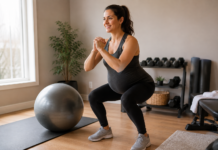
Walking is the most accessible starting point, but light resistance movements help preserve muscle that chemotherapy and reduced activity can otherwise erode. Useful examples include seated marching, ankle pumps, gentle arm raises with or without light hand weights, and sit-to-stand practice from a sturdy chair. Add gentle stretching and slow diaphragmatic breathing, both of which are frequently recommended alongside aerobic movement in oncology exercise resources. Keep resistance loads light, especially if platelet counts are low, and stop any movement that causes joint pain, not just muscle fatigue.
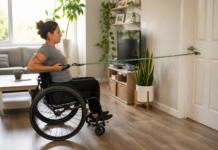
If a resistance band or light dumbbells are available at home, two or three sets of eight to twelve gentle repetitions for major muscle groups, arms, legs, and core, is a reasonable starting structure, adjusted downward on harder days. Rest at least a day between resistance sessions targeting the same muscles. If access to a physical therapist with oncology training is available through your treatment center, even a single consultation to check form and set an individualized starting plan can be valuable, particularly if you have any pre-existing joint issues, prior surgery sites, or a port or central line that changes which movements are appropriate.
Step 8: Track Patterns, Not Just Single Sessions
Keep a simple log: date, what you did, how long, how you felt during, and how you felt for the rest of that day. Over a few cycles, patterns tend to emerge: certain days are reliably harder, and certain activities are reliably better tolerated. Bring this log to appointments. It gives your oncology team concrete information to work with rather than a general impression of “tired,” and it can help identify whether fatigue is following the expected treatment pattern or whether something else needs attention.
Red Flags: When to Contact Your Care Team Immediately
Stop activity and contact your oncology team right away if you experience:
- A fever of 100.4°F (38°C) or higher, or chills. This can indicate infection during a period of low white blood cell counts and is treated as urgent
- New or worsening shortness of breath, chest pain, or a racing or irregular heartbeat
- Dizziness, lightheadedness, fainting, or sudden unsteadiness on your feet
- Unusual bruising, bleeding that won’t stop, or blood in urine or stool
- Sudden swelling, redness, or warmth in one leg or arm
- Severe or worsening pain that is new for you
- Confusion or sudden changes in vision
- A “crash” after activity that leaves you needing far longer than usual to recover, or fatigue that keeps worsening rather than following its normal pattern
When in doubt, call. Oncology teams expect these calls and would rather hear from you early than after a symptom has progressed.
What the Evidence Does and Does Not Support
It’s worth being precise about what the research actually shows, since YMYL topics like active cancer treatment deserve accuracy over enthusiasm. Randomized controlled trials and the resulting consensus guidelines support light-to-moderate exercise as a generally safe and often beneficial addition to standard cancer care for most patients, with benefits shown for fatigue, mood, physical function, and quality of life. This is a strong body of evidence, and it’s why major cancer organizations include physical activity in their supportive care recommendations rather than treating it as an alternative or unproven therapy.
What the evidence does not support is exercise as a treatment for cancer itself, a substitute for chemotherapy, or a guaranteed fix for every case of fatigue. Some fatigue has causes that exercise cannot address, including anemia requiring transfusion, thyroid dysfunction, or depression requiring its own treatment. Exercise research in oncology also does not override individual medical restrictions. A specific surgical site, an implanted port, bone involvement from the cancer itself, or a cardiac risk from a specific chemotherapy agent can all mean that general population guidance does not apply to your case without modification. This is the central reason clearance from your own oncology team, not a generic article, has to be the final word on what is appropriate for you.
Conclusion
Training during chemotherapy is not about maintaining a pre-diagnosis fitness routine or pushing through exhaustion. It is a much smaller, more careful practice: get cleared by your oncology team, understand where your blood counts sit at any given point in the cycle, choose settings that keep infection risk low, start at a volume that feels almost too easy, and let your body’s daily signals guide adjustments. For many people managing chemotherapy-related fatigue, this kind of scaled-down, cycle-aware movement is one of the few tools with real evidence behind it. It is not a cure, but a manageable, low-risk way to support daily function during a genuinely difficult stretch of treatment.
Frequently Asked Questions
Is it normal to feel too fatigued to exercise at all on some days?
Yes. Fatigue during chemotherapy fluctuates, often tied to where you are in your treatment cycle and your current blood counts. Some days, appropriate rest is the correct choice, not a failure to keep up a routine. Skipping activity on a hard day and resuming when you feel able is a normal part of this process.
Can exercise lower my white blood cell count further?
Moderate activity itself is not generally described as lowering blood counts; chemotherapy’s effect on bone marrow is what drives those changes. The concern with exercising in public spaces during neutropenia is exposure to infection sources in the environment, not the exercise lowering your counts directly. Always confirm your current counts and specific risk with your care team.
What if I was very active before my diagnosis?
Prior fitness level does not exempt you from scaling down during active treatment. Guidance from cancer care organizations generally recommends exercising at a lower intensity than your pre-diagnosis baseline and avoiding vigorous exercise unless your oncology team specifically approves it for your situation.
Should I exercise on the day of my infusion?
This depends entirely on how you feel and what your care team advises. Many patients find infusion days are best used for rest or, at most, very gentle seated movement. There is no requirement to exercise on infusion day, and skipping it is common and reasonable.
How do I know if my fatigue needs medical evaluation rather than just more rest?
Mention any fatigue that feels disproportionate, is rapidly worsening, or is accompanied by symptoms like shortness of breath, chest discomfort, or fainting to your oncology team. Fatigue can sometimes overlap with treatable contributors such as anemia, thyroid changes, dehydration, or sleep problems, so it is worth having it assessed rather than assumed.
Is walking really enough, or do I need a structured gym program?
For many patients during active chemotherapy, walking combined with light resistance and stretching movements at home is a reasonable and evidence-supported starting point. A structured program supervised by an oncology-trained physical therapist can be valuable if it’s accessible to you, but it is not a requirement to get meaningful benefit from lower-volume home-based movement.
References
- American Cancer Society. “Physical Activity When You Have Cancer.” cancer.org
- National Cancer Institute. “Fatigue (PDQ) – Health Professional Version.” cancer.gov
- Campbell, K.L., et al. “Exercise Guidelines for Cancer Survivors: Consensus Statement from International Multidisciplinary Roundtable.” Medicine & Science in Sports & Exercise, 2019, summarized via ScienceDaily. sciencedaily.com
- Memorial Sloan Kettering Cancer Center. “Managing Cancer-Related Fatigue with Exercise.” mskcc.org
- UT MD Anderson Cancer Center. “Neutropenic Precautions: 5 Dos and Don’ts for This Cancer Treatment Side Effect.” mdanderson.org
- ASCO Post. “Updated ASCO Guidance on Cancer-Related Fatigue Expands Patient Options for Interventions.” ascopost.com
By Sophie Taylor