

















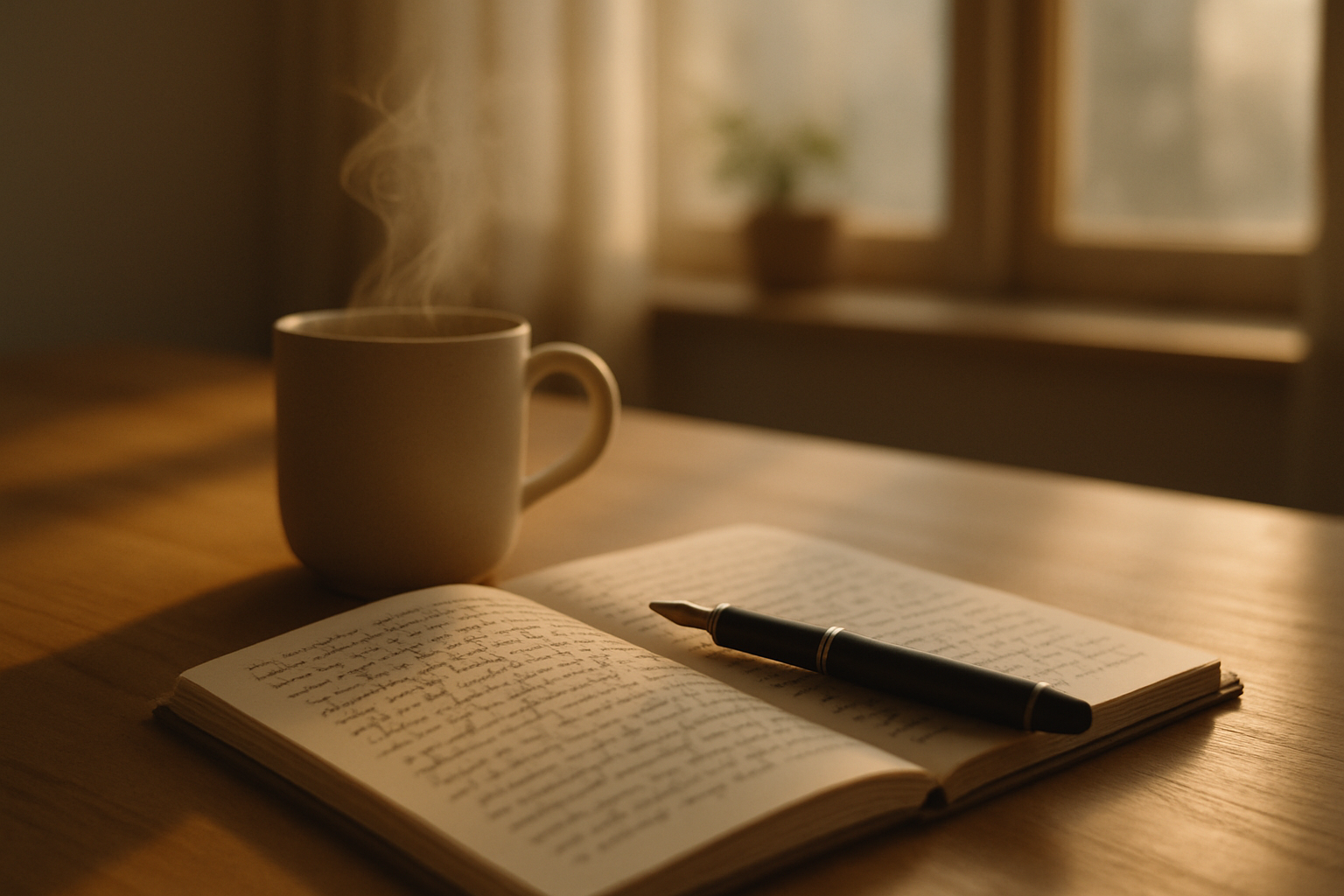
Morning Pages are a simple, discipline-building way to unstick your creativity: three pages of longhand, stream-of-consciousness writing done first thing every morning—private, uncensored, and not “art.” That’s the core method Julia Cameron popularized in The Artist’s Way, and it’s still the most effective starting point if you want clearer thinking, more ideas, and less mental noise. In practice, you’ll sit down, put pen to paper, and keep your hand moving for three full pages; you don’t pause to edit or polish. You empty your head so your creative attention is free for the rest of the day.
Quick start: Grab a notebook, wake up, write three pages by hand without stopping, don’t reread, and repeat tomorrow. Expect ~20–45 minutes depending on handwriting speed (about ~750 words for many people).
1. Do Three Longhand Pages, First Thing
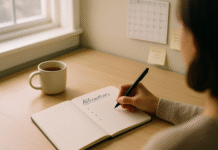
The non-negotiable foundation of Morning Pages is three pages of longhand written immediately after you wake. This timing catches your thoughts before the day floods in, so you can drain worries, plans, and distractions onto paper. Longhand slows you down just enough to connect with what you actually think and feel; the goal isn’t pretty prose but momentum and honesty. “First thing” means before email, chats, or news—if you check your phone, you’ve already shifted into reactive mode. Keep the pages private and unfiltered; there’s no audience and no need to sound smart. Treat the practice like brushing your teeth for your brain: daily, dull-on-purpose, and surprisingly powerful.
1.1 How to do it
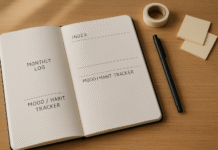
- Keep a dedicated notebook and pen within arm’s reach of your bed.
- Wake, sit, and start writing; no coffee ritual or apps first.
- Fill exactly three pages; if you stall, write “I don’t know what to write” until momentum returns.
- Finish, close the notebook, move on with your morning.
1.2 Numbers & guardrails
- Pages: 3 longhand pages (A4/Letter).
- Time: ~20–45 minutes for most writers.
- Word ballpark: ~750 words (varies by handwriting).
Synthesis: Guarding “first thing” is the single highest-leverage choice—protect it, and everything else becomes easier.
2. Keep It Stream-of-Consciousness (Not “Writing”)
Morning Pages are not a diary entry, a blog post, or chapter one of your novel. They’re a stream of thought—whatever is on your mind—written quickly to clear cognitive clutter. That includes the mundane (“need to buy batteries”), the anxious (“did I reply to…?”), and the petty (“why did they…”). By allowing all of it, you reduce rumination and free working memory for creative tasks later. Importantly, don’t aim for insight on the page; insight is a side effect, not the assignment. When you try to be profound, you slow down, censor, and lose momentum. This “low bar” is what makes the practice sustainable and powerful. Chris Winfield
2.1 Common mistakes
- Pausing to craft sentences or fix grammar.
- Turning pages into a to-do list (capture tasks, then keep writing).
- Writing for an imagined reader.
2.2 Mini-checklist
- Private? Yes.
- Unfiltered? Yes.
- Continuous? Yes—no stopping.
Synthesis: Think of pages as mental windshield wipers; streaks are fine—the point is visibility, not perfection.
3. Don’t Reread for the First 8 Weeks
For the first eight weeks, resist rereading. Early review tempts you to judge, perform, or self-edit; all three undermine the “dump, don’t decorate” spirit. Julia Cameron’s community guidance consistently emphasizes waiting before looking back—enough time for momentum, not meaning, to be your focus. When you finally review, you’ll do it on purpose, looking for patterns rather than polishing sentences. That delay protects the habit during its fragile phase and reduces the urge to curate or share. Intention Inspired
3.1 Why it matters
- Prevents performance mode: you write for release, not for readers.
- Reduces shame spirals: no “I can’t believe I wrote that” rabbit hole.
- Builds tolerance for mess: a core creativity muscle.
3.2 After week 8
- Skim with a highlighter for recurring themes, repeated complaints, or seeds of ideas.
- Capture actionable items elsewhere (see Rule 8).
- Archive pages; don’t re-rewrite them.
Synthesis: Delay turns rereading into a tool, not a trap.
4. Prefer Pen and Paper (Here’s Why)
Cameron specifies longhand for a reason. Writing by hand is slower, which tends to deepen processing and reduce verbatim transcription—useful when you’re trying to access feelings and original thought rather than “type what you already think.” Experimental evidence shows longhand note-takers outperform laptop note-takers on conceptual questions, likely because handwriting encourages generative processing over copying. Additional studies suggest handwriting (even on digital pens/tablets) can enhance learning compared with typing. For Pages, that friction is a feature; it keeps you with yourself.
4.1 Tools & examples
- Any A4/Letter notebook you won’t mind filling quickly.
- Gel pen you like (smooth ink lowers resistance).
- Optional: digital pen + tablet in “ink” mode if hand pain is an issue.
4.2 Guardrails
- If typing is the only way you’ll do them, do them—but label it a variation (see Rule 10).
Synthesis: Use longhand as your default; treat digital as an accommodation, not the baseline.
5. Anchor the Habit with a Simple Routine
Habits stick when they’re tied to a reliable cue and a friction-free setup. Pick one cue (alarm, coffee brewing, prayer/meditation) and link it to “sit and write.” The science of habit formation suggests automaticity builds with consistent repetition in a stable context, often over weeks to months (a common average is ~66 days, with wide individual range). That timeline is normal; you’re wiring a behavior to a cue. Stack Pages before other morning tasks so the day can’t squeeze them out. Scientific American
5.1 Mini-checklist
- Cue: same trigger daily.
- Place: same seat/table if possible.
- Prep: notebook and pen set out the night before.
5.2 Common pitfalls
- “I’ll fit them in later” (you won’t).
- Over-engineering (apps, timers) before the core habit is stable.
- Skipping after a bad day (miss once, never twice).
Synthesis: Simplicity wins—consistent cue + easy setup beats motivation.
6. Respect Your Brain’s Morning Biology
Most people experience a cortisol awakening response (CAR) about 30–60 minutes after rising; in that window, your alertness naturally ramps up. Doing Pages early leverages that biological state while your prefrontal cortex isn’t yet hijacked by inputs. Pairing Pages with natural light (open a curtain) can also help sync your circadian rhythm over time. You don’t need a lab to apply this—just a consistent “wake → write” rhythm that matches your body, not your inbox.
6.1 How to do it
- Wake, hydrate, open blinds, sit down to write.
- If you meditate, do Pages before or after—experiment for energy.
- Keep phone in another room until you’re done.
6.2 Numbers & guardrails
- Timing: within 15–30 minutes of waking is ideal; no later than 60 minutes.
- Light: 1–2 minutes of daylight exposure before or after helps most people.
Synthesis: Align the practice with natural alertness and it feels less like a fight.
7. Capture Tasks Separately, Then Keep Writing
Pages will surface errands, reminders, and half-formed to-dos. If you let them hijack the session, you’ll slide into planning mode. Instead, use a tiny “parking lot”: when a task pops up, jot a one-line note in the margin or on a sticky, then return to your sentence. After you finish the third page, transfer those items to your system—calendar, task app, or a paper list—so nothing is lost. This keeps Pages emotionally honest while still reducing practical anxiety.
7.1 Mini-checklist
- During pages: one-line captures only.
- After pages: process captures immediately (2–5 minutes).
- No planning in pages: if you need a plan, make it after.
7.2 Common mistakes
- Turning Page 2 into a checklist.
- Interrupting the flow for scheduling.
- Letting captures languish unprocessed.
Synthesis: Separate emptying your head from organizing your day—you’ll do both better.
8. Expect Emotional Weather—and Handle It Well
Expressive writing can bring up strong feelings. A large body of research links writing about emotional events to improvements in mental and physical health for many people, though it isn’t a stand-alone treatment for clinical conditions. If Pages stir sadness, anger, or anxiety, that doesn’t mean you’re “doing it wrong”—often it means you’re touching something true. Take care: slow down after intense sessions, add grounding (walk, shower), or talk to a trusted person. If you’re currently under professional care, ask your clinician how to integrate Pages safely.
8.1 Grounding mini-list
- 5-minute walk without headphones.
- 4–6 deep breaths with long exhales.
- Warm drink and a glass of water.
8.2 Guardrails
- If Pages consistently worsen your mood or functioning, pause and consult a professional.
- Don’t use Pages to rehearse self-criticism; notice it, then keep writing through it.
Synthesis: Emotional content is normal; pair honesty with self-care.
9. Keep Pages Private (You’ll Write Braver)
Privacy is the pressure-release valve that keeps Pages uncensored. Promise yourself nobody else will read them—no partner, no friend, no coach. Once read by others, Pages become performance, and you’ll start pre-editing on the page. If you’re tempted to share, ask what you’re seeking (validation? feedback?) and meet that need elsewhere. The practice works because it’s a rehearsal space for your raw voice—one you can’t get if you’re imagining a reader.
9.1 Practical tips
- Use a plain notebook (less precious = less pressure).
- Store finished notebooks out of sight.
- If privacy is a concern at home, write in a parked car or a quiet corner.
9.2 Common pitfalls
- Quoting Pages in public posts.
- Asking for “accountability reads.”
- Letting someone “just peek.”
Synthesis: Guard privacy and your honesty will flourish.
10. Digital Variations: Use Sparingly and Deliberately
Cameron’s rule is longhand, but digital variants can sustain a streak when pen-and-paper isn’t feasible (travel, hand pain, childcare). Tools like 750Words were explicitly inspired by Morning Pages and target ~750 words daily; they add streak counters and simple metrics. If you go digital, turn off formatting, avoid backspace-editing, and keep it private. Treat this as an adaptation, not a shortcut—and return to longhand when you can.
10.1 Digital guardrails
- Full-screen, no notifications.
- Type continuously; don’t edit or reread.
- Export or delete—whatever preserves privacy best.
10.2 When digital wins
- Repetitive strain injury or arthritis flares.
- Newborn stage or caregiving windows.
- Commuter writing (on a train, eyes down, headphones off).
Synthesis: Let digital keep the chain unbroken; just keep the spirit intact.
11. Turn Pages into Creative Fuel—After a Delay
Pages aren’t the work, but they feed the work. After you’ve built a stable streak (4–8+ weeks), flip through with a highlighter. You’ll spot repeated obsessions, fresh metaphors, or problem statements begging for exploration. Pull those into an “Idea Bank” (index cards, notes app) and schedule short, separate sessions to pursue them. This delayed extraction preserves privacy while converting raw material into drafts, designs, or decisions.
11.1 Mini workflow
- Monthly: skim, highlight, and list 3–5 promising seeds.
- Next day: free-write 15 minutes on one seed outside your Pages.
- Weekly: choose one seed to prototype (sketch, outline, mind map).
11.2 Tiny example
- Pages reveal you keep writing “I miss making music.”
- Seed: “30-minute Sunday loop session.”
- Prototype: make one loop this week; note how it feels; iterate.
Synthesis: Treat Pages as a compost heap—give them time, then harvest the good soil.
12. Build a Compassionate Streak (Miss Once, Never Twice)
Consistency beats intensity. Aim for daily, but expect life. If you miss a day, skip the guilt and write the next morning. Habit research suggests early repetitions in a stable context matter more than perfection, and lapses are normal on the path to automaticity. Track your streak if it motivates you, but don’t weaponize the counter. If you’re repeatedly blocked, reduce friction: earlier bedtime, simpler setup, smaller handwriting, or a different chair.
12.1 Troubleshooting list
- “No time.” Set a 25-minute cap; stop at three pages.
- “Hand hurts.” Thicker pen, looser grip, micro-breaks each page.
- “Mind blank.” Write the blankness: “I have nothing…” until it shifts.
12.2 Micro-commitment
- Promise “two sentences” on hard days; most days, two sentences become three pages.
Synthesis: Practice kindness plus persistence—your future creative self depends on both.
FAQs
1) What exactly are Morning Pages?
A daily practice of writing three pages of longhand, stream-of-consciousness text first thing in the morning—private, unedited, not intended as “writing.” The goal is to clear mental static so you can think, feel, and create with less self-censoring the rest of the day. Julia Cameron introduced the tool in The Artist’s Way and still teaches it today.
2) Do they have to be handwritten?
Cameron recommends longhand because the slower pace and embodied movement support deeper processing. Studies comparing handwriting and typing suggest longhand can improve conceptual understanding and learning; for Morning Pages, that friction reduces the urge to perform. If typing is your only viable route, keep it private and continuous—but consider longhand your default.
3) Why three pages (and roughly how long is that)?
Three standard pages (A4/Letter) provide enough time to move past surface chatter into more honest material. For many people, that’s about ~750 words and ~20–45 minutes, depending on speed and size of handwriting. The number is a sizing tool, not a law—finish three and stop.
4) Should I reread what I wrote?
Not at first. For about eight weeks, don’t look back; early rereading invites judgment and performance. Later, review intentionally to spot patterns and pull ideas into your creative work. Treat rereading as a separate session so Pages stay uncensored.
5) What if I miss a day?
Pick up the next morning. Habit research indicates automaticity builds over dozens of consistent reps in a stable context; lapses are normal. Focus on “miss once, never twice,” and simplify your setup so the next session is easy to start.
6) Is there evidence that writing like this helps?
Expressive writing research—while not identical to Morning Pages—shows benefits for many people, including improved mood and various health markers, when writing about emotional events for short sessions across days. Morning Pages are longer and daily, but the mechanism (emotional processing through words) overlaps. They’re not therapy; use them alongside care, not instead of it.
7) When exactly should I do them?
As close to waking as practical, ideally within the first hour. That timing aligns with natural alertness shifts (the cortisol awakening response), and it’s before digital inputs hijack attention. Pair Pages with a fixed cue—alarm, sunlight, or coffee.
8) Can I use apps like 750Words?
Yes—as a deliberate variation. 750Words was inspired by Morning Pages and gives a word target and streak tracking, which can be motivating. If you type your pages, write continuously, avoid editing, and keep them private. Return to longhand when feasible.
9) Are Morning Pages only for “artists”?
No. Cameron argues everyone is creative and benefits from clearing mental clutter. People use Pages to think through parenting, leadership, research, or business building. The point is clarity, not craft.
10) How do Pages relate to The Artist’s Way 12-week course?
Morning Pages are one of the course’s “bedrock tools” (along with the Artist Date and walks). Many people do Pages without the full 12-week program, but the program scaffolds broader creative recovery. Choose the level that fits your season.
11) What if my Pages become a to-do list?
Use a margin “parking lot.” Jot a one-line task when it appears, then keep writing feelings and thoughts, not plans. Process those captures after you finish Page 3. This preserves honesty and reduces anxiety without derailing flow.
12) How will I know they’re “working”?
You’ll notice subtle shifts: fewer mental loops, clearer priorities, and spontaneous ideas during the day. Over weeks, many people report improved mood and more consistent creative output. Track effects by noting, weekly, one thing Pages helped you notice or change.
Conclusion
Morning Pages work because they lower the bar to writing while raising the bar on honesty. Three pages, first thing, by hand, with no audience: that combination empties the mental inbox, reduces rumination, and creates a clean runway for the creative work you actually want to do. The 12 rules above keep the practice intact—protect the morning, keep it private, delay rereading, and build a humane streak. Add simple logistics (pen ready, notebook open, phone away), and you’ll find momentum easier than motivation. After a month or two, review lightly and harvest the seeds that keep reappearing; shape those into drafts, designs, decisions, and experiments. Start tomorrow morning, before your phone: three pages, no stopping. Open your notebook and begin.
CTA: Set your notebook and pen by the bed tonight—then write your three pages first thing in the morning.
References
- “Julia Cameron Live — Morning Pages (official definition).” Julia Cameron / The Artist’s Way (site), 2025. https://juliacameronlive.com/ / theartistsway.com
- Mueller, P. A., & Oppenheimer, D. M. “The Pen Is Mightier Than the Keyboard: Advantages of Longhand Over Laptop Note Taking.” Psychological Science, 2014. SAGE Journals
- Ihara, A. S., et al. “Advantage of Handwriting Over Typing on Learning Words.” Frontiers in Behavioral Neuroscience, 2021. PMC
- Baikie, K. A., & Wilhelm, K. “Emotional and physical health benefits of expressive writing.” Advances in Psychiatric Treatment, 2005. Cambridge University Press & Assessment
- Niles, A. N., et al. “Effects of Expressive Writing on Psychological and Physical Health.” Emotion, 2014 (PMCID 2013 review). PMC
- Vukčević Marković, M., et al. “Effectiveness of Expressive Writing in the Reduction of Psychological Distress during COVID-19.” Frontiers in Psychology, 2020. Frontiers
- Bowles, N. P., et al. “The circadian system modulates the cortisol awakening response.” Scientific Reports, 2022. PMC
- “750 Words — Practice Writing Every Day.” 750words.com (About). Accessed Aug 2025. 750words.com
- Benson, B. “750 Words (background).” 2019. Buster Benson
- “The Artist’s Way Video Course (12-week).” Julia Cameron Live, 2025. juliacameronlive.com
- Lally, P., et al. “How are habits formed: Modeling habit formation in the real world.” European Journal of Social Psychology, 2010. Wiley Online Library
- “Everyone Is Doing The Artist’s Way (explainer).” The Cut, 2022. The Cut