












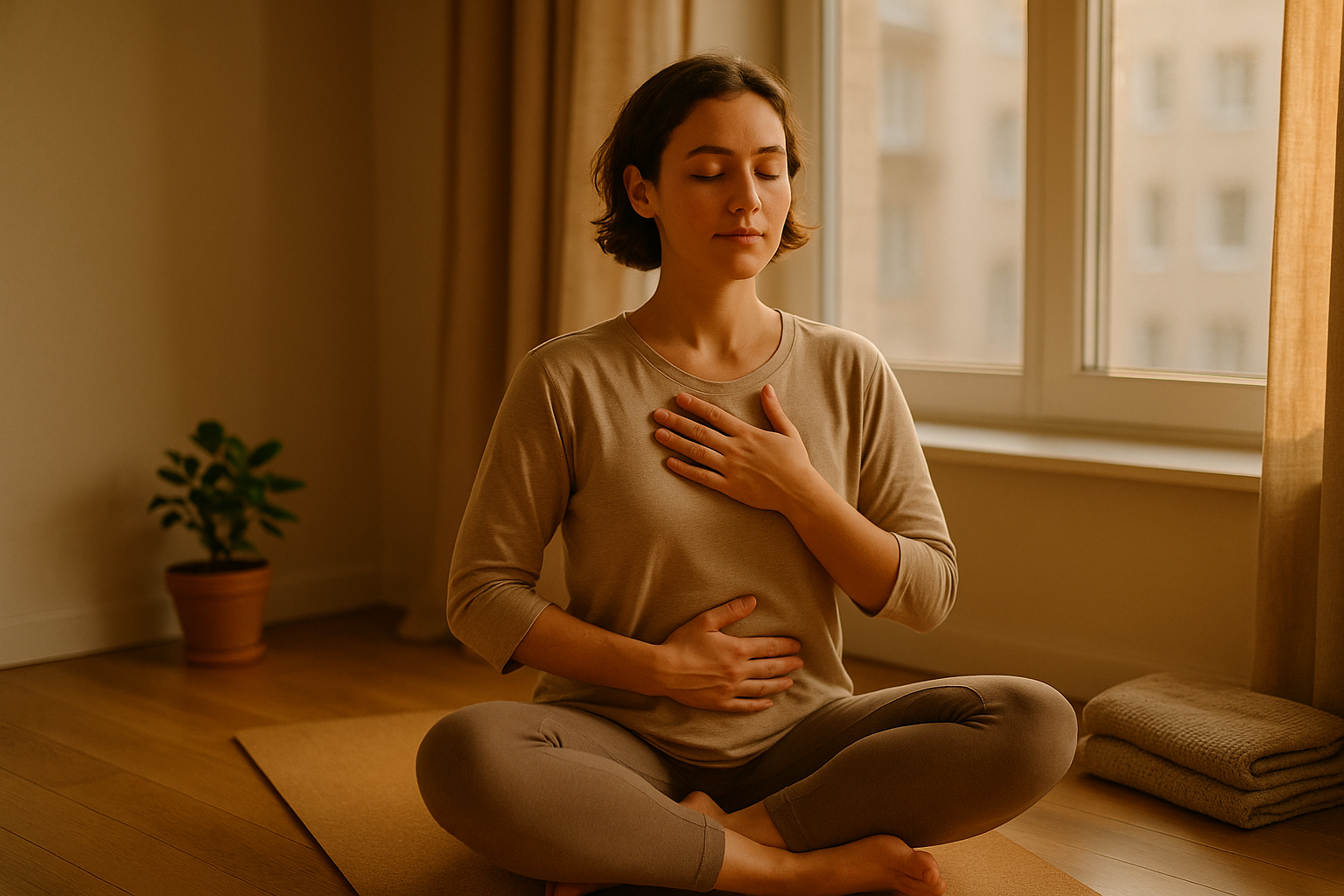
Sama Vritti—often translated as “equal breathing”—is a simple, steady-paced pranayama that balances your inhale and exhale (and optionally the pauses between them) to settle the mind and soothe the nervous system. In one sentence: Sama Vritti is breathing where each phase is the same length, creating a calm, even rhythm. Done consistently, it can lower stress, improve focus, and make meditation more accessible. This guide turns the practice into nine concrete steps you can repeat daily, including safety guardrails, progression options, and real-world applications. Brief note: what follows is educational and not medical advice; if you’re pregnant, have cardiovascular, lung, or eye conditions, or feel dizzy or distressed, skip long breath-holds and consult a clinician or qualified teacher.
Quick-start (30 seconds): Sit tall. Breathe in through your nose for 4 counts, out for 4 counts, smooth and silent. Continue 2–5 minutes. If that feels great, you can later add gentle pauses (e.g., 4–2–4–2).
1. Prepare Your Space and Intention
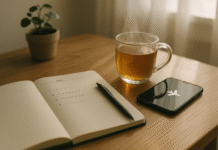
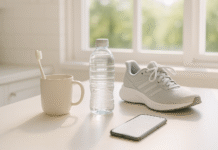
Your first step is to make it easy to relax: choose a quiet spot, reduce distractions, and decide what you want from the session—calm, clarity, or better sleep. Environment shapes nervous-system response; fewer sensory interruptions mean your brain can attune to the breath’s rhythm faster. Set a time boundary (e.g., five minutes) and pick a cue—like finishing tea or shutting your laptop—to trigger practice. A tiny ritual (lighting a candle, dimming lights) signals “now we slow down,” which reduces the friction of getting started and increases the chance you’ll repeat tomorrow. Finally, decide whether today is a no-holds day (inhale=exhale) or a holds day (adding equal pauses); we’ll build toward holds later with safety guardrails. Intention is not woo: it’s a cognitive anchor that guides attention back when the mind wanders.
- Mini-setup checklist
- Quiet(ish) space; phone on silent or timer only
- Comfortable temperature; optional light blanket or shawl
- Support for hips or back (cushion, folded towel, chair)
- A clear, simple objective (“five minutes to reset”)
- A gentle timer (vibration or chime)
1.1 Why it matters
Reducing decision load increases follow-through. A pre-chosen time, place, and goal lets your nervous system anticipate rest, amplifying the calming effect of slow, even breaths. Over time, the ritual itself becomes a cue for relaxation, making the practice more efficient.
1.2 Numbers & guardrails
Start with 3–5 minutes if you’re new. Longer isn’t always better; research on breath practices suggests sessions under five minutes are less consistently effective, while brief, repeated sessions across days are reliable for stress reduction (as of 2023).
Bottom line: make the setup so simple you can’t not do it; consistency beats intensity.
2. Choose a Posture That Supports Diaphragmatic, Nasal Breathing
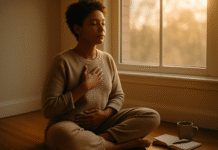
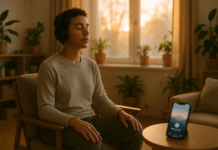
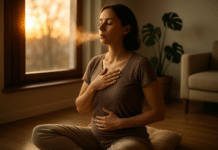
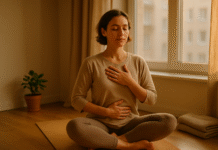
The second step is posture: sit or lie in a position that keeps the airway open and the diaphragm free to move. A tall, neutral spine allows ribs to expand laterally while the belly softens to receive the breath. If you’re on the floor, elevate the hips above the knees; if you’re in a chair, scoot forward with feet flat and shins vertical. Shoulders can relax down and back so your upper chest doesn’t do all the work. If you’re very tired or anxious, a supported recline (legs bent over a bolster or couch edge) is excellent—what matters most is ease and the ability to breathe smoothly through the nose.
- Setup options
- Chair: Sit upright, seat bones heavy, crown tall, hands resting on thighs.
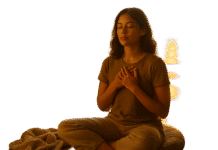
- Cushion: Cross-legged or kneeling with a block/cushion to raise hips.
- Recline: On your back, knees bent, a pillow under head and knees.
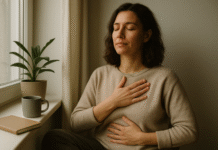
- Hands: One on chest, one on belly to sense balance (optional).
2.1 How to do it
Scan for tension: jaw unclenched, tongue resting on the palate, brow smooth. Imagine your breath inflating the low ribs like a belt—not just the front belly. Keep the breath quiet; sound often signals constriction or effort.
2.2 Common mistakes
- Overarching the lower back: compresses ribs and reduces diaphragmatic movement.
- Chest-only breathing: shallow, fast, and fatiguing.
- Mouth breathing: can dry airways and reduce nasal nitric oxide benefits; use the nose if possible.
Synthesis: a sustainable posture makes equal breathing feel natural, not forced.
3. Find Your Baseline Count (and Keep It Comfortable)
Your third step is to find a count you can repeat evenly without strain. Many people start with 4 on the inhale and 4 on the exhale; others do better with 3. What matters is consistency, not impressively long counts. The right tempo feels steady, quiet, and repeatable for minutes at a time. If you’re mentally counting, match syllables (“in-two-three-four, out-two-three-four”) and let the breath meet the count, not the other way around. If you’re using a timer app or metronome, select a gentle tone and volume.
- Self-test for the right count
- You could maintain it for 3 minutes without fidgeting.
- Your breath stays nasal and silent.
- You don’t gasp at the end of the exhale.
- You feel calmer after the first 8–10 cycles.
3.1 Numbers & guardrails
A practical range is 3–6 counts per phase for beginners. Many slow-breathing protocols target ~5–6 breaths per minute (bpm) because it often optimizes heart rate variability (HRV) and baroreflex engagement (as of 2023–2025). Equal 4–4 gives 7.5 bpm; equal 5–5 gives 6 bpm; equal 6–6 gives 5 bpm. Pick comfort over theory; you can progress later.
3.2 Tools/Examples
Use a metronome at 60 bpm and breathe one breath every 10 seconds (inhale 5 ticks, exhale 5 ticks) for a 6 bpm rhythm. Or try apps with visual breath bars. If you get breathless, drop one count or switch to item 4’s “no-holds” practice.
Synthesis: the “right” count is the one your body repeats calmly today.
4. Master the Core Pattern: Equal Inhale–Exhale (No Holds)
Before adding any pauses, build fluency with equal inhale and exhale. This is fully valid Sama Vritti, and for many people it’s all they ever need. Start with your baseline count and track your mind’s tendency to rush the exhale or pad the inhale. Your aim is a smooth, continuous loop: inhale rising, exhale falling, like a tide. If thoughts surge, label them gently (“thinking”) and return to the count. Two to five minutes is enough to feel a tangible shift; expect a sense of steadiness, softer edges in the body, and fewer spikes of anxious thought.
- Practice template (no holds)
- 1 minute: settle posture, pick the count.
- 2–5 minutes: inhale x, exhale x (x = 3–6), 12–30 cycles.
- 30 seconds: notice the after-feel (heavier limbs, quieter mind).
4.1 Why it works
Slow, even nasal breathing can reduce sympathetic arousal and support parasympathetic activity, reflected in HRV patterns and subjective calm. The breath acts as a metronome for attention, training your brain to sustain a steady focus. Reviews of slow breathing link these rhythms with improved autonomic flexibility and emotional regulation (as of 2018 and later).
4.2 Common mistakes
Counting too fast, pushing volume, or letting the exhale collapse. Keep volume moderate; aim for smoothness over depth. If you feel dizzy, stop, breathe normally, and reduce your count next round.
Synthesis: fluent equal inhale–exhale is the foundation; don’t rush past it.
5. Layer in Optional Holds Safely (Kumbhaka Progression)
Holds are optional in Sama Vritti. If you add them, do so gradually and gently. Start where you’re steady with no-holds, then try micro-pauses after inhale and exhale. A common progression is: 4–0–4–0 → 4–2–4–2 → 4–4–4–4. If any hold causes strain, shorten it or return to no-holds. Holds can sharpen focus, but they also increase CO₂ and internal pressure—fine in moderation, unhelpful if forced. People who are pregnant, have uncontrolled blood pressure, glaucoma, or cardiopulmonary issues should avoid long holds and seek medical guidance; prioritizing safety is part of yogic wisdom.
- Two-week sample ramp
- Days 1–3: 4–0–4–0 for 5 minutes
- Days 4–7: 4–2–4–2 for 5 minutes
- Days 8–14: 4–4–4–4 for 4–6 minutes, only if comfortable
5.1 Numbers & guardrails
If you can’t maintain quiet, nasal flow during holds, shorten them. Avoid breath-holding after vigorous exercise or immediately after a large meal. If you notice headaches or eye pressure, stop holds and consult a professional.
5.2 Mini case
A beginner practicing 5 minutes of 4–2–4–2 nightly reported falling asleep faster within a week. While that’s anecdotal, it aligns with broader findings that slow, structured breathing before bed can aid sleep onset by lowering arousal.
Synthesis: treat holds as seasoning, not the meal—optional, light, and responsive to your body.
6. Tune the Mechanics: Diaphragm-First, Smooth, and Silent
Mechanics turn counting into comfort. Lead with the diaphragm: as you inhale, let the low ribs widen and the belly softly expand; as you exhale, feel the belly return and the ribs narrow gently. Keep the breath silent and through the nose to warm, humidify, and filter air, and to support nitric oxide signaling in the nasal passages. Rather than sucking air in, imagine you’re allowing it. During exhale, avoid collapsing; think “long and low,” keeping a tiny sense of lift in the upper chest so the breath leaves evenly, not as a dump.
- Refinements
- One hand on the low ribs to feel lateral expansion.
- Slightly narrower throat to smooth flow (micro-ujjayi, optional).
- Unclench your jaw; soften the eyes.
6.1 Why it matters
Diaphragmatic breathing is associated with reductions in stress reactivity and improvements in attention and mood in experimental settings, likely via vagal pathways and baroreflex mechanisms that respond to slow, even breaths (as of 2017–2018).
6.2 Common mistakes
Over-breathing (too big), audible gasping, or upper-chest dominance. If you hear the breath, scale the volume down and slow the transitions. If your nose is congested, a brief saline rinse beforehand can help; otherwise, keep breaths smaller and gentler.
Synthesis: refined mechanics make equal counts feel naturally equal.
7. Aim for Resonance: 5–6 Breaths Per Minute (When Ready)
Once the pattern feels smooth, you can explore a slower tempo near 5–6 breaths per minute. Many people find this range creates a pronounced sense of synchronicity—heart rate and breath oscillations align, often reflected as increased HRV and a subjective calm. Not everyone lands exactly at 6 bpm; your personal “sweet spot” may be slightly above or below. Use it as a target to test, not a rule to obey. If you feel air hunger, increase the count a little or return to a faster, comfortable rhythm.
- How to find your sweet spot
- Try 5–5 for several minutes (6 bpm).
- Try 6–6 (5 bpm) and 4–4 (7.5 bpm) on different days.
- Track which leaves you calmer and clearer afterward.
7.1 Numbers & guardrails
Evidence links near-6-bpm breathing to favorable autonomic effects, though specific HRV components can vary across studies and individuals (e.g., HF may not always rise). The take-home is experiential: choose the tempo that reliably calms you. Frontiers
7.2 Tools/Examples
Use a visual pacer set to 10-second cycles for 6 bpm. If you like sound, pick a soft bell every 5 seconds (inhale), another at 10 seconds (exhale), repeating for 3–8 minutes.
Synthesis: resonance is a helpful zone, not a destination you must reach.
8. Troubleshoot Common Issues and Adapt on the Fly
Even with a good plan, real bodies vary day to day. If you feel dizzy, anxious, or tight-chested, the fix is almost always to do less: reduce the count, skip holds, reduce volume, or switch to a lying position. If the nose is blocked, shorten the breath and don’t force nasal flow; a brief walk, a warm shower, or a saline rinse may help. If your mind races, stay with a simpler count (3–3 or 4–4) and shorten the session to two minutes repeated later. For post-meal practice, keep it gentle and upright. If you’re ill, rest; practice resumes when your breathing feels normal.
- Rapid fixes
- Dizziness → breathe normally for a minute; resume with 2–2 or 3–3.
- Anxiety spike → extend exhale slightly for a few rounds (e.g., 4–5), then return to equal.
- Tight throat → relax the jaw, swallow once, soften the tongue.
- Sleepy → sit taller or practice standing for two minutes.
8.1 Why equalizing helps anxiety
Equal inhale–exhale reduces the oscillations of effort and release that can feel like “chasing” the breath. Reviews of slow breathing show autonomic benefits and improved psychological flexibility that map to the felt sense of steadiness many people report.
8.2 Safety notes
If pregnant or managing hypertension, glaucoma, or cardiopulmonary disease, avoid long holds and work with a clinician or qualified teacher; broad safety guidance from reputable medical sources emphasizes individualized caution.
Synthesis: small adjustments preserve the practice’s calm even on challenging days.
9. Make It a Habit: Session Structure, Timing, and Everyday Uses
Sama Vritti becomes powerful when it’s part of your routine. Anchor it to existing habits: after brushing teeth, before opening email, or as the last thing before lights-out. Structurally, most people benefit from short, consistent sessions—5–10 minutes once or twice daily—rather than occasional long sits. To reinforce benefits, pair it with a brief reflection (“What feels lighter now?”). For targeted use, try a two-minute equal-breath reset before a meeting, after a stressful interaction, or when switching from work to family time. For sleep, keep counts gentle and the environment dim. Over weeks, expect a baseline shift: steadier attention, fewer spikes of stress, and easier access to calm.
- Habit blueprint
- Morning: 5 minutes, 4–4 or 5–5
- Afternoon reset: 2 minutes, 4–4
- Evening wind-down: 5–8 minutes, 4–2–4–2 or no-holds, lights low
9.1 Evidence-informed cadence
Regular slow-breathing practice is associated with stress reduction, BP modulation, and improved HRV metrics across diverse populations, with multi-session and longer-term practice outperforming isolated trials (as of 2019–2025). Keep sessions ≥5 minutes when possible, and maintain them across weeks for cumulative benefit. PMC
9.2 Real-world examples
A manager uses 3 minutes of 5–5 before presentations to steady voice and pacing. A student sets a post-lunch 2-minute 4–4 timer to reset focus. A new parent does lying-down equal breathing during night feeds to reduce rumination.
Synthesis: consistency transforms a technique into a trait—calm that’s available on demand.
FAQs
1) What exactly is Sama Vritti, and how is it different from “box breathing”?
Sama Vritti means “equal fluctuations” and usually refers to equal-length inhale and exhale, with optional equal holds. Box breathing always includes holds in a 4-4-4-4 pattern. In practice, equal inhale–exhale without holds is fully valid Sama Vritti; if you later add gentle, equal pauses, it looks like box breathing. Choose the version that feels smooth and sustainable. Yoga Basics
2) How long should each session be to notice benefits?
Aim for 5–10 minutes per session on most days. Reviews indicate that very short, one-off sessions (<5 minutes) are less consistently effective, while multi-session and longer-term practice reliably reduce stress. Two brief sessions (morning/evening) can be easier to sustain than one long block.
3) What breath rate should I target?
Many people feel best around 5–6 breaths per minute (e.g., 5–5 or 6–6 counts), a range associated with favorable autonomic effects and HRV changes. But comfort rules; if you feel air hunger, pick a slightly faster rhythm and return to the slower rate later.
4) Is breath-holding necessary—or even safe?
No, holds are optional. If you’re pregnant or have glaucoma, uncontrolled blood pressure, or cardiopulmonary issues, avoid long holds and consult a clinician. Many people find that no-holds Sama Vritti already delivers the calm and focus they seek. NCCIHMount Sinai Health System
5) Can I practice Sama Vritti when anxious or during a panic spike?
Yes, but go simpler and shorter: sit upright, breathe through the nose at 3–3 or 4–4 for two minutes. Avoid deep, forceful breaths and long holds, which can increase lightheadedness. The equal rhythm acts like a metronome for attention, helping the body downshift.
6) Will this help with sleep?
Many people use equal breathing as a pre-sleep wind-down because it reduces arousal and rumination. A calm, even rhythm with optional short holds (e.g., 4–2–4–2) in a dark room often shortens sleep onset, though results vary by person. Medical sites also describe box/equal breathing as a practical stress reliever that may aid sleep.
7) Do I need ujjayi (an audible throat constriction) for Sama Vritti?
No. Gentle, silent nasal breathing is sufficient and often better for beginners. A very light constriction can smooth flow if it happens naturally, but avoid creating noise or strain. The goal is even timing, not sound.
8) Is there evidence beyond tradition that this helps?
Yes. Reviews and trials of slow, paced, or diaphragmatic breathing report improved stress markers, attention, and autonomic flexibility; HRV-focused research highlights benefits near 6 bpm, though specific components vary across studies. Practice quality and consistency matter more than any single protocol.
9) How does Sama Vritti compare to 4-7-8 breathing?
4-7-8 uses an exhale that’s almost twice as long as the inhale and a long post-inhale hold, whereas Sama Vritti keeps phases equal (with or without short holds). If you feel edgy on long holds or long exhales, equal breathing is usually more comfortable and repeatable.
10) Can I teach this to kids or older adults?
Yes—simplify the count (e.g., 3–3), keep sessions short (2–3 minutes), and make it playful or practical (before homework; after a walk). For older adults, chair posture and a gentle tempo work well; avoid breath-holding unless cleared and comfortable. Evidence suggests slow-breathing routines can reduce stress across ages when practiced regularly.
Conclusion
Sama Vritti is deceptively simple: equal inhale and exhale—optionally with equal pauses—repeated consistently. Behind that simplicity sits a powerful mechanism: steady, nasal, diaphragmatic breaths that nudge your nervous system toward equilibrium. You don’t need to nail a perfect count or chase special states; you need a repeatable setup, a posture that feels good, and a comfortable tempo you can sustain for a few minutes. From there, you layer optional holds, refine mechanics, test a slower cadence, troubleshoot gently, and stitch short sessions into your day. Over weeks, you’re likely to notice a quieter mind, steadier focus, and more choice in how you respond to stress. Start with five minutes today—equal in, equal out—and let the practice prove itself.
CTA: Take two minutes right now: sit tall, inhale 4, exhale 4—repeat 12 cycles and notice what changes.
References
- Zaccaro A., Piarulli A., Laurino M., et al. “How Breath-Control Can Change Your Life: A Systematic Review of Mechanisms Underlying Slow Breathing.” Frontiers in Human Neuroscience, 2018. Frontiers
- Ma X., Yue Z.-Q., Gong Z.-Q., et al. “The Effect of Diaphragmatic Breathing on Attention, Negative Affect and Stress in Healthy Adults.” Frontiers in Psychology, 2017. Frontiers
- Lalanza J.F., et al. “Methods for Heart Rate Variability Biofeedback (HRVB).” Frontiers in Physiology, 2023. PMC
- Cleveland Clinic Health Essentials. “How Box Breathing Can Help You Destress.” Aug 17, 2021. Cleveland Clinic
- NCCIH. “Yoga: Effectiveness and Safety.” Updated 2021. NCCIH
- Hopper S.I., et al. “Effectiveness of Diaphragmatic Breathing for Reducing Physiological and Psychological Stress.” JBI Database of Systematic Reviews and Implementation Reports, 2019. PubMed
- Mauro M., et al. “Heart Rate Variability Modulation Through Slow-Paced Breathing.” The American Journal of Medicine, 2025. American Journal of Medicine
- Bentley T.G.K., et al. “Breathing Practices for Stress and Anxiety Reduction.” Global Advances in Integrative Medicine and Health, 2023. PMC
- Cleveland Clinic. “What Is Breathwork? A Beginner’s Guide.” May 19, 2023. Cleveland Clinic
- NCCIH. “Relaxation Techniques: What You Need to Know.” Updated June 8, 2021. NCCIH