






















Box Breathing (Square Breathing) is a simple four-phase pattern—inhale for 4, hold for 4, exhale for 4, hold for 4—that steadies your nervous system and sharpens focus in minutes. It’s portable, free, and easy to learn. In this guide, you’ll master the technique from setup to troubleshooting, so you can use it at work, before sleep, or whenever stress spikes. Quick disclaimer: this content is educational and not a substitute for medical advice; if you have a cardiovascular, respiratory, or pregnancy-related condition, modify holds or check with a clinician first.
One-minute starter: Sit tall. Inhale through your nose (4). Hold (4). Exhale through your nose (4). Hold (4). Repeat 3–5 rounds.
1. Choose Your Why, When, and Starting Cadence
Start by deciding why you’re practicing—stress relief, sleep, focus, or recovery—because purpose determines timing and dose. For most beginners, a 4-4-4-4 count for 1–3 minutes is a safe, effective entry point that creates a gentle rhythm without air hunger. Pick one anchor moment in your day—right after you sit at your desk, before a meeting, or in bed—so practice becomes automatic. If you’ve tried breathwork before and felt dizzy, you likely pushed the holds too long; think “easy and repeatable,” not heroic. You’ll refine your cadence later, but setting a clear goal and a consistent slot removes 90% of the friction. Remember: any discomfort means shorten the holds, slow down, or take a break.
1.1 How to do it
- Sit or lie comfortably; shoulders relaxed, jaw unclenched.
- Breathe through your nose unless congested.
- Count silently: inhale 4 – hold 4 – exhale 4 – hold 4.
- Run 3–5 cycles (~1–2 minutes).
- End with a normal breath and notice the difference.
1.2 Numbers & guardrails
- One full “box” = 16 seconds; 4 boxes ≈ 64 seconds.
- If 4s feels easy, you can explore 3–5 minutes total.
- Lightheaded? Switch to 3-3-3-3 or skip holds for a bit.
Bottom line: clarity of purpose plus a modest cadence makes consistency easy and keeps the experience calm, not forced.
2. Get the Posture Right (So Your Diaphragm Can Work)
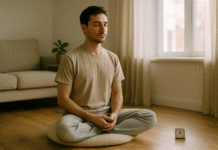
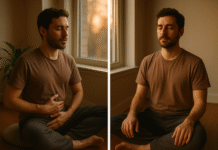
Correct posture makes box breathing smoother by letting your diaphragm descend freely and your ribs move evenly. Sit with your feet flat, hips slightly above knees, spine long, and chest soft (not puffed). Place one hand on your lower ribs and one on your belly—those should move first on the inhale while your shoulders stay quiet. If you’re lying down, bend your knees to neutralize your lower back and keep the tongue resting on the roof of your mouth for easy nasal airflow. Poor posture invites neck and upper-chest breathing, which can feel shallow and anxious. A neutral, relaxed setup also reduces the urge to over-inhale or clamp down on holds.
2.1 Mini-checklist
- Seat height lets hips open; feet grounded.
- Neck long; chin slightly tucked (no forward head).
- Belly and lower ribs expand first; shoulders quiet.
- Jaw and tongue relaxed; lips lightly sealed for nasal breathing.
2.2 Common mistakes
- Shrug breathing: Lifts shoulders instead of expanding ribs.
- Collapsed slouch: Compresses diaphragm excursion.
- Rigid chest: Overbracing the core blocks gentle expansion.
Bottom line: a neutral, relaxed posture unlocks efficient, quiet breaths and steadier holds.
3. Master the 4-Phase Pattern (and Personalize the Count)
The essence of Box Breathing is equal lengths across inhale, hold, exhale, and hold, creating a steady cadence your brain can entrain to. Begin with 4-4-4-4; if that’s strenuous, drop to 3-3-3-3. If it’s too easy, increase to 5-5-5-5 later. The goal isn’t longer breath holds; it’s a smooth, unforced rhythm—like tracing four equal sides of a square. As your comfort grows, you may notice a calmer heart rhythm and quieter mind. Keep adjustments small (±1 second) so your nervous system stays settled.
3.1 Numbers & guardrails
- Beginner range: 3–5 seconds per side.
- Sweet spot for many adults: 4 seconds per side.
- Avoid breath hunger (tight throat, chest pressure, gasping).
3.2 Tools/Examples
- Think: “Up – Across – Down – Across.” Visualize a square.
- One minute at 4-4-4-4 = ~4 cycles.
- Use a metronome or “box” animation to keep tempo.
Bottom line: equal, gentle phases—not max capacity—deliver the calming effect reliably.
4. Breathe Nasally and Low (Diaphragm First)
Nasal, diaphragm-led breathing filters and warms air, supports nitric oxide production, and encourages a calmer autonomic response. Imagine 360° expansion around the lower ribs and belly on each inhale, then a soft recoil on the exhale; the chest may rise a little, but it shouldn’t lead. Keep breaths quiet—no hissing or “sipping” air—which usually means you’re taking in just enough. If your nose is stuffy, steam or a saline rinse beforehand can help; otherwise, use a relaxed lip seal and let the tongue rest behind the teeth to promote a natural airway. Diaphragmatic mechanics make the holds feel stable and keep the exhale smooth, which is where many people feel the most relief.
4.1 How to feel it
- Place hands on lower ribs; feel them widen sideways on inhale.
- Imagine breathing “down and wide,” not “up and high.”
- Keep the exhale silent; if you hear air, you might be pushing.
4.2 Mini case
At 4-4-4-4, Robin noticed shoulder tension after two cycles. Switching focus to lower-rib expansion immediately softened the breath and made the last hold feel effortless.
Bottom line: nasal, lower-rib breathing makes box breathing smoother, quieter, and more effective.
5. Pace With Simple Tools (Counting, Timers, and Visuals)
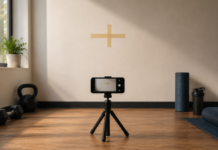
Pacing removes guesswork and keeps the breath even. Some people prefer silent counting; others do better with external cues. A metronome at 60 bpm makes a 4-second phase equal four ticks, while many free apps and smartwatches offer “guided breathing” or an animated square you can follow. If technology distracts you, trace a square with your index finger on your thigh—one side per phase. For team settings (classrooms, clinics), a shared timer prevents drift and keeps everyone in sync. The aim is smoothness; the more consistent your pacing, the less cognitive load and the more calming the practice feels.
5.1 Tools/Examples
- Phone metronome (60–72 bpm) or box-animation timer.
- Watch “breath” mode set to equal phases (inhale/hold/exhale/hold).
- Physical trace: draw a square in the air or on paper.
5.2 Common pitfalls
- Speed creep: phases shorten under stress. Use a timer.
- Over-focus: rigid counting spikes tension. Think “glide, don’t grind.”
- Sounded exhale: suggests pushing; soften to stay parasympathetic.
Bottom line: a simple pacing aid turns practice into a reliable, repeatable protocol.
6. Start Micro, Then Scale (Habit-First Dosing)
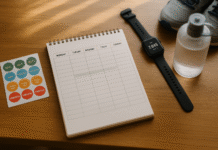
Consistency beats intensity. Begin with 1–2 minutes once or twice daily and stack it onto existing routines—after you sit at your desk, between tasks, or lights-out in bed. After a week, build to 3–5 minutes, and consider a “1-minute reset” before meetings or commutes. For workouts, slot 1–2 minutes post-exercise to downshift faster. If you’re using it for sleep, keep the room cool, dark, and quiet; box breathing pairs well with a 5-minute wind-down and no screens. Track how you feel in a notes app: stress (0–10), focus (0–10), and sleep onset (minutes). Seeing progress reinforces the habit loop.
6.1 Mini-checklist
- Pick two anchor moments (e.g., start-of-day, pre-sleep).
- Use the same cadence all week; adjust next week if needed.
- Log quick ratings for stress/focus/sleep.
- If you miss a day, resume without “making up” volume.
6.2 Example weekly ramp
- Week 1: 1–2 min daily at 4-4-4-4.
- Week 2: 3–4 min daily; add a 1-min mid-day reset.
- Week 3+: 5 min daily; optional second 2–3 min session.
Bottom line: small, consistent sessions compound into a stable stress-management skill.
7. Use It in Real Life (Stress, Focus, and Sleep)
Box breathing shines when stakes feel high. Before a presentation, 2 minutes can steady your voice and cadence. During conflict, a single quiet cycle creates space to respond rather than react. If you wake at night, 3–5 cycles often ease you back to sleep. For focus, run 2–3 minutes before deep work, then switch to normal breathing and a distraction-free block. In cravings or urges, the 16-second cadence buys time for wiser choices. Parents report great results guiding kids with a finger-traced square and calm voice. The key is using the technique in context, not just in a quiet room.
7.1 Situations & tips
- Pre-meeting nerves: 2 minutes backstage or at your desk.
- Traffic or delays: 1 minute at red lights (eyes open).
- Night waking: 3–5 cycles; keep lights low to avoid alerting.
- Study block: 2 minutes, then start a 50-minute focus timer.
- Cravings: 4–8 cycles to surf the urge.
7.2 Mini case
Amina, a project manager, ran 2 minutes before weekly status updates. Over three weeks she noted steadier pacing and fewer filler words, plus easier sleep on meeting nights.
Bottom line: deploy box breathing at the point of need; it’s a practical, just-in-time regulation tool.
8. Track What Changes (HRV, Pulse, and Perceived Calm)
Measuring your response helps you personalize the dose. A basic approach is subjective: rate calm, focus, and mood before/after a 2-minute set. For data-curious readers, many wearables show heart rate (HR) and heart rate variability (HRV) trends; you may see HR drift down and HRV increase after steady practice. If you don’t track, a simple resting pulse check (count beats for 30 seconds) before and 2 minutes after gives a rough sense of downshift. As of August 2025, research on slow, paced breathing shows modest BP benefits and improvements in vagal markers like HRV for many people, though results vary with technique and adherence.
8.1 Practical metrics
- RPE-Stress (0–10): aim for a 2–3-point drop post-set.
- Resting pulse: often ↓ 3–8 bpm after 2–5 minutes.
- HRV trend: look for gradual weekly upticks, not single-session spikes.
8.2 Guardrails
- Don’t chase numbers during practice; focus on feel.
- If data stresses you, skip it—subjective calm is a valid outcome.
- Plateaus are normal; adjust cadence or timing and continue.
Bottom line: light-touch tracking validates progress and guides fine-tuning, but calmness—not the dashboard—is the goal.
9. Stay Safe: Contraindications, Modifications, and Red Flags
Box breathing is gentle, but the hold phases can feel uncomfortable for some people. If you’re pregnant, have uncontrolled high blood pressure, fainting history, or a cardio-respiratory condition, shorten or skip holds (e.g., 4-0-4-0 or 4-1-4-1) and discuss with a clinician. If you experience dizziness, chest pain, or tingling lips/fingers, stop, breathe normally, and resume later with shorter phases. Kids and older adults often prefer 3-3-3-3 or even equal phases at 2–3 seconds. For panic-prone folks, keep exhales soft and avoid forceful breathing; pairing with a grounding cue (feel your feet, name five things you see) can help.
9.1 Safer variants
- No-hold box: inhale 4 – exhale 4 (repeat) for 1–3 minutes.
- Short-hold box: 4-1-4-1 to reduce air hunger.
- Rectangle breathing: 4-2-6-2 (longer exhale) to emphasize relaxation.
9.2 When to pause and seek care
- Chest pain, severe breathlessness, fainting, or new palpitations.
- Persistent dizziness despite shorter phases.
- Anxiety spikes during holds that don’t settle with modifications.
Bottom line: respect your limits; choose gentler ratios or skip holds—calm beats intensity, always.
10. Troubleshoot and Progress (From Beginner to Pro)
If you feel stuck, you’re not alone—most issues come from pacing or tension. First, make the breath quieter and smaller; second, shorten holds; third, ensure your posture allows belly-rib expansion. Once fluent, explore 5–10 minutes when appropriate, or combine box breathing with a brief body scan: after each exhale, relax your brow, jaw, shoulders, and hands. For performance contexts, run 2 minutes pre-task and 1 minute post-task to downshift. You can also rotate with other patterns (e.g., 4-7-8 for sleep or a longer exhale rectangle) while keeping box breathing as your everyday reset.
10.1 Common problems & fixes
- Air hunger on holds: drop to 3-3-3-3 or 4-1-4-1.
- Racing thoughts: add finger-traced square or soft visual focus.
- Sighing or yawning: you’re over-inhaling; make breaths smaller.
- Neck tension: exhale fully, unclench the jaw, lengthen the back of the neck.
10.2 Progression ideas
- Extend sets to 5–10 min on calm days.
- Pair with journaling (one line on how you feel).
- Use before meditation to settle attention.
Bottom line: simplify, soften, and then scale; progress comes from ease plus repetition.
FAQs
1) What is Box Breathing (Square Breathing) in one sentence?
It’s a four-step pattern—equal-length inhale, hold, exhale, hold—that creates a steady rhythm in your breath and nervous system, helping reduce stress and improve focus within minutes when practiced gently and consistently.
2) How long should I practice each day to notice benefits?
Most people feel calmer within 1–3 minutes; with daily practice of 3–5 minutes, many report steadier mood and focus over 1–2 weeks. Benefits build with repetition, so aim for a small, reliable slot rather than occasional long sessions.
3) Is nose breathing mandatory for box breathing?
Nasal breathing is preferred because it filters and conditions air and often feels calmer. If you’re congested or exercising, mouth breathing is fine temporarily; keep the breaths gentle and the phases equal, then return to nasal breathing when you can.
4) Can box breathing lower blood pressure?
Slow, paced breathing (including equal-phase patterns) shows modest average reductions in blood pressure for many people, though effects vary by technique, adherence, and health status. Treat it as a helpful adjunct, not a replacement for medical care or medication.
5) I get dizzy during the holds—what should I do?
Stop, breathe normally, and resume with shorter phases (e.g., 3-3-3-3 or 4-1-4-1). Make the breath quieter and smaller, and ensure you’re seated. If dizziness persists, skip holds or consult a clinician.
6) Does it help with anxiety or sleep?
Many people find box breathing reduces anxious arousal and helps with sleep onset by promoting a slower, steadier rhythm. For bedtime, keep lights low, try 3–5 cycles, and avoid pushing the holds so you stay relaxed.
7) Is there an “ideal” count for everyone?
No—3–5 seconds per phase suits most adults. The best ratio is the one you can maintain without strain. Over time, you may experiment with slightly longer phases, but equal and comfortable beats longer and forced.
8) What’s the difference between box breathing and 4-7-8?
Box breathing uses equal phases; 4-7-8 emphasizes a longer exhale and hold, which many find sedating. Both can be effective; choose box breathing for steadiness and 4-7-8 for winding down, then stick with the one you’ll repeat consistently.
9) Can kids or older adults practice it?
Yes, with shorter counts (often 2–3 seconds per phase) and playful cues like tracing a square with a finger. Skip long holds and stop if anyone feels breathless or lightheaded. Gentle, brief sessions work best.
10) Will this improve my HRV or heart rate?
Many people see lower heart rate after a few minutes and gradual HRV improvements with regular practice, though individual responses vary. Use subjective calm and function (sleep, focus) as your primary success metrics.
Conclusion
Box Breathing (Square Breathing) is a small habit with outsized leverage: four equal phases, repeated gently, can help you downshift quickly and think clearly under pressure. By dialing in posture, nasal breathing, and a realistic cadence, you create a reliable anchor you can use before a meeting, after a workout, at bedtime, or whenever emotions run hot. Start with 1–2 minutes, track how you feel, and nudge the dose only when the practice is easy. Respect your limits—shorten holds or choose a no-hold variant whenever needed. Over weeks, you’ll likely notice steadier energy, smoother decision-making, and easier sleep.
Try it today: 3 box cycles before your next task—then notice what changed.
References
- How Box Breathing Can Help You Destress. Cleveland Clinic Health Essentials, Aug 17, 2021. https://health.clevelandclinic.org/box-breathing-benefits
- What Is Breathwork? A Beginner’s Guide. Cleveland Clinic Health Essentials, May 19, 2023. https://health.clevelandclinic.org/breathwork
- Relaxation Techniques: What You Need to Know. National Center for Complementary and Integrative Health (NCCIH), Jun 8, 2021. https://www.nccih.nih.gov/health/relaxation-techniques-what-you-need-to-know
- The Physiological Effects of Slow Breathing in the Healthy Human. Russo MA et al., Breathe (ERS), 2017. https://pmc.ncbi.nlm.nih.gov/articles/PMC5709795/
- Heart Rate Variability Biofeedback: How and Why Does It Work? Lehrer PM, Gevirtz R., Frontiers in Psychology, 2014. https://www.frontiersin.org/articles/10.3389/fpsyg.2014.00756/full
- Heart Rate Variability and Cardiac Vagal Tone in Psychophysiological Research. Laborde S. et al., Frontiers in Psychology, 2017. https://www.frontiersin.org/articles/10.3389/fpsyg.2017.00213/full
- An Overview of Heart Rate Variability Metrics and Norms. Shaffer F., Frontiers in Public Health, 2017. https://www.frontiersin.org/articles/10.3389/fpubh.2017.00258/full
- Breathing Practices for Stress and Anxiety Reduction: Conceptual Framework of Implementation Guidelines Based on a Systematic Review. Bentley TGK et al., Healthcare, 2023. https://pmc.ncbi.nlm.nih.gov/articles/PMC10741869/
- Breathing Exercise for Hypertensive Patients: A Scoping Review. Herawati I. et al., Healthcare, 2023. https://pmc.ncbi.nlm.nih.gov/articles/PMC9905130/
- Relaxation Techniques: Breath Control Helps Quell Errant Stress Response. Harvard Health Publishing, Jul 24, 2024. https://www.health.harvard.edu/mind-and-mood/relaxation-techniques-breath-control-helps-quell-errant-stress-response
- Effects of Voluntary Slow Breathing on HRV: Systematic Review and Meta-analysis. Laborde S. et al., Neuroscience & Biobehavioral Reviews, 2022. https://www.sciencedirect.com/science/article/abs/pii/S0149763422002007
- Deep Breathing Exercise at Work: Potential Applications and Considerations. Tavoian D. et al., Frontiers in Physiology, 2023. https://www.frontiersin.org/articles/10.3389/fphys.2023.1040091/full