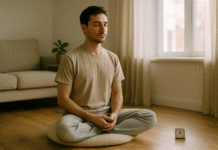



























Transcendental Meditation (TM) is a standardized, mantra-based meditation practiced for about 20 minutes twice daily, taught one-on-one by certified instructors. It’s designed to be effortless, comfortable, and compatible with ordinary life—no special beliefs or postures required. In this guide you’ll learn exactly what TM is (and isn’t), how instruction works, what a session looks like, the best-supported benefits, safety considerations, and a practical eight-week plan to integrate it into your routine. Definition in brief: Transcendental Meditation is a silent mantra technique taught by certified teachers, typically practiced for 20 minutes twice per day while seated with eyes closed.
Brief note: This article is informational and not medical advice. If you have a mental health condition, cardiovascular disease, or are pregnant, speak with a qualified clinician before starting or changing any mind–body practice. For suspected adverse effects, seek professional support promptly.
1. What Transcendental Meditation Is (and Isn’t)
TM is a silent mantra meditation taught in a standardized way and practiced for 20 minutes, twice daily, in a comfortable sitting position. It does not involve concentrating, controlling thoughts, or adopting a new belief system. In practice, the technique uses a personalized sound (mantra) provided by a certified teacher, allowing the mind to settle with minimal effort; physical relaxation follows naturally. Because instruction is individualized and reinforced by follow-up, students are expected to practice independently after the first day while receiving ongoing support through local centers and the official TM app.
1.1 Why it matters
Defining TM precisely helps you decide whether it matches your goals. Many people approach meditation seeking less stress, better sleep, or improved focus. TM offers a “low-friction” entry because the method is simple and time-bounded; it’s also intentionally secular in delivery, even though it draws from Vedic traditions. Understanding these attributes will help you compare it fairly with mindfulness, yoga-based breathing, or other mantra practices that can look similar but are taught and supported differently. TM Australia
1.2 Mini-checklist: Is TM a fit for your situation?
- You want a structured, reliable routine with minimal effort cues.
- You prefer short, time-boxed sessions (about 20 minutes).
- You like access to in-person guidance and ongoing support.
- You’re open to learning a personalized mantra privately.
- You need a practice that coexists with work, school, and family rhythms.
Bottom line: TM is a standardized, teacher-led mantra technique designed for ease and consistency, not a do-it-yourself mindfulness variant.
2. How You Learn TM: Certified Instruction and the 4-Day Course
You learn TM through a short, structured course anchored by one-on-one instruction. Day 1 is a private session (about 60–90 minutes) in which a certified teacher gives you your mantra and shows you exactly how to use it; by the end of this session, you’ll be able to meditate at home. Days 2–4 typically include group “checking” sessions (in person or hybrid) to refine your practice, answer questions, and confirm you’re doing it correctly. After that, you can attend optional tune-ups, group meditations, talks, and use the official TM app for timers and reminders.
2.1 How to enroll (and what to expect)
- Find a center: Search for a nearby TM center and book an intro talk.
- Personal instruction: Expect a private lesson where you receive your mantra and learn the technique.
- Three follow-ups: Group sessions to fine-tune your practice.
- Lifetime support: Access to teachers, events, and app-based tools to sustain consistency.
2.2 Numbers & guardrails (as of August 2025)
- Instruction is available globally through non-profit TM organizations; ongoing support is emphasized.
- The official app is for verified TM meditators and complements, not replaces, in-person teaching.
- Instructional quality and consistency are prioritized through standardization and teacher certification.
Bottom line: TM is intentionally taught via certified instructors with a defined Day-1 + Days-2-4 format and continued support to keep your practice on track for the long term.
3. What a Session Looks Like: 20 Minutes, Twice a Day
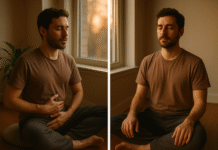
A typical TM session is simple: you sit comfortably (chair or cushion), close your eyes, and practice the mantra-based technique for about 20 minutes. There’s no breath control, no effort to suppress thoughts, and no need to monitor attention moment-to-moment. Most people do one session in the morning and one in the late afternoon or early evening. The technique is framed as “effortless,” and the time box makes it easier to protect in busy schedules.
3.1 Mini how-to (high-level overview)
- Choose a quiet, comfortable spot and sit with back supported if you like.
- Close your eyes for a minute or so, then begin the technique as instructed.
- If you notice thoughts, that’s fine—return easily to the procedure.
- Continue for ~20 minutes; at the end, take a minute of quiet before resuming activity.
- Repeat later in the day; keep timing approximate rather than rigid.
3.2 Common mistakes to avoid
- Treating TM like concentration training (straining or “trying hard”).
- Extending sessions excessively without guidance.
- Skipping the settling period before and after the 20 minutes.
- Expecting identical experiences every session.
Bottom line: Two short, comfortable sessions framed by a brief settle-in/settle-out are the core practice; consistency beats intensity.
4. How It May Work: Attention, Effortlessness, and Brain Activity
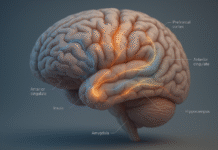
Researchers often describe meditation styles as focused attention, open monitoring, and a third category—automatic self-transcending—which includes TM. The proposal is that TM allows the mind to settle with minimal effort, showing distinct EEG patterns (for example, increased alpha-1 activity and coherence) compared with practices that train attention or open monitoring. These findings suggest a physiology of restful alertness, although mechanisms are not yet definitive and practical implications are still being studied.
4.1 What the studies show (so far)
- Conceptual frameworks place TM in a category emphasizing effortlessness and reduced monitoring.
- EEG research reports increased frontal alpha-1 and coherence during TM in small samples.
- These physiological signatures differ from many mindfulness protocols, but translation to outcomes is still being clarified.
4.2 Guardrails for interpretation
- EEG studies often have small sample sizes and specialized methods; results should be viewed as preliminary.
- Physiological differences between meditation styles do not automatically imply superior benefits; choose based on fit and goals.
- For health outcomes, rely on clinical trials and authoritative guidelines.
Bottom line: TM likely engages the brain in a way that looks different from attentional training, but for decisions about health, prioritize outcome studies and consensus statements.
5. Blood Pressure & Heart Health: What the Evidence Shows
Evidence linking meditation to heart health is promising but measured. The American Heart Association (AHA) advises that meditation—including TM—may be considered as an adjunct to guideline-directed risk reduction, not a replacement for proven therapies. Prior AHA guidance on non-pharmacologic blood pressure control noted supportive evidence for TM, and a randomized trial in people with coronary heart disease reported fewer cardiovascular events when TM was added to usual care. Quality and quantity of studies vary, so clinicians recommend meditation alongside, not instead of, standard care.
5.1 Numbers & context
- AHA 2017 statement: Meditation can be considered to complement lifestyle and medication; evidence overall is modest; more research is needed.
- AHA 2013 BP statement: TM showed reductions in blood pressure in some trials; recommendations remain cautious.
- RCT (2012): In patients with coronary heart disease, adding TM to usual care was associated with lower rates of death, MI, and stroke over ~5 years (trial in a specific population; methods and generalizability should be weighed).
5.2 Practical takeaways
- If you have hypertension or cardiac risk, talk to your clinician about incorporating TM in addition to diet, activity, sleep, and prescribed medications.
- Track your own markers (home BP readings, resting heart rate, sleep) to see if practice correlates with improvements.
- Use validated tools (e.g., home BP cuffs, logs) to avoid anecdotal bias.
Bottom line: For cardiovascular risk, TM can be a useful add-on within a comprehensive plan, but it does not replace guideline-based care.
6. Stress, Anxiety, and Mood: Benefits and Limits
Large reviews indicate meditation programs can reduce stress and anxiety symptoms by small to moderate amounts; evidence specific to TM suggests possible benefit for anxiety, but many studies are small or have limitations. Authoritative overviews emphasize that while TM may help with stress management in everyday life, evidence for diagnosed anxiety or depressive disorders remains mixed and should be interpreted carefully. A practical approach is to try TM for several weeks while tracking sleep, mood, and stress and to seek clinical support for persistent symptoms.
6.1 What to watch for in your own data
- Perceived stress: Use the PSS-10 monthly to quantify changes.
- Sleep: Record sleep latency and awakenings in a simple log.
- Function: Check concentration and productivity markers you care about.
- Symptoms: If anxiety or low mood worsen, pause and consult a clinician.
6.2 Mini case example
An office worker with high self-reported stress begins TM twice daily for eight weeks. They track PSS-10, sleep onset time, and afternoon energy. After six weeks, they see a 4-point drop in PSS-10 and 15-minute faster sleep onset on average. While anecdotal, the data help them decide to continue TM as part of a broader plan that includes walking and regular bedtimes.
Bottom line: TM can reduce everyday stress and may ease anxiety for some, but for clinical conditions it should complement—not replace—evidence-based therapies.
7. Sleep, Focus, and Performance: What to Expect
Meditation is commonly used to improve sleep quality and mental clarity. Overviews from major health agencies report mixed but encouraging findings across styles; TM’s time-bounded, low-effort approach can support regular wind-down routines and daytime focus. Because results vary, it helps to frame TM as a sleep-supportive habit (like consistent bedtimes or light exposure) rather than a cure for insomnia. For focus at work or study, consistent twice-daily practice can serve as a reliable “reset,” particularly in high-stress roles.
7.1 Sleep-support checklist
- Keep sessions away from the last hour before bedtime if they tend to energize you.
- Pair TM with sleep hygiene (fixed rise time, dim lights late, cool room).
- Note changes in sleep onset, awakenings, and refreshed feeling on waking. Sleep Foundation
7.2 Workday focus routine
- Morning session before email to start with lower arousal.
- Short walk or light exposure after meditating.
- Afternoon session as a transition between meetings and deep work.
- Optional: Use the official TM app for gentle reminders and logs.
Bottom line: TM can be a stabilizing habit to support better sleep and sustained attention, especially when paired with basic sleep and focus hygiene.
8. Safety, Side Effects, and Who Should Be Cautious
Meditation and mindfulness practices are generally considered safe for most people, but some participants report negative experiences such as increased anxiety or low mood; a meta-analysis summarized by a national health agency estimated adverse experiences around 8%, similar to rates seen in psychological therapies. People with current or past mental health conditions should proceed with clinician guidance, especially if trying to manage panic, trauma, or bipolar symptoms. For cardiovascular conditions, TM should supplement—not replace—medical care. If new or worsening symptoms appear, pause, consult your teacher, and seek professional help.
8.1 Practical guardrails
- Start with the standard schedule (about 20 minutes, twice daily).
- Avoid dramatically extending session length without guidance.
- Monitor mood and sleep; if they deteriorate, adjust or pause.
- Coordinate with your clinician if you’re on psychiatric or cardiac medications.
8.2 Region-specific note (as of August 2025)
Access to qualified teachers and follow-up varies by country; most TM organizations provide contact points for local guidance and app-based support. If you’re in a region with fewer centers, ask about virtual follow-ups and group meditations. tm.org
Bottom line: TM is low risk for most, but thoughtful guardrails and clinician collaboration keep it safe and useful.
9. Costs, Scholarships, and Access: Budgeting for TM
TM instruction involves course fees that support personalized teaching and lifetime follow-up. Fees are income-based in several countries, with scholarships and payment plans available through TM organizations. Exact amounts and structures vary by region and can change over time; the best way to get accurate pricing is to contact your local TM center. Remember that while cost is a factor, the value proposition includes initial one-on-one instruction, group sessions, ongoing access to teachers, app tools, and community events.
9.1 What your fee typically covers
- Personalized one-on-one instruction and a private mantra.
- Three follow-up sessions after Day 1.
- Ongoing teacher support (tune-ups, checks).
- Access to the official TM app and group meditations.
9.2 Smart budgeting tips
- Ask about scholarships for students, first responders, veterans, and financial aid.
- Inquire about installment plans and regional pricing.
- Consider total value over a multi-year horizon since support is ongoing.
Bottom line: Expect an upfront fee with income-based options and scholarships in many regions; confirm current local pricing and what’s included.
10. TM vs. Mindfulness and Other Practices: Choosing What Fits
Mindfulness training typically teaches you to observe thoughts, feelings, and sensations non-judgmentally; TM teaches an effortless mantra practice that does not require monitoring attention. Conceptual models and EEG studies propose distinct categories and physiological signatures for these styles. Which is “better” depends on your goals: TM’s ease and time box appeal to busy schedules; mindfulness’s skill of moment-to-moment awareness is valuable for emotional regulation and pain. Many people combine them—TM for daily de-stress, mindfulness for in-the-moment awareness—without conflict. NCCIH
10.1 Quick comparison
- Core method: Silent mantra (TM) vs. attention/awareness training (mindfulness).
- Effort: TM emphasizes effortlessness; mindfulness trains deliberate attention.
- Typical dose: ~20 minutes, twice daily (TM) vs. variable formats (mindfulness/MBSR often 45 minutes, once daily).
- Evidence highlights: TM—BP/stress adjunct; Mindfulness—broad stress/pain support and mental health programs.
10.2 Decision path
- If you want structure and “set-and-forget” daily sessions → consider TM.
- If you want skills you can apply moment-to-moment in daily life → add mindfulness training.
- If you’re managing medical conditions, align any practice with clinician guidance.
Bottom line: TM and mindfulness are complementary; choose based on lifestyle fit and the specific outcomes you care about.
11. Who Tends to Benefit Most (and When to Try Something Else)
People with high daily stress, demanding schedules, or hypertension risk may find TM especially practical thanks to its simplicity and cardiovascular adjunct evidence. Students and knowledge workers often value the predictable “reset” effect; older adults may appreciate a gentler method without breath holds or physical strain. That said, if your main goals are trauma processing, behavioral activation for depression, or in-the-moment emotion skills, structured therapies or mindfulness programs may offer more targeted tools; TM can still play a supportive role.
11.1 Indicators TM might help
- You can realistically commit to two 20-minute sessions most days.
- Stress manifests as mental fatigue or rumination rather than acute panic.
- You want a restorative practice that doesn’t require tracking breath or thoughts.
11.2 When to consider alternatives or add-ons
- You need skills for moment-to-moment reactivity (mindfulness/CBT modules).
- You’re targeting trauma symptoms (seek trauma-informed therapies).
- You prefer group-based curricula with weekly classes (e.g., MBSR).
Bottom line: TM is a strong daily de-stress habit for many; match the tool to the job and combine approaches as needed.
12. Getting Started and Staying Consistent: A Practical 8-Week Plan
Success with TM is mostly about showing up for two short sessions most days. After learning from a certified teacher, treat the next eight weeks as a gentle pilot with simple tracking and realistic expectations. You’re aiming for consistency, not perfect experiences. Pair TM with sleep, light activity, and social support to amplify benefits; use teacher tune-ups and the app when motivation dips. By the end of eight weeks, you’ll have enough personal data to decide whether to continue, adjust, or combine with other practices.
12.1 Week-by-week checklist
- Weeks 1–2: Lock in timing (morning + late afternoon). Use a simple timer and jot down session times and how you feel afterward.
- Weeks 3–4: Add a basic sleep log and a weekly PSS-10. Attend at least one follow-up/tune-up.
- Weeks 5–6: Notice workday energy; place the afternoon session before deep work or commute.
- Weeks 7–8: Review your logs; keep what works; book an optional group meditation or refresher session.
12.2 Tools & tips
- Use the official TM app for reminders, timers, and event calendars.
- Choose a “backup slot” for days when your routine shifts.
- Avoid making big claims in week 1; evaluate trends after 6–8 weeks.
- If you hit roadblocks (restlessness, drowsiness), ask your teacher for a quick check.
Bottom line: After certified instruction, a focused eight-week pilot—supported by light tracking and teacher check-ins—is enough to judge whether TM earns a permanent place in your day.
FAQs
1) What exactly is Transcendental Meditation?
It’s a standardized, teacher-taught mantra technique practiced for about 20 minutes twice daily while seated comfortably with eyes closed. Instruction is one-on-one, followed by group checks and ongoing support (including an official app for verified meditators).
2) How is TM different from mindfulness meditation?
Mindfulness trains you to monitor and accept present-moment experience; TM uses an effortless mantra process without monitoring. Conceptual and EEG research suggests different categories and patterns, though both can reduce stress. Choice depends on your goals and preferences.
3) Is there good evidence that TM lowers blood pressure?
Some trials and AHA statements support TM as a complement to standard care for blood pressure and cardiovascular risk. The AHA advises meditation may be considered as an adjunct; it should not replace medications or lifestyle treatments prescribed by your clinician.
4) Can TM help with anxiety or depression?
Reviews show small to moderate benefits for stress and anxiety across meditation programs; TM may help some people, but evidence for diagnosed disorders is mixed. Use TM alongside therapies recommended by your clinician. Track your own stress, sleep, and function to see real-world changes.
5) How long before I notice results?
Some people feel calmer after the first week; measurable changes (like consistent sleep onset or lower perceived stress scores) may take 4–8 weeks. Use simple logs to track your progress, and schedule a teacher check if practice feels off.
6) What does the TM course fee include?
Typically: personal instruction, three follow-ups, lifetime access to teacher support, group meditations, and the official TM app. Fees may be income-based; scholarships and payment plans exist in many regions—ask your local center for current details. tm.org
7) Is TM safe if I have a heart condition?
TM is generally low risk, but it should complement guideline therapy. The AHA supports meditation as an adjunct; coordinate with your cardiologist, keep taking prescribed medications, and monitor home blood pressure if advised.
8) Are there side effects?
Most people tolerate meditation well, but a minority report increased anxiety, low mood, or discomfort. If this happens, pause, speak with your teacher, and consult a clinician—especially if you have a history of mental health conditions.
9) Can I learn TM from a book or video?
Officially, TM is taught only by certified teachers through a structured course. This is part of how the organization keeps the instruction uniform and offers lifetime follow-up. If you prefer self-guided options, consider secular mindfulness courses, but they are different methods.
10) Who owns the Transcendental Meditation name?
“Transcendental Meditation” and “TM” are trademarks used by Maharishi Foundation organizations; this is why the technique is taught through certified teachers and standardized courses.
Conclusion
Transcendental Meditation delivers a straightforward promise: two short, comfortable sessions daily, taught personally and supported for life. That simplicity is its strength. For many people, TM functions as a reliable “reset”—a predictable window where the nervous system can settle and attention can refresh. The best evidence today frames TM as a helpful adjunct to healthy living and medical care: supportive for stress management, potentially beneficial for blood pressure and cardiovascular risk when paired with guideline therapy, and a practical habit for sleep and focus when combined with basic hygiene. Equally important are the safety guardrails—start with the standard dose, track your own markers, and collaborate with clinicians if you have medical or mental health conditions.
If you’re curious, the most effective next step is simple: attend an intro talk, learn from a certified teacher, and give the eight-week plan a fair shot. You’ll know, from your own logs and lived experience, whether TM deserves a permanent place in your day. Start with one calm session tomorrow morning.
References
- Meditation and Cardiovascular Risk Reduction: A Scientific Statement From the American Heart Association. American Heart Association (J Am Heart Assoc). 2017. AHA Journals
- Beyond Medications and Diet—Alternative Approaches to Lowering Blood Pressure: A Scientific Statement From the American Heart Association. Hypertension. 2013. AHA Journals
- Stress Reduction in the Secondary Prevention of Cardiovascular Disease: Randomized Controlled Trial of Transcendental Meditation and Health Education in Blacks. Circulation: Cardiovascular Quality and Outcomes. 2012. (Open-access summary) PMC
- Meditation and Mindfulness: Effectiveness and Safety. National Center for Complementary and Integrative Health (NCCIH). Updated June 3, 2022. NCCIH
- Anxiety and Complementary Health Approaches (for Providers). NCCIH. Accessed 2025. NCCIH
- 8 Things to Know About Meditation and Mindfulness. NCCIH. Accessed 2025. NCCIH
- Focused attention, open monitoring, and automatic self-transcending: Categories of meditation practice. Consciousness and Cognition. 2010. ScienceDirect
- Temporal and Spatial Characteristics of Meditation EEG. (Review PDF) Fred Travis, 2019. drfredtravis.com
- What is the Transcendental Meditation technique? TM Official Site. Accessed 2025. tm.org
- How to learn the TM technique (Course overview). TM Official Site. Accessed 2025. tm.org
- Free Continued Support (TM follow-up and app). TM Official Site. Accessed 2025. tm.org
- The official TM app. TM Community. Accessed 2025. TM Community
- Taught by a non-profit; income-based fees and scholarships. TM Official Homepage (U.S.). Accessed 2025.
- Trademarks (Transcendental Meditation and related marks). TM Official Site. Accessed 2025. tm.org
- Copyright and Trademark. TM for Veterans. Accessed 2025. TM for Veterans
- Meditation usage rise in the U.S. (2002–2022). NCCIH Press Release. 2024. NCCIH
- What makes the Transcendental Meditation technique unique? TM Official Homepage (practice description). Accessed 2025. tm.org